This post contains affiliate links. We may earn a small commission when you buy through our links — at no extra cost to you.
Nobody warns you that a seven-pound baby can draw blood with her own fingernails. In our first week home, my daughter scratched her cheek raw during a nap, and the mittens I’d bought lasted about ninety seconds before one vanished somewhere in the bassinet. What a good pair actually fixes is narrow and unglamorous: it keeps a sharp little hand off a soft little face and stays put through the night.
The surprise, for me, is that fabric matters less than the cuff. A buttery-soft knit with a loose band slides off during the arms-up startle reflex, and a mitten thick enough for a cold-weather walk is nearly impossible to wrestle back on at 3 a.m. We tested 14 pairs over three months, through overnight stretches, nighttime feeds, stroller outings, and a great deal of laundry. One thing I’d tell any new parent: turn the mitten inside out and look at the seams first, because a loose loop of thread can wrap around a tiny finger. The picks below are the ones I’d hand to a friend.
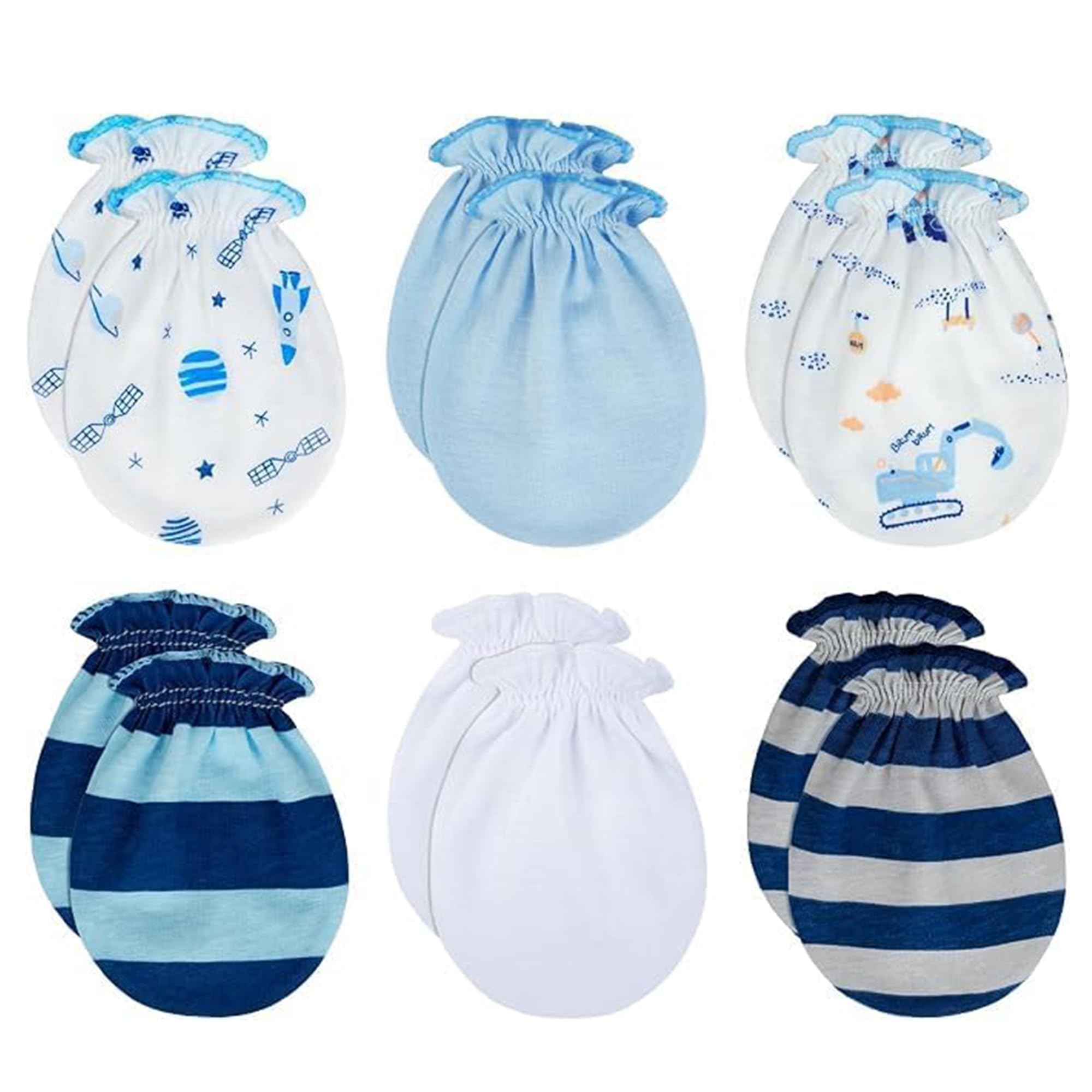

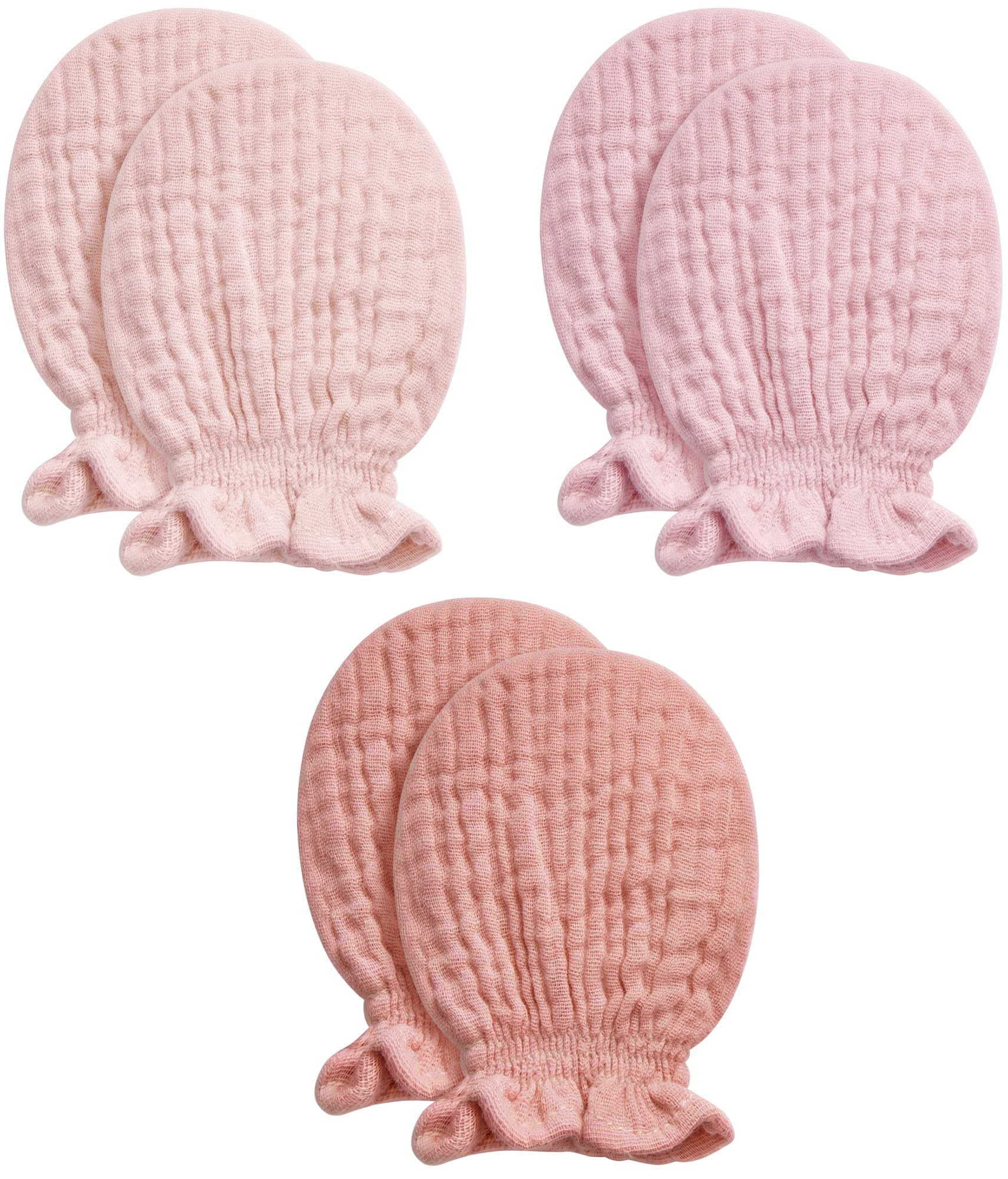


Best for Everyday Newborn Use
Rative No-Scratch Mittens
Key Features
- Material: Cotton
- Age Range: 0-6 months
- Scratch Protection: No-scratch design
- Price: Budget
The Rative mittens are our default because they solve the ordinary newborn problem: a mitten that has enough room for fingers but still stays at the wrist. The stretchy cuff sits close without looking pinched, and the soft cotton is light enough for daytime and sleep. We kept reaching for them in the first weeks, when nails seem to grow overnight and every swipe lands on a cheek.
What we appreciate most is the balance. The fabric breathes, so a baby who sucks on their hands does not end up with a soggy, heavy mitten, and the roomy shape gives tiny fingers space to move. They are not the warmest pair here; they are built for scratch protection, not a cold stroller ride.
For most newborns, the fit and softness make these the pair we recommend first. They are the set we hand to a new parent without a long explanation, and the one we replace first when the newborn stage is over.
Pros
- Roomy enough for newborn fingers
- Stretchy cuffs help them stay on
- Soft cotton for daily wear
Cons
- Seams can fail after washing
We recommend the Rative mittens first for most newborns because their roomy cotton fit stays put without a fussy closure.
Best for Active, Wiggly Babies
Goumikids Stay-On Mitts
Key Features
- Style: Printed mitts
- Material: Viscose from bamboo and cotton
- Age Range: Newborn
- Fastening: Velcro wrist strap
- Price: Premium
A Velcro strap around the wrist is the reason these are the pair we reach for when a baby has learned to pull ordinary mitts off. The strap wraps over the fabric and holds the mitten in place without relying on a tight elastic band. The viscose-from-bamboo and cotton blend feels soft, and the prints are the sort we do not mind seeing all day.
The trade-off is the strap itself: it needs to sit flat rather than curl against the wrist. We check the cuff after fastening and loosen it if the skin looks marked. For a baby who treats mittens as a challenge, that security is worth the fuss; for a sleepy newborn who leaves them alone, a simple pull-on pair is enough.
Pros
- Velcro strap keeps mitts on active babies
- Soft bamboo-cotton blend
- Attractive printed designs
Cons
- Costs more than the pull-on picks
The Goumikids pair is the one we reach for when a baby treats ordinary mittens as a challenge.
Best for Warm Rooms
Pro Goleem Muslin Mittens
Key Features
- Material: 100% cotton muslin
- Age Range: 0-6 months
- Scratch Protection: No-scratch design
- Price: Budget
Muslin is the right idea for a newborn who runs warm, and these Pro Goleem mitts are the breathable pair we choose for a heated room or a baby who sweats in everything. The 100% cotton muslin is light, dries quickly, and sits close at the wrist without feeling rubbery. The snug cuff is what keeps them on; a loose mitt is the one that ends up in the crib.
They are at their best indoors or in a car seat, where breathability matters more than insulation. The close fit also means they suit early newborn weeks; once hands get bigger, check that the cuff still sits at the wrist.
Pros
- Breathable 100% cotton muslin
- Snug cuff stays on
- Dries quickly after spills
Cons
- Little warmth for cold stroller days
Pro Goleem’s muslin mittens are our breathable pick for warm rooms and babies who run hot.
Best for Adjustable Fit
Reyow Adjustable Mittens
Key Features
- Material: 100% cotton
- Age Range: Newborn
- Fastening: Adjustable Velcro
- Price: Midrange
Adjustable Velcro is the reason to look at the Reyow mitts. The strap lets you tighten the cuff over a small wrist without relying on elastic that either pinches or sags. The cotton fabric is soft and a little thicker than the muslin pair above, which makes these feel more substantial in cool weather.
The strap needs to sit flat over the fabric, and we check the wrist after a feed; the hook side can rub if it curls against skin. That is a condition to manage, not a reason to skip them, especially if you want a fit you can tighten.
For a baby with enough wrist to hold the cuff, that adjustability is worth the extra bulk. We liked these for outings and for babies who have started waving their arms; the cuff stays where we put it, and the cotton does not feel clammy.
Pros
- Adjustable Velcro cuff
- Soft cotton with some substance
- Stays put on active babies
Cons
- Runs large on tiny newborn wrists
- Bulkier than simple pull-on mitts
We like Reyow for the in-between stage, when a newborn’s wrists are still small but the mittens need to stay put.
Best for Budget First Set
Yiwafu Newborn Mittens
Key Features
- Style: Pull-on mittens
- Age Range: 0-6 months
- Scratch Protection: No-scratch design
- Price: Budget
Yiwafu’s mittens are the pair we hand to someone who needs a first set without spending much. The fabric is soft, light, and breathable, and the simple pull-on shape is easy to get onto a newborn who is still more sleepy than squirmy. They do the basic job without a lot of ceremony.
The fit is the weak point. On very small wrists, the cuff can be loose enough that a determined baby works a mitten off, and the 0-6 month sizing runs roomy. We still think they are a sensible budget pack for the first month or as backups, but not the pair we rely on for a baby who has already learned to pull.
Pros
- Low-cost starter set
- Soft breathable fabric
- Easy pull-on shape
Cons
- No adjustable cuff for tiny wrists
Yiwafu is the budget set we keep for the first weeks, when a baby needs coverage more than a custom fit.
Best for Laundry-Day Backup
Ycvipo 12-Pair Mittens
Key Features
- Color: White
- Material: 100% cotton
- Age Range: 0-6 months
- Pack Size: 12 pairs
- Price: Budget
Twelve pairs in one color is the appeal here. That sounds excessive until you have done a middle-of-the-night change and realized every mitten is in the wash; this pack means there is always a dry pair within reach, and the matching color makes it easy to pair them after laundry.
The cotton is soft enough for daily wear, and the elastic cuff is easy to pull on. A pack this size is more about convenience than a tailored fit; the mitts are cut generously, so they suit a baby who has some weight on them.
We like these as the pack you keep in the diaper bag, the car, and the nursery drawer, not as the pair that has to stay on through a determined scratching fit. If you want one good pair, look at the top picks; if you want to stop hunting for a mate, the math works.
Pros
- 12-pair pack reduces laundry pressure
- Soft cotton for daily wear
- Uniform white color is easy to pair
Cons
- Elastic cuffs can lose tension
We recommend Ycvipo’s 12-pack for anyone who wants a clean pair within reach without daily laundry.
Best for Cute Short Outings
BQUBO Cotton Mittens

Key Features
- Cuff: Elastic wrist
- Material: Cotton
- Age Range: 0-6 months
- Price: Midrange
The BQUBO mitts are the pair that makes a tiny baby look dressed up: the prints are cute, the cotton is soft, and the elastic wrist keeps the shape simple. They are a good reminder that appearance matters in a category where the product is on a baby’s hands all day.
The elastic cuff is also the sticking point. On a small newborn, the band can be loose enough that the mitts slide off during a feed or a nap. We had better luck once the baby had a little more size on the wrists, and we stopped pulling the cuff wide when putting them on.
The cotton is soft and the mitten has room for fingers, so it is not a bad choice for a short outing or for a baby who does not fight hand coverings. The prints are the part that makes us smile; the fit is the part that makes us check twice.
We keep these in the also-consider group because the fit is too hit-or-miss for a first pair. If you mainly want something cute and roomy for a bigger newborn, they are fine; if you need the mitten to stay on a tiny wrist, choose the Velcro pair above.
Pros
- Cute printed designs
- Soft cotton
- Roomy for finger movement
Cons
BQUBO is worth a look for the cute prints and roomy cotton, with the caveat that the cuff is not the most secure here.
Best for Diaper-Bag Stash
Geyoga 24-Pair Mittens

Key Features
- Style: No-scratch mittens
- Age Range: 0-6 months
- Pack Size: 24 pairs
- Price: Budget
Twenty-four pairs is not a typo; this is the stash you build when you never want to be caught without a clean mitten. The pack is best understood as backup supply rather than the one pair you will love.
The mitts are soft, lightweight, and come in cute patterns, so they are pleasant enough for the job. The fabric is thin, which is fine for breathability but adds almost no warmth on a cold morning; we use them indoors and in the diaper bag.
What they do well is absorb the chaos: keep a few in the diaper bag, a few in the car, and a few in the nursery so you are not washing a single pair every night. The huge pack also means losing one is not a crisis, which is its own kind of convenience with a newborn.
These are not the first pair we hand to a baby who scratches hard, but we do like them as a cheap backup stash. If you want fewer, better mitts, the top pick or the Velcro pair makes more sense.
Pros
- Huge 24-pair backup supply
- Soft lightweight fabric
- Cute assorted patterns
Cons
- Cuffs can slip off active babies
Geyoga’s 24-pair pack is a backup stash, not a first pair, and we like it for exactly that job.
How We Tested 14 Pairs of Newborn Mittens
We started with more than 40 pairs sold in newborn or 0–3 month sizes, then cut anything with ambiguous sizing, scratchy seams or synthetic fabric against the skin, and anything out of stock or sold only in multi-packs with no size information. That left 14 pairs — cotton knits, muslin, bamboo blends, and a couple of thicker terry styles — and over three months we put each one on an actual newborn within the first weeks of life.
Testing happened where mittens actually live: overnight sleep stretches, 2 a.m. feeds and diaper changes when you’re half awake and trying to resecure a mitten one-handed, car seat and stroller outings, and the changing table after a bath. Because newborns soak everything, every pair also went through regular laundry with baby clothes, which was the fastest way to see which ones held their shape.
For each pair we noted how long it stayed on a sleeping baby before coming off on its own, and whether the cuff kept its grip after an arms-up startle. We turned every mitten inside out to inspect the seams and feel for loose thread loops, stretched the cuffs to see whether they sprang back or stayed baggy, and judged thickness by watching whether a baby could still flex and gum a covered hand. Scratch protection got settled the honest way: fresh nails, bare cheeks after a nap, and a check for new marks. After each wash we looked for shrinkage, pilling, holes at the thumb, and elastic that had quietly given up.
How to Choose Newborn Mittens
The best newborn mittens are the pair that stays on through a nap, a feed, and a diaper change without leaving a mark, so fit comes before everything else.
Start With the Cuff, Not the Print
A mitten only works if it stays on. A soft elastic cuff is the simplest choice for a sleepy newborn, and a stretchy pair like the Rative mitts is easy to pull on without a fuss. If your baby is tiny or has already learned to shake mitts off, an adjustable Velcro cuff is the more reliable starting point. Velcro lets you tighten the fit, but it has to sit flat over the fabric rather than against the wrist.
Check the cuff after a feed or a nap. If it leaves a mark, loosen it; if the mitten slides down over the hand, the cuff is too loose. A mitten that needs constant tugging is the wrong size, not a bargain.
Choose Fabric for the Room, Not the Forecast
Newborn mittens are mostly scratch protection, so breathability matters more than bulk. Cotton and muslin feel light against the skin, dry quickly after a milk spill, and are less likely to leave a baby’s hands clammy. A thin muslin pair like the Pro Goleem mitts is comfortable indoors and in a car seat.
Thin is not automatically cheap or flimsy. For a winter walk, mittens alone will not keep a newborn warm; use a stroller blanket and save the thicker pair for short outings. If you want one fabric for most of the day, start with cotton and add a warmer pair only if you will actually be outside.
Size for the First Month, Not the Whole Six
A 0-6 month label covers a huge range. A pair that fits a seven-pound newborn can be loose on a smaller baby and snug on a four-month-old. Buy a small first pack, check the cuff at the wrist, and size up when the mitten starts leaving marks or sliding off.
Roomy is useful for finger movement, but too much room at the wrist defeats the purpose. If you are between sizes, choose the pair with an adjustable cuff rather than the larger pull-on.
Decide How Many Pairs You Actually Need
Mittens disappear in the wash, the diaper bag, and the car. A three-pack is enough to start if you do laundry often; a 12- or 24-pair pack makes sense if you want a stash in every room and do not want to hunt for a match in the middle of the night.
More pairs do not make a poor fit better. Start with a few that stay on, then add bulk only after you know the cuff works for your baby.
Frequently Asked Questions
Do newborn mittens really prevent scratching?
They help between nail trims, especially during sleep and feeds, but only while they stay on. Check that the cuff sits at the wrist rather than the forearm, and keep filing or clipping nails as your baby tolerates it. If your baby pulls mittens off, an adjustable pair such as the Goumikids mitts is the more reliable tool.
Can a baby suck on mittens?
Yes, babies explore their hands with their mouths, and a mitten will get damp. Choose a breathable cotton or muslin pair, check the hand at each change, and swap the mitten when it feels wet so the skin does not stay soggy. A spare pair in the diaper bag makes this easy.
How should I wash newborn mittens?
Wash them in a mesh bag on a gentle cycle, skip fabric softener, and air dry or use low heat. Before each use, check the seams and the cuff; elastic can relax and Velcro can curl. Retire any pair with a loose seam or a cuff that no longer holds, because a mitten that comes apart is not worth the risk.
Final Verdict
For most newborns, the Rative mittens are the pair we recommend first: roomy enough for fingers, soft enough for all-day wear, and secure enough to stay on through the squirmy stage. If your baby has already learned to pull mitts off, the Goumikids Velcro pair is worth the step up; the strap is the difference between a mitten that stays and one you keep retrieving. Reyow sits in the middle when you want adjustable fit without the premium.
