This post contains affiliate links. We may earn a small commission when you buy through our links — at no extra cost to you.
The first weeks after birth are a blur of healing, feeding, and too little sleep, and the last thing you need is a band that rolls down, digs into a C-section scar, or loses its grip mid-feed. A good postpartum belly band is not a corset or a weight-loss shortcut; it is a steadying layer that supports a sore abdomen and makes standing, coughing, and lifting the baby less jarring. Over four months, my team and I tested 14 belly bands, and the good ones shared one quality: they stayed put without asking for constant adjustment.
The differences showed up quickly: some bands felt supportive for ten minutes and then slid, while others stayed quietly in place through nursery runs and long nursing sessions. I wanted a closure I could fasten one-handed, a fit that adapted as my waistline shifted, and fabric that did not turn a warm afternoon into a sauna. The picks below earned their place by being supportive, comfortable, and genuinely easy to live with.


Best for Overall Postpartum Support
Gepoetry Postpartum Girdle
Key Features
- Style: One-piece wrap
- Back panel: Two-layer support
- Support areas: Belly and lower back
- Adjustment points: 3
- Price: Midrange
Three separate tightening points is what makes the Gepoetry girdle our default pick. Instead of one broad panel that either digs in or feels loose, you can tune the compression across the belly and lower back, which is exactly what a C-section recovery calls for. The band holds that setting through sitting, standing, and feeding rather than loosening halfway through the day.
What sold us was the balance. It gives firm support without the strapped-in, can’t-breathe feeling that makes some binders get abandoned after an hour. The fit is adjustable enough to follow a changing postpartum body, and the one-piece design is quicker to put on than a three-belt system. We also like that the back panel is supportive without turning the whole thing into a rigid corset.
The trade-off is bulk. Under close-fitting clothes, this is not the band that disappears. That matters less if you are wearing it around the house or under loose clothes, which is how most of us use a binder in the first weeks anyway. For everyday recovery support, though, the Gepoetry is the one we reach for first, and the one we recommend to a friend who wants a single band that does the job.
Pros
- Three tightening points for custom compression
- Strong C-section and postpartum support
- Comfortable enough for daily wear
- Secure fit that stays put
Cons
We recommend the Gepoetry girdle as the best all-round postpartum band because its three-point adjustment gives secure, C-section-friendly support without a multi-piece routine.
Best for C-Section Incision Relief
Frida Mom Hot & Cold Binder
Key Features
- Care: Machine wash
- Closure: Buckle
- Therapy: Reusable hot and cold packs
- Waist range: 22-44 inches
- Price: Premium
A reusable hot or cold pack slides into the front of the Frida Mom binder, right where a C-section incision needs it. The pack sits against the scar rather than across the whole belly, so the relief is focused instead of diffuse. The band itself is a soft, adjustable wrap with a buckle closure and a stated waist range of 22 to 44 inches.
That targeted therapy is why this is our pick for the first week or two after a C-section. The gentle compression feels reassuring over a healing incision, and the hot setting is a useful option when you want warmth rather than ice. We also appreciate that the binder is easy to put on by yourself, which matters when bending and twisting are still sore.
The catch is that it is a therapy tool more than an all-day support band. It is bulky under clothes, and the band can shift when you move around, so it works best for rest periods, feeds, and short stretches rather than a full day of chasing a toddler. If you need one binder for the whole recovery, the Gepoetry is the better all-rounder; if incision care is the priority, this is the one to have.
Pros
- Targeted hot and cold therapy at the incision
- Adjustable 22-44 inch waist range
- Gentle compression for C-section recovery
Cons
- Cold packs lose their chill quickly
We reach for the Frida Mom binder when incision relief is the priority, because the reusable hot and cold packs target the C-section scar directly.
Best for Budget Daily Wear
MAMODY Postpartum Belly Band
Key Features
- Care: Hand wash
- Sizes: S/M, L, XL, 2XL
- Closure: Hook-and-loop
- Material: Polyester
- Price: Budget
The MAMODY band is the one we suggest when someone wants a straightforward postpartum binder without paying for extras. It is a single adjustable wrap with four size ranges, a hook-and-loop closure, and a soft polyester body that feels less medical than a hospital binder. The compression is easy to dial in, and the one-piece design means there are no separate belts to line up before you can get it on.
What we like most is how little fuss there is. You wrap it, press the closure, and adjust the two sides until the support feels right. The lower back gets noticeable pressure without the band digging into the ribs, and the front panel stays smooth enough to wear under a T-shirt. The sizing is broad enough that most people can find a workable fit, though the band runs best when you measure rather than guess.
It is not the most polished binder here, but as a budget pick it earns its place. The support is real, the fit is adjustable, and the price leaves room for the other things a new parent needs. If you want a simple band for daily wear, this is the one we point to first.
Pros
- Four sizes cover a wide waist range
- One-piece design is easy to put on
- Supportive for belly and lower back
- Budget-friendly
Cons
- Hand wash only
The MAMODY band is our budget pick for a simple one-piece wrap with four sizes, easy adjustment, and dependable belly and back support.
Best for Targeted Pelvic Support
KeaBabies Revive 3-in-1
Key Features
- Size: M/L, 25-35 inches
- Pieces: Stomach, pelvis, and waist belts
- Closure: Hook-and-loop
- Material: 80% polyester, 20% elastic
- Price: Midrange
Three separate belts come in the KeaBabies Revive set: one for the stomach, one for the pelvis, and one for the waist. That sounds like more work than a single wrap, and it is, but the pieces let you put compression exactly where you need it. The stomach belt gives the front support, the pelvis belt wraps lower, and the waist belt adds back support without forcing all three areas into the same tension.
The design is especially useful if your lower back or pelvic area needs more attention than your belly. The mesh panels breathe well, and the hook-and-loop closures are adjustable enough to follow a changing shape. We found the separate pieces helpful for targeted support, particularly in the first weeks when sitting up and standing felt like a production.
Where the system loses us is staying put. The bands can roll and bunch during long wear, especially when you are sitting or bending, and that turns a supportive set into something you have to keep smoothing back into place. The MAMODY high-coverage band is a better choice if you want one piece that stays put, while the KeaBabies is the one to choose when targeted pelvic and back support matters more than a tidy silhouette. It is not a set we recommend for all-day, under-clothes wear, but for short, focused support sessions, the three-piece design does something the one-piece bands here cannot, and that is why it stays in the roundup.
Pros
- Three belts target belly, pelvis, and waist
- Breathable mesh panels
- Strong lower back and pelvic support
Cons
- Hand wash only
Three separate belts make the KeaBabies Revive set our choice when you want to target belly, pelvis, and lower back support separately.
Best for Longer Torsos
MAMODY 9.5-Inch Binder
Key Features
- Style: One-piece wrap
- Fabric: Stretchy knit
- Height: 9.5 inches
- Adjustability: Two layers of adjustment
- Price: Midrange
At 9.5 inches tall, the MAMODY binder covers more of the abdomen than the shorter wraps here. The extra height puts compression across the whole belly and into the lower back, and the stretchy fabric lets you pull it snug without a rigid, corset-like feel. The double-layer adjustment is simple to work with, and the one-piece design is quicker than a multi-belt system.
That taller cut is why we like it for a longer torso. It stays in place well, supports the back without riding up, and feels secure enough for daily wear. On a shorter frame, though, the same height can dig into the ribs or the top of the hips when you sit, so this is not the band we hand to someone who is petite. Measure your torso before you order; if the band is likely to run from underbust to hip, choose a shorter pick.
The fabric is soft and stretchy, and the compression is easy to fine-tune, which makes it a comfortable choice for longer wear when the height is right. It costs a little more than the budget MAMODY band, but the extra coverage is the reason to choose it. For a longer torso and a preference for one-piece support, it is a strong alternative to the Gepoetry.
Pros
- 9.5-inch height covers more of the belly
- Strong, secure support for longer torsos
- Stretchy, comfortable fabric
- Easy one-piece adjustment
Cons
Our pick for a longer torso is the MAMODY 9.5-inch binder, which covers more of the belly and back and stays put through daily wear.
Best for Soft Post-Surgery Support
AltroCare Abdominal Binder

Key Features
- Care: Machine wash
- Size: S/M, 30-45 inches
- Panels: 3
- Closure: Hook-and-loop
- Price: Budget
The AltroCare binder is a soft, three-panel wrap that feels closer to a gentle compression band than a stiff medical brace. The panels conform around the abdomen, and the material has enough give to sit against a C-section incision without a hard edge. It is a simple piece to put on and take off, which matters when you are still moving slowly.
The support is steady rather than aggressive. It holds the belly and lower back without the tight, can’t-bend feeling some binders create, and the machine-wash care is easier than hand-washing. We found it a good choice for post-surgery recovery as well as postpartum, especially if you want something soft enough to wear for longer stretches.
The sizing is the part to watch. The S/M is listed for a 30-to-45-inch waist, but it runs small, so measure before you order and size up if you are near the top of the range. Those are real annoyances, but the softness and simple support keep it in the roundup as a good low-fuss option.
Pros
- Soft three-panel design
- Easy to put on and take off
- Machine washable
Cons
- Hook-and-loop can be stiff to open
We like the AltroCare binder as a soft, simple post-surgery wrap that is easy to put on and gentle over a healing incision.
Best for Lower Back Support
NYOrtho Abdominal Binder

Key Features
- Design: Wrap-style binder
- Closure: Hook-and-loop
- Support: Lower back and abdomen
- Adjustability: Adjustable compression
- Price: Midrange
The NYOrtho binder wraps the lower waist in a broad, adjustable band. It is a unisex compression wrap rather than a postpartum-specific girdle, and the hook-and-loop surface lets you set the tension anywhere along the perimeter instead of only at one spot. The design puts firm pressure across the lower back and abdomen.
That broad wrap is useful when the discomfort is in the lower back rather than the belly. The band supports the lumbar area without a stiff stay, and it is easy to loosen or tighten while seated. It also works after abdominal surgery, which is why it keeps showing up in recovery kits even though it is not sold as a postpartum band.
The compromises are in the fit and stability. The band can roll when you sit or bend, and the fit runs broad, so a smaller frame may find more band than it needs.
For us, the NYOrtho earns its place as a lower-back support pick rather than a first-choice postpartum band. If your recovery is dominated by back pain and you want a wide, adjustable wrap, it is a practical option. If you want a band that stays tidy under clothes and is sized specifically for postpartum wear, the Gepoetry is the better fit.
Pros
- Broad lower back and abdominal support
- Adjustable wrap tension
- Useful after abdominal surgery
Cons
- Velcro can lose grip over time
When lower back pain drives the recovery, the NYOrtho binder is the broad, adjustable wrap we point to.
Best for Multi-Size Value
ChongErfei 3-in-1 Belly Wrap
Key Features
- Sizes: S/M, L, XL, 2XL
- Pieces: 3-in-1 set
- Weight: 4.23 oz
- Material: 80% polyester, 20% spandex
- Price: Midrange
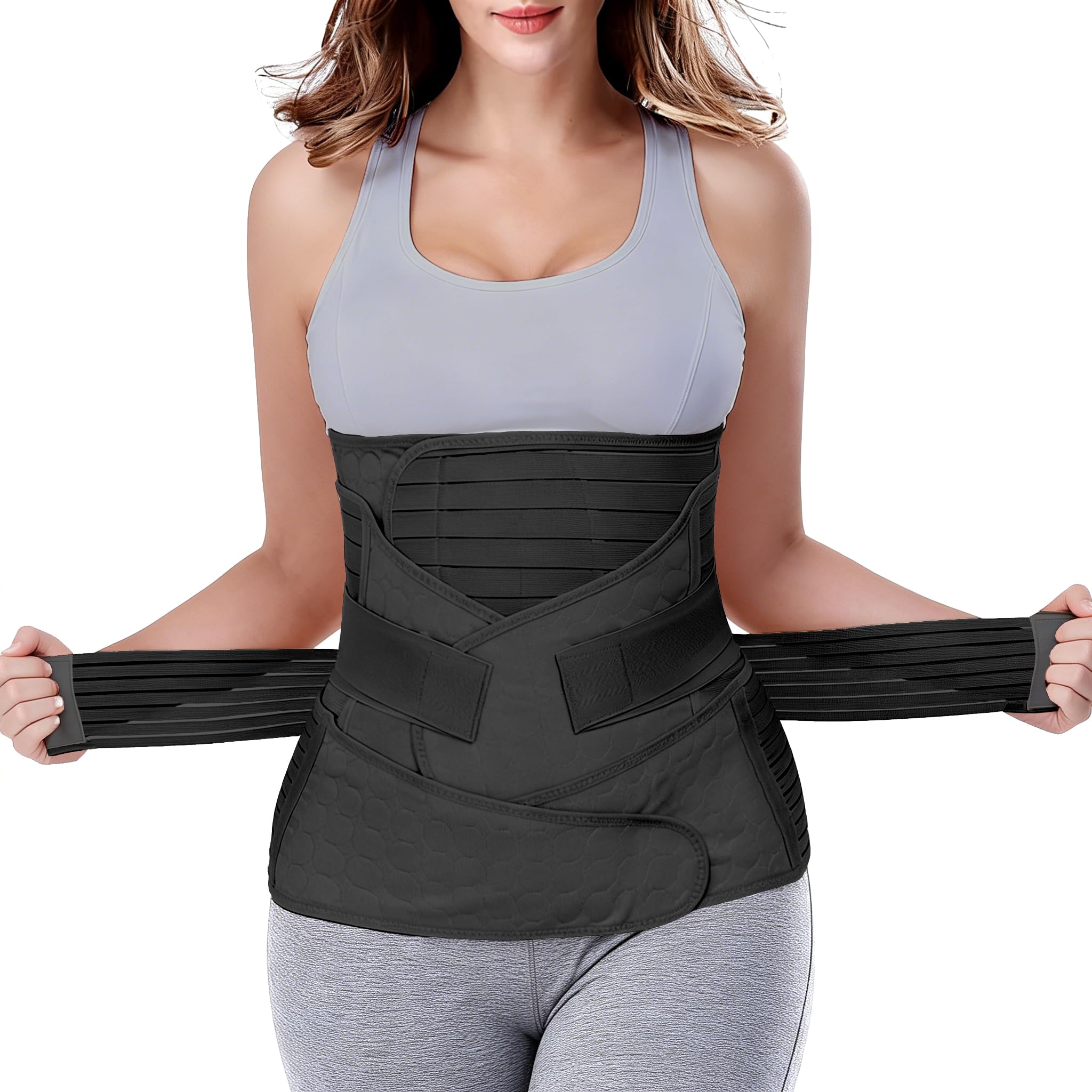
The ChongErfei set includes three pieces and four size options, which makes it one of the more flexible multi-piece binders here. The pieces are designed to wrap the stomach, waist, and pelvis, and you can wear one, two, or all three depending on how much support you want. The fabric is a breathable polyester-and-spandex blend, and the whole set is light enough to pack without much bulk.
That modular approach is appealing if you want to change the level of compression as your body changes. The separate pieces let you add support where you feel weakest, and the four sizes give more room to find a starting fit than a one-size band. The material has some stretch, so it moves with you rather than holding a single rigid shape.
The stomach belt can be worn alone for front support, the pelvis belt adds lower compression, and the waist belt finishes the wrap around the back. That modularity is the point, and it gives you more ways to adjust than a single band.
For a shopper who wants a multi-piece system at a lower price than the KeaBabies, the ChongErfei is a sensible choice. It gives you the modular support and size range without the higher cost, and the breathable fabric is a welcome detail for warmer rooms. We see it as a value alternative, not as the first band for someone who wants the simplest routine.
Pros
- Three-piece system for targeted support
- Four sizes available
- Breathable polyester-spandex fabric
- Lightweight at 4.23 ounces
Cons
- Three pieces take more sorting
We see the ChongErfei 3-in-1 set as a value-minded way to get modular belly, waist, and pelvis support in one package.
How We Chose and Tested Postpartum Belly Bands
We started by scanning the postpartum belly band market for adjustable closures, breathable fabrics, and size ranges that accounted for changing postpartum measurements. I filtered out anything with flimsy-looking stitching, confusing sizing, or a closure that seemed likely to peel open, then ordered 14 bands and tested them for four months.
Testing happened in real postpartum life, not on a table. I wore each band under cotton tees and knit dresses for full days at home, on short stroller walks, during school pickup, while sitting to nurse, and in the car. I noted whether it rolled when I stood up from the couch, slid during a thirty-minute walk, or dug into my sides after an hour of sitting. Because bodies change in those early weeks, I rechecked fit at the start and end of the test and adjusted each band as my measurements shifted.
For support and effectiveness, I paid attention to how each band felt during coughs, sneezes, and lifting the baby, and whether it made movement feel steadier rather than stiffer. I fastened and unfastened every Velcro closure repeatedly, tugged at the edges, and listened for the telltale peel that says a band is about to give up. I timed one-handed application, watched for bunching and heat buildup under clothes, and washed the bands according to their care labels to see if the construction held. The bands that advanced stayed supportive without constant tugging, felt comfortable through a long day, and kept their grip after repeated use.
How to Choose a Postpartum Belly Band
The right band is one you can adjust without help, wear without thinking about it, and keep using as your body changes.
Start With Adjustability, Not Maximum Squeeze
A postpartum band is doing useful work only when the compression is spread where you need it. A single broad panel can feel tight across the front and loose at the back, or the reverse. We look for at least two points of adjustment, and we prefer three: the Gepoetry girdle lets you tune the belly and lower back separately, which is the difference between support you forget about and a band you keep tugging. If a band only tightens in one place, it will either dig in or drift. Choose adjustable compression over the strongest possible squeeze.
Match the Height to Your Torso
Waist size is only half the fit. A band’s height determines whether it sits under the ribs and above the hips or digs into both. The MAMODY 9.5-inch binder is a good example: on a longer torso it covers more of the abdomen and stays put; on a shorter frame it can feel too tall when you sit. Measure from just below your bra line to the top of your hips before you choose. If you are petite, a shorter one-piece band is usually easier to live with. If you are long-waisted, extra coverage can be the difference between support and a band that keeps rolling.
Choose One Piece or Three for Your Routine
One-piece bands are faster to put on and easier to wear under clothes, which is why they suit the first weeks when you are tired and sore. The MAMODY and Gepoetry bands are our default shapes for that reason. Multi-piece sets such as the KeaBabies Revive and ChongErfei give you separate belly, pelvis, and waist belts, so you can target support where you feel weakest. The trade-off is more sorting and more chances for a band to shift. If you want to wear compression all day, choose one piece; if you want focused support sessions, a set earns its keep.
For a C-Section, Protect the Incision First
A C-section changes the priority. The band needs a soft edge, enough height to stay away from the scar, and a closure you can work without twisting. The Frida Mom hot and cold binder adds a reusable pack that sits over the incision, which is useful in the first week when ice or warmth brings more relief than broad compression. The AltroCare three-panel binder is the softer, simpler alternative. Whatever you choose, check that the lower edge does not press on the scar when you sit. If it does, the band is either too tall or seated too low.
Frequently Asked Questions
Do I need a postpartum belly band after a vaginal birth?
No, it is not required. A band is a comfort and support tool, not a treatment, and plenty of people recover without one. It can still help if you want light compression for back support or to feel more secure while moving. Choose an adjustable one-piece band and wear it only as long as it feels comfortable. If it digs, restricts breathing, or makes movement harder, loosen it or take it off.
Can I use a waist trainer instead of a postpartum band?
No. A waist trainer is built for shaping or sweating, not for postpartum support, and it often has a stiffer structure that presses where you do not want pressure after birth. A postpartum band is designed to wrap the belly and lower back with adjustable compression. Look for a soft, breathable band with at least two adjustment points, and leave the waist trainer for a different job.
How should I wash a postpartum belly band?
Check the care label first, because the materials differ. Many postpartum bands are hand wash only, while the AltroCare binder is machine washable. Fasten the hook-and-loop closure before washing so it does not snag the fabric, use cold water, and air dry flat. Skip the dryer and fabric softener, which can break down the elastic and the grip of the closure.
Final Verdict
The Gepoetry girdle is the band we recommend first. Its three-point adjustment gives you firm, C-section-friendly compression without a three-piece routine, and it stays supportive through the sitting, standing, and feeding cycles that make up the first weeks. If you want one band to cover the whole recovery, start there.
For the first days after a C-section, the Frida Mom hot and cold binder is the one to add: the targeted packs do something the all-rounders cannot. If you want a simple one-piece for less, the MAMODY band is the budget choice.
