This post contains affiliate links. We may earn a small commission when you buy through our links — at no extra cost to you.
A blank page can stop a kid cold. Hand a 9-year-old an empty notebook and you get three sentences about the dog and a lot of white space — but give them one with a prompt at the top, a lock on the cover, or a pen clipped inside, and something clicks. The right journal doesn’t teach a kid to write; it makes writing feel like it belongs to them.
We’ve spent five months with 14 kids’ journals — primary-ruled composition books headed for school backpacks, lockable diaries, scrapbook kits — and the differences come down to paper and presentation. Paper thickness is the spec shoppers underestimate: thin stock ghosts through, kids stop using the back of the page, and the book is effectively half as long. Appearance counts, too. A cover they like is a cover they open.
The picks below run from school-mandated to gift-ready to the kind you find hidden under a mattress. Every one of them is built to be written in, dog-eared, and filled up.



Best for Everyday Journaling
Harry Potter Lockable Diary
Key Features
- Pages: 150
- Extras: Lock, key, and UV invisible-ink pen
- Ruling: Lined
- Paper size: A5
- Price: Premium
A diary that guards a secret twice: a metal lock and key on the cover, and a pen whose ink only appears under the UV light that comes with it. Underneath the novelty is a proper A5 hardback with 150 lined pages and a faux leather cover printed with Hogwarts symbols — the kind of book a child carries around rather than leaves on a desk.
What separates it from every other themed diary is that the theme does actual work. A child who stares at a blank page will write a message in invisible ink and then go hunting for the light to read it back, and the second or third message tends to be a real entry. The lock adds the same pull: a book nobody else can open is a different object to a nine-year-old than a notebook with a nice cover, and that difference is usually what gets the first line written.
The pen’s light runs on a battery, so have one on hand before the wrapping paper comes off. Otherwise the details are sensible. A5 is small enough to travel and roomy enough to write in comfortably, 150 pages lasts most kids a few months of on-and-off use, and the hard cover shrugs off a backpack. The pages are lined with no drawing space, so a child who tells stories in pictures does better with the Mead Story Tablet.
Buy it as a gift for a child who already loves the stories, or for one who needs a reason to sit down with a book. The themed cover is what gets it picked up, and the ink is what keeps it open long enough for the habit to stick.
Pros
- Lock, key, and UV pen in one set
- Hardback A5 that travels well
- Novelty gets hesitant writers started
Cons
- One of the pricier journals here
We put this one first because the gimmick earns its keep: an invisible-ink pen gives a hesitant writer a reason to open the cover, and the lock keeps the pages private.
Best for Reluctant Writers
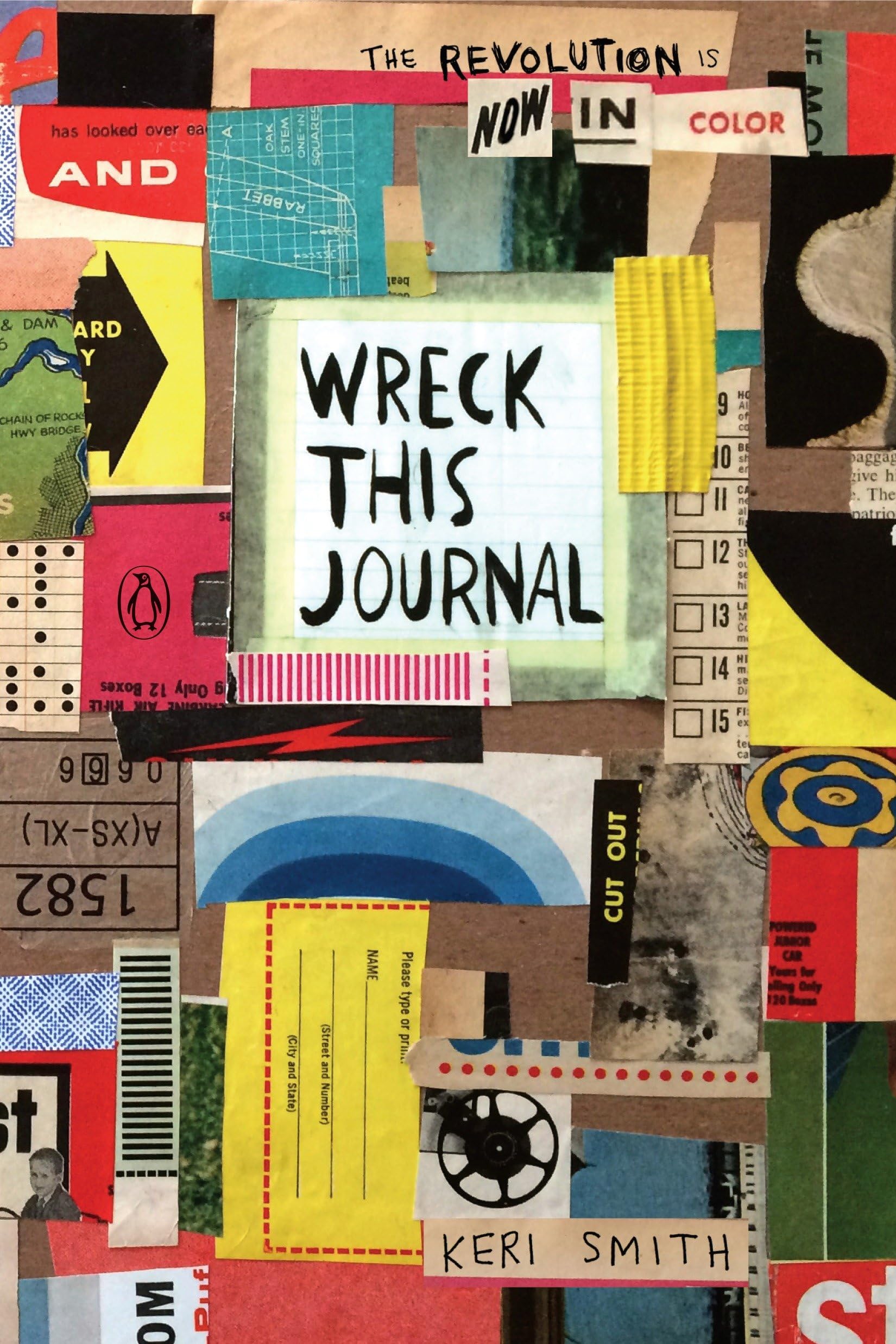
Wreck This Journal: Now in Color
Key Features
- Pages: 224
- Format: Interactive prompt book
- Edition: Full color
- Trim size: 5.52 x 8.22 inches
- Price: Budget
The premise is a journal you are encouraged to wreck, and that inversion is exactly why it works on a child who has decided they hate writing. There are 224 pages of tasks in this color edition, printed on a compact 5.5-by-8.2-inch trim, and not one of them is a blank page waiting for a paragraph.
Following an instruction is a much smaller ask than producing an entry. A kid who won’t write about their day will happily carry out a silly assignment, and by the time the book is half-ruined, the habit of picking it up is established. It works as an outlet too, because a bad mood gets somewhere to go that isn’t a sibling or a screen.
The compact trim is the one frustration: a few tasks want more room than the page gives, and the fix is a bigger work surface and a sheet of newspaper underneath rather than a different book. Our read is that it suits kids from about nine or ten, when following written instructions becomes fun instead of frustrating.
What surprised us is how much reading hides inside it. A child who won’t write a paragraph will read a page of directions twice over to get a task right, and that is its own kind of practice.
Pros
- A prompt on every page, so nobody faces a blank sheet
- Messy tasks give a bad mood somewhere to go
- Full-color edition with plenty of pages
Cons
- Not a keepsake — the pages are meant to be wrecked
Buy it for the kid who groans at a blank page: the prompts hand out permission to be messy, and that is usually what gets a reluctant writer moving.
Best for Bedtime Gratitude
The 3 Minute Gratitude Journal for Kids
Key Features
- Pages: 110
- Format: Guided daily prompts
- Trim size: 6 x 9 inches
- Reading age: 5 to 9 years
A page here asks a child to name a few good things and stop, which is the entire design. The book runs 110 pages at 6 by 9 inches, and the prompts do the work of getting a child started, so nobody has to invent a subject before they can write a sentence.
That structure is the reason we recommend it as a first journal. A blank page asks a five-year-old to decide what a journal is; a question asks them to answer, and the answer is the entry. It also slots into a bedtime routine without a negotiation, which is more than most writing practice manages.
It’s a shared sort of journal, the kind a parent fills in alongside a child at the end of the day, rather than something with a lock on it. That suits a family routine better than a private one, and it gives you a reason to sit down with them instead of handing the book over.
Past about age nine, move to a journal with more page to work with. This one is built for the years when a sentence counts as a full entry, and it does that job without asking for more than a child has to give at bedtime.
Pros
- Guided prompts remove the blank-page problem
- Short enough to fit a nightly routine
- Simple enough for a child to finish alone
Cons
- Little room for drawing or longer entries
This is where we start a family that wants a bedtime writing habit: one short guided page a night, done in the time it takes to brush teeth.
Best for Grades K-2
Mead Primary Journal Story Tablet
Key Features
- Pages: 200
- Layout: Blank top half for drawing
- Ruling: Primary ruled with dotted midline
- Sheet size: 7.5 x 9.75 inches
- Price: Budget
The page is split: blank on the top half for a picture, primary ruled on the bottom half, with a solid top line, a dotted midline, and a baseline so a five-year-old can see where each letter belongs. That split is the whole reason this one earns a place, because it treats drawing and writing as one job instead of two.
It’s 100 sheets, 200 sides, in a 7.5-by-9.75-inch book with a sewn binding that lies flat when it’s open. The cover carries a manuscript alphabet for reference, which turns out to be the kind of thing a small child actually checks mid-sentence.
What we noticed in use is that the picture comes first and the sentence follows. A child who resists a lined page will fill the box and then write about it, because the drawing gives them something to say. The flat binding matters for small hands too — the book stays open without being held down while a pencil is gripped.
The paper is the compromise. Pencil is fine, but markers show through to the other side and crayon can press an impression into the next page, so keep this one for pencil work and treat it as a school supply rather than a keepsake.
Pros
- Picture box above primary lines on every page
- Sewn binding lies flat for small hands
- Cheap enough to buy several at once
Cons
- Cover color arrives at random
For a kindergartner or first grader this is the format that fits: a box to draw in and primary lines underneath, at a price that makes a lost one painless.
Best for Tween Crafters
Nollh DIY Journal Kit
Key Features
- Pens: 8 fineliner colors
- Pages: 60
- Kit type: DIY journal and scrapbook set
- Journal size: 6 x 8 inches
- Price: Premium
Aimed at the eight-to-twelve crowd, and the contents explain why: a 6-by-8-inch spiral journal with 60 pages, eight fineliner pens in different colors, a glue pen, glitter tape, a heart-shaped stamp, sticker sheets, bookmarks, paper clips, a charm, and a storage box to hold the lot.
The kit is really a craft project with a journal at the center, and that is what makes it land with a tween who has outgrown character covers. Decorating a page is a lower-stakes way in than writing on one, and once the tape and stickers are out, the writing tends to follow. The storage box is the detail we appreciate most: the pieces go back in one place instead of migrating across a bedroom floor.
The balance is what sells it — enough supplies to make the decorating interesting without turning the box into clutter, and a spiral journal that sits flat while it’s being worked on. Neither the short page count nor the small pieces get in the way of that, as long as the child is old enough to keep track of a charm.
Pros
- Journal, eight pens, tape, stamps, and stickers in one box
- Storage box keeps the small pieces together
- Craft-first approach suits tweens who resist blank pages
Cons
- Only 60 pages, so it fills quickly
- Small clips and charm suit ages eight and up
We point gift-givers here when the child wants to make something: 60 pages to fill and a box of pens, tape, and stickers to decorate them with.
Best for First Diary
Butterfly Journal for Girls
Key Features
- Size: 5.3 x 7.5 inches
- Pages: 192
- Ruling: College ruled
- Closure: Magnetic with pen loop
- Price: Budget
At 5.3 by 7.5 inches it’s the smallest journal here, which is the point — it drops into a backpack pocket or a purse without a fight. A child who has been carrying a picture book around since preschool can move up to this without changing the habit.
Inside there are 192 college-ruled pages on acid-free ivory paper, a stitched binding that opens flat, a water-resistant hard cover, and a magnetic closure with a loop that holds the crystal ballpoint it ships with. For the money, it’s the most book-like object in this group.
The closure is better than we expected. A magnetic flap shuts quietly and one-handed, which is what a kid actually needs at a desk or in the back seat, and it makes the whole thing feel like a proper grown-up diary. The pen loop is the other detail that turns out to matter, because a diary with no pen within reach is a diary that stays shut.
Pros
- Pen loop keeps the pen with the book
- Stitched binding opens flat
- Hard cover in a size that fits a backpack pocket
Cons
- College-ruled lines are tight for new writers
- Magnetic closure isn’t private
Our pick for a first real diary: a hard cover, 192 pages, and a pen that clips to the spine, for less than most of the sets here.
Best for Gifts for 6-8
Cat Diary with Lock
Key Features
- Lock: Metal lock with two keys
- Size: 8.3 x 5.9 inches
- Pages: 160
- Extras: Coin purse, multicolor pen, stickers
- Price: Midrange
It arrives as a set rather than a book: a plush, tie-dye A5 diary with 160 ruled pages, a metal lock with two keys, a cat coin purse, a multicolored pen, sticky notes, and stickers, all in a box that doesn’t need extra wrapping.
At this age the extras are the present and the diary is the bonus, which is fine, because the book underneath is a solid A5 notebook with enough pages to last a school year of sporadic entries. The stickers give a younger child something to do on the pages before they’re ready to write much.
The plush cover is the trade-off. It’s what makes a seven-year-old want it, and it’s also what keeps the book from sliding into a school bag as neatly as a flat hardback, so it lives on a bedside table rather than in a backpack.
Set against the other lockable diary here, this is the one to buy for a younger child: it arrives ready to hand over, and a fluffy cover signals a present in a way a faux leather one doesn’t. The two keys are small enough to disappear, so decide where the spare lives before the packaging goes out with the recycling.
Pros
- Lock and two keys keep siblings out
- Boxed with purse, pen, and stickers
- Plush cover makes it feel like a present
Cons
- Ruled pages give no drawing space
We buy this one as a wrapped present for a six- to eight-year-old: a plush lockable diary boxed with a coin purse, pen, and stickers.
Best for Handwriting Practice
Mead Primary Composition Book

Key Features
- Cover: Blue marble with alphabet
- Pages: 200
- Ruling: Primary ruled with dotted midline
- Sheet size: 7.5 x 9.75 inches
- Price: Budget
You can spend a lot more on a child’s first journal and get less paper. This is a 100-sheet composition book — 200 sides — at 7.5 by 9.75 inches, with primary ruling printed in solid and dotted lines and a blue marble cover that carries the manuscript alphabet and a few handwriting hints.
The alphabet on the cover is the detail worth paying attention to: a child copying a letter can check the shape without asking, which is exactly the independence a five-year-old wants. The sewn binding lies flat on a table, so the book doesn’t need holding open while a small hand grips a pencil.
Where it fits best is practice — spelling words, a dictated sentence, a page of letters. The size sits flat on a table without taking over a small desk, and the ruling is wide enough that a beginner’s letters don’t crowd each other while they’re still learning where the lines are.
None of this is precious, which is the point. We keep a few on hand the way we keep spare pencils — one for the car, one for the kitchen table, one to replace the one left at school — and the journal that gets filled is usually the one that was within reach.
Pros
- Lowest price of any journal here
- Manuscript alphabet printed on the cover
- Sewn binding lies flat on a table
Cons
- No drawing space on the page
- Paper cover creases with rough handling
Our cheapest pick, and the simplest way into a writing habit: 200 primary-ruled pages, an alphabet on the cover, and a sewn binding that lies flat.
How We Tested Kids’ Journals
We started with listings and review pages for journals aimed at kids roughly 5 to 12, then filtered by grade-level ruling, page count, binding, and whether the book came with a pen, a lock, or stickers. Price per page was part of the cut — a couple of pretty covers cost twice as much as a comparable book with more paper inside. Fourteen made the final round, and they lived with us for five months.
Each one went into a real routine: a second grader’s backpack, a fourth grader’s bedside table, the kitchen counter after school, and a few long car rides. We wrote in every journal with pencil, marker, and gel pen, then flipped the page to see whether the ink showed through — the fastest way to tell thick paper from thin. We noted which books lay flat without a hand pressing them down, which prompts actually got a kid writing versus which got skipped, and which covers came back scuffed and dog-eared after a week in a bag.
The lock-and-key books got their own trial: we handed them to a 6-year-old and timed how long the novelty lasted before the key went missing. We also checked that the pens tucked in the box actually wrote without skipping or leaking. For the gift-oriented sets, we watched the unboxing, judged whether the thing looked presentable without extra wrapping, and tracked how much got used in the first month versus how much quietly migrated to a drawer.
How to Choose a Kids Journal
The right journal is the one whose pages match what a child can already do — hand a five-year-old a blank book with narrow lines and you have handed them a test.
Match the Page to the Writing Stage
Primary ruling — a solid top line, a dotted midline, and a baseline — is what a kindergartner needs, because it shows where a letter starts, dips, and stops. Once letters land reliably on a line, somewhere around second or third grade, wide or college ruling is fine. A blank page suits a child who already narrates their day out loud; it stalls almost everyone else.
The trap is buying the beautiful book first. A hardback diary with 7mm college lines is a lovely object and the wrong first journal for a new writer, while a picture box above primary lines does more for a five-year-old than any cover will. Buy the format for the writer you have this month, not the one you’re hoping for next year.
Decide How Much Privacy the Journal Needs
A lock and key buys something a magnetic flap can’t: the sense that the pages belong to one person. That matters most between about seven and eleven, when a sibling reading over a shoulder is the main reason a diary gets abandoned. A magnetic closure keeps the pages tidy and shuts one-handed, but it isn’t privacy and shouldn’t be presented to a child as if it were.
Practical notes before you buy: locks come with small keys, so agree where the spare lives before the book is in use, and check that the lock is the kind a child can work alone. A clasp that needs two hands and a steady grip becomes a reason not to open the book.
Blank Pages, Guided Prompts, or a Kit
These three formats solve different problems. A guided journal asks a question and gives a child a place to answer it, which suits the kid who freezes at an empty page. An activity book hands out instructions instead of subjects, which suits the kid who has decided writing is a chore. A DIY kit gives a tween supplies to decorate with, which suits the kid who wants to make an object more than keep a record.
Buy the format that matches the resistance you’re actually seeing. If a child already writes stories on their own, a plain lined journal and a good pen is all you need — the prompts and stickers just become clutter on a shelf.
Size, Page Count, and How Long It Lasts
An A5 or 6-by-8-inch journal fits in most backpacks and purses; a 7.5-by-9.75-inch composition book is a desk object. Page counts across this set run from 60 to 224, but count isn’t the same as lifespan: a 60-page kit journal with decorations on every spread disappears faster than a 200-page composition book used for handwriting practice.
If more than one child will use it, buy several cheap ones rather than one expensive one, and give the fancy book to the child who has already finished a plain one. A journal that’s allowed to get scruffy is a journal that gets filled.
Frequently Asked Questions
Should I read my child’s diary?
Decide the rule before you buy and say it out loud. A lock is a promise that you won’t read the pages, and a child who catches you breaking it stops writing honestly, which defeats the purchase. Most families settle on one exception: if an adult is worried about safety, they ask directly rather than snoop.
If you aren’t ready to make that promise, buy a shared journal and write in it together instead.
How do I get a kid to actually use a journal?
Make it a short appointment rather than a project: the same few minutes each night, one page, and no correcting spelling while the child is still writing. Keep the book where they see it — a bedside table works better than a shelf — and let them choose the cover.
If a blank page is what stalls them, start with prompts. A guided page or an instruction-a-day book gets the first two weeks done, and the habit usually takes over from there.
Is a diary the same thing as a journal?
Same object, different emphasis. Diary is the word children’s products use for a private, dated book, which is why you see lockable diaries and secret diaries, while journal tends to signal school writing, drawing space, or prompts. The labels blur in practice, so choose on the pages: ruling, drawing space, and whether there’s a lock.
Do any of these journals come with a pen?
Several do. The Butterfly journal ships with a crystal ballpoint in a loop on the cover, the Cat Diary box adds a multicolored pen, the Harry Potter set includes the invisible-ink pen and its light, and the Nollh kit brings eight fineliners.
The Mead notebooks don’t include one and are happiest with a pencil, so add a pack if you’re giving one as a gift.
Final Verdict
A hesitant writer needs a reason to open the book, and that is why the Harry Potter diary leads: the lock and the invisible-ink pen make writing feel like a secret worth keeping. If your child freezes at a blank page rather than wanting privacy, Wreck This Journal is the better buy, because the prompts do the starting for them.
For a kindergartner, skip both and get the Mead Story Tablet, where a picture box sits above the lines and the first sentence has something to be about.
