This post contains affiliate links. We may earn a small commission when you buy through our links — at no extra cost to you.
Mealtime with a baby is supposed to be about exploring flavors, not scrubbing pureed sweet potato out of yet another bib at 8 p.m. I learned that the hard way with my own kid, who treated every spoonful like a finger-painting session. A good bib fixes a lot of that: it keeps the onesie dry, catches the drips, and doesn’t turn into a soggy, stained rag by the end of the meal.
Over the past four months, we’ve tested 18 bibs on babies from 4 to 14 months old, through breakfast purees, teething drool, and daycare drop-offs. The best ones were soft against the neck, absorbed milk and drool without soaking through, and came out of the wash looking nearly new. But we also paid attention to the less glamorous stuff: whether a bib stayed flat after ten cycles, if tomato sauce left a ghost stain, and whether the cheapest pack was actually the best value. The picks below are the ones that earned a permanent spot in the diaper bag.


Best for Starting Solids
PandaEar Silicone Bibs 3-Pack
Key Features
- Pocket: Front catch pocket
- Material: Silicone
- Set size: 3 bibs
- Age range: 10-72 months
- Price: Budget
A feeding bib earns its place by what it saves you from, and the PandaEar set saves the most: the front pocket is deep enough to catch the food that slides off the spoon, and the soft silicone wipes down without turning into a soggy cloth. The three-bib pack is the practical part of the appeal, with one on the baby, one drying, and one in the diaper bag, and it is the least expensive silicone set here.
The listed fit runs from 10 to 72 months, and the adjustable neck is what keeps it useful once a baby starts reaching for the spoon. We like that the silicone is soft rather than board-stiff; a rigid bib gets tugged at and ends up under the chin. The trade-off is absorbency. This is a mealtime tool, not an all-day drool bib, and a baby who leaks saliva between meals needs cotton or muslin instead.
The pocket catches most of a dropped handful, though a determined sideways swipe can still escape. That is a small thing next to the cleanup advantage: no soaking, no stain panic, no wrestling a wet bib over a baby’s head. One small difference we noticed is that the neck strap is less bulky than the molded silicone bibs here, so it sits flatter on a small baby. For the messy stretch from first purees to self-feeding, that is the right combination.
Pros
- Three bibs keep a clean one ready
- Deep pocket catches dropped food
- Silicone wipes clean quickly
- Adjustable fit covers 10 to 72 months
Cons
- No absorbent layer for between-meal drool
We recommend the PandaEar set as our top pick for starting solids: the deep pocket catches dropped food, the silicone wipes clean, and three bibs cover the laundry gap.
Best for Constant Drool
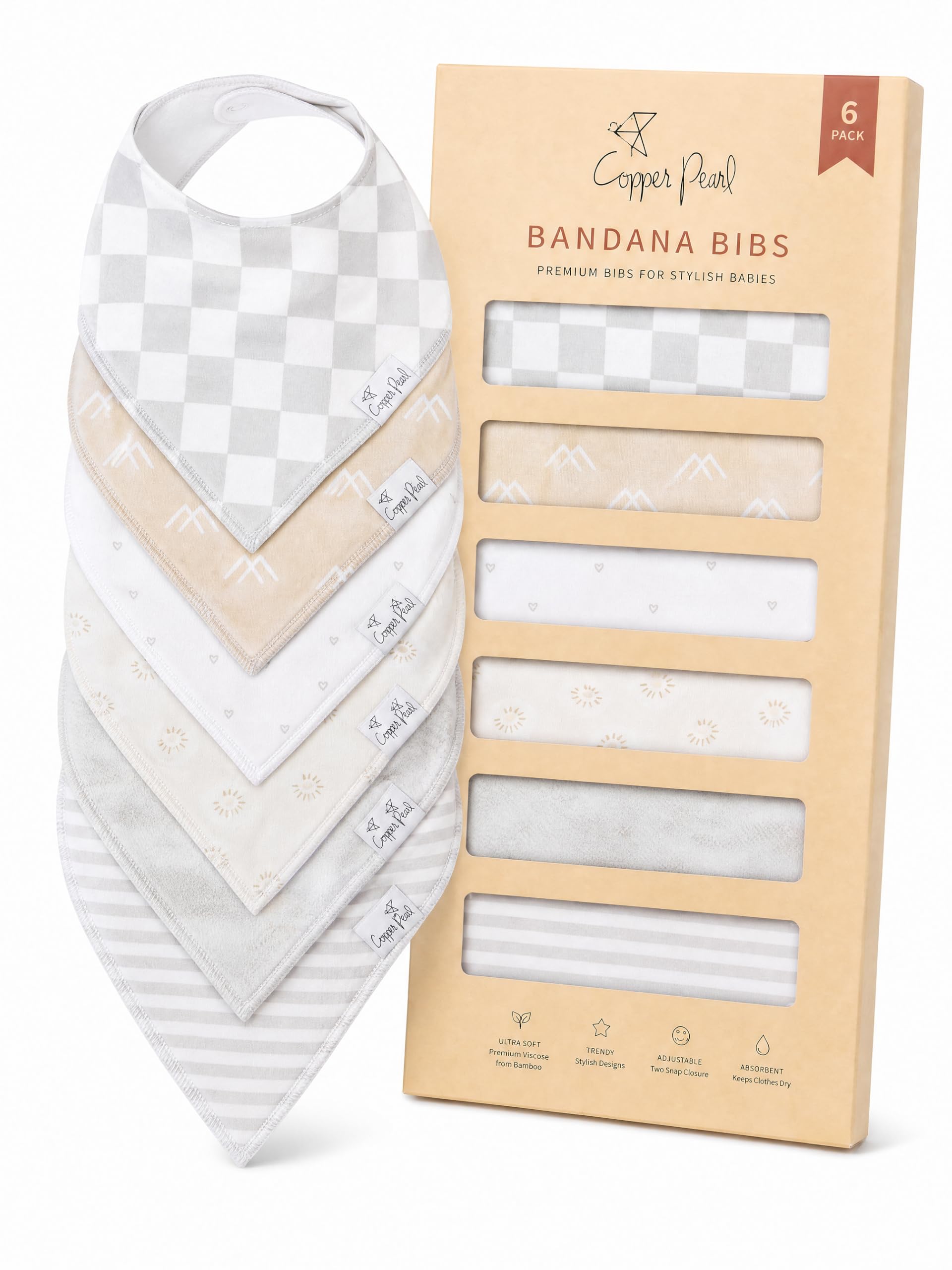
Copper Pearl Bandana Bibs
Key Features
- Style: Bandana
- Closure: Two-snap neck
- Material: Cotton
- Pack size: 4 or 6 bibs
- Price: Premium
Drool is a different problem from dinner. Copper Pearl’s bandana bibs are the ones we reach for when a baby is leaking saliva all day rather than wearing lunch: the cotton is exceptionally soft against the chin, and the two-snap neck lets you loosen it as the baby grows. They look like part of the outfit rather than a sickroom accessory.
The absorbency is the reason they earn their premium price. The fabric soaks up a lot of slobber, and the back keeps the wet from reaching the onesie as quickly as a single-layer cotton bib. We paid attention to the finish, too: the printed stripes may not absorb quite like the solid colors, so if you are buying a pack, put the solids in the heaviest drool rotation.
The trade is that these are drool bibs, not mealtime armor. A bowl of puree will go straight through, and the prints can fade with repeated washing. If your baby lives in a bib from morning to night, the softness and absorbency justify the premium; if you need one bib to do everything, the PandaEar silicone set is the better buy.
Pros
- Exceptionally soft against the skin
- Absorbs heavy drool without immediate soak-through
- Two snap settings grow with baby
- Looks neat enough for daily outfits
Cons
- Prints can fade with repeated washing
- Not waterproof for meals
We choose Copper Pearl for constant drool: the softest cotton here, strong absorbency, and two snaps that grow with baby. The prints may fade, but the comfort is worth the premium.
Best for Messy Self-Feeding
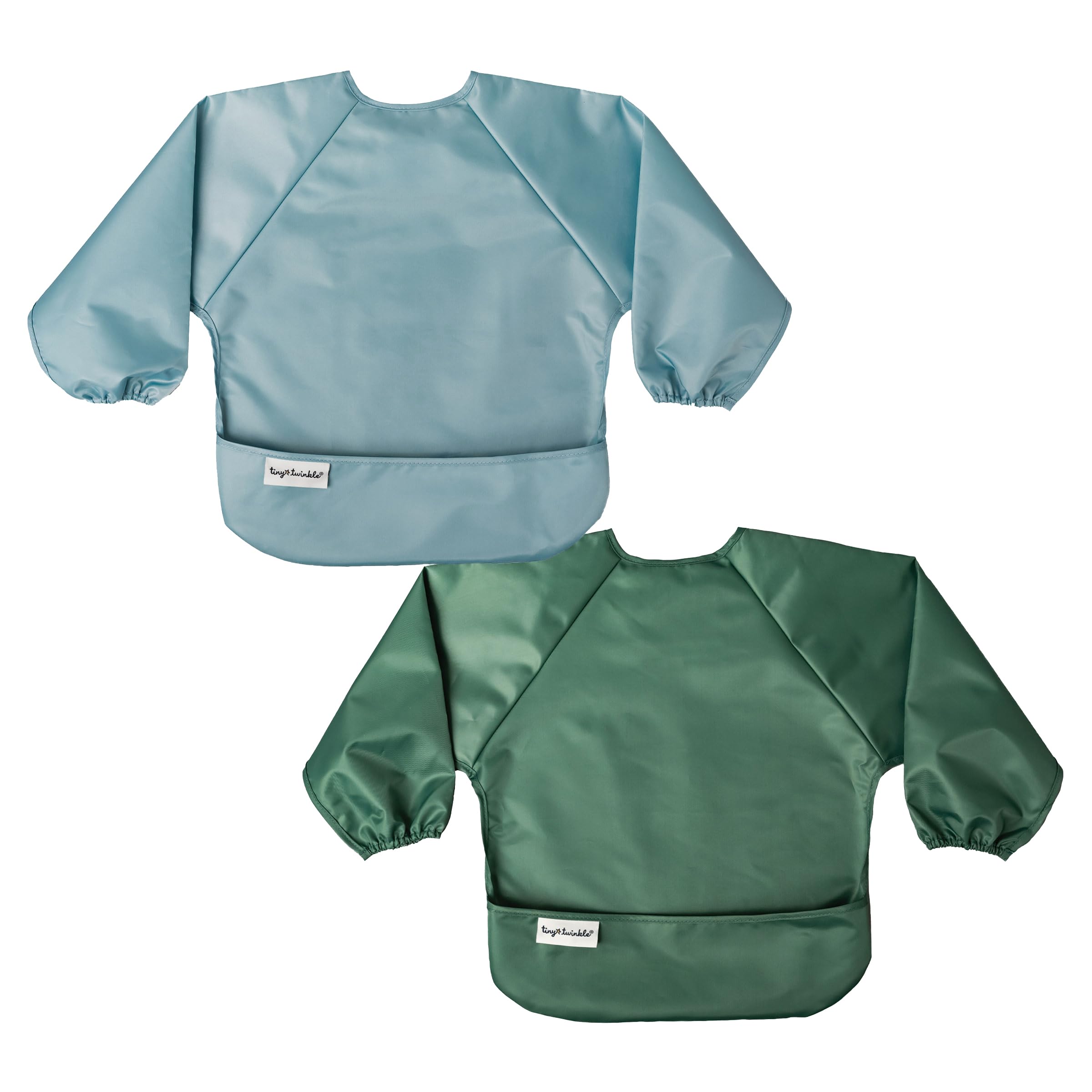
Tiny Twinkle Long-Sleeve Bib
Key Features
- Size: 6-24 months
- Sleeves: Long sleeve
- Pack size: 2 bibs
- Water resistance: Waterproof
- Price: Midrange
The long-sleeve Tiny Twinkle bib is not subtle, and that is the point. It covers the arms, chest, and upper lap in waterproof polyester, so a baby learning to self-feed can wear yogurt rather than paint the high chair with it. The elastic cuffs keep sleeves out of the bowl, and the hook-and-loop back is faster to fasten than a row of snaps when a hungry baby is already strapped in.
We like the two-pack for the same reason we like the sleeved design: one can be in the wash while the other is in use. The 6-to-24-month size has room for a growing baby, and the fabric is light enough that it does not turn mealtime into a wrestling match. It is also machine washable, which matters because this is the bib that takes the worst of the mess.
The upkeep is the catch. Because the fabric is waterproof, it does not absorb drool, and it can develop stains or mildew if it goes into the wash bag damp. Dry it promptly, and check the sleeve length before buying if your toddler is near the top of the range. For the messiest baby-led-weaning phase, it is the bib we reach for before a silicone pocket bib.
Pros
- Full arm and chest coverage
- Waterproof fabric keeps clothes clean
- Elastic cuffs stay out of the bowl
- Two-pack and machine washable
Cons
- Needs prompt drying to avoid mildew
- Meal-only design, not for all-day drool
We keep the Tiny Twinkle long-sleeve bib for the messiest baby-led-weaning days: waterproof sleeves, full coverage, and a two-pack that makes the laundry less daunting.
Best for Diaper-Bag Meals
Tiny Twinkle Mess-Proof Bib
Key Features
- Weight: 0.85 oz
- Closure: Hook and loop
- Pack size: 3 bibs
- Water resistance: Waterproof
- Price: Midrange
The sleeveless Tiny Twinkle bib is the one that lives in the diaper bag. At 24 grams it adds almost nothing to the load, and the waterproof polyester wipes clean with a baby wipe or a quick rinse, so you are not carrying a wet cotton bib home from a restaurant.
Compared with the long-sleeve version, it gives up arm coverage and the smock-like security, but it is easier to put on a baby who is already squirming. The hook-and-loop closure is quick, the catch-all pocket holds crumbs and soft pieces, and the three-pack means one can stay in the car without a rotation crisis.
The limitation is the closure. A toddler who has learned to pull at hook-and-loop can peel this bib off, and the lightweight fabric is not as rigid as silicone, so a very messy eater may still need the long-sleeve smock. For travel, quick snacks, and babies who tolerate a bib but hate a production, it is the easy choice.
Pros
- Light enough for the diaper bag
- Wipeable waterproof fabric
- Catch-all pocket contains crumbs
- Three-pack keeps spares around
Cons
- Hook-and-loop can be pulled open by toddlers
- Sleeveless design leaves arms exposed
For diaper-bag duty, the Tiny Twinkle mess-proof bib is our easy choice: light, wipeable, and roomy enough to cover a toddler’s front without bulk.
Best for Budget Drool
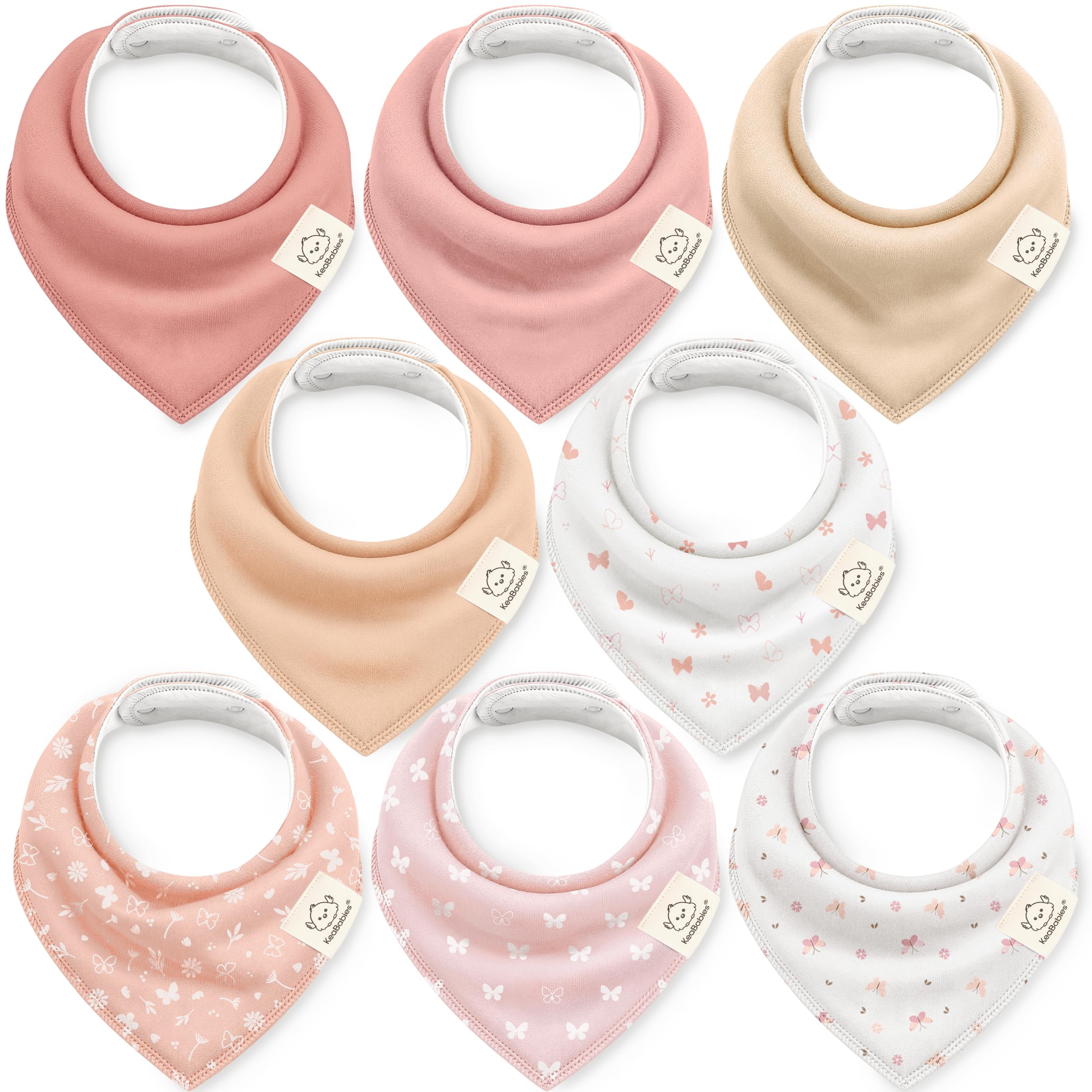
KeaBabies Bandana Bibs 8-Pack
Key Features
- Backing: Polyester fleece
- Closure: 3-stage snaps
- Material: Organic cotton
- Pack size: 8 bibs
- Price: Budget
Drool bibs are a volume business. A baby who soaks one before lunch needs a stack, not a single precious bib, and KeaBabies sells eight at once. That rotation is the real feature: one on the baby, one in the wash, one in the diaper bag, and enough left over that you are not running a midnight laundry cycle.
The construction backs it up. The front is organic cotton, the back is a soft polyester fleece, and three-stage snaps let you adjust the neck as the baby grows. The fleece is the detail we appreciate most, because it keeps a soaked front from wicking straight through to the onesie. The prints are cheerful without being loud, which makes them easy to live with.
These are drool bibs, not waterproof mealtime bibs. Purees and soups will soak through, and the fleece backing can pill after enough washes. For a modest outlay, you get a full rotation that handles teething and spit-up; if you need one bib for a bowl of spaghetti, look at the silicone picks instead.
Pros
- Eight-bib rotation reduces laundry pressure
- Fleece backing helps keep clothes dry
- Three snap settings for growing babies
- Soft organic cotton front
Cons
- Not waterproof for meal messes
- Fleece backing can pill over time
We recommend the KeaBabies eight-pack as our best drool-bib value: soft organic cotton, a dry fleece back, and enough spares to stop washing every day.
Best for Stylish Gifting
mushie Silicone Bib

Key Features
- Weight: 3.99 oz
- Closure: Button
- Cleaning: Dishwasher safe
- Material: Food-grade silicone
- Price: Midrange
The molded neck fasteners are the first thing we noticed on the mushie bib. Instead of a thin strap threading through a hole, the rounded tabs sit flush around the neck and give the bib a finished, almost Scandinavian look. The deep front pocket is generous, and the food-grade silicone is free of BPA, BPS, PVC, and phthalates, which matters for something a baby chews on.
At 113 grams, it has enough weight to stay put without feeling like a breastplate, and the one-piece silicone wipes clean without a fabric edge to trap puree. We like it best as the bib you leave out on the high chair or give as a design-conscious gift. The one-size cut is wide, though; a small six-month-old can look a little lost inside it.
What makes it worth the premium is the finish. The rounded fasteners, the deep pocket, and the matte colors make it feel less like baby gear and more like something you chose on purpose. It is the one we reach for when the bib is part of the kitchen’s look, not just a tool in the drawer.
Pros
- Deep front pocket holds a lot
- Food-grade silicone is soft and free of BPA, BPS, PVC, and phthalates
- Rounded fasteners sit comfortably
- One-piece design wipes clean
Cons
- Button closure is fiddly
- Colorful foods can leave stains
We choose mushie when a silicone bib has to look as good as it works: a deep pocket, soft food-grade silicone, and a one-piece design that wipes clean.
Best for Heavy Drool
Parker Baby Bandana Bibs

Key Features
- Style: Bandana
- Closure: Two snaps
- Material: Cotton
- Pack size: 4 or 8 bibs
- Price: Premium
The neck opening is the first thing to check on a bandana bib, especially for a baby with a little extra chin. Parker Baby cuts these generously, with two snap settings that sit comfortably without digging in. That roomier fit is why they stay in rotation longer than the trimmer bandanas here.
The absorbency is the other reason we like them. The soft cotton front takes a lot of drool, and the fleece backing keeps the wet from reaching the onesie as fast as a single-layer bib. They are not waterproof, so they are for saliva and spit-up rather than a bowl of puree, and the prints are deliberately calm rather than novelty.
The fabric feels more substantial than a thin muslin, and the finish is considered: calm colors, soft cotton, no slogans. That makes them the bandana we reach for when a baby is soaking through a standard bib but still needs something soft against the skin.
For a heavy drooler who is already filling out the neck of a standard bib, the roomy cut and fleece back are the reasons to choose this set. The neck, the soft cotton, and the dry layer underneath are what keep it in the rotation.
Pros
- Generous neck fit with two snaps
- Soft cotton front
- Fleece backing helps keep clothes dry
- Calm colors suit everyday outfits
Cons
- Roomier cut can swamp a newborn
- Not waterproof for meals
We like Parker Baby for heavy drool and a roomier neck: the soft bandana absorbs a soaking and the fleece back keeps clothes dry through the day.
Best for Teething Rotation
Simple Joys Teething Bibs

Key Features
- Care: Machine wash
- Closure: Snap
- Material: 100% cotton
- Pack size: 7 bibs
- Price: Midrange
Seven cotton bibs for teething season is the right kind of unglamorous. Simple Joys by Carter’s gives you a week’s rotation in one pack, with a snap closure that stays put better than velcro and a shape that sits close under the chin. These are the bibs you leave in the drawer and grab without thinking.
The fabric is absorbent, and the backing gives it a little more body than a plain cloth bib, so a soaking does not immediately reach the onesie. The snap is the detail we appreciate most: it is quieter than velcro, it does not catch hair, and a baby is less likely to pull it open.
The cotton has a sturdy, no-nonsense feel, and the seven-pack is the point: you can keep one in the diaper bag, one in the car, and still have a clean bib for the next round of teething. The snap sits flat against the neck and stays out of the way when you are holding a squirming baby.
For the teething months, when you are changing a bib several times a day, the seven-pack makes more sense than a premium single bib. It is the set we keep for the messy, forgettable days.
Pros
- Seven-bib rotation for teething
- Absorbent cotton with a backing
- Snap closure stays put
- Machine washable
Cons
- Cotton can stiffen after washing
- Single snap limits fit adjustment
For teething-season laundry, we recommend the Simple Joys seven-pack: absorbent cotton, a secure snap, and enough bibs to keep one clean while others wash.
How We Chose and Tested Baby Bibs
We started by pulling together the bibs that kept surfacing in parent forums, registry lists, and our own diaper bags, including cotton, muslin, silicone, and waterproof styles from budget multi-packs to single splurges. From that pool, we narrowed to 18 that represented the range of materials and price points, then rotated them through four months of real meals.
Each bib went through breakfast purees, lunch yogurt, teething drool, and the occasional diaper-bag blowout. We fastened them on babies aged 4 to 14 months, including a heavy drooler and a very enthusiastic eater, and noted whether the neckline scratched or left red marks. To check absorbency, we spooned a teaspoon of water onto the front and timed how quickly it soaked in, then pressed a tissue against the back to see if it wicked through. For stain resistance, we smeared on tomato sauce and pureed carrots, let them sit for 30 minutes, and washed as directed.
After every wash, we looked for fading, pilling, and shrunk edges, and we tugged at seams and snap closures to see if they held. We also wiped each bib with a damp cloth before washing to judge ease of cleaning, and compared how many uses we got out of each one over the four months to gauge value. The bibs that made the list were the ones that stayed soft, absorbed without leaking, came clean without heroics, and still looked presentable enough to pack for daycare.
How to Choose Baby Bibs
The bib you need changes with the mess: drool calls for absorbent cotton, while starting solids calls for waterproof coverage and a pocket.
Start With the Stage, Not the Print
Before you compare patterns, decide what the bib is for. A bandana bib is a drool catcher: soft cotton or muslin against the chin, often with a fleece back. A silicone bib is a mealtime tool: waterproof, wipeable, and built around a catch pocket. A sleeved smock is for the baby who paints with yogurt. No single design does all three well. We recommend a small drool rotation plus one or two meal bibs rather than forcing one style to cover the whole day. A baby who only needs protection at the table can get by with silicone alone.
Check the Neck and Closure
The neck is where most bib problems start. A bandana that gaps lets drool run under the chin; one that is too tight leaves red marks and gets pulled at. Look for at least two snap settings on a bandana, and three if the bib is meant to last from newborn to toddler. For silicone bibs, check whether the neck fastening is a strap, a button, or a molded tab. Hook-and-loop is quick, but a determined toddler can peel it open. We prefer snaps on drool bibs and a molded neck on silicone.
Choose Between Absorbency and Waterproofing
Absorbency and waterproofing solve different problems. Cotton, muslin, and fleece backs soak up saliva and keep it from wicking through; silicone and polyester shed puree and wipe clean. A waterproof bib with no absorbent layer is a poor choice for a baby who drools all day, and a cotton bandana is no match for a bowl of soup. If your baby is both drooling and eating, keep both types in the drawer. A deep pocket helps only if it stays open; shallow pockets flatten against the belly and catch nothing. We look for a pocket with enough structure to hold a dropped piece of food, not just a decorative lip.
Plan the Laundry Before the Pack Size
Most families need enough bibs to get through a day without emergency laundry. A four-to-eight-pack of drool bibs is a reasonable rotation; two or three meal bibs covers the high chair and the diaper bag. The trap is storing them damp. Cotton can stiffen, and waterproof fabrics can develop mildew if they go into the wash bag wet. Hang or lay bibs flat to dry, and keep a wet bag for the ones coming home from a restaurant. More bibs do not help if half of them are sitting in a damp pile.
Frequently Asked Questions
Should a baby wear a bib while sleeping?
No. A bib is for supervised waking use, and a loose or wet bib around the neck is not worth the risk during sleep. Take it off before a nap or bedtime, and check that the neck fits snugly without gaps before putting one on.
Can silicone bibs go in the dishwasher?
Only if the maker says so. Some silicone bibs are dishwasher safe, while others are hand-wash only; heat and long cycles can shorten the life of a softer bib. Check the care instructions on your exact model. If it is not labeled dishwasher safe, rinse it promptly and wash with warm soapy water.
How often should baby bibs be washed?
Drool bibs can go a day or two if they stay dry, but wash them as soon as they feel damp or smell sour. Meal bibs should be rinsed after every use, then washed with soap before the residue sets. A rotation of several bibs makes that practical, and it is the reason a pack of seven or eight is not overkill.
Final Verdict
For most families, the first bib purchase should be the PandaEar silicone set. It handles the messiest transition, starting solids, with a deep pocket, a wipe-clean surface, and three bibs that keep the rotation going.
If your baby is in a constant drool phase, choose Copper Pearl instead; the soft cotton and two-snap fit are kinder against a wet chin. For baby-led weaning with sleeves, add the Tiny Twinkle long-sleeve bib. Those two alternatives cover the needs the silicone set cannot.
