This post contains affiliate links. We may earn a small commission when you buy through our links — at no extra cost to you.
A bandana bib looks like a simple triangle of fabric until you’re changing a soaked onesie every two hours. The right one catches drool before it reaches the neck folds, stays soft against a baby’s skin, and looks enough like a little accessory that you don’t mind being seen out with it. The wrong one curls at the edges after two washes or comes in colors that fade before the first daycare drop-off. I’ve spent the past four months testing 16 bandana bibs through teething, meals, and stroller naps, and the gap between a good one and a cute one shows up fast.
Thickness isn’t the same as absorbency—some of the thickest bibs left a damp ring against the neck, while a few thinner ones pulled moisture away and dried quickly between feeds. Softness matters from the first wear, but so does quality: snaps that don’t twist, stitching that survives the wash, and colors that stay true after a dozen cycles. Value comes down to whether you reach for every bib in the set, not the prettiest print.


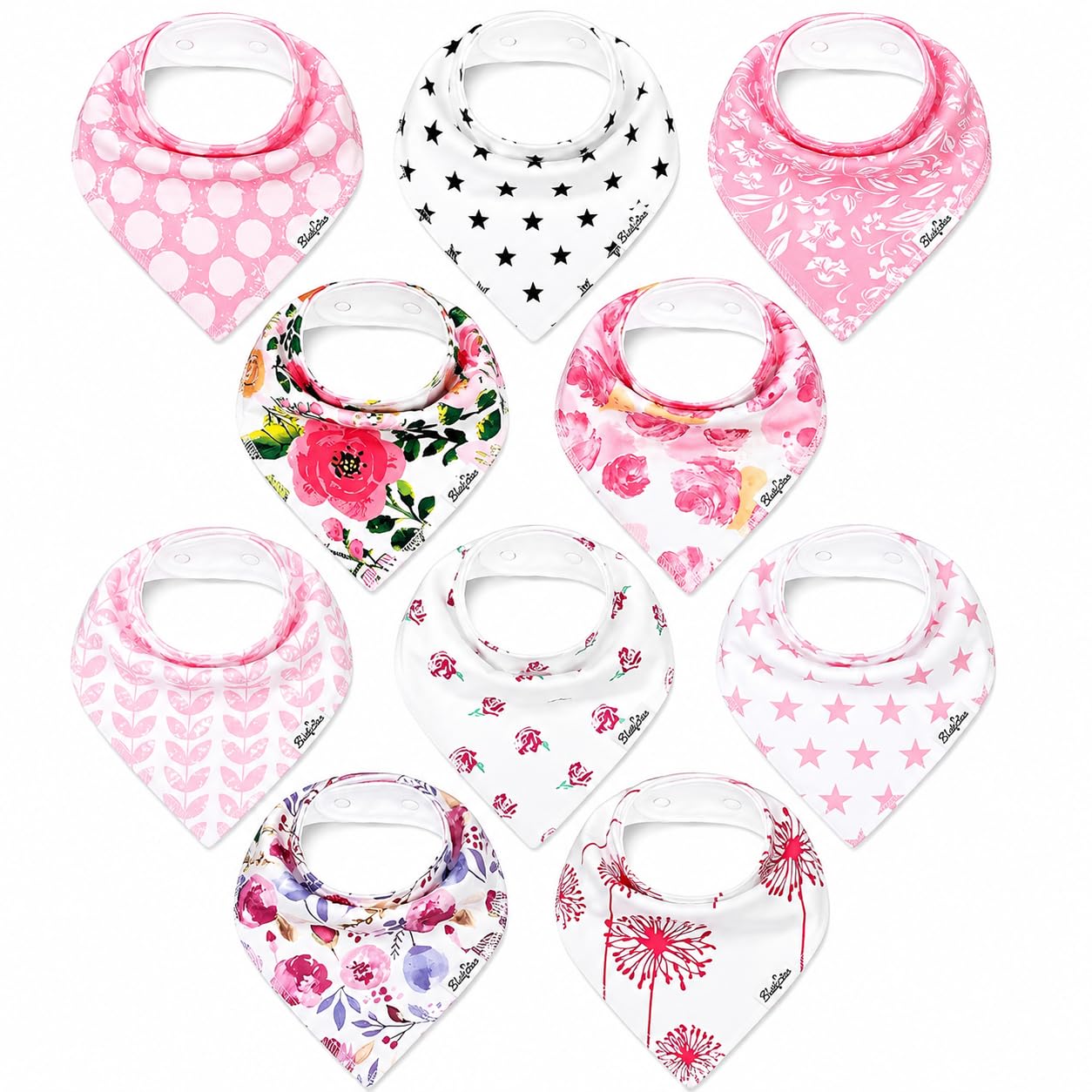

Best for Everyday Drooling
KeaBabies 8-Pack Organic Bibs
Key Features
- Care: Machine wash, tumble dry low
- Fabric: Organic cotton front, polyester fleece back
- Closure: Snap, adjustable
- Pack size: 8
- Price: Budget
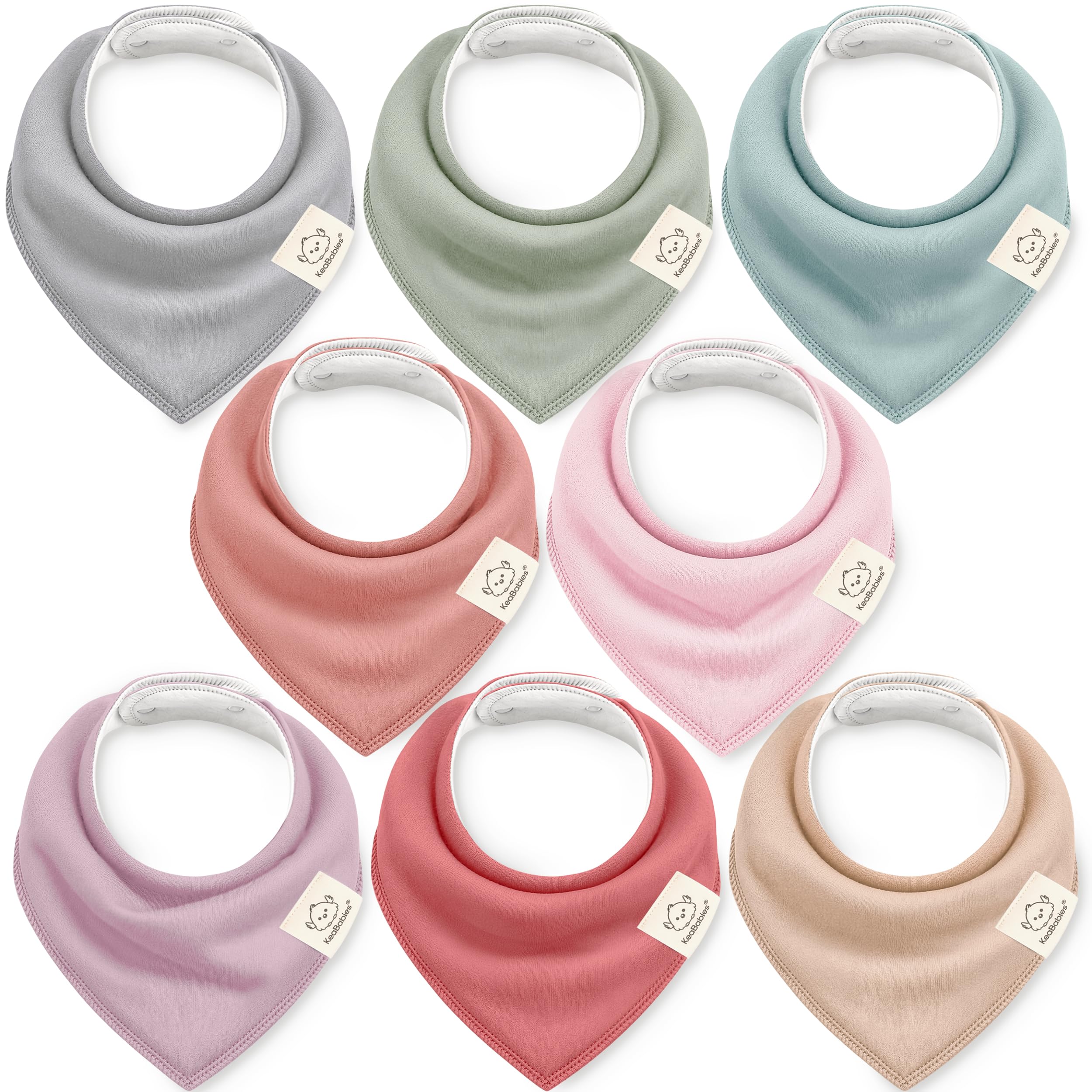
Eight bibs, an organic cotton face and a polyester fleece back: that combination is why this is the set we recommend first. A drooly baby can go through three or four bibs before lunch, and eight in the drawer means you are never running an emergency wash at bedtime. The fleece is doing the quiet work — the cotton catches the drool and the backing stops it reaching the onesie.
Softness is the other reason we keep coming back. The organic cotton is gentle around a neck that is already damp and chafed, and the fleece side stays dry against the skin instead of turning cold the way a soaked single-layer bib does. Two snaps give a smaller and a larger fit, and the size range covers newborn through 36 months, so one pack spans most of the drooling years.
What you give up is variety. This set comes in muted pastels and solids, so if you want prints that draw comments at a baby shower, Copper Pearl is the one to look at. Everything else about ownership is easy: machine wash, tumble dry low, no hand-washing ritual, which is the only care instruction that survives contact with a real week.
Pros
- Fleece back keeps drool off the onesie
- Eight bibs cover a heavy drooler’s day
- Soft organic cotton at the neck
- Machine wash and tumble dry low
Cons
- Solid pastels only, no prints
- Fleece backing line-dries slowly
Eight bibs, an organic cotton face and a fleece back: this is the set we hand to parents who want the drool problem handled without spending much.
Best for Softness and Prints
Copper Pearl Bandana Bibs
Key Features
- Fabric: Soft cotton
- Closure: Snap, two sizes
- Pack options: 4 or 6 pack
- Price: Midrange
Copper Pearl is the set that gets compliments before anyone registers it is a bib. The cotton is the softest in this group by a clear margin, and the prints are the sort you build an outfit around rather than hide under a muslin square. For a gift, or a first baby where the photographs matter, that counts for something.
Where the money goes is fabric and finish rather than quantity. We found the two-size snap does the growing for you, and the underside holds enough that a wet front does not mean a wet chest — the drool stops at the bib instead of wicking through to the vest.
The catch is laundry economics. Prints this pretty still fade over a few months of washing, and a small pack means more loads than an eight- or ten-bib set would. If your baby is a two-bib-a-day drooler, that is the trade: the softest cotton and the best-looking patterns here, in exchange for more frequent washing and a shorter life for the colours.
Pros
- Softest cotton in this group
- Patterns worth building an outfit around
- Two-size snap grows with the baby
- Absorbent underside keeps the chest dry
Cons
- Prints fade with repeated washing
The softest cotton in this group and the prettiest prints, which is exactly what you are paying the premium for.
Best for Bigger Babies
Parker Baby Co. Bandana Bibs
Key Features
- Backing: Fleece
- Closure: Snap, two sizes
- Dimensions: 13 x 13 in
- Pack options: 4 or 8 pack
- Price: Premium
Most bandana bibs share one flaw: the triangle rides up and bunches under the chin, so the baby ends up gumming wet fabric instead of wearing a bib. Parker’s panel is the one here that stays put — wider and flatter, so it lies against the chest on a bigger baby rather than folding into the mouth.
Underneath, a fleece backing takes what the cotton front catches, and the whole thing is thick enough that a soaking does not reach the onesie. The snap gives two sizes, which is the minimum worth having and enough here because the panel is generous to begin with.
What you are buying is coverage. This is the bib we reach for once a baby has outgrown the newborn sizes and started soaking through everything, and the flat sit means the wet ends up on the bib instead of the collar. The pattern selection leans narrow, especially for boys, which is the one thing we would change.
Pros
- Wide panel sits flat under the chin
- Fleece backing protects the onesie
- Two snaps with room for chubby necks
- Absorbs heavy drool without soak-through
Cons
- Highest-priced set here
The pick for bigger babies: a wider panel that sits flat under a chubby chin, and a fleece backing we trust with a soaking.
Best for Toddlers and Summer
Konssy 10-Pack Muslin Bibs
Key Features
- Fabric: Muslin cotton
- Closure: Snap, two sizes
- Pack size: 10
- Recommended age: 12 months – 4 years
- Price: Midrange
Muslin is the fabric to reach for when a fleece backing feels like too much: it is light, it breathes, and it does not hold warmth against a chest in a hot nursery. This is the pack we keep for summer and for the months when a baby is drooling steadily but not yet soaking through two layers.
Ten bibs for a little more than the budget sets is a fair trade, and the muted colours pass as clothing rather than baby gear. They wash without pilling or shrinking, and two snaps adjust the neck as a baby grows.
The neck runs large. The smaller snap still leaves room on a young infant, and the panel sits lower under the chin than on the Parker set, so drool can run past the edge instead of onto it. On a three-month-old that is a real gap at the side of the neck.
From about six months, or for a toddler still cutting teeth, this is the most comfortable set here — light enough to forget, breathable in a warm room, and cheap enough to keep three in the changing bag. It is the wrong first bib for a newborn and the right second pack for almost everyone else.
Pros
- Ten bibs in one pack
- Breathable muslin for warm rooms
- Washes without pilling or shrinking
- Muted colours suit everyday outfits
Cons
- Neck runs large on small babies
- Muslin can soak through on heavy days
Ten breathable muslin bibs we keep for warm rooms and older droolers; small newborns will swim in them for a month or two.
Best for Growing Babies
KiddyStar Drool Bibs
Key Features
- Backing: Absorbent fleece
- Closure: Snap, four sizes
- Dimensions: 11 x 9 in
- Price: Midrange
Four snaps is the reason to buy this set. Most bibs here offer two, which is fine until a baby lands between sizes — the smaller setting leaves a mark and the larger one gapes. KiddyStar’s four settings close that gap, and it is the bib we have kept in rotation longest as a baby moves from newborn to toddler.
The panel is wider than most, covering more of the chest and catching drool that would otherwise land on a collar. Cotton on the front takes the wet, fleece on the back keeps it off the skin, and it snaps on in one motion.
The trade is the tab. Snapped to the smallest setting, the leftover end hangs past the fastening and curls against the shoulder, which looks untidy and sometimes ends up damp. Sizing up solves it, but it is the detail we noticed every single time on a small baby.
Pros
- Four snaps give a true newborn-to-toddler fit
- Wider panel covers more of the chest
- Cotton front with a fleece back
- Easy to snap on and adjust
Cons
- Long tab hangs loose when snapped small
Four snaps and a wide panel make this the bib we recommend for a baby who needs to grow into it without a tight neck.
Best for Teething Babies
vuminbox Bibs and Teethers
Key Features
- Fabric: 100% organic cotton
- Teethers: Detachable, snap-off
- Pack contents: 6 bibs and 6 teethers
- Price: Budget
The teether is the reason this set exists. Every bib has a small, flexible toy snapped to the front, so a teething baby has something to chew that is not a soaked collar. The fobs pop off for washing, and the same snap takes a pacifier or another small toy.
Take the teethers off and you still have a decent bib underneath: thick cotton, a back that does not let slobber through to the shirt, and neck snaps that adjust with the baby. Nothing fancy, nothing flimsy.
Where it falls short is the toys. We found them slim, and a baby who really chomps will want something chunkier within a month. Buy the set for the first teeth, when having a bib and a chewable in one place genuinely saves a scramble through the diaper bag, not as the teether you will still be using at a year.
Pros
- Six bibs and six teethers in one set
- Teethers snap off for cleaning or swapping
- Thick enough to stop drool soaking through
- Sensible price for a teething starter kit
Cons
- Teethers are slim and thin
Six absorbent bibs plus six snap-off teethers — the set we buy for the first teeth, when chewing and drooling arrive together.
Best for Matching Outfits
Diaper Squad 10-Pack Bibs
Key Features
- Fabric: Organic cotton
- Closure: Snap, two snaps
- Pack size: 10
- Price: Premium
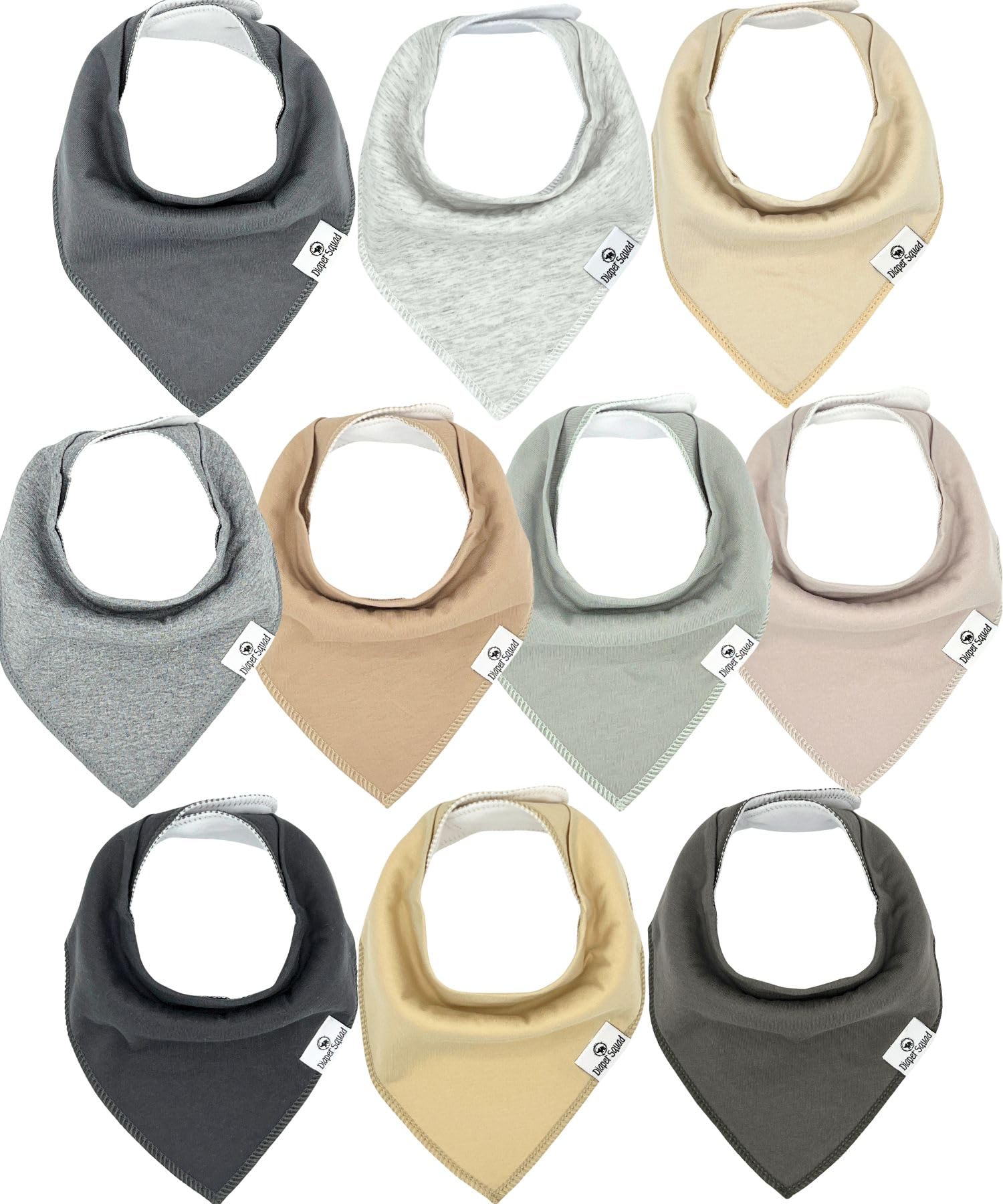
Ten bibs in flat, muted solids: grey, oatmeal, navy, nothing with a dinosaur on it. If your baby’s drawer is already put together, this is the pack that disappears into it, and the ones you reach for when you are going out rather than staying home.
Organic cotton with a double-layer front, absorbent enough for a milk-heavy morning and padded enough that it does not rub a chin that is already sore. Two snaps give the usual smaller and larger fit.
They wash well and hold their shape, though the pale solids show drool between changes in a way a print would not — that is the trade for the clean look.
For a parent who wants the bib to read as part of the outfit rather than a baby accessory, we think this is the best-looking set here after Copper Pearl, and you get ten of them instead of a handful. Buy it if the wardrobe is already neutral; skip it if you would rather hide the evidence.
Pros
- Ten organic cotton bibs
- Muted solids match most outfits
- Absorbent double-layer front
- Soft and padded at the neck
Cons
- Solid tones show drool between washes
Solid, muted organic cotton for a baby whose outfits are already put together, in a ten-pack we think earns its place.
Best for Backup Stash
egmao baby 12-Pack Bibs

Key Features
- Fabric: Cotton front, polyester back
- Closure: Snap, two snaps
- Pack size: 12
- Price: Budget
Twelve bibs is the biggest pack in this group, and the cheapest way to build a stash that covers the diaper bag, the car and the changing table at once. The front is cotton, the back is polyester, and the colours hold through the wash without turning grey.
What we like most is that the price does not show in the fabric. The cotton front is soft at the neck, the backing keeps most drool off the shirt, and there are enough of them that a soaked bib is never a crisis — just swap it and get on with the day.
The fit is where it gives ground. The edges curl up around the chin after a few washes, so on a small baby the bib bunches near the mouth instead of lying flat, and the neck runs roomy. On a bigger baby, or as the emergency set that lives in the car, neither matters much.
Pros
- Twelve bibs, the largest pack here
- Lowest cost per bib in this group
- Soft cotton front with a polyester back
- Colours hold up in the wash
Cons
- Edges curl around the chin after washing
Twelve cotton bibs at the lowest cost per bib here: the set we buy to keep one in every bag and drawer.
How We Tested (and Washed) 16 Bandana Bibs
To build our shortlist, I started with the bandana bibs that keep showing up in parent forums and baby registries, then narrowed by fabric content, snap style, size range, and price per bib. We ended up with 16 bibs—some sold singly, some in sets—and used them for four months on babies from newborn to 18 months, through teething, meals, stroller naps, and daycare drop-off. Each bib went through the same rotation: breakfast oatmeal, a morning stroller walk, an afternoon nap, and whatever drool the evening brought.
We assessed softness by rubbing the inner fabric against a wrist and a baby’s neck, then checking for pilling and stiffness after every fifth wash. For absorbency, we dribbled a measured teaspoon of water onto the center of each bib and watched whether it beaded up or wicked away, then felt the backing to see if moisture reached the onesie underneath. Appearance and color got the wash-test treatment: we laundered each bib with a mix of dark and light baby clothes, photographed it after 10 cycles, and noted fading, bleeding, or print cracking.
Quality showed up in the details—whether snaps stayed closed during a diaper change, whether edges curled after repeated washing, and whether the neck opening adjusted without bunching. Value was a simple calculation: price per bib in the set, plus how many we actually reached for in a week. The best ones were soft enough for a newborn, absorbent enough for a teething toddler, and made in colors that still looked good after a month of daily use.
How to Choose Bandana Bibs
The layer against your baby’s chest decides whether a bib works; the print on the front is the part everyone shops by and the part that matters least.
Start With the Back Layer
A bandana bib does two jobs: catch drool on the front and stop it reaching the shirt. Single-layer muslin handles the first and eventually loses the second. A cotton face with a fleece or polyester backing handles both, which is why the backed sets here are the ones we recommend for a baby who soaks through a bib within the hour.
The trade is warmth and drying time. Backed bibs feel warmer against the chest and hang on the line longer; muslin is light, quick and better in a hot room. Konssy’s muslin pack suits a warm nursery and an established drooler, while KeaBabies’ fleece-backed set is the one for a baby who soaks everything.
Count Bibs in Laundry Cycles
A heavy drooler goes through three or four bibs a day, so pack size is really a question about how often you want to run the machine. Eight to twelve bibs gets most families to a wash every few days with a couple spare in the diaper bag. A four- or six-pack means near-constant laundry unless your baby is a light drooler, which is fine for a newborn and unrealistic by six months.
Fit Means Neck Size and Where the Panel Sits
Two snaps are standard. Four, as on KiddyStar, buy a fit that follows a baby through the awkward months when the smaller setting marks the neck and the larger one gapes. But the neck is only half of it. A wide panel that lies flat keeps the wet part under the chin; a narrow one leaves the collar exposed, and a stiff one curls into the mouth.
The trap is buying big to grow into. A roomy neck on a three-month-old gapes at the sides and catches nothing, which is why Konssy’s generous muslin bibs suit a six-month-old better than a newborn.
Snaps, Washing and What Wears Out
Snaps beat Velcro for bibs. They come through the wash without collecting lint, a baby cannot peel them open, and they do not lose their grip. The cost is a fiddlier second while a baby squirms, and a long tab that can curl at the smallest setting.
Fasten the snaps before washing so the tabs do not snag, and expect prints to soften and pale long before the fabric gives out. Fleece-backed bibs want a low tumble or a line; muslin dries in an afternoon.
Frequently Asked Questions
Do bandana bibs help with teething pain?
Not really. A bib manages the drool, not the ache, and the constant wetness is what leaves a chin sore and a shirt damp. Pair the bib with a chilled teether and let the fabric handle the moisture.
If you want both in one place, a set with a snap-on teether such as the vuminbox pack keeps something chewable within reach without another item to remember.
Can my baby sleep in a bandana bib?
No. Take it off for naps and bedtime, every time. Anything fastened around a baby’s neck is a strangulation risk in a crib, and a bib only does its job on a baby who is awake and in view.
The practical routine is simple: bib on when the baby gets up, bib off before the sleep sack goes on. Keeping a hook by the crib makes that automatic.
Are bandana bibs any use once my baby starts solids?
Less so. They are shaped to catch drool running down the chin, not puree going sideways, and a fabric bib will stain where a wipe-clean one will not. Keep the bandanas for the teething months and switch to a full-coverage or silicone bib at mealtimes, and you will get more life out of both.
Final Verdict
Buy the KeaBabies eight-pack. It solves the actual problem: enough bibs to get through a drooly day, an organic cotton face that stays soft against a damp neck, and a fleece back that keeps the onesie dry, without the premium price of the prettiest sets here.
If softness and prints matter more than laundry maths, Copper Pearl is the step up. If your baby is past six months and runs hot, the Konssy muslin pack is the one that breathes.
