This post contains affiliate links. We may earn a small commission when you buy through our links — at no extra cost to you.
There’s a particular hour of the night when a manual pump stops being the backup and becomes the entire plan. You’re engorged, the baby has finally gone down, and hauling out the electric pump—tubing, horns, the one outlet behind the dresser—feels like assembling furniture in the dark. A good manual pump empties a side in about ten minutes, runs on your hand, and makes almost no sound while it does it.
What surprised me after four months with 15 pumps and silicone collectors is that this isn’t really one category. Half of what’s sold as a "manual pump" is actually a suction collector—no handle, no bottle, just soft silicone that attaches to the breast and catches whatever letdown gives you. Handled pumps let you control rhythm and pull; collectors buy you hands-free time, and either way the tradeoff is real. Buyers who don’t know the difference end up with the wrong tool and blame themselves.
We paid closest attention to suction and whether it held through a full session, comfort at the flange, and how many parts stood between you and a clean pump at midnight. Below are the ones we’d hand to a friend who asked.
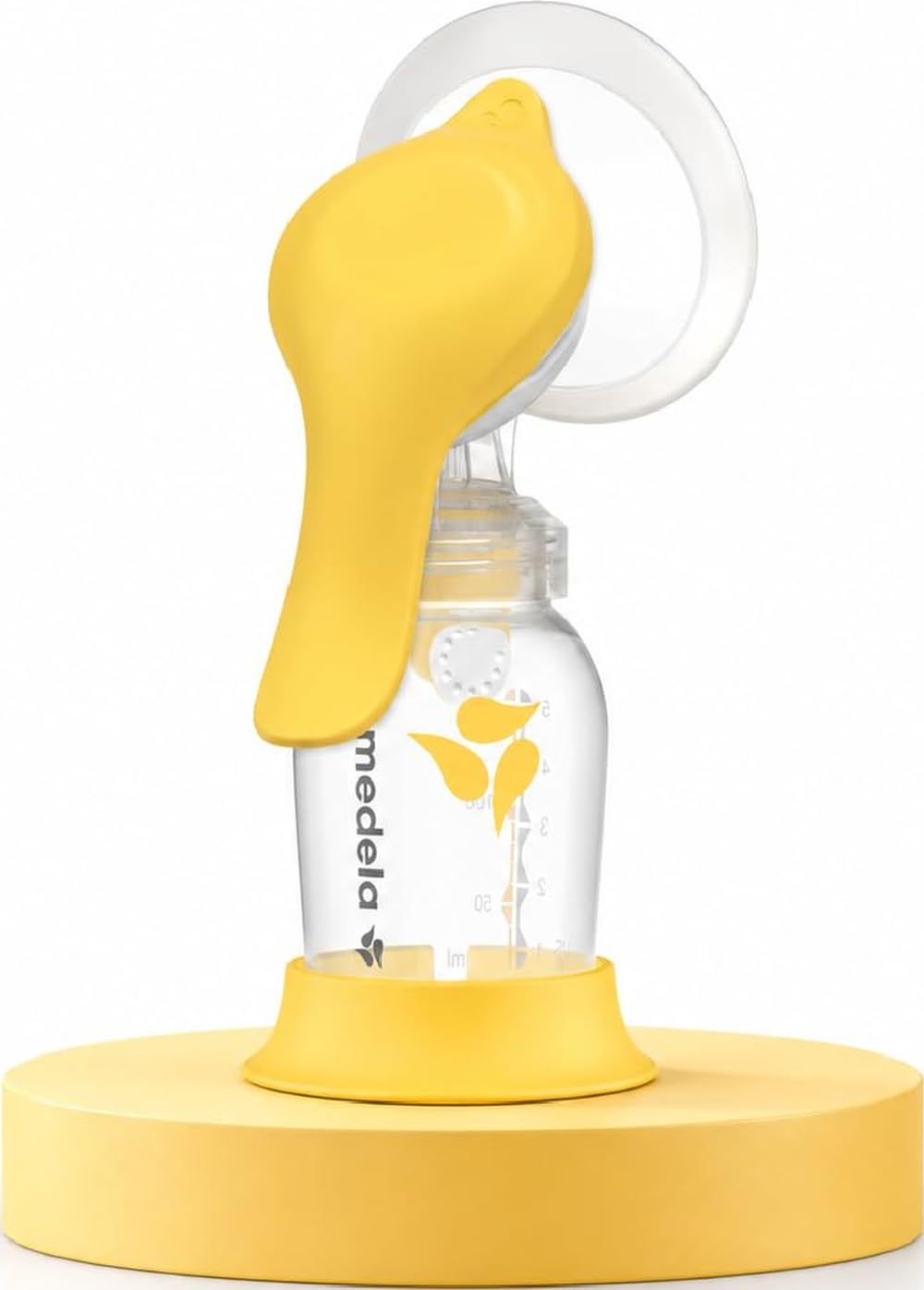


Best for Everyday Pumping
Medela Harmony Manual Breast Pump
Key Features
- Shield: 24mm PersonalFit Flex
- Cleaning: Dishwasher-safe parts
- Pump type: Hand-lever, two-phase
- Bottle capacity: 5 oz / 150 ml
- Price: Midrange
A hand pump lives or dies by its rhythm. The Harmony is the one in this group that builds the rhythm into the handle: short quick squeezes to start a letdown, then longer, slower ones to express, switched with your thumb instead of a dial. After a couple of sessions the two-phase lever stops sounding like a marketing phrase and starts feeling like the reason to own a lever pump at all. The soft oval rim on the shield rotates to sit where your breast actually is, which does more work than the millimeter number on the box.
This is the one we point to first when the goal is a bottle of milk and there’s no outlet in reach. It pumps straight into a 5-ounce bottle you can cap and chill, the parts are dishwasher safe, and there are few enough of them that a 2 a.m. wash-up isn’t a project. Sessions ran roughly the length of a feed, which is the honest expectation for anything manual.
Two things to know before ordering. There’s no nipple in the box, so plan on pouring into a bottle you already own or buying nipples separately. And this is a session-at-a-time tool: if you’re heading back to work and need to pump four times a day, keep the electric in rotation and treat this as the one that lives in your bag. What you get in return is a pump that makes no noise in a shared office and never needs a charge.
Pros
- Two-phase handle mimics a baby’s rhythm
- Pumps into a cap-able 5 oz bottle
- Few parts, dishwasher safe
- Soft oval shield rotates to fit
Cons
- Some units lose suction or never build it
- Only one 24 mm shield in the box
We point people to the Harmony first when the goal is a bottle of milk with no outlet in reach: two-phase pumping, a cap-able bottle, and almost nothing to wash.
Best for Catching Letdown
Haakaa Manual Breast Pump
Key Features
- Design: One-piece, no assembly
- Capacity: 4 oz / 100 ml
- Cleaning: Boil-safe
- Material: Food-grade silicone
- Price: Budget
Milk that leaks from the side your baby isn’t nursing from is milk you already made, and the Haakaa is one of the least expensive ways here to stop throwing it away. Squeeze the silicone, seat it on the breast, and suction holds it there while you feed on the other side: no assembly, no valves, nothing to charge. It weighs about three ounces, which is why it earns a permanent spot in a diaper bag.
Cleaning is where it wins outright. One piece of food-grade silicone, no joints or seams for milk to hide in, and boil-safe, so it’s back in rotation the same day. It can also be worn inside a pumping bra with no suction at all, purely to catch what flows, and that’s the version a lot of people move to once letdown is strong.
It doesn’t empty a breast the way a lever pump does, though. It collects what’s already moving, so we treat it as the second half of a setup rather than a replacement for a pump. That’s also why it’s easy to justify buying even when you already own one: two of them means one is always dry and within reach.
Pros
- One piece, no assembly, boil-safe
- Catches letdown hands-free during feeds
- Fits in a diaper bag and needs no power
Cons
- No lid or stopper included
- Can lose its seal as it fills
If you’re nursing and not catching the other side, this is the simplest fix here and the one that gets used at every feed.
Best for Pump and Feed
Lansinoh Manual Breast Pump
Key Features
- Handle: Ergonomic easy-express
- Phases: Let-down and expression
- Included: Slow-flow NaturalWave nipple
- Bottle capacity: 5 oz
- Price: Premium
The Lansinoh is the only pump here that hands you the whole chain in one box: pump into the 5-ounce bottle, cap it, and screw on the slow-flow NaturalWave nipple that comes with it. If you’ve ever finished pumping and then had to pour one bottle into another while a baby fussed, you already know what that’s worth.
It’s a two-phase pump like the Medela, with quick strokes for letdown and a slower rhythm for expression, and the switch happens under your thumb rather than on a dial. The handle is shaped so the squeeze comes from your whole hand instead of your fingertips, and hand fatigue is what ends a manual session early, so that’s the part we paid attention to.
What we didn’t love: the handle develops a squeak after a few weeks of steady use, which is galling on a pump you chose partly for being quiet. It’s also the priciest of the hand pumps here, and the nipple is the reason to pay the difference.
Pros
- Nipple included, so one bottle does it all
- Two pumping phases on a thumb switch
- Handle shaped to reduce hand fatigue
- Fewer parts to assemble and wash
Cons
- Suction is inconsistent between units
Buy the Lansinoh if you want one bottle to go from pump to baby without decanting; the included nipple is why we kept it in rotation.
Best for Wearing While Nursing
Boon Trove Silicone Manual Pump
Key Features
- Wear: Fits inside a bra
- Capacity: 3 oz
- Cleaning: Top-rack dishwasher safe
- Material: 100% food-grade silicone
- Price: Midrange
The Trove doesn’t read as a pump at first. It’s a small teardrop of silicone that sits inside your bra, which means the milk it’s collecting can’t be knocked over by a baby’s heel, a toddler, or your own elbow. Of everything here, it’s the one we reach for with a wriggly baby on the couch.
Three ounces is the ceiling, and passive suction means it takes what your body is already giving instead of pulling a breast down the way a lever pump does. That’s the trade: this is a catcher, not a pump, and it does its best work on the side you aren’t nursing from. Pouring is easier than it looks because the Trove stands up on its own, and the plug lets you set it down mid-feed without losing a drop.
Top-rack dishwasher safe is the detail that keeps it in rotation. Silicone that has to be hand washed gets used twice and then forgotten; this goes in with the bottles and comes out ready to use, which is the difference between a collector you own and a collector you actually use.
Pros
- Tucks inside a bra, clear of kicking feet
- Stands on its own for easy pouring
- Top-rack dishwasher safe
Cons
- Holds only 3 ounces
- Needs a snug bra to stay put
For nursing a wriggly baby, we reach for the Trove: it tucks into a bra, stays clear of kicking feet, and stands up on its own when you pour.
Best for Full Starter Set
NatureBond Silicone Breast Pump

Key Features
- Design: One-piece, spout-free rim
- Capacity: 3.4 oz / 100 ml
- Included: Lid, stopper, strap, pouch
- Material: Food-grade silicone
- Price: Budget
The NatureBond is the same basic object as the Haakaa, a one-piece silicone cup you squeeze and seat, sold as a set. In the box: the pump, a dust cover lid, a silicone stopper, a strap, and a velvet pouch, for roughly what the bare Haakaa costs.
The rim is the design choice worth noticing. There’s no pour spout molded into it, which keeps the edge smooth against the breast instead of pressing a channel into it. We noticed it most in the early weeks of nursing, when everything is tender and a hard edge is the difference between using the pump and avoiding it.
Where it gives ground is at the pour. Without a spout, tipping milk into a storage bag takes a steadier hand than a lipped pump does, and the lid helps more before you fill it than after. It’s still the set we recommend to anyone who wants the accessories without buying them one at a time, and the strap does real work when the seal lets go mid-feed.
Pros
- Complete set with lid, stopper, strap, pouch
- Smooth, spout-free rim sits comfortably
- One-piece silicone, easy to clean
Cons
- Seal can give way while nursing
We recommend the NatureBond to anyone who wants the strap, stopper, and lid without assembling a kit; it’s the most complete silicone pump here.
How We Tested Manual Breast Pumps
We built the shortlist by rounding up every manual pump and silicone collector we could find in the budget-to-mid range, then cutting anything that shipped with only one flange size, required a proprietary bottle, or had a cluster of reviews about seals giving out within a few weeks. Fifteen made the cut, and each one lived with us for four months—through night feedings, the return to work, a weekend trip, and more than a few sessions in a parked car.
Effectiveness came down to a kitchen scale. We weighed every bottle and collector before and after each session and compared the output against what the same side gave up to a double electric pump. For suction, we counted squeezes per minute and noted whether the pull faded after fifteen minutes of steady use, then repeated the whole thing with damp hands, since that’s how it usually happens.
Comfort and stability got tested in motion. Every flange stayed on for a full twenty-minute session, after which we checked for red rings and pinching at the rim. Collectors went on while we picked up a baby, leaned over a crib, and walked to the kitchen—holding position is the entire promise with those, and a few failed it. Noise got a phone decibel reading in a quiet room with a baby asleep in the next one.
Cleaning was a count and a scrub: how many pieces came apart, whether milk fat clung to seams, and how each one fared in the sink, in boiling water, and on the top dishwasher rack. We inventoried every box—lids, stoppers, straps, pouches—since value here is mostly about what you don’t have to buy separately, and we logged which pump we actually reached for at 3 a.m., which turned out to be the most honest ease-of-use and enjoyment measure we had.
How to Choose a Manual Breast Pump
The first decision isn’t brand or budget, it’s which of two jobs you need done: emptying a breast into a bottle, or catching the milk that leaks from the side you aren’t nursing from.
Decide Which Job You Need Done
A lever pump and a silicone milk collector are both sold as manual breast pumps, and they don’t do the same job. A lever pump creates and releases vacuum through a valve, so it can work a breast down the way a baby does, which is what you want when the milk is going into a bottle for someone else to give. A silicone collector holds whatever flows and can’t empty a full breast on its own.
Most nursing parents end up with one of each: the pump for a missed feed, the collector for the side the baby isn’t using. Buying them separately is usually cheaper than buying one pump that claims to do both.
Suction Is the Spec Nobody Prints
Every listing boasts about suction, and none of them gives a number you can compare. What matters is whether the seal holds for a whole session, because a pump that lets go at three ounces is one you stop using. Silicone collectors lose grip as they fill and get heavy; lever pumps lose it when a shield or valve isn’t seated properly.
We put more weight on this than on capacity, and it’s the reason to buy somewhere with a real return window and test the pull in the first week.
Fit Matters More Than Capacity
A 24 mm shield is not a universal size, and a shield that’s too small will pinch however good the pump is. If you already know your size, check what’s in the box before you order; silicone pumps skip the question because they flex to fit.
Capacity is the easier number to overthink. Three to five ounces covers a bottle, and you can pour off mid-session and keep going.
Count the Parts Before You Buy
The pump you use is the one that’s clean. A one-piece silicone cup rinses in seconds and can be boiled; a lever pump breaks down into a shield, valve, and bottle, so dishwasher-safe parts earn their keep at two in the morning.
If you want to pump, store, and feed without decanting, look for a wide-neck bottle and a nipple that fits it, otherwise you’re washing twice as much.
Frequently Asked Questions
Can a manual pump replace my electric pump?
For occasional bottles, yes, and plenty of people use one as their only pump. It stops working as a substitute once you need several sessions a day, because a hand pump is slower per ounce and your hand tires before the breast empties.
If you need a bottle most days, keep the electric in rotation and treat the manual as the one that goes in the bag for travel, night feeds, and power outages.
How do I stop a silicone pump from hurting?
Almost always it’s too much squeeze. The silicone only needs enough vacuum to stay put; crushing it to force flow pulls the rim into tender tissue. Squeeze lightly, break the seal with a fingertip at the rim before lifting it away, and take it off when it starts to ache rather than pushing through a feed.
If it hurts even at a light squeeze, the shape may not suit your breast, and a lever pump with a sized shield is the better bet.
Do I need more than one manual pump?
One lever pump and one collector covers most people, since they do different jobs. If you’re collecting at every feed, buy a second silicone one; they’re the inexpensive half of the setup, and having a dry one within reach is what keeps you using it.
Two lever pumps rarely make sense. That money goes further on a spare collector or extra bottles.
Final Verdict
The manual pump we recommend first is the Medela Harmony. Two-phase pumping, a 5-ounce bottle you can cap and chill, dishwasher-safe parts, and no cord to hunt for at 3 a.m. It’s the one here that does the actual work of getting milk out of a breast and into something a partner can feed from.
Add the Haakaa for the side you aren’t nursing from and you’ve covered both jobs, which is how most people actually use these. If you want one bottle to go from pump to baby without decanting, pay more for the Lansinoh; the included nipple is the whole argument.
