This post contains affiliate links. We may earn a small commission when you buy through our links — at no extra cost to you.
The hardest part of buying a kids iron supplement usually isn’t the shopping—it’s the standoff at the kitchen counter. A liquid that tastes metallic, a gummy that’s too tough to chew, or a dropper that dribbles dark syrup onto a school shirt can turn a daily dose into a daily negotiation. I wanted options that fit real family life: a taste kids didn’t fight, a texture they could chew, easy dosing, and no surprise staining or stomach upset.
Over four months, I tested 14 kids iron supplements with my two kids and parent volunteers—liquids, chewables, and gummies—and the differences were not subtle. We checked iron content against the label, watched how consistent each bottle stayed, and noted side effects and color transfer in real life; effectiveness is hard to judge without bloodwork, so we focused on label accuracy, easy dosing, and whether families could stick with it. The best ones made the routine boring in the right way, while a few were disappointing enough that we stopped early. Value for money mattered too, but only after the basics held up.



Best for Toddlers and Kids
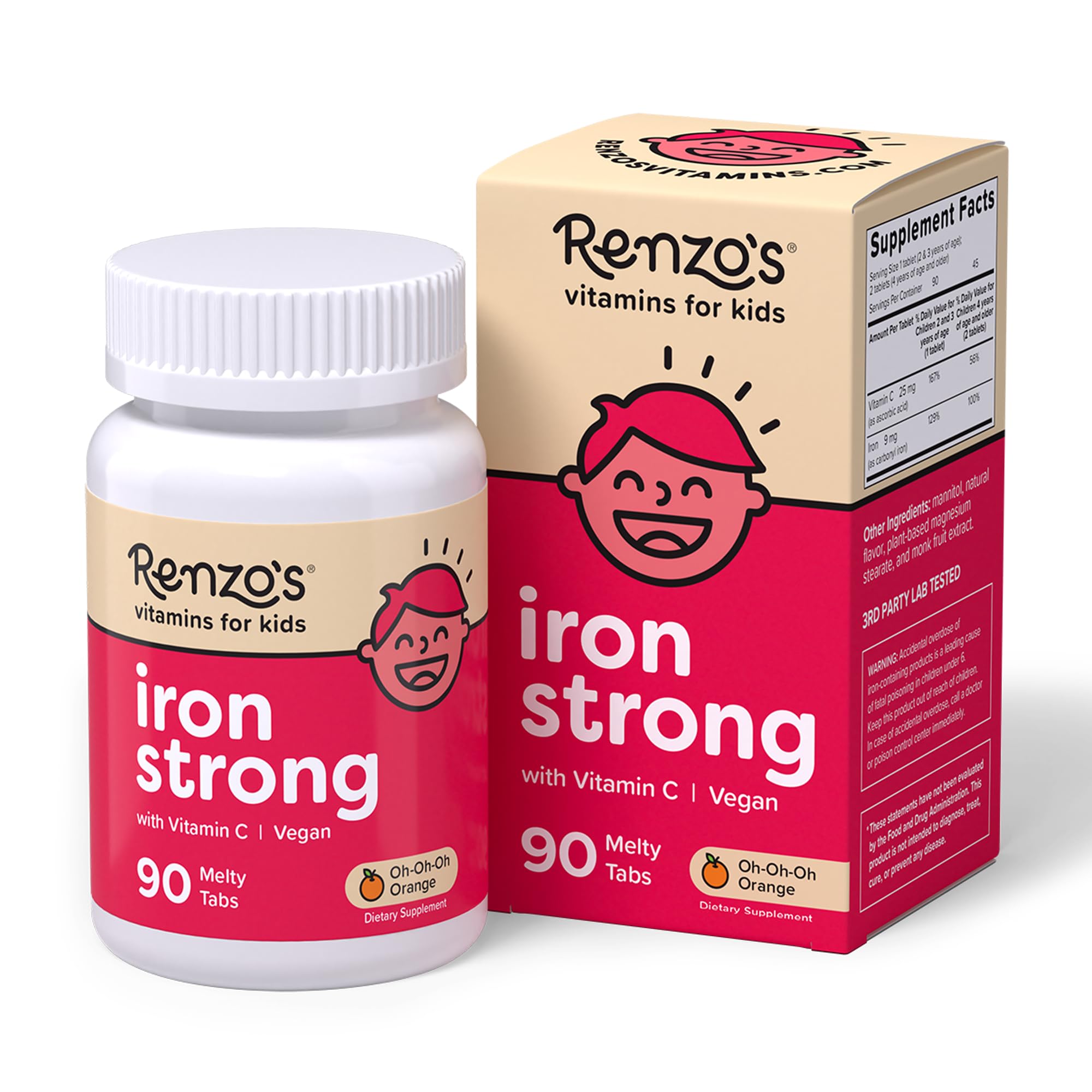
Renzo’s Iron Strong Melty Tabs
Key Features
- Form: Dissolvable tablet
- Age range: 2 years and up
- Vitamin C: Included
- Iron per tablet: 9 mg carbonyl iron
- Price: Midrange
The first thing we look for in a kids’ iron supplement is a form that doesn’t turn dose time into a negotiation. Renzo’s melty tabs are built around that: they dissolve instead of requiring a swallow, and the dose is simple enough to adjust by age.
Each tablet carries 9 mg of carbonyl iron plus vitamin C, which is a sensible pairing because vitamin C helps with iron absorption. The sugar-free orange formula is also one of the cleaner options here on added sugar, and the tablet format means you’re not measuring or staining a liquid. For a child who can handle a dissolve-on-the-tongue tablet, that is a genuinely easier routine.
We recommend it first for the 2-to-4 stretch, when dosing is changing and a liquid feels like more fuss than it’s worth. Older kids may need a different product if they dislike the texture, but the flexibility is the point. It’s the one we reach for when we want a kids’ iron supplement that fits a wide age range without a syringe.
Pros
- Dissolves without a swallow
- 9 mg carbonyl iron plus vitamin C
- Age-flexible from 2 years up
- Sugar-free orange flavor
Cons
- Two tablets needed daily from age 4
For most families, this is the kids’ iron supplement we recommend first: a dissolvable 9 mg tablet with vitamin C that covers ages 2 and up without measuring or staining.
Best for Older Kids
NovaFerrum Yay Chewable Iron
Key Features
- Form: Chewable tablet
- Servings: 90
- Age range: 4 years and up
- Iron per tablet: 18 mg
- Price: Midrange
One chewable tablet, 18 mg of iron: that is the whole case for NovaFerrum Yay, and for an older child who can chew and swallow a tablet, it is a strong one. We like the simplicity of a single daily dose after age 4, especially for kids who are already taking a multivitamin or who need a higher amount than a 9 mg melty tab provides. The orange chewable is sugar-free and gluten-free, and the 90-tablet bottle covers three months at one a day.
The tablet is small enough to chew, but it is still a tablet—kids who refuse anything firm will do better with a liquid or powder. For everyone else, this is the most straightforward high-dose chewable here. The 90-tablet bottle also means you are not restocking every month, which matters if your child takes iron daily.
Pros
- One tablet delivers 18 mg
- 90-day supply
- Sugar-free and gluten-free
- Chewable for older kids
Cons
- Tart orange flavor may not appeal to every child
For an older child who needs a higher dose in one tablet, this is the chewable we recommend; the 18 mg dose and 90-day supply make the daily routine simple.
Best for Ages 1–3
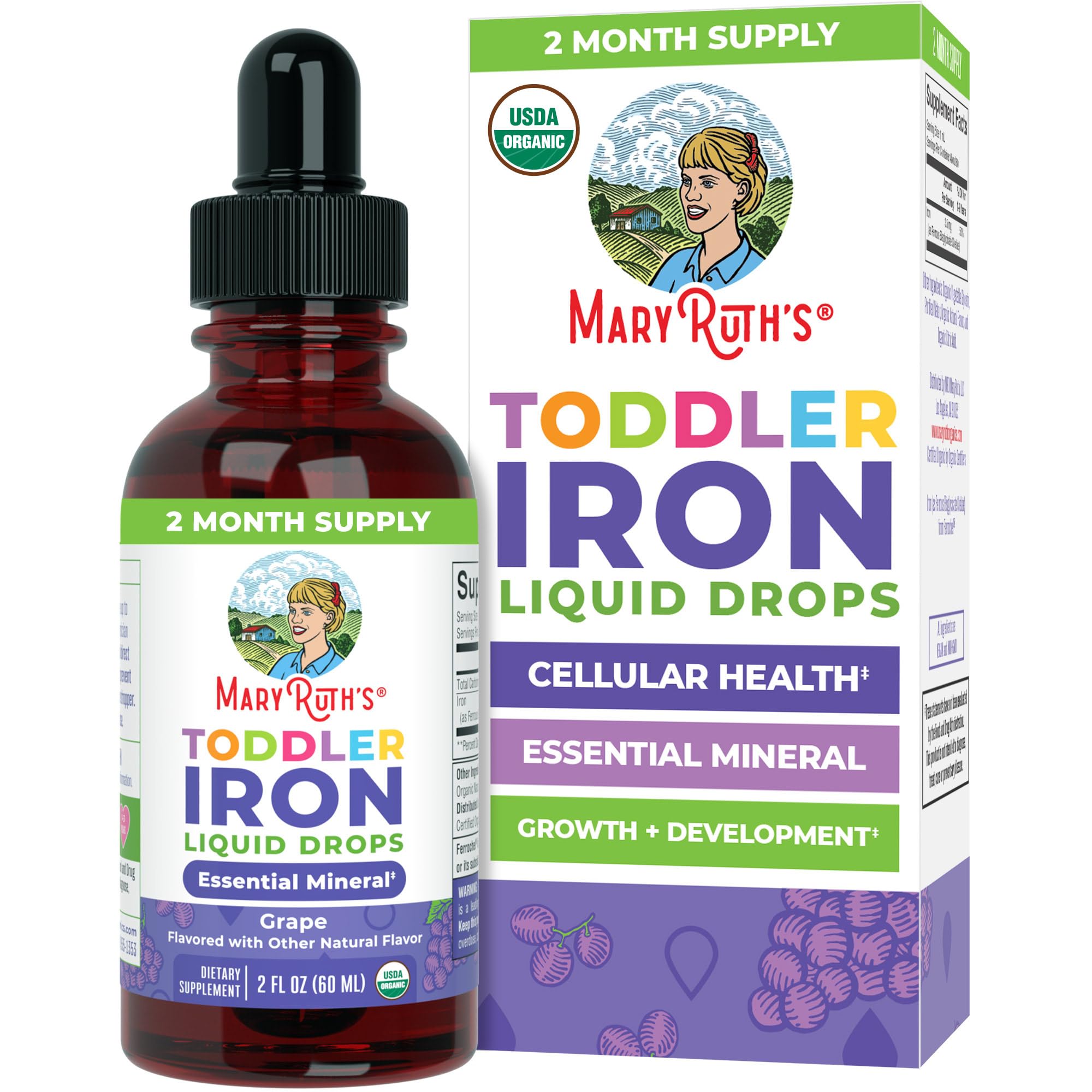
MaryRuth’s Toddler Iron Drops
Key Features
- Form: Liquid drops
- Size: 2 fl oz
- Age range: 1–3 years
- Iron form: Ferrochel ferrous bisglycinate chelate
- Price: Midrange
A toddler supplement has a narrower job than a kids’ supplement, and MaryRuth’s Toddler Iron Drops are labeled for exactly that window: ages 1 to 3. That specificity is useful because it keeps the dose question simpler than a family formula that asks you to work out a child’s portion. The liquid is grape-flavored, USDA Organic, vegan, and made with Ferrochel ferrous bisglycinate chelate, a form marketed for gentler absorption.
We like this one for the toddler who will take a spoon or syringe but not a tablet. The 2-ounce bottle is small enough to keep in a diaper bag, and the grape flavor is a better bet than plain iron for a child who is already suspicious of new tastes. The caveat is that digestive tolerance varies: some toddlers handle it easily, while others have loose stools or vomiting, so start with a small dose and watch how your child responds.
The 1-to-3 age cap is the deciding point. If your child is 4 or older, this is the wrong bottle, not because the iron is poor but because the product is built for a younger dose. For the toddler years, it is a tidy, well-specified liquid that takes up little space and is easy to measure.
Pros
- Labeled for ages 1–3
- Ferrochel iron in a grape liquid
- Small 2 oz bottle
- USDA Organic and vegan
Cons
- Metallic aftertaste can linger
For a toddler between 1 and 3 who will take a liquid but not a tablet, this grape Ferrochel drop is the most age-specific pick here.
Best for Picky Eaters
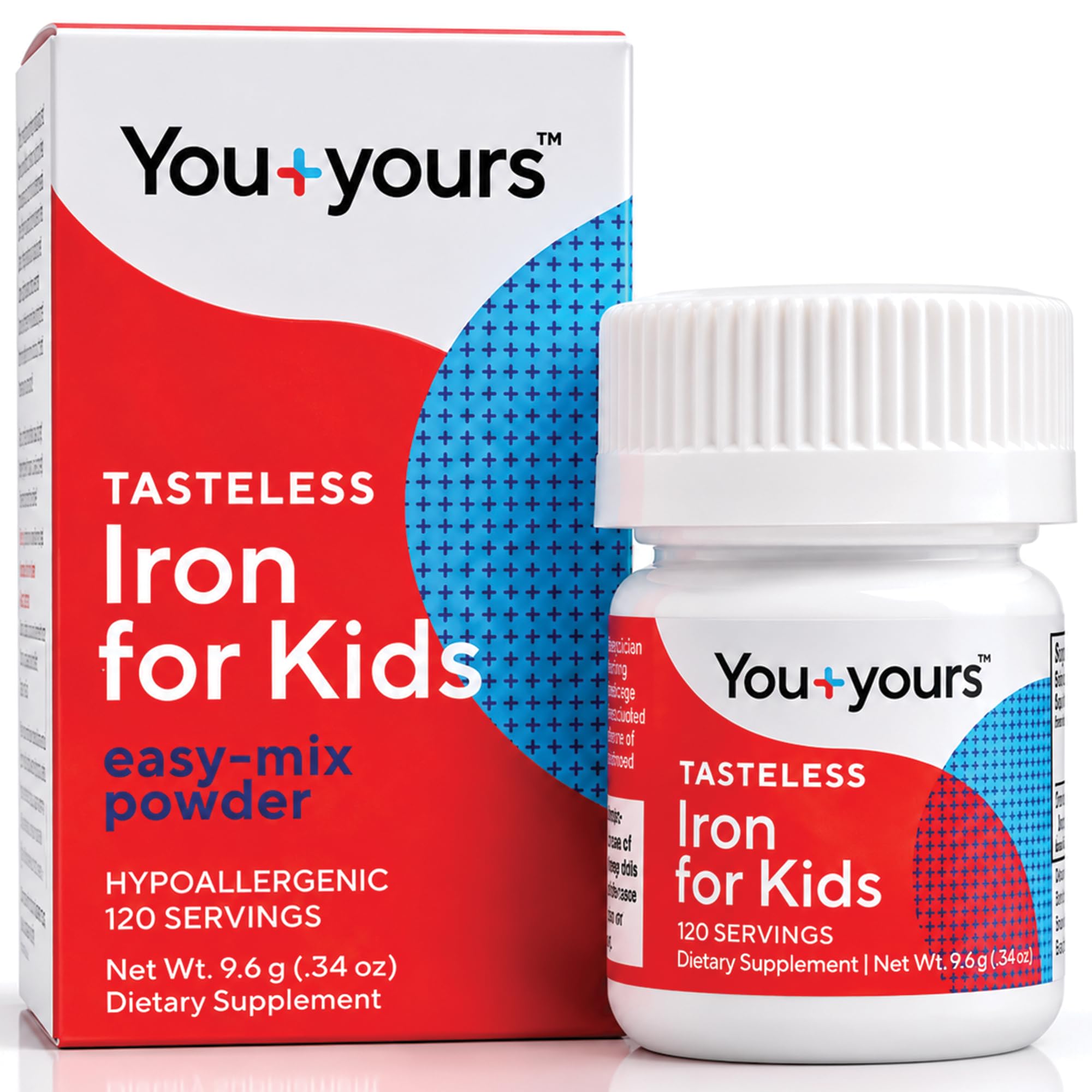
You+yours Tasteless Iron Powder
Key Features
- Form: Tasteless powder
- Servings: 120
- Age range: Kids and toddlers
- Iron per serving: 15 mg
- Price: Midrange
If your child can taste iron in anything, a tasteless powder changes the whole calculation. You+yours is just that: 15 mg of elemental iron per serving in a powder designed to disappear into a drink or soft food without changing its taste, odor, or texture. It is vegan, free of the major allergens, and uses ferric glycinate, a form the brand describes as gentle on the stomach. The bottle provides 120 servings, so the supply lasts four months at one serving a day.
We like this one for the child who has already rejected drops and chewables, and for a household that wants to stir iron into applesauce, yogurt, or juice without a fight. The catch is color: the powder is deep red and can leave a brown tint, so mix it into something opaque rather than a clear sippy cup. It is also not a measured dropper, so you need to be consistent about the scoop. For the right family, that is a small trade for a supplement that actually gets taken.
Pros
- Tasteless in drinks and soft food
- 15 mg iron per serving
- 120 servings per bottle
- One-ingredient, allergen-free formula
Cons
For a child who tastes iron in everything, this tasteless 15 mg powder is the pick we recommend; stir it into an opaque drink or soft food.
Best for Liquid for Kids
NovaFerrum Yummy Liquid Iron
Key Features
- Diet: Sugar-free, gluten-free
- Form: Liquid
- Size: 16 fl oz
- Age range: 4 years and up
- Price: Premium
Liquid iron has one obvious advantage—you can dose it by syringe or spoon—and one obvious risk: it can stain. NovaFerrum Yummy is a 16-ounce liquid for ages 4 and up, and the staining is the first thing we tell anyone to plan for. A paper towel under the chin and a quick rinse of the dosing tool go a long way, but this is not the supplement to hand a child in a white shirt and walk away.
The formula is sugar-free, gluten-free, and free of alcohol, synthetic colors, and caffeine, which is a clean profile for a liquid. It is also thin enough to measure and swallow, and the taste is designed to avoid the metallic edge that makes kids refuse iron. We like it for the child who can’t or won’t chew a tablet and is old enough for a 4+ product.
The 4+ age floor is the real boundary. This is not a toddler formula, and the 16-ounce bottle is a commitment for a small household. For an older child who takes liquid without a fight, though, it is a clean, easy-to-measure option that avoids the chewable standoff.
Pros
- Sugar-free liquid for ages 4+
- Easy to measure and swallow
- No alcohol, gluten, or synthetic colors
- Pleasant taste for many kids
Cons
- Dropper can be messy and hard to clean
For a child 4 or older who will take liquid but not chewables, this sugar-free iron is a strong choice—just plan for the staining and the fussy dropper.
Best for Budget Chewable
Carlson Kid’s Chewable Iron
Key Features
- Form: Chewable tablet
- Count: 60 tablets
- Age range: Kids
- Iron per serving: 15 mg
- Price: Budget
Carlson’s Kid’s Chewable Iron is the plain-spoken option: 15 mg of iron per serving, a small chewable tablet, and a bottle of 60. It does not try to be a gummy, a melt, or a liquid. For a child who already takes a chewable vitamin, that familiarity is the appeal. It is also the least expensive way here to put a meaningful dose of iron into a daily routine.
The tablet is easy for many kids to chew, and the flavor gets a warmer reception than the dark color suggests. The color is the odd part: the tablets are dark, almost black, and they can look chalky. That is cosmetic, not a sign of a bad batch, but it is worth knowing before you open the bottle.
We recommend it for the family that wants a low-cost chewable and has a child who is not fussy about color or texture. The tablet can take a moment to dissolve, so it is not our first pick for a toddler or a child who struggles with pills. For an older kid who just needs the iron, it is the straightforward backup we keep in mind.
Pros
- 15 mg iron per tablet
- 60 chewables per bottle
- Low-cost chewable
- Small, easy-to-chew tablet
Cons
- Tablets can stick together in the bottle
For a family that wants a low-cost chewable and has an older kid who tolerates tablets, this 15 mg option is a sensible, no-frills buy.
Best for Gummy Fans
Lifeable Iron Gummies

Key Features
- Form: Gummy
- Servings: 45
- Vitamin C: 26 mg
- Iron per serving: 10 mg
- Price: Midrange
A gummy is the form kids ask for, and Lifeable’s grape iron gummy is aimed squarely at that preference: 10 mg of elemental iron plus 26 mg of vitamin C in a two-gummy serving, with 45 servings per bottle. The pitch is simple—iron for kids who hate iron—and the pectin base means it is vegan rather than gelatin-based.
The formula uses microencapsulated ferric saccharate, a form chosen to soften the metallic taste, and the grape flavor is the kind of thing that gets a child to the table without a fight—at least at first. We like that the vitamin C is built in rather than left to a separate supplement. The serving size is two gummies, not one, so the bottle goes faster than a one-tablet option.
Where this one slips is the texture. The gummy is firmer and chewier than a fruit snack, and a younger child may struggle with it. That is not a deal-breaker for a kid who already eats gummy vitamins, but it is the reason we do not put this at the top for a toddler or a child who is new to chewy supplements.
We rank this one as a gummy option, not the default kids’ iron supplement. If your child will reliably eat a firmer gummy and you want the vitamin C built in, it is worth a try. If texture is already a battleground, a dissolvable tablet or tasteless powder is the safer bet.
Pros
- 10 mg iron plus 26 mg vitamin C
- Vegan pectin gummy
- Grape flavor kids recognize
- 45 servings per bottle
Cons
- Firm texture is hard for some kids to chew
- Metallic aftertaste lingers for some
For a child who already likes gummy vitamins and will eat a firmer chew, this grape gummy delivers 10 mg of iron plus vitamin C in a familiar form.
How We Tested Kids Iron Supplements
We started with a shortlist of 22 kids iron supplements, reading ingredient panels and dosing instructions and filtering out anything with unclear age ranges, vague iron content, or a form our parent testers said their kids routinely refused. That left 14 products—liquids with droppers, chewable tablets, and gummies—which we used over four months.
Testing happened where the products actually live: at the breakfast table before school, in backpacks for sleepovers, and on a weekend trip when we had to dose away from home. I watched how kids reacted to taste and smell, whether chewables were soft enough to chew without gagging, and how easy each bottle was for a rushed parent to open and measure. For liquids, I checked whether the dropper delivered a clean, accurate dose and whether the bottle stayed consistent instead of settling into a gritty layer.
We compared iron content with the label, noted color and staining after drips on a white shirt and counter, and logged stomach upset, constipation, or other side effects reported by parents. Ease of use included cleanup and storage; value for money came down to cost per dose, not just bottle price. A few products were genuinely disappointing—leaky droppers, clumping gummies, or a taste kids refused—and we said so. We did not run blood tests, so effectiveness here means label accuracy, consistent dosing, and whether families could keep up with the routine.
How to Choose a Kids Iron Supplement
The right kids iron supplement is the one your child will take consistently, at a dose that matches their age, in a form that fits your routine.
Match the form to your child
The form decides whether the supplement actually gets taken. A dissolvable tablet like Renzo’s skips the swallow; a chewable like NovaFerrum Yay is simpler for an older kid who already chews vitamins; a liquid like NovaFerrum Yummy helps when swallowing is the barrier; and a tasteless powder like You+yours works for a child who detects iron in everything. Gummies are not automatically easier—Lifeable’s firmer texture is a real chewing hurdle. Pick the form your child already accepts, then check the iron dose, rather than starting with the highest number on the label.
Read the elemental iron and the age floor
Iron amounts are not interchangeable across forms. Renzo’s gives 9 mg per tablet and asks for two tablets from age 4; NovaFerrum Yay packs 18 mg into one chewable for ages 4 and up; Lifeable’s 10 mg is for a two-gummy serving. A 90-count bottle of one product can be a shorter supply than a 90-count bottle of another. Check the age on the label first, then the milligrams per serving, then how many servings the bottle actually provides. The age floor matters as much as the dose: MaryRuth’s Toddler Drops are built for ages 1 to 3, not for a 5-year-old.
Look for vitamin C and a gentle iron form
Vitamin C is worth looking for because it helps the body absorb iron. Renzo’s and Lifeable both include it; the other picks rely on the iron form and the rest of the diet. The iron form also matters for tolerance: carbonyl iron, Ferrochel ferrous bisglycinate chelate, ferric glycinate, and microencapsulated ferric saccharate are all chosen to be gentler than the cheapest iron salts, though no form guarantees zero stomach upset. If constipation is already a problem, start with a lower dose and ask your pediatrician before increasing it.
Plan for taste, staining, and the daily routine
Taste is the most common reason a kids’ supplement fails, and the mess is a close second. Liquid iron can stain teeth and clothes—NovaFerrum Yummy needs a paper towel under the chin and a quick rinse of the dosing tool. You+yours powder is tasteless but deep red, so it can tint a clear drink; mix it into something opaque. Chewables and melts can be refused on texture alone. Buy for the routine you can repeat every day, not the one that looks neatest on the shelf.
Frequently Asked Questions
Can my child take adult iron supplements?
No. Adult products can carry a much higher dose than a child needs, and the label may not give a safe pediatric serving. Use a product with a clear age range, such as Renzo’s for ages 2 and up or NovaFerrum Yay for ages 4 and up, and ask your pediatrician to confirm the dose. If you already have an adult iron supplement in the house, keep it out of reach.
Should I give iron with milk?
Milk is not the best mixer. Calcium can get in the way of iron absorption, so separate the supplement from a large milk or calcium dose by a couple of hours if you can. A small amount of vitamin C-rich food or juice is a better partner. If your child drinks milk constantly, mention it to your pediatrician when you review the iron plan.
How long does it take for iron levels to improve?
Iron stores usually move slowly, and a supplement is only one part of the plan. Do not judge by a few days of appetite or energy. Keep the daily routine consistent and ask your pediatrician when to recheck with a blood test; that follow-up is the only reliable way to know whether the dose is working.
What if my child vomits after taking iron?
Stop the supplement and call your pediatrician before trying again. Vomiting can be a sign that the form or dose does not suit your child, and a different iron form or a lower dose may be safer. Do not push through the same serving to make up for a missed one, and keep the bottle out of reach in the meantime.
Final Verdict
Renzo’s is the one we recommend first for most families: the dissolvable 9 mg tablet covers ages 2 and up, includes vitamin C, and avoids the measuring and staining that come with a liquid. If your child is 4 or older and needs a higher single-tablet dose, NovaFerrum Yay is the more straightforward choice. For a toddler who will not take a tablet, MaryRuth’s Toddler Drops are the better fit. Start with the form your child will take, then match the dose to the age on the label.
