This post contains affiliate links. We may earn a small commission when you buy through our links — at no extra cost to you.
Graphic novels have a reputation problem. Some parents see a comic-style book and worry it’s not "real" reading—or that the content might be too dark, too snarky, too old for a second grader. But the right graphic novel can do something a chapter book often can’t: it can make a kid who claims to hate reading ask for one more chapter. The pictures aren’t a crutch; they’re a bridge, and when the story is good, that bridge holds.
I’ve watched my 7-year-old reread the same 200-page graphic novel four times—something she’s never done with a chapter book. Over the past six months, my team and I read through 16 graphic novels with kids ages 6 to 11, paying attention to what made them laugh, what made them ask questions, and what they reached for again. We also kept notes on the things parents ask me about most: whether the story gets too scary, whether the panels are easy to follow, whether the ending sends them looking for the next book in the series, and whether the book earns its keep after the first read. The picks below are the ones that survived repeated readings, car trips, and the ultimate test—being shoved into a backpack for school.


Best for First Graphic Novel
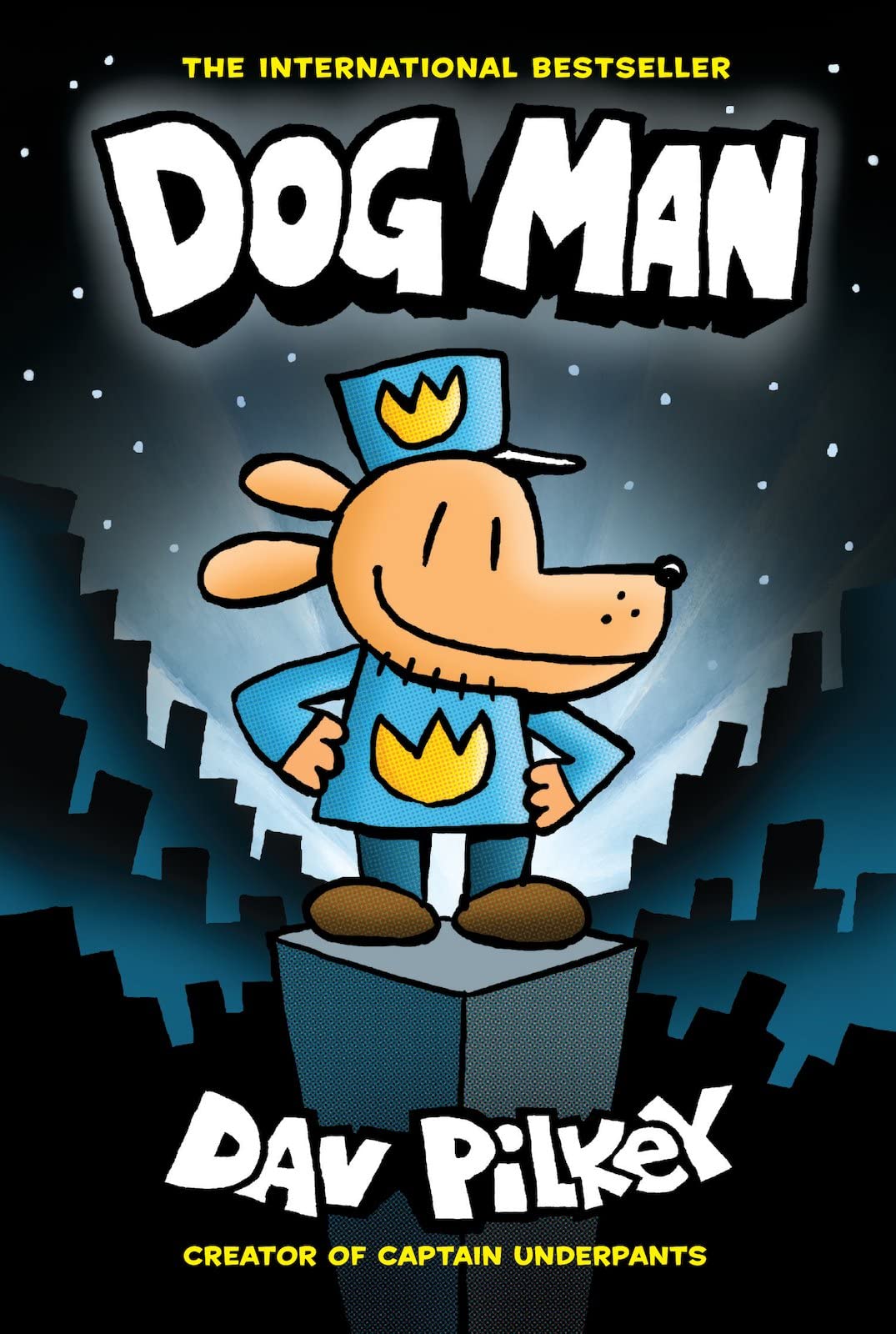
Dog Man: A Graphic Novel
Key Features
- Series: Dog Man #1
- Grade level: 2 and up
- Reading age: 6+ years
- Print length: 240 pages
- Price: Budget
The first Dog Man book has a very specific job: it turns a child who has never finished a book into one who asks for the next. We put it at the top of this list because it does that more reliably than any other title here, and it does it without asking a young reader to carry a heavy page count or a complicated plot. The 240 pages are mostly panels, sound effects, and jokes, so the book feels fast even when the story is doing real work.
The format is only half the story. Dog Man works because the humor is broad and physical, with a hero named Dog Man and a supporting cast that keeps finding new ways to be ridiculous. That is the engine: a page gives a young reader a joke, a sound effect, or a bit of action, and the next page asks them to keep going. We appreciated that the book never talks down to a reader who is still building stamina.
The series is now fifteen books deep, so this first volume is a low-risk test of whether your reader wants more. The drawing lesson at the back is a nice bonus, because it gives a kid something to do after the last page instead of just closing the book. For a reader who wants a quieter realistic story, Guts is the better choice; for a fantasy world, Wings of Fire. Dog Man is the front door.
Pros
- Turns reluctant readers into series readers
- Fast panels and silly humor
- First volume of a long series
- Drawing lesson at the back
Cons
- Potty humor will not suit every family
We recommend Dog Man as the default first graphic novel for ages six and up, especially for a child who needs a fast, funny win.
Best for Young Cartoonists
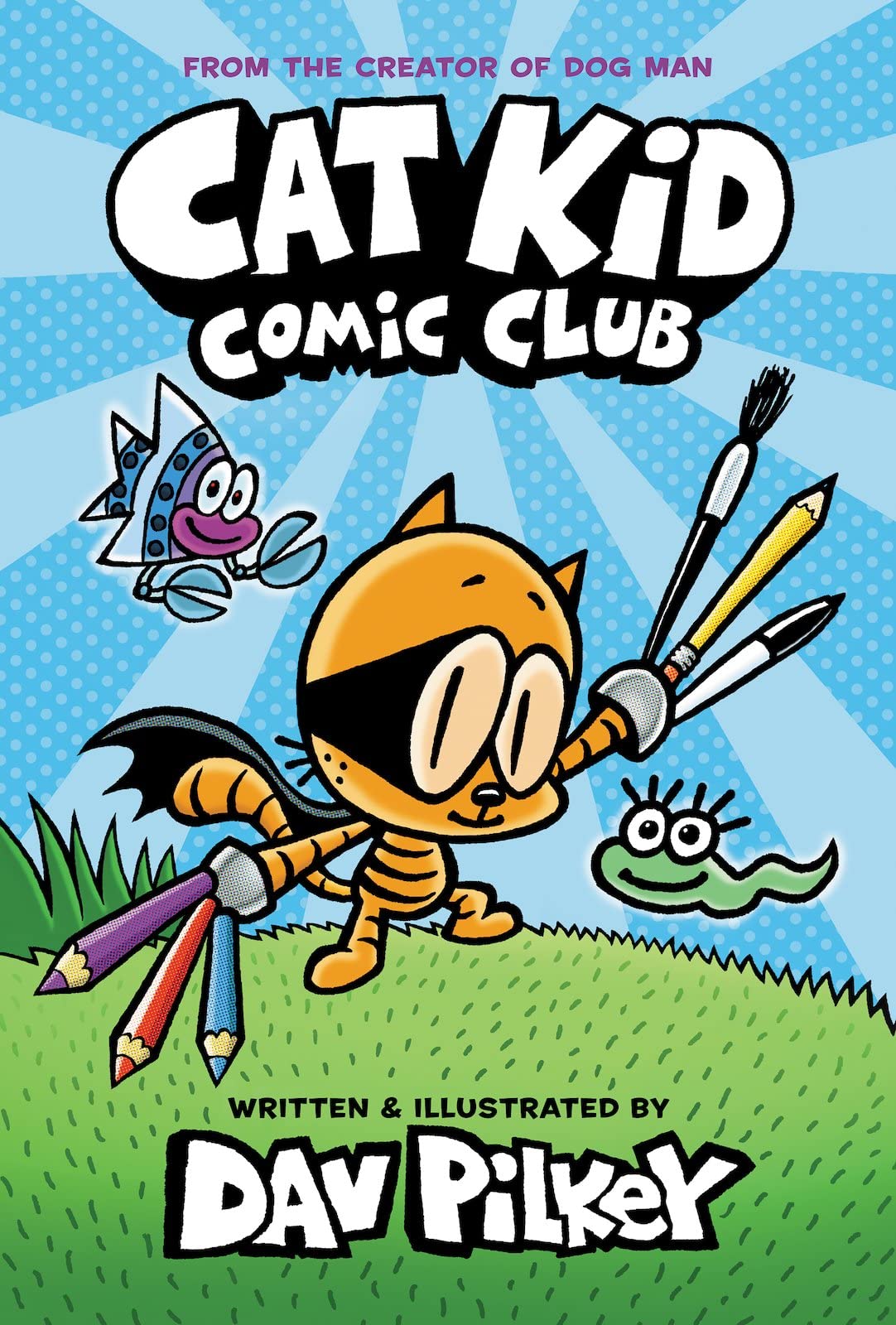
Cat Kid Comic Club
Key Features
- Series: Cat Kid Comic Club #1
- Grade level: 2 and up
- Reading age: 7-9 years
- Print length: 176 pages
- Price: Budget
Cat Kid Comic Club is built around a simple idea: a group of young characters makes comics, and the book shows the messy, funny process of putting one together. The 176-page story is shorter and more clubhouse than Dog Man, with a cast of young characters and a club setting. It is aimed at the seven-to-nine range, and the panels are clean enough for a reader who is still learning where to look.
We recommend it for the reader who finishes a book and immediately wants to make something of their own. That creative loop is the reason it earns a runner-up spot: after this one, we ended up with a stack of homemade comic panels, which is not something every graphic novel inspires.
The humor is still Pilkey-brand silly, including the potty jokes that some families will want to preview. What makes it different from Dog Man is the focus on making comics rather than chasing a villain. If your reader wants action, Dog Man is the better first buy; if they want permission to draw their own stories, Cat Kid is the more useful book.
Pros
- Turns reading into comic making
- Funny enough for Dog Man fans
- Encourages kids to draw their own
Cons
For the kid who wants to make comics after reading one, Cat Kid Comic Club is the book we hand over next.
Best for Reluctant Readers
The Bad Guys Box Set
Key Features
- Grade level: 2-5
- Reading age: 6-8 years
- Box contents: Books 1-5
- Print length: 1,440 pages
- Price: Midrange
The Bad Guys box set arrives as a five-book stack, and the first thing a young reader notices is how much reading it represents. The series is built like a comic, with big panels, short chapters, and a running joke about a group of characters who may not be as bad as they seem. The set collects books one through five, which is enough to establish the characters and the rhythm without asking a family to buy the whole series at once.
The page count looks imposing, but the panels move quickly. We found the humor broad enough to work for a six- or seven-year-old and sly enough that an adult reading aloud does not dread the next chapter. The books are also a useful bridge for a reader who is comfortable with pictures but not yet ready for a wall of prose.
We recommend the box set for a reader who needs momentum more than a single perfect story. Five books in a row give a child the satisfaction of finishing one and immediately starting another, which is exactly what a reluctant reader needs. If your reader is already past book five, buy the later volumes instead; this set is a starter, not the whole series.
Pros
- Five books build reading momentum
- Comic panels make a thick stack approachable
- Funny for kids and adults
- Good bridge to chapter books
Cons
For a reader who needs a stack to build momentum, The Bad Guys box set is our pick.
Best for New Readers
Narwhal and Jelly Box Set
Key Features
- Format: Paperback box set
- Grade level: 1-4
- Reading age: 5-7 years
- Box contents: Books 1-3 plus poster
Narwhal and Jelly is the smallest format on this list, and that is the point. The box holds three short books and a poster, with big expressions, simple panels, and plenty of white space. We recommend it as the first graphic novel for a five-to-seven-year-old who is ready to read to someone but not ready for a dense page.
The stories are silly in a gentle way: the two title characters carry the jokes, and their friendship keeps the stories warm. There is a little learning tucked in, but it never turns the book into a lesson. For a new reader, the short chapters are a real confidence boost, because finishing a whole book in one sitting feels like a big deal.
The poster is a nice extra, and the small trim size makes the books easy for little hands to hold. The humor is sweet rather than gross, which makes this an easy handoff for a family that wants a break from potty jokes. It is a gentle first step, and the poster gives a new reader something to put on the wall.
Pros
- Three books plus a poster
- Short chapters build early confidence
- Cute art and gentle humor
- A little learning tucked in
Cons
- Best for new readers; fluent kids outgrow it
For a brand-new reader who wants a funny first graphic novel, Narwhal and Jelly is the gentlest place to start.
Best for Older Middle-Graders
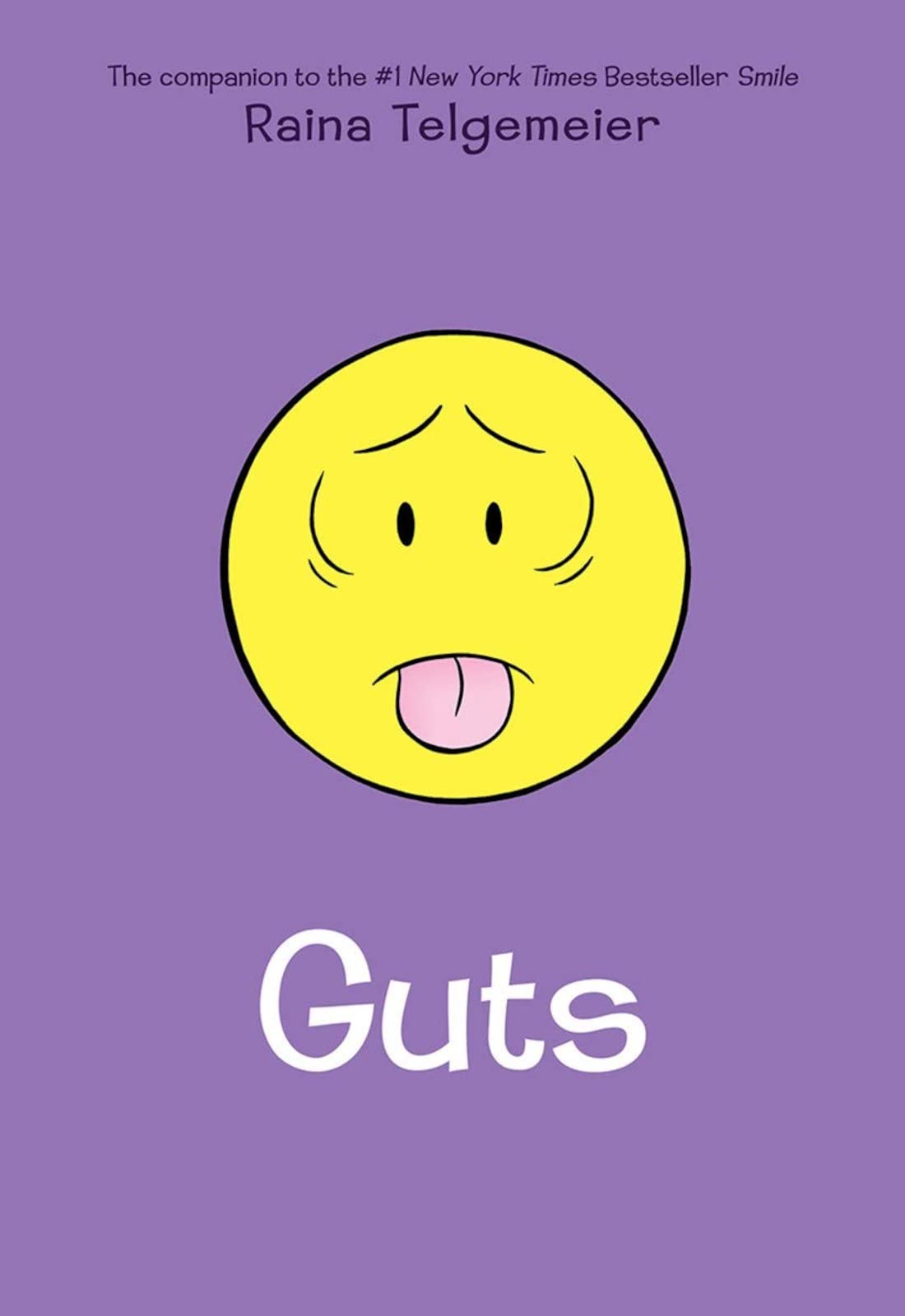
Guts: A Graphic Novel
Key Features
- Series: Smile series
- Grade level: 3-7
- Reading age: 9+ years
- Print length: 224 pages
Guts is the book in this group that puts a child’s worry at the center and keeps it there. Raina Telgemeier’s story follows a middle-grader dealing with worry and friendship, and the graphic format lets the physical feeling of worry show up in the art rather than in a long explanation. The 224 pages are clean and direct, with panels that are easy to follow.
We recommend it for the older middle-grader who wants to see their own worried thoughts on the page, and for a parent who wants a book that starts a conversation without sounding like a lecture. It earns a place because it makes worry feel less private.
The reading experience is quick, even though the subject is not light. A reader who usually avoids prose may finish it in a day or two and come back to a favorite scene. If your reader wants pure jokes, Dog Man or The Bad Guys is the better fit; if they want a story about friendship and worry, Guts is the one we reach for.
Pros
- Makes worry feel relatable
- Clean panels for quick reading
- Strong middle-grade voice
- Encourages conversation about worry
Cons
We recommend Guts for the older middle-grader who wants a story that names worry honestly and still keeps them reading.
Best for Series Bingeing
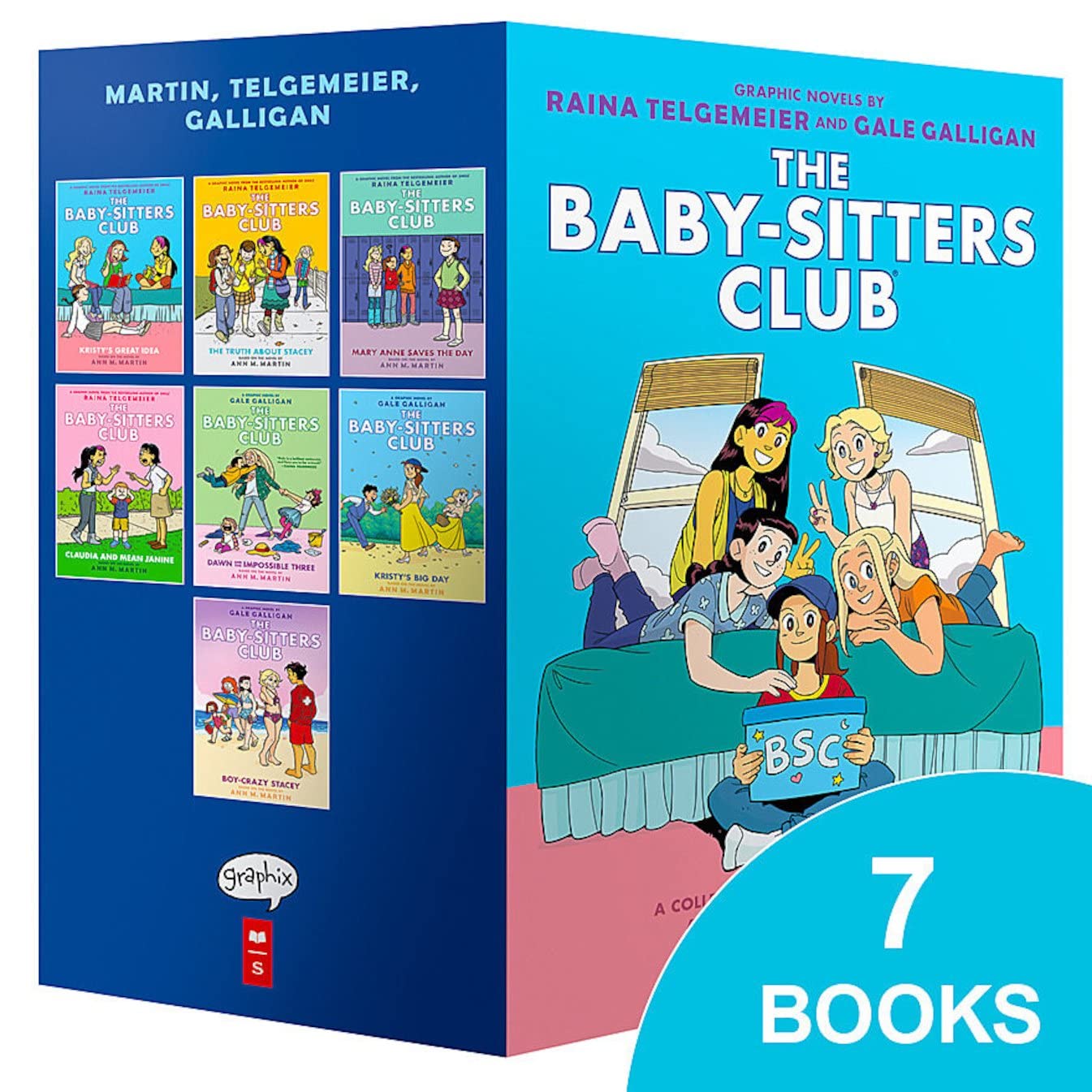
The Baby-sitters Club Box Set
Key Features
- Grade level: 3-7
- Reading age: 8-11 years
- Box contents: Books 1-7
- Print length: 1,760 pages
- Price: Premium
The Baby-sitters Club box set is seven books in one box, which makes it a different kind of purchase from the single volumes here. The set collects the first seven graphic novels, with color art and a focus on friendship, babysitting, and the small dramas of middle school.
The page count is huge, but the books are not heavy reading. Each volume is a complete story, so a reader gets a finished arc before moving to the next, and the familiar characters make the next book feel like returning to a group of friends. The color edition is bright and easy to follow, which matters for a reader who is still building stamina.
We noticed the set works best for a reader who wants to live inside a series rather than sample one story. The box is heavy, so it is better for a home shelf than a backpack, and the stories stay in the friendship-and-babysitting lane rather than fantasy or superhero action. That narrow focus is also why the series feels so comfortable.
We recommend it as the binge pick for the eight-to-eleven-year-old who wants a long run of stories with characters they can keep up with. If your reader prefers one strong standalone, Guts is the better choice. Otherwise, the seven books are the point: they turn one reading win into a habit.
Pros
- Seven books keep a reader going
- Familiar friendship and babysitting stories
- Color art is easy to follow
- Good value as a set
Cons
For the reader who wants a series to disappear into, The Baby-sitters Club box set is our binge pick.
Best for Fantasy Fans
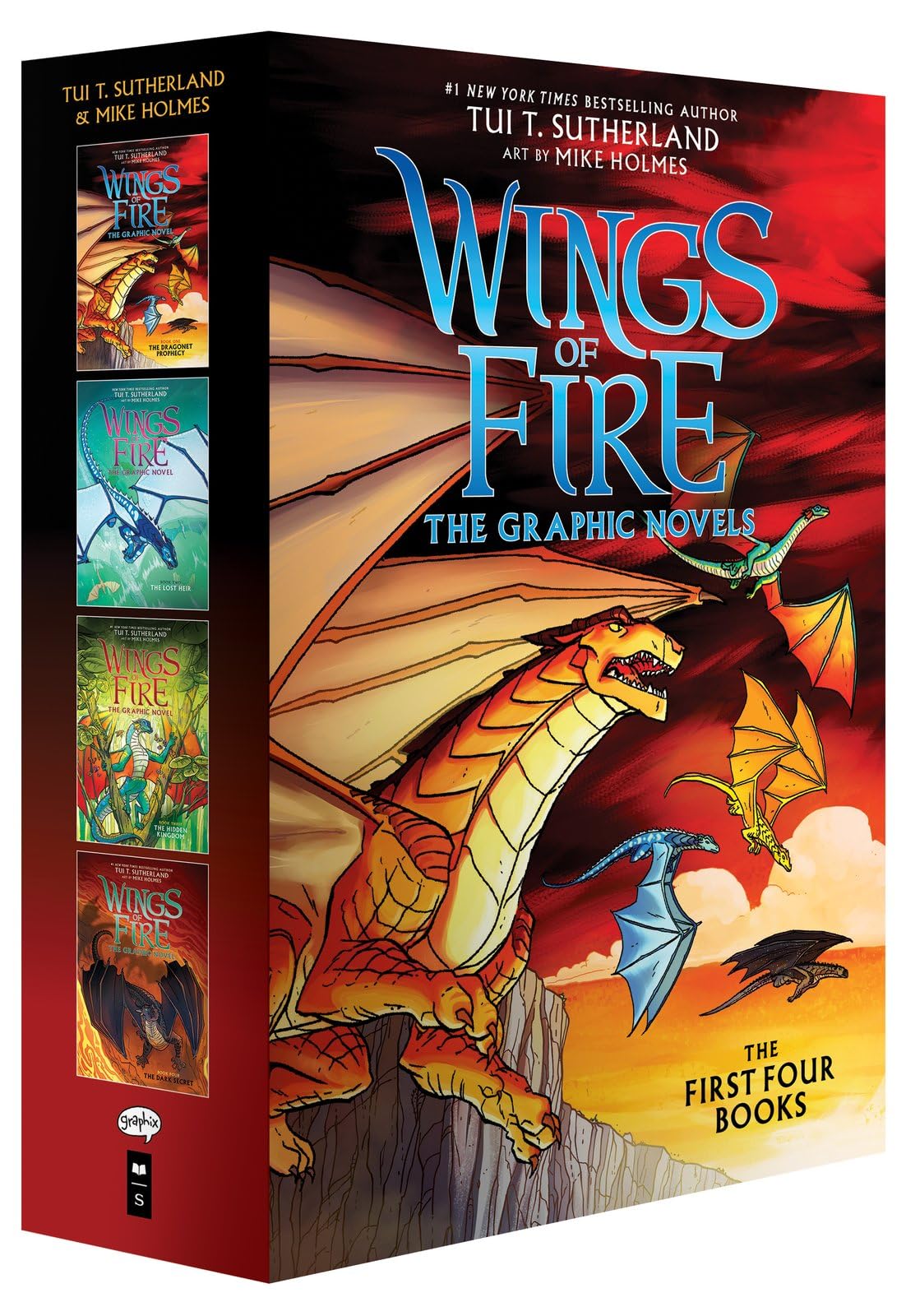
Wings of Fire Graphic Novel Box Set
Key Features
- Grade level: 3-7
- Reading age: 8-11 years
- Box contents: Books 1-4
- Print length: 896 pages
Wings of Fire is the biggest step up in this group: four graphic novels, 896 pages in total, and a world built around dragons and adventure. The box collects the first four adaptations, with a larger trim size and more detailed art than the younger picks here.
The story is action-heavy, but the emotional core is friendship and found family. The panels are colorful and the dragons are expressive, which helps a reader keep track of a large cast. This is not a book for a six-year-old who is still sounding out words; it rewards a reader who is comfortable with longer arcs and more characters.
We recommend it for the eight-to-eleven-year-old who is ready to trade quick jokes for a fantasy world to return to. The four books give a reader a lot to come back to, and the larger trim size makes the art easy to share. If your reader wants a faster, funnier start, Dog Man is the safer choice.
Pros
- Four-book fantasy arc to grow into
- Colorful, expressive dragon illustrations
- Found-family story with action
- Good step up for older readers
Cons
- Heavy four-book box is shelf-bound
For the reader ready for a bigger cast and a longer fantasy arc, Wings of Fire is the step up we recommend.
Best for School Stories
New Kid

Key Features
- Series: Class Act
- Grade level: 3-7
- Reading age: 9-12 years
- Print length: 256 pages
- Price: Budget
New Kid begins with the familiar school-hallway problem of being the new kid who does not fit the box everyone expects. The story follows a middle-grader navigating friendship, teachers, and the small comments that add up.
The graphic format does a lot of the emotional work. A raised eyebrow or a silent panel can say more than a paragraph, and the art is embedded throughout the text rather than saved for big moments. The 256 pages move quickly, which makes it a strong choice for a reader who is comfortable with pictures but not with long descriptions.
The book is funny, but it is not weightless. Race and belonging are part of every chapter, and the story invites a reader to notice the assumptions other characters make. That makes it a different experience from the humor-led picks here, and a more social one than Guts.
We recommend New Kid for the nine-to-twelve-year-old who wants a school story with something to talk about afterward, and for a parent who is ready to have that conversation. If your reader wants pure escape, Dog Man is the easier handoff; if they want a book that meets the real world, this is the one.
Pros
- Relatable new-school story with heart
- Art carries the emotional beats
- Good for reluctant readers
- Prompts real conversation about belonging
Cons
We recommend New Kid for the older middle-grader who wants a funny, honest school story with something to talk about afterward.
How We Tested the Best Graphic Novels for Kids
We started with a long list of about 60 titles recommended by librarians, teachers, and the kids in our own lives, then narrowed it to 16 based on age range, series availability, and price. Each book went home with at least two families and rotated through bedtime read-alouds, after-school independent reading, and car rides.
For content, we kept a running list of scary moments, potty humor, and how conflict gets resolved—whether a bully gets punched or talked to—and noted which books needed a parent preview. Readability came down to watching kids navigate the panels: did they follow the flow left to right, or did they get lost and flip back? We noted font size, text density, and whether the art carried enough of the story that a struggling reader could keep up without giving up.
Humor was easy to measure: we counted genuine laughs, the kind where a kid stops reading to tell you the joke. For series, we checked whether the ending made them ask for the next book, and whether the second volume held up. Value came down to page count versus price, but also re-readability—a cheaper book that gets read five times is a better deal than a pricier one that gets read once.
How to Choose Graphic Novels for Kids
The right graphic novel is the one your reader will finish and pick up again, so start with reading stamina and taste rather than the age sticker alone.
Start With the Reader, Not Just the Age Range
Age ranges are a useful fence, not a gate. Dog Man is listed for six and up, Guts for nine and up, and New Kid for nine to twelve, but a strong younger reader can handle more than a number suggests while an older reader may still prefer a gentler story. Look at what your child already chooses: silly humor, realistic friendship stories, fantasy, or superhero action. The best first purchase is one book in their preferred lane, not a whole shelf in a lane you hope they will grow into.
Match Page Count to Reading Stamina
Page count is not the same as difficulty, but it does tell you how much time a reader is signing up for. Narwhal and Jelly uses short chapters and lots of white space; Dog Man runs 240 pages but moves in quick panels; Wings of Fire asks for 896 pages across four books and a larger cast. For a reader who is still building the habit, start with a 64- to 240-page book. For a reader who finishes in one sitting, a box set gives them the next book without a gap.
Check the Humor and the Emotional Weight
Graphic novels can be pure jokes, or they can carry heavier themes, and the cover does not always tell you which. Dog Man and Cat Kid Comic Club lean on potty humor; The Bad Guys is broad and silly; Guts puts worry and friendship at the center; New Kid takes on race and belonging at school. Preview a few pages and decide whether you want a book that is pure escape or one that opens a conversation. Neither is better, but they suit different readers and different evenings.
Choose a Standalone or a Series
A single volume is the lower-commitment choice: Guts and New Kid each stand alone, so a reader can finish and move on. A series or box set gives a reader momentum and usually a lower cost per book, but it also takes shelf space and assumes they want more of the same. We like box sets for readers who have already shown they finish what they start. If your child is new to graphic novels, start with one volume and let the request for the next one come from them.
Frequently Asked Questions
Do graphic novels count as real reading?
Yes. Panels ask a reader to track sequence, read expressions, and infer what happens between frames, so the format can be as demanding as prose. The useful test is whether your child is choosing the book and finishing it. Keep prose in the mix if you want variety, but do not treat a graphic novel as a lesser book; it is a different way of reading, not a shortcut.
How do I know if a box set contains every book?
Check the contents line, not just the series name. The Bad Guys set here covers books one through five, The Baby-sitters Club set covers one through seven, and Wings of Fire covers one through four; each series continues beyond its box. If your reader is already past those numbers, buy the next single volume instead of starting over.
My child finishes these in one sitting. Is that a waste?
Not if the book gets reread or leads to the next one. Short books like Narwhal and Jelly are built for early stamina, while box sets give a fast reader more to grab. If cost is the concern, borrow first volumes from a library or swap with friends before buying a whole series, then invest in the characters your reader asks for again.
Final Verdict
Dog Man is the default because it gives the widest range of young readers a fast, funny win, and the first volume is a low-risk place to start. If your reader is older and wants a story about worry and friendship, choose Guts; if you need a stack to build momentum, The Bad Guys box set is the better buy. For a fantasy reader ready for more pages, Wings of Fire is the step up.
