This post contains affiliate links. We may earn a small commission when you buy through our links — at no extra cost to you.
A children’s book has two jobs: survive a toddler and earn a repeat read. The wrong one gets chewed, torn, or abandoned after a single sitting—lift-the-flap books are especially guilty, since one flimsy flap can turn story time into a repair job. The right one becomes part of the bedtime ritual, requested by name and tucked under the arm on the way to the couch. That’s what this list is about: stories with real content and illustrations that pull kids in, in formats sturdy enough to hand down.
Over the past four months, I’ve read 18 kids’ books with my own children and a rotating crew of nieces, nephews, and neighbors’ kids—board books, picture books, lift-the-flap titles, and a few gift-worthy hardcovers. We paid attention to whether the story actually held attention, whether the pictures gave kids something to talk about, how each book looked wrapped and presented, and whether the classics still felt classic. The best ones turned reading into something the kids asked for; the flimsy ones didn’t last a week.



Best for First Library
The Very Hungry Caterpillar
Key Features
- Format: Board book
- Dimensions: 7.13 x 0.64 x 5 inches
- Reading age: 1+ years
- Print length: 26 pages
The first thing we noticed about this board-book edition is how neatly it fits a small hand: about 7 by 5 inches, with thick pages and those famous holes to poke. That compact size is a large part of why it is our default first purchase. A baby can hold it, turn it, and chew a corner without the book giving up.
The story earns its reputation by layering simple lessons into a very short read. A caterpillar eats through one apple, two pears, three plums, and so on; the days of the week tick by; then the whole thing turns into a butterfly. We watched the counting and the sequence click for a toddler who already knew the pictures, and the final transformation still got a reaction.
Eric Carle’s collage illustrations are the other reason it works. The colors are bold without being noisy, the fruit is easy to point at, and the holes give fidgety fingers something to do while the page is being read. The text is short enough for a bedtime read, but there is enough repetition to invite a child to finish the lines.
For one child in a lap, the scale is right, and the sturdy pages survive the way a first book needs to. This is the copy we keep in the diaper bag rather than on a high shelf.
Pros
- Thick board pages suit babies and toddlers
- Counting, days, and foods in one short story
- Bold collage art gives plenty to point at
- Compact trim fits small hands and diaper bags
Cons
- Small trim is not ideal for group reading
This is the board book we hand to new parents first: sturdy, rhythmic, and clever enough to teach counting and days without feeling like a lesson.
Best for Color Recognition
Brown Bear, Brown Bear
Key Features
- Format: Board book
- Dimensions: 4.95 x 0.55 x 6.95 inches
- Reading age: 1-3 years
- Print length: 28 pages
The repeated question does most of the work here: Brown Bear, Brown Bear, what do you see? A child answers, the page turns, and the next animal repeats the pattern. We read it with a two-year-old who supplied the line before we could finish it, which is the sign a repetitive book has done its job.
We recommend it for the color-and-animal stage because the repetition is not a gimmick; it is the teaching method. Each spread pairs a big, plain animal portrait with a color name, and the white background keeps the focus on the creature. The board pages are thick enough for a toddler to turn without help.
The square trim is easy to stack and easy to find in a basket. For the months when naming colors and animals is the main event, it does more than most board books here.
Pros
- Repeated question invites toddlers to join in
- Bold animal portraits teach colors and names
- Sturdy board pages turn easily
Cons
- Little story beyond the repeated pattern
We recommend it for the color-and-animal stage, when a toddler wants the same question answered just one more time.
Best for Alphabet Fun
Chicka Chicka Boom Boom
Key Features
- Dimensions: 5.5 x 0.9 x 7.25 inches
- Grade level: Preschool and up
- Reading age: 1-4 years
- Print length: 36 pages
The alphabet race up the coconut tree is the engine, and this is the alphabet book we reach for when a child already knows a few letters and wants the fun of chanting the rest. The letters arrive in a bouncing rhyme that is closer to a playground chant than a lesson.
What makes it work is the rhythm. The lines have a swing that carries a child from A to Z, and the capital and lowercase letters are big enough to trace with a finger. The illustrations are bright and a little chaotic, which suits the story’s energy.
The board pages are sturdy enough for the repeated readings this one invites. We keep it for the after-nap slot, when a little rowdiness is an asset rather than a problem.
Pros
- Bouncing rhyme makes alphabet practice feel like play
- Big letters show capitals and lowercase
- Bright, energetic illustrations match the chant
Cons
- Too frenetic for a calm bedtime read
For a child ready to chant letters, this is our alphabet pick: bouncy, bright, and built for repeat performances.
Best for Rhyming Read-Aloud
Room on the Broom
Key Features
- Dimensions: 9.7 x 10.8 x 0.2 inches
- Grade level: Preschool – 2
- Reading age: 2-5 years
- Print length: 32 pages
A witch, a cat, a broom, and a growing train of animals: the setup is simple, and the rhyming carries it. We read this one in the run-up to Halloween, when a little spookiness is welcome but a toddler still needs to feel safe.
We rate it as the strongest cumulative rhyme in this set. Each new animal asks for a spot on the broom, the witch says yes, and the repeated pattern builds until the broom is crowded. The language has a bounce that makes the refrains easy to join in with, and the illustrations give every animal a distinct face.
Ages two to five is the sweet spot; older children may find the resolution tidy, but the ride is the point. We keep it as the read-aloud we choose when we want a story with a beat.
Pros
- Cumulative rhyme builds a refrain kids can join
- Witch-and-animal story fits Halloween without scaring
- Bright illustrations keep the growing cast clear
Cons
- Paperback pages need gentle handling
We reach for this one when a read-aloud needs a plot, a beat, and a little Halloween mischief.
Best for Beginner Readers
Dr. Seuss Beginner Book Boxed Set
Key Features
- Grade level: Preschool – 2
- Reading age: 1+ years
- Print length: 360 pages
- Books included: 5
Building an early-reader shelf one book at a time gets expensive and repetitive, which is the problem this boxed set solves. It gathers five Dr. Seuss beginners — The Cat in the Hat, One Fish Two Fish Red Fish Blue Fish, Green Eggs and Ham, Hop on Pop, and Fox in Socks — in one slipcase.
The books are genuinely designed for children who are starting to sound out words. The rhymes repeat, the vocabulary is controlled, and the pictures give a struggling reader clues without doing the work for them. The set runs to 360 pages across the five titles, so there is enough material to last through the beginner stage.
We think it is the best boxed set here for that specific window: a child who can read a little and needs a stack of choices. It also works as a read-aloud set before that, which takes some of the pressure off the purchase. The individual books are compact, so they suit small hands and short attention spans.
This is not a baby gift, and it is aimed at the four- to seven-year-old who is starting to read. For a family in that window, the convenience is hard to beat.
Pros
- Five beginner classics in one boxed set
- Controlled rhyme supports early independent reading
- 360 pages give new readers plenty of choice
- Compact books suit small hands
Cons
- Bulky box takes shelf space
This is the early-reader set we suggest when you want five classics on the shelf without hunting them down one by one.
Best for Baby Gifts
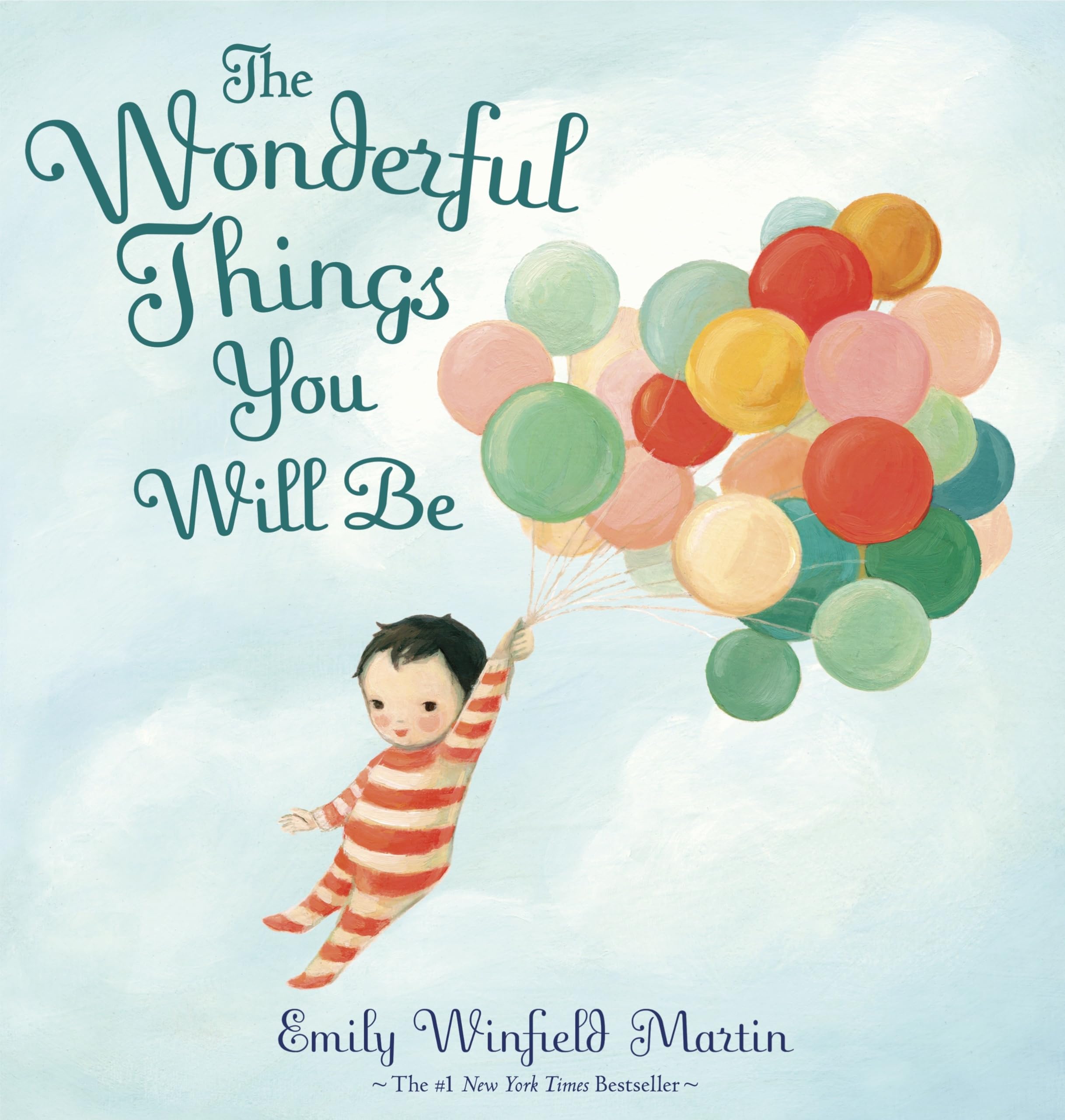
The Wonderful Things You Will Be
Key Features
- Dimensions: 9.94 x 0.34 x 10.31 inches
- Reading age: Baby – 3 years
- Print length: 36 pages
- Price: Midrange
The message is the reason this one gets handed to new parents: whatever you become, you are loved. Emily Winfield Martin delivers it as a series of gentle possibilities — a dreamer, a builder, an explorer — rather than a single moral.
The illustrations are soft and detailed, with children in costumes and quiet domestic scenes that reward pointing. The rhyme is unforced, and the pages are large enough to share with a baby on a lap. The reading age runs from baby to three, but the sentiment will outlast that window.
It is the book we choose for a baby-shower gift because it works before a child understands the words. The parent reads the message, the child looks at the faces, and the book becomes a keepsake rather than a daily board book. That is a different job from a lift-the-flap or a counting book.
We think it is the best gift book here for that role, provided you are buying for a family that reads together. Read it on the sofa, not in the car.
Pros
- Tender message works as a new-baby gift
- Soft, detailed illustrations reward pointing
- Simple rhyme suits bedtime read-alouds
Cons
- Large trim is awkward for small hands
We give this as a new-baby gift when we want a book that says something, not just a pretty cover for the shelf.
Best for Imaginative Preschoolers
Where the Wild Things Are
Key Features
- Format: Paperback
- Dimensions: 10 x 0.38 x 9 inches
- Reading age: 1+ years
- Print length: 48 pages
- Price: Midrange
Max puts on a wolf suit, talks back to his mother, and sails off to a forest of wild things. The wild rumpus is the famous part, and it still has a feral energy that most picture books sand off.
Maurice Sendak’s illustrations do the emotional work. The monsters are scary and silly at once, and the forest grows from Max’s bedroom in a way that makes the imaginary world feel like a real place. The story is 48 pages, which gives the journey room to breathe without becoming a chapter book.
We recommend it for preschoolers who can handle a little mischief and a big imagination. The arc is not a gentle bedtime story: Max is sent to bed without supper, and the return home is quiet rather than triumphant. That is exactly what makes it worth reading, but it is not the book for a child who needs every story to be soft.
The older story may not click with every toddler. We keep it for the child who likes to roar and then come back to the sofa. The final line lands on the warmth of home, and that is the part we remember.
Pros
- Caldecott-winning art still feels wild and alive
- Imaginative story gives preschoolers a safe scare
- Short picture book with a satisfying return home
Cons
- Paperback pages need gentle handling
We keep this for preschoolers who can handle a little mischief and a big imagination, not for the youngest laps.
Best for Classic Board Books
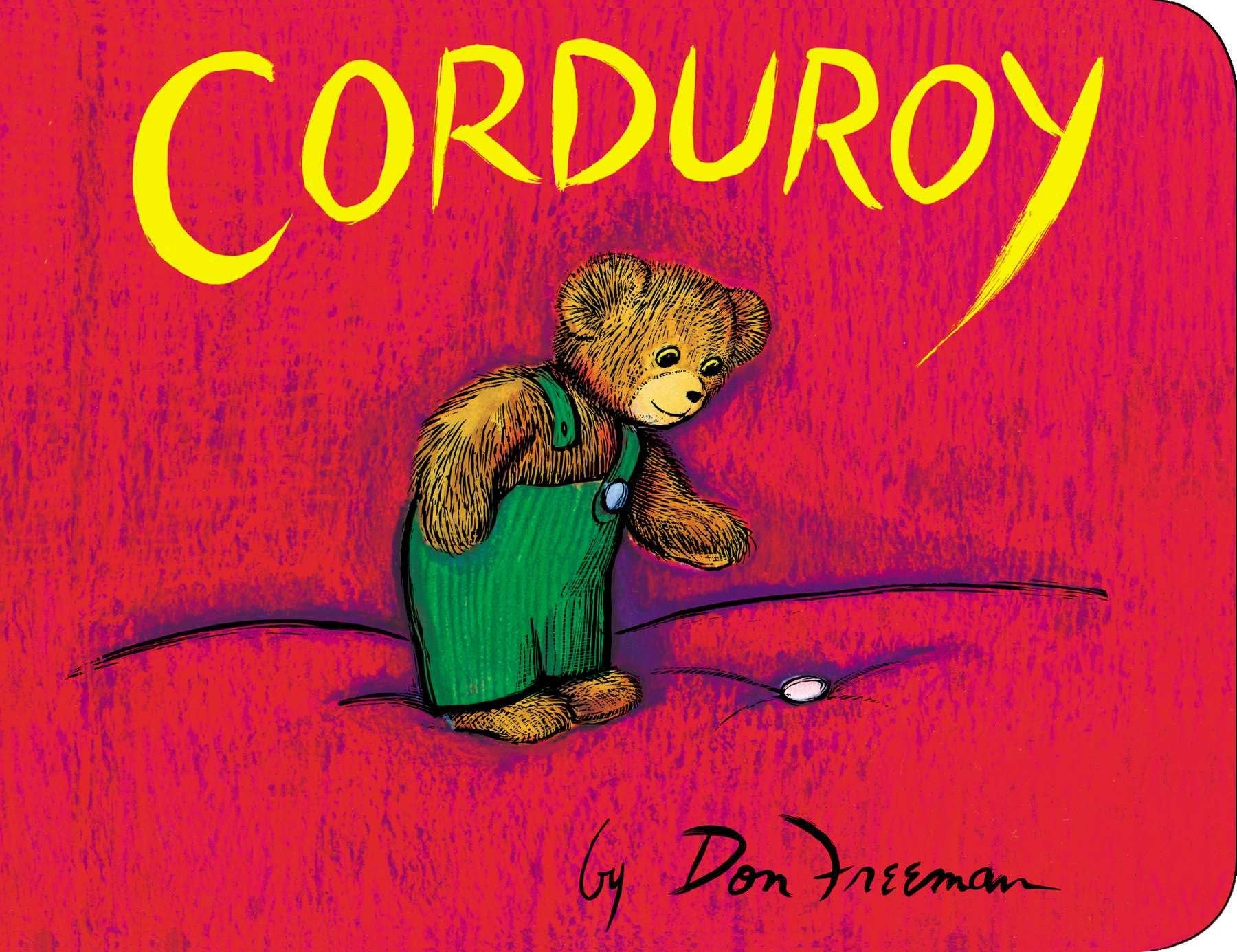
Corduroy
Key Features
- Series: Corduroy
- Dimensions: 6.5 x 0.79 x 5 inches
- Reading age: Baby – 4 years
- Print length: 34 pages
Corduroy is a department-store bear missing a button, and the story is small enough to fit in a child’s pocket. He waits on a shelf, a girl spends her savings on him, and the two go home together.
The board-book edition is 34 pages and sized for small hands, with a trim that is closer to a square than a picture book. The illustrations are warm and uncluttered, and the story has a gentle arc about being wanted. It is a classic without feeling fussy.
We like the way the friendship develops without a lecture. Lisa notices the missing button, comes back for him, and sews it on; the book lets that kindness speak for itself. It is also a useful step up from a one-word-per-page board book, with sentences a toddler can follow.
We keep it as the classic board-book pick for a quiet story before bed. The small trim is the compromise, but it is also what makes the book feel like a child’s own. Once the story lands, it stays.
Pros
- Gentle friendship story with a satisfying ending
- Board-book trim suits small hands
- Simple sentences suit a first read-aloud
Cons
- Older pacing may lose very young toddlers
This is the classic board book we choose for a quiet friendship story that still fits small hands.
Best for Older Kids
The Giving Tree

Key Features
- Dimensions: 7.5 x 0.38 x 10 inches
- Grade level: 2 – 3
- Reading age: 2+ years
- Print length: 64 pages
- Price: Midrange
The Giving Tree is a short book with a long shadow: a boy and a tree, a lifetime of giving, and an ending that leaves readers arguing about what it means. We read it as a story about love and also about taking, which is why it stays in the conversation.
Shel Silverstein’s black-and-white drawings are spare, and the text is simple enough for a second- or third-grader to read alone. The book runs 64 pages, though many spreads carry only a line or two, so it moves faster than the page count suggests.
The emotional register is the thing to know before buying. The tree gives everything it has, and the boy keeps coming back; the story invites strong feelings and strong opinions. That is not a flaw in the book so much as the reason it invites discussion.
We read it with an older child who wanted to talk about whether the boy was kind, and the conversation was the point. A younger toddler will not get much from it beyond the pictures.
We recommend it for children ready to talk about giving, need, and what a story can make them feel. It is not the lightest pick here, and it is not the first book for a baby. For a family that reads and discusses together, it earns its place on the shelf.
Pros
- Spare story opens a real conversation about giving
- Simple text suits second- and third-grade readers
- A classic that stays with older children
Cons
- Can feel sad or unsettling
We recommend it for older children ready to talk about giving, need, and what a story can make them feel.
Best for Interactive Toddlers
Where’s Spot?

Key Features
- Format: Board book
- Reading age: 1-2 years
- Print length: 22 pages
- Interactive feature: Lift-the-flap
The lift-the-flap search is the whole engine of this book. Sally looks for Spot, opens a door or a basket, and finds another animal instead; the child gets to say no, turn the flap, and keep looking.
The story is deliberately simple, with one repeated question and a cast of animals that are easy to name. That repetition is what makes it work for a one- or two-year-old: they know what comes next, and the knowing is the fun.
The board pages are 22 pages in a small square trim, which makes the book easy to hold and easy to pack. The flaps are the interactive part, and they give a toddler something to do with their hands while the adult reads.
We found the book best for supervised reading rather than independent play. A child who is still learning gentle hands gets more from it with an adult nearby, and the search stays playful rather than becoming a tug-of-war.
We recommend this for the toddler who needs to touch the story, not just hear it. It is a short, sturdy book with a clear payoff, and the final reveal still gets a smile. Keep it in the read-together basket, not the toy bin.
Pros
- Lift-the-flap search keeps toddlers participating
- Simple repeated question builds anticipation
- Small board book packs easily
Cons
- Flaps can tear with eager handling
We recommend this for supervised toddler reading, where the hunt and the flaps are the whole point.
How We Chose and Tested the Best Kids’ Books
We started by building a shortlist from award lists, bestseller shelves, and the titles kids actually ask for again and again—then filtered by age range, format, and price so the list made sense for babies through early elementary. That left us with 18 books: board books, picture books, lift-the-flap titles, and a few hardcovers that looked gift-ready right out of the box. We skipped novelty formats that seemed more toy than book and made sure we included a handful of older classics alongside newer stories.
Testing ran for four months, mostly at bedtime and nap time, with kids ages 1 to 7. We read each book aloud multiple times and watched for the signals that matter: whether a child asked for it again, pointed at the illustrations, finished the story without wandering off, or started reciting lines. For the lift-the-flap books, we opened and closed every flap repeatedly, then handed the book to a 2-year-old to see how it survived real page-turning. We also checked corners, spines, and page thickness after a few weeks of use.
Because so many of these books are bought as gifts, we wrapped each one, set it out on a table, and judged whether it looked presentable enough to hand over without a supplement. We noted which stories felt timeless and which illustrations invited conversation, and we kept reading the strongest contenders long after the official test ended to see if they held up. The flimsy flaps showed themselves quickly; the books that survived are the ones still in rotation.
How to Choose Books for Kids
The right book is less about the label on the cover and more about the reading moment you are buying for: a baby who chews board pages, a toddler who wants the same refrain, or a new reader who needs a stack of short successes.
Match the format to the child’s hands
A board book is the right first purchase for a child who still mouths pages, drops books from a high chair, or turns with a whole hand. The thick pages survive that. Paper picture books are for lap reading and for children who can turn a page without crumpling it, while a boxed set is a shelf purchase rather than a first book.
The trap is assuming a board book is indestructible. Lift-the-flap titles add a moving part, and those flaps are usually the first thing to wear. We keep interactive books in the read-together stack and leave plain board books in the toy basket.
Read the stage, not just the age
Reading-age labels are a starting point, not a gate. A two-year-old can enjoy a picture book aimed at five-year-olds if the pictures carry the story and the adult shortens the text; a five-year-old may still want a board book at bedtime. Use the label to judge interest and content, not to decide whether a child is allowed to enjoy it.
For independent reading, look for controlled vocabulary, rhyme, and short sentences. A beginner boxed set can wait until a child is sounding out words, but it can also serve as a read-aloud library before that. The useful question is whether the child is ready to read it alone, not whether the set looks impressive on the shelf.
Choose a read-aloud rhythm you can live with
You will read the winning book dozens of times, so read a page aloud before you buy. Rhyme and repetition are not decoration; they are what lets a child join in and what keeps the adult from stumbling. A book that looks charming on the page can be a chore at 8 p.m. if the meter is clumsy.
Cumulative stories, alphabet chants, and call-and-response books are especially good for toddlers because the pattern does the memory work. If you find yourself rushing the lines, the child will too. Choose a rhythm that feels natural in your voice.
Know the emotional register
Some classics are not gentle bedtime stories. A picture book can be scary, sad, or morally complicated, and that is often why it lasts. The Giving Tree is the obvious example here: it invites strong feelings about giving and taking, and it is better for a child ready to talk than for a toddler who just wants a cuddle.
Preview the ending before you give a book as a gift, especially if the child is sensitive to loss or conflict. Where the Wild Things Are gives a safe scare because Max returns home; a story that ends on sadness needs a different kind of reader and a different moment.
Buy for the shelf you actually have
A five-book boxed set looks efficient, but it takes more shelf space than a single picture book and can overwhelm a child who is still choosing by cover. Start with one or two titles from a series if you are unsure, then add the set when the child asks for more.
For gifts, a single handsome picture book often works harder than a stack, because it can be read that night. For a family building a library, a set of beginner readers earns its footprint once the child is ready to read alone. Buy the shelf you need, not the one the listing photographs.
Frequently Asked Questions
How do I get a toddler to sit through a whole book?
Start shorter than you think. A book with one or two lines per page and a strong rhythm gives a toddler a finish line they can see. Follow their point instead of forcing the words; if they turn back a page, read it again. Stop while they are still interested, even if the book is not finished. The habit is built on happy short sessions, not complete ones.
Is a boxed set worth buying before my child can read?
Yes, if you plan to read the books aloud now. A set of standalone stories can become a family library before it becomes independent reading. Wait on a leveled series until the child is actually sounding out words, and choose a set with individual titles rather than one long volume. That way the purchase grows with them instead of sitting sealed.
What should I do if a lift-the-flap book tears?
Repair it before it goes back into rotation. Smooth the flap flat, tape along the original fold with clear tape, and check for loose pieces that a baby could pick off. If the moving part is too damaged to secure, retire the book rather than leave a torn edge in reach. Supervision matters more than a perfect repair.
Final Verdict
For most families, The Very Hungry Caterpillar is the book we recommend first. It is sturdy enough for a baby, short enough for a tired parent, and layered enough to teach counting and days without turning bedtime into a lesson.
If your child is in the color-and-animal phase, choose Brown Bear, Brown Bear; if you want a rhyming story with more plot, Room on the Broom is the better read-aloud. For a new reader, the Dr. Seuss boxed set gives you a shelf of short successes. Start with the stage in front of you, not the label on the cover.
