This post contains affiliate links. We may earn a small commission when you buy through our links — at no extra cost to you.
Ask anyone who reads to a toddler: a favorite book is an endurance test. It gets read four times before breakfast, dragged by one corner, and judged by a critic who will walk away mid-sentence. The books that survive—and get asked for again—have a rhythm that’s easy to read aloud, pictures that make sense from a lap, and just enough story to hold a squirmy listener. I’ve been reading to a 2-year-old, and our team has spent five months with 16 board books, picture books, and classics to see which earn their shelf space.
Toddlers will skip the page you love, demand the same spread twice, and notice when a rhyme lands awkwardly—so readability matters more than jacket copy suggests. We also weighed content and educational value, because a book can be charming and still be too long or too abstract. A few sound books made our test pile; we listened for clear speakers, sensible volume, and buttons a small hand can press. The picks below held up to repeated readings, not just one enthusiastic pass.




Best for First Toddler Book
The Very Hungry Caterpillar
Key Features
- Pages: 26
- Format: Board book
- Dimensions: 7.13 x 0.64 x 5 inches
- Reading age: 1+ years
The Very Hungry Caterpillar is the toddler book we recommend first because it does three jobs at once: it tells a simple story, gives a child a counting sequence to follow, and survives being carried around by one corner. In the compact board edition, the pages are thick, the trim is small enough for a toddler’s lap, and the bright collage art still looks fresh against the white space. We noticed that the book’s real trick is the pacing; the repeated ‘but he was still hungry’ builds a rhythm a child can predict before they can read.
The learning is built into the plot without feeling like a lesson. A toddler can count the fruits, name the colors, follow the days of the week, and wait for the butterfly payoff at the end. The die-cut holes give the counting a tactile beat, and the small format makes it a book a child can hold while the adult reads.
What keeps it in rotation past the first birthday is that it does not talk down. The story has a beginning, a feast, a stomachache, and a transformation, and the last page gives a toddler something to look forward to. We have found it works as a first book, a travel book, and a bedtime book without feeling like three different products. The butterfly page is the payoff; expect to turn back to the start.
Pros
- Toddler-sized board pages survive repeated handling
- Counting, days, and fruit create a learning arc
- Bright collage art and a butterfly payoff hold attention
Cons
- Die-cut holes are small in this compact edition
We tell new parents to start here: a sturdy board book with a counting story, bright collage art, and a butterfly payoff that keeps a 1-year-old turning pages.
Best for Colors and Animals
Brown Bear, Brown Bear, What Do You See?
Key Features
- Pages: 28
- Format: Board book
- Dimensions: 4.95 x 0.55 x 6.95 inches
- Reading age: 1 – 3 years
The question is the engine: ‘Brown Bear, Brown Bear, what do you see?’ A toddler hears the rhythm, sees the next animal, and by the third page is usually filling in the answer. The board edition is small, bright, and easy to hold, with one large animal portrait per spread and a plain white background that keeps the color lesson uncluttered.
We recommend it when you want a toddler to participate rather than just listen. The repetition is not a bug; it is the part that lets a 2-year-old ‘read’ back to you before they know letters. We found the color-and-animal structure gives a very young child a clear job on every page: point, name, turn.
It is also a book that grows with a child. At one, it is a picture-naming book; at two, it is a call-and-response game; at three, it is an early color and animal reference. The simple text will not teach a plot, but it does something more useful for this age: it builds the confidence to speak up during a book. We keep it in the diaper bag because it is small enough to matter.
Pros
- Call-and-response text invites toddlers to join in
- Bold animal portraits make color learning clear
- Sturdy board pages suit repeated grabs
Cons
- Repetitive text can wear thin for adults
- Small trim is best for one-on-one reading
We recommend Brown Bear when you want a toddler to join in rather than just listen; the call-and-response text and bold animal portraits make it a participation book.
Best for Bedtime Wind-Down
Goodnight Moon
Key Features
- Pages: 34
- Format: Board book
- Dimensions: 5.8 x 0.7 x 4.9 inches
- Reading age: Baby and up
- Price: Budget
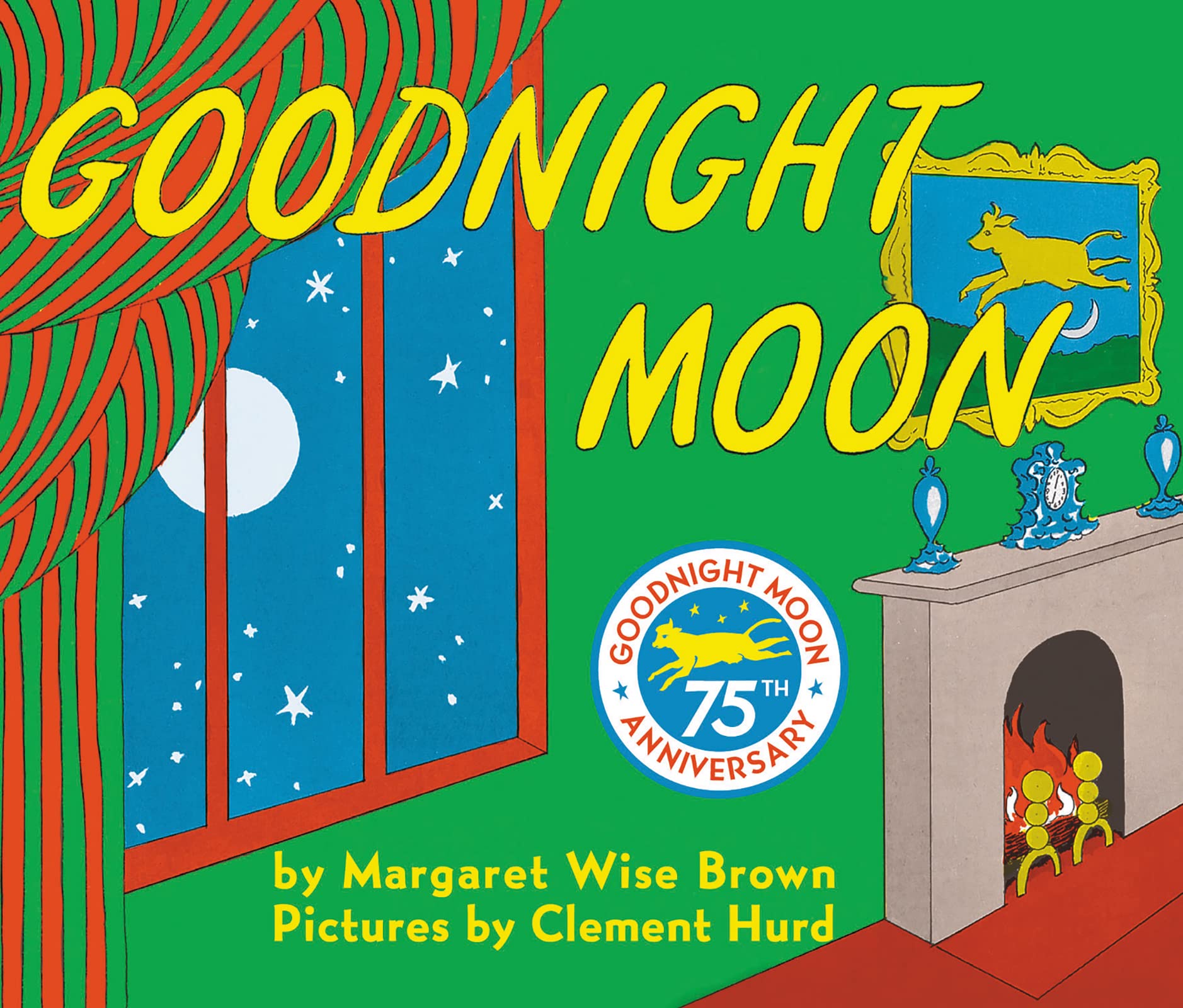
Goodnight Moon does not tell a big story. It says goodnight to the room, one object at a time, and that is exactly why it works at the end of the day. The board edition is small enough for a toddler to hold, with thick pages and a quiet pace that asks everyone to slow down.
The art moves between bright color and quieter black-and-white passages, which gives the book a visual rhythm of its own. We noticed that the familiar objects give a child something to point to without turning the read into a seek-and-find. The text is simple enough that a toddler can finish the last line.
We reach for it when bedtime needs a ritual rather than a plot. It asks for a dark room and a lap, and it rewards that setting. But as the last read of the night, it earns its place. The last goodnight lands like a closed door.
Pros
- Quiet, rhythmic goodnights slow the room down
- Small board format is easy for a toddler to hold
- Familiar objects give children something to point to
Cons
- Tiny trim is awkward for group reading
We keep Goodnight Moon for the last read of the night; its quiet rhythm and small board format make it a dependable wind-down book.
Best for Love-Themed Gift
I Love You to the Moon and Back
Key Features
- Pages: 28
- Format: Board book
- Dimensions: 6.44 x 0.62 x 6.63 inches
- Reading age: Baby and up
- Price: Budget
Some toddler books are built for participation; this one is built for the lap. I Love You to the Moon and Back is a short rhyming board book about the size of a slice of bread, and it works best when a parent and child are already settled in.
The text is a series of small assurances, and the rhyme keeps it moving. We found it easy to read at a sleepy pace without stumbling, which matters more than a complicated plot at this age. A toddler can follow the rhythm even if the words are still beyond them.
The illustrations are warm and detailed enough to invite pointing, and the message that love is unconditional is clear without becoming saccharine. It is also short enough to finish before a toddler’s patience runs out, which is a real virtue in a bedtime book.
We recommend it as a gift or a cuddle book rather than a story a child will act out. It does not have the participatory hook of Brown Bear or the learning arc of The Very Hungry Caterpillar, but it does something different: it makes the read feel like a hug. That is why it stays on our shelf.
Pros
- Warm rhyming text makes a soothing read-aloud
- Short board-book length fits a toddler’s attention
- Illustrations and message make it a strong gift
Cons
- More affirmation than plot
We reach for this one as a gift or a cuddle book: the rhyming text and warm illustrations say I love you without asking a toddler to follow a plot.
Best for Bilingual Word Learning
LeapFrog Learning Friends 100 Words Book
Key Features
- Format: Electronic learning book
- Age range: 18 months – 4 years
- Languages: English and Spanish
- Dimensions: 9.4 x 9.2 x 1.9 inches
- Price: Midrange
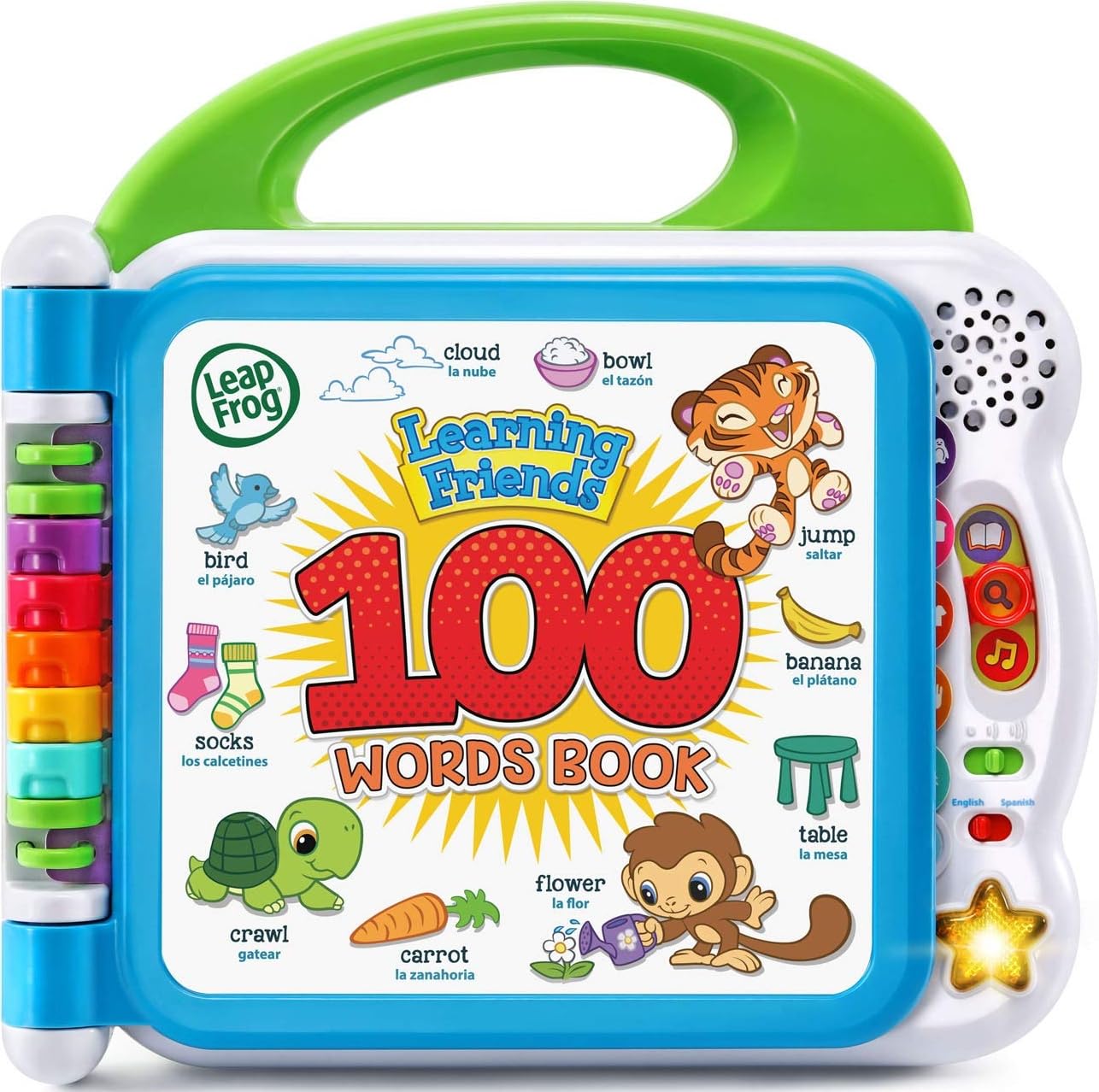
This is not a book you read; it is a book you operate, and that is why we recommend it for a toddler who wants to press, hear, and repeat. The LeapFrog Learning Friends 100 Words Book turns vocabulary into a cause-and-effect game: touch a word, hear it spoken, hear a sound effect, and move on.
The bilingual feature is the part that earns its place. Words, songs, and instructions can be heard in English or Spanish, and the categories give it more range than a sound-button board. We found the light-up star and theme song make it feel like a toy, which is exactly the point for a child who is not ready to sit for a story.
It works best as a supplement to paper books, not a replacement for them. A toddler can use it independently for a few minutes, but the learning sticks when a parent names the pictures alongside the voice. The volume control is there; use it in a small room. We also like that the word categories give a parent a way to extend the play beyond the screen-free book.
Pros
- Touching words triggers speech and sound effects
- English and Spanish modes add bilingual value
- 100 words across familiar categories build vocabulary
- Light-up star and song add replay value
Cons
- Sound quality divides listeners
- Requires 2 AA batteries
We recommend this for the toddler who wants to press, hear, and repeat: it teaches 100 words in English and Spanish, though it works best as a supplement to paper books.
Best for Alphabet Practice
Chicka Chicka Boom Boom
Key Features
- Pages: 36
- Format: Board book
- Dimensions: 5.5 x 0.9 x 7.25 inches
- Reading age: 1 – 4 years
- Price: Budget
The letters are characters, the tree is a stage, and the whole book is a chase. Chicka Chicka Boom Boom takes the alphabet and turns it into a rhyming race, with bright pages and big letters that give a toddler something to spot before they know the alphabet.
We recommend it for the older toddler who already likes to shout out letters. The rhyme pulls a 2- or 3-year-old along, and the book manages to teach capital and lowercase letters without a worksheet. We appreciated that it is a step up from simpler alphabet books; there is a plot, a tumble, and a reason to turn the page.
It is a high-energy read, not a bedtime one. The faster pace may lose a 1-year-old who is still working on board-book patience. For the right child, though, it is the book that makes letters feel like a game. The repeated ‘chicka chicka boom boom’ is the part they shout back.
Pros
- Letters become characters in a rhyming chase
- Bright, bold alphabet pages invite spotting
- Board format holds up to repeated reads
Cons
- Alliterative text can be a mouthful to read aloud
We recommend Chicka Chicka for the older toddler who loves rhythm and letters; it is a high-energy alphabet race, not a quiet first board book.
Best for Truck Bedtime
Goodnight, Goodnight, Construction Site
Key Features
- Pages: 30
- Format: Board book
- Dimensions: 7.1 x 0.85 x 6.2 inches
- Reading age: 2 – 3 years
- Price: Budget
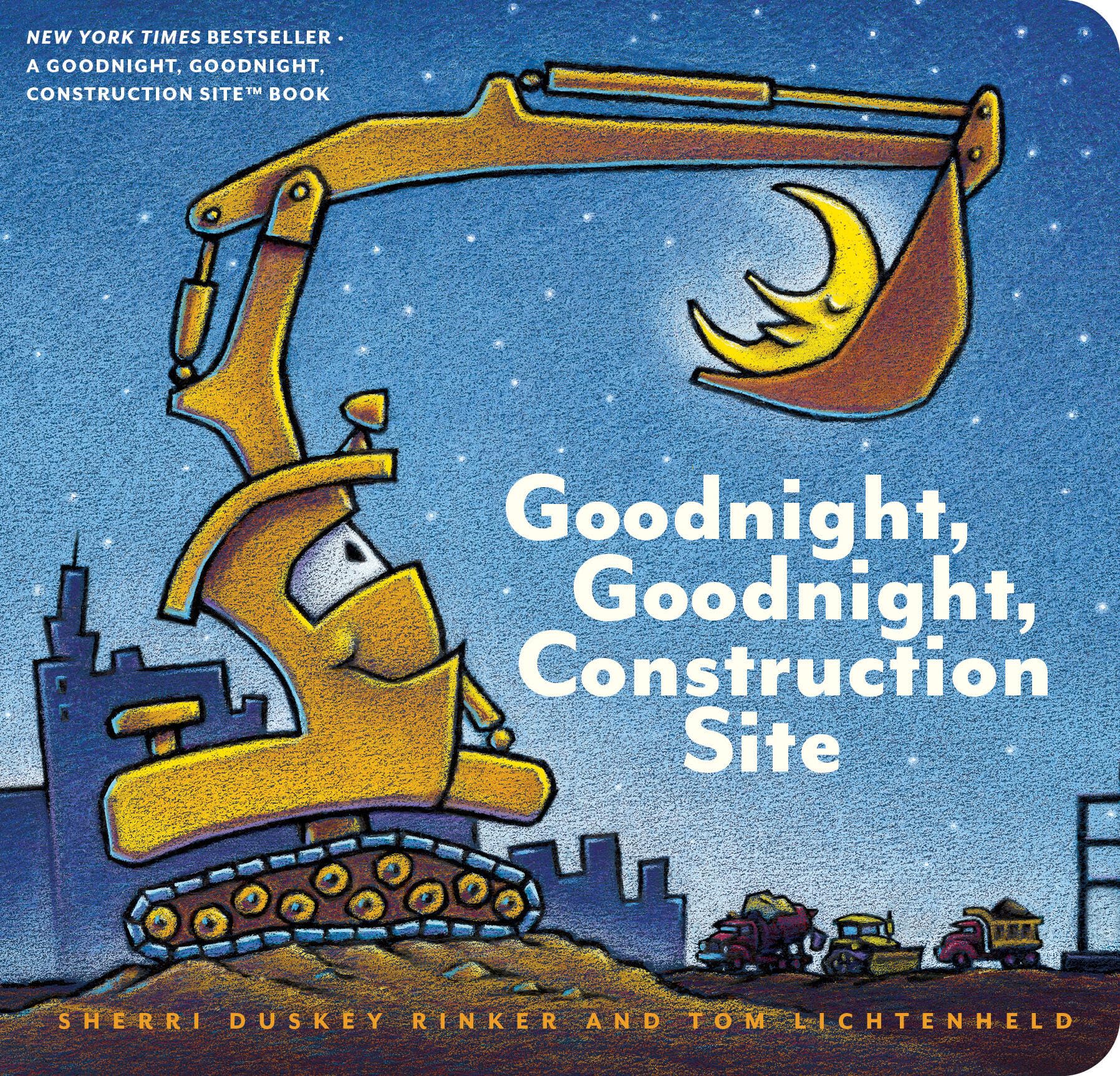
The crane lowers its boom, the bulldozer parks, and the rhyme slows down with them. Goodnight, Goodnight, Construction Site takes the truck book and turns it into a bedtime routine, with each machine finishing its job and settling in for the night.
The construction vocabulary is the hook. A toddler gets to name diggers and dump trucks, and the rhyming text gives the read a soothing rhythm. We found the bedtime charm is real, and the truck details are what make it land.
We recommend it as a bedtime book that happens to teach construction vocabulary. The board pages are sturdy, the illustrations are big enough for a lap read, and the last spread is the one that gets a yawn. It is a specific pick, but a good one.
Pros
- Rhyming bedtime routine calms truck-loving toddlers
- Construction vehicles are named and given jobs
- Sturdy board pages stand up to play
Cons
- Narrow truck appeal limits its audience
We recommend this for truck-loving toddlers who need a wind-down book; the rhyming bedtime routine turns diggers and cranes into sleepy characters.
Best for Classic Friendship Story
Corduroy
Key Features
- Pages: 34
- Format: Board book
- Dimensions: 6.5 x 0.79 x 5 inches
- Reading age: Baby – 4 years
- Price: Budget
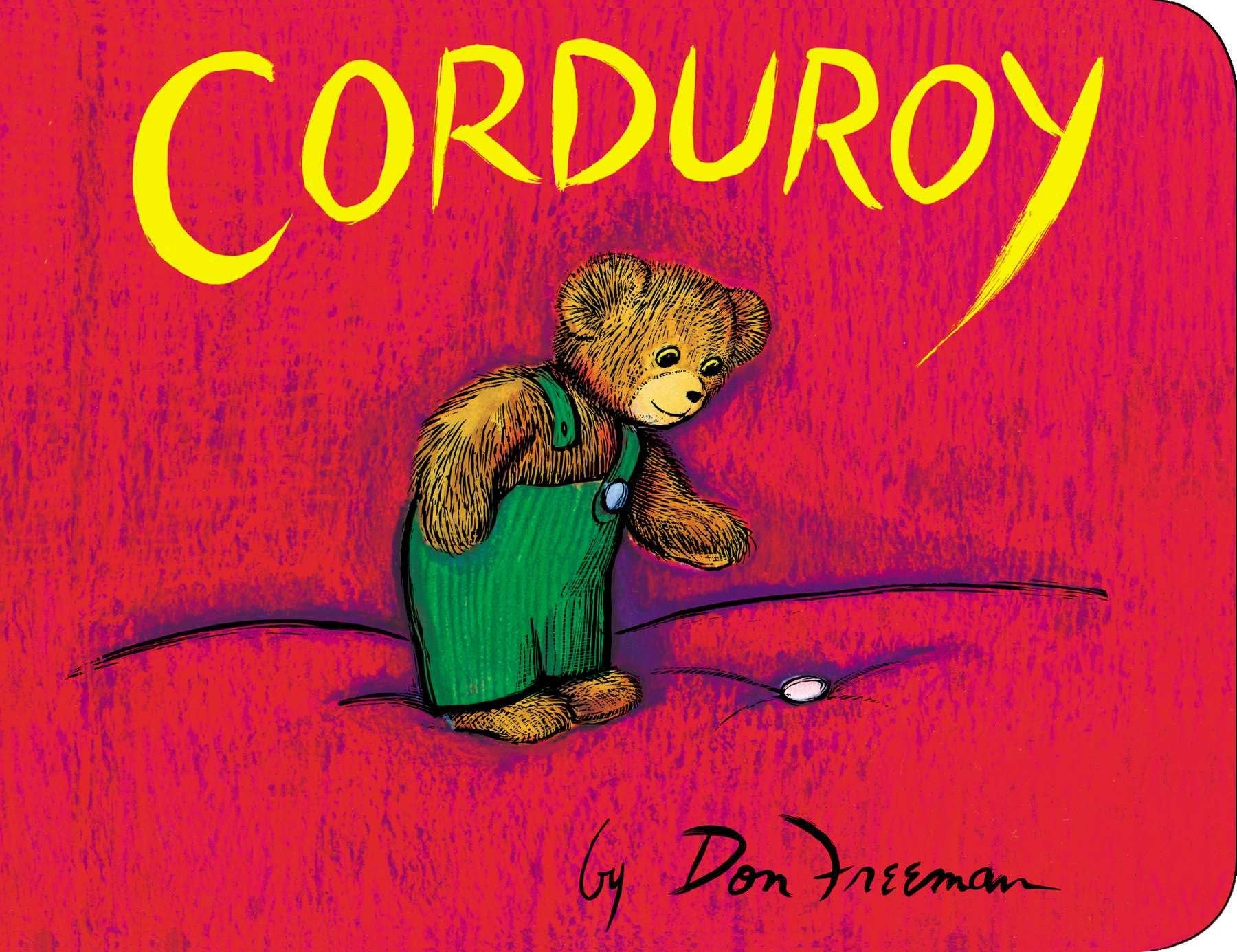
Corduroy is the quiet classic in this stack. The board edition is small enough for a toddler to hold, and the story is a gentle friendship tale with a sweet ending, which makes it a good change of pace from the rhyming chant-alongs.
We appreciate that it gives a toddler a real narrative to follow. There is a character to care about, a small problem, and a resolution that feels warm rather than lesson-y. The illustrations have a calm, classic look that holds up next to brighter modern board books.
It is also a book that invites conversation. The story deals with love and acceptance in a simple way, and a parent can talk about feelings without turning the read into a lecture. We found it works best as a shared read, with a parent nearby to help with the story’s quieter moments.
We recommend Corduroy as an also-consider for the child who has moved beyond pointing books and wants a story. It is not as interactive as the novelty books here, but it earns its place on the shelf as the calm, classic option. The last page is the one that makes a child ask for it again.
Pros
- Gentle friendship story with a sweet ending
- Board pages make the classic easy to handle
- Calm illustrations invite conversation about feelings
Cons
- Longer text may lose a 1-year-old
We recommend Corduroy for a toddler ready for a gentle friendship story; the board edition makes the classic easy to handle and revisit.
How We Tested Toddler Books
To build the shortlist, I started with award lists, library storytime recommendations, and the books toddlers in my life already ask for, then filtered for board-book durability, page count, trim size, and price. We ended up with 16 titles—newer stories, sturdy board books, a few picture books, and a handful of classics—and read them over five months in the places they actually get used: bedtime, after nap, the car seat, and the diaper bag.
Every book got repeated read-alouds, not a single polite pass. I paid attention to whether the words tripped me up, whether the rhyme scanned, and whether a 2-year-old stayed with the story or started flipping ahead. We held each book at lap distance to check illustrations—could a child name what was on the page, or were the pictures too busy from where they sat?—and talked through colors, animals, letters, and numbers to see which books invited that kind of exchange.
For the classics, we re-read them with a current toddler rather than trusting memory; some still clicked, and some felt long. We also checked content for anything dated or oddly scary. For sound books, we pressed every button, listened for crackle or muffled speakers, and tested volume from across the room—then handed the book to a toddler to see whether the buttons were reachable and not too easy to trigger by accident.
How to Choose Toddler Books
The best toddler book is the one your child can handle, follow, and ask for again, so start with format and pace before you fall for the cover.
Start with board-book durability
For a 1- or 2-year-old, the binding is part of the purchase. Board books have thick pages that survive grabbing, dropping, and the occasional chew, while paper picture books are better for a supervised lap read. We prioritize board books for the first shelf and add paper picture books when a child is past the grab-and-rip stage. Check the trim size too: a 7-by-5-inch board book fits a diaper bag, while a 10-inch picture book is a lap book.
Match the text to the attention span
Open a spread and count the lines before you buy. A 1-year-old usually does best with one short line or a repeated phrase per page; a 2- or 3-year-old can handle a couplet and a simple sequence. Page count is a rough guide, not a rule. Goodnight Moon is 34 pages but reads quickly, while Chicka Chicka Boom Boom is 36 pages of faster wordplay. If the text looks dense on the page, it will feel dense at bedtime.
Read it aloud before you commit
Rhythm matters more than plot at this age. A book that trips you up on the first read will trip you up every night, so read a page aloud before you commit. Look for a refrain a toddler can finish, a rhyme that does not force the stress, and a story that ends before the child’s patience does. Brown Bear’s call-and-response and Chicka Chicka’s alphabet chase are good tests of whether a book has a read-aloud engine.
Choose interaction with a purpose
Interactive books can be wonderful or just busy. Die-cut holes, repeated phrases, and touch-and-feel patches give a toddler a job to do; electronic books add sound and bilingual vocabulary but also batteries and volume control. We like one interactive book in the rotation, not a whole shelf of them. The LeapFrog 100 Words Book is a supplement for word learning, while The Very Hungry Caterpillar uses holes and counting to keep the story moving.
Size it for your reading life
Think about where the book will live. A compact board book is the one that goes in the diaper bag, the car, and the stroller; a larger picture book is for the couch, the bedtime shelf, or a gift. If you are buying for a baby shower, a larger keepsake edition can feel more special, but a small board book will get more daily use. Check the dimensions rather than the cover image, because product photos make small books look bigger.
Frequently Asked Questions
How do I get a toddler to sit through a whole book?
Start with a book that has one line per page and a refrain they can finish. Sit side by side, let them turn the pages, and stop when they lose interest instead of pushing to the end. A 24- to 30-page board book is plenty at first; you can build up to longer stories like Corduroy as their attention grows.
Is it bad if my toddler wants the same book every night?
No. Repetition is how toddlers build memory, vocabulary, and the confidence to join in. Keep two or three favorites in rotation and add one new book at a time; if you are tired of the favorite, hide it for a week rather than retiring it. The books that survive repeat reads usually have a strong refrain or a clear sequence.
What should I look for in a bedtime toddler book?
Look for a calm rhythm, a short text, and an ending that slows down rather than winds up. Read the last two pages aloud before buying; if the lines make you rush, the book will do the same at bedtime. Goodnight Moon and Goodnight, Goodnight, Construction Site are built for that last-read slot, while Chicka Chicka Boom Boom is better for daytime energy.
Final Verdict
If you buy one toddler book, make it The Very Hungry Caterpillar. It has the rare combination of a real learning arc, a read-aloud rhythm that does not wear out, and board pages that survive a 1-year-old’s grip. We reach for it before a first birthday and keep it in rotation past the second.
If your toddler learns by joining in, Brown Bear is the better fit; if bedtime is the battlefield, Goodnight Moon is the one we hand over last. The right choice is the one that matches your reading routine, not the longest shelf.
