This post contains affiliate links. We may earn a small commission when you buy through our links — at no extra cost to you.
Starting solids is equal parts excitement and anxiety. You want your baby to master self-feeding, but every bite brings a silent calculation: will this dissolve quickly enough? The baby aisle promises ‘melt-in-mouth’ safety across dozens of snacks, yet countless parents discover puffs that turn gummy, wafers that snap into rigid chunks, and melts that leave a powdery residue rather than a smooth dissolve.
This guide cuts through the texture theater. Instead of trusting the marketing, we focus on which finger foods consistently break down with saliva without posing a hidden hazard—and which ones work best for specific stages, from first pincer grasps to teething relief. The right pick depends not on brand loyalty, but on genuine dissolving behavior and how the snack holds up in a real high chair.


Best for First Self-Feeder
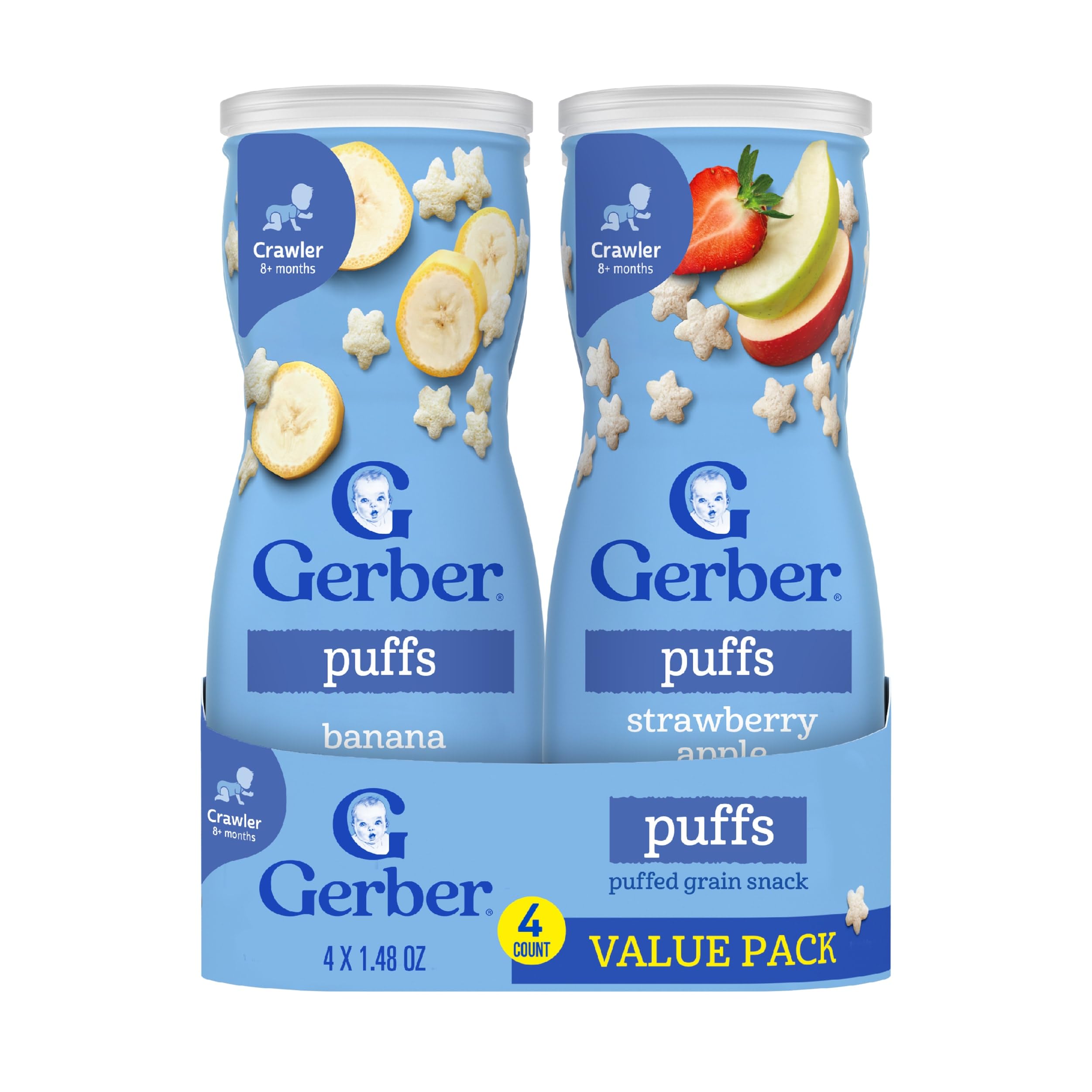
Gerber Puffs Variety 8-Pack
Key Features
- Age/Stage: 8 months+
- Ingredients: No artificial, non-organic
- Dissolving Safety: Quickly dissolves
- Portion Size: 8 x 1.48 oz cans
- Flavor: Banana, strawberry apple
- Price: Mid-Range
Gerber Puffs dissolve on contact with saliva, matching the texture needed for safe self-feeding. Each serving provides 20% DV iron and choline, and the two-flavor variety (Banana and Strawberry Apple) keeps snack time interesting without artificial ingredients.
The light, airy shape encourages pincer grasp development while producing minimal mess — crumbs stay contained inside the can or on a tray. The 8-pack is easy to toss into a diaper bag for outings, and the resealable lids help maintain freshness when traveling.
Ideal for parents introducing first finger foods to babies 8 months and older who can sit up and chew. Not certified organic, and freshness can vary between shipments — check the seal on arrival and plan to use each can within a few days of opening for the best texture.
The price per can undercuts many organic alternatives, making this a cost-effective choice for daily use. Multi-pack format means fewer trips to the store and more backup cans for hungry little hands.
Pros
- Flavor variety that babies enjoy, making snack time pleasant.
- Dissolves quickly and safely, reducing choking risk during self-feeding.
- Multi-pack delivers solid value, lowering the cost per container.
- Compact containers travel well for snacking away from home.
Cons
- Freshness consistency can vary — some containers arrive less crisp or soften faster after opening.
For parents introducing solids, Gerber Puffs offer the best balance of safety, nutrition, and cost — just check the seal and plan to use promptly.
Best for Pincer Grasp
Happy Baby Yogis 3-Pack
Key Features
- Age/Stage: 6+ months
- Ingredients: USDA Organic, non-GMO
- Dissolving Safety: Freeze-dried, some powder
- Portion Size: 3 x 1 oz bags
- Flavor: Mixed berry, peach, banana
- Price: Mid-Range
Made with USDA Organic yogurt and real fruit purées, these freeze-dried melts bring a creamy, tangy-sweet flavor that distinguishes them from bland starch-based puffs. No artificial colors, flavors, or sweeteners enter the recipe — just cultured whole milk yogurt and recognizable ingredients like banana, strawberry, and mango. That commitment to ingredient quality makes them the go-to for parents who want a first finger food that skips the additives common in non-organic snacks.
The small, rounded disc shape is sized for crawling babies who are just developing pincer grasp. Melts are firm enough to pick up but dissolve into a yogurt-like paste with minimal chewing, turning snack time into a self-feeding exercise. Three one-ounce resealable bags slip into a diaper bag without crushing, so the snack doubles as a portable activity during errands or travel.
This variety pack fits families who prioritize certified organic, non-GMO ingredients and need a mess-resistant snack that encourages motor skill development. The tradeoff: melting consistency varies between batches. While most pieces dissolve into a smooth paste, a small number of bags produce a drier, powdery residue that takes longer to break down. Babies who are still learning to manipulate textures may notice the difference, but the melt still softens safely. If smooth dissolve is the top priority, the leading puff delivers more uniform results; if organic ingredients and bold fruit-yogurt flavor matter more, these earn their spot.
Pros
- Real yogurt and fruit taste — creamy and tangy-sweet — that babies and toddlers reach for
- Encourages self-feeding and pincer grasp development with an easy-to-grip disc shape
- USDA Organic, non-GMO ingredients and no artificial additives give parents confidence in what they’re serving
- Resealable, pocket-sized bag that withstands the diaper bag crush and makes on-the-go snacking simple
Cons
- Melting can be powdery rather than smoothly dissolving in some bags, creating a brief texture mismatch for youngest eaters
- Higher cost per ounce compared to bulk-purchased non-organic puff alternatives
A smart fit for organic-first families who will accept the small tradeoff of variable melt texture in exchange for real yogurt-and-fruit flavor and a snack that doubles as a motor-skill trainer.
Best for Savory Alternative
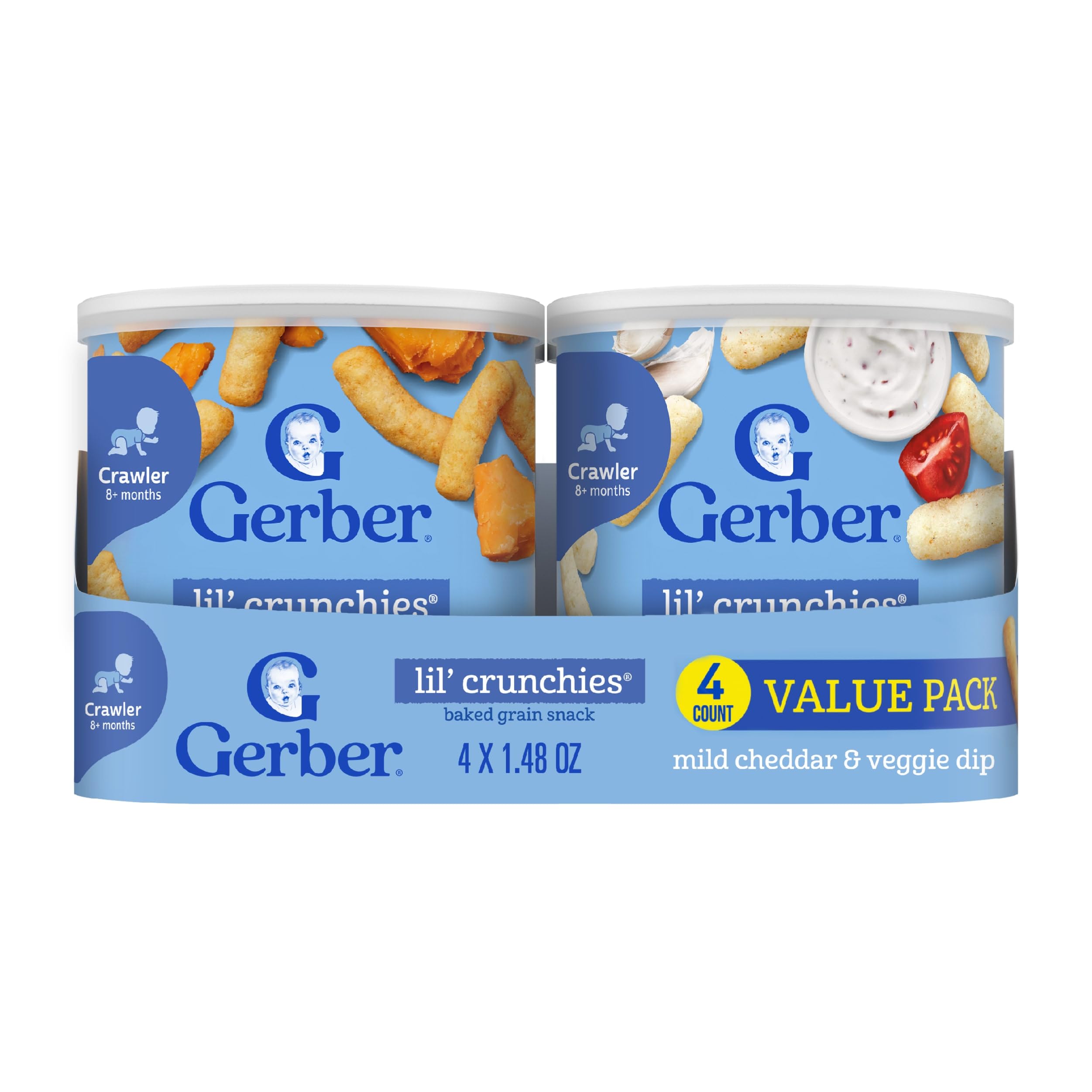
Gerber Lil’ Crunchies 8ct
Key Features
- Age/Stage: 8 months+
- Ingredients: No artificial, non-organic
- Dissolving Safety: Quickly dissolves
- Portion Size: 8 cans
- Flavor: Mild cheddar, veggie dip
- Price: Mid-Range
Where Gerber Puffs use a light, airy base that dissolves almost instantly, Lil’ Crunchies lean into a cornmeal crunch with a distinct cheddar flavor that holds its shape a second longer before melting. That slight additional texture makes them feel more like a real snack—a plus for older babies who’ve moved past the touch-and-dissolve stage and want something to gum with purpose. Each serving delivers 15% of daily iron and 20% of vitamin E, a meaningful nutrient bump in a finger food free of artificial ingredients.
The 8-can bulk pack cuts per-serving cost considerably, but the trade-off is rapid staling. Once a can is opened, the crunchies lose their snap within a day or two unless sealed airtight. This works for families who’ll empty a can quickly—think daycare providers, multiple-child households, or babies who snack frequently. It’s a poor fit if a single can stretches for a week. The cheddar and veggie dip flavors stay firmly in savory territory, making these a welcome change for parents tired of the near-ubiquitous sweet puff, but they have no organic certification and won’t satisfy a baby craving fruit tastes. For the 8-month-plus set ready for more texture, these are a low-risk way to introduce corn-based crunch without sacrificing safety—the pieces dissolve readily in saliva and are small enough for emerging pincer grasps.
Pros
- Cheesy flavor with broad appeal—older siblings and adults reach for it too.
- Bulk 8-can pack costs less per serving than buying single cans at grocery stores.
- Quick-melting texture that gums can handle, low choking risk for early self-feeders.
- Kid-sized crescent shape supports pincer grasp practice and doubles as a gentle teething aid.
Cons
- Staleness arrives within a day or two of opening unless the can is sealed tightly.
If you’re stocking up for a baby with a savory tooth and you’ll finish each can fast, the Gerber Lil’ Crunchies value pack delivers flavor variety and iron at a smart per-serving cost—just treat that plastic lid as a speed bump, not a seal.
Best for Teething & Grasp
Earth’s Best Crunchy Sticks
Key Features
- Age/Stage: 6 months+
- Ingredients: Organic, non-GMO
- Dissolving Safety: Quickly dissolves, crumbly
- Portion Size: 5 x 0.56 oz packs
- Flavor: Strawberry banana
- Price: Mid-Range
The stick shape immediately sets these apart from round puffs and melts. It fits naturally into a baby’s palm, encouraging early grasping and self-feeding well before the pincer grip refines. Compared to wafer-style teethers that demand a more confident bite, these sticks soften with saliva and dissolve with minimal chewing, making them accessible for a 6-month-old just beginning solids.
That dissolving behavior is the core safety feature. The stick melts into a soft paste quickly, lowering the anxiety that can accompany first finger foods. The mild strawberry-banana taste comes from organic fruit and vegetable ingredients without artificial additives, and the light crunch offers enough resistance to massage sore gums during teething.
Parents looking for an organic, non-puff, non-melt option for a baby’s earliest snacks will find a match here. The unavoidable tradeoff is the crumbly texture—these sticks fracture into tiny pieces that scatter over high-chair trays, laps, and clothes. For those willing to trade a two-minute cleanup for a stick-shaped teether that dissolves predictably, the compromise is manageable.
Pros
- Stick shape is easy for small hands to grasp, helping teething babies practice self-feeding.
- Dissolves quickly and safely, easing parent concerns about choking for babies 6+ months.
- Mild strawberry-banana flavor from organic ingredients with no artificial additives.
Cons
- Sticks crumble into tiny, messy pieces that can spread across trays and clothes, requiring cleanup.
When stick-shaped teething and quick dissolving rank above a crumb-free tray, these organic sticks give early self-feeders a sensible start.
Best for Trial Pack
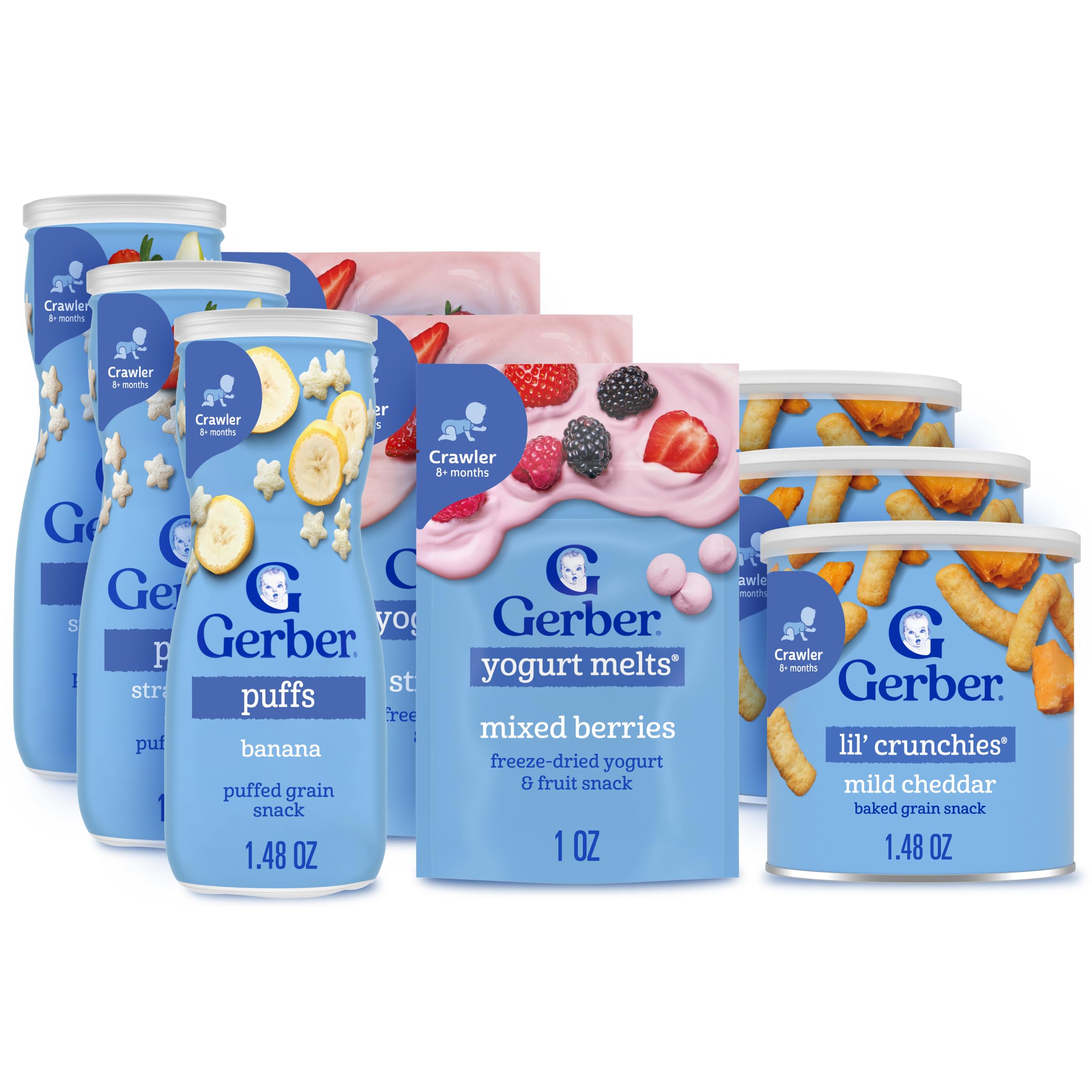
Gerber 9ct Variety Sampler
Key Features
- Age/Stage: 0–10 months
- Ingredients: No artificial, non-organic
- Dissolving Safety: Mixed: puffs dissolve, melts vary
- Portion Size: 9 cans
- Flavor: Assorted (puffs, melts, crunchies)
- Price: Premium
Nine individual cans split across sweet puffs, savory Lil’ Crunchies, and fruity yogurt melts give a broad flavor rotation without buying three separate multipacks. Each can seals tightly enough for days-long freshness, and the compact size slides easily into a diaper bag.
The sampler format costs more per ounce than single-type bulk packs, so it’s not the pantry stock-up choice. Yogurt melts are the wildcard: their dissolving texture can skew powdery or sticky rather than smooth, and some cans ship closer to the best-by date. Still, for parents uncertain which snack will click, the variety justifies the premium as a low-risk trial run.
Pros
- Varied flavors and textures keep mealtime interesting, helping identify your baby’s preference.
- Sampler format costs less than buying all three types separately, making it a budget-friendly trial.
- Small, portable cans are easy to stash in a diaper bag for on-the-go snacking.
Cons
- Yogurt melts can have a powdery or sticky texture that doesn’t dissolve as smoothly as expected.
- Some melts may require more chewing than anticipated, making them less suitable for the earliest self-feeders.
This variety box makes sense as an introduction to finger foods when you don’t know if your baby will favor puffs, crunchies, or melts, but once a favorite emerges, switching to single-type bulk cans will save money.
Best for Older Toddlers
Goldfish Baby Crackers

Key Features
- Age/Stage: Not baby-specific (12m+ only)
- Ingredients: Real cheddar, no artificial
- Dissolving Safety: Not dissolvable
- Portion Size: 1 x 7.2 oz bag
- Flavor: Cheddar
- Price: Budget
Baked with real cheddar and free from artificial flavors, these tiny crackers deliver the familiar savory Goldfish taste that kids willingly grab. Their bite-sized shape helps older toddlers refine self-feeding and pincer skills, and the budget-friendly bag stays crunchy and fresh across many snack times.
The firm texture is not designed to dissolve. That means these crackers are off the table for infants 6–12 months just starting self-feeding—they require active chewing and pose a choking risk for that stage. For toddlers past the one-year mark who have moved beyond melts and puffs, they offer a low-hassle, widely available bridge to traditional crackers.
Pros
- Classic Goldfish cheese flavor that toddlers and adults enjoy, without over-sweetness.
- Mini size ideal for older toddlers practicing self-feeding and pincer grasp.
- Budget-friendly single bag that stays fresh and crunchy for multiple uses.
Cons
If your child is 12+ months and has moved beyond dissolvable snacks, these budget-friendly crackers provide a familiar cheesy taste and a self-feeding size, but they are not a first finger food.
How to Choose
The critical difference between a safe first snack and a risky one comes down to how the food breaks down in saliva—not just its label.
Age/Stage
Manufacturer age labels are rough guides; a ‘6+ months’ claim doesn’t guarantee the same dissolvability as a puff designed for 8+ months. The younger the baby, the more important it is that a snack starts transforming into a paste the second it touches the tongue.
If your baby is just starting solids with a strong gag reflex, choose puffs or melts that lose shape instantly. Save stick-shaped teethers or wafer-style snacks for when they’ve built oral coordination, usually closer to 10–12 months.
Ingredients
Organic certification means the ingredients were grown without synthetic pesticides, but it often comes with a smaller total weight per package. You may pay more per ounce for organic melts than for a conventional puff pack.
Weigh how important organic is to your household against daily cost. For a snack that’s eaten in small handfuls, the organic premium can be acceptable; for a toddler who polishes off a can in two days, a non-organic bulk option may make more sense.
Dissolving Safety
Not all ‘melt-in-mouth’ claims are created equal. Freeze-dried yogurt snacks, for example, sometimes produce a dry, powdery residue instead of a smooth dissolve, which can confuse a baby and trigger coughing.
Teething wafers can break into rigid, sharp-edged chunks before saliva fully softens them, creating a temporary obstruction risk. If dissolving consistency is your top priority, stick with puffs that have a long track record of turning into mush almost instantly.
Portion Size
Bulk packs slash the cost per container, but a common frustration is that opened cans can go stale within 48 hours. Puffs and crunchies depend on airtight seals to maintain crispness.
If you go through a can every few days, a value pack is a money-saver. If a single container lasts a week, consider buying smaller multi-packs and transferring uneaten snacks to a sealed jar immediately.
Flavor
Variety packs let you test whether your baby prefers sweet fruit puffs, creamy yogurt melts, or savory cheese crunchies. The hidden trade-off: once you know a favorite, buying a single-flavor bulk box is almost always cheaper per serving.
Babies can be fickle, but stocking up on one proven favorite reduces waste from uneaten flavors. Use samplers as a discovery tool, then commit to the flavor that consistently gets emptied.
FAQ
Why do some yogurt melts turn into powder instead of dissolving?
Freeze-dried yogurt melts can absorb moisture inconsistently, leaving a dry, powdery residue instead of a smooth paste. This often results from storage conditions or batch variability. If your baby struggles with the texture, switching to a puff that consistently dissolves into a wet mush is a safer, less frustrating alternative.
Can teething wafers be a choking risk even if they say ‘dissolvable’?
Yes. Some teething wafers break into hard, jagged chunks before saliva can soften them, creating a blockage risk—especially for younger infants without molars. For babies under 10 months, start with puffs or melts that lose structural integrity the moment they touch moisture.
How long do baby puffs stay fresh after opening the can?
Most puffs lose crispness within one to two days if the lid isn’t snapped shut immediately after each use. Transferring them to an airtight container can extend freshness to about a week. For maximum crunch, open only one can at a time and reseal it tightly.
Are Gerber Lil’ Crunchies safe for a 7-month-old with no teeth?
Gerber Lil’ Crunchies are formulated for 8 months and up because they have a slightly denser chew that requires more gumming. A 7-month-old without teeth may find them frustrating or spit them out. Stick to instant-dissolve puffs or melts until your baby’s oral motor skills mature.