This post contains affiliate links. We may earn a small commission when you buy through our links — at no extra cost to you.
Ask any parent what they want from a sleep sack and you’ll hear the same quiet list: something soft against bare legs, warm enough for a 2 a.m. feed, and simple enough to get onto a half-asleep baby without waking the house. The good ones also survive a wash every few days, keep their shape, and zip smoothly in the dark. I’ve learned that a sleep sack is less about nursery matching and more about whether everyone gets back to sleep faster.
We put 14 sleep sacks through six months of naps, overnight sleep, and middle-of-the-night diaper changes, with babies ranging from 3 to 14 months old. My team and I washed each one repeatedly, felt how the fabric held up against skin, and watched the neck openings, armholes, and length as the babies grew. The ones that stood out made the nightly routine easier—not because they were fancy, but because the quality, fit, warmth, and zipper all held up. The sleep sacks below are the ones we’d reach for again.

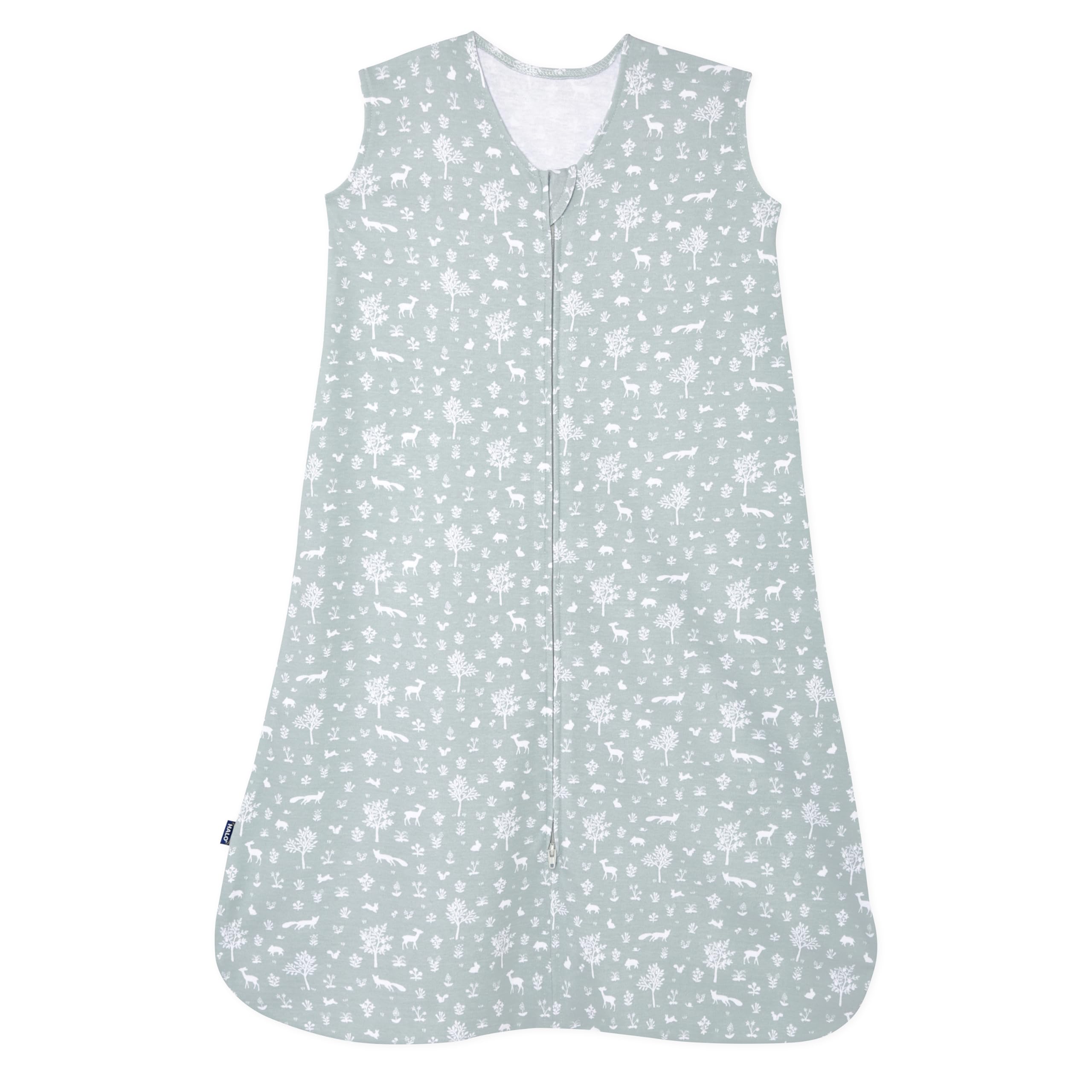
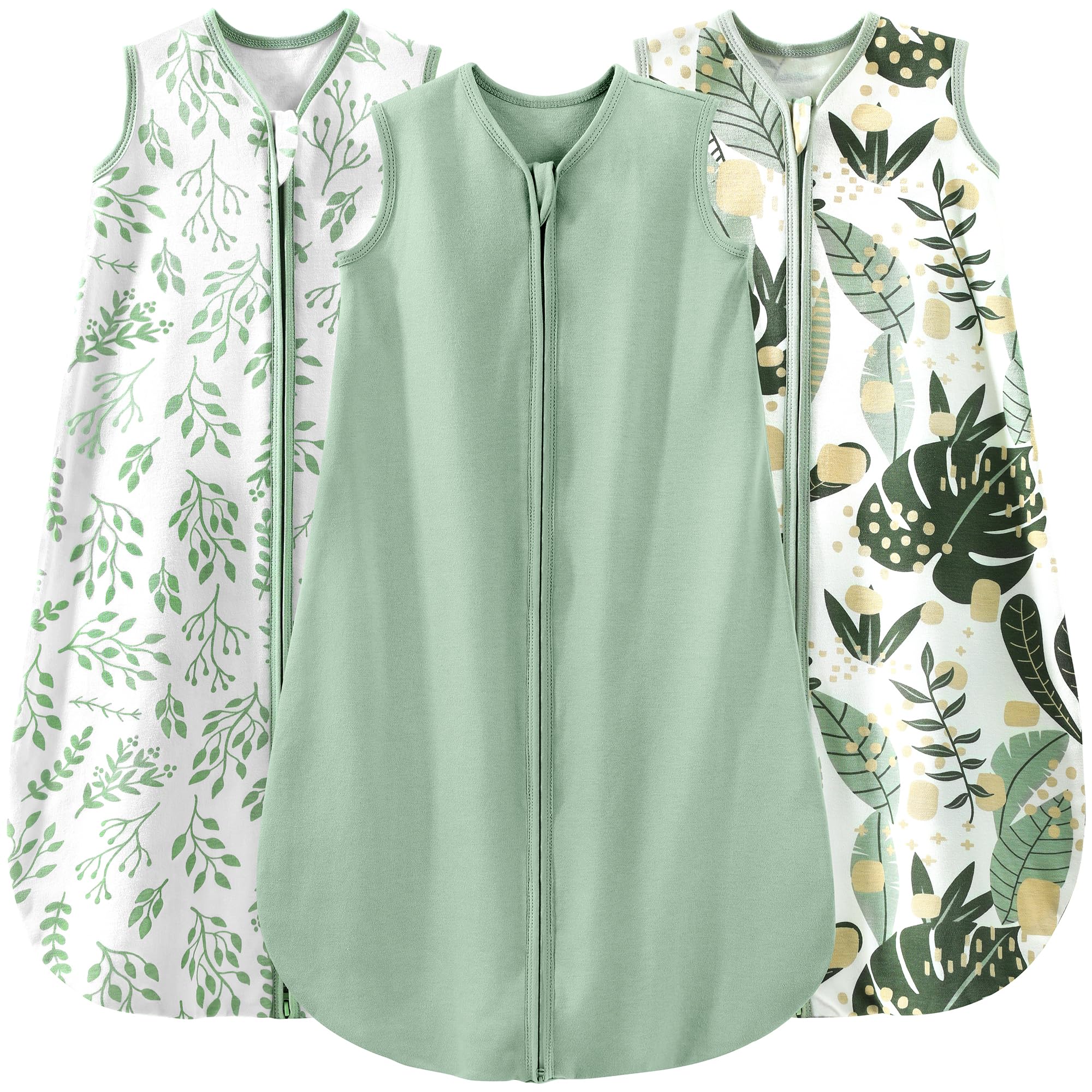


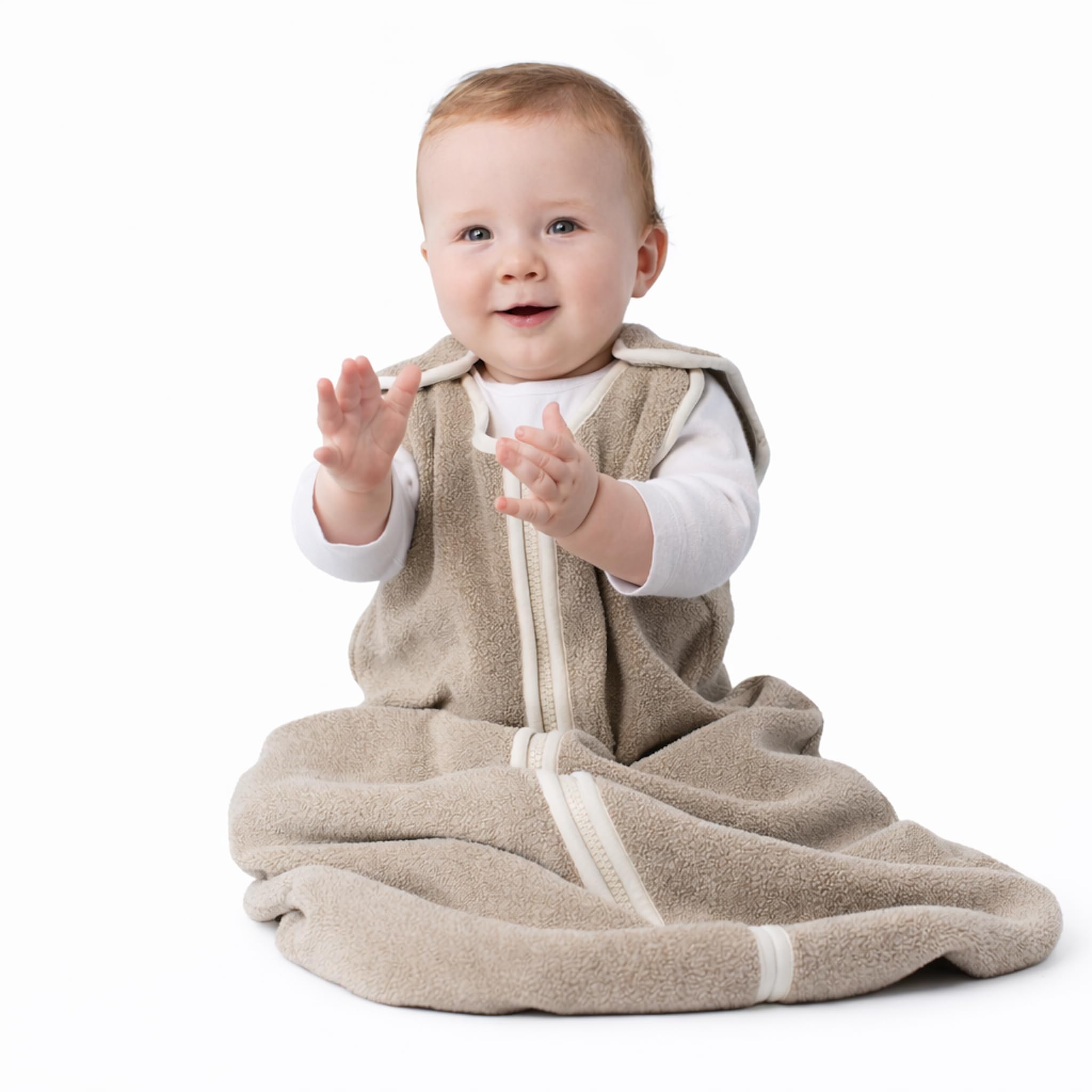
Best for Everyday Year-Round Use
Burt’s Bees Beekeeper
Key Features
- Fabric: Organic cotton
- Closure: Zipper
- TOG rating: 0.5 or 1.5
- Price: Budget
One cut, two weights. The Beekeeper comes in a light 0.5 TOG and a medium 1.5 TOG, and that is the reason it takes the top spot: you work out how warm your nursery runs once, buy the matching weight, and you’re done shopping. The light one is a summer layer over a short-sleeve bodysuit. The medium one is what we reach for once the heating comes on.
The cotton is the part that keeps earning it. It comes out of a cold wash as soft as it went in, and it doesn’t pill or stiffen the way cheaper jersey can. There’s genuine room through the body and legs, so it goes over a footed sleepsuit without bunching under the arms or riding up when a baby kicks. Roomy has a limit, though: this one runs big, and sizing up to grow into it is how you end up with a collar that gaps.
Where it gives ground is the closing. The zip wants a square start — line the pull up before you tug, or you’re fighting it in the dark at 2 a.m. It’s the only part of this sack we grumble about. What you get in return is a plain, well-cut bag with no decorative seams to rub and nothing to snag, the sort of thing you stop noticing, which is the point.
Pros
- Two warmth weights in the same cut
- Organic cotton stays soft after washing
- Roomy through the body and legs
- Cheapest of the single-sack picks here
Cons
- Zipper can be stiff to start
- Runs big; the next size up gaps at the neck
We recommend it first for most families: one organic cotton cut in a light and a medium weight, still soft after washing, roomy enough to layer over pajamas.
Best for Warm Nurseries
HALO SleepSack
Key Features
- Fabric: 100% cotton
- Closure: Zipper
- TOG rating: 0.5
- Price: Midrange
The collar is where a HALO either fits or it doesn’t, and it decides more than the length does. Some sizes run wide at the neck — wide enough to slide over a head with room to spare — and a gap there is the one thing to check before the first night rather than after. If it gaps, size down; the sack should sit close at the chin with no more than a finger’s room.
Get the fit right and this is the lightest thing in the roundup: 100% cotton at 0.5 TOG, sleeveless, with a shallow V at the neck that keeps fabric away from the chin. We like it for a nursery that sits warm, and for a baby who runs hot. It layers over a bodysuit without bulk, and because the legs are enclosed, a determined climber has a much harder time getting a knee over the crib rail.
Cotton at this weight is the easiest laundry in the house — cold wash, low tumble, back on the baby the same evening — and it stays flat enough to sit under a heavier bag on a cold night without turning anyone into a parcel. The zip runs a long way down the front, which is what you want at a change; just run a finger along the guard afterwards so the pull isn’t sitting against a chin.
Pros
- Light 0.5 TOG cotton for warm rooms
- Sleeveless, so it layers under anything
- Plain cotton that washes and dries fast
Cons
- Collar can gap on smaller babies
We reach for the HALO in a warm nursery: light 0.5 TOG cotton, sleeveless, and it layers over anything, provided the collar sits snug when it arrives.
Best for Newborn Spares
Yoofoss Sleep Sack 3-Pack
Key Features
- Fabric: GOTS organic cotton
- Zipper: Two-way
- Pack size: 3
- TOG rating: 0.5
- Price: Midrange
A two-way zip is the difference between a diaper change you can do in the dark and one that means stripping a half-asleep baby in a cold room. On the Yoofoss the second pull runs up from the hem, so you open the bottom, change, and close it again without ever uncovering the chest. That single feature is why this pack earns a place ahead of sacks with nicer fabric.
Three of anything sounds like a sales tactic until you’ve had a sick night. One goes in the wash, one is on the baby, one is dry and waiting — which is the real argument for a multipack, well before any saving. They’re 0.5 TOG GOTS organic cotton, a t-shirt-weight layer that works over a short-sleeve bodysuit in summer and under a sleepsuit in spring, and the knit feels like a well-worn tee rather than anything technical.
Sizing is the caveat. These run large even by sleep sack standards, and the smallest size is generous on a newborn, so when in doubt take the smaller one. The cotton does shrink in a warm wash and stretches back out while it’s still damp; a cold cycle and a low tumble save you the whole conversation, and the zip pulls stay smooth through it.
Pros
- Two-way zip opens from the hem
- GOTS organic cotton, soft like a worn tee
- Three in a pack keeps a clean one in rotation
Cons
- Sizing runs large; take the smaller of two
Three organic cotton sacks with two-way zips, so a clean one is always ready — the best value here for a newborn through the first six months.
Best for All-Season Sleeping
Woolino Ultimate Sleep Sack
Key Features
- Care: Machine wash
- Fabric: Merino lining, organic cotton outer
- Closure: Side zippers, shoulder snap
- Size range: 2 months to 2 years
- Price: Premium
It’s the most expensive sack here by a wide margin, and the Woolino knows it. What the money buys is a different construction from everything else in this roundup: a merino wool lining against the skin, an organic cotton outer, and no TOG rating at all.
Merino is the argument. Wool buffers a wider temperature band than cotton and moves moisture away from the skin, which is why Woolino sells one universal sack for two months to two years instead of five sizes. In a room that swings from a warm evening to a cold early morning, that’s the difference between a baby who wakes up chilled and one who doesn’t.
Whether it’s worth it comes down to arithmetic you can do beside the cot: four cotton sacks across two years against one of these. We think it wins that sum, because the merino is the part that lasts and a second child gets the same sack — but it only wins if you keep it the full two years. Pass things on at six months and you’ve bought the most expensive option for the shortest time.
The universal fit is the trade you make. On a newborn there’s a lot of sack, and it billows around the legs until about four months; after that the growing room is genuinely useful. Side zips and a shoulder snap mean you can settle a sleeping baby in without hauling a neck opening over their head, and the whole thing goes in the machine.
Pros
- One size from 2 months to 2 years
- Merino buffers temperature swings
- Side zips and a shoulder snap
- Machine washable
Cons
- Baggy on a newborn until about four months
- Premium price only pays off across two years
We think it’s worth the money if you want one sack from two months to two years: merino over organic cotton, no TOG guesswork, and it replaces four sizes of anything else.
Best for Cold-Weather Nights
Simple Joys Microfleece Sleepbag
Key Features
- Fabric: Microfleece
- Sleeves: Long sleeves
- Pack size: 2
- Price: Midrange
A cold nursery is a layering puzzle, and most sleep sacks only solve half of it: the sleeveless ones leave arms bare, so you add a long-sleeve bodysuit and hope. The Simple Joys sack is a long-sleeve microfleece bag, which means the arms are covered by the sack itself and one layer comes off the bedtime routine.
That’s the appeal. In a room that dips into the sixties, fleece with sleeves does more for a baby than any sleeveless cotton sack, and the fleece here is a medium weight — soft, a little fuzzy, closer to a blanket than a bodysuit. Carter’s doesn’t quote a TOG, which is genuinely annoying when you’re cross-shopping, but the weight tells you what it is: a winter sack, not an all-year one.
Two in a pack means one is always dry, and the fleece washes and dries without shrinking, which is not something every fleece manages. The catch is the sleeves. They’re cut narrow, and getting a wriggling arm through takes technique: pinch the cuff open, guide the hand, then let the fabric settle rather than pulling.
Pros
- Long sleeves cover arms without extra layers
- Medium-weight fleece for cold rooms
- Two-pack keeps a spare in rotation
- Washes and dries without shrinking
Cons
- Narrow sleeves slow down dressing
- No TOG rating to compare with other sacks
Our pick for a cold nursery: medium-weight microfleece with long sleeves that does the work of an extra layer, in a two-pack. The sleeves run narrow, so check them first.
Best for Fast Night Changes
baby deedee Sleep Nest
Key Features
- Fabric: Fleece
- Closure: Zipper with shoulder snaps
- TOG rating: 1.2
- Price: Midrange
Two snaps on the shoulders and a zip down the front. That’s the whole idea, and it’s a good one: you open the top, lay the baby in, snap it shut, and never drag a neck opening over a sleeping head. For a baby who wakes the moment you start dressing them, it changes bedtime.
The shell is a 1.2 TOG fleece — warm, slightly quilted in the hand, the sort of thing for a bedroom in the low sixties. It isn’t a year-round sack and doesn’t pretend to be. Think of it as the winter half of a two-sack wardrobe, with a light cotton one for the warmer months.
The snaps are also the sturdier closure, and the zip is the part to watch: a pull that starts catching is the signal to stop using the sack rather than to tug harder. Fit runs generous and long, which buys months at the leg, so a smaller size will see a baby through an entire winter.
Pros
- Shoulder snaps make night changes quick
- 1.2 TOG fleece for cold bedrooms
- Generous length lasts a whole winter
Cons
- Zipper can start catching with heavy use
If bedtime is a wrestle, this is the one we hand people: shoulder snaps open the top so a sleeping baby goes in without a collar over the head.
Best for Sensitive Skin
Kyte Baby Sleep Bag

Key Features
- Fabric: Rayon from bamboo
- Zipper: Dual
- TOG rating: 1.0
- Price: Premium
Where the Burt’s Bees sack is crisp cotton, this is bamboo rayon, and the difference is immediate in the hand — silkier, cooler, with a drape that settles on the body instead of standing away from it. If your baby runs warm and fusses at the feel of fabric, start here.
The cut is more fitted than most, particularly at the neck, and that’s the detail we appreciate most. A snug collar means the sack stays where you put it when a baby rolls onto their belly, and there’s less loose fabric to think about at 3 a.m.
The practicalities are mixed. Bamboo holds water, so it takes a while to dry, and it stains more readily than cotton — a bib at breakfast and a quick rinse matter more here than they do with a plain cotton sack. Two in rotation is more realistic than one.
Durability is where it gives ground. The seams and the zip are the parts that fail, and at this price that’s a real trade: you’re buying the nicest fabric in the roundup, not the longest-lived sack. It’s still the one we reach for when the feel of the fabric matters more than the lifespan.
Pros
- Silkiest fabric in this roundup
- Snug neck stays put on movers
- 1.0 TOG suits most rooms
Cons
- Seams and zipper are the wear points
- Stains easily and dries slowly
The softest thing here, and you pay for it: bamboo rayon with a snug neck that stays put on a belly-sleeper. Buy it for the feel, not for a decade of use.
Best for Toddler Beds
BubblePanda Sleep Sack

Key Features
- Size: 24–36 months
- Fabric: 97% bamboo rayon, 3% spandex
- Zipper: Two-way
- TOG rating: 1.0
- Price: Budget
Most sleep sacks stop at 24 months, which is exactly when plenty of toddlers are still sleeping in one. BubblePanda cuts this in 24 to 36 months, and that size band alone is why it’s here.
The fabric is 97% bamboo rayon with 3% spandex at 1.0 TOG, which puts it in the middle of the warmth range and adds a stretch that matters more as they get mobile. A toddler who rolls, sits up and shuffles around the cot does better in something with give than in a stiff cotton bag.
The neckline is cut deeper and narrower than the baby-sized sacks here, a deliberate choice to keep fabric off the face of a child who moves all night. It’s the sort of detail you only notice when it’s missing, usually at 4 a.m. with a handful of loose collar.
We rate it for the size alone, since there’s very little competition in the toddler band, and the feel is a bonus at the price. The zip is the gamble: the two-way pull is what wears, so check it monthly and treat a stiff patch as a warning rather than an annoyance.
Pros
- Sizes up to 24–36 months
- Stretchy bamboo blend for movers
- 1.0 TOG works across seasons
- Deep, narrow neckline keeps fabric off the face
Cons
- Zipper is the wear point with nightly use
For a two-year-old still in a sack, this is the one: stretchy bamboo rayon in 24 to 36 months, a mid-weight 1.0 TOG and a narrow neckline. Watch the zip.
How We Tested 14 Sleep Sacks Over Six Months
To build the shortlist, we compared fabric content, TOG ratings, size ranges, zipper styles, and price bands across the sleep sacks parents mention most, then cut anything with vague sizing or a pattern of complaints about zippers. We ended with 14 sacks and rotated them through real sleep: naps in cribs and bassinets, overnight stretches, middle-of-the-night diaper changes, and the bag that goes to a grandparent’s house or daycare. Testers’ babies ranged from 3 to 14 months, so we could judge sizing at both ends of the range and as they grew.
Over six months, each sack was washed every few days on a normal cycle. Afterward we checked for pilling, thinning, loose seams, and whether the fabric still felt soft against a forearm; we also felt the lining against a baby’s bare legs at bedtime. Warmth got judged on actual nights, not just the TOG label—we checked the back of the baby’s neck in the morning and noted any sweaty or cool sleepers in a 68 to 72 degree room. Fit meant looking at the neck opening, armholes, and hem: anything that gaped, bunched, or rode up went on our watch list, and we rechecked length as babies moved up sizes. For zippers, we did changes in low light and noted snags, stuck fabric, and whether a two-way zip actually helped. We also tracked whether babies settled normally and whether testers reached for the same sack again, since comfort and sleep quality are hard to separate.
How to Choose a Baby Sleep Sack
The sack that works is the one that matches your nursery’s overnight temperature and sits snug at the neck — get those two right and the print stops mattering.
Match the TOG to the room, not the calendar
TOG is a warmth rating, and a sack only means anything against the room it’s used in. A 0.5 TOG sack is a light layer for a nursery around 72 to 75 degrees Fahrenheit; 1.0 TOG lands in the high sixties and low seventies; 1.5 TOG and up is winter territory in a cool room. The trap is buying for the season instead of the thermostat — plenty of January babies sleep in 0.5 TOG because the apartment sits at 74.
Pick your usual overnight number and hold it steady. If your house swings a lot between seasons, two sacks at different weights serve you better than one compromise weight, which is exactly why we rate the Burt’s Bees cut in both a light and a medium.
The zip matters more than you think
The zipper is the one part of a sleep sack used in the dark, several times a night, for years. A two-way zip — one pull at the neck, one at the hem — lets you open the bottom for a diaper change without uncovering the chest, and we rate it above almost any other feature on a sack. A single top-down zip means peeling the whole thing off a sleeping baby.
Check the guard as well. The fabric flap over the pull keeps a cold zip off a chin, and a flap that won’t stay put is worth fixing every time you close it. A zip that starts catching is a warning rather than an annoyance — stop tugging and treat it as wear.
Buy the size that fits now
Every instinct from baby clothes says size up so it lasts longer. Here that’s the wrong move. A sack with a collar that gaps can ride up over the face when a baby rolls, and the roomy sizes that look like better value are the ones with the loose neck. The fit test is simple: snug at the chin, armholes that don’t swallow the shoulders, and enough length that the feet don’t jam against the hem.
If your baby sits between sizes, take the smaller one. Almost every sack on this page runs large, and the one that fits properly tonight is the one that keeps a baby warm tonight.
Fabric: what each one is for
Cotton is the default and the easiest to live with — breathable, washable at any temperature, softer with use. Bamboo rayon is silkier and cooler in the hand, which matters for a warm baby or sensitive skin, though it stains more readily. Merino buffers a wider temperature range than anything else here and costs accordingly, while fleece is for genuinely cold rooms and is the only fabric in this roundup that gives you sleeves.
Match the fabric to where the sack will actually be used, not to how it feels on the shelf. A merino sack in an 80-degree room is money spent on nothing.
Frequently Asked Questions
How many sleep sacks do I need?
Two is the working minimum, three is comfortable. A sack is worn for twelve hours a night and washed weekly at least, so one in the machine leaves nothing spare for a leaky diaper at 2 a.m. A three-pack like the Yoofoss covers a newborn’s first six months without a second purchase.
When does a baby move out of a sleep sack?
Most sizing stops at 24 months, but that’s an arbitrary line. Keep using a sack as long as your toddler still sleeps in one, can move safely in it, and can’t work the zip alone. If your child is past two and kicking blankets off, a toddler-cut sack in 24 to 36 months — the BubblePanda is the one here — bridges the gap.
How do I wash a sleep sack without shrinking it?
Cold water, zip closed, low tumble or line dry. Cotton can shrink a full size in a hot dryer and the knit doesn’t always stretch back, while bamboo rayon holds water and does better hung up. Treat the first wash as the test: if a cotton sack comes out short, stretch it while damp and drop the dryer temperature from then on.
Final Verdict
Buy the Burt’s Bees Beekeeper unless something specific pulls you elsewhere. Two warmth weights in one cut mean a single decision covers summer and winter, the cotton stays soft through a season of washing, and the size that fits now will keep fitting for months.
If you want to buy once for two years, the Woolino’s merino is the better long game. If you want three sacks and a permanent spare, the Yoofoss pack is the practical answer. Beyond that, choose on the fabric your baby tolerates and the collar that fits — those two decide more nights than anything else here.
