This post contains affiliate links. We may earn a small commission when you buy through our links — at no extra cost to you.
Every back-to-school season, I stock the medicine shelf—and every year I face a wall of kids’ immune support gummies, powders, and liquids wondering which have ingredients and doses worth taking seriously. The real test isn’t the label; it’s whether a six-year-old will chew, swallow, or sip it without a standoff at 7:15 a.m., and whether you’re comfortable with what’s doing the sweetening. What this category fixes is the daily-routine gap: a kid-friendly way to add supportive nutrients during sniffle season—not a replacement for sleep, handwashing, or a pediatrician’s advice.
Over four months, my team and I put 14 kids’ immune support supplements through normal family chaos—school mornings, daycare pickup, and a few travel weekends—with kids from 3 to 10. We tasted every one ourselves (yes, even the powders), read the sugar and serving-size fine print, and watched which bottles earned repeat requests instead of eye rolls. One piece of category wisdom: a supplement your child refuses does nothing, so taste and ease of use matter as much as the ingredient panel. Below are the ones that survived the routine.


Best for Daily Immune Support
Zarbee’s Kids Elderberry Gummies
Key Features
- Count: 42 gummies
- Flavor: Natural berry
- Format: Pectin gummy
- Key ingredients: Elderberry, vitamins A, C, D, E, zinc
- Price: Midrange
Elderberry is the name on the front, but the ingredient panel is what earns this bottle its shelf space: elderberry extract alongside vitamins A, C, D and E and zinc, all in one soft pectin gummy. Most of the immune products on this page pick one or two of those. This one covers the spread that parents otherwise end up buying as three separate bottles.
That breadth is why it’s our top pick. A child gets elderberry, vitamin C and zinc in the same mouthful, and the pectin base keeps the formula free of gelatin, gluten, wheat, dairy, egg and peanut, which matters when a bottle has to survive a classroom and a backpack. The berry flavor is mild and sweet rather than sharp, and the chew is soft, so nothing about it needs chasing with juice.
Two things to know. The gummies are large and sticky, so they clump in the bottle and need a shake to separate; keep it somewhere cool and dry rather than on a sunny windowsill. And they are genuinely candy-sweet, which is the price of a formula kids take without negotiation. If added sugar is the line you don’t cross, MaryRuth’s sugar-free drops handle the vitamin C side instead, and you give up the elderberry and zinc to get there.
What settles it is the morning itself: no spoon, no measuring cup, no conversation. The 42-count bottle isn’t a stock-up size, so plan on it as a repeat purchase rather than something you tuck in the cupboard in September and forget.
Pros
- Five immune nutrients in one gummy
- Soft pectin chew, free of major allergens
- Berry flavor kids accept without coaxing
Cons
- Candy-sweet, sugar-coated gummies
Buy this one if you want a single daily gummy covering elderberry, vitamin C, D and zinc; it’s the most complete formula here and the easiest to keep up.
Best for Gummy Refusers
Zarbee’s Kids Elderberry Syrup
Key Features
- Size: 4 fl oz
- Flavor: Natural elderberry
- Format: Liquid syrup
- Key ingredients: Elderberry, vitamin C, zinc
- Price: Budget
A gummy only works if it gets chewed, and the child who refuses one is exactly who this four-ounce bottle is for. It takes the same elderberry idea as the gummies in this line and turns it into a liquid with vitamin C and zinc, and it’s the pick we reach for when a kid will swallow a spoon but not a chew.
The formula is short and readable: concentrated elderberry, vitamin C, zinc, natural elderberry flavor, no drugs or alcohol. It tastes sweet and berry-forward rather than medicinal. That sweetness is also the dividing line. Kids who like it ask for it; the ones who don’t turn their head at the third spoon, and a dosing syringe aimed into the cheek gets further than a teaspoon for that group.
It stains, so dose it over a sink rather than over school clothes. The fridge door is the right home for it, where it’s a five-second job before shoes go on, and the small bottle means you’ll be reordering rather than rationing.
Pros
- Liquid works for kids who won’t chew
- Elderberry with vitamin C and zinc
- Drug- and alcohol-free formula
Cons
- Four-ounce bottle empties quickly
Worth buying if your child won’t chew a gummy: it delivers elderberry, vitamin C and zinc in a sweet syrup that goes down in a spoonful.
Best for Budget Daily Dose
Amazon Basics Kids’ Vitamin C Gummies
Key Features
- Count: 60 gummies
- Flavor: Orange, sour finish
- Age range: 2 years and up
- Vitamin C: 125 mg per gummy
- Price: Budget
Nothing about this bottle is trying to impress you: a plain label, one orange gummy a day for children two and up, 125 mg of vitamin C, and 60 gummies that work out to roughly two months of doses.
The details are sensible. It’s a pectin gummy, vegetarian and free of gluten, wheat, dairy, soy and egg, and soft enough to chew without drama. The orange flavor is deliberately sour at the finish, closer to a sour candy than a sweet one, which is either the reason your kid asks for it or the reason they hand it back.
Our reservation is that vitamin C is all you get: no elderberry, no zinc, no vitamin D. That makes this the second bottle in a routine rather than the only one, the inexpensive way to add C to a child who is already covered on the rest. There’s a light sugar coating, worth knowing if this is the last thing before teeth brushing. As a plain vitamin C gummy, it’s the easiest yes on this page.
Pros
- One gummy a day from age two
- Sour orange flavor kids ask for
- Vegetarian pectin, free of major allergens
- About two months of doses per bottle
Cons
- Vitamin C only, no elderberry or zinc
The cheapest sensible way to give a child daily vitamin C, as long as you don’t expect elderberry or zinc from the same bottle.
Best for School and Travel
Emergen-C Kidz Vitamin C Crystals
Key Features
- Count: 56 packets
- Format: Crystals, no water needed
- Vitamin C: 250 mg per packet
- Also includes: Zinc, manganese, B vitamins
- Price: Midrange
You don’t need water, a spoon or a cup for this one. Tear a stick pack, pour the crystals into your mouth, and they fizz and pop like the candy the brand clearly had in mind.
Each packet carries 250 mg of vitamin C plus zinc, manganese and B vitamins, and it’s caffeine-free, gluten-free and vegetarian. For a child who is a picky eater, that’s a meaningful top-up in a format that doesn’t need cooperation at the breakfast table.
The fizz is both the selling point and the risk. Kids who like sour candy treat a packet as a reward; a child who doesn’t will screw up their face at the first hit. The sourness is real, not a hint of it, and it’s the main reason a bottle gets abandoned half full.
Where it earns its place is the school bag, the sports kit and the glovebox: 56 packets, no liquid to leak, nothing to refrigerate. It’s the most portable option here and the one we hand over on the way out the door, at a cost per dose that sits in the middle of this group.
Pros
- No water needed, pour and go
- 250 mg vitamin C with zinc and manganese
- Kids treat the fizz as a treat
- Individual packets travel well
Cons
- Sour fizz divides kids
- 56 individual packets means a lot of waste
Our pick for bags and travel: a fizzy, no-water vitamin C dose that kids treat as a treat rather than a chore.
Best for Gut and Immune
Culturelle Kids Immune Defense Probiotic
Key Features
- Diet: Sugar-free, gluten-free, dairy-free
- Format: Chewable tablet
- Age range: 3 years and up
- Key ingredients: LGG probiotic, elderberry, zinc, vitamins C and D
- Price: Premium
This is the only pick here built around a probiotic, and that’s the whole reason we kept it in the list: Lactobacillus rhamnosus GG, the strain the label calls clinically proven for occasional tummy trouble, plus elderberry, zinc and vitamins C and D in one fruit-punch chew for ages three and up.
It’s sugar-free, non-GMO, gluten-free and dairy-free, and the dose is a single tablet, which is as simple as this category gets. Fruit punch is a love-it-or-leave-it flavor for kids, and there’s no way to know which side your child lands on until the bottle is open.
The catch is cost. This is the priciest bottle in the group by a wide margin, and 60 chews at one a day is two months of doses, so it’s reasonable per day but a real outlay up front. It’s worth it if the probiotic is the point; if gut health isn’t the goal, the elderberry gummies cover the immune side for a lot less.
Pros
- Probiotic plus elderberry, zinc, C and D
- Sugar-free chewable, one a day
- Ages three and up, clearly stated
Cons
- Priciest pick in this set
Choose it when gut health is part of the goal: an LGG probiotic plus elderberry, zinc and vitamins C and D in one sugar-free chew.
Best for Herbal Blend Fans
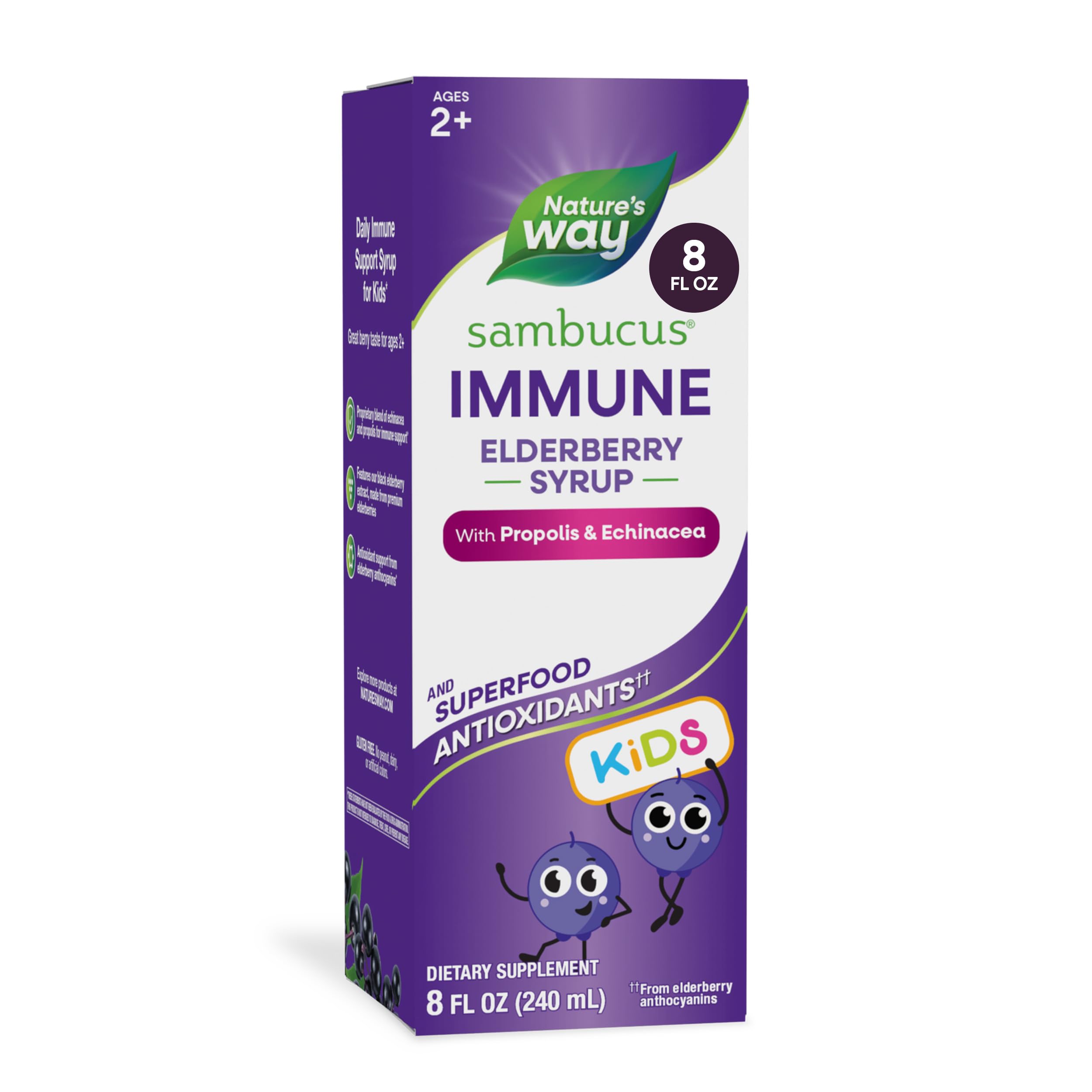
Nature’s Way Kids Sambucus Syrup
Key Features
- Diet: Gluten-free, vegetarian
- Format: Liquid syrup
- Daily serving: 1 tsp ages 2-6, 2 tsp ages 7+
- Key ingredients: Elderberry, echinacea, propolis
- Price: Midrange
One teaspoon for ages two to six, two teaspoons from seven up. This is one of the few bottles here that prints two doses by age instead of a single line for the whole household, and if you’re dosing children of different ages, that clarity is worth something.
The formula is the other draw. Alongside black elderberry it carries two types of echinacea and propolis, which makes it the pick for a parent who wants a traditional herbal blend rather than a vitamin-forward gummy. It’s gluten-free and vegetarian, and the berry flavor is sweet enough that kids take it without a fuss.
The staining is the thing we noticed first: dark purple, and not always out of a sleeve, so dose it over the sink. It also isn’t the cheapest bottle here for what you get. Buy it because you want echinacea and propolis in the mix, not because it’s the budget route to elderberry.
Pros
- Elderberry plus echinacea and propolis
- Two age-based doses, clearly printed
- Berry flavor kids take without fuss
- Gluten-free and vegetarian
Cons
- Syrup can stain clothing
A good choice for parents who want echinacea and propolis alongside elderberry, with doses spelled out separately for younger and older kids.
Best for Sugar-Free Routines
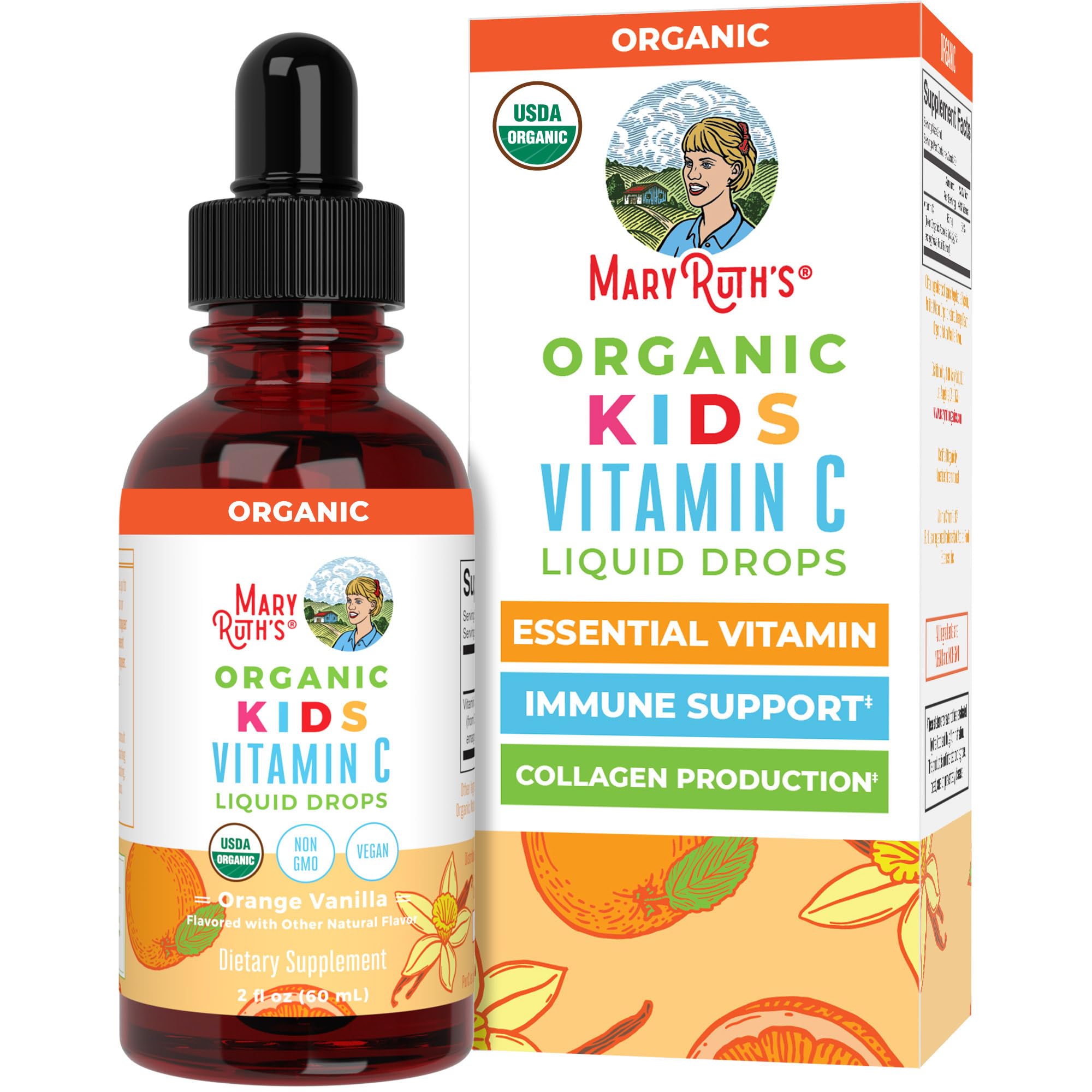
MaryRuth’s Organic Kids Vitamin C Drops
Key Features
- Diet: USDA Organic, sugar-free, vegan
- Size: 2 fl oz
- Format: Liquid drops
- Vitamin C source: Organic acerola fruit
- Price: Midrange
No gummy, no sugar, no chew: this is a two-ounce dropper bottle of vitamin C from organic acerola fruit, flavored with orange and vanilla.
It’s USDA Organic, vegan, sugar-free and free of the usual allergens, and it carries a Clean Label Project purity award after third-party testing for more than 200 contaminants. For something you give a small child every day, that testing is the most reassuring line on the label.
The reason we recommend it over a gummy is control. A dropper goes into a small glass of orange juice, a yogurt or a bottle of water, and the orange-vanilla flavor mostly disappears in the process. That makes it the practical option for a toddler or a picky eater who won’t chew, and the only pick here with no added sugar at all.
Taken straight, it’s strong, and more than one child has turned their nose up at the undiluted drop; mix it and the problem goes away. The trade is speed. A dropper takes longer than handing over a gummy, and this is the bottle you keep in the kitchen rather than the one that goes in a lunchbox.
Pros
- Sugar-free, organic acerola vitamin C
- Third-party tested for contaminants
- Mixes into juice, water or yogurt
Cons
- Dropper dosing is slower than a gummy
The pick for sugar-free households and kids who won’t chew: organic acerola vitamin C in a dropper that disappears into juice.
Best for Cold-Season Support
Herb Pharm Kids Echinacea

Key Features
- Herb: Organic echinacea purpurea root
- Size: 1 fl oz
- Format: Alcohol-free liquid extract
- Servings: About 27-108 per bottle
- Price: Budget
This isn’t the bottle we reach for every morning. It’s the one for the week a child starts sniffling, when a single-herb echinacea extract is what you want rather than another daily gummy.
It’s alcohol-free and sugar-free, made from fresh, never-dried organic echinacea purpurea root, and flavored with sweet orange oil so it doesn’t taste like a tincture. Mix it into two ounces of water or juice and it goes down without an argument; give it straight and you’ll get a face.
The serving math is the odd part. The label puts a one-ounce bottle at anywhere from 27 to 108 servings depending on your child’s body weight, so the same bottle can last a fortnight or most of a winter. The dose moves with the child instead of a fixed count.
That’s the trade: a certified organic, single-ingredient herbal extract at a modest price, in exchange for weight-based dosing and a small bottle. For a family that already has a daily gummy and wants something extra for the rough weeks, it’s a sensible second bottle.
Pros
- Alcohol-free, sugar-free organic echinacea
- Orange flavor disguises the herb
- Easy to mix into water or juice
Cons
- Dose shifts with your child’s weight
- One-ounce bottle is small
Keep it for the weeks a child starts sniffling rather than daily use; it’s the single-herb option here, and a good one.
How We Tested Kids’ Immune Support
To build the shortlist, I started with the kids’ immune support products parents actually ask about—gummies, chewables, powders, and liquids—then filtered by age range, serving size, and whether the label made the dose easy to understand. I skipped anything with vague dosing or a front label that read like candy packaging. We ended up with 14 products and ran them for four months in the routines where they actually live: breakfast before school, the after-daycare snack window, bedtime on school nights, and a couple of weekend trips where packing mattered. My two kids and three other families, with children ages 3 to 10, rotated each product for a week or two.
Taste got judged twice: once by me, with notes on chalkiness, metallic aftertaste, and how sweet or sour each one was, and once by the kids, by whether they finished the dose or left half of it on the counter. I read every sugar line and serving size, then noted whether the sweetness came from added sugar, juice, or a sugar alcohol—and whether a second serving would make the product feel more like a treat than a supplement. For ease of use, I timed how long it took to open the container, measure or hand over a dose, and wipe up the mess; powders were the usual offenders.
Effectiveness is the hardest thing to judge in four months, so we did not pretend a gummy could replace sleep, handwashing, or a pediatrician’s advice. Instead we tracked whether families stuck with the routine, whether kids took the full serving without a fight, and whether the ingredient panel and dose were clear enough that a parent would feel comfortable repeating it. The products that made the list were the ones that survived the morning rush and the sugar check—not just the ones with the prettiest bottle.
How to Choose Kids Immune Support
The right bottle is the one your child takes without a negotiation every morning; everything else on the label is secondary to that.
Pick the form your child will actually take
Every format in this guide can work; what separates them is compliance. A gummy is the easiest sell for most children over two, but only if your child chews properly, since a pocketed gummy helps nobody. Syrups and liquid drops mix into a couple of ounces of juice or water and disappear, which helps with a picky toddler but adds a step and a cup to wash. Chewables sit in the middle, and crystals need no water at all.
Decide which of those your child does on a school morning without a fight, and buy in that format. A bottle that gets skipped is worse value than a pricier one that gets finished.
Read the age band, not the front of the bottle
Kid-specific matters. Some elderberry gummies give adults and children the same two-gummy dose, which means the chew is not calibrated to a small child at all. The bottles we recommend either print a child’s dose or print two: the Nature’s Way syrup, for instance, gives one teaspoon at ages two to six and two teaspoons from seven up.
If a bottle never names an age, treat that as a question to settle before you buy, and never start a supplement on a child below the range the label states.
Decide how wide the formula needs to be
A single nutrient is not a lesser product. If your child already takes a multivitamin with zinc and vitamin D, a plain vitamin C gummy is the sensible addition, and stacking a broad immune blend on top just doubles up. Starting from nothing, an elderberry gummy with vitamins C and D and zinc covers the same ground in one step.
Herbal blends built on echinacea and propolis, and probiotic-based chews, are for parents who have decided those specific ingredients are what they want rather than one more thing in the daily routine.
Weigh the sugar and the cost per serving
Gummies are candy and the labels mostly do not pretend otherwise; sugar is a large part of why they are easy to give. If you are keeping added sugar out of the supplement drawer, sugar-free chews and liquid drops exist, and they usually cost more per dose.
The other half of value is servings. Divide what is in the bottle by the dose your child actually takes before comparing two products: a big bottle dosed twice a day can cost more per week than a small bottle dosed once.
Frequently Asked Questions
Do kids’ immune support supplements actually keep kids from getting sick?
Not on their own. Elderberry, vitamin C and zinc support normal immune function rather than block infection, and the FDA does not evaluate those claims, so no label can promise your child will dodge what is going around the classroom. What these products can do is close a nutrient gap for a picky eater.
Give the dose on the label and resist doubling it at the first sniffle. Sleep, handwashing and regular meals still do more of the work.
Can my child take one of these alongside a multivitamin?
Usually, but check the overlap first. Vitamin C, vitamin D and zinc show up in both, and two products together can push a child past the daily amount printed on either label.
Put the multivitamin and the immune supplement side by side, add up those three, and keep the total at or under the label’s daily figure. If they overlap heavily, keep one and drop the other.
Why did my gummies arrive fused into one lump?
Gummies soften in heat, and a delivery truck or a metal mailbox in summer is enough to do it. Let a warm bottle cool at room temperature before opening, then shake it; gummies that are still separate usually come apart.
If they have fused into a solid mass or look discolored, ask for a replacement rather than picking at them. Buying bottles in cooler months, or off a store shelf, avoids the problem.
Final Verdict
Zarbee’s Kids Elderberry Immune Support Gummies earn the top spot because they solve the whole morning in one step: elderberry, vitamins A, C, D and E, and zinc in a soft gummy that children take without argument. For most families, that settles it.
Two situations change the answer. A child who will not chew is better served by the Zarbee’s syrup, which delivers elderberry, vitamin C and zinc in a spoon. A household avoiding added sugar should look at MaryRuth’s drops, and a tight budget is well covered by the Amazon Basics vitamin C gummies.
