This post contains affiliate links. We may earn a small commission when you buy through our links — at no extra cost to you.
A baby book has one job: survive the mouthing, the grabbing, and the tenth read in a row, and still make your baby lean in. I learned that the hard way with a beautiful gift edition that lasted one afternoon before its pages became a chew toy. Over five months, my team and I read, mouthed, and wiped down 18 board books, picture books, and sound books for the first year or two, noting which ones got grabbed again. The right one turns a wiggly diaper change into a shared pause and gives you a line you’ll both know by heart.
What surprised me was how often the classics got ignored. A book can be beloved by generations and still have text that’s too long for a 6-month-old or illustrations too busy at bedtime. We wanted read-aloud rhythm that doesn’t wear thin, clear pictures, and content a baby can point at or name. We pressed every sound button too, because a tinny speaker can ruin a sweet book fast; the picks below earned repeat reads, not just shelf space.




Best for Bedtime Routine
I Love You to the Moon and Back
Key Features
- Pages: 28
- Format: Board book
- Dimensions: 6.44 x 0.62 x 6.63 inches
- Reading age: Baby and up
- Price: Budget
A baby book has to survive two readers: the one who chews it and the one who reads it for the hundredth time. I Love You to the Moon and Back gets both jobs right. The board pages are heavy cardboard, the trim is a compact 6.44 by 6.63 inches, and the whole thing is short enough to finish after the lights are already low. That combination is why we keep coming back to it as the default first book.
What makes it our top pick is the read-aloud experience. The rhyme is simple and soothing, and the illustrations give a baby something soft to look at while the words do their work. We read it at bedtime and found the rhythm did more than the plot; it sets a pace. The board pages turn easily, and the size is small enough to hold in one hand while you settle a baby on your lap. It is also the book we are most comfortable giving at a baby shower, because the message lands with the parent as well as the child.
It is not the pick for a loud, interactive story time. There are no flaps, sounds, or textures here, and that is the point: it is the calm end of the shelf. If you want one book that can be read, gifted, and kept, this is the one we recommend first.
Pros
- Short rhyming text suits bedtime
- Heavy board pages handle little hands
- Warm message works as a gift
- Compact size for lap reading
Cons
We recommend I Love You to the Moon and Back as the default first baby book: a short, sturdy board book that works for nightly reading and as a gift.
Best for Quiet Bedtime
Goodnight Moon
Key Features
- Pages: 34
- Format: Board book
- Dimensions: 5.8 x 0.7 x 4.9 inches
- Reading age: Baby and up
- Price: Midrange
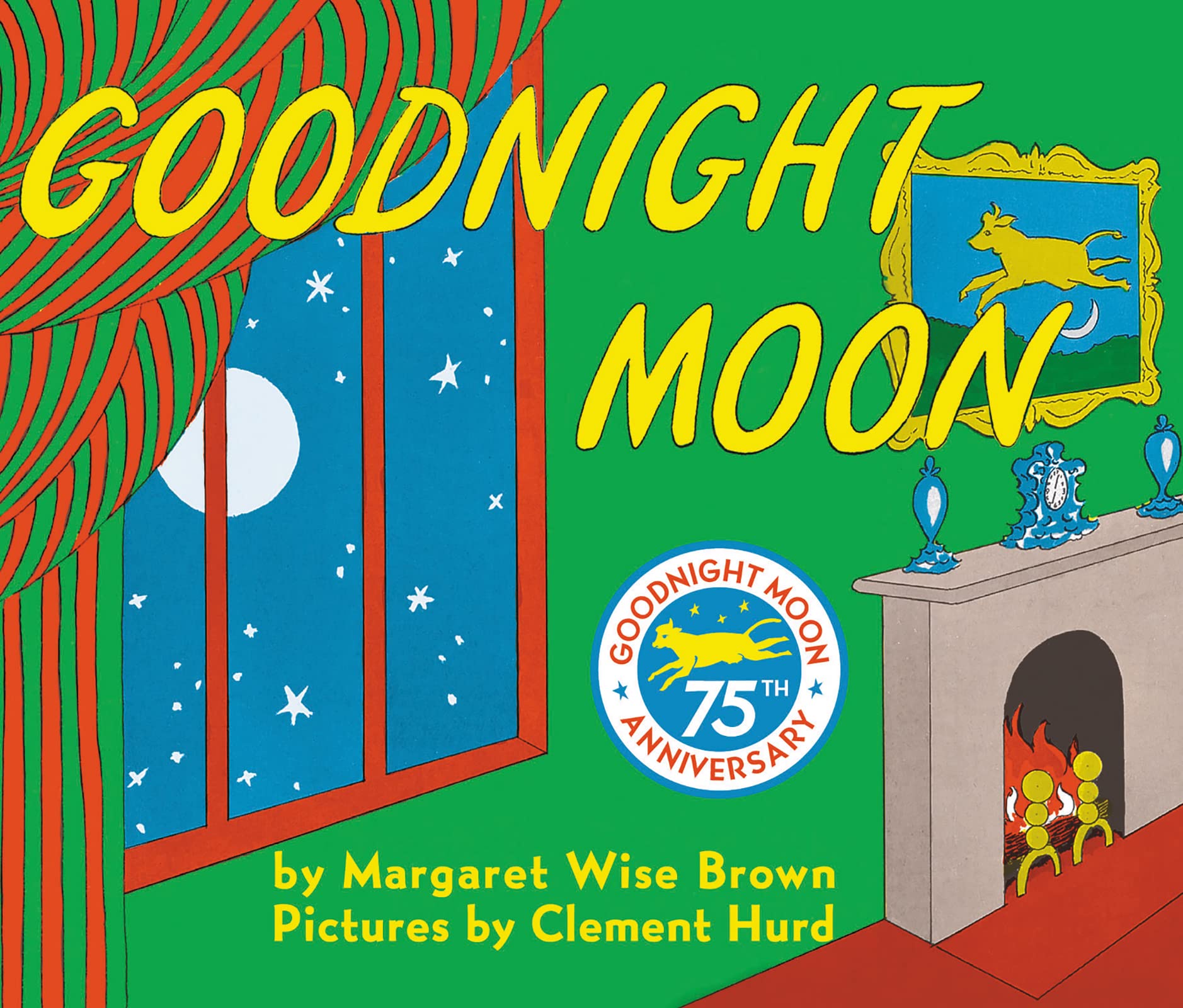
If our top pick is the warm hug, Goodnight Moon is the dimmer switch. It is the book we reach for when the room is already quiet and you want the last five minutes to stay quiet. The rhyme moves through the room naming familiar things, and the repeated goodnights give a baby a rhythm to sink into.
The board edition is compact at 5.8 by 4.9 inches, with 34 pages, so it sits easily beside the crib or in a diaper bag. We like the way the illustrations alternate between bright color and soft black-and-white spreads; it gives small eyes something to find without overstimulating them. The text is simple enough that a toddler can start to anticipate the next line, which is the beginning of reading together.
It is a mood more than a plot. If your baby wants flaps, buttons, or a punchline, this one may feel too slow; save it for the wind-down rather than the middle of the day. For the family that wants a classic bedtime ritual, that slowness is exactly the feature.
Pros
- Rhythmic goodnight ritual
- Compact board edition
- High-contrast and color pages
Cons
- Very quiet pacing for active babies
We choose Goodnight Moon when you want a quieter, classic bedtime ritual; its compact board edition is easy to keep within reach.
Best for First Words
Brown Bear, Brown Bear
Key Features
- Pages: 28
- Format: Board book
- Dimensions: 4.95 x 0.55 x 6.95 inches
- Reading age: 1-3 years
The first time a baby fills in the pause after “What do you see?” the book stops being a performance and becomes a conversation. Brown Bear, Brown Bear is built around that pause. The question repeats, the answer names an animal and a color, and then the next page hands the question back to the baby.
The repetition is the engine. It gives a baby a predictable pattern to follow, and the big animal pictures give them something to point at while you read. We found the board pages sturdy enough for the grab-and-turn stage, and the 28-page length is short enough to finish before attention runs out. It is also a useful first color book, because the color words arrive inside a game rather than a lesson.
The text is minimal, so the adult has to bring the energy: read it slowly, leave the pause, and let the baby answer. What it does not have is a story with a beginning, middle, and end. If you want a book that rewards a longer sit, this is not it; it is a call-and-response game. For a baby who is just starting to join in, that is the better hook.
Pros
- Repeated question invites participation
- Big animal and color pictures
- Sturdy board pages for little hands
Cons
- Minimal plot, more of a word game
Our pick for first words is Brown Bear, Brown Bear: the repeated question turns reading into a call-and-response game a baby can join.
Best for Counting and Touch
The Very Hungry Caterpillar
Key Features
- Pages: 26
- Format: Board book
- Dimensions: 7.13 x 0.64 x 5 inches
- Reading age: 1+ years
The holes are the point. The Very Hungry Caterpillar turns a counting story into something a baby can do with a finger: trace the holes, count the fruit, name the days, and wait for the butterfly at the end. The board edition is 26 pages and 7.13 by 5 inches, small enough for little hands to hold and sturdy enough for the page-turning that follows.
We recommend it as the classic board book for the toddler who wants to touch as much as listen. The story is simple, the food pictures are bright, and the holes give a baby a reason to go back to the beginning. It also does the quiet teaching that board books do best: counting, sequence, colors, and the idea that a story has a shape. None of it feels like a lesson, because the finger holes keep pulling the baby back into the page. The small trim is the one thing to know: it is a lap book, not a large picture book, and the holes are sized for little fingers. If you want more room for shared pointing, the larger edition is the better buy; for a diaper bag or a crib shelf, this size is right.
Pros
- Finger holes invite tracing
- Counting and days of the week
- Bright, simple illustrations
- Sturdy board pages
Cons
We keep The Very Hungry Caterpillar on the short list for its finger-tracing holes and simple counting story, all in a sturdy board edition.
Best for Newborn Play
Very Hungry Caterpillar Soft Book
Key Features
- Size: 5.25 x 5.25 inches
- Format: Soft cloth book
- Attachment: Stroller clip
- Recommended age: 0-2 years
- Price: Budget
This is the book that lives on the stroller, not on the shelf. The Very Hungry Caterpillar Soft Book is a 5.25-inch square of polyester with crinkle pages, a squeaker, a teether corner, and a clip that attaches to a stroller or car seat. For a newborn, that is the right job: it gives them something to bat at, chew, and hear without asking them to follow a story. The bright pages use the Very Hungry Caterpillar imagery, with a counting element that gives an older baby a little more to do.
We like it as the first book because it asks nothing of the baby. The crinkle rewards a swipe, the teether corner meets a mouth, and the clip means it does not end up on the floor. It is small, but that is the point; it fits in a diaper bag and does not take over the stroller. The cloth is washable, which matters more than any design detail in this category. It is not a substitute for a board book, though. There is very little text and no real narrative, so it will not grow into bedtime reading the way our other picks do.
Pros
- Crinkle and squeaker engage babies
- Teether corner for chewing
- Stroller clip keeps it handy
- Washable cloth construction
Cons
We reach for the Very Hungry Caterpillar Soft Book for newborns and teething babies: crinkle, squeak, and a clip that keeps it close.
Best for Bilingual Toddlers
LeapFrog 100 Words Book
Key Features
- Words: 100+
- Age range: 18 months-4 years
- Batteries: 2 AA
- Languages: English and Spanish
- Price: Premium
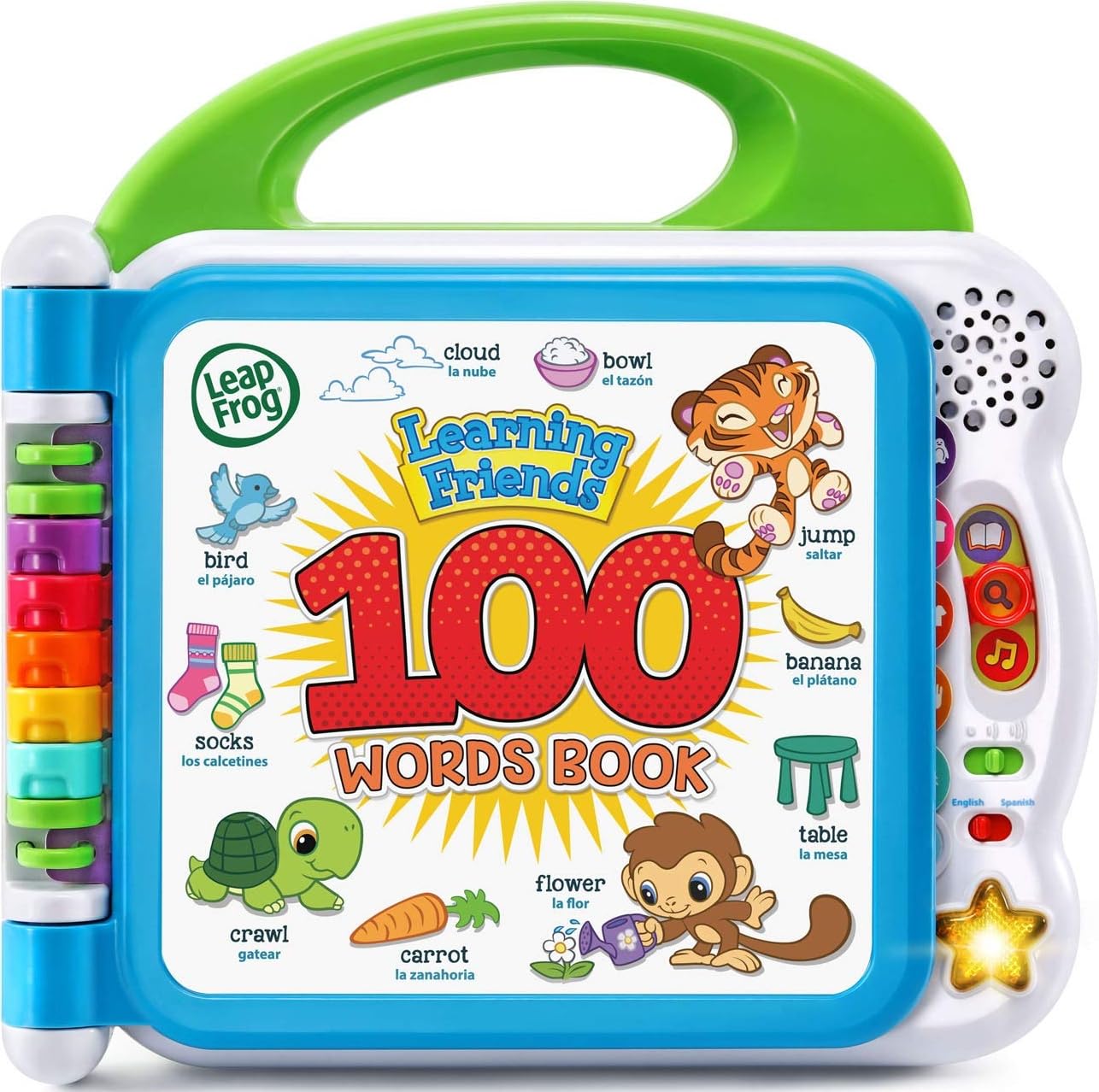
The 18-month age label is the first thing to notice. The LeapFrog Learning Friends 100 Words Book is an electronic learning toy, not a baby book for a newborn; it is plastic, it takes two AA batteries, and it wants a toddler who can press a picture and wait for the response. For the right age, that is a good job.
The book introduces more than 100 words across categories like pets, food, colors, opposites, and outside, and touching a word plays the word, a sound effect, or a fact. The bilingual mode switches between English and Spanish, which is the feature we appreciate most: it lets a bilingual household read the same page in both languages without buying a second book. The volume control is not a small detail; you will want it.
We recommend it as the interactive pick for toddlers 18 months and up, especially in bilingual families. It is a lap toy, not a cuddle book. Plan on fresh batteries for daily use, since the included set is for demo purposes. If your baby is still mouthing everything, wait; the soft book is the better first purchase.
Pros
- 100+ words in English and Spanish
- Touch-and-hear interaction
- Volume control and clear categories
Cons
- Sound quality can be uneven
Our interactive pick is the LeapFrog 100 Words Book for bilingual toddlers 18 months and up; it is a lap toy, not a bedtime story.
Best for Alphabet Practice
Chicka Chicka Boom Boom
Key Features
- Pages: 36
- Format: Board book
- Dimensions: 5.5 x 0.9 x 7.25 inches
- Reading age: 1-4 years
- Price: Budget
The title is nonsense until you read it aloud, and then it becomes the hook. Chicka Chicka Boom Boom is an alphabet book built on a chant: the letters climb a coconut tree, the tree bends, and the whole thing crashes into a refrain. A baby will not know the letters yet, but they will know the beat.
The rhyme is why this one works. It gives the adult a performance to deliver, and it gives a toddler a pattern to memorize. The letters are big and bright, and the alliteration makes the sounds stick. We found it one of the easiest books to read with expression, which matters when you are asked for it again and again.
It is also longer than the typical baby board book at 36 pages, and the board edition is 5.5 by 7.25 inches. That makes it a better fit for a toddler with a longer attention span than for a newborn. If your baby is still in the mouthing stage, start with the soft book instead.
For the 1-to-4 stage, we recommend it as the alphabet pick that does not feel like flash cards. It teaches letters, sounds, and sequence, but it does it through rhythm. If your baby is sitting up and asking for the same page again, this is the one that rewards the repetition.
Pros
- Catchy read-aloud rhythm
- Teaches letters and alliteration
- Bright, bold letter shapes
Cons
- More chant than story
We recommend Chicka Chicka Boom Boom as the alphabet pick for toddlers who like a performance; it turns letters into a chant.
Best for Baby Gifts
The Wonderful Things You Will Be
Key Features
- Pages: 36
- Format: Picture book
- Dimensions: 9.94 x 0.34 x 10.31 inches
- Reading age: Baby-3 years
- Price: Midrange
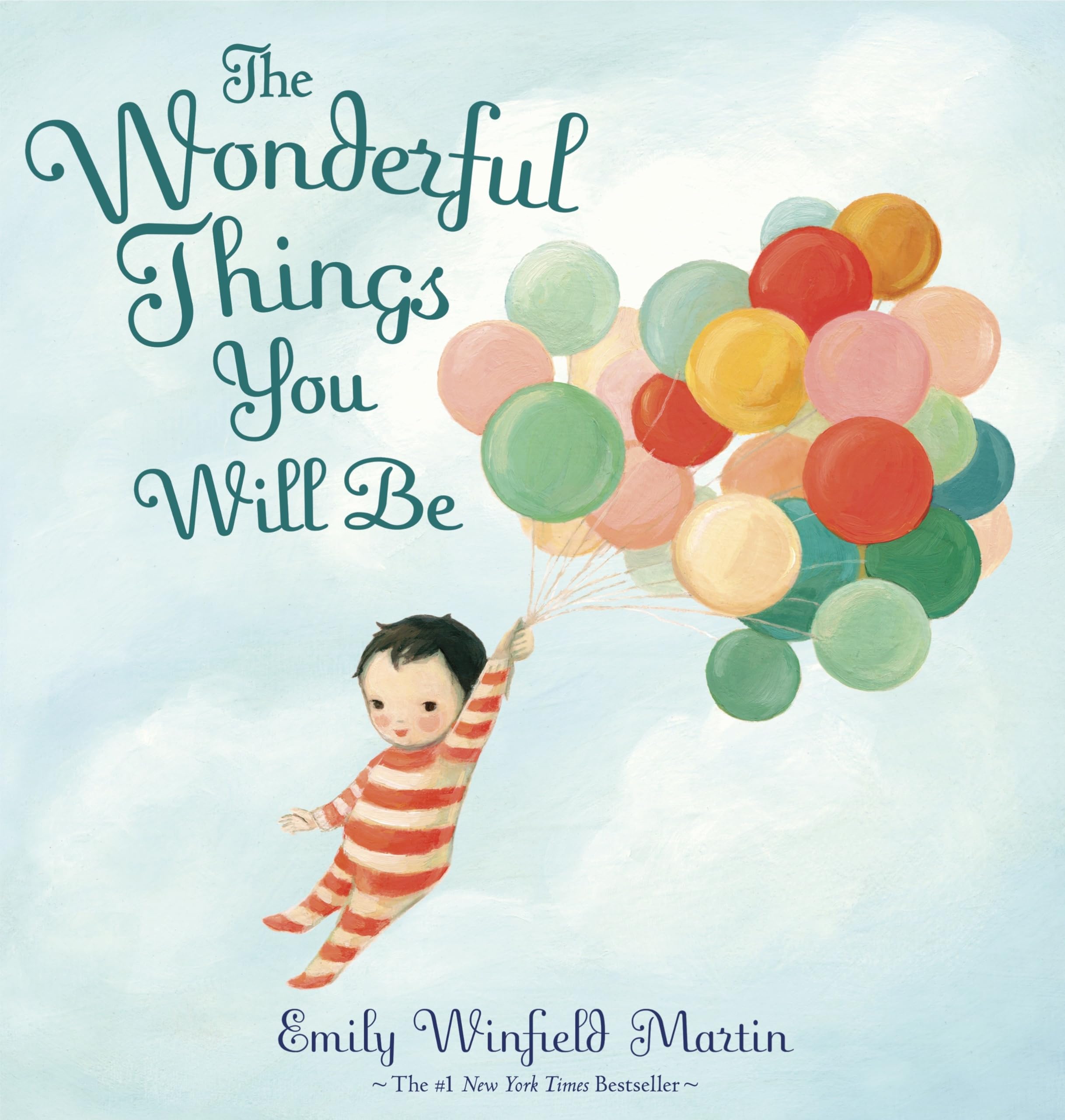
This is the one we reach for when the book is also a message to the parents. The Wonderful Things You Will Be is a picture book, 36 pages and nearly 10 inches square, with a rhyming text about who a child might become and the love that stays constant. It is designed to be read together, not chewed on.
The illustrations are the draw as much as the words. They are detailed and warm, with enough small things to find that a toddler can stay with a page after the sentence is over. The message is gentle and uplifting without being saccharine, which is a harder balance than it sounds.
The practical side matters here. This is not a board book, so it stays on the shelf until you are reading with a baby who can handle paper pages. The large trim makes it a lap book, and the pages are better for a supervised story time than for independent play. If you want a book a baby can toss in a diaper bag, choose one of the board picks.
We recommend it as a baby-shower or first-birthday gift, especially when you want something that will last past the board-book stage. It is a keepsake, not a daily workhorse. For the family that wants one beautiful book to read on special evenings, that is exactly the right trade.
Pros
- Heartfelt message for parents and children
- Detailed, warm illustrations
- Large lap-friendly trim
- Good baby-shower gift
Cons
Our gift-book pick is The Wonderful Things You Will Be: a heartfelt picture book for reading together, not for leaving with a teething baby.
How We Chose and Tested Baby Books
We started by pulling a long list of board books, picture books, and sound books from publisher catalogs, librarian recommendations, and the titles parents told us they reread most. We filtered that list by age range, page count, binding, and price, then cut anything that looked too flimsy for a diaper bag or too dense for a lap sit. That left 18 books, which we tested over five months.
Each book went home with at least two families on my team and lived where books actually live: the diaper bag, the stroller basket, the high chair tray, and the bedside table. We read them at nap time, bedtime, and during the late-afternoon fussies, and we handed them to babies from about 3 to 18 months. At each reading, we noted whether a baby reached for the book, turned away, or tried to eat it. We watched caregivers read aloud and marked where the text tripped them up, whether the rhyme held, and if the page turn came at the right beat.
We looked at illustrations from a baby’s distance — held at arm’s length, not on a coffee table — and asked whether there was one clear image to focus on or a crowded scene. For educational titles, we checked whether the concepts matched the age on the cover and whether the book gave us something to talk about beyond the words. We included several classics but did not give them a pass; if a beloved book got ignored, we said so. We also dropped, mouthed, and wiped each book with a damp cloth, and sound books got their own pass: volume checks, repeated button presses, and a listen for garbled or scratchy audio after a week of use.
How to Choose Baby Books
The book you will actually read every night matters more than the one with the longest list of features.
Start with the format your baby can handle
Cloth and soft books belong in the mouthing stage: they can be grabbed, chewed, and clipped to a stroller without turning into a pile of paper. Board books are the workhorses once a baby can sit up and swipe at pages; their thick pages survive repeated turning and the occasional bite. Paper picture books are for supervised reading with an adult, not for the floor or the diaper bag.
Our advice is to keep one soft book for the newborn months, two or three board books for daily handling, and save picture books for gifts or older toddlers. That mix covers the way a baby actually uses books before age two.
Match the book to the stage, not the age on the cover
A newborn does not need a plot. They need your voice, a clear rhythm, and pictures with enough contrast to hold their gaze. Around six to twelve months, the book becomes a physical object: pages to turn, holes to poke, textures to scratch. By toddlerhood, repetition and participation matter most; a book that invites the child to fill in a word or make a sound will get more use than a longer story.
That is why a simple call-and-response book can outperform a beautiful picture book for a one-year-old. Buy for the stage in front of you, not the age printed on the cover.
Read it aloud before you commit
Rhythm matters more than plot in this category. A book that looks charming on the shelf can be miserable on the twentieth reading if the sentences trip you up or the refrain wears thin. Read one page aloud in the store or open a sample at home. If you stumble, or if you cannot imagine saying it again tomorrow night, keep looking.
The best baby books have a cadence that does some of the work for you. That is why short rhymes and repeated questions show up again and again in the picks above: they are easy to deliver, and babies recognize the pattern.
Choose interaction with a purpose
Textures, holes, sound buttons, and bilingual modes are not automatically better; they are different jobs. A crinkle book gives a newborn something to bat at. Finger holes give a toddler a reason to trace and count. A sound book gives an older toddler a cause-and-effect game and can expose a bilingual child to both languages on the same page.
The trap is buying an interactive book too early. Electronic books usually carry an age recommendation for a reason, and a baby who is still mouthing everything will get more from cloth than from buttons. Pick one interactive book for the stage your child has reached, not a shelf full of them.
Buy the gift for the family, not just the baby
A board book is the safer baby-shower gift if you want the family to use it immediately; a picture book is the better choice when you want a keepsake with a message. Look at the wording before you buy: a story about a parent’s love can be perfect for one family and a poor fit for another, especially if it makes assumptions about how a child joined the family.
If you are unsure, choose a classic board book and write a note on the card rather than inside the cover. The family can decide later what becomes a keepsake.
Frequently Asked Questions
When should I start reading to my baby?
From birth. Newborns will not follow a story, but they tune into your voice, the rhythm of the words, and the pause when you turn a page. Start with one short board or cloth book at bedtime, and stop when your baby turns away. A five-minute ritual you repeat is more useful than a long session that ends in tears.
How do I clean a baby book?
Board books usually wipe clean with a damp cloth and a little mild soap; cloth books are generally spot-clean only, and electronic books should never be submerged. Check the care instructions before washing anything a baby chews. If a board book’s edges are peeling or a cloth book’s seam has opened, retire it rather than repair it.
What if my baby won’t sit through a whole book?
Follow their attention span instead of forcing the ending. Let them hold the book, turn the pages, or point at pictures while you read, and skip pages if that keeps them engaged. Keep one short book in the diaper bag for calm moments. If they push it away, try a different format — cloth or interactive — and come back later.
Final Verdict
For most families, I Love You to the Moon and Back is the baby book we recommend first: board pages, a short rhyme, and a message that holds up to nightly reading. If your baby is already reaching to turn pages, Brown Bear turns reading into a game; for a newborn, the soft crinkle book is the better first purchase. Start with the one that fits your baby’s hands and your own read-aloud patience, then add the others as their attention grows.
