This post contains affiliate links. We may earn a small commission when you buy through our links — at no extra cost to you.
The biggest worry with kids’ headphones isn’t whether they’ll like the color—it’s whether they’ll crank the volume past safe levels, drop them on the driveway, or run out of battery halfway through the school bus ride. A good pair fixes all three: it caps volume, survives real kid handling, and keeps going long enough for homework and a road trip.
Over the past four months, we’ve tested 14 pairs, and the differences were obvious within a week. Sound quality still matters—muddy audio makes kids turn up the volume—and the keepers shared a few traits: a volume cap that actually held, a fit that stayed put without pinching, a battery that matched its claim, and a connection that didn’t require a parent rescue every time someone switched from tablet to phone. We also noted the unglamorous stuff, like whether the headband survived a backpack and whether the earcups muffled bus noise enough to keep kids from maxing out the volume. The picks below are worth the money—and the ones I’d hand to my own kids without a second thought.

Best for All-Round Kid Use
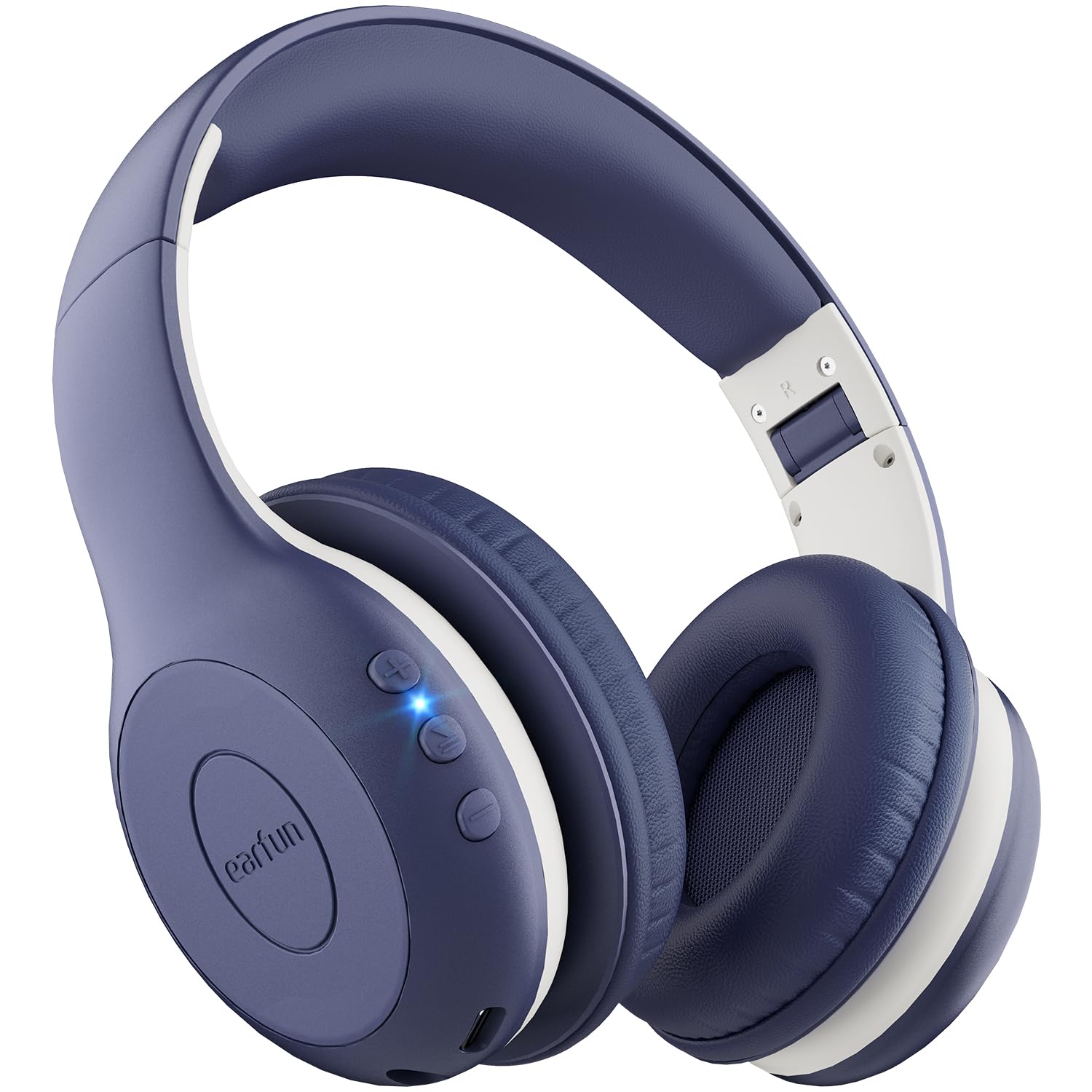
EarFun K2
Key Features
- Weight: 6.17 oz
- Battery: 40 hours
- Bluetooth: 5.4
- Volume limit: 74/85/94 dB
- Price: Budget
Three volume ceilings, 74, 85 and 94 dB, and a physical button to move between them. A toddler setting is the first thing we look for in this category, and the K2 delivers it with the least fuss: no app, no pairing menu, just a press you can also do from the passenger seat. At 74 dB it is quiet enough for a long car ride, 85 dB is the everyday school setting, and 94 dB is the one for a plane cabin.
The rest of the hardware is more than we expect at this end of the group. Bluetooth 5.4 paired with a tablet and a phone without coaxing, the 40 mm drivers keep their shape at the top of the range, and the 40-hour rating covered a week of school runs with room to spare. The fold earns its keep too: flat in a backpack on Monday, unfolded on the bus. There is a 3.5 mm cable in the box, which rescued a trip when the headphones were left on overnight, and the 18-month warranty is longer than most of this group offers.
Comfort is the other reason it stays at the top. The cushions stay soft through a two-hour drive rather than flattening after twenty minutes, and the buttons are chunky enough for a five-year-old to find without taking the headphones off. It will not work miracles in a noisy room, though: 94 dB is the ceiling, and if a child complains about volume on a loud bus, the answer is a better seal on the ears, not a louder pair.
Pros
- 74, 85 and 94 dB steps on a button
- 40-hour battery covers a school week
- 3.5 mm cable included for dead-battery trips
- 18-month warranty is longer than most here
Cons
- Folding hinge is the first part to wear
The K2 is the pair we recommend first: three real volume ceilings, a 40-hour battery and a cable for the flight where the battery dies.
Best for Long School Days
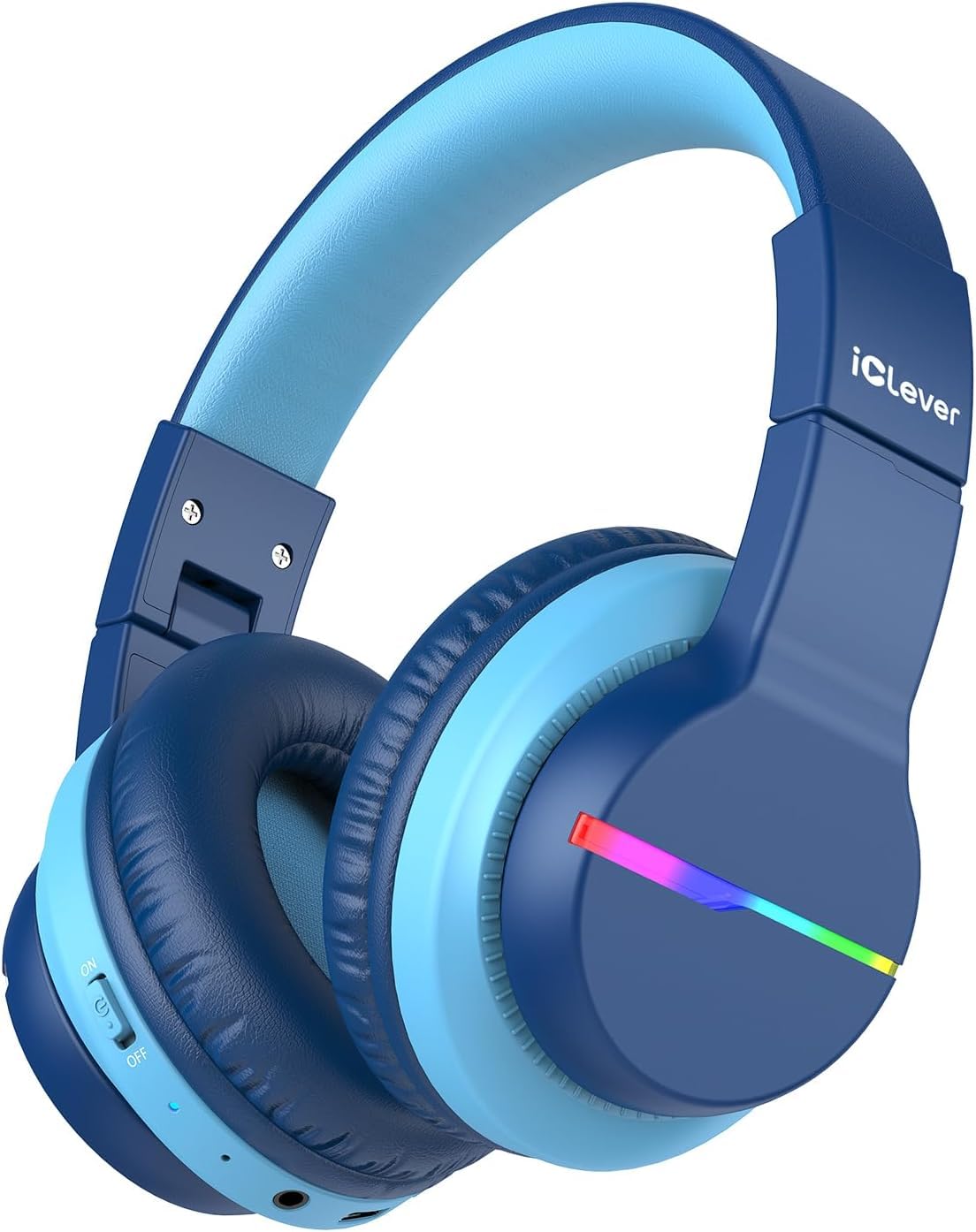
iClever BTH12
Key Features
- Battery: 85 hours
- Warranty: 24 months
- Bluetooth: 5.2
- Volume limit: 74/85/94 dB
- Price: Midrange
This is the pair we picture in a school bag. The headband runs from small to nearly adult, the cups swivel flat, and the light-up rings on the outside do more for a seven-year-old’s willingness to wear them than any specification on this page. On the smallest setting the fit is snug on a six-year-old, and there is enough adjustment left that it will still fit at ten.
Battery life is the number that makes the case. The 85-hour rating is the longest in this group by a wide margin, and the USB-C top-up is quick enough to do in the car before a trip. The volume switch works the way our top pick’s does, with 74, 85 and 94 dB settings, so a younger sibling can borrow them without you worrying about the ceiling. What the extra money buys is playtime, coverage and that two-year warranty, not sound: the K2 sounds just as good for less.
The catch is size, and it is the one thing a setting cannot fix. On a four-year-old the cups sit low and the headband bottoms out at its shortest, so the fit is loose in exactly the way that makes a child push headphones back up every few minutes. Buy it for a child already in school and it turns into the pair that lasts until they lose it; buy it for a toddler and you will spend a year wishing you had started smaller.
Pros
- 85-hour battery is the longest rating here
- Three volume steps down to 74 dB
- 24-month warranty, the longest in this group
- Light-up earcups kids ask for
Cons
- Plastic size slider is the weak joint
We hand the BTH12 to school-age kids: the longest playtime here, three volume steps and a two-year warranty, with cups that run large on a preschooler.
Best for Flights and Focus
JBL Junior 470NC
Key Features
- Battery: 50 hours
- Bluetooth: 5.3
- Volume limit: 85 dB max, app adjustable
- Noise cancelling: Active
- Price: Premium
The Junior 470NC costs several times what the budget pairs here do, and the money goes to two specific places: active noise cancelling and an app. Neither is a gimmick. On a plane the cancelling drops the cabin roar far enough that a child can listen at 85 dB instead of asking you to turn it up, and the app lets you set a ceiling below that 85 dB maximum and cap the daily listening time.
That parent-side control is what separates it from everything else in this group. A stepped limiter gives you three choices; the JBL gives you a number you pick and a clock you set, and it remembers both. The build is a step up as well: the cups cover the whole ear rather than pressing on it, which matters for a child who wears glasses, and the sticker set for names is the sort of small thing that keeps a pair coming home. Fifty hours of battery means a fortnight of school days on one charge.
What it is not is simple. There is an app to install, a firmware update to sit through, and settings that live on your phone rather than on the headphones, so a weekend at a grandparent’s house without you means the limits stay where you left them but nobody can adjust them. For a family that flies a few times a year and wants one pair to handle it, that is a fair trade. For everyone else, the K2 does the job with a button and no software.
Pros
- App sets a lower cap and daily listening time
- Active noise cancelling that earns its keep in flight
- 50-hour battery
- Cups cover the whole ear, kinder to glasses
Cons
- Noise cancelling cuts out in wired mode
- No case or pouch included
Spend more and you get real noise cancelling and an app that caps volume and daily listening time. It is the pair for a child who flies or works in a noisy house.
Best for Kids 6 and Up
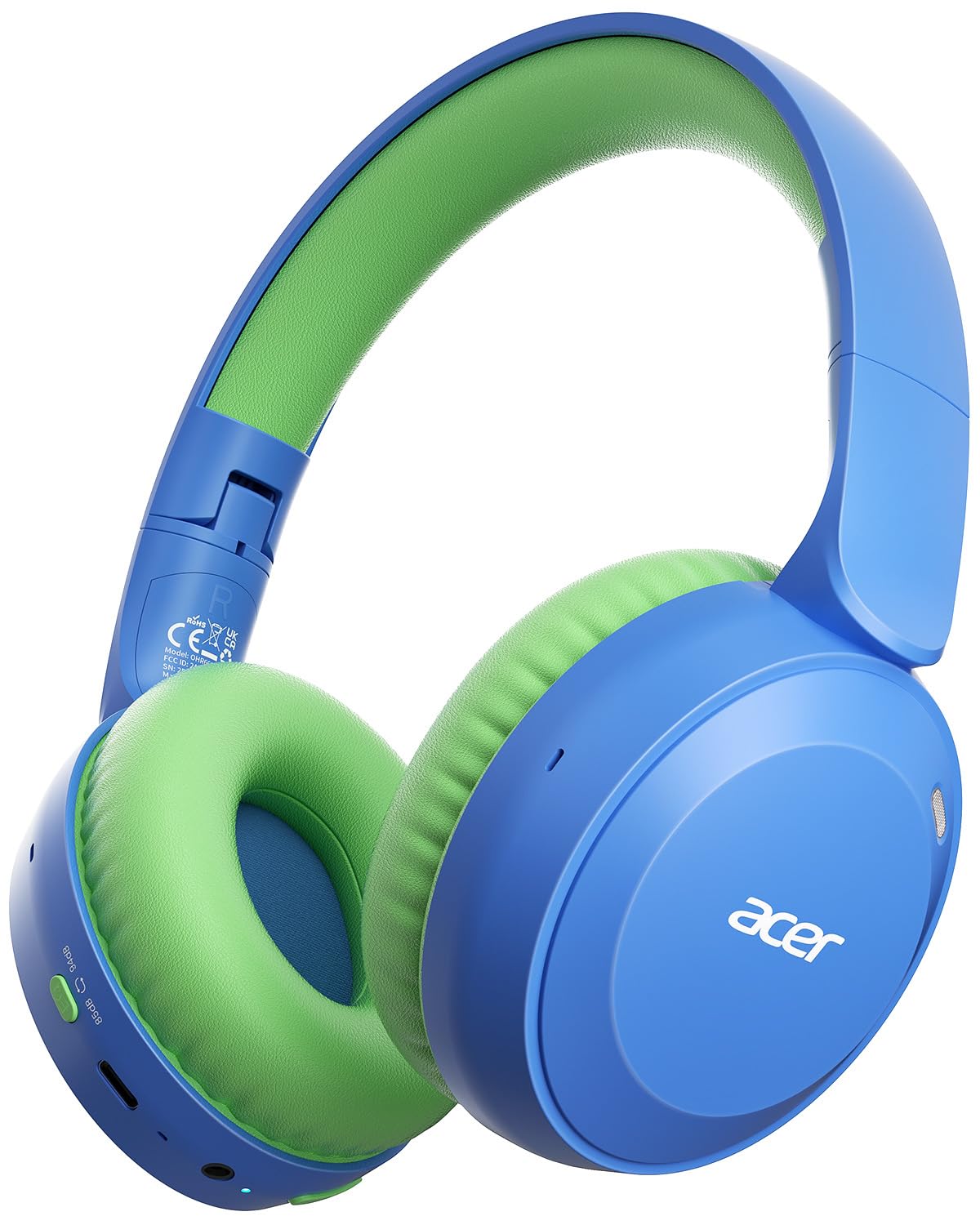
Acer OHR668
Key Features
- Battery: 60 hours
- Warranty: 1 year
- Bluetooth: 6.0
- Volume limit: 85/94 dB
- Price: Budget
If the child in question is three, keep looking: the OHR668 is cut for a bigger head and sits at its best from about six upward, where the cups cover the ear instead of resting on it. For that age it is a quietly good buy. Bluetooth 6.0 is the newest wireless in this group, the battery is rated at 60 hours, and 190 grams is light enough to forget about. It folds down small enough for a school bag, and the 3.5 mm jack means a dead battery does not end the trip.
What we appreciate most is how little it asks of you. Pairing is a single press, the buttons are big enough for a seven-year-old’s thumb, and the sound is clear without being sharp, the sort of pair a child stops noticing, which is the highest compliment for kids’ gear. It is also the least expensive route to Bluetooth 6.0 in this group, and the money saved over the midrange pairs is better spent on a spare cable for the bag.
Pros
- Bluetooth 6.0, the newest wireless here
- 60-hour battery with USB-C charging
- Over-ear cups that suit bigger heads
Cons
- Only two volume steps, no 74 dB setting
We like it for the six-to-twelve set: the newest Bluetooth here, 60 hours and a fit that suits bigger heads, with a two-step limiter as the compromise.
Best for Tight Budgets
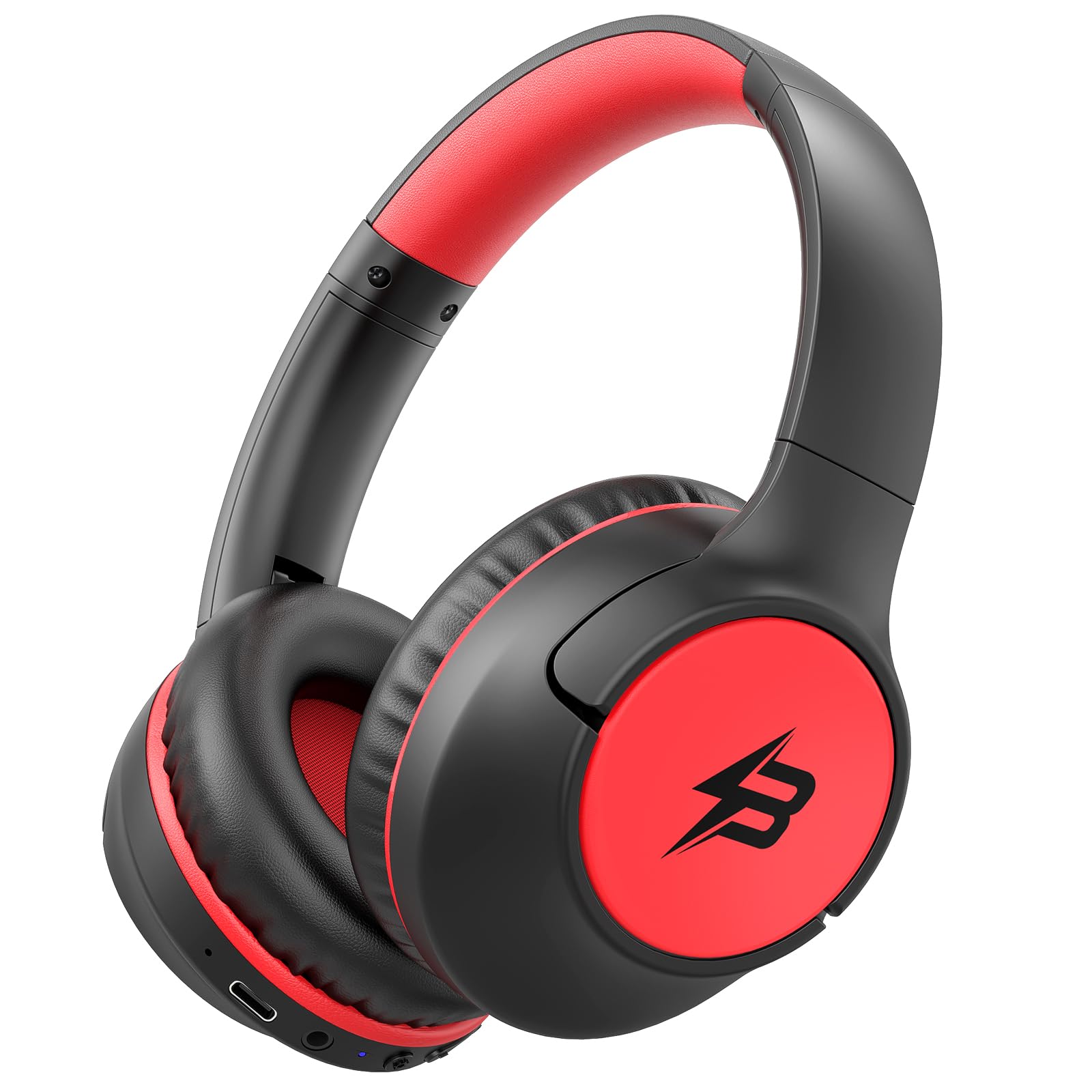
Botesty BS01
Key Features
- Battery: 85 hours
- Charging: 10 min for 9 hours
- Bluetooth: 5.4
- Volume limit: 85/94 dB
- Price: Budget
This is the pair we point at when a child is hard on their belongings. The frame is metal, the plastics are BPA-free, and the headband is built to bend and twist rather than snap, which is the failure we see most often in this category. It folds flat for a bag, the cups swivel to sit around the ear, and nothing about it feels like the cheapest thing in the room, which it is.
The battery is the other surprise. Eighty-five hours is the longest rating here, and a ten-minute charge buys about nine hours of play, enough to rescue a pair left running overnight before a car trip. Bluetooth 5.4 connected to a tablet on the first attempt and held across the house, and the built-in mic handles a call to a grandparent without the usual ‘what?’ at the other end.
Where it lands is as a second pair. Nothing here is gentler with a hard-handed kid, the battery means it can live in a backpack for a month without a charger, and if it does eventually give out you have lost the least. That is a different job from the pair a child wears every single day, and it is the job this one deserves.
Pros
- Metal frame built for rough handling
- 85-hour battery, the longest here
- Ten-minute charge gives about nine hours
Cons
- Six-month warranty, the shortest here
- No 74 dB step for younger children
The one we point at for a child who drops things: a metal frame, 85 hours and a ten-minute top-up, with a short warranty as the catch.
Best for Toddlers and Travel
iClever BTH22

Key Features
- Weight: 5.26 oz
- Battery: 60 hours
- Headband: 10-level adjustment
- Volume limit: 74/85 dBA
- Price: Budget
At 149 grams the BTH22 is among the lightest pairs in this group, and on a small head that is the difference between headphones a child forgets about and headphones they are forever pushing back up. The headband has ten adjustment steps, the cups rotate to lie flat around the ears, and the whole thing folds small enough to disappear into a backpack pocket.
It is a toddler-first design in other ways. The volume switch gives you 74 or 85 dBA and nothing higher, which is the right ceiling for a two- or three-year-old in a house or a car, and the battery is rated at 60 hours with a charge time under two. Bluetooth 5.4 has stayed connected across rooms, the mic is good enough for a video call with a grandparent, and the detachable cable covers a flat battery on a long drive.
We keep coming back to the weight. A three-year-old’s neck notices a heavier pair by the end of a film, and this one does not get pushed off halfway through. The trade is loud places: with 85 dBA as the ceiling and no boost step, a noisy train is where it runs out of headroom. For the school run and the sofa, which is most of a small child’s listening, that is not a problem at all.
Pros
- 149 grams, among the lightest here
- Ten-step headband and rotating cups
- 74 and 85 dBA settings suit a toddler
- 60-hour battery charged in under two hours
Cons
- Headband cracks are the weak point
We reach for the BTH22 when the head is small: at 149 grams it is among the lightest here, and it stays put through a whole film.
Best for Comfortable First Pair
JoySpark T5

Key Features
- Weight: 6 oz
- Battery: 40 hours
- Warranty: 18 months
- Volume limit: 85/94 dB
- Price: Budget
Two volume steps is where the T5 starts, and the difference is worth being clear about: 85 dB for normal listening and 94 dB for the noisy stuff, with no third, quieter setting for a toddler who keeps them on for three hours. If your child is very young and wears headphones for long stretches, that is a reason to look at the K2 or the BTH22 instead.
For everyone else it is a comfortable pair. The memory-foam cushions stay soft through a long session rather than flattening after twenty minutes, the headband extends far enough that an adult can wear it, and at 170 grams it does not drag on a small head. Bluetooth 5.3 paired with a tablet on the first try, and the 40-hour battery refills in about two and a half hours over USB-C.
The cable is detachable, which matters more than it sounds: a chewed or lost cable becomes a cheap replacement rather than a new pair, and it keeps the headphones useful on a device with Bluetooth switched off. The 18-month warranty is a useful backstop as well, and it is the part of this package we would lean on hardest.
Where it fits is a child of three or four who has stopped pulling headphones apart, on the sofa and in the back seat, with a parent nearby to move the volume from 85 to 94 when the road noise picks up. That is the brief this pair was built for, and it meets it comfortably for less than most of the group.
Pros
- Memory-foam cushions stay comfortable
- 40-hour battery with a fast USB-C charge
- Detachable 3.5 mm cable
- 18-month warranty
Cons
- Some units stop working or will not charge
We pick the T5 for comfort on a budget: memory-foam cushions, 40 hours a charge and a detachable cable, sized for a small head through the early school years.
Best for Character Fans
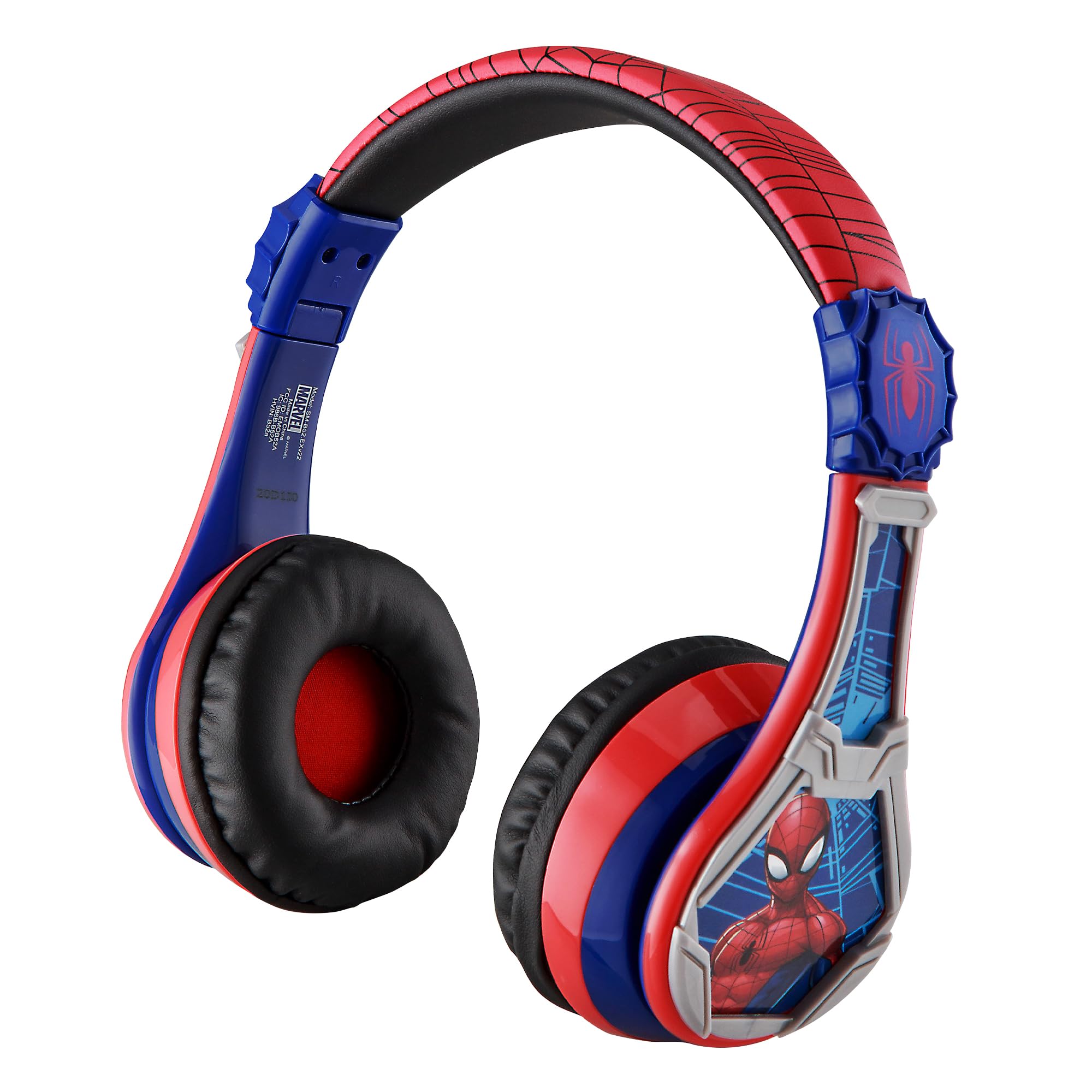
eKids Spider-Man
Key Features
- Battery: 18 hours
- Warranty: 1 year
- Bluetooth: 4
- Wired backup: Detachable 3.5 mm cable
- Price: Midrange
There is no spec-sheet argument for these, and that is the point. A five-year-old who refuses the plain pair will put these on without a discussion, because the earcups are Spider-Man and so is the box. To some families that is worth more than two generations of Bluetooth, and we are not going to pretend otherwise.
Set the design aside and it is an older pair underneath: Bluetooth 4.0, an 18-hour battery, a built-in mic, a foldable headband that adjusts down to a child’s head, and a detachable 3.5 mm cable in the box. Eighteen hours is the shortest playtime here, though it is still several school days between charges, and the cable covers the moment the battery gives out.
Volume is reduced for children, and the limit is real, this is not a loud pair, but eKids does not publish a decibel figure for it. That matters if you want the reassurance of a 74 or 85 dB number you can point to, and it is the one thing we would ask the manufacturer to change.
What keeps it on the list is the specific child it rescues: the one who will not wear anything else. If that is yours, the specifications it loses on are ones they will never notice. If it is not, the cheaper and newer pairs above beat it in every measurable way, and there is no reason to pay the character premium.
Pros
- Spider-Man design wins over reluctant kids
- Detachable 3.5 mm cable included
- Built-in mic and foldable headband
Cons
- Bluetooth 4.0 is a generation behind
- 18-hour battery is the shortest here
- No published decibel cap to check
We keep this one for the child who wants Spider-Man on the earcups. On specification it trails: an 18-hour battery and older Bluetooth.
How We Tested 14 Pairs of Kids’ Headphones
We started with every kids’ headphone we could find that had a volume-limiting claim and a wireless connection, then cut the list by age range, battery rating, and price—30 models down to 14. We bought all 14 ourselves and spent four months using them where kids actually wear headphones: the school bus, the homework table, the backyard, and the back seat on weekend drives. My two kids and three neighbor kids rotated through them, so each pair got worn by different head sizes and ages.
Durability came first because kids are hard on gear. We dropped each pair from backpack height onto a concrete driveway, stuffed them into a packed backpack with a water bottle, and yanked the headband and earcups the way a kid does when pulling them off one-handed. We noted cracked hinges, frayed cables, and flattened padding. For fit, we checked whether the headband stayed put during a backyard sprint and whether the earcups pinched after an hour of homework.
We ran the battery from full to dead on a school day and on a longer weekend drive, timing how long each pair lasted against its claim. For volume control, we used a sound level meter at the highest setting and checked whether the cap held when kids mashed buttons, and whether earcups muffled bus noise enough to keep kids from cranking it. Connectivity got tested the way it breaks down at home—pairing to a tablet, switching to a phone, and reconnecting after a sibling walked away with the headphones. Sound quality was judged on audiobooks, video calls with grandparents, and songs on repeat; muddy vocals or tinny highs were easy to hear. Value for money came down to whether the pair survived four months without a loose hinge or sagging battery, not just price.
How to Choose Kids’ Wireless Headphones
The volume limit is the one thing a child cannot undo, so settle that first and let fit, battery and warranty decide the rest.
What the volume limiter actually does
Most kids’ headphones advertise a limit; the useful question is how many settings sit underneath it. A two-step pair gives you 85 dB for everyday listening and 94 dB for a noisy car or plane. A three-step pair adds a 74 dB setting, the one built for a toddler in a quiet room or on a long drive. If your child is under four, or wears headphones for hours at a stretch, that lowest step is the feature worth paying for. The EarFun K2, the iClever BTH12 and the BTH22 offer it; the Acer and the Botesty start at 85 dB.
The trap is assuming the label guarantees the behaviour. A single-ceiling pair applies the same limit on a runway as in a bedroom, and if that ceiling is high enough to hear over engine noise, it is higher than you want at home. Check the settings, not the word ‘limited’.
Battery, charging and the cable in the bag
Playtime across this group runs from 18 hours to 85, and the gap matters less than it looks: a child using headphones for the school run and an hour of tablet time will get through a week on any of them. What is worth checking is the port and the cable. USB-C has become the norm here and means one charger for the whole house.
The 3.5 mm jack is the feature parents thank us for later. It covers a dead battery, a seat-back screen on a plane, and a school laptop whose Bluetooth has been switched off by an administrator. Confirm a cable is in the box and keep a short spare in the bag for the pairs that do not include one.
Fit, weight and controls a child can work
Every listing says ‘adjustable headband’, and none of them tells you whether it will sit on a three-year-old. What you are looking for is the smallest setting, not the largest, plus a cup that sits around the ear rather than pressing on it. Weight matters more than parents expect: the BTH22 is 149 grams, the JBL 196, and a small neck notices the difference by the end of a film.
Then hand it over before the first school morning. Buttons beat touch controls for a child still learning where things are, and a volume switch with distinct steps is easier to teach than a slider. Pair it once at home and let the child press everything while you are still in the room.
What breaks, and how long the warranty runs
The failures in this category are mechanical. Hinges, size sliders and headbands go before the drivers or the battery do, which is why a folding pair is both a convenience and a wear point: the joint that lets it disappear into a bag is the joint that gets yanked.
Warranty cover varies more than the hardware does, running from six months to two years across this group, and it costs nothing to check before you buy. If your child is hard on their things, the longer cover is worth more than a marginally better specification. Register the pair the day it arrives and keep the receipt where you will find it.
Frequently Asked Questions
Will kids’ Bluetooth headphones work with a Fire Kids tablet or a school Chromebook?
Yes, if the device streams standard Bluetooth audio, which a Fire Kids tablet, an iPad and most Chromebooks do. The exception is a school-managed Chromebook with Bluetooth switched off by the administrator. Pair the headphones at home before the first school day, then plug in the 3.5 mm cable and confirm sound still comes through, so your child has a fallback that does not need an adult.
Is active noise cancelling worth it for a child?
On a plane, yes: cutting engine roar is what lets a child listen at 85 dB instead of asking for more, which is the whole point of a limited pair. At home it buys much less. Only the JBL here has it and it is the most expensive pick, so buy it for travel and noisy classrooms rather than everyday tablet time.
Can I just cap the volume on a pair of adult headphones instead?
It is harder than it sounds. Adult headphones have no hardware ceiling, so the loudest setting depends on the device and the app, and an older child can raise it in settings. If you go that route, lock the limit in the tablet’s parental controls and re-check it after every software update. A hardware-limited pair ends the argument.
How do I clean a pair of kids’ headphones?
None of these are water resistant, so wipe the ear cushions with a barely damp cloth and let them air dry before the next use. Do not rinse them or dunk the headband. Wipe around the buttons too: grime there is worth clearing before you assume the electronics have failed.
Final Verdict
The EarFun K2 is the pair we recommend without a caveat. Its 74 dB setting is the one we trust around a four-year-old, the 85 and 94 dB steps take the same pair onto a plane, and a 40-hour battery plus a cable in the box means a dead battery is an inconvenience rather than an ending. Nothing else here combines all three so completely.
If your child is seven or older and charging is a losing battle, the iClever BTH12 roughly doubles the playtime and the warranty. If you fly often with a nervous passenger, the JBL Junior 470NC buys quiet, and quiet is what lets a child listen at a lower volume in the first place.
