This post contains affiliate links. We may earn a small commission when you buy through our links — at no extra cost to you.
Easter baskets can be a parent’s quiet triumph—or a surprise cleanup marathon. The problem isn’t the gifts, but the mismatch between a craft’s packaging promise and its actual use: scratch art that people love but that coats the table in fine dust, egg-dig kits that thrill a kid for hours but bury the yard in silt. Without knowing the real trade-offs, you’re often left with a child who’s moved on and a room that hasn’t.
This guide skips the hype and points you to the products that thrive because they align with how kids actually play—long enough to make an impression, messy in a manageable way (or not at all), and designed to spark repeat use. Whether you’re filling a basket for a baby, a tween, or a dino-obsessed kindergartner, the picks ahead are anchored in the details real parents call out: sturdiness, attention-holding power, and what happens after the unboxing.



Best for Creative Kids 4+
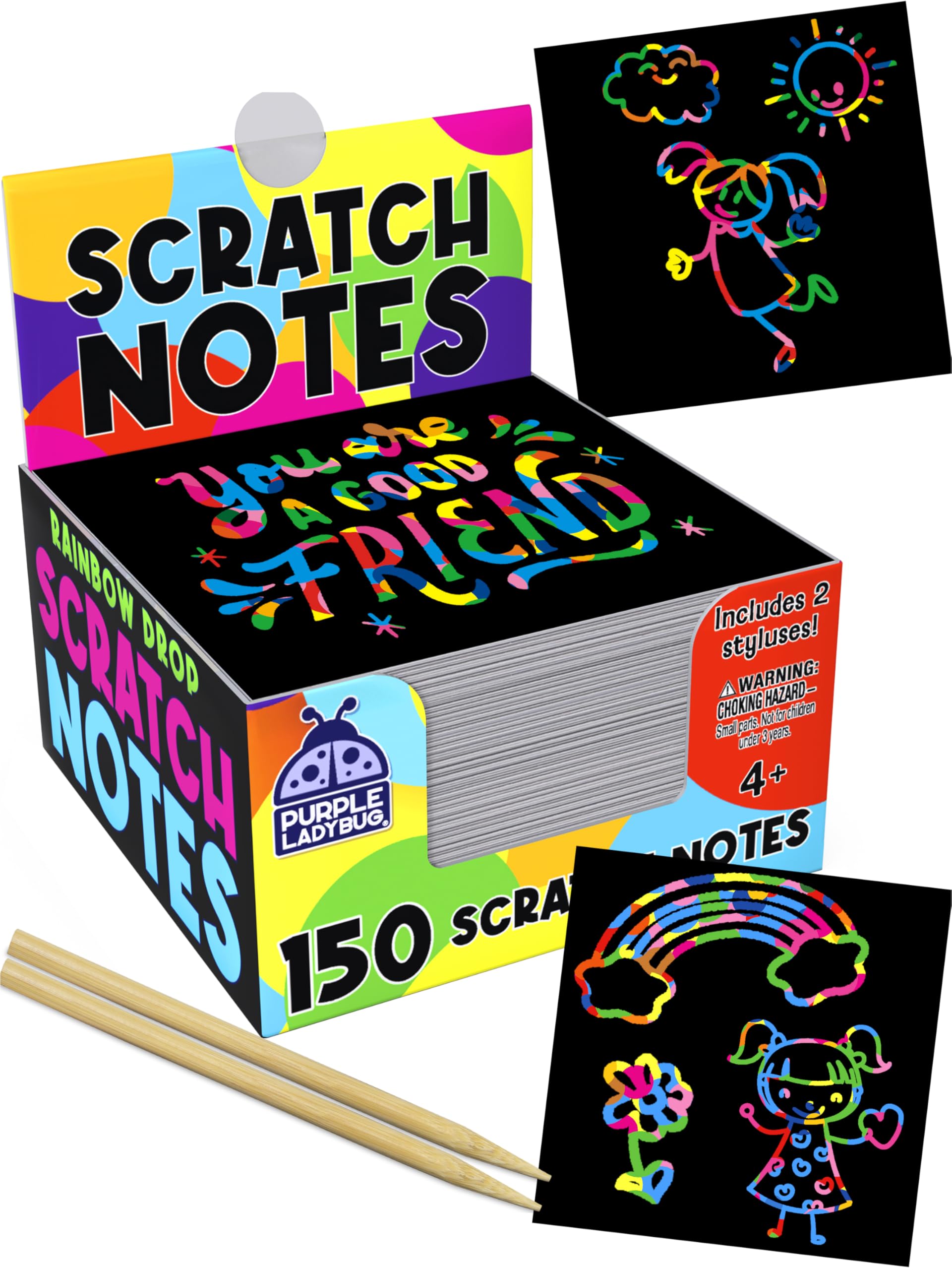
Scratch Art Mini Notes (150-Pack)
Key Features
- Age-Appropriateness: 4-12 years
- Mess Level: Moderate dust, requires tray
- Interactive vs. Passive: Interactive drawing
- Replayability / Longevity: 150 uses
- Quality of Included Materials: Thick cardstock, 2 stylus pens
- Price: Budget
With 150 sheets and two stylus pens in a desktop dispenser box, this scratch art set offers enough material to last through spring break and beyond. The cardstock is thick enough to hold up to repeated scratching, and the rainbow colors underneath are vivid and satisfying to reveal.
The scratching action is straightforward for most kids ages 4 and up, though the black coating can require a bit more pressure than some very young children expect. A contained surface like a tray catches the fine dust that naturally flakes off — this is not a mess-free activity, but it’s manageable with a little preparation.
Best suited for kids who enjoy drawing and don’t mind a bit of cleanup. Parents looking for an Easter basket filler that doubles as a quiet activity will appreciate the built-in storage box — with a tray or newspaper underneath, the dust stays put and wipes away easily. The 3.5-inch square notes are also usable as mini thank-you cards or doodle pads, stretching the value beyond the holiday.
Pros
- Engages a wide age range from preschoolers to teens
- Excellent as an Easter basket stuffer or gift — widely loved for gifting
- Thick, sturdy cardstock with vibrant rainbow colors under the scratch layer
- Great value for money given the 150-sheet quantity and durable packaging
Cons
- Scratching requires more force than some children expect, which can frustrate younger users
- Fine dust accumulates during use and requires a contained surface to avoid mess
A high-quantity craft that delivers creative fun with the straightforward trade-off of a little dust — best for families who don’t mind a quick cleanup.
Best for Toddlers & Babies
Burrow Bunny Plush (9-inch)
Key Features
- Age-Appropriateness: All ages (birth+)
- Interactive vs. Passive: Passive cuddle toy
- Replayability / Longevity: Long-term companion
- Quality of Included Materials: Polyester, surface-washable
- Price: Mid-Range
While the 3-in-1 building set in this Easter lineup engages kids who love to construct, the Burrow Bunny stakes its appeal on one thing: softness. The polyester fur has a buttery texture that makes it an instant comfort object for little hands. Floppy ears and oversized feet give it a distinctive, classic silhouette that fits effortlessly into nursery décor or an Easter basket.
This plush is best for babies and toddlers who need a cuddly companion rather than a toy with moving parts. The 9-inch size is easy to tote but can underwhelm if you’re expecting a larger lovey from the photos. Fur may shed, and stitching around the neck may have loose threads upon arrival — a quick inspection before gifting is wise. Parents seeking a low-maintenance plush that doesn’t need constant machine washing will appreciate the surface-wash design.
Pros
- Buttery-soft texture makes it an irresistible snuggle companion for babies and toddlers.
- Universally cute design — floppy ears and a fluffy tail make it a cherished Easter basket gift.
- Mid-range price from a trusted name makes it an affordable high-quality plush for gifting.
Cons
- The 9-inch height may feel small compared to product images, leaving some gift-givers surprised.
For the child who needs a comfort-first companion rather than another activity toy, this bunny fills small arms with softness that lasts beyond the holiday.
Best for Dino-Loving Kids 5+
Dig a Dozen Dino Egg Kit
Key Features
- Age-Appropriateness: 3+ years
- Mess Level: Substantial mud/dust, outdoor use
- Interactive vs. Passive: Interactive excavation
- Replayability / Longevity: 12 separate eggs
- Quality of Included Materials: 12 eggs, chisels, fact cards
- Price: Mid-Range
Twelve individually wrapped dino eggs transform an Easter egg hunt into a mini paleontology camp. Inside each, a small dinosaur skeleton awaits — along with a chisel, brush, and illustrated fact card that names the creature and shares a fun fact. The kit sidesteps screen time and encourages focused, tactile play, stretching across multiple sessions as kids work through a dozen digs. Unlike plant-growing crafts, this activity centers on excavation and discovery, giving dino-obsessed children a reason to stay outside long after the eggs are found.
The kit works best for families with outdoor space and a tolerance for mess. The eggs crumble into fine dust and clumpy mud that can travel beyond a small indoor mat — a covered porch, patio, or backyard helps contain the debris. It suits dinosaur-loving kids ages five and up who enjoy hands-on projects and learning through doing. For under-threes, small parts pose a choking risk, and indoor-only play areas will struggle with the clean-up.
Pros
- Keeps kids engaged for extended periods with screen-free, hands-on digging and discovery.
- Each egg comes with a full-color fact card, turning play into an introduction to dinosaur names and traits.
- A dozen eggs stretch the fun across multiple sessions, ideal for Easter hunts or party activities.
Cons
- The digging process generates fine dust and clumpy mud that can spread; outdoor use or a carefully covered surface is essential.
For an Easter activity that merges discovery with outdoor play, the Dig a Dozen Dino Egg kit delivers — provided you’re ready to embrace the cleanup.
Best for Mess-Free Decorating
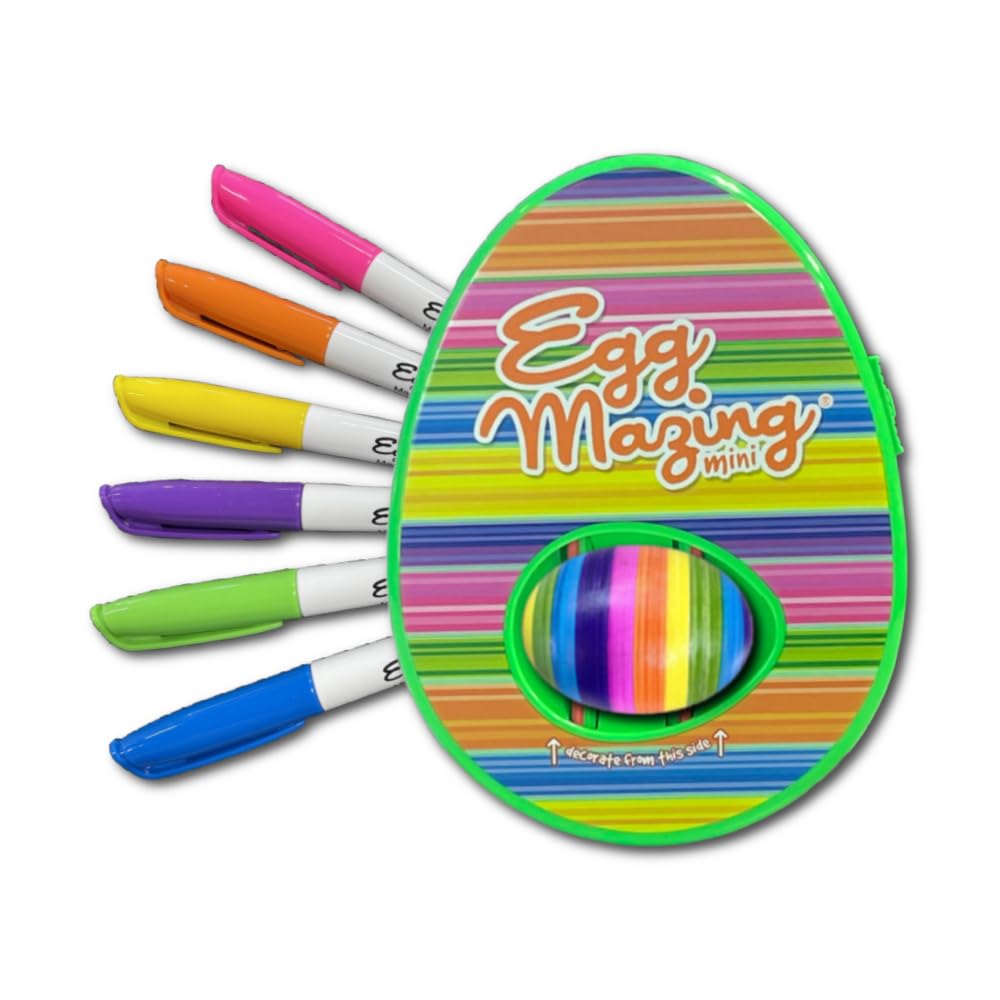
EggMazing Egg Decorator Kit
Key Features
- Age-Appropriateness: 3+ years
- Interactive vs. Passive: Interactive spin & color
- Replayability / Longevity: Reusable with extra eggs/markers
- Quality of Included Materials: 6 non-toxic markers, spinner
- Price: Mid-Range
Unlike candy-filled Easter treats that can leave hands sticky, this kit spins the egg while kids press markers against the shell. The result is crisp stripes, dots, and swirls that look far cleaner than most dip-dyed attempts—and there’s no bowl of colored liquid waiting to tip. It works on real hard-boiled eggs, plastic eggs, or wooden blanks, so you can choose between a one-time project or a permanent display.
This suits families who dread the cleanup of a traditional egg-dyeing station. Toddlers as young as three can hold a marker to the spinning egg with little help, and adults often get just as hooked. Keep a spare set of washable markers ready: the included ones can run low after a few eggs, especially if caps aren’t tightened firmly. Wooden eggs sidestep that concern and turn the craft into a reusable tradition.
Pros
- Even toddlers manage beautiful striped eggs independently, producing results that look far beyond a typical craft kit.
- No dye cups, no stained fingers, no spills—decorating stays entirely on the egg surface.
- Suits the youngest participants with barely any adult intervention, keeping the whole family engaged rather than managing chaos.
Cons
- The spinner motor may stop working after a short period of use, cutting a decorating session unexpectedly.
- The included markers can run dry after decorating only a few eggs, making a backup set essential to finish a dozen.
For families who want dye-free Easter decorating with less mess and more creative control—provided they’re ready to replace markers—this spinner earns its spot as a holiday activity that skips the mop.
Best for Toddler Read-Aloud
It’s Not Easy Being a Bunny
Key Features
- Age-Appropriateness: 2-5 years
- Interactive vs. Passive: Passive read-aloud
- Replayability / Longevity: Repeated readings
- Quality of Included Materials: Hardcover, 48 pages
- Price: Budget
P.J. Funnybunny tries living as a bear, a bird, and a possum only to learn he’s happiest being himself — a lesson delivered with dry humor and no finger-wagging. Bright, crisp illustrations hold the attention of toddlers, and the 48-page hardcover holds up to many re-reads. The humor lands for both kids and parents, which keeps it off the shelf long after spring.
This book suits parents building a library of early-reading stories with a positive message, particularly as an Easter basket addition where the bunny theme does the heavy lifting. The Easter tie-in is subtle — there are no eggs, baskets, or holiday rituals — so set expectations accordingly. Pair it with a spring activity if the recipient wants a stronger seasonal focus.
Pros
- A non-preachy self-acceptance message woven into a funny, memorable story
- Age-appropriate language and length for toddlers and new readers
- Bright, engaging illustrations that support the humor and hold attention
Cons
A budget-friendly hardcover that earns its place in a child’s permanent collection — bring it out for Easter, but expect to read it all year.
Best for Unicorn Craft Fun
Mini Garden: Unicorn

Key Features
- Age-Appropriateness: 6-8+
- Mess Level: Minimal
- Interactive vs. Passive: Interactive plant & craft
- Replayability / Longevity: One-time growth
- Quality of Included Materials: Chia seeds, plastic planter, decorations
- Price: Budget
The Mini Garden: Unicorn centers on quick-growing chia seeds that turn the egg-shaped planter into a fuzzy green creature within days. Kids can personalize it with the included stickers and gems, adding a craft component that appeals to unicorn-loving 5- to 8-year-olds. The project is intentionally transient—chia growth fades after a week or two, and the tiny terrarium isn’t meant for long-term display. That brevity makes it a low-commitment Easter surprise rather than a lasting houseplant, aligning with the product’s small size and budget price.
Pros
- Chia seeds germinate in 3–4 days, giving young kids a nearly instant sense of accomplishment.
- Adorable unicorn egg planter with stickers and gems appeals strongly to girls ages 5–8.
Cons
- A few kits may be missing small decorative pieces upon arrival.
If you’re looking for an Easter surprise that lets a unicorn-loving 5-8 year old grow something quickly, this tiny garden does the job—just plan on it being a brief, enchanting project rather than a permanent plant.
Best for Creative Builders 8+
LEGO Cute Bunny 3-in-1

Key Features
- Age-Appropriateness: 8+
- Interactive vs. Passive: Interactive building
- Replayability / Longevity: 3-in-1 rebuildable
- Quality of Included Materials: 326 LEGO pieces
- Price: Mid-Range
With 326 pieces, this 3-in-1 set builds a posable bunny, seal, or llama — each one cute enough to display long after Easter. Clear printed instructions cover the bunny and llama, making those builds satisfying and confidence-building. The seal, however, exists only as a digital PDF. That’s a minor snag for kids who want to flip through a booklet, but it’s easy to manage if a tablet is nearby. For families seeking an Easter gift that evolves with spring and beyond, this set delivers extended creative play.
Pros
- The three animal figures (bunny, seal, llama) are posable and adorable, making them display-worthy after the build.
- Replay value with three different builds extends fun well past Easter basket unboxing.
Cons
- Only the bunny and llama builds come with printed instructions; the seal build must be accessed online, which may interrupt the building session for kids without a device handy.
Suited for kids 8+ with a tablet handy who want an Easter basket toy that transitions into a year-round building project.
Best for Candy-Free Hunts
Play-Doh Eggs 24-Pack

Key Features
- Age-Appropriateness: 2+
- Mess Level: Moderate (dough crumbs)
- Interactive vs. Passive: Interactive molding
- Replayability / Longevity: 24 eggs, single-use each
- Quality of Included Materials: 2oz Play-Doh per egg
- Price: Mid-Range
Turning an Easter egg hunt into a sculpting station, this 24-pack hides 2 oz of Play-Doh in each egg — a candy-free alternative that toddlers and preschoolers find thrilling. The colors match the eggs and are bright right out of the shell, fueling open-ended play long after the hunt. However, some eggs can arrive with hardened, crumbly dough that’s unworkable. For a smooth hunt, open a few eggs as soon as the box arrives and have a backup plan for any duds.
Pros
- Eliminates sugar from Easter egg hunts while kids still get the thrill of discovery.
- Bright, varied colors that match the eggs for easy sorting and immediate play.
Cons
- Some eggs hold Play-Doh that’s hardened and crumbly straight from the package — open a few ahead of time.
This candy-free hunt earns its place when you can inspect the eggs a few days before Easter — waiting until the morning of means risking a basket full of dried-out surprises.
Best for Easter Story Time
How to Catch the Easter Bunny

Key Features
- Age-Appropriateness: 2-5 years
- Interactive vs. Passive: Passive read-aloud
- Replayability / Longevity: Repeated readings
- Quality of Included Materials: Hardcover, 40 pages
- Price: Budget
This book leans on trap-humor and bright, busy illustrations to build pre-hunt excitement. The rhymes can feel forced and the story disjointed, with an abrupt ending; adults reading repeatedly will notice the strain, though 2-to-5-year-olds may not. For a holiday-themed activity paired with egg hunts, the novelty carries it — it’s not polished, but it fills an Easter morning niche where playful anticipation counts more than literary flow.
Pros
- Easter-specific story that’s perfect for basket stuffing
- Bright, colorful illustrations and humorous, engaging rhymes
Cons
- The story can feel disjointed, with rhymes that may come across as forced and an abrupt ending
For families who want an Easter-themed tale that gets kids excited about the holiday, this book delivers despite its uneven rhymes; if polished storytelling matters more, consider a classic bunny read-aloud instead.
Best for Active Hide & Seek
Eggcellent Hide & Seek Toy

Key Features
- Age-Appropriateness: 3+
- Interactive vs. Passive: Interactive hide & seek
- Replayability / Longevity: Repeatable hide & seek
- Quality of Included Materials: Light-up egg, batteries included
- Price: Budget
Silly electronic audio cues and a boppy tune get kids as young as 2 bouncing and hunting immediately. The egg’s prompts call out hints and celebrate discovery, making solo or group play equally energetic. The fixed loud volume and lack of any quiet mode mean the fun arrives at one particular decibel level — a genuine nuisance in noise-sensitive homes, but a feature if you want the hunt heard throughout the house.
Pros
- Immediately engaging, silly hide-and-seek fun that captivates toddlers as young as 2.
- Music and audio hints encourage dancing and active play, perfect for solo giggles or group celebrations.
Cons
- Speaker output can fade or stop over time; swapping batteries may not restore sound.
Ideal for outdoor Easter egg hunts or active playrooms where the egg’s electronic music blends with general chaos — the hide-and-seek thrill makes it a worthy basket stuffer for families that value movement over quiet.
How to Choose
The secret to a successful Easter gift isn’t the theme—it’s matching the activity’s real-world demands to the child’s age, attention span, and your tolerance for cleanup.
Age-Appropriateness
Ages on the box are a starting point, not a guarantee. A craft marked ‘6+’ might frustrate a five-year-old who lacks the fine motor control to scratch precisely, while a ‘3+’ dig kit could involve small parts that pose a choking hazard. Look for age ranges reinforced by parent feedback about longevity: the Scratch Art notes work across ages because the scratching motion is simple, while the dino eggs demand more dexterity and patience.
Mess Level
Mess isn’t a defect—it’s often a sign of engagement. The scratch art dust and egg-dig mud are byproducts of use, not hidden flaws. The real choice is whether you can easily contain the mess (a tray or outdoor space) or prefer a zero-cleanup experience. If your Easter morning happens indoors on a rainy day, stick with the EggMazing decorator or a plush bunny; if you have a yard and don’t mind hosing down the patio, the dino eggs deliver unforgettable fun.
Interactive vs. Passive Play
Kids under three often need passive comfort like a plush, while older children thrive on interactive projects that give them control. But even a book can feel interactive if it has lift-the-flaps, as with Little Blue Truck’s Springtime. When choosing, ask whether the child will be leading the activity or simply receiving it—this determines whether the gift will be used once or requested daily.
Replayability / Longevity
A gift that lasts beyond Easter morning hinges on whether it has multiple uses. Scratch art notes can be used 150 times; a one-time terrarium sprout might be exciting for a week then forgotten. Consider how many ’rounds’ the item provides—and whether you’re willing to store it after the holiday. Toys that transform, like the LEGO 3-in-1 bunny that becomes a seal or llama, offer built-in replay value for creative builders.
Quality of Included Materials
Not all included supplies are created equal. Markers in the EggMazing kit can dry out after a few eggs; the Play-Doh in those candy-filled eggs may already be hardened on arrival. The highest satisfaction comes when the core consumable (paint, seeds, dough) is fresh and usable. Check reviews for patterns: if many report dried-out materials, order close to the event and test upon arrival.
FAQ
Why is my Play-Doh in Easter eggs hard and crumbly?
Play-Doh eggs often sit in warehouses for months. Heat exposure during storage causes the dough to dry out, even if the packaging looks intact. Order as close to Easter as possible, and squeeze an egg when it arrives—if it feels rock-hard, request a replacement immediately. The freshest batches are typically from retailers that restock seasonal goods in late March.
How do I prevent scratch art dust from coating the table?
Set up the scratch notes inside a shallow plastic tray or on a wipeable mat. The dust is fine and will cling to surfaces, but a tray with raised edges catches most of it. A handheld vacuum or damp cloth cleans any escapees easily. Avoid doing it on carpet or near electronics.
Can I use the EggMazing decorator on real eggs, not just wooden ones?
Yes, it works with real hard-boiled eggs, plastic eggs, and wooden eggs. For real eggs, make sure they’re completely dry before spinning, and give them a quick wipe with vinegar to help marker adhesion. Wooden eggs create a keepsake that lasts beyond the holiday.
Why did the plants in our paint-and-plant kit die after sprouting?
The tiny planter included can’t sustain most flowers long-term; once seedlings reach a few inches, they need transplanting to a larger pot or garden bed within 7-10 days. Also, overwatering can cause root rot, so water sparingly only when soil feels dry. If you repot into 4-inch containers and place in full sun, the marigolds and zinnias will bloom for weeks.
How long do the markers last with the EggMazing kit?
The six non-toxic markers can dry out after just a few eggs if left uncapped. Always recap tightly after each egg, and store them horizontally. For a longer decorating session, have a backup set of standard fine-tip washable markers; any brand works as long as they fit the spinner’s holder.