This post contains affiliate links. We may earn a small commission when you buy through our links — at no extra cost to you.
The day my toddler yanked open the under-sink cabinet and made a beeline for the dishwasher pods, I learned that not all cabinet locks are equal. A good one buys you a few seconds of friction—enough time to cross the kitchen—without making you wrestle your own cabinets every time you need a sponge. The wrong one either pops off at the first hard tug or is so fussy that you stop using it by Thursday.
I’ve spent the last three months testing 14 cabinet locks in my own home, and the differences come down to a few unglamorous things: whether the adhesive actually holds on a humid bathroom vanity, whether the latch survives a determined 2-year-old, and whether you can open it one-handed while holding a kid on your hip. Price matters less than fit, but you shouldn’t have to pay a premium for a lock that stays put and comes off without peeling the finish. The picks below are the ones that earned their place.


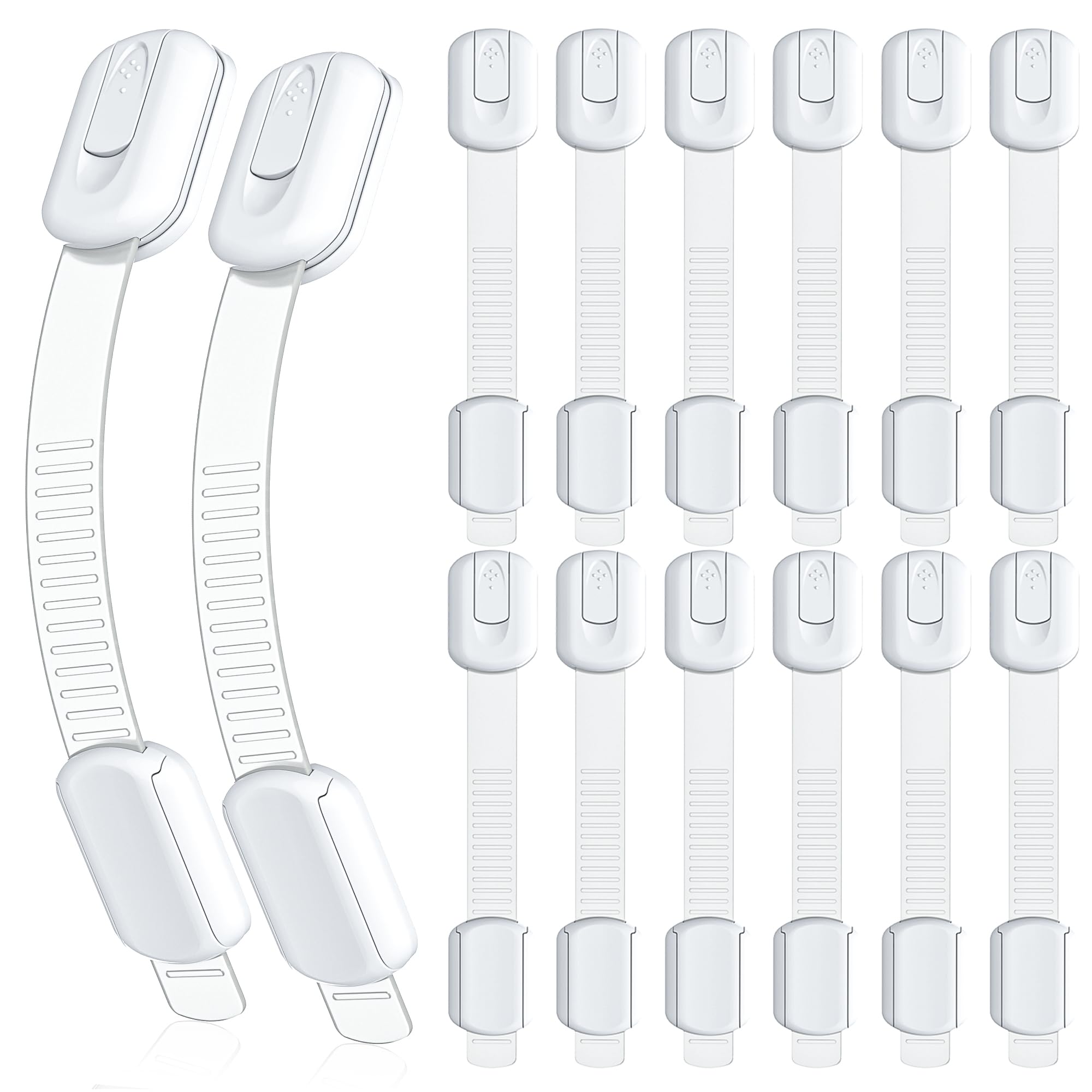

Best for Whole-Home Starter
SKYLA HOMES Strap Locks
Key Features
- Lock type: Adhesive strap
- Pack count: 8
- Installation: No-drill adhesive
- Strap length: 3 to 7 inches
- Price: Budget
An eight-pack of adjustable strap locks at the budget end of this group is the simplest way to cover the cabinets a crawling baby reaches first. We like that the strap bends around corners and adjusts from 3 to 7 inches, so the same lock can handle a cabinet door, a drawer, and the fridge without a second shopping trip. The peel-and-stick install is the part that decides whether these work: clean the surface, set the strap length before pressing, and give the adhesive the full 24 hours to cure.
We fitted ours to a standard kitchen cabinet and found the release easy to work one-handed once the strap was aligned. The catch is adhesion and long-term durability, which are the two weak spots in this set; on a glossy or greasy surface, or a cabinet a toddler can hang from, a strap lock can peel or fail. We still make it the default because it is affordable, forgiving of layout, and easy to move between rooms, but treat the first day as part of the installation.
For a determined climber or a cabinet with an awkward overhang, step up to the Munchkin Xtraguard or the Benny Bradley’s latch. For the ordinary lower kitchen cabinet, this is the lock we reach for first.
Pros
- Eight locks cover several rooms
- Adjustable 3 to 7 inch strap
- No-drill adhesive installation
- Simple one-handed release
Cons
- Adhesive depends on careful surface prep
- Can peel under a hard pull
We recommend these as the default cabinet lock for most families: eight adjustable no-drill straps cover the rooms a baby reaches first, provided you prep the surface and let the adhesive cure.
Best for Hidden Coverage
Vmaisi Magnetic Locks
Key Features
- Lock type: Hidden magnetic
- Pack count: 20 locks, 2 keys
- Installation: Adhesive or screws
- Cabinet door max: 2 inches
- Price: Premium
The Vmaisi system is the one to choose when the hardware should disappear. The locks mount inside the cabinet or drawer, the two magnetic keys open them from outside, and there is nothing for a toddler to pick at on the door face. With 20 locks and two keys, it covers a whole kitchen plus a bathroom, which is why we treat it as the premium whole-home option in this set.
We especially like that the same lock works on drawers and cabinet doors up to 2 inches, and that installation can be adhesive or screwed for a more permanent fit. The install is fussier than a strap: metal handles, screws, or appliances nearby can interfere with the magnet, so keep the lock clear of iron and metal and test the alignment before sticking anything down. The magnet keys need a home out of reach, and losing one makes the lock annoying rather than impossible.
Adhesive hold and locking consistency are the parts that need watching, so for a cabinet that gets heavy use, screw these in rather than relying on the tape. Choose this when the clean look matters and you are willing to spend an afternoon on placement; skip it if you want something you can move every few weeks.
Pros
- Completely hidden from outside
- Twenty locks and two keys
- Works on cabinets and drawers
- Adhesive or screw installation
Cons
- Nearby metal can interfere
- Magnet keys can be misplaced
For hidden hardware and whole-kitchen coverage, this is the magnetic set we point you to; placement near metal takes patience, but the finished install disappears.
Best for Trouble Spots
Munchkin Xtraguard Locks
Key Features
- Strap: Flexible around corners
- Lock type: Dual-button strap
- Pack count: 2
- Installation: Adhesive
- Price: Budget
Two buttons, not one, are what make the Xtraguard worth a look for the cabinet a toddler attacks most. The latch needs both buttons pressed to release, and that extra step is the difference between a curious child and a lock that pops open on the first tug. We fitted one to a bathroom cabinet and found the flexible strap handled the corner better than a rigid latch; the same design works on a fridge, toilet seat, or drawer.
This is a two-pack, so it suits a few high-value trouble spots rather than whole-house coverage, and it costs more per lock than the bulk straps here. Adhesion is still the weak point: the tape grabs well on a clean, flat finish but can lift on a greasy cabinet or one that gets pulled hard.
We like the dual-button mechanism enough to keep this as our pick for a determined toddler or an especially tempting cabinet. If you are locking every lower cupboard in a kitchen, start with the eight-pack above and use these where the extra resistance matters.
Pros
- Dual-button release resists toddlers
- Flexible strap fits corners
- Works on appliances and toilet seats
Cons
- Only two locks in the pack
- Adhesive can lift on some finishes
The Xtraguard is our pick for the two or three cabinets a toddler targets most; its dual-button release adds real resistance, provided the adhesive goes on a clean, flat surface.
Best for Rentals
SKYLA HOMES Sliding Locks
Key Features
- Lock type: Handle lock
- Handle fit: D, ring, round knobs
- Pack count: 4
- Installation: No adhesive
- Price: Budget
These are the cabinet locks for a rental, a grandparents’ house, or any cabinet you are not allowed to stick tape to. The U-shaped lock threads through two cabinet knobs and squeezes shut with a two-button release, so there is no adhesive, no drilling, and no residue when you move it.
We tried it on a pair of round knobs and appreciated that the lock could be adjusted for spacing; the design fits D-shaped pulls, ring pulls, and round or mushroom knobs. The catch is fit: knobs set too far apart, or a single handle with nothing to pair with, will not work, so measure the gap before ordering.
The plastic is sturdier than the price suggests, though the release can take a firm squeeze. For a renter with standard double-door cabinets, this is the least invasive way to add a barrier, and it can move to a new home without leaving a mark. It does not replace a strap on a drawer or a single-door cabinet, and a determined older toddler may work the buttons if the fit is loose.
Pros
- No adhesive or drilling
- Reusable and rental-friendly
- Fits common paired handles
Cons
- Needs two close-enough handles
- Fit affects toddler resistance
Renters and double-knob cabinets get the easiest win here: no adhesive, no damage, and a two-button release that stays awkward for small hands, as long as your handles fit.
Best for Large Coverage
4our Kiddies 14-Pack Locks
Key Features
- Extras: Spare adhesive pads
- Lock type: Adhesive strap
- Pack count: 14
- Installation: No-drill 3M adhesive
- Price: Budget
Fourteen locks is a lot until you count the drawers, the bathroom vanity, the fridge, and the trash can; then it starts to look like a sensible whole-house kit. The 4our Kiddies set uses the familiar adjustable strap and side-release buckle, and the extra 3M adhesive pads are the detail that makes moving one to a new cabinet less annoying.
We used this set as the coverage option in our testing, and the one-touch release is genuinely easy to work while holding a baby. The strap is adjustable and the pack includes spare tape, so a mistake does not cost you a whole lock.
The trade-off is that not every one of those fourteen locks will feel equally secure: the adhesive can let go on a surface that was not cleaned well, and the plastic can come undone after repeated pulling. We had to press the tape down firmly and leave it alone before trusting the first one. That is normal for this style, but it makes placement and surface prep more important than the lock count. Choose it when you want a lot of locks without spending much, and you are willing to take the time to fit each one properly.
Pros
- Fourteen locks for broad coverage
- Spare 3M adhesive pads included
- One-touch side release
Cons
- Adhesion varies by surface
- Plastic can loosen over time
For budget-minded whole-house coverage, the 4our Kiddies pack earns its place; fourteen locks and spare adhesive go far, though each one needs careful surface prep to stay put.
Best for Small Setups
Wappa 4-Pack Locks
Key Features
- Base: 360-degree rotation
- Lock type: Double-lock strap
- Pack count: 4
- Strap length: 4.5 to 7.5 inches
- Price: Budget
The small switch on the Wappa latch is the feature we did not expect to care about: slide it to double-lock, and a toddler pushing the release button alone cannot open the strap. Four locks make this a targeted pack for the cabinets that get the most attention, not a whole-house solution.
The strap adjusts from 4.5 to 7.5 inches and the base rotates, which helps when the mounting points are not lined up perfectly. We fitted one to a fridge door and found the extra step quick for an adult and awkward enough for small fingers.
The limitation is the same one that runs through strap locks: adhesion on a greasy or textured surface is the weak link, and the Wappa tape is not immune. We also found the double-lock switch easy to leave in the locked position out of habit, so check it before you walk away.
For a small home, a rental where you only need a few key spots, or a cabinet with an awkward angle, this four-pack is a useful middle ground between a single latch and a giant bag of straps. It is not the cheapest way to cover a kitchen, but it is the one here with a second lock built into the release.
Pros
- Optional double-lock switch
- Adjusts from 4.5 to 7.5 inches
- Rotating base aids positioning
- Manageable four-lock pack
Cons
- Only four locks included
- Adhesive can fail on textured surfaces
This four-pack is the one for a few awkward cabinets that need a second lock; the rotating base and adjustable strap help, and the adhesion still depends on a clean surface.
Best for Invisible Latch
Benny Bradley’s Invisible Locks

Key Features
- Lock type: Hidden hook latch
- Pack count: 10
- Pull rating: 25 lb
- Overhang clearance: 1.5 inches
- Price: Midrange
The problem with many hidden latches is that they need a clear path to the cabinet frame; Benny Bradley’s answer is a longer hook arm that clears a countertop overhang of up to 1.5 inches. That makes it the one to consider when a standard strap or short internal latch will not sit flat. The latch mounts inside and stays invisible with the door closed, and the maker rates it for a 25 lb pull.
We liked the fact that there is no magnet to keep track of; adults reach in and release the catch. The installation is quick, but the adhesive is the part we trust least: it can let go on a surface that is not perfectly clean, and it can take finish with it if removed carelessly. Warming the adhesive before peeling helps.
This is a specialist pick rather than a default: choose it for an overhang, a deep drawer, or a cabinet where you want no visible hardware and no key. The ten-pack makes it a pricey experiment if the fit is wrong, so measure the overhang and the cabinet frame before ordering.
Pros
- Hidden hook with no magnet key
- Clears 1.5 inch overhangs
- Rated for a 25 lb pull
Cons
- Adhesive can lift on imperfect surfaces
- Specialist fit at a higher price
Benny Bradley’s is the overhang specialist: the hidden hook is neat and keyless, but the adhesive needs a very clean, well-prepped surface before you trust it with a toddler.
Best for Reusable Coverage
Jetec U-Shaped Locks

Key Features
- Lock type: U-shaped handle lock
- Pack count: 10
- Installation: No adhesive
- Handle spacing: Up to 6 inches
- Price: Midrange
A pair of cabinet doors with round knobs is the setup the Jetec lock is built for. The U-shaped strap threads between the knobs, the straight side faces out, and the two halves squeeze together; there is no adhesive to cure and no residue to clean up, which is why this is the reusable option for a rental or a house you are staging.
Ten locks in the pack let you cover a kitchen, a bathroom, and a laundry closet, and because nothing is stuck down, you can move one to a new cabinet when a toddler discovers a new drawer.
The limit is fit and security: the knobs need to be no more than 6 inches apart, the lock needs to be threaded correctly, and a loose fit gives a determined toddler enough slack to pull the doors apart. We found the plastic light but serviceable, and the release easy enough for an adult once the strap was seated.
This is not the pick for a single-handle cabinet or a drawer, and it is not the hardest lock here to defeat. It is the one to choose when you cannot or will not put adhesive on the cabinets.
Pros
- No adhesive or residue
- Ten reusable locks
- Fits paired knobs up to 6 inches
Cons
- Only fits paired handles
- Can loosen if not fitted tightly
For double-knob cabinets where adhesive is off-limits, the Jetec ten-pack is the reusable answer; fit and a firm strap matter more here than the lock count.
How We Tested the Best Cabinet Locks for Babies
I started by pulling together 14 locks—adhesive strap latches, magnetic locks, sliding cabinet locks, and a couple of screw-mounted options—after comparing installation requirements, materials, and customer reviews. I skipped models with vague instructions or hardware that looked likely to strip, and I made sure the shortlist covered a range of prices so value wasn’t just a proxy for cheap.
Installation was timed with a stopwatch on a painted kitchen cabinet and a laminate bathroom vanity, and I noted whether the template lined up or the adhesive needed clamping. For stick-on locks, I pressed each one on, waited the recommended cure time, then loaded the cabinet with cans and cleaning bottles and opened and closed the door throughout the day. After a week, I tugged each latch sideways and downward to check for shift, and let bathroom steam do its worst.
My toddler and a borrowed 3-year-old were the quality-control team: they pulled, rattled, and hung on doors while I watched for pinch points and latches that gave way with one hard yank. For ease of use, I opened each lock one-handed while holding a 20-pound bag of flour, noting whether the mechanism needed two hands or a precise angle. After three months, I removed every adhesive lock to see whether it came off cleanly or lifted paint, and compared how each held up against what it cost.
How to Choose Cabinet Locks for a Baby
The right lock is the one that fits your cabinet hardware and your tolerance for installation, not the one with the longest feature list.
Match the lock to the cabinet you actually have
Walk through the kitchen before you buy and note what each door has: a single handle, paired knobs, a drawer pull, or a hidden frame. A strap lock is the most forgiving because it can bridge a door and a drawer; a handle lock like the SKYLA HOMES sliding design needs two knobs close enough to span; a magnetic or internal latch needs clearance inside the cabinet and, for magnetic models, a door thickness within the maker’s limit. If your cabinets are mixed, a strap pack plus one specialty lock makes more sense than forcing one mechanism everywhere.
The trap is buying by photo: a U-shaped lock looks universal until you try it on a single handle with nothing to grip. Measure handle spacing and door thickness before you choose the clever-looking option.
Treat surface prep as part of the lock
Adhesive is the weak link in most strap locks, and no amount of extra tape fixes a dirty, damp, or greasy surface. Clean the area, let it dry completely, set the strap length before pressing, and leave the lock alone for the full cure time. A cabinet door that gets pulled hard, or a finish with texture, is a tougher home for tape; a screw-in magnetic lock or a no-adhesive handle lock is the more dependable choice there. We prefer fitting fewer locks properly to rushing a full kitchen.
Balance toddler resistance with adult access
A lock only works if you can open it while holding a baby, a grocery bag, or both. Single-button straps are the quickest for adults and the easiest for a determined toddler to learn; dual-button and sliding double-lock designs add a step that buys time. Magnetic locks hide the release completely, but the key has to live somewhere predictable.
Think about the child, not the label: a curious crawler may never test a simple strap, while a strong puller will go straight for the loose corner. Put the extra-resistance locks on the dangerous cabinet, and keep the easier release for the pantry you open all day.
Buy for coverage, then place the locks where they matter
Count the cabinets you actually need to secure before choosing a pack size. A small apartment may need four to six locks; a kitchen plus bathroom plus laundry can absorb ten to fourteen; a whole-house magnetic kit runs to twenty. More locks only help if they fit the surfaces you have.
Start with the lowest cabinets and the ones holding hazards, then add the pantry, the trash can, and the fridge as your baby’s reach grows. A ten-pack of handle locks is wasted if only two cabinets have paired knobs.
Frequently Asked Questions
At what age should I start locking cabinets?
Start when your baby begins crawling or pulling to stand, rather than waiting for the first attempt to open a door. Put locks on the lowest cabinets first, especially those holding cleaners, medicines, or sharp tools, then add pantry and drawer locks as reach expands. A lock buys time; it does not replace supervision.
How do I remove adhesive cabinet locks without damaging the finish?
Warm the adhesive with a hair dryer, then peel the pad back at an angle instead of pulling straight out. Dental floss can saw behind a stubborn pad. Test the method on an inside corner first, and expect a painted or veneered finish to need more patience than a factory laminate.
What if my toddler can already open the cabinet?
Match the resistance to the child: switch to a dual-button or sliding double-lock, tighten any adjustable strap, and check that the adhesive has not lifted. If a handle lock slides loose, it is a fit problem, not a toddler problem. For a cabinet holding something dangerous, move the contents out of reach until the lock is secure.
Final Verdict
For most families, the SKYLA HOMES eight-pack is the one to buy first. It is the least fussy way to cover the cabinets a baby reaches, and its adjustable strap works on doors, drawers, and appliances. Prep the surface and give the adhesive its full cure, because that is what separates a lock that holds from one that peels.
If you want hidden hardware, the Vmaisi magnetic set is the upgrade; if you cannot put adhesive on the cabinets, the SKYLA HOMES sliding lock is the renter-friendly alternative. The right choice changes with the cabinet, not with the size of the pack.
