This post contains affiliate links. We may earn a small commission when you buy through our links — at no extra cost to you.
The minute the gate agent calls for families to board is the minute you learn what your stroller is made of. I found out at 6 a.m. on a regional jet, folding one-handed while a toddler negotiated with gravity and the line behind me sighed. A stroller that flies well isn’t just small — it collapses fast, rolls straight down a jet bridge with a bag hooked over the handle, and comes back from the gate check in one piece. That’s the job: curb to cabin without a meltdown, and still a real stroller at your destination.
We put 10 strollers through eight months of airports, gate checks, and preschool runs, and the differences come down to things no showroom floor will show you. The spec sheet won’t tell you that a two-hand fold is a different product when you’re alone with a baby on your hip, or that three pounds saved means nothing if the frame shudders over every sidewalk crack. These are the ones that earned their price.
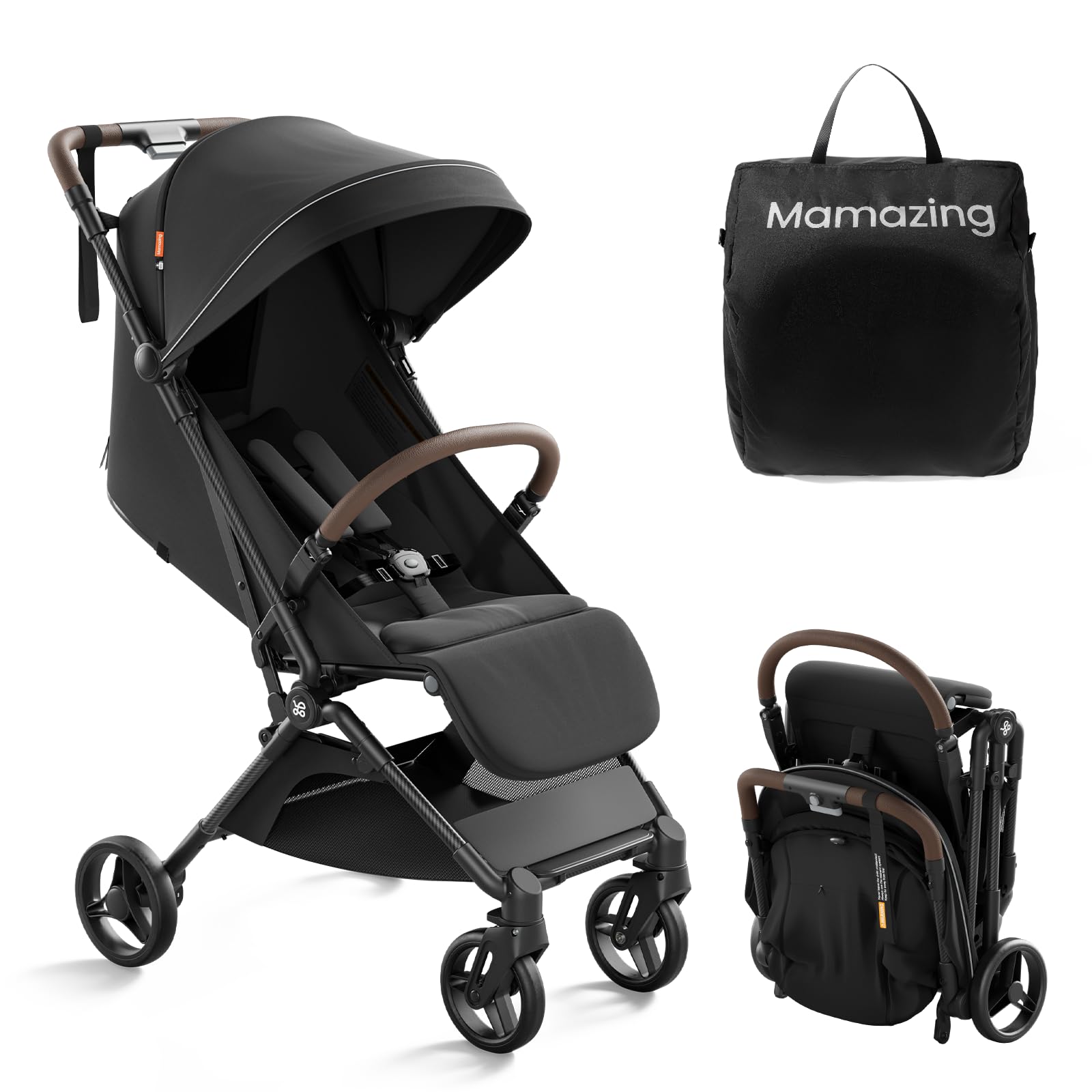
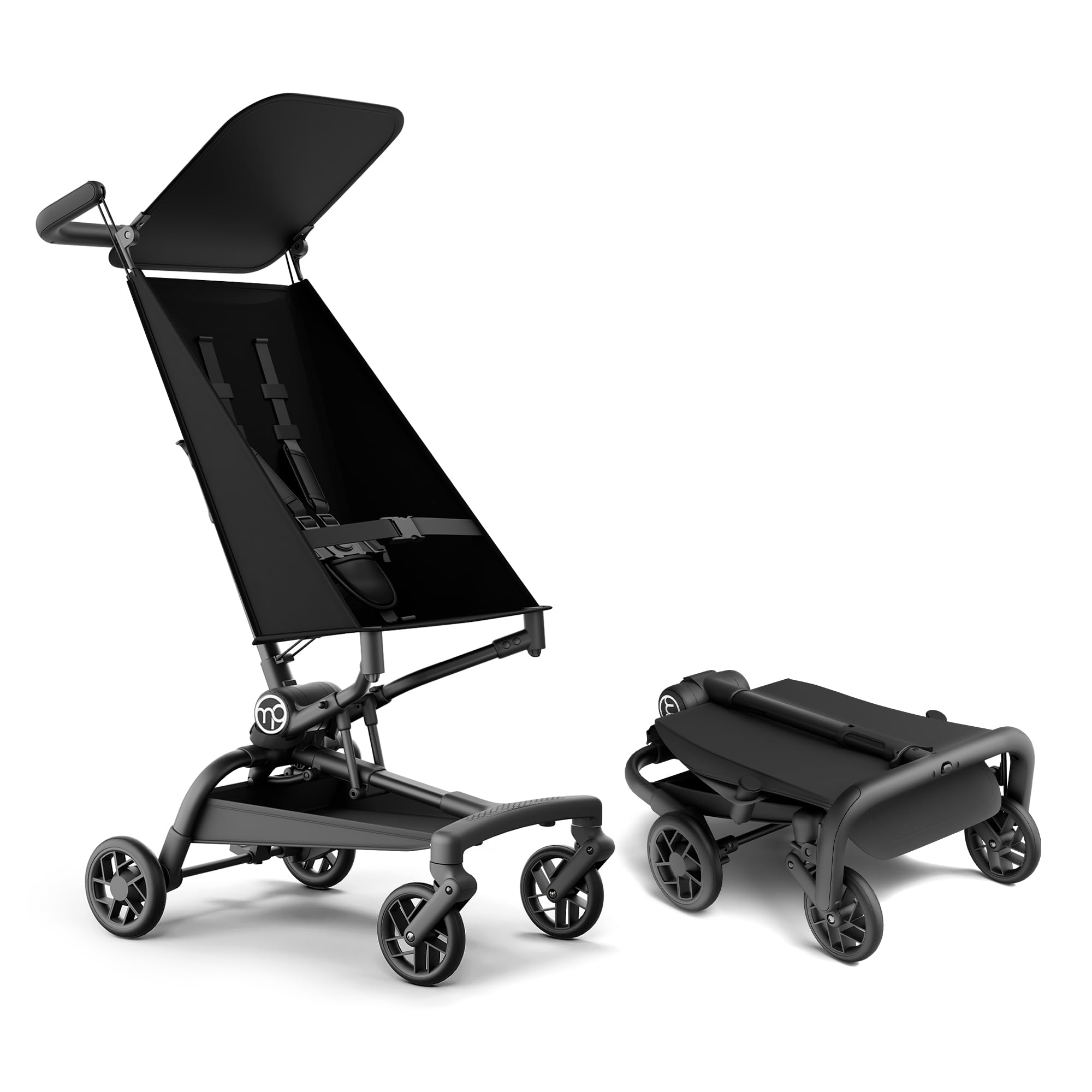


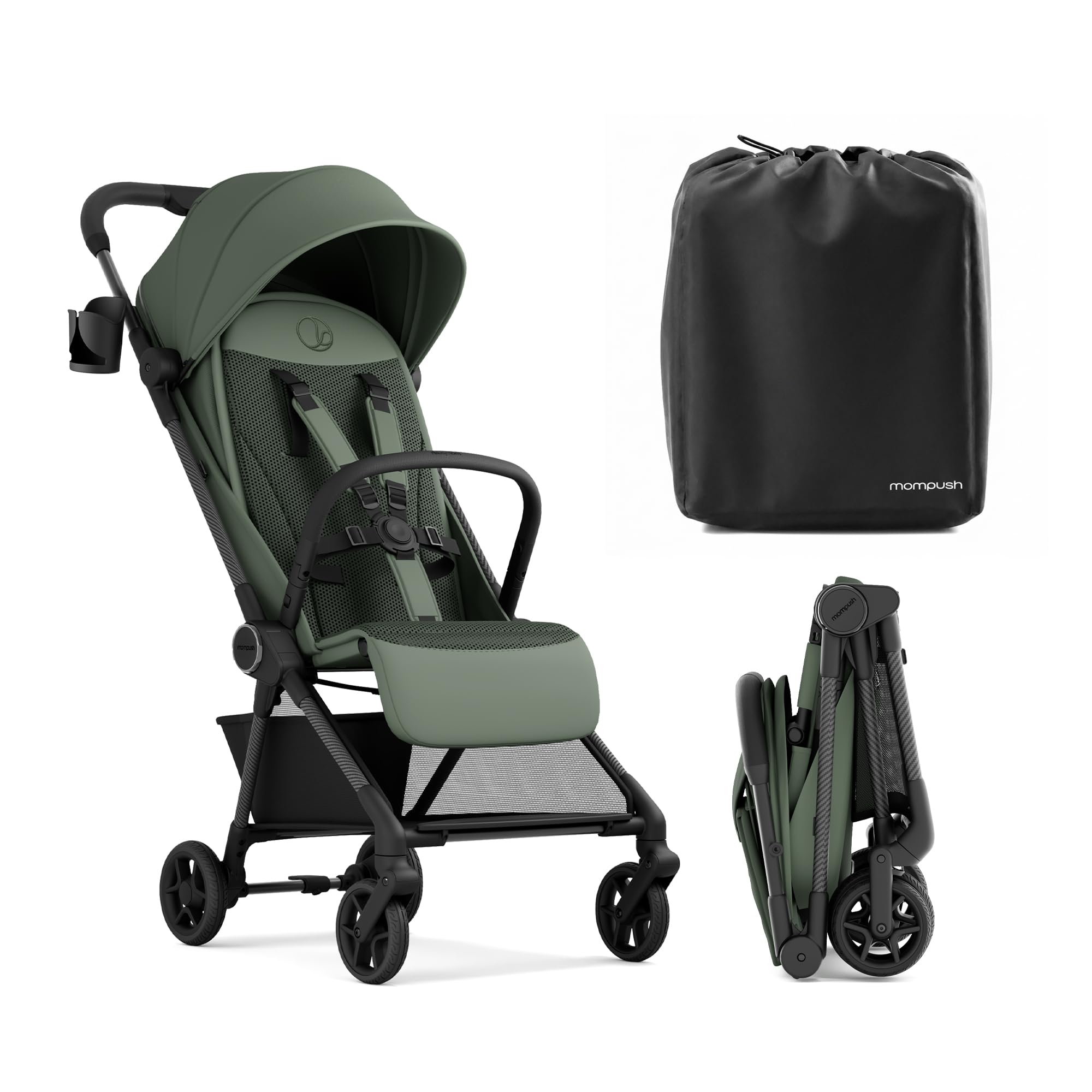
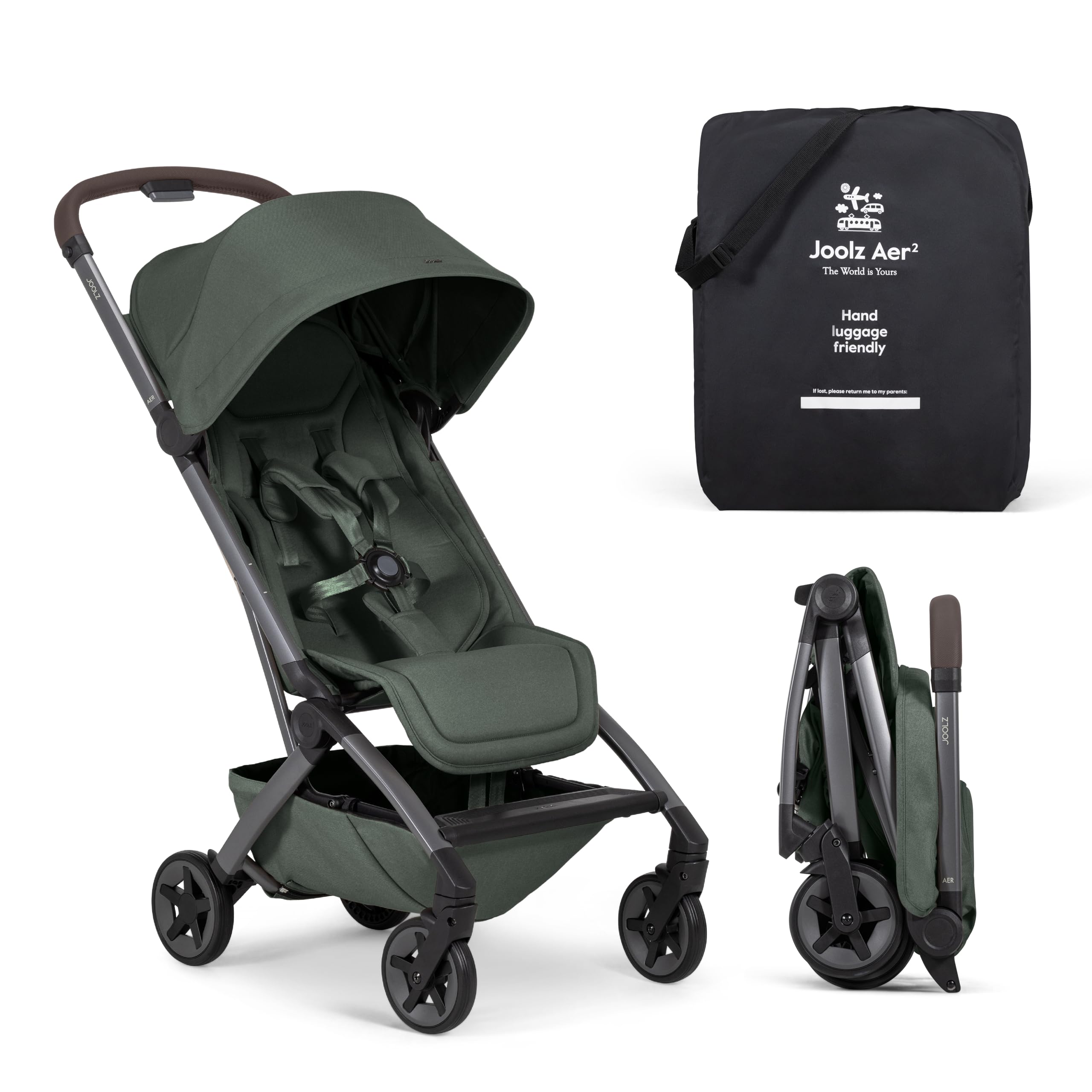

Best for All-Around Air Travel
Mamazing Ultra Air
Key Features
- Weight: 11.6 lb
- Travel bag: Included
- Folded size: H22x W19.3 x D11 inch
- Max child weight: 50 lb
- Price: Midrange
The 50-pound capacity is what separates the Ultra Air from the tiny-stroller crowd. Plenty of cabin-friendly strollers stop at 40 pounds; this one keeps a larger toddler in the seat and pairs that with a 22-pound basket, unusually generous for something that folds to roughly 22 by 19 by 11 inches. We appreciated that on a travel day, because the stroller can carry the diaper bag instead of the adult carrying both.
The carbon fiber frame is listed at 11.6 pounds, and that feels like the right trade: light enough to lift into an overhead bin, substantial enough not to feel like a bare umbrella stroller. The included travel bag matters more than the spec sheet suggests. We found it useful for keeping the folded stroller contained on a shuttle or at the gate, and the bumper bar gives a tired toddler something to hold.
The ride is not plush. The seat is on the firm side, the canopy is adequate rather than huge, and the 11-inch folded depth means it takes up real bin space. Check the bag strap and frame joints before a trip, since those are the weak points. Still, for a stroller that has to work at the airport and on daily errands, the balance is right.
If you need the smallest possible fold or a true newborn recline, look at the Sparrow or Joolz. For most families with a toddler and a carry-on, this is the one we reach for first.
Pros
- Carries a 50-pound toddler
- 22-pound basket is generous for travel
- Folds into an overhead-bin package
- Travel bag and bumper bar included
Cons
- Starts at 6 months, not newborn-ready
- 11-inch folded depth uses bin space
We recommend the Mamazing Ultra Air for most flying families: it combines a true overhead-bin fold with a 50-pound seat limit and a genuinely useful basket.
Best for Budget Carry-On
Mompush Jeto
Key Features
- Weight: 10.1 lb
- Carry strap: Integrated
- Folded size: 20.5*17.3*7.1 Inches
- Max child weight: 40 lb
- Price: Budget
The Jeto’s carry weight is listed at 10.1 pounds, and its folded package is about 20.5 by 17.3 by 7.1 inches. We found that combination easy to lift one-handed and easy to slide into an overhead bin, which is the whole job on a travel day. The integrated carry strap is a nice touch when the bin is full and you need to keep moving.
That light carry is why we recommend it so readily for budget-minded flyers. The Jeto does not feel like a full-size stroller, and it is not trying to be: the seat is compact, the basket is tiny at 4.4 pounds, and the 40-pound weight limit will not suit every older toddler. But it folds with one hand, stands upright, and costs less than most of this group, which makes it the easy choice for short trips and tight connections.
The ride is best on smooth airport floors and city sidewalks. Small wheels and a modest canopy keep the weight down, so we do not treat this as a cobblestone or theme-park stroller. The seat back has enough padding for a short nap, but it is not the place for an all-day snooze. For a family that wants a second stroller just for flying, that is a fair trade.
Pros
- Very light at 10.1 pounds
- Folds into a compact square
- One-hand fold and self-standing
- Budget-friendly travel stroller
Cons
- Tiny 4.4-pound basket
- 40-pound seat limit
We recommend the Mompush Jeto for flyers who count every pound and want to spend less: it is the lightest cabin-friendly pick here and still folds into a neat square.
Best for Tight Overhead Bins
Munchkin Sparrow
Key Features
- Weight: 12.8 lb
- Harness: 5-point
- Folded size: 15"(L) x14"(H) x 6.25"(W)
- Max child weight: 55 lb
- Price: Midrange
The Sparrow’s folded package is 15 by 14 by 6.25 inches, and that 6.25-inch thickness is the number that matters. It is the slimmest fold here, so we stopped treating the overhead bin as a maybe and started treating it as the stroller’s parking spot. The 55-pound seat limit is also unusually high for a stroller this compact, so it can keep working well past the toddler stage.
Munchkin gives it 8-inch front wheels, which are larger than the tiny rollers on several travel strollers. We noticed the difference on terminal carpet and uneven pavement: it pushes more smoothly than its size suggests. The trade is a seat that sits low and a canopy that does very little in strong sun. We treat the Sparrow as an airport and city stroller, not a shade tent for a beach day.
The 12.8-pound weight is manageable, and the included zip bag makes it easier to keep clean between trips. We do wish the handle were a little taller; taller parents may find themselves hunching on longer walks. Still, for the family that wants a slim footprint without dropping to a 3-point harness, this is the one.
Pros
- Slim 6.25-inch folded package
- Takes a 55-pound child
- Larger 8-inch front wheels
- Zip carry bag included
Cons
- Canopy offers little sun cover
- Handle height is low for taller parents
We recommend the Munchkin Sparrow when overhead space is the deciding factor: its 6.25-inch-thick fold is the slimmest here, and it still takes a 55-pound child.
Best for Under-Seat Stow
gb Pockit Air
Key Features
- Weight: 10.4 lb
- Harness: 3-point
- Folded size: 11.8 x 7 x 13.8
- Max child weight: 55 lb
- Price: Midrange
The Pockit’s party trick is the fold: 11.8 by 7 by 13.8 inches, small enough to tuck under an airplane seat or into a crowded overhead bin. At 10.4 pounds, it is also one of the lightest strollers here. We understand the appeal for a parent traveling alone with a toddler and no spare hand.
We recommend it with a caveat. The fold takes a firm shake and a little practice, and the seat is much more upright and sparse than the plusher options here. The 3-point harness and small canopy are the clearest signs that gb prioritized packability over cocooning. If your child naps easily and you mostly need a seat for the terminal, that trade works; if you want a travel stroller that doubles as a daily stroller, it will feel limited.
The double wheels help on uneven pavement, though the ride still feels light and busy over cracks. We also like the carry cover for keeping the folded stroller clean in a car trunk. The seat is best for a toddler who is happy to sit upright; a slumped nap is not its strength. Think of it as an airport tool rather than a family stroller, and the Pockit makes a lot of sense.
Pros
- Folds smaller than any other pick here
- Very light at 10.4 pounds
- Fits under an airplane seat
- Double wheels help on uneven pavement
Cons
- Fold needs practice and a firm shake
- Sparse seat and small canopy
We recommend the gb Pockit Air for the absolute smallest stow: it folds down to a handbag-size package that can go under a seat, as long as you accept a firm, bare-bones ride.
Best for One-Hand Folding
Mompush Nexis
Key Features
- Weight: 13.9 lb
- Rain cover: Included
- Folded size: 19.88"L x18.11"W x 7.87"H
- Max child weight: 50 lb
- Price: Midrange
The Nexis is the travel stroller for the parent who does not want to feel like they are using a compromise. The carbon fiber frame, self-standing auto-fold, and one-hand recline are all aimed at the moment when you are holding a baby and still need the stroller to cooperate. The folded package is about 19.9 by 18.1 by 7.9 inches, so it is cabin-friendly without being a bare-bones umbrella.
The one-hand system is the reason it earns a place. We found the fold easy to trigger and the stroller stable when standing, and the included rain cover and cup holder are the kind of extras that matter on a real trip. The seat reclines far enough for naps, and the canopy has a mesh window for checking on a toddler.
The 13.9-pound carry weight is the main tax. It is still manageable, but it is noticeably more stroller than the Jeto or Pockit when you are lifting it into a bin. The ride can also feel tippy when a child leans to the side, so we keep bags in the basket rather than on the handlebar. For a family that wants a plusher travel stroller and does not mind the extra pounds, the Nexis is a strong step up.
Pros
- One-hand auto-fold and self-standing
- Near-flat recline for naps
- Rain cover and cup holder included
- Compact 7.9-inch fold
Cons
- 13.9-pound carry weight
- Can feel tippy when a child leans
We recommend the Mompush Nexis for parents who want a true one-hand fold and a more polished travel stroller, provided they can live with a little more weight and a higher price.
Best for Premium Newborn Travel
Joolz Aer2
Key Features
- Weight: 14.4 lb
- Folded size: 20.9 x 17.3 x 9.2 inch
- Travel pouch: Included
- Max child weight: 50 lb
- Price: Premium
The Aer2 is the most expensive stroller here, and it is the one that feels most like a daily stroller that happens to travel. The aluminum frame, leatherette seat, and one-hand fold put it in a different finish class from the budget picks. The folded size is about 20.9 by 17.3 by 9.2 inches, which is overhead-bin territory rather than a miracle cube.
Joolz includes a travel pouch and a baby net, and lists the stroller as suitable from birth when fully reclined with the net. That newborn-ready claim is worth checking against the U.S. version’s recline stops, because a seat that reclines nearly flat is not the same as a bassinet. For a toddler, the 50-pound limit and adjustable harness are straightforward and useful.
What we appreciate most is the push. The Aer2 steers smoothly with one hand, and the taller handle makes it comfortable for a range of parents. The canopy extends far enough for nap-time shade, and the seat fabric wipes clean after snack spills.
The compromises are weight and price. At 14.4 pounds, it is not the stroller to choose if you are lifting it overhead every day, and it costs a premium over the rest of this group. We recommend it for the family that wants one refined stroller for both travel and everyday use, and is willing to pay for the finish.
Pros
- Premium materials and smooth push
- Newborn-ready with baby net
- Folds into an overhead bin
- 10-year warranty
Cons
- 14.4-pound carry weight
- Premium price
We recommend the Joolz Aer2 for families who want a premium travel stroller from birth: it folds into an overhead bin, takes a 50-pound child, and comes with a travel pouch and baby net.
Best for Everyday and Travel
Jeep Altitude
Key Features
- Fold: One-hand auto
- Weight: 16.6 lb
- Folded size: 12.5*19*29 Inches
- Max child weight: 50 lb
- Price: Budget
The Altitude is the stroller for the family that does not want a dedicated travel-only stroller. Four-wheel suspension, a multi-position recline, and a 50-pound seat limit make it more comfortable and more versatile than the ultralight options. The folded package is 12.5 by 19 by 29 inches, so it is compact in a trunk but not a true overhead-bin cube.
The 16.6-pound weight is the first thing we noticed when lifting it. That is a real trade for the plusher ride: this is not the stroller to carry up a jet bridge with a toddler on your hip. The one-hand auto-fold helps, and the folded stroller stands on its own, which makes it easier to manage at a gate.
For everyday use, the Altitude is the most comfortable of the value picks. The suspension takes the edge off pavement, the canopy has a peek-a-boo window, and the seat reclines enough for a nap. The 50-pound limit gives it room to grow, and the seat fabric wipes down without fuss. We recommend it when the stroller will live in the car and travel a few times a year, not when every ounce has to go into the overhead bin.
Pros
- Suspension smooths pavement
- Reclining seat and 50-pound limit
- One-hand auto-fold
- Good value for a full-feature stroller
Cons
- Heavy at 16.6 pounds
- Folded height makes cabin storage a gamble
We recommend the Jeep Altitude for families who want one stroller for the airport and everyday walks: it has suspension, a reclining seat, and a 50-pound limit, but it is the heaviest pick here.
Best for Gate-Check Lightness
Dream On Me Aero

Key Features
- Fold: One-hand
- Weight: 7.2 lb
- Folded size: 40.6 x 7.7 in
- Max child weight: 33 lb
At 7.2 pounds, the Aero is the lightest stroller here by a wide margin. That matters when you are carrying it up stairs, onto a bus, or through a terminal when your child decides walking is over. The one-hand fold and steel frame are simple, and it sits in the budget tier.
The catch is the folded shape. The listed fold is 40.6 by 7.7 inches, which is a long umbrella package rather than a cube. It will not disappear into an overhead bin the way the Sparrow or Pockit does, so this is a gate-check stroller in practice. We do not call it cabin-friendly.
The Aero is also a short stroller. The handle height is low enough that taller parents may hunch, and the 3-point harness and 33-pound limit make it a better fit for a smaller toddler than a big 4-year-old. The canopy is small, so plan for sun on walks.
We recommend it for the family that wants a spare stroller for gate-checking and does not want to spend much. If your priority is walking it into the cabin, choose the Sparrow or Jeto instead; the Aero’s job is to be almost nothing to carry.
Pros
- Very light at 7.2 pounds
- One-hand fold
- Easy to carry up stairs
Cons
- Long fold is not cabin-friendly
- Low handle height
We recommend the Dream On Me Aero for gate-checking families who want the lightest possible stroller, not for anyone who needs a cabin-size fold.
How We Put 10 Travel Strollers Through the Airport
We started with roughly 40 strollers and cut the list to 10 by reading spec sheets: folded dimensions against the carry-on limits airlines publish, claimed weight, and whether the fold genuinely worked with one hand. Price factored in only as part of the value equation — what came in the box, like a travel bag, rain cover, or a canopy with real coverage — and how the materials looked and felt in person. Over eight months those 10 logged about 30 flights between them, from short regional hops to one long international trip, plus daily walks, subway stairs, and the trunk of a compact car.
Every fold got timed with a stopwatch, standing, with a 20-pound dumbbell in one arm to stand in for a toddler. We noted whether it locked loudly enough to trust, whether it stood upright once folded, and whether we could lift it by the frame instead of grabbing a fistful of fabric. Each stroller was weighed on a luggage scale with a diaper bag and rain cover packed on, then hoisted into an overhead bin and carried up a flight of stairs. Folded footprints were measured with a tape measure and set beside a standard carry-on suitcase.
On the move, we pushed each one loaded over jet-bridge seams, curb cuts, gravel paths, and one badly cracked sidewalk, watching whether it tracked straight with one hand and how much the frame rattled. A full diaper bag went on the handle and we let go, to see whether it tipped backward with an empty seat. Canopies were pulled down at midday to check how much sun actually reached the seat, and we noted whether the handle sat high enough for a six-foot pusher or left them kicking the rear axle. After six months of gate checks we went back over every joint, wheel bearing, and fabric seam for bends, rattles, and fraying, then compared the wear against the price paid.
How to Choose a Flying Stroller
The best flying stroller is the one you can fold with one hand, carry through a terminal, and stow without begging a gate agent for a favor.
Cabin, Gate Check, or Overhead Bin
Start with where the stroller will spend the flight. A true cabin stroller needs a folded package that fits the airline’s published carry-on envelope, and that envelope varies by carrier and aircraft. The Pockit is the smallest overall fold here, while the Sparrow is the slimmest. If you plan to gate-check, weight and fold speed matter more than a few inches, because the stroller will wait on the jet bridge rather than ride inside.
Weight and Fold Are a Daily Tax
Every pound shows up when you lift the stroller over your head. The Jeto is listed at 10.1 pounds, the Mamazing at 11.6, and the Joolz at 14.4; the Delta is 16.6. Below about 12 pounds, most parents can manage a one-handed lift; above 15, the stroller starts to feel like luggage. We prioritize a one-hand fold and a self-standing stance for solo travel, because those two details keep the seat off the floor while you hold a boarding pass and a child.
Match the Seat to Your Child
Travel strollers range from 33-pound seats to 55-pound seats, and that difference decides how long the stroller stays useful. A 40-pound limit is fine for a small toddler but tight for a tall 3-year-old; 50 to 55 pounds gives more room. For a baby under 6 months, confirm an approved full-recline or baby-net configuration before you buy. The Joolz Aer2 is the one here with an explicit newborn setup; several others start at 6 months.
Storage and Sun Coverage
Travel strollers save weight by shrinking the basket and canopy, and that trade bites on a real trip. The Mamazing’s 22-pound basket is the outlier; the Jeto’s 4.4-pound basket is barely enough for a small diaper bag. If you plan to carry snacks, bottles, and a change of clothes, check the basket rating and plan to wear a backpack. Canopy coverage matters too: a small visor is not shade, and the Sparrow and Pockit are airport tools rather than sun shelters.
Wheels and the Pavement You Actually Walk
Small wheels are fine on terminal tile and smooth sidewalks, which is where most travel strollers spend their time. If you plan to walk city streets or cobblestones, look for larger front wheels or suspension. The Sparrow has 8-inch front wheels, and the Delta has four-wheel suspension; both push more smoothly than the tiniest rollers. Do not expect any of these to feel like an all-terrain stroller.
Frequently Asked Questions
Can a travel stroller replace my everyday stroller?
For many families, yes, if most walks are on smooth pavement and your child is within the seat limit. A travel stroller gives up basket space, canopy coverage, and suspension. The Mamazing Ultra Air comes closest here because of its 50-pound seat and 22-pound basket, but it is still firmer than a full-size stroller. If you walk long distances daily, keep a full-size stroller for home.
Can I take a stroller through airport security?
Fold it and send it through the X-ray like a checked bag, removing loose cups or attachments first. If it does not fit, security may hand-check it. Keep the stroller unfolded until you reach the scanner so you can carry your child through, and allow a little extra time for the hand-check.
What happens if an airline damages my gate-checked stroller?
Inspect it before you leave the airport, photograph the damage, and file a claim with the airline the same day. The manufacturer’s warranty usually covers defects, not airline handling. If the stroller is cabin-approved, keeping it with you avoids the gate-check risk entirely.
Final Verdict
The Mamazing Ultra Air is our default because it solves the two things that make flying with a stroller hard: it folds into an overhead-bin package, and it still carries a 50-pound toddler with a usable basket. If you want to spend less and carry less, the Mompush Jeto is the lighter budget choice; if overhead space is the tightest constraint, the Munchkin Sparrow is the slimmer fold. Start there, then let your airline’s carry-on rules settle the rest.
