This post contains affiliate links. We may earn a small commission when you buy through our links — at no extra cost to you.
Bedtime with small kids is a narrow window — stories, one more glass of water, lights out — and the wrong pajamas blow it wide open. I’ve been through the 2 a.m. "these are too itchy" negotiation and the morning a size-4 top came out of the dryer fitting a kid half their age. The right pair fixes both: soft enough that nobody mentions them, cut well enough to survive a growth spurt and a hot dryer, and cute enough that a kid actually wants to put it on.
Softness is what kids notice first and what fades first, so fabric quality matters more than the print. Over the past four months, my team and I have put 14 pairs through bedtimes, sleepovers, and a lot of laundry. One thing worth knowing before you scroll: kids’ sleepwear is supposed to fit snugly — that’s a safety standard, not a sizing error — so judge fit at the shoulders and cuffs rather than by how much room is left at the ankle. The picks below are the ones that earned a repeat wear.

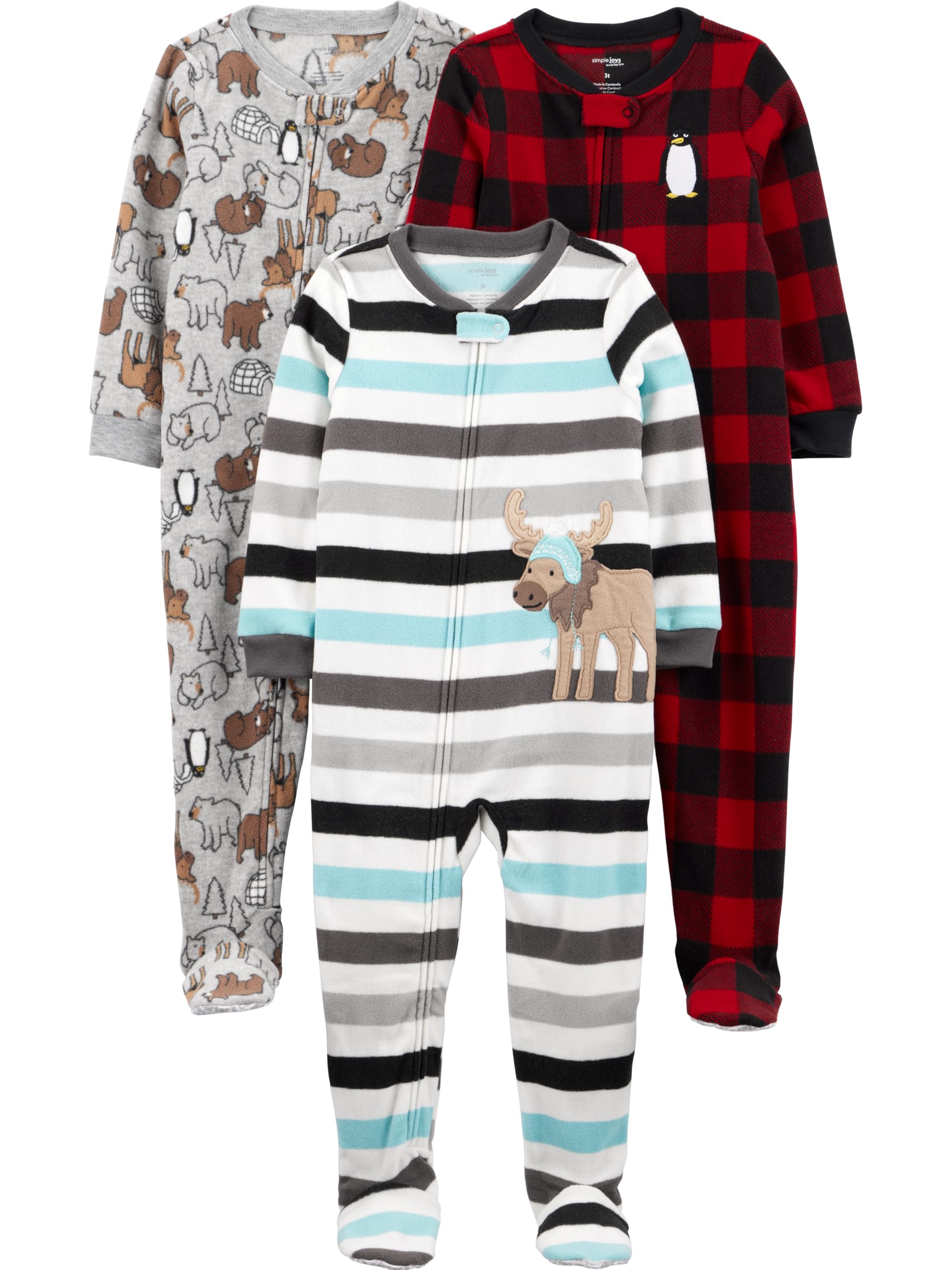
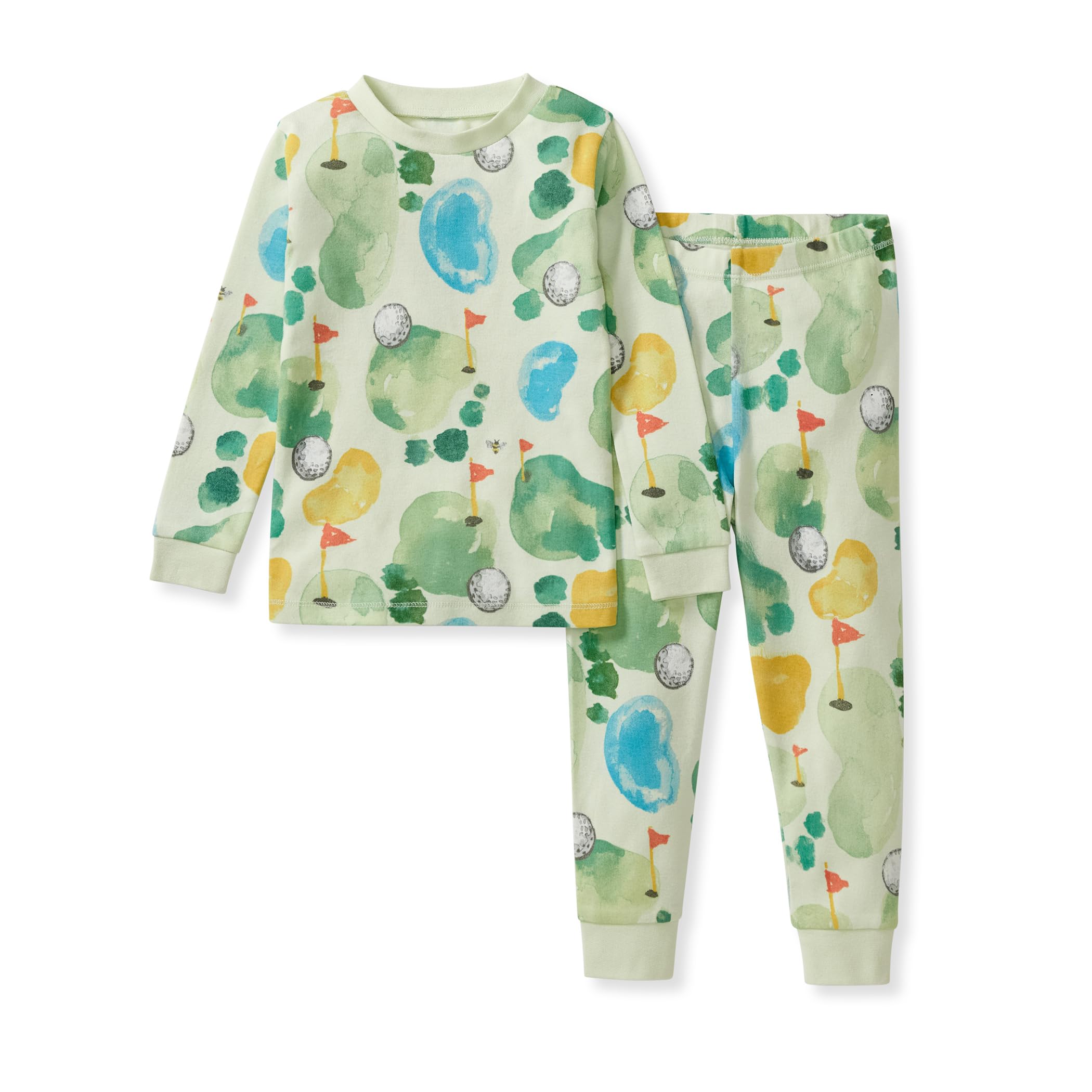

Best for Everyday Cotton Sleepwear
Simple Joys 6-Piece Cotton Pajama Set
Three tops and three bottoms in one order is the entire argument, and it holds up. Six pieces means you are never one laundry cycle away from a bedtime standoff, and the per-set cost lands below most of the single sets here. We kept coming back to this one because it solves the boring problem — enough clean pajamas — without asking you to think about it again until the drawer runs low.
The cotton is the other half of the case. It is light enough for a warm room, it softens with washing rather than stiffening, and the snug cut sits close through the body and the sleeves so nothing twists at three in the morning. There is no growing room in it, by design: a tall or broad-shouldered child needs the next size up, and a child between sizes takes the larger one.
Prints are where the set earns its keep with kids. The patterns are bright, the color holds, and after repeated washing they still look like the picture. One caveat to know before you pick a design: the glitter-finished prints shed, and a washer full of dark clothes is not the place to find out.
What tips it for us is that the set behaves like a uniform. Nothing needs special handling, nothing has to be matched, and a spilled cup at eight in the evening costs you one piece instead of the whole outfit.
Pros
- Six pieces cover three nights between washes
- Breathable cotton that softens in the wash
- Snug cut stays put through the night
- Prints and color hold up
Cons
- Glitter-finish prints shed onto bedding and laundry
Six cotton pieces make this our default for most babies and toddlers — it fits snugly, washes well, and ends the nightly laundry scramble.
Best for Cold Bedrooms
Simple Joys Fleece Footed Pajamas
Key Features
- Fit: Loose fit
- Style: Footed one-piece
- Fabric: Fleece
- Flame resistance: Flame resistant
- Price: Midrange
A cold bedroom and a child who kicks the covers off are the same problem, and a footed fleece sleeper is the least fussy answer to both. This one closes at the foot, holds the ankle with elastic, and zips up the front, so there is no gap for cold air and no sock to hunt for at two in the morning.
The soles are the detail we appreciated most. A grip print runs across the bottom of each foot, which matters on hardwood and tile once a toddler starts running instead of walking. The loose fit is deliberate: roomy enough for a diaper and easy to pull onto a resisting child, and the flame-resistant fabric is what allows that roominess instead of a tight, stretch-to-fit cut.
It is a winter garment and nothing else. In a warm, centrally heated house, fleece plus a duvet is too much and you end up with a sweaty, cranky child by midnight — this is the pick for a drafty older house, a cabin, or a room that never quite warms up. It also runs generous through the feet, so start with your child’s current size rather than sizing up.
What we like is how little it asks of you: one zip to pull, no gap at the ankle, and a sleeper that stays on a child who treats sleep like a wrestling match.
Pros
- Grip soles for hardwood and tile
- Ankle elastic keeps feet where they belong
- Loose fit leaves room for diapers and movement
- Holds up through repeated washing
Cons
- Too warm for anything but a cold bedroom
Our pick for cold bedrooms: the fleece one-piece and grippy feet keep a blanket-kicking toddler warm from bedtime to morning.
Best for Sensitive Skin
Burt’s Bees Organic Cotton Pajama Set
Key Features
- Set: Top and bottoms
- Fabric: Organic cotton
- Department: Baby boys
- Price: Midrange
Organic cotton earns its premium on a child who scratches at night. The knit here is light and smooth next to skin, with none of the slick, faintly plasticky hand a polyester blend has, and it breathes well enough that a warm room does not turn into a sweaty one. If the pajama drawer is currently full of synthetic blends and the itching has not stopped, this is the first swap to make.
The two-piece layout is worth as much as the fabric. A top and bottoms separate for middle-of-the-night changes and bathroom trips, and the top can be worn with other bottoms when one half is in the wash — something a footed sleeper cannot offer.
Snug is the operative word. Shoulders and sleeves sit close and the torso runs short, so a tall toddler or a baby in cloth diapers needs a size up, and the label tracks a fairly average build rather than a long, lean one.
Durability is where we temper things. The cotton is soft enough that it can look tired after a long run of washing, and the underarm seam is the place to watch. Treat it as a set for the size your child is in now rather than a hand-me-down-in-waiting, and the softness is worth the shorter life.
Pros
- Light organic cotton that suits sensitive skin
- Two pieces make night changes easier
- Quiet prints that still look good after washing
Cons
- Short torso and tight sleeves on tall toddlers
- Underarm seams can fail before the fabric
For a child with sensitive skin, the light organic cotton is the reason to buy — just take the next size up for a tall toddler.
Best for Budget Cotton Sets
Family Feeling 2-Piece Cotton Pajamas
The price tier is what gets these into the cart; the cotton is what keeps them there. This sits at the cheap end of the group and still uses a proper mid-weight 100% cotton knit with a smooth face, not the thin, faintly transparent stuff that has no business being called pajamas.
It is a two-piece with long sleeves and long pants, which covers most of the year in a normally heated house, and the prints are the loud, character-driven kind children choose for themselves. Some designs glow in the dark, which is the sort of thing that gets a reluctant sleeper into bed rather than negotiated with.
Longevity is the trade we noticed. The crotch seam and the seat are where these give out, so a child who wears the same pair every night wears through it faster than a child rotating three. The fit is snug and close to size with a little room to grow, which softens that a bit.
The size range is the quiet advantage: these run from toddler sizing up into bigger-kid sizes, so a five-year-old and an eight-year-old can end up in the same set without big-kid prices for the privilege. That is not a small thing in a house with one bedtime and two children.
Pros
- Real 100% cotton at a budget tier
- Glow-in-the-dark prints kids ask for
- Sizes run up into bigger-kid range
- Soft, smooth fabric that does not thin out
Cons
- Crotch and seat seams wear through first
The best-value cotton set here, with prints kids pick for themselves and a size range that reaches big brothers and sisters.
Best for Layering and Stretch
AVAUMA Snug-Fit Cotton Pajama Set

Key Features
- Fit: Snug fit
- Fabric: Cotton
- Department: Baby boys and girls
- Price: Budget
These run small. Not dramatically, but consistently enough that ordering your child’s usual size is a gamble, and the cut runs slimmer than the roomy sizing a lot of baby clothes use. Measure, check the chart, and go up if the height lands at the top of a size.
Past that, this is the softest cotton in the group. The knit is thick enough to feel substantial yet stretches in every direction, which is why it works as a base layer under a costume or a snowsuit as well as a pajama — nothing bunches at the shoulder, and nothing bags at the knee by morning.
The snug cut is the other half of that. There is no ease in these through the body or the sleeves, so a child who hates feeling restricted fights you, while a child who runs cold sleeps better for it. We noticed the difference most on a wriggly sleeper: the set stays put instead of riding up around the ribs.
And the colors are the fun part — neutrals, a proper mint, a yellow that is not a pastel washout. For a family buying several pairs at once, a range that does not force every child into pink or blue is worth more than any single feature.
Pros
- Thick, stretchy cotton that moves with a child
- Exceptionally soft next to skin
- Stays snug without bagging overnight
- Colors beyond the usual pink-and-blue split
Cons
- Close cut that some children will not tolerate
Buy it for the stretch and the softness, and size up: it is the most comfortable basic here for layering under costumes and snowsuits.
How We Tested Kids Pajamas (With Help From Some Very Opinionated Toddlers)
We started with a shortlist of about 40 pairs from brands we’d bought before and ones that kept surfacing in customer reviews, then narrowed it by fabric content, size range, price, and whether the label spelled out a snug-fit standard. That left 14 pairs, which went into my house and two colleagues’ homes — through school-night bedtimes, Saturday mornings on the couch, one sleepover, and a week of fevers when everything got changed twice a night.
Every pair went through at least 10 wash-and-dry cycles on the settings a real household uses, not the gentle ones. We measured sleeves, inseams, and cuffs before the first wash and again after the fifth, because the honest test of sizing is whether a pair still fits in March the way it fit in November. We ran a hand along every inner seam, noted whether tags were printed into the fabric or sewn in, and watched the prints — cracking and fading showed up on a few by week six.
The kids did their own scoring. Each child picked from a lineup of the pairs in their size and told us which ones they’d ask for again, which settled the cuteness question better than we could. Parents logged the practical stuff: whether a 3-year-old could pull the bottoms down unaided at 2 a.m., whether footie zippers caught, whether a shirt stayed tucked through the night. The pairs that survived all of it sit at the top of the list; the ones that pilled, shrank, or got refused at bedtime didn’t make it.
How to Choose Kids Pajamas
The one decision that shapes everything else is the fit standard on the hang tag: snug-fitting cotton or flame-resistant loose fit, and each one is built for a different bedroom.
Start With the Label: Snug Fit or Flame Resistant
Children’s sleepwear is sold under one of two approaches. A garment is either cut close to the body and labeled snug-fitting, or made roomier from flame-resistant fabric. Neither approach is better in the abstract; they answer different problems.
Snug cotton is the better year-round choice for a heated house because it breathes. And because the close cut is doing the safety work, a baggy version of the same set is not the safer version — it is just a worse fit. Flame-resistant fleece is the right call for a genuinely cold bedroom, where warmth matters more than breathability. Read the tag before you fall for a print.
Sizing: Buy for the Child You Have This Month
The most common regret in this category is sizing for next winter. Snug-fit cotton has no slack by design, so a set bought two sizes ahead slides off the shoulder and bunches at the knee, and the child sleeps badly in it. Between sizes, go up one — not two.
Measure height and weight against the size chart rather than trusting the age on the label. A long, lean toddler and a round, cloth-diapered baby of the same age often need different sizes, and the chart reflects the garment, not the birthday.
Fabric and Warmth: Cotton, Fleece, or a Mix
Cotton covers most of the year: it breathes, it softens rather than stiffens in the wash, and it is the usual starting point for a child with eczema or sensitive skin. Fleece earns its place in a cold room and nowhere else — in a warm house, fleece plus a duvet produces a sweaty, restless child by midnight.
The hybrid, a cotton top with fleece bottoms, suits a child who runs hot on top and cold on the legs. Heavier is not automatically better: a thick synthetic set can trap heat just as effectively as it traps warmth.
Feet, Fastenings, and the 2 a.m. Change
A footed sleeper keeps socks on and keeps ankles covered, and the sole is worth checking before you buy: a rubberized grip print grips a wood floor, while a printed pattern that has worn smooth does not. Elastic at the ankle keeps the foot where it belongs on a child who moves all night.
A front zip beats snaps when you are changing a diaper in the dark, a two-piece beats a sleeper once a child is toilet training, and a pull-on top with an elastic waist is the difference between a toddler dressing themselves and a fight.
How Many Sets a Child Actually Needs
Three to four sets per child covers a week with one laundry day, and that math is the real argument for a multipack — provided the tops and bottoms are interchangeable, so a lost half does not retire a whole set.
For a baby, plan for more changes rather than fewer, and keep one size up in the drawer for the week the current size stops fitting overnight. The best pajamas are the ones already clean when bedtime arrives.
Frequently Asked Questions
Should I wash new pajamas before the first wear?
Yes. A cold wash and a low dryer before the first wear removes factory finishes and shows you how much the set shrinks while you can still exchange it. Cotton knits tighten most in that first cycle, so judge the fit after the wash rather than straight out of the bag.
Turn prints and glow-in-the-dark graphics inside out to protect them, and skip high heat, which is what does the damage to both cotton and elastic.
Does a baby wear pajamas under a sleep sack?
A light cotton set under a properly fitted sleep sack is the usual arrangement, with the sack doing the job a blanket would. Keep loose blankets, pillows, and quilts out of the crib for the first year.
Check that the sack’s neck and arm openings fit closely so a baby cannot slip down inside it, and size the sack by weight rather than by age.
Can pajamas be handed down between siblings?
Yes, with two checks. Run a thumb over the soles of footed sleepers — a grip pattern worn smooth is a slip risk on hard floors — and inspect the crotch and underarm seams, which fail before the fabric does.
Then be honest about size. A snug-fit set one size too small is not a hand-me-down; it is a set that will pinch and wake everyone up.
Are character pajamas worth paying more for?
Mostly you are paying for the license, not for better fabric; several of the plainest sets here wear as well as the branded ones. Buy one character set the child is genuinely excited about, then fill the drawer with cheaper multipacks.
That way the favorite gets worn and washed less often, and it survives long enough to be outgrown rather than worn out.
Final Verdict
Start with the Simple Joys six-piece cotton set. It is the one we reach for: three matching sets of breathable cotton, cut snug enough to stay put through the night, and no other pick here covers three nights for less.
Change one requirement and the answer changes. A genuinely cold bedroom with a toddler who will not stay under the covers makes the fleece footed sleeper the better buy, and a child who scratches at synthetic fabric belongs in the Burt’s Bees organic cotton, one size up.
