This post contains affiliate links. We may earn a small commission when you buy through our links — at no extra cost to you.
Most of us start the same way: pencil marks on a doorframe, dated in somebody’s handwriting. Then the hallway gets repainted or the family moves, and a decade of those marks vanishes under two coats of paint. A growth chart is the fix — one long canvas runner or wooden board that keeps a child’s whole childhood in one place, stays legible through years of measuring, and comes down in one piece when you need it to.
I’ve hung a few of these in my own house, and the differences show up fast. A chart that looks perfect in a listing photo can curl at the edges by week three or lift a strip of paint when you peel the backing off. My team and I tested 15 of them over the past four months — canvas runners, solid wood boards, and one peel-and-stick vinyl kit.
The printed numbers are rarely the problem. What makes a chart accurate for its whole life is where it starts — some hang from a fixed top edge, some get tacked up, and one mounted two inches too high is wrong forever. The picks below are the ones that hung straight, stayed put, and still looked like something worth leaving on the wall.
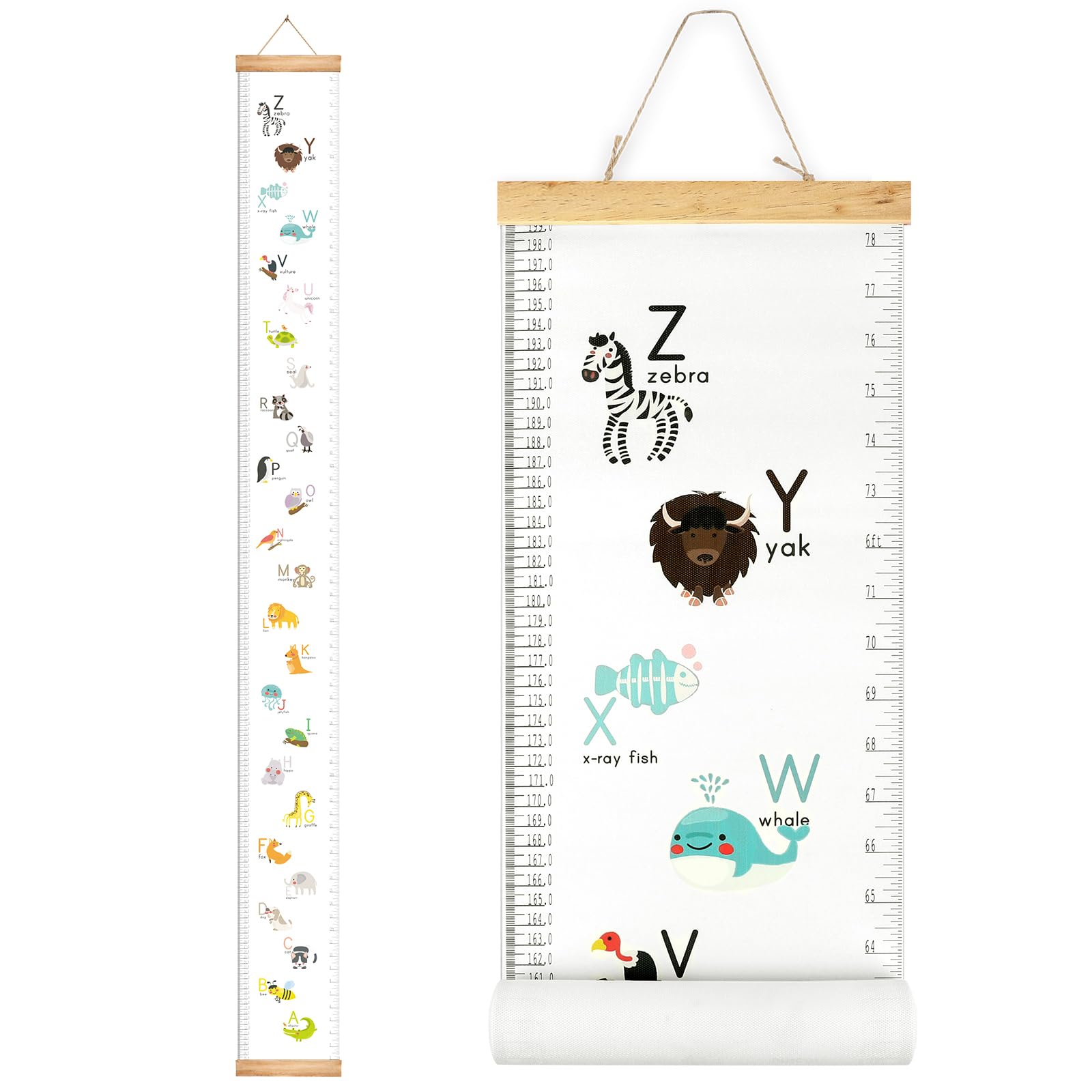


Best for Most Families
MIBOTE Canvas Growth Chart
Key Features
- Material: Canvas
- Mounting: Rope hanger
- Overall size: 79 x 7.9 inches
- Price: Budget
One nail, a loop of rope, and a printed canvas: that is the whole installation. The sheet measures 79 by 7.9 inches, weighs under six ounces, and rolls into a bundle small enough to drop in a moving box, which is why it suits renters and families who are not finished moving.
What puts it at the top of this set is the combination of length and money. Seventy-nine inches of canvas runs from a baby’s first mark to a six-foot adult, and it does that for less than nearly everything else here. The fabric has enough body to write on with a pencil or a fine permanent marker, and the wooden strips at the top and bottom keep the edges from curling the way a bare panel does.
Hang height is the step that decides whether any of this is honest. The scale is printed to begin above the bottom edge, so an inch of error at the hook is an inch of error on every mark. We checked ours against a tape measure at the three-foot and five-foot lines and moved the hook until both matched; a chart that will not agree at two points goes back. After that, marking takes a second, and pencil wipes off while marker does not.
Pros
- Hangs from a single nail or hook
- 79 inches measures baby through adult
- Canvas takes pencil or fine marker
Cons
- Printed numbers can lift if scrubbed with cleaner
- Light canvas feel, not an heirloom
We send most families here: one nail, one scale for everyone in the house, and a chart that rolls up when you move.
Best for Nursery Statement Piece
Headwaters Studio Wooden Height Chart
Key Features
- Material: Wood
- Thickness: 0.25 inch
- Construction: Two-part folding
- Measuring range: Up to 6 ft 6 in
- Price: Premium
Every other pick on this list is fabric. This one is wood, and that changes its job: it belongs on a hallway wall in a house where the chart will still be there when the children are grown. We were struck by how much more finished it looks in a room than a printed canvas panel, and that impression is most of what the higher price buys.
It arrives as two panels that join to run up to six feet six inches, and at a quarter inch thick it sits close to the wall. A fine Sharpie writes cleanly on it, and the width gives you room to stack three children’s names and dates. Two things to plan before you drill. The fasteners in the box are the weak link on a board this solid, so use screws into studs or proper anchors, one at each panel, and line the scale up across the joint before you commit to a height, because that seam is the part that can drift.
It is the wrong chart to buy if you expect to move twice in the next five years; a board this size does not roll. As a piece of a house, though, it earns its place, and the wood takes a marker in a way that reads as permanent in the best sense.
Pros
- Looks like furniture, not decor
- Measures up to 6 feet 6 inches
- Sharpie writes cleanly on the surface
Cons
- Quarter-inch board feels slim for the price
We treat this as the forever pick: wood instead of canvas, six foot six of scale, and a board you can leave up for twenty years.
Best for Small Wall Spaces
Outivity Canvas Growth Chart
Key Features
- Length: 64 inches
- Material: Canvas, hemp rope, wood
- Mounting: Rope hanger
- Price: Budget
At 64 inches, this is the shortest chart in the group, and that is exactly the point. The printed scale picks up around the one-foot mark and runs to six feet, packed into a strip of wall that a 79-inch sheet will not fit: the space between a closet door and a corner, or the end of a hallway. The giraffe print is cheerful without being loud, and the canvas is thicker than the price suggests.
We kept coming back to it for small bedrooms and for grandparents’ houses, where a shorter run is easier to place and less to look at. It arrives rolled tight and spends a few days relaxing against the wall, so put a pin or a dab of removable putty at each bottom corner instead of fighting the curl with your hands. The hemp rope and wooden ends are the same fittings you find on charts that cost more.
Pros
- Fits narrow strips of wall
- Cheerful giraffe print
- Thick canvas for the money
Cons
- Stops at about six feet
Small bedrooms and grandparent houses are where we point people: 64 inches of thick canvas that fits where a full-length chart cannot.
Best for Tall Households
KooKooBaby Canvas Growth Chart
Key Features
- Length: 82 inches
- Material: Canvas with wood frame
- Hang offset: 2 feet
- Price: Budget
Eighty-two inches is the number that matters here. Hang it two feet off the floor the way the directions call for and the scale runs from two feet up to six foot ten, which is enough for a tall teenager and most adults. In a family where the twelve-year-old is already taller than grandma, that is the difference between a chart you retire early and one you keep using.
The canvas is thick and waterproof, wrapped in a wood frame, and the print is the sort of warm sunshine design a child picks out herself. One pin holds it, which we appreciated in a room with fresh paint. Expect the bottom to curl for the first week after it comes out of the box, and add a second pin at each lower corner rather than pressing it flat with your hands every time you walk past.
What it costs is wall. A chart that reaches six foot ten wants a tall, clear run, and a room with a chair rail or a window over the dresser may not have one. Measure before you order; if the height is there, this is the one that keeps working when the children stop being little.
Pros
- Scale reaches 6 feet 10 inches
- Thick waterproof canvas in a wood frame
- Hangs from a single pin
Cons
- Needs a tall, clear wall to fit
Tall families get our nod here: the longest scale in the group at six foot ten, on waterproof canvas that goes up with one pin.
Best for Tight Budgets
SUJAYU Canvas Growth Chart
Key Features
- Scales: Inches and centimeters
- Material: Canvas with wood
- Hang offset: 1.96 inches
- Overall size: 79 x 7.9 inches
- Price: Budget
The cheapest chart we recommend, and it does not feel like a compromise. The canvas is heavy enough that a pencil writes on it without punching through, the wooden ends hold it hanging straight, and the print carries inches and centimeters side by side, which is genuinely useful if you are recording both for family abroad.
The scale is the part to get right. It is printed to hang 1.96 inches off the floor, so a chart set flush against the baseboard will read short at the bottom by about that much. Follow the offset and check it against a tape at three feet before you start marking. The look is plain white with thin black rules, the least decorative chart here and the easiest one to put beside any wallpaper.
Pros
- Lowest-priced pick in the group
- Inches and centimeters on one scale
- Thick canvas with wooden ends
Cons
- Bottom rail can work loose with heavy use
For the first chart on a tight budget, we pick this: thick canvas, dual scales, and a plain finish that fits any wall.
Best for Several Children
Morxy Canvas Growth Chart
Key Features
- Length: 6.33 feet
- Material: Canvas with pine rails
- Hang offset: 5.5 inches
- Price: Midrange
Three names, one ruler. This chart has the most usable writing room of the fabric picks, a printed scale down the center with blank canvas either side for a name, a date, and what the child said about being measured. That space is the reason we keep it over a plainer sheet.
The materials are where the money goes. The canvas is thick, stain- and water-resistant, bordered in polished pine at the top and bottom, and hung from a sturdy string; at eight ounces it hangs straight without hardware. It is built to sit 5.5 inches off the floor, and that offset is not a suggestion, so set the hook there and the scale reads true.
So the case for it is the case for any good object in a child’s room: you look at it every day. If the chart goes where visitors see it, the pine rails and calm palette earn their keep; if it lives behind a closet door, a plain canvas does the same job for a lot less.
Pros
- Room for names, dates, and notes
- Thick, stain-resistant canvas
- Calm palette and pine trim
Cons
- Priciest of the canvas charts
- Rolls up bulkier than a thin sheet
Rooms that get seen are where we hang this one: blank canvas for three kids’ names, pine rails, and a palette that does not shout nursery.
Best for Gifts
LIFELIKO Animal Growth Chart
Key Features
- Extras: AR app
- Material: Wood and canvas
- Overall size: 76.3 x 7.9 inches
- Price: Midrange
The bonus here is an app. Point a phone at the chart and the dinosaurs on it come to life in augmented reality, which sounds like a gimmick on paper but is the one feature here that got a four-year-old to stand against the wall on purpose. We have not seen another chart do that.
Under the trick is a solid chart: 76.3 by 7.9 inches of wood and canvas with a printed panel for the child’s name at the top. It hangs from a cord, wipes with a soft dry cloth, and a low iron takes out a shipping crease, which is worth knowing before you start pressing at it with a hot one.
Personalization is the other reason it works as a gift. A name on the chart means it arrives ready for a specific child, and at a shower it gives people something to look at beyond another printed ruler.
What it is not is the longest chart here, since 76.3 inches runs a few inches short of the 79-inch sheets, and that only matters if you are measuring a tall adult. Buy it for the child who will use the app and the name panel, not for the tallest teenager in the house.
Pros
- AR app adds a reason to stand still
- Printed panel for the child’s name
- Wipes clean and irons flat
Cons
- Edges can fray with handling
As a gift, this is the one we reach for: a name panel, dinosaur artwork, and an app that gets a reluctant kid to stand still.
Best for Diy Builders
Little Acorns Vinyl Ruler Decal Kit

Key Features
- Numbers: 1 through 6
- Coverage: 72 inches of lines
- Material: Matte vinyl
- Price: Midrange
Nothing in the box is a growth chart yet. What arrives is 72 inches of matte vinyl measuring lines in six strips, the numbers 1 through 6, and a set of instructions; the board they go on is something you buy, cut, finish, and seal. That is either the appeal or the dealbreaker, and it is worth deciding before you order.
The application is the good part. We found six separate strips far easier to keep square than one long decal, and the numbers go down with a card and a steady hand once the board is sanded and sealed. Measure up from the bottom of the board twice, because vinyl does not forgive a second attempt.
Vinyl is fussy about what it sticks to. On a smooth, sealed surface it grips and stays; on bare or dusty wood the edges lift and the backing fights you. Press every strip down hard, give it a day, then clear-coat over the top if the finished ruler will hang where hands brush past it.
This is for the family who wants a specific board, a width that fills an odd wall, a stain matched to the trim, a length cut to their ceiling, and is happy to spend an afternoon on it. If you want something on the wall tonight, a canvas chart does it for less and none of the work.
Pros
- Six strips keep the scale straight
- Numbers look like painted markers
- Fits a custom board and wall
Cons
- Board, stain, and sealer all sold separately
For families building a board to match their trim, this is the kit we recommend: crisp numbers, six easy strips, and a ruler that looks handmade because it is.
How We Tested 15 Kids Growth Charts
We started by pulling together every growth chart with a strong review record — canvas runners, wooden boards, and a peel-and-stick vinyl kit — then cut anything that topped out before a kid’s teen years or couldn’t come down without doing damage. That left 15 charts, which we hung over four months in real bedrooms, a nursery, and one hallway: smooth painted drywall, a textured patch, and a wall that had been repainted the week before. We also kept a running list of what came in each box, since hanging hardware and a decent marker account for a lot of the difference in value.
Installation came first. I timed each one solo, with no drill and no helper, counting trips to the toolbox and noting whether the instructions actually said where to start measuring from — several didn’t, which is the most common way these end up hung wrong. Once a chart was up, we checked accuracy the boring way: a steel tape measure anchored at the same height, compared mark by mark, then the same child measured against both on the first of each month, socks off, heels against the wall.
Then we lived with them. Kids leaned on them, tugged the bottom edge, and drew on them; we wiped smudges with a damp cloth and watched for fraying canvas, creases that wouldn’t flatten, and fading in a room that gets afternoon sun. At the end of four months we peeled a corner of every adhesive-backed chart to see what came away with it, and rechecked whether the wooden ones still hung level after months of being bumped. The charts that made the list did all of that without curling, drifting, or losing a single mark.
How to Choose a Kids Growth Chart
The printed scale matters less than the hook it hangs from, so start with where the chart will go and how you will check it, not with the artwork.
Set the Hook Height Before You Trust the Scale
Almost every height chart here is printed so the scale starts above the bottom edge: 5 centimeters on several of the affordable canvases, 5.5 inches on the Morxy, a full two feet on the KooKooBaby. Hang one flush against the baseboard and every mark you make reads short by that offset. Measure up from the floor, mark the wall, hang the chart, then hold a tape against the printed three-foot and five-foot lines.
If both agree, the chart is true and you can start marking. If they do not, move the hook and try again; one that refuses to agree at two points is a return, not a rounding error. This single step decides whether the chart is worth keeping, and it explains almost every scale that seems off out of the box.
Match the Length to the Wall and the Family
Length does two jobs at once. A 79-inch sheet runs from a baby’s first mark to about six and a half feet, which covers siblings and most adults on one ruler. A 64-inch chart like the Outivity squeezes roughly one foot to six feet into a much shorter strip of wall, which is what fits between a closet door and a corner. Measure the clear run first, then decide whether you need the extra height, because an 82-inch chart wants most of that wall kept empty.
Choose the Material for How You Live
Canvas rolls up, travels, and costs little, which makes it the right call for renters and for anyone who expects to move before the children finish growing. A wooden board looks like furniture and outlasts the nursery, but it is heavy, it wants screws rather than a nail, and it does not pack into a box. Vinyl decal kits sit in between: you choose the board, the stain, and the length, and you supply the afternoon.
Decide What Gets Written, and With What
Pencil erases and fine permanent marker does not, so try a corner before you commit a name to the middle of the chart. Write the date beside every line, since a bare mark means little five years later, and leave a column for siblings so nobody’s measurements end up stacked on someone else’s. Treat the printed scale gently too: a damp cloth handles dust, while a household spray can lift the numbers right off the fabric.
Frequently Asked Questions
Will a growth chart damage my wall?
A rope-hung canvas needs one nail or a small hook, so the damage is a single hole you can fill in a minute. A removable adhesive hook rated for the weight does the job too, since most of these charts weigh under ten ounces. A wooden board is heavier and wants a screw into a stud or a proper wall anchor.
How do I clean a canvas height chart?
Dust it with a dry cloth. For sticky fingerprints, use a cloth barely damp with water and a drop of mild dish soap, then dry the spot right away. Skip all-purpose sprays and erasers, because the scale is ink on fabric and harsh cleaners can take the numbers with them. Test anything new on the blank margin at the bottom first.
Can I hang a growth chart above a crib?
Keep it off the crib wall. Rope-hung charts have a cord, and any cord within a baby’s reach is a strangulation risk; a board can also fall. Hang the chart on another wall, or high enough that a standing toddler cannot grab the bottom edge and pull it down.
Is a growth chart a good baby shower gift?
Yes, and the practical gift is one that packs flat or rolls: a canvas chart travels better than a wooden board and can move house with the family. If you want it to feel personal, look for a printed name panel, like the one on the LIFELIKO chart, and tuck a fine-tip marker in with it so the parents can start that week.
Final Verdict
Most families should buy the MIBOTE canvas and then spend ten minutes hanging it correctly, because a chart that lines up at the three-foot and five-foot marks stays useful until the children stop growing. It is the easiest kind of chart to live with: one hook, one scale for everyone, nothing to move when you do.
Choose the Headwaters board if the chart goes where you will look at it every day and you want wood instead of fabric. Choose the KooKooBaby if someone in the house is already past six feet, since its six-foot-ten scale is the only one here that keeps up.
