This post contains affiliate links. We may earn a small commission when you buy through our links — at no extra cost to you.
A kid with a stomach bug is a terrible time to discover they won’t touch a salty drink. That’s the real job of kids electrolytes: replacing what they lose through a fever, a hot soccer game, or a day at camp, without a fight at the kitchen counter. The category has exploded, and the differences are not cosmetic—some taste like candy, some taste like seawater, and some are so bulky you won’t pack them. Over the past three months, we mixed and packed 14 powders, tablets, drops, and ready-to-drink options, with kids and a few adults doing the sipping.
Taste mattered most, because a drink nobody finishes doesn’t hydrate anyone. We also watched for versatility—cold water, warm water, smoothies—and whether a stick survived a lunchbox or a carry-on. Ingredients and value came down to reading labels and counting servings, not marketing claims. A few parents borrowed the unflavored ones after a late night—consider that the unofficial hangover test—and the picks below are the ones that earned a repeat request, not just a polite sip.


Best for Sick Days, Travel
Pedialyte Electrolyte Powder 24ct
Key Features
- Format: Powder packets
- Stated age: 10 months and up
- Servings per box: 24 packets
- Water per packet: 16 fl oz
- Price: Premium
The moment you need an electrolyte drink is never the moment you planned for: a fever at 2 a.m., a stomach bug on the second day of a trip, a kid who comes off the field wobbly in July. That’s the case for keeping pre-measured sticks rather than a bottle. Tear one open, add 16 ounces of water, and you have a pint of properly mixed drink with nothing to refrigerate and nothing to eyeball.
We recommend this box first because it removes the most ways a bad day can go worse. There’s no scoop to guess at in the dark and no half-empty bottle in the fridge to squint at; the carton sits in a cabinet or a diaper bag for months and is still good when you finally open it. Grape, strawberry lemonade, and orange come in the same box, which matters more than it sounds — rotating flavors is how the second cup gets finished, not just the first, and a kid who is bored of grape will still take orange.
The powder is mild rather than syrupy, closer to weak juice than to a sports drink, and it dissolves in cold water without the gritty film that turns some mixes into a negotiation. Pedialyte lists it for 10 months and up, and each packet is about the size of a sugar stick, so a few in the bottom of a bag cost you nothing in space.
Two things worth knowing before you buy. A packet makes a full pint, which is more than a toddler drinks in one sitting — pour half into a cup and put the rest in the fridge rather than leaving it out on the counter. And this is a water-dependent product: it’s the one for home, a hotel room, or a car with a bottle already in it, not the one to rely on when you’re somewhere without drinkable water.
Pros
- Pre-measured packets, nothing to scoop
- Mild flavor kids finish without a fight
- Shelf-stable, so no fridge needed
- Three flavors to rotate
Cons
- Needs 16 fl oz of clean water per packet
The one we recommend first: a shelf-stable stick that turns 16 ounces of water into a properly mixed pint, ready for a diaper bag, a glovebox, or a 2 a.m. fever.
Best for Reluctant Drinkers
Pedialyte Freezer Pops 64ct
Key Features
- Count: 64 pops
- Format: Freezer pops
- Flavors: Grape, blue raspberry, cherry, orange
- Total volume: 134.4 fl oz
- Price: Midrange
Frozen pops are the only format here that a kid asks for rather than tolerates, and that isn’t just psychology. Freezing slows the whole serving down: instead of gulping a cold cup and bringing it straight back up, a child takes small, slow mouthfuls, which is exactly the pace an upset stomach will accept. We keep coming back to these for the afternoons when nothing else gets past the first sip.
The box holds 64 pops in grape, blue raspberry, cherry, and orange, and they thaw slowly enough to survive being handed to a kid on the sofa. Texture buys you time, and time is what a rehydration attempt usually needs.
The catch is planning. These arrive unfrozen, so they’re a buy-ahead product: order a box, clear a shelf, and they’re waiting when a bug comes through the house. Order them the morning a fever starts and you’re watching the freezer. The carton is roughly the footprint of a shoebox and you’ll notice the weight of it going in, so it isn’t an impulse buy in a crowded freezer — but 64 pops is a supply that carries a family through more than one illness, and four flavors means a kid gets to choose, which does more for cooperation than any amount of coaxing.
Pros
- Frozen form gets fluids into reluctant kids
- Small, slow mouthfuls suit an upset stomach
- 64 pops and four flavors per box
Cons
- Arrives unfrozen; needs freezer space ahead of time
Buy these when your kid refuses a cup — freezing slows the drink into small mouthfuls a queasy stomach can keep down.
Best for Fridge-Ready Backup
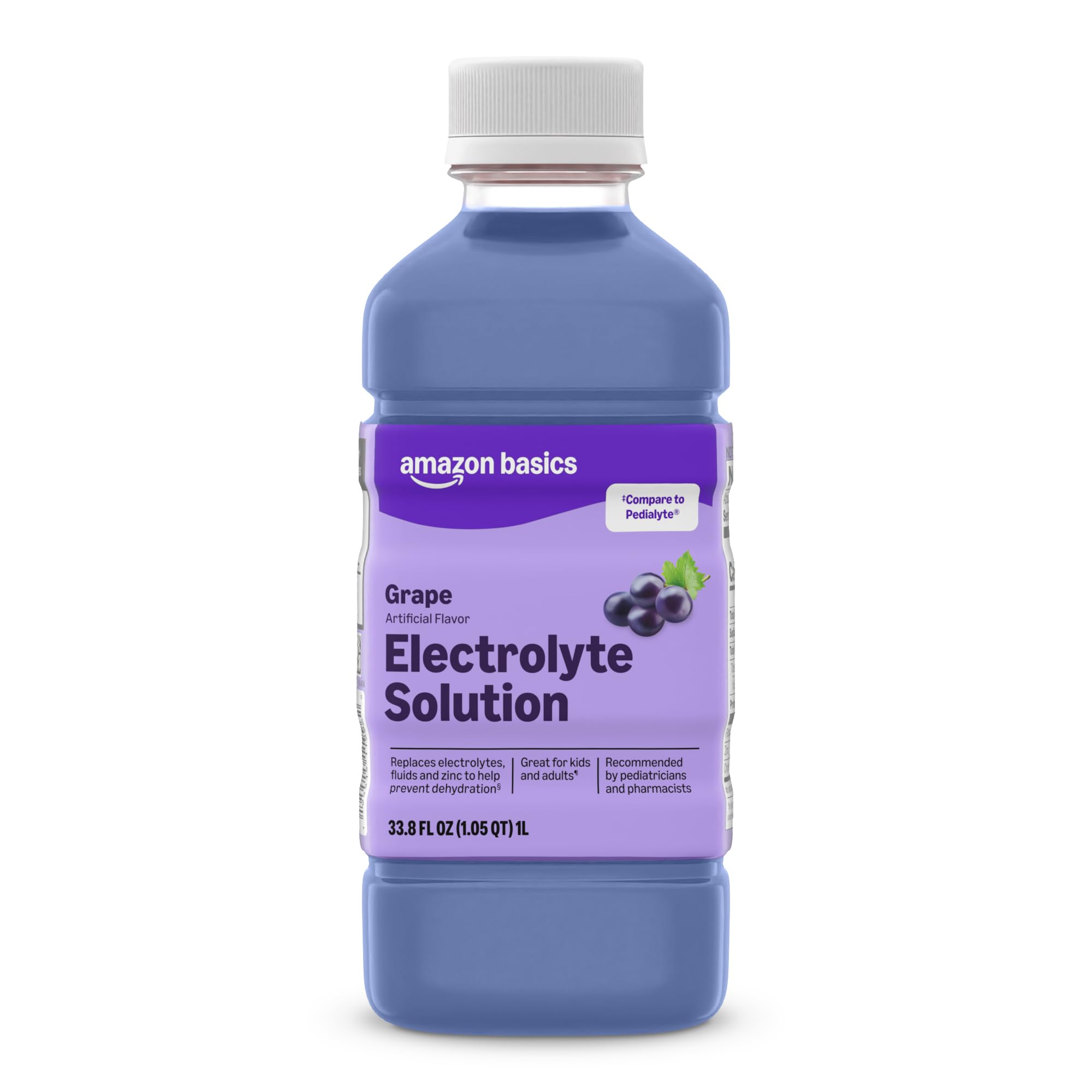
Amazon Basic Care Electrolyte Solution
Key Features
- Size: 33.8 fl oz
- Flavor: Grape
- Format: Ready-to-drink bottle
- Added mineral: Zinc
- Price: Budget
This is the least complicated thing here: unscrew the cap, pour, hand it over. There’s no packet to tear, no ratio to hit, and nothing to stir, so the whole process takes about four seconds and none of it requires turning on a kitchen light.
We recommend it for the fridge door, and specifically for the middle of the night. A chilled bottle is the answer when you’re too tired to measure anything and a kid is too wrung out to wait, and the label’s own instruction — serve it chilled and start with small, frequent sips — is far easier to follow from a bottle you can recap and put back than from a cup going warm on the counter.
It also lists zinc, which none of our other picks call out, and the grape flavor is mild enough that most kids take it without an argument. The catch is the sweetener: this one uses sucralose, and if you keep artificial sweeteners away from small children, the Pedialyte powder packets are the better route, since those are sweetened with sugar. At 33.8 ounces it’s a fridge supply rather than a bag supply, so think of it as the bottle that lives at home.
Pros
- No mixing, measuring, or water needed
- Chilled bottle is easy to sip slowly
- Zinc on the label, unlike our other picks
Cons
- Grape only, sold one bottle at a time
For a fridge you can reach into half-asleep, this is the pick: nothing to measure, nothing to mix, and a chilled bottle ready the moment a bug hits.
Best for Small Toddler Cups
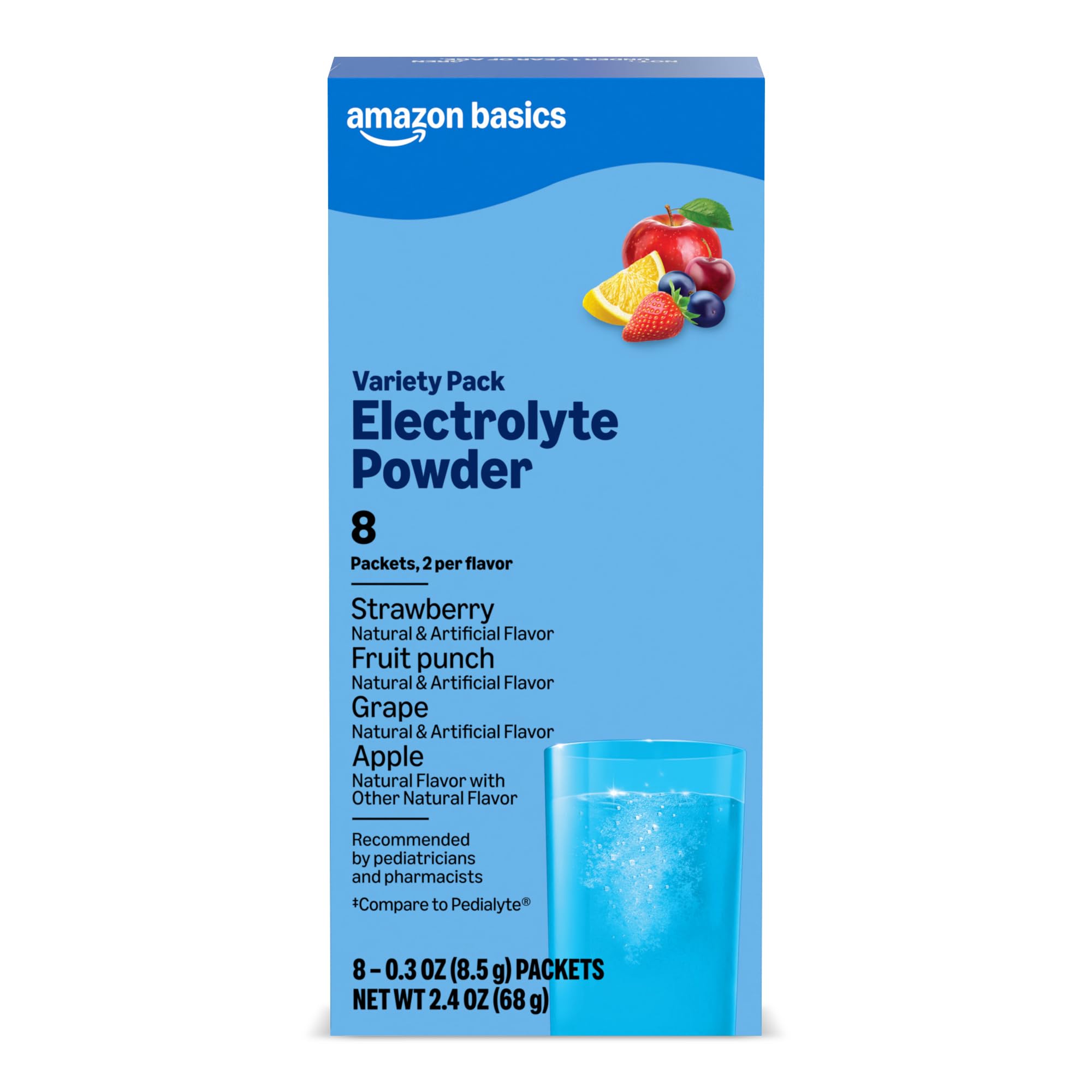
Amazon Basics Electrolyte Powder 8ct
Key Features
- Count: 8 packets
- Format: Powder packets
- Flavors: Apple, fruit punch, grape, strawberry
- Water per packet: 8 fl oz
- Price: Budget
Eight ounces. That’s the number that decides whether this box suits your family, because each packet is dosed for a single small cup rather than the pint the Pedialyte sticks make.
For a toddler, that’s the right call. You’re not mixing a pint and watching half of it go warm while a kid takes three sips and pushes the cup away — the whole packet goes into something they can actually finish. For an older child with a 16-ounce bottle, the same packet lands strong and sweet, which is a concentration problem rather than a recipe one. Mix it into the full 16 ounces if the flavor is too much, just know you’re halving the electrolytes per ounce, so the bottle has to be finished for the serving to count.
We like it best as a sampler: four flavors in an eight-count box lets you learn which one your kid will actually drink before you commit to 24. That’s a more useful thing to own than it sounds, because flavor is the single biggest reason a sick child refuses a drink, and it’s the one thing no label can tell you in advance.
The powder dissolves clean in cold water without grit, and the packets are flat enough to disappear into a diaper bag until you need one. Just don’t expect the box to last — eight packets go quickly in a house with two kids, so this is the one to buy in pairs.
Pros
- Dissolves clean without gritty residue
- Eight-ounce packets suit a toddler cup
- Four flavors to sample before buying more
Cons
- Eight packets go fast with two kids
Worth buying as a sampler: eight-ounce packets let you find the flavor your kid will drink before committing to a bigger, pricier box.
How We Tested Kids Electrolytes
We started with a long list of electrolyte powders, tablets, drops, and ready-to-drink bottles, then cut it by format, age range, and label transparency—no mystery blends, no dyes we couldn’t justify, and no tubs so large they’d expire before a kid got halfway through. That left 14 products, which we used over three months in the places they actually show up: school mornings, lunchboxes, soccer practice, a stomach-bug week, a road trip, and hot afternoons at camp.
Taste was a daily test. We mixed each one at the package dose, handed it to kids from preschool through middle school, and noted who finished the bottle, who asked for more, and who handed it back after one sip. For hydration and effectiveness, we filled marked water bottles before practice and checked how much was left afterward; during the sick week, we tracked whether kids kept sipping instead of refusing altogether. Versatility got tested with cold tap water, room-temperature fountain water, and a smoothie, because a powder that only works in one setup is a powder that sits in the pantry.
Portability was a lunchbox and carry-on trial: we packed single-serve sticks and tablets, shook them around, and checked for punctures, clumps, and leaks. We read every ingredient panel for sugar, sodium, potassium, magnesium, dyes, and sweeteners, then compared the amounts with what a kid actually needs in a day. Value came down to cost per serving and how many half-used sticks ended up in the trash; size came down to servings per container, scoop size, and whether the package fit in a lunchbox. A few adults on the team also borrowed the unflavored options after a late night and reported whether they felt less dried out by morning—our informal check on the hangover-relief claim.
How to Choose Kids’ Electrolytes
The best electrolyte for a child is the one they’ll actually swallow, so format — powder, bottle, or freezer pop — decides more about whether it works than any number printed on the back of the box.
Start With the Moment You’ll Need It
Electrolytes get bought for three different scenes, and they barely overlap. A shelf-stable powder is for the diaper bag, the hotel room, and the fever that starts at 2 a.m. — it keeps for months and asks only for water. A ready-to-drink bottle is for the fridge you can open half-asleep, with nothing to measure and no water to find. Freezer pops are for the child who has stopped drinking altogether, but they arrive unfrozen, so they need a shelf waiting for them.
The trap is buying for the emergency you’re already in. Pops bought the morning a fever starts are useless until they freeze, and a bottle that has been sitting in a warm car all afternoon isn’t the one to hand a sick child.
Sugar Is in There on Purpose
A rehydration drink contains sugar because sodium and glucose are absorbed together — the sugar is part of what pulls fluid in. That’s why pediatric formulas taste faintly salty-sweet rather than like juice, and why a zero-sugar mix is a different product: pleasant for everyday hydration, but not the one built for a stomach bug. Read the sweetener line as carefully as the sugar line. Some bottles use sucralose, and families who keep artificial sweeteners away from small children will want a sugar-sweetened formula instead.
Match the Packet to the Cup
The water volume on the packet isn’t a suggestion; it sets the concentration you’re giving. A stick dosed for 16 ounces makes a pint, one dosed for 8 ounces makes a small cup, and neither is better — they suit different children. If your kid finds the 8-ounce version too sweet, more water fixes the taste but dilutes the electrolytes with it, so the whole bottle has to be finished for the full serving to count. When the label says 16 ounces, measure 16 ounces.
Check the Age Line First
The powder we recommend is listed for 10 months and up, and ready-to-drink labels direct caregivers to consult a doctor before giving electrolyte solution to a child under 1. That isn’t small print to skim past: dehydration in an infant that young can move quickly, and the right call is a pediatrician rather than a shopping cart. For an older child, the age line is the one figure on the package worth checking before anything else.
Buy a Box Before You Need It
This is the rare purchase where buying early is the whole point, because nobody wants to shop during a stomach bug. Keep one format in each place it might be needed — sticks in the diaper bag, a bottle in the fridge door, pops in the freezer — and count servings rather than packets. A box of pint-sized sticks stretches further than the count suggests; a box of 8-ounce packets is gone in a couple of days with two sick kids. Then check the dates and restock once a year.
Frequently Asked Questions
Can adults drink kids’ electrolyte drinks?
Yes. Several of the formulas here are labeled for both kids and adults, and the pint a packet makes is a sensible adult serving too. The difference is scale rather than safety: a grown-up replacing a big sweat loss will want more than one serving, and anyone watching sodium or blood sugar should read the label before making it a habit.
When should I call the pediatrician instead of buying electrolytes?
If a child is lethargic, isn’t producing urine, can’t keep anything down, or is under a year old, that’s a call to the doctor rather than a shopping decision. Electrolyte drinks help with mild to moderate dehydration; they aren’t a treatment for a child who is getting worse. Offer small sips and keep the pediatrician’s number closer than the box.
Can I make my own electrolyte drink at home?
You can mix salt, sugar, and water, but hitting the sodium-to-glucose balance a rehydration formula is built around is guesswork with kitchen spoons, and the margin for error is smaller than it looks. A pre-measured packet removes the arithmetic. If you’re out of packets and a child is simply thirsty, plain water plus a normal meal does more than a homemade brew improvised on the spot.
Final Verdict
Most families should start with the Pedialyte powder packets. They survive a forgotten diaper bag, need no fridge, and turn water you already have into a properly mixed pint — which is what you want at 2 a.m. Keep the freezer pops for the child who won’t drink from a cup, and the ready-to-drink bottle for the fridge door when measuring anything is one step too many.
Buy one of each and the three ways a sick day usually goes are covered before the first fever arrives.
