This post contains affiliate links. We may earn a small commission when you buy through our links — at no extra cost to you.
The first practice of the season is a bad time to find out your kid’s cleats are half a size too small. Feet grow between spring and fall, sizing runs differently from one brand to the next, and a shoe that pinches in the car ride over is a blister by halftime. A good pair fixes all of that quietly: it fits right out of the box, survives a season of mud and grass stains without the toe blowing out, and doesn’t make you wince at the register for something your kid will outgrow by spring. We spent a full fall season with 14 pairs to sort out which ones actually hold up.
What surprised me wasn’t the range in quality — it was how differently the same listed size fit. My own kid wore a 3Y in one pair and a 4Y in another within the same week, which is exactly why the old thumb’s-width-of-room-at-the-toe rule still beats any size chart printed on a box. Comfort and looks matter to kids, durability matters to whoever’s paying, and the picks below are the ones that delivered on all three.
Our Top Picks


The Best Kids Cleats, Reviewed
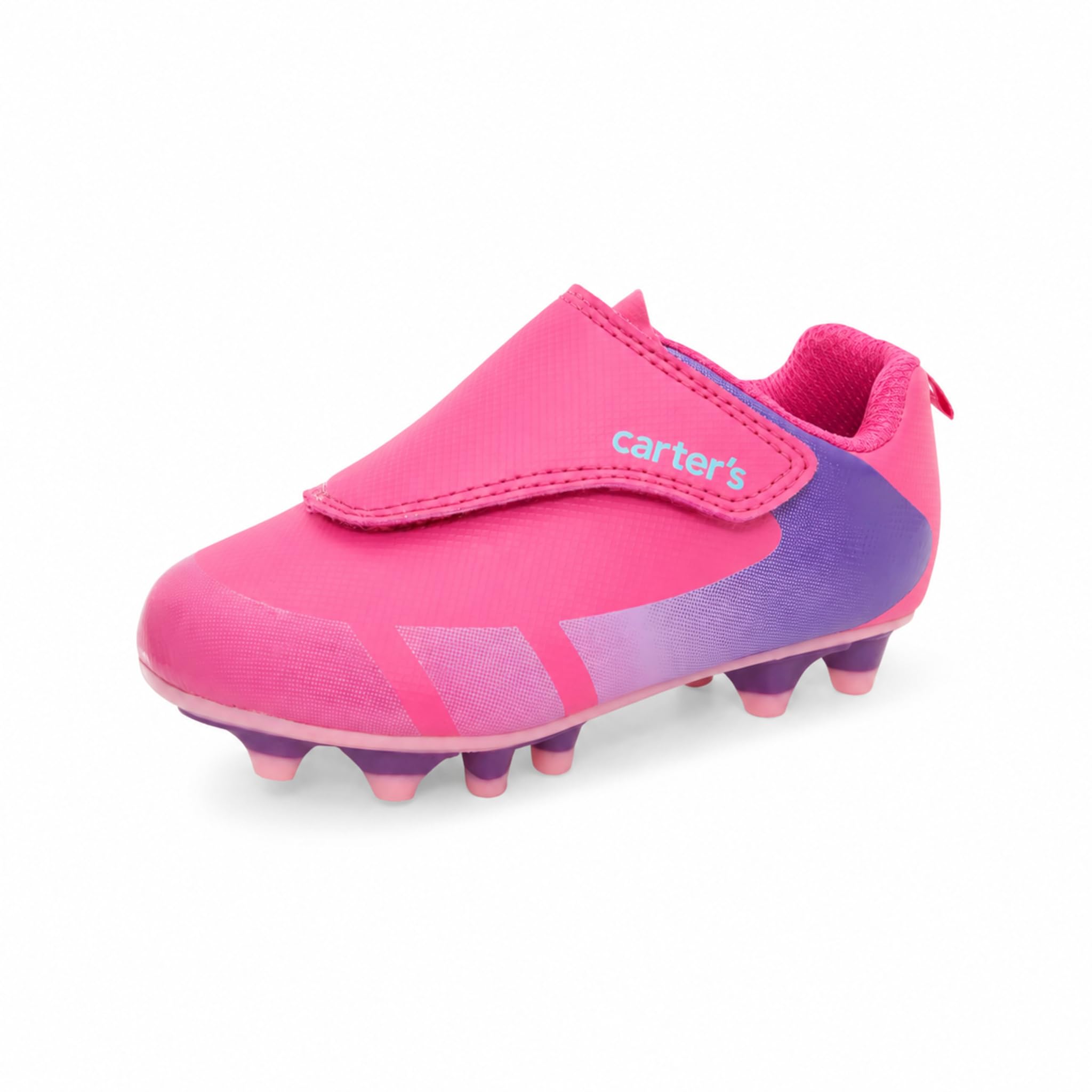
Carter’s Fica Soccer Shoes – Best Overall
Key Features
- Sizing: True to size
- Fastening: Hook-and-loop, no laces
- Department: Unisex child
- Price: Budget
A hook-and-loop strap under a lace panel is the whole idea here, and it’s why these are the pair we hand to a family buying a first cleat. There’s nothing to tie and nothing loose to trip over, so a three- or four-year-old can close them without an adult kneeling in the wet. The strap sits over a padded tongue instead of pressing straight onto the instep, which is the detail that separates these from velcro cleats that leave a red mark after twenty minutes.
Fit is the other half of the appeal. They run true to size, the insole is soft enough that no break-in is needed, and the upper flexes where a small foot bends. Width is where they tighten up: the strap adjusts, but there’s a limit to the room across the forefoot, so a child with wide or thick feet should go to the brooman instead. Between two sizes, take the larger one — the padding packs down after a few weeks.
What we can’t dress up is the ceiling. The upper is soft and the studs are modest, which is right for a five- or six-year-old playing once a week and wrong for a child training three nights a week, where the toe goes before the season does. As a first pair, though, they’re the ones we keep coming back to — ours has spent more weekends in the trunk than in a kit bag, which is its own kind of recommendation.
Pros
- No laces for a child to manage
- True-to-size fit for most kids
- Least expensive pair in this guide
- Cushioned insole with no break-in
Cons
- Strap gives less fine-tuning than laces
For a child’s first season we buy the Fica without much deliberation: hook-and-loop straps, a true-to-size fit, and a price that makes replacing them next year painless.
brooman Kids Firm Ground Cleats – Best for Wide Feet
Key Features
- Sizing: Wide-foot friendly
- Surface: Firm ground
- Fastening: Hook-and-loop straps
- Price: Premium
The most expensive pair in this guide is also the roomiest, and that’s the trade you’re making. These are cut for the kid with wide feet or a thick instep — the shape that turns most cleats into a wrestling match on the bottom step. The straps overlap generously across the top, so there’s real adjustment rather than one fixed setting, and the upper gives where a narrower shoe would pinch across the toes.
For a wide-footed child who wants to fasten their own cleats, this is the pair we point to, and the extra spend is easy to justify against a season of struggling at the door. The caveat sits at the toe: the seam where the upper meets the sole is where these give out on a hard-playing kid, so check it every few weeks rather than assuming the whole season is covered. Above that line, the upper holds its shape.
They’re light, which matters more than parents expect — a heavy cleat on a small leg is visible by the second quarter — and the bright colorways are the practical choice. On a field of eight-year-olds in matching kits, being able to find your own child from the sideline is worth something. Sizing is the usual muddle: most kids land true and a few need to go up, so measure the foot in game socks rather than trusting last season’s sneaker size.
Pros
- Roomy across wide feet and thick insteps
- Straps with genuine adjustment
- Light on small legs
- Bright colorways easy to spot
Cons
- Most expensive pair here
If your child has wide feet and hates laces, the brooman buys a fit nothing else here matches; check the toe seam every few weeks and it will see out a season.
adidas Goletto IX Cleats – Best for Older Kids
Key Features
- Sizing: Runs narrow; size up
- Surface: Firm ground and multi-ground
- Fastening: Laces
- Department: Unisex child
- Price: Midrange
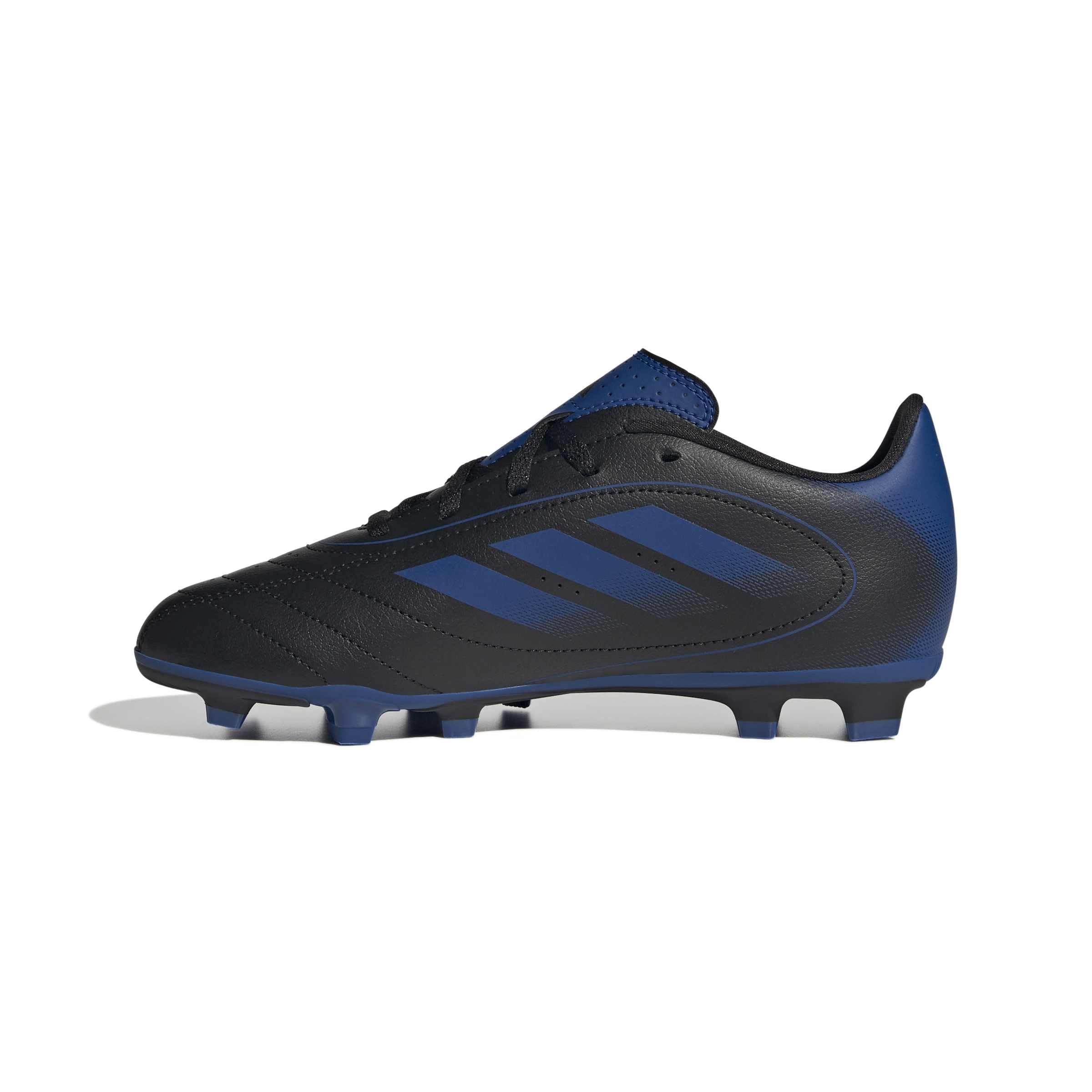
Sooner or later a kid wants laces, and that’s the point where this guide changes hands. The Goletto IX is a proper junior cleat — firm-ground and multi-ground studs, a low synthetic upper, and a look that reads as serious on the pitch — and it’s the pair we move a player to once they can tie their own without help.
Fit is the catch. The shoe is narrow through the forefoot and the sizing runs short, so a child between sizes needs the bigger one and a child with wide feet needs a different shoe entirely — the brooman. Try them on with game socks rather than everyday socks; the upper has very little give sideways, and a tight pair here shows up as a blister by halftime rather than a slow discomfort.
Get the size right and there’s a lot to like. The studs grip wet grass without the clatter of a longer sole, the upper wipes clean of mud instead of drinking it, and the shape holds through a season of twice-weekly practices. It’s a rec-and-club cleat that happens to look good, which is roughly the right brief for a junior player who wants to look the part.
The laces are the loose end, literally: they arrive long enough to need a double knot, and a kid who can tie a bow is not always a kid who ties a good one, so trim them or knot them twice. Colors run from black-and-white to a hot pink sole that’s easy to pick out on a gray Saturday morning.
Pros
- Firm-ground and multi-ground studs
- Holds up over multiple seasons
- Wipes clean of mud
- Colors kids ask for
Cons
- Pricier than the velcro picks
Once a kid can tie laces, we move them to the Goletto IX: real firm-ground grip, an upper that wipes clean, and enough durability for a full season.
DREAM PAIRS Kids Soccer Cleats – Best Color Range
Key Features
- Colors: Bright prints and patterns
- Sizing: Runs slightly large
- Department: Unisex child
- Price: Midrange
The prints are the first thing anyone notices. DREAM PAIRS does these in the loud, patterned colorways kids pick for themselves, and that’s not a small thing on a Saturday morning — a five-year-old who chose the shoe is a five-year-old who puts the shoe on without an argument.
The upper is a harder synthetic than the adidas or the Carter’s, and the stiffness buys grip: these bite into wet grass in a way softer cleats don’t, and they hold their shape when the field turns to mud. The cost is a short break-in — a practice or two before they feel like the child’s own shoe rather than a borrowed one.
Sizing runs a touch large, which is the rare problem worth having. Thick game socks and a fast-growing foot both fit inside without the toe curling under, and if your child is between sizes or has narrow feet, take the smaller of the two, because the extra volume is real.
We rank these behind the Goletto for a competitive player and ahead of it for a family buying one pair to see out a rec season: the color choice keeps a fussy kid happy, the price sits lower, and they still look new after a couple of months of games. What they aren’t is a travel-team cleat — the sole is built for fun, not for four sessions a week.
Pros
- Bright prints kids choose themselves
- Grip on wet grass
- Runs slightly large for thick socks
- Still looks new after weeks of games
Cons
- Not built for competitive travel teams
We point families at the DREAM PAIRS cleats when a kid cares about the color and the budget has a ceiling: bright, grippy, and roomy enough for thick socks.
Stelle Girls Soccer Cleats – Best for Girls
Key Features
- Sizing: Runs small
- Fastening: Hook-and-loop strap
- Department: Girls
- Price: Midrange
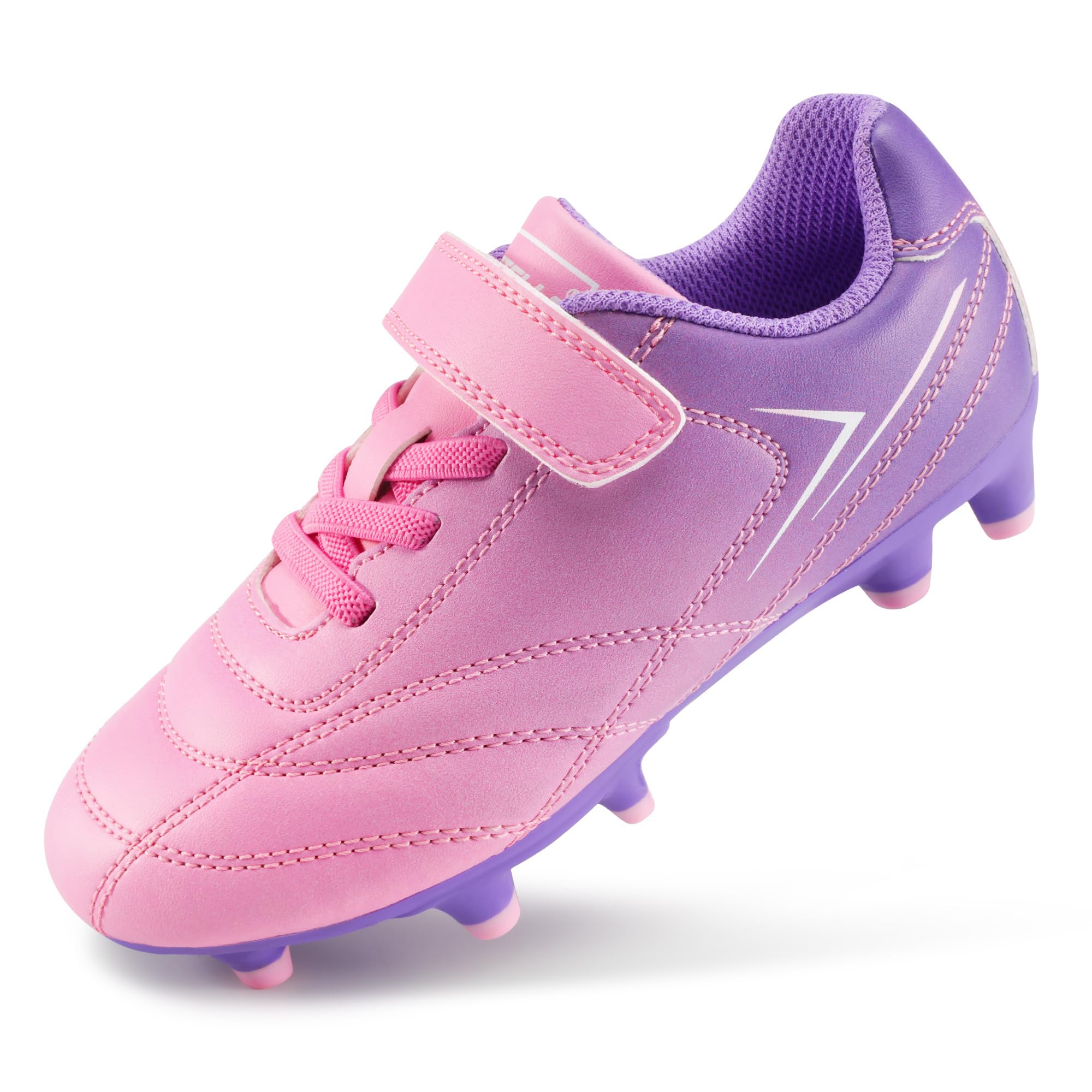
One wide strap over a laced core does the work here, and it’s why these are our pick for the girl who has opinions about her cleats. The band sits flat across the instep, closes with a single pull, and stays put through a game rather than loosening halfway. No laces to retie and no kneeling on wet grass.
They’re the brightest pair in this guide — the sort of pink and purple that gets chosen by the child rather than the parent — and the shoe underneath holds up: a soft upper with no break-in, molded studs that bite on grass, and a weight that doesn’t drag on small legs.
What surprised us is how walkable they are. Cleats usually turn into ice skates on the path back to the car; these don’t, and a kid who plays two games in a weekend can cross gravel without complaining. A couple of months of weekly games have left ours looking new, which is more than we expected.
Pros
- Closes in one pull, no laces
- Bright girls’ colorways
- Soft upper, no break-in
- Grips grass but stays walkable
Cons
- Runs small — measure before ordering
We recommend the Stelle cleats for a girl who wants color and a strap she can fasten herself — order up, because the sizing runs small.
PUMA Attacanto FG Cleats – Brand-Name Value

Key Features
- Sizing: Runs small and narrow
- Surface: Firm ground
- Department: Boys
- Price: Midrange
Light is the word that keeps coming back with these. Pick one up and it feels closer to a track shoe than a sneaker — thin upper, low stud plate, very little bulk around the ankle — and on a six-year-old that turns into feet that are still moving in the second half rather than dragging.
The shape is the catch. These are cut narrow, and a half size up handles the length; what it doesn’t handle is width, so a child with wide or thick feet should skip them entirely and take the brooman. Buy them for a narrow-footed kid and they’re the value pick among the brand-name cleats here, gripping firm ground properly and looking the part on the field.
The sole is firm-ground, so a season spent mostly on synthetic turf will wear the studs faster and feel grabby underfoot; on grass, which is what most rec leagues play on, they’re fine. The synthetic upper is easy to wipe down after a game, though the paler colorways keep a grass stain no matter how carefully you clean them.
Pros
- Light on the foot
- Proper firm-ground grip
- Brand name at a mid price
- Easy to wipe down
Cons
- Pale colorways keep grass stains
The Attacanto is our pick when you want a brand-name firm-ground cleat without paying adidas money, provided your child’s feet are on the narrow side.
OKPHRA Kids Soccer Cleats – Spare Pair
Key Features
- Sizing: True to size
- Break-in: Minimal
- Department: Boys
- Price: Budget
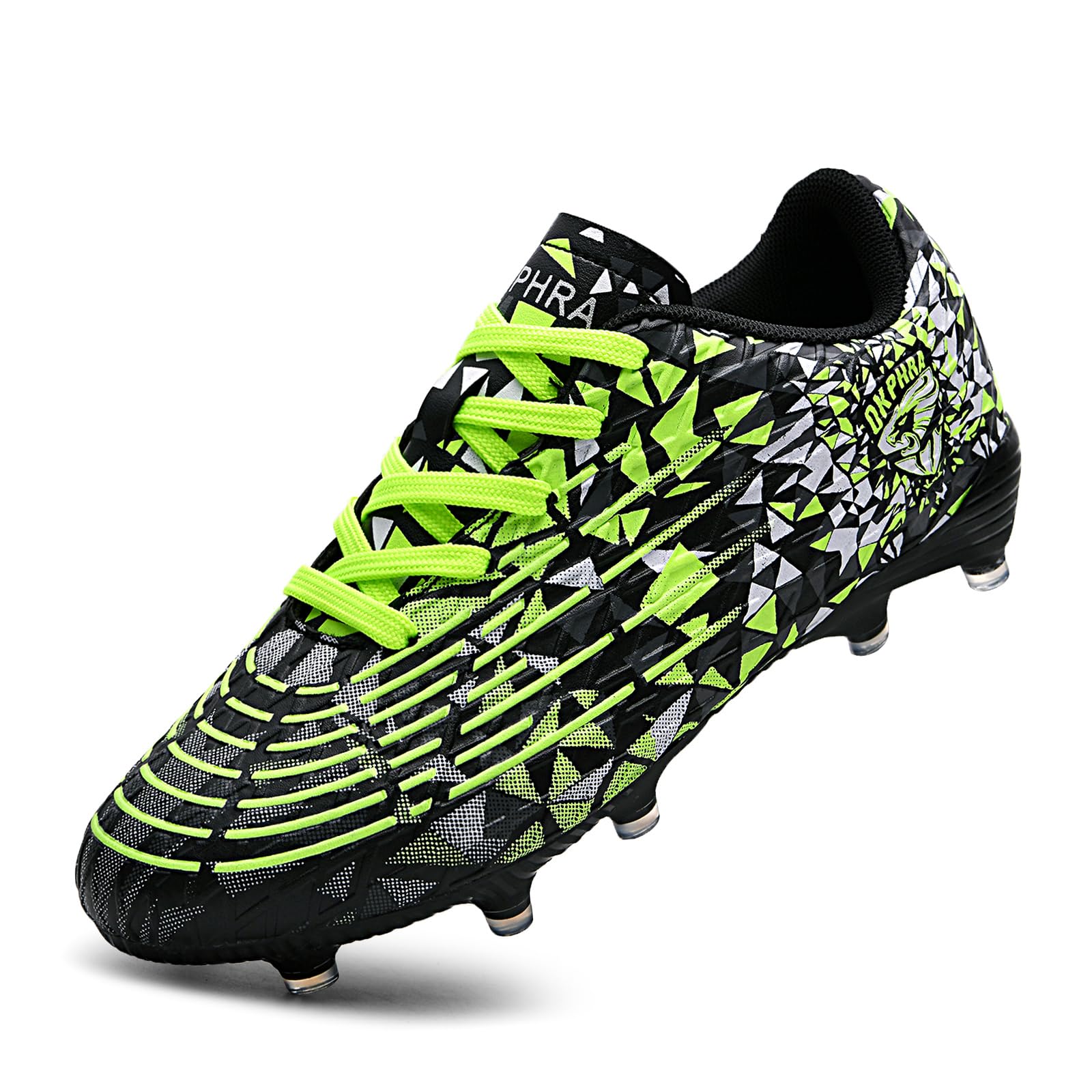
The heel is where these earn their money. A molded counter wraps the back of the shoe and holds the foot steady, which is the part cheap cleats usually skip, and it shows in how a kid runs — steady through the turn instead of clumping along on their heels.
The rest is soft. The upper flexes out of the box, the insole is cushioned, and there’s no break-in to schedule around, which matters when the first practice is in three days. They run true to size as well, which is rarer in this category than it ought to be.
Near the bottom of the price range, these are the pair we suggest as a second set — one in the kit bag, one in the trunk — or for a season that might not survive a growth spurt. The styling is plain next to the Carter’s and there’s nothing here that stands out on a shelf; on the field, where it counts, they do the job.
Pros
- Molded heel counter steadies the foot
- True to size
- Soft out of the box
- Budget price for a second pair
Cons
We keep the OKPHRA on the list for the family that needs two pairs: true to size, soft from the first practice, and steady around the heel.
How We Tested Kids Cleats
We started by pulling together every youth cleat we could find in sizes running from little-kid to big-kid, in both firm-ground and turf soles, then narrowed the list by reading size charts and customer reviews for the two things that sink a purchase fastest: shoes that run mysteriously small and uppers that split at the toe within a month. That left 14 pairs, which went to families with kids ages 6 through 12 playing rec and travel leagues. Testing ran the length of a fall season, about four months, from the first practice through the last game.
Fit got checked hardest, since it’s the reason most cleats come back. We measured the interior of each shoe against the brand’s own chart, pressed a thumb down at the toe to see how much room was actually there, and had each kid jog a lap to watch for heel slip. Then we wrote down which size each kid needed versus what they normally wear, because the spread between labels was wider than we expected.
For comfort, kids wore each pair through full two-hour practices and told us where anything rubbed — we checked heels and toes for hot spots afterward, not just whether they complained. Durability was a season-long watch: we inspected toe seams and stitching at the four-week mark, checked whether studs were wearing unevenly, and let mud dry before brushing it off to see if the upper cracked or cleaned up. Appearance held up better than we assumed on most pairs, though light-colored uppers lost the battle by week six. Value came down to wear per season — a couple of the least expensive pairs outlasted ones that cost twice as much.
How to Choose Kids’ Soccer Cleats
The cleat that actually gets worn is the one a child can put on alone and forget about by the second drill; everything else is detail.
Start With the Fastening
When a child can’t fasten a cleat alone, every practice begins with an adult on one knee in the wet. Hook-and-loop straps solve that, and for most players under eight they’re the right call — the Carter’s and the Stelle each close with a single strap a preschooler can manage. Laces make sense once a player can tie them and keep them tied; before that, budget on retying mid-game.
Slip-on designs are the trap here. A snug ankle collar can be harder to pull over a heel than a strap is to close, so have the child put them on unaided in the shop rather than deciding for them.
Fit: Snug, With Room at the Toe
Cleats should fit closer than sneakers. A loose cleat slides on the foot, blisters, and dulls the grip you paid for. We leave a thumb’s width at the toe and no more, and we try them on with the socks the child will actually play in, because thick game socks can eat most of that gap.
Don’t assume the sneaker size carries over. The adidas runs narrow and short, the DREAM PAIRS runs large, the Stelle runs small, and those gaps are wider than the size steps between them. Measure the foot, then follow the note on the specific pair.
Match the Sole to the Surface
Most rec soccer happens on natural grass, which is what firm-ground studs are for: a low molded pattern that grips without sinking. Take that same sole onto synthetic turf every week and it wears quickly and feels grabby underfoot, so a turf-specific shoe is the better buy for a carpet-based league.
Multi-ground soles split the difference for a kid who practices in one place and plays in another. Whatever you choose, studs on a gym floor or a playground are a slip risk, so keep sneakers in the bag for the walk home.
Buy for One Season, Not Three
Feet grow faster than cleats wear out, and that changes the value math. An expensive pair outgrown by spring is worse value than a cheap pair that lasted the season, which is why we’re comfortable sending a first-season player out in the Fica. Spend up when a child trains several times a week — that’s where the Goletto’s build earns the money.
For a once-a-week rec team or a season that might end in a growth spurt, stay near the bottom of the range and put the savings toward the next size.
Frequently Asked Questions
Can kids wear soccer cleats for t-ball or flag football?
Molded firm-ground studs grip dirt and grass well enough for casual t-ball and flag football, and at rec level one pair often does both jobs. The compromise shows up on hard-packed infields and turf, where the studs wear quickly and feel skittery underfoot.
If your child plays both sports in the same season, buy the cleat for the surface they play on most and keep a pair of sneakers for the other.
What socks should kids wear with cleats?
The team sock, whatever it is. Most youth leagues issue a thick one, and that’s the thickness the cleat should be fitted around, so try the shoe on with those socks rather than everyday ones — thick socks can take up most of the room you thought you had.
If a cleat only fits with thin socks, it’s too small. Size up rather than switching socks.
How long should a pair of kids’ cleats last?
Longer than the foot usually does. For most children a pair covers a season or two of weekly games, but growth ends its useful life long before the upper wears out, so buy for this season rather than the next.
Replace them when the toe seam lifts, the sole edge separates, or there’s no thumb’s width left at the toe. Check both after every few games — cleats fail at the toe first.
Final Verdict
The Carter’s Fica is the pair we buy for most families: no laces for a child to manage, a fit that runs true, and a price that turns a mid-season growth spurt into a nuisance rather than a crisis. If your child’s feet are wide, the brooman is worth the extra spend for the width alone; once a player can tie laces and wants a proper firm-ground cleat, move to the adidas Goletto IX.