This post contains affiliate links. We may earn a small commission when you buy through our links — at no extra cost to you.
The first question I ask about an indoor swing has nothing to do with color. It’s whether I trust the hardware enough to hang my kid three feet off the floor — and after six months with 12 of them strung from doorways, joists, and porch beams, I’ve learned the ceiling is rarely the problem. The anchor is. What a good swing actually buys you is a rainy afternoon that ends without a meltdown and a corner of the house that finally earns its square footage.
Nobody warns first-time buyers that the weight limit on the box describes the fabric and stitching, not the eye bolt in your ceiling, so look at how each swing spreads that load before you fall for a pattern. Stretch matters too — cuddle-style wraps give a little, which some kids find calming and others find wobbly, while seat-style swings hold their shape through a growth spurt. Neither is wrong; they suit different kids.
Here are the swings that survived my kids, my nieces, and one very opinionated four-year-old — the ones they climb into without being asked.


Best for Everyday Indoor Swinging
SUCHDECO Sensory Swing
Key Features
- Material: Double-layer nylon and polyester
- Mounting: Hanging hardware and height instructions included
- Seat Style: Cocoon hammock
- Weight Limit: 300 lb
- Price: Midrange
Two layers of fabric instead of one is the detail that settled this one for us. Every cocoon here hangs from a single gathered point at the top, and that is where the fabric takes the most strain; the double layer of stretch-resistant nylon and polyester holds the seat where you set it instead of letting it creep toward the floor over a season. We hung ours from a ceiling beam, and the fabric is still taut.
It is also the roomiest of the cocoons that still feels like a cocoon. The fabric spans 59 inches and the seat is rated to 300 pounds, which in practice means you can climb in with a toddler who refuses to go in alone, and an older sibling can sprawl sideways in it with a tablet. That shared use is what we got the most out of in the first weeks, when a small kid wants the swing but not the separation.
Setup is one fixing point, and the instructions walk through hanging it at different heights, so the same swing sits low enough for a small child to climb in and high enough for a bigger one to swing hard. Everything needed to mount it comes in the box, indoors or out. Ours has become the spot the kids head to before school, which is the highest compliment we can pay a piece of fabric.
Pros
- Double-layer fabric resists sagging and seam strain
- Wide enough for an adult and a toddler together
- Hanging hardware and height instructions included
Cons
- Stretch-resistant fabric wraps less than a spandex cocoon
The indoor swing we point people to first: double-layer fabric that stays where you hang it, plus room for an adult to climb in with a nervous toddler.
Best for Babies and Toddlers
Little Tikes 2-in-1 Snug ‘n Secure Swing
Key Features
- Seat Style: Bucket with movable T-bar
- Weight Limit: 50 lb
- Recommended Age: 9 months to 4 years
- Hanging Hardware: Not included
- Price: Budget
This is the swing for the kid who cannot yet hold themselves upright in an open seat. The plastic bucket wraps a baby’s sides, the T-bar sits across the lap, and the straps lock over the shoulders, so a nine-month-old swings with both hands free and no way to pitch forward. No fabric cocoon in this group can do that job.
Move the T-bar to the bottom of the seat and it becomes a toddler swing with an open front, which is a lot of range for the money. We also came around on the stiff buckles: they take two hands and a firm press, which is a nuisance when you are loading a wriggling baby and a gift once a toddler works out how a chest clip opens.
It hangs from whatever you already have, a rope over a joist, a hook in a beam, or the hooks on a swing set. Nothing to hang it with comes in the box, so plan on a strap and an anchor. Fifty pounds or four years old is the ceiling, and most kids meet one of those before they meet the other. For a first swing, nothing here is simpler.
Pros
- Holds a baby upright from nine months
- Converts to a toddler seat by moving the T-bar
- Light enough to carry between rooms
Cons
- Outgrown around the four-year mark
- Buckles take two hands to work
The pick for a baby or young toddler: the T-bar and locking straps hold a 9-month-old upright, and it is the least expensive swing in this guide.
Best for Growing Kids
JKsmart Toddler Rope Swing
Key Features
- Included: Snap hooks and hanging straps
- Seat Style: Deep woven rope basket
- Rope Length: 41.73 to 70.86 inches
- Weight Limit: 400 lb
- Price: Midrange
Between roughly 41 and 71 inches of rope is why this swing works indoors. Hang it long from a high beam and a six-year-old gets a real arc; shorten it and a three-year-old can climb in from the floor and push off without help. We looped ours over a deck beam and then brought it inside for a rainy week, changing nothing but the length.
The seat is the part that earns it a place. It is a woven basket with higher sides than most rope seats, so a toddler settles back into it instead of perching on top, and the anti-collision strips on the rim save shins when a kid climbs in fast. At 400 pounds it holds an adult, and the basket is deep enough that one fits.
The ropes are what ages, so watch the knots where they meet the bar and the stitching on the hanging straps, and re-tie rather than re-hang if anything slips. Snap hooks and hanging straps come in the box, which makes this the most portable seat here: same swing, ceiling beam or tree branch.
Pros
- Rope adjusts from about 41 to 71 inches
- Deep woven seat cradles the back and sides
- Snap hooks and hanging straps included
Cons
- Open seat gives no support for a baby
Buy this one for a child who wants to swing rather than cocoon: a deep rope seat with enough adjustment to hang from a tall ceiling or a low beam.
Best for Bedroom Nooks
OUTREE Double Layer Sensory Swing
Key Features
- Hanger: 360-degree swivel
- Included: Hardware kit and storage bag
- Material: Double-layer fabric
- Weight Limit: 300 lb
- Price: Midrange
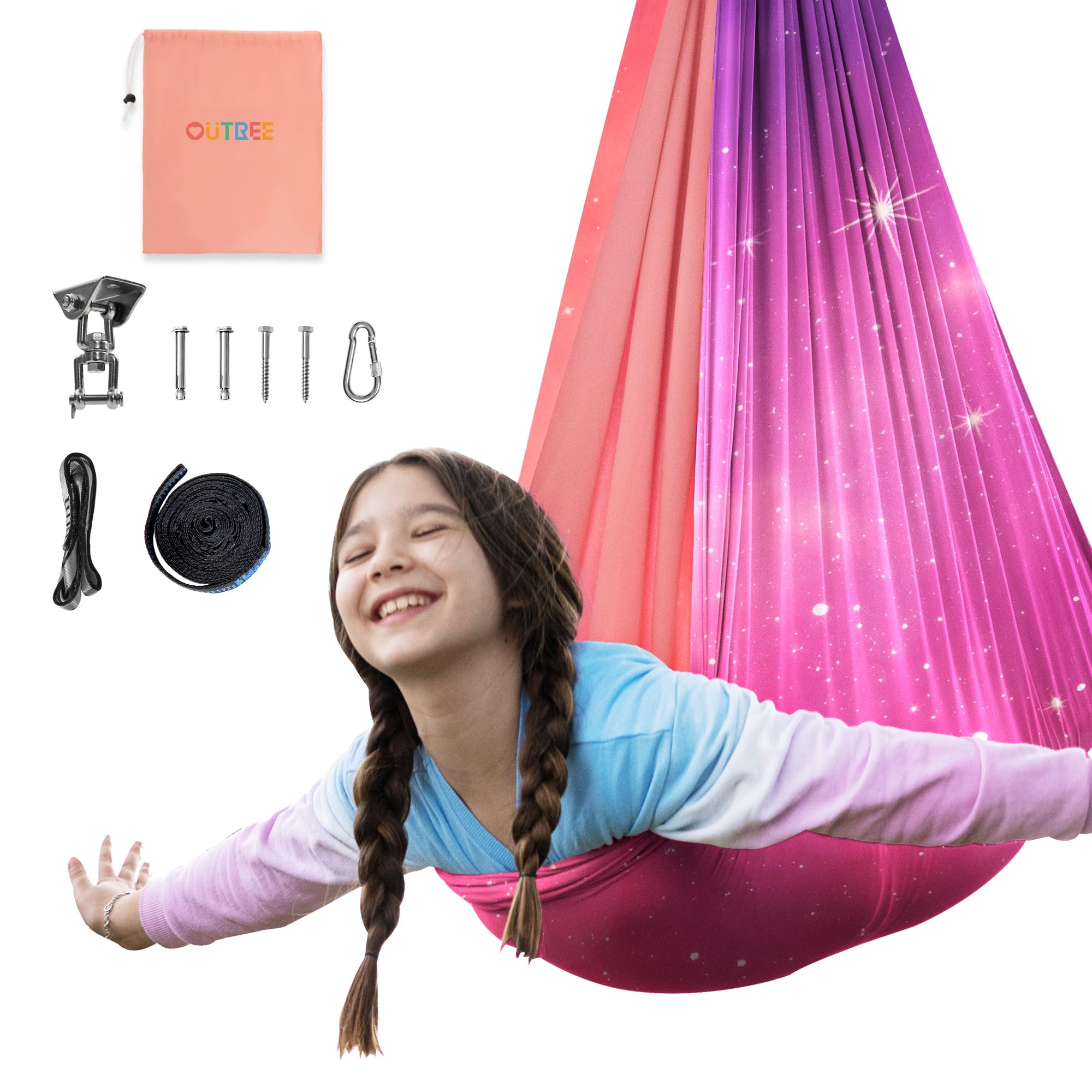
Two swings here are built from double-layer fabric, and this is the one for a kid’s bedroom. The print is the obvious difference, but the practical one is the storage bag: when a room has to work as a playroom and a guest room, being able to unhook the swing and pack it into a cupboard matters more than any line on the spec sheet.
Underneath it is the same idea as our top pick, two layers, a 300-pound rating, and a fabric that keeps its shape rather than stretching out, with a 360-degree swivel hanger added at the top. That hanger is the feature kids fight over. A push is fine; a spin on the swivel is what turns ten minutes in the swing into half an hour.
The mounting kit is complete, with a daisy chain, carabiners, and screws for concrete, so a garage beam and a bedroom joist both work. Set the height with a taller child in mind, since the fabric has a little give and the seat sits lower once someone is in it.
Pros
- Storage bag makes it easy to put away
- 360-degree swivel hanger for spinning
- Full mounting kit included
Cons
- Thick fabric runs warm in summer
Worth the step up if the swing is going in a bedroom: a starry print, a swivel hanger for spinning, and a bag to pack it away when floor space is needed.
Best for Deep-Pressure Calming
VISSE Sensory Cocoon Swing
Key Features
- Material: Double-layer polyester spandex
- Warranty: 3 years
- Weight Limit: 300 lb
- Ceiling Range: 6 to 9 feet
- Price: Premium
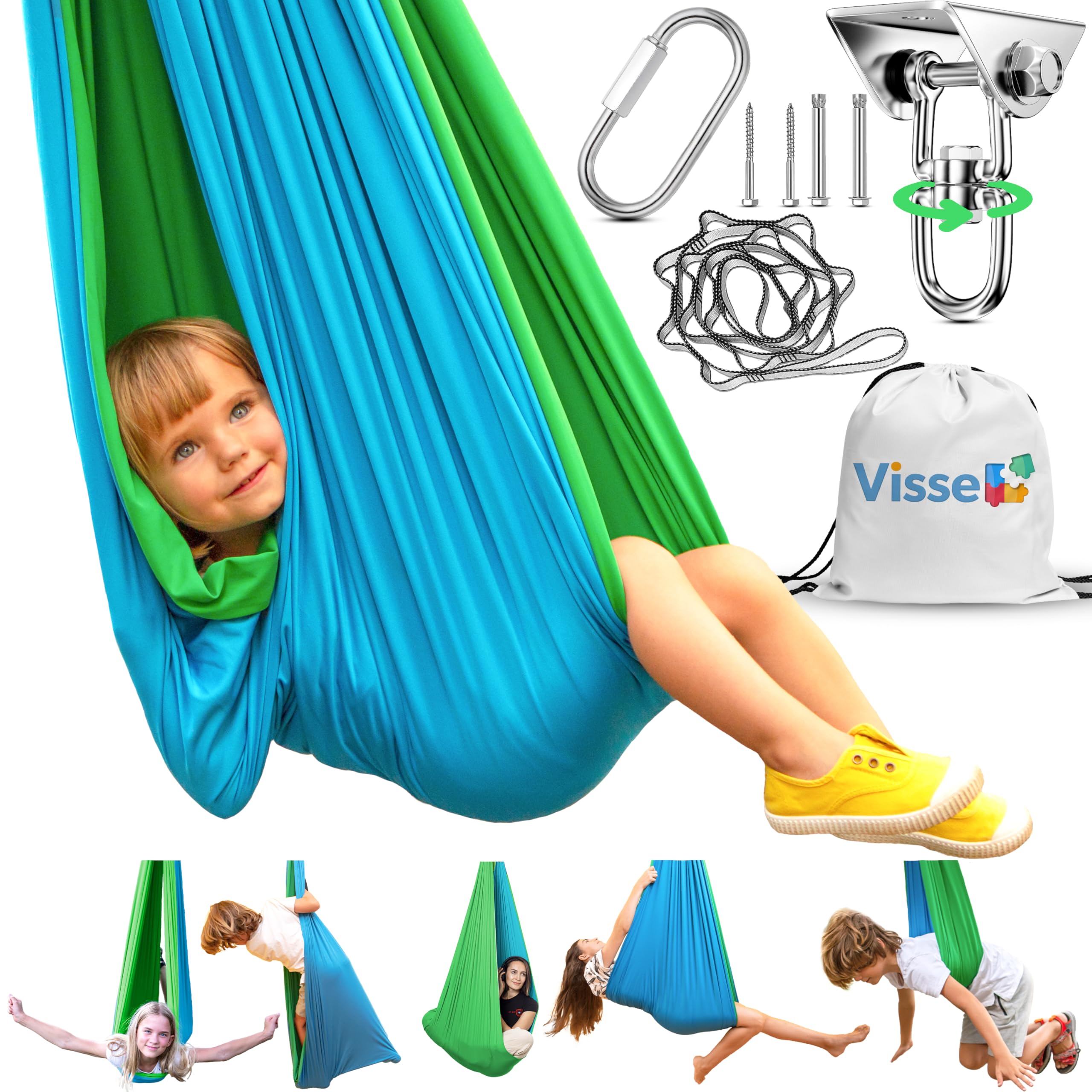
This is the most expensive swing in the guide, and the money goes into the fabric. The poly-spandex blend gives under a child’s weight instead of holding a fixed shape, so it wraps and hugs rather than cradling from below, which is the deep-pressure feel a lot of sensory-seeking kids are after. Parents of kids who cannot settle often find this is the swing they end up using every evening.
The opening is generous enough that a small child can back into it without help, and the same stretch that makes it comfortable also means it hangs lower the moment someone gets in. Plan for 18 to 22 inches of drop under weight and put the mounting point higher than looks right, or a tall kid ends up dragging.
Three years of manufacturer warranty is unusual on a fabric item and is the reason this one stays on the list at its price. The kit includes an adjustable rope, a carabiner, and a backpack, and the manufacturer specifies 6 to 9 feet of concrete or wooden ceiling. It is also the swing here that two small kids can share for a quiet minute.
Pros
- Three-year warranty on the fabric
- Stretchy spandex gives a deep-pressure hug
- Wide opening is easy to get into
Cons
- Seams have torn early on some swings
The one to buy for a sensory-seeking kid who wants to be swallowed up: stretchy, wide-mouthed, and backed by a three-year warranty.
Best for Big Kids and Teens
Aokitec Sensory Swing

Key Features
- Included: Swivel hanger, daisy chain, and screws
- Warranty: 1 year
- Fabric Size: 59 by 67 inches
- Weight Limit: 300 lb
- Price: Midrange
At 67 inches long and 59 wide, this is the largest piece of fabric in our group, and size changes what a swing is for. Two kids can pile in, a ten-year-old can stretch out flat, and it works as a reading hammock as much as a swing. If your children span a wide age range, that footprint does more for you than any other detail on this page.
The kit is complete: a daisy chain, an O-sling, a carabiner, a 360-degree swivel hanger, and expansion screws. It is rated to 300 pounds and carries a one-year warranty. Hung from a beam, the swivel is what keeps it in rotation, since a kid can spin without twisting the rope into a knot that has to be undone later.
It is also the easiest of the cocoons to move: two pounds of fabric and hardware means it comes down and goes back up without a second pair of hands, which is more than we can say for the double-layer swings. Take it outside for an afternoon and bring it in before rain.
Where it lands is a family swing rather than a single child’s spot. It is the one we point to when two kids need to share, or when a big kid still wants a turn. Set expectations accordingly, and hang it where the wider arc has clearance.
Pros
- Largest fabric here at 67 inches wide
- Swivel hanger and full hardware kit included
- Rated to 300 pounds
Cons
- Thin nylon feels flimsy next to double-layer picks
- Mounting instructions leave steps unclear
Buy it for the fabric: 67 inches across makes this the biggest cocoon here, with the swivel hanger included, if a thinner nylon is acceptable.
Best for Small Kids’ Hideout
Y-STOP Kids Pod Swing
Key Features
- Included: Rope and mounting hardware
- Seat Style: Enclosed pod with inflatable cushion
- Seat Width: 27.5 inches
- Weight Limit: 176 lb
- Price: Midrange
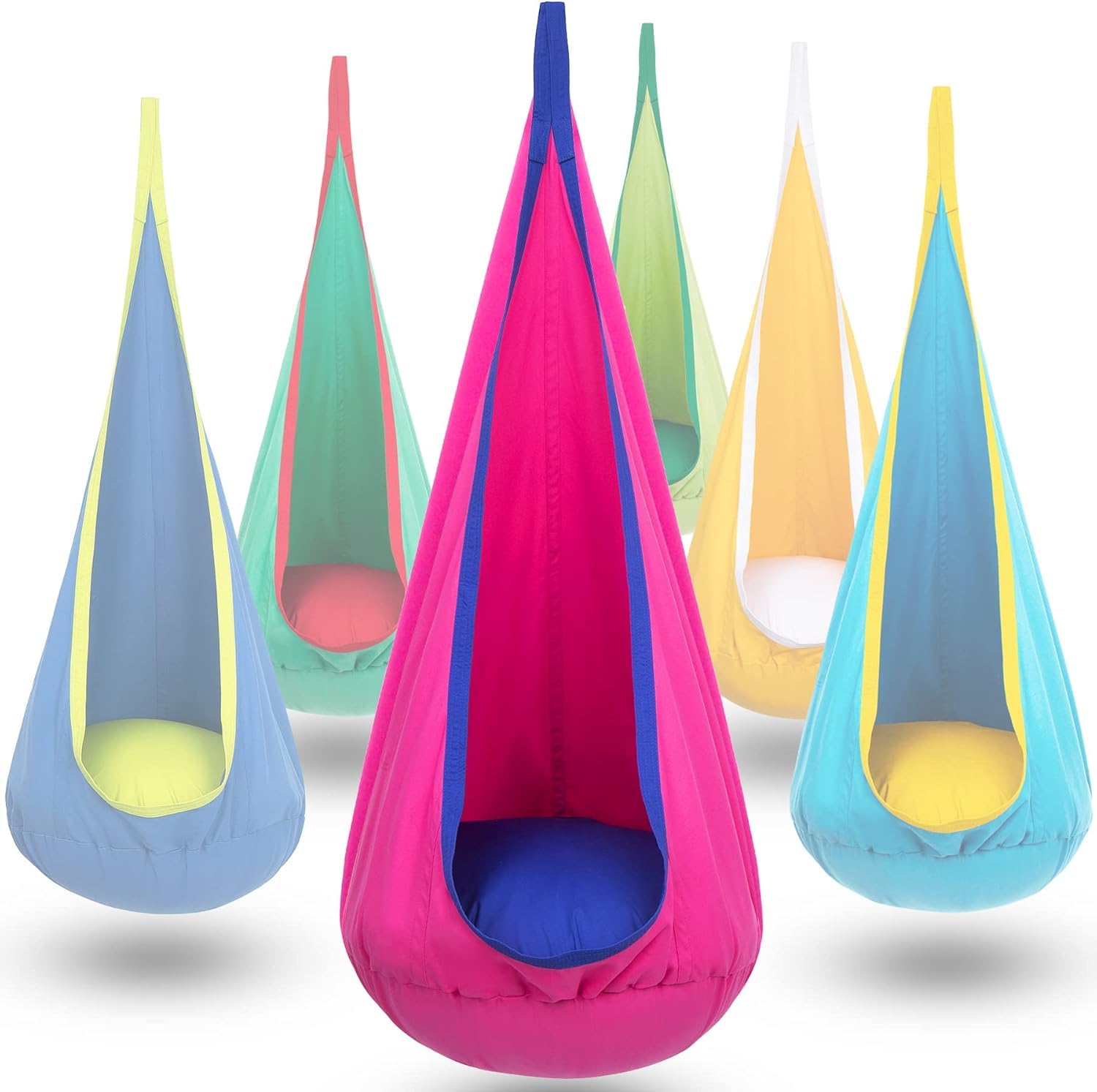
Pod swings live or die on fit, and this one is 27.5 inches across at the widest point. A three-year-old curls up in it with room to spare and a six-year-old still fits; a tall seven-year-old ends up with knees under the chin. If your child is already deep into elementary school, skip this shape and look at a cocoon.
What we appreciate about the design is that it hangs as a chair when it is not swinging. The cushion sits in the base, the canvas comes up around the shoulders, and there is a pocket inside for a water bottle or two small toys, which is the detail that turns a two-minute swing into twenty quiet minutes.
The inflatable cushion is the weak point: it goes soft over a few weeks and it is slippery enough that a small kid slides around getting in. The canvas shell itself holds up, and the rope and mounting hardware come in the box, so the swing is ready to hang as soon as you find a joist.
At 176 pounds this is a one-child swing with no room for an adult to climb in, which is the real difference between it and the fabric cocoons. Buy it as a private corner for a small kid, not as a family swing, and it does that job well.
Pros
- Enclosed pod with an inside pocket
- Hangs as a chair, not just a swing
- Rope and mounting hardware included
Cons
- Inflatable cushion is slippery and loses air
- Too small for kids past first grade
A pod is a chair as much as a swing, and this is the one to hang for a three-to-six-year-old who wants a spot to hide in with a book.
Best for Budget Cocooning
Satisure Sensory Swing

Key Features
- Included: Daisy chain, carabiner, and connecting rope
- Warranty: 1 year
- Fabric Size: 110 by 59 inches
- Weight Limit: 440 lb
- Price: Budget
There is more fabric here than almost anything else in the group, 110 inches long by 59 wide, and it costs less than every other cocoon on the list. That is the pitch: a lot of wrap for the money, pre-tied at the top so it goes up in a few minutes, with a daisy chain, a carabiner, and a connecting rope in the box.
Hung from a beam, that length gives you two things in one: a swing you can spin a kid up in, and a hammock they can lie back in with their feet up. The rating is 440 pounds, so an adult can get in, and the fabric is breathable enough that a kid who settles in for a while does not come out clammy.
The nylon is thin, and thin is what you are trading for the price. It feels closer to a kite than to the canvas and double-knit cocoons above, which matters most at the gathered top seam where all the load sits. Give that seam a firm tug before the first hang and check it again after a month.
The long hang is the other consideration: 110 inches of fabric needs headroom, and in a room with a standard ceiling you end up with the seat low or the fabric pooled. It is the right first cocoon for a family testing whether a swing becomes part of the routine, and the wrong one for a low room.
Pros
- Least expensive cocoon swing here
- 110 inches of fabric to wrap up in
- Pre-tied, with daisy chain and carabiner included
Cons
- Thin nylon wears sooner than double-layer fabric
- Long fabric needs a tall ceiling
The least expensive way to find out whether your kid takes to a cuddle swing, with a long run of nylon that wraps them right up.
How We Tested 12 Indoor Swings
We started with about 40 swings sold online and cut anything that needed a ceiling joist but shipped no mounting hardware, or promised a high weight capacity with no rated anchor behind it. That left 12 — cuddle-style wraps, pod chairs, and a toddler bucket seat — hung for six months in a living room doorway, a finished basement, and a covered porch.
Each one got a solo install first: stopwatch in one hand, drill in the other, timing from box to first push and checking whether everything the listing promised was actually in the box (two sent me to the hardware store for a lag bolt). For secure fit, I hung a 60-pound sandbag in each, then pushed sideways hard enough to make the anchor complain. I also measured how far the seat dropped between the first hang and week three — the nylon wraps settled a couple of inches, the woven seats barely moved.
Fabric got washed the way each label instructed, and I checked seams after every cycle, dragged a hoodie zipper across the seat on purpose, and watched the spot where fabric meets rope or strap. Then my two kids and a nephew, plus a neighbor’s 6-year-old with ADHD, used them daily; I noted which ones they climbed into without being asked and how long they stayed, whether a 4-year-old could get in and out alone without tangling, whether the pod knocked into the wall, and whether an adult could walk past. Value came down to what you still had to buy to hang it.
How to Choose an Indoor Swing for Kids
The ceiling decides more of this purchase than the swing does, so find the fixing point first and work backward to the seat.
Find the fixing point before you shop
Every swing here hangs from a single point, and that point has to be structure: a ceiling joist, an exposed beam, or a concrete slab. The fabric cocoons ship with a daisy chain, a carabiner, and screws for wood or concrete, which covers a joist and a beam in one kit. The toddler bucket seat ships with nothing to hang it from, so add a strap and an anchor to the cart.
If the only sensible spot has drywall and no joist behind it, or you rent and would rather not drill, a freestanding metal swing stand does the job without touching the ceiling. Measure the ceiling height before you fall for a long cocoon; the 110-inch swings need real headroom, while a pod or a shorter cocoon suits an ordinary room.
Match the seat shape to the kid you have
Three shapes cover this category. A cocoon is a sheet of fabric gathered at the top: a child sinks in, it spins, and it is the shape for a kid who wants to be wrapped up. A pod is an enclosed chair with a padded base, better for reading and hiding than for a hard swing. An open bucket or rope seat is for a child who wants to swing high, and the bucket version is the only one that supports a baby who cannot sit up yet.
Pick for the child in front of you rather than the one you expect in three years. A bucket seat is outgrown around the four-year mark, and a pod that fits a five-year-old will have a seven-year-old sitting with knees under the chin.
Read the weight limit as a load on the ceiling
The numbers here run from 50 pounds for a bucket seat to 176 for a pod and 300 or more for the fabric swings. They are not just about the fabric. A 300-pound cocoon with an adult and a toddler in it puts a couple of hundred pounds of moving load on one screw, and a swinging child pulls harder than a child sitting still.
That is why the anchor matters as much as the rating. Bolting into a joist or a concrete slab is the difference between a swing that holds and a repair job; if you are unsure what is above the paint, a stand removes the question entirely.
Stretch or structure
Spandex blends stretch under weight. They wrap a child into a hug, which is the whole appeal for a sensory-seeking kid, and they also drop a foot and a half to nearly two feet once someone climbs in, so the mounting point goes higher than looks right. Nylon and canvas hold their shape and their height, which is easier to live with day to day, though a single layer can feel thin in the hand.
Double-layer fabric is the middle ground we lean toward: it holds its height like a structured swing and still feels substantial. If a deep-pressure wrap is the point of the purchase, go stretchy and mount high; if you want a swing that stays where you hung it, go structured.
What wears out first
Three things fail in this group: the seam where the fabric gathers at the top, inflatable pod cushions that lose air, and thin single-layer nylon that tears at stress points. None of that should talk you out of a swing, but it tells you where to look. Give the top gather a tug when the swing arrives, and check it again after the first month of daily use.
A deflated pod cushion is the easiest fix in the category: a bed pillow fits the base and outlasts the original. Fabric that has started to fray at the seam is the one to stop using and take up with the seller, since the warranty is the only real remedy.
Frequently Asked Questions
How high off the floor should an indoor swing hang?
Set the mounting point so the lowest part of the seat clears the floor by a couple of inches with a child in it, not empty. Stretchy spandex swings drop 18 to 22 inches under weight, so they need to start far higher than they look; a structured nylon or canvas cocoon barely moves and can hang near its final height.
Then check the arc with someone in the seat. A swing needs clear space front and back, so shift the fixing point rather than hanging a swing that clips a dresser on every pass.
Can adults use a kids’ sensory swing?
Yes, on most of the fabric swings here. The cocoons are rated to 300 pounds or more and the rope seats list 400 to 440, so an adult fits within the limit. What limits adult use is size and the anchor rather than the fabric: an adult fills a 59-inch cocoon completely, and the fixing point carries that weight.
The bucket seat is the exception. At 50 pounds it is strictly for babies and small toddlers.
Can two children swing at the same time?
Assume one child per swing unless the listing says otherwise. Almost every swing here is built around a single seat and a single hanging point, and the weight limit covers the total load rather than each child.
Two small kids can sit still together in the wider cocoons, but two kids pushing in opposite directions is exactly the load the top seam and the anchor were not designed for.
Final Verdict
If you want one swing that will still be in use when your child has outgrown a bucket seat, hang the SUCHDECO. Double-layer fabric, a 300-pound rating, and mounting hardware in the box make it the least fussy way to put a swing in a room, and the fact that an adult can climb in beside a hesitant toddler is the part we keep coming back to.
Two situations change the answer. For a child under four who cannot sit up in an open seat, the Little Tikes bucket is the better first swing and will be outgrown on schedule. And if you want a deep-pressure wrap rather than a structured seat, the VISSE stretches where ours holds firm: mount it higher, and check the seams when it arrives.
