This post contains affiliate links. We may earn a small commission when you buy through our links — at no extra cost to you.
The best parenting book is the one you can actually open at 9 p.m., after the dishes are done and the toddler has finally gone down. That sounds obvious, but plenty of titles are long on theory and short on what to do when a 3-year-old refuses to leave the playground. Over the past six months, I read 14 parenting books—pregnancy guides, toddler manuals, communication scripts, and an early-reading guide—and the keepers shared two things: useful content and a pace that respected a tired parent’s attention span. They did not just explain child development; they helped me handle the next tantrum or bedtime with less guesswork.
What surprised me was how differently these books wear their information. Some are deeply informative and educational but ask for long stretches of reading. Others are slim and script-heavy, easy to pick up mid-crisis, which makes them more readable and often more effective in the moment. I started judging usefulness over page count: Did I remember the advice a week later, and did I actually try it? The picks below are the ones I kept reaching for.
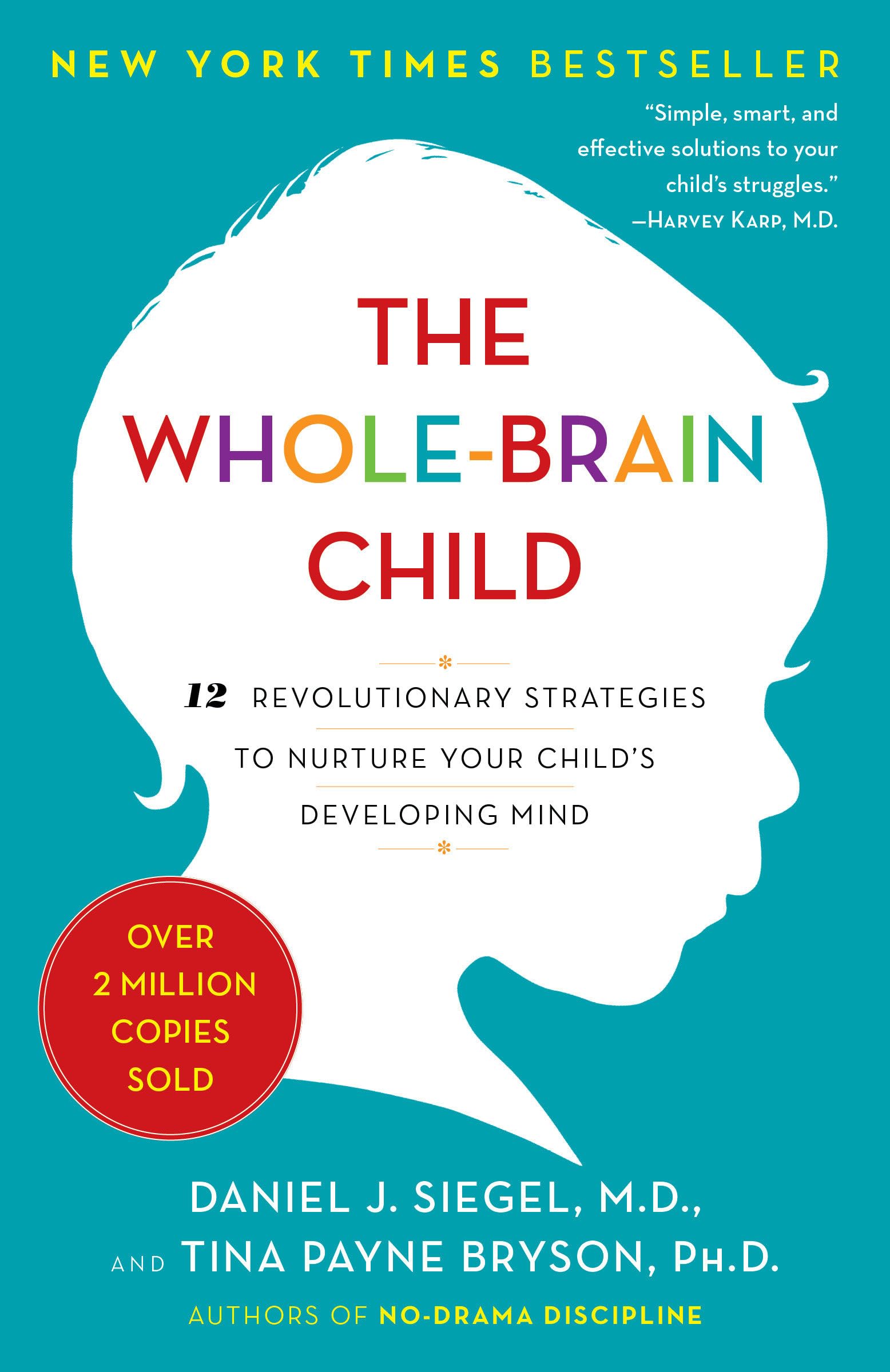


Best for Discipline and Meltdowns
The Whole-Brain Child
Key Features
- Trim size: 5.18 x 0.51 x 7.95 inches
- Page count: 192 pages
- Publication date: September 11, 2012
- Price: Midrange
At 192 pages, The Whole-Brain Child is the shortest book in this guide, and that is a large part of why we hand it to a parent who has no time to read. It works through twelve strategies, each attached to a plain-English explanation of how a child’s brain is developing, and it does it in a warm, anecdotal voice rather than a clinical one.
What makes it our default is that it changes how you read a moment. Once you understand why a 4-year-old can’t argue their way out of a meltdown, the meltdown stops looking like defiance and you respond more slowly, with less heat. It gives you the why before the what, and each chapter closes with a short recap, so the idea you need is findable on a bad evening.
The trade-off is scripts. If you want the exact sentence to say in the cereal aisle, the How to Talk books are more literal and faster to reach for; this one hands you a way of thinking and trusts you to find your own words. The other reason it leads: it stretches from the toddler years into the preteen stretch, while the pregnancy, toddler, and reading picks here each cover a much narrower window.
Pros
- Short enough to actually finish
- Explains the behavior, not just the fix
- Covers toddler years through preteens
Cons
- Restates a few core ideas
Buy this one first: it explains why your child falls apart, which is what makes the strategies stick, and it’s short enough to finish in a week of naps.
Best for Communication with Kids
How to Talk So Kids Will Listen
Key Features
- Edition: Updated
- Page count: 384 pages
- Publication date: February 7, 2012
- Price: Midrange
What separates this book from everything else on this list is that it makes you practice. Chapters run on cartoons of real exchanges, then hand you an exercise — write down what you would say next — and close with homework to try on your own child before you turn the page. We found the panels the fastest part to absorb and the exercises the part that actually changed our wording.
The advice holds up because it’s specific. The chapters on naming feelings and on setting expectations arrive with the exact phrasing plus a short example of what happens when you get it wrong, which is more useful than a principle you have to translate yourself. It’s an updated edition of a book that’s been in print for decades, and it reads like a workshop rather than a lecture.
Its reach is wider than the title suggests: the same lines work on school-age children and, we found, on partners and coworkers. The tools land best once a child can put a sentence together, so with a 2-year-old the companion volume is the better match. Where it earns its place on our shelf is the middle of childhood, roughly ages four through the teens.
Pros
- Turns advice into exercises you do
- Gives exact phrasing, not principles
- Useful beyond parenting
Cons
- Examples lean toward school-age kids
- Benefit depends on doing the exercises
If the trouble is what comes out of your mouth when your child melts down, start here — the exercises are what make the scripts stick.
Best for Toddlers and Preschoolers
How to Talk so Little Kids Will Listen
Key Features
- Trim size: 5.5 x 1.1 x 8.38 inches
- Page count: 432 pages
- Publication date: January 10, 2017
- Price: Midrange
Toddlers and preschoolers get their own volume, and the split is the smartest thing about this series. The 2-to-7 window has its own physics: a child who can’t yet reason, negotiate, or wait, and a parent with four minutes to get shoes on. This book assumes both and writes to that gap.
It’s 432 illustrated pages of tools aimed at that stage — tantrums, whining, sibling fights, bedtime, car seats — each with sample dialogue and a short explanation of why the usual response backfires. What we appreciated most is the tone: it takes the child’s side without excusing the behavior, and it never makes you feel like the problem.
We used it as a look-it-up book rather than a read-through, and it holds up that way, because the chapters are sorted by the situation you’re actually in. Grandparents and sitters can use it too, which matters more than it sounds: consistency between caregivers is what makes the phrasing work. It’s also an inch-thick paperback, so it lives on a shelf rather than in the diaper bag.
Pros
- Aimed squarely at ages 2 to 7
- Sample dialogue for everyday flashpoints
- Easy to dip into by problem
Cons
- Too thick to carry around
Buy it when your child is between 2 and 7 and the days are being lost to standoffs — this is the most immediately usable book here.
Best for Toddler Home Setup
The Montessori Toddler
Key Features
- Trim size: 6.6 x 1 x 9.25 inches
- Page count: 256 pages
- Publication date: March 19, 2019
- Price: Midrange
This is the one book here that isn’t about what you say. It’s about what’s in the room: how to set up a home so a toddler can reach, choose, and put things back without being told, and what to offer at each stage. If the problem you’re trying to solve is a child who won’t leave the playground, skip ahead.
At 256 illustrated pages it splits cleanly between philosophy and doing — activity lists, charts, and craft suggestions you can act on the same weekend, plus enough background that the activities don’t feel arbitrary. We liked that it’s dip-in friendly: you can open it to the section that matches your week, use one idea, and put it down. Most people will.
Where it runs out is conflict. Montessori gives you an environment that produces fewer no’s; it doesn’t hand you a script for the ones you still have to say, so treat this as a companion to a communication book rather than a replacement. The parents it suits are the ones already inclined to move a shelf and see what happens.
Pros
- Activity lists you can use immediately
- Easy to read in sections
- Balances philosophy with practical setup
Cons
- Little on discipline and limit-setting
- Assumes interest in Montessori philosophy
For fewer daily fights by changing the room instead of the conversation, this is the most useful book in the stack.
Best for Pregnancy Reference
What to Expect When You’re Expecting
Key Features
- Edition: 5th
- Trim size: 6.05 x 1.75 x 8.95 inches
- Page count: 656 pages
- Price: Budget
It’s built like a reference, and that’s how it should be used: month by month, with a long symptoms section you can flip to at 2 a.m. The fifth edition runs 656 pages from conception through the postpartum weeks, and it answers the questions you would otherwise save up for an appointment.
We kept it by the bed rather than in a bag, because it’s a book you open with a question and close two pages later. The organization is the point: entries are sorted by what’s happening to you rather than by what you already understand, which is exactly what you need before you’ve learned the vocabulary.
It’s also the most complete single volume here on the physical side of pregnancy — tests, birthing options, what’s routine and what’s worth a call. That breadth is why it gets passed from friend to friend, and the tone stays calm in a way most expectant parents want in the room at midnight.
What we kept coming back to is coverage: nearly every odd symptom and decision shows up somewhere, and having it in one place beats six browser tabs. If you would rather make choices from data than from reassurance, Expecting Better is the sharper companion; if you want one book with an answer for everything, this is the one.
Pros
- Answers almost everything in one place
- Organized for panic-mode lookup
- Calm, reassuring tone
Cons
- 656 pages is a lot to work through
Buy it as a reference rather than a read-through: it’s the most complete pregnancy volume here, and the one you’ll still be flipping through in the last month.
Best for Keeping Your Cool
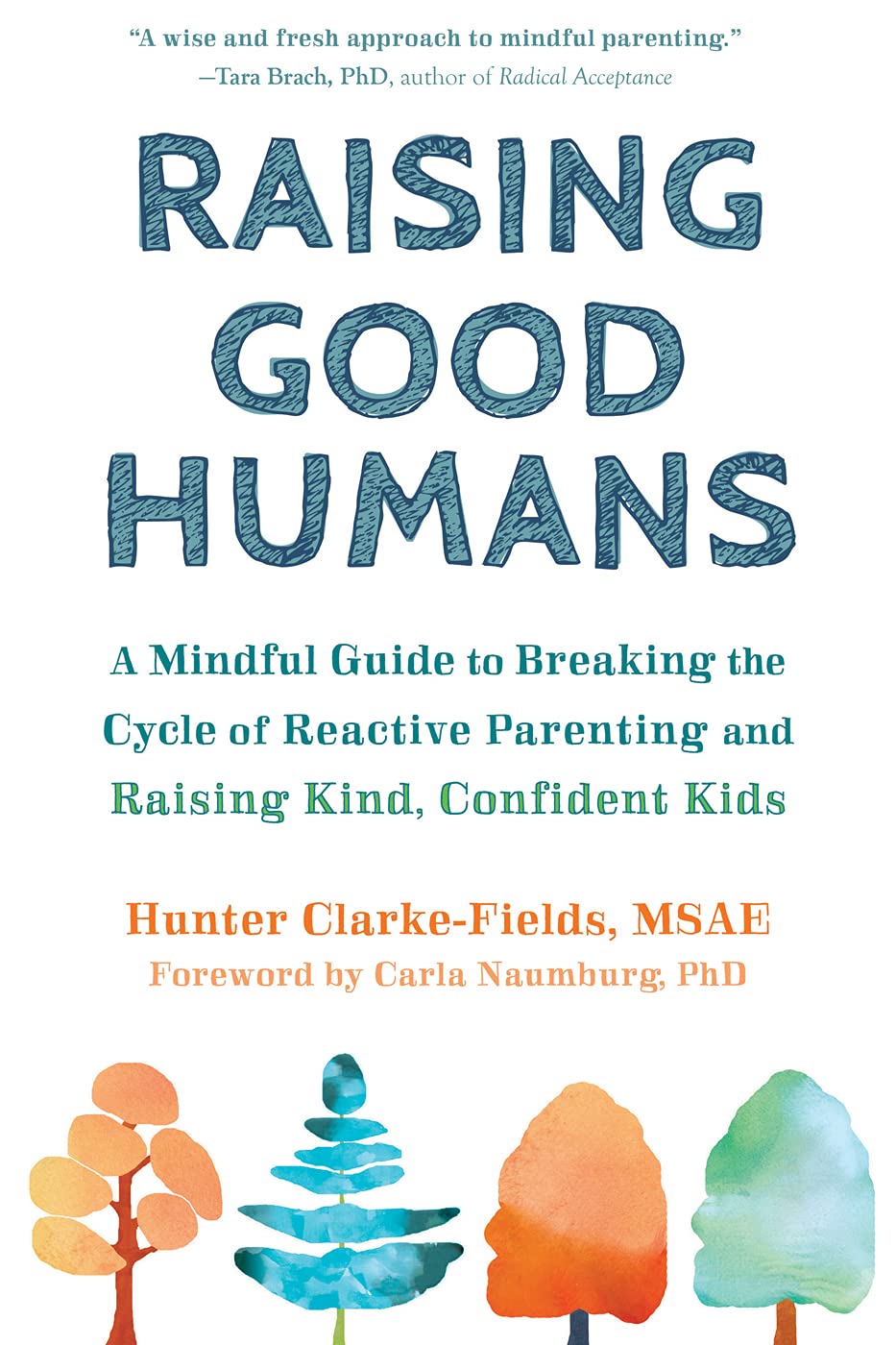
Raising Good Humans
Key Features
- Trim size: 6 x 0.46 x 9 inches
- Page count: 184 pages
- Publication date: December 1, 2019
- Price: Midrange
The premise is that the useful work starts with you: notice your own escalation, breathe, and respond instead of reacting. It’s 184 pages, built around short mindfulness practices and reflection questions, and it spends as much time on the adult’s nervous system as on the child’s behavior.
That’s the gap it fills, and it’s why it stays within reach on our shelf. By the time you’ve read one communication book you roughly know what to say; the failure point is 6 p.m., when you’re tired and the third request has been ignored. This book is aimed at that moment, and we reach for it when the problem is our own temper rather than a missing script.
It’s the shortest serious-minded book here, so finishing it is realistic, and most exercises take a few minutes rather than an evening. It pairs naturally with The Whole-Brain Child: that one explains what’s happening in your child, this one works on what’s happening in you, and the two together cover more ground than either alone.
Pros
- Targets the parent’s reactions first
- Short and finishable
- Practices that fit a real day
Cons
- Light on specific behavior fixes
- Progress depends on doing the practices
Read it if you know the right words and still lose your temper — it works on the parent, which is where the change has to start.
Best for Evidence-Based Pregnancy
Expecting Better

Key Features
- Trim size: 5.5 x 0.83 x 8.44 inches
- Page count: 384 pages
- Publication date: June 24, 2014
- Price: Midrange
The method is to take the rules you’ve been handed — no soft cheese, one cup of coffee, don’t sleep on your back — and replace them with the evidence underneath and the size of the risk. It’s 384 pages organized by decision rather than by trimester, with charts, and it assumes you would rather weigh a trade-off than be told what to do.
That makes it a different book from the one most expectant parents own, and for a certain reader a better one. If because-it’s-safer with no number attached makes you anxious instead of reassured, having the numbers written down is calming in a way encouragement isn’t. It’s also unusually readable for something that cites studies: the prose is brisk and the tables carry a lot of the argument.
The limits come with the approach. The research is condensed for a general reader, so you’re getting a confident synthesis rather than the full picture, and where studies are thin the conclusions are only as strong as that. It also won’t replace a reference: there’s no month-by-month symptom guide and nothing that walks you through labor.
Our view is that this is the second pregnancy book rather than the only one. Pair it with a comprehensive reference and you have both halves of the job — what’s happening, and whether it’s worth worrying about — which is more than either book manages alone.
Pros
- Turns rules into sized trade-offs
- Readable despite the data
- Helps you prepare for appointments
Cons
- Condenses studies into confident summaries
For the parent who wants the numbers behind the rules, this is the pregnancy book that respects your judgment — pair it with a reference.
Best for Teaching Early Reading
Teach Your Child to Read in 100 Easy Lessons

Key Features
- Edition: First Edition
- Trim size: 8.38 x 1 x 11 inches
- Page count: 420 pages
- Publication date: June 15, 1986
- Price: Premium
Every word you say is printed for you. The book lays out 100 lessons of roughly 20 minutes each, with your lines in one column and your child’s responses in the other, moving from letter sounds to reading sentences on a schedule you don’t have to design. It’s also 420 pages at close to printer-paper size, so it belongs on a desk, not a lap.
It’s a program rather than a book about reading, and it works because it removes decisions: nothing to supplement, nothing to invent, no guessing what comes next. The progression is cumulative and the sessions are short, which is why it turns up in homeschooling curricula and with parents who want reading handled before kindergarten.
The cost is patience. The opening lessons are repetitive by design — same sounds, same format, day after day — and that’s the stretch where families quit. Our advice is to pick a daily slot before lesson one and treat the first two weeks as a habit rather than a lesson; the children who finish are usually the ones whose parents kept the sessions short and dull.
It’s also the only pick here that isn’t parenting advice at all. It earns its place for a narrow reader: one with a 4- or 5-year-old, 20 minutes a day, and an appetite for a script rather than a philosophy.
Pros
- Fully scripted, no prep required
- Short daily sessions
- Visible progress for the child
Cons
- Slow, repetitive opening lessons
- Rigid script to follow
Buy it if you want reading handled by a script you follow rather than a philosophy you interpret — and you can hold a daily 20-minute slot.
How We Chose and Tested the Best Parenting Books
I started with a shortlist of more than 30 parenting titles recommended by pediatricians, parent groups, and bestseller lists, then narrowed it by stage and format: pregnancy, newborn, toddler discipline, communication, and early reading. I filtered out books that were mostly anecdote or mostly theory with no practical takeaway, and kept a mix of big reference guides and slim, script-based handbooks. The final 14 books were read over six months, some cover to cover and some in 10-minute windows between nap and snack.
I kept a rotating stack on my nightstand, in the diaper bag, and by the kitchen counter, which is where parenting books actually get used. For pregnancy guides, I read a chapter before appointments and marked whether the information was clear enough to bring to a doctor without a translator. For toddler and communication books, I tried one strategy or script per week during real flashpoints—leaving the playground, tooth brushing, dinner refusal—and wrote down what happened that same night. For the early-reading guide, I followed a few lessons with a preschooler and noted whether the directions were clear enough to use without prep.
I judged content and usefulness by whether a book gave me something to do differently that week, not just a new phrase to repeat. Readability meant I could follow a chapter at 9 p.m. without rereading the same paragraph; informative and educational value meant the book explained why a strategy might work and how it connected to a child’s stage, not just what to say. Pacing was its own test: some books front-load theory so long that I lost the thread, while others move in short sections that fit a nap. Effectiveness came down to follow-through—whether the advice held up on day three, after the novelty wore off.
The books that stayed on the nightstand were the ones I reached for again—after a hard bedtime, before a pediatrician visit, or when I needed a script fast. That staying power separated the final picks from the stack I donated.
How to Choose a Parenting Book
The right book is the one that matches the age your child is right now and the kind of help you actually want: words to say, a way to think, or a room to rearrange.
Match the book to your child’s age, not the age you’re planning for
The biggest filter is the age on the cover, and it’s where most purchases go wrong. A communication book written for school-age children will frustrate you at bedtime with a 2-year-old — the same series publishes a separate volume for the 2-to-7 window for exactly that reason — and a pregnancy reference stops being useful a few months after your baby arrives. Buy for the stage you’re in this month, and expect to buy again in two years. The exception is a framework book that spans toddlerhood into the preteens, which is the one that stays on the shelf longest.
Decide whether you want scripts, a framework, or a room
Parenting books do three different jobs, and mixing them up is why so many go unread. Script books hand you the sentence to say, chapter by chapter, with exercises attached. Framework books explain why the behavior happens and leave the wording to you. Setup books change your home so there’s less to argue about in the first place. The mistake is buying a framework when you needed words at 7:05 a.m., or buying a script book when the real problem is that nothing in your kitchen is reachable by a toddler. Choose by the moment that’s actually going badly.
Check how the book is built, not just what it covers
Page count and trim size decide whether a book gets used. A 656-page reference belongs on the nightstand, a 192-page book belongs in the week after you buy it, and a workbook-sized program belongs on a desk at a fixed time each day. Look at whether the chapters are sorted by problem, which is what you need at 2 a.m., or by sequence, which is what you need if you’re following a method end to end. Trim size and page count tell you more about whether you’ll finish it than the subtitle does.
Pick a tone you’ll open at 11 p.m.
Two books can be equally accurate and still suit different parents. Some readers want reassurance first and detail second; others want the numbers, the size of the risk, and permission to decide for themselves. Neither is wrong, but the wrong one goes unread, so read a sample page before you buy — the tone is right there on page one. For pregnancy titles, also check which edition you’re getting: guidance on tests and screenings moves, and an older printing is worth replacing.
Frequently Asked Questions
Can I find all of this free online?
Sometimes, but what you find online is usually a tip rather than a method. A good book gives you one approach in order, with the phrasing and the reasoning attached, and the exercises are the part that doesn’t survive a blog post — they only work if you do them. Start with one book, pick a single tool, and use it for a week before adding another.
Should I buy print, ebook, or audiobook?
Print wins for anything you look things up in: the pregnancy references, and the reading program, where you and a child need to see the page together. Audio suits the narrative titles you’d get through on a commute, like Raising Good Humans and The Whole-Brain Child. If you go digital for a reference, check that the charts and tables render before you rely on them.
Is a parenting book a substitute for my pediatrician?
No. Use these books to understand what’s typical and to arrive at appointments with better questions. Call the pediatrician for a symptom that worries you, a feeding problem, or a developmental concern, and treat the book as background rather than a diagnosis. The pregnancy guides are useful for exactly that reason: they help you tell which symptoms are routine and which are worth a same-day call.
What if my partner won’t read it?
Pick the shortest book that addresses the problem — 184 or 192 pages is a weekend read — and leave it open at the chapter that matches this week’s fight. Reading one chapter aloud on a drive works better than a lecture about the book. Two adults giving the same response beats one adult who has read five books.
Final Verdict
Start with The Whole-Brain Child. At 192 pages it’s the shortest book here and the one most likely to get finished, and understanding what’s happening in a child’s brain is what makes any strategy usable on a real evening.
If your trouble is the words themselves, add How to Talk So Kids Will Listen — or the Little Kids edition if your child is under 7 — and expect the exercises to do more for you than the reading does. If you’re still pregnant, buy the reference first and treat everything else as a second purchase.
