This post contains affiliate links. We may earn a small commission when you buy through our links — at no extra cost to you.
It’s 2:47 a.m., and you’ve typed some version of "why won’t my baby sleep" into your phone for the fourth night running. That’s the state most of us buy our first sleep book in — not curious, desperate. A good one won’t hand you a magic switch, but it will give you a repeatable routine and a way through the middle-of-the-night decisions.
The popular books disagree with each other, loudly. One says put the baby down drowsy but awake, another hands you a minute-by-minute schedule, a third says follow the baby and let the clock sort itself out. My team and I spent six months living with 14 of them, with babies from three weeks to four years old, and the method mattered less than whether it fit the child’s age and the parents’ temperament at 3 a.m.
Several picks are thin paperbacks that get to the point in under 200 pages — at 3 a.m., that counts. Start with whatever your household can sustain for two weeks, and save the rest for the next stage.


Best for Picking a Method
Precious Little Sleep
Key Features
- Edition: 2nd edition
- Published: October 2020
- Print length: 310 pages
- Price: Midrange
Most sleep books arrive with a verdict: cry it out, don’t cry it out, follow this schedule exactly. Precious Little Sleep is the one we recommend first because it doesn’t pick for you. It opens with how infant sleep actually works, how sleep associations form and why the way your baby falls asleep at bedtime shapes what happens at 2 a.m., and then it lays out several routes to independent sleep, from gradual to full extinction.
What surprised us is how well the tone holds up when you’re the one getting up twice a night. It’s genuinely funny, in a dry, been-there way, and the chapters are short enough that you can jump to the one problem you actually have instead of reading front to back. The second edition, from 2020, keeps the research current without turning the book into a textbook.
The trade-off is choice itself: with several methods on the table, a parent who wants one script for night one has to do some deciding first. We think that’s a fair price for a book you’ll come back to at every regression, and it’s the reason this one stays on the shelf long after the newborn stage ends.
Pros
- Several proven methods rather than one rigid plan
- Funny, plain-English writing that works when you’re exhausted
- Covers newborn sleep through toddler regressions
Cons
- No day-by-day schedule to follow
The one we recommend first: it explains how baby sleep works, then hands you several methods so you can pick one that fits your family instead of the author’s.
Best for Gentle Sleep Training
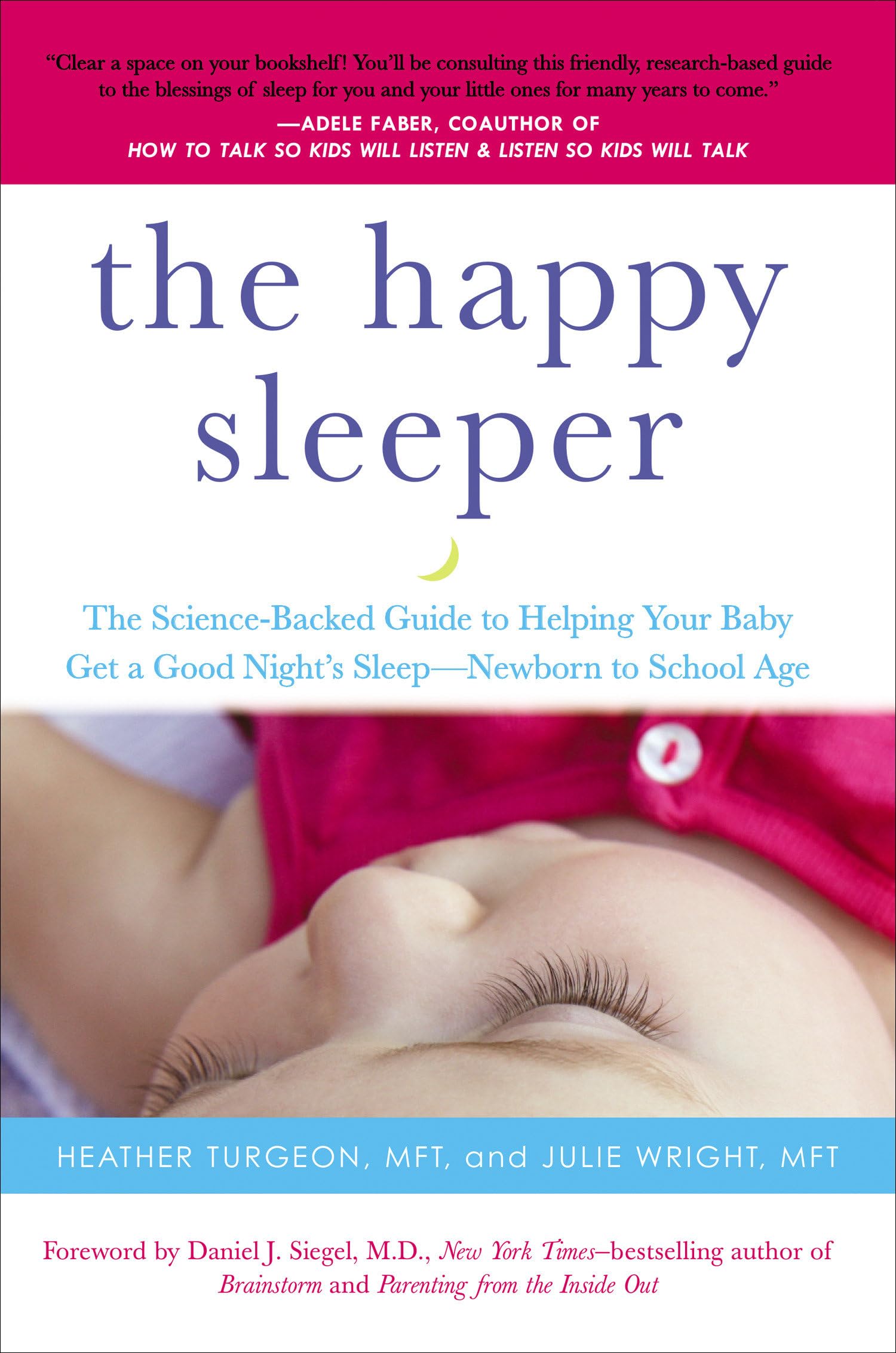
The Happy Sleeper
Key Features
- Age range: Newborn to school age
- Published: December 2014
- Print length: 368 pages
- Price: Midrange
If you already know you can’t do full extinction, The Happy Sleeper is the book we point to first. Its method is built on short, scheduled check-ins rather than leaving a baby alone to cry, and it walks through the whole sequence for children from newborn through the school years.
What we appreciated is that the check-ins aren’t left vague. There’s a set interval, a defined thing to do at each visit, and the same routine every time, which is the part that actually does the work. The book is also careful to separate fussing from genuine distress, a distinction that matters when you’re standing in the hallway deciding whether to go in.
At 368 pages it’s a longer read than the friendly cover suggests, and the sleep-science sections move more slowly than the practical ones. Parents who want a hardline plan will find it too soft; parents who tried extinction and hated it will find it about right. The chapters on naps, early waking, and older children mean it keeps working after the first month.
Pros
- Check-in method without full extinction
- Clear instructions for every check-in
- Covers newborns through school-age children
Cons
- Check-ins still involve some crying
Our pick if full extinction isn’t for you: fixed check-ins, spelled out step by step, for parents who want a gentler method that still moves the needle.
Best for Older Children
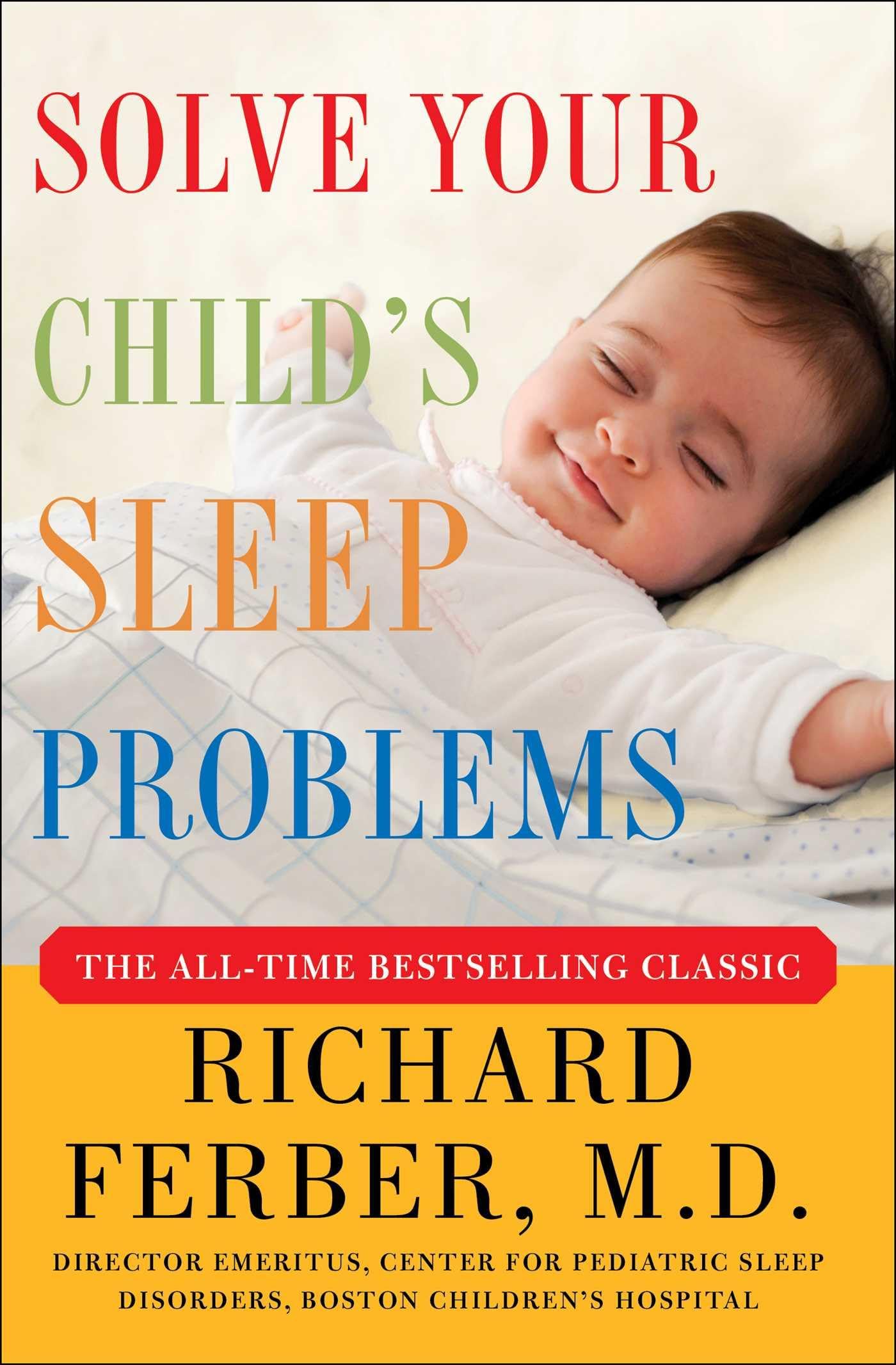
Solve Your Child’s Sleep Problems
Key Features
- Edition: Expanded edition
- Published: May 2006
- Print length: 464 pages
- Price: Midrange
Ferber’s name became shorthand for letting a baby cry, which is an odd fate for a 464-page book that spends most of its length explaining how sleep works and working through specific problems one at a time. The method at the center of it is gradual: brief, timed checks that stretch out over a week or so rather than a closed door on night one.
The breadth is the reason to own it. Chapters run by scenario, so the family with a 2-year-old who won’t stay in bed and the family with a 5-month-old waking every two hours both find their section, and the explanations lean on research rather than assertion. This is the one we reach for when the problem isn’t a simple night waking.
It is, in places, a 2006 clinical text. Case studies pile up before the practical steps arrive, and the writing is plain rather than warm. Read the chapters for your child’s age and leave the rest for later; that’s how we used it, and it’s still the most complete book of the group.
Pros
- Scenario chapters for night wakings and bedtime battles
- Research-backed explanations, not just prescriptions
- Covers infants through older children
Cons
- Dense, case-study-heavy writing
- Slow to reach the practical steps
Worth owning if you want to understand the problem as well as fix it; the scenario chapters cover babies through older children, and the method is milder than its reputation.
Best for Newborn Routines
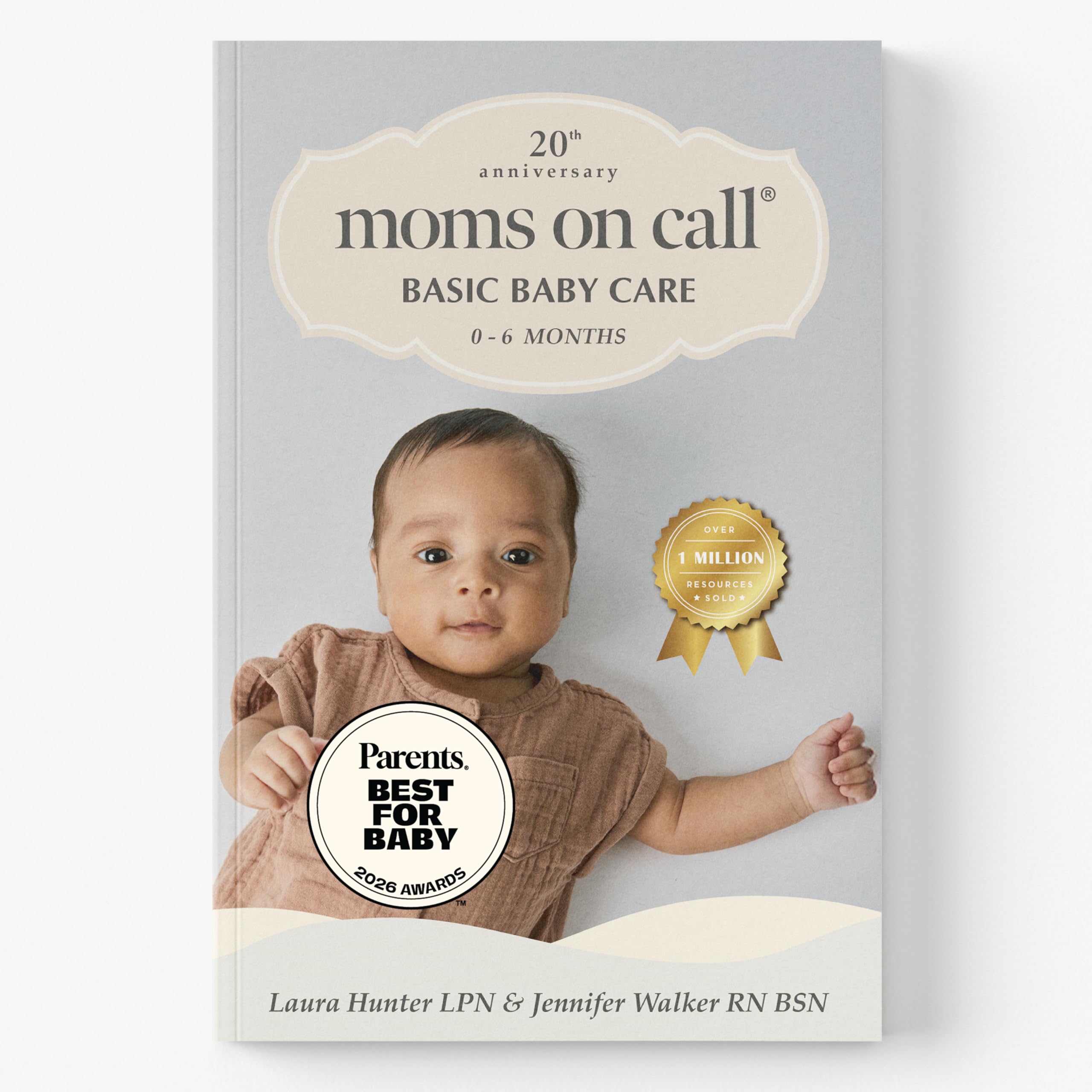
Moms on Call Basic Baby Care
Key Features
- Age range: 0-6 months
- Dimensions: 11 x 5.5 x 0.5 inches
- Print length: 159 pages
- Price: Premium
Moms on Call doesn’t look like a sleep book. It’s a tall, thin paperback, 11 by 5.5 inches, built from bullet points and schedules rather than chapters, and it slides into a diaper bag or a nightstand drawer without complaint. That format is the point: in the first three months you’re not reading, you’re looking something up one-handed.
The schedules are the draw. They’re laid out by age across the 0-to-6-month stretch and cover feeding, naps, and bedtime in one place, which gives a shapeless day a structure to check itself against. We found the value is less in any single piece of advice than in having a consistent plan to return to at 4 p.m. when everything has fallen apart.
It’s also a full baby-care handbook, covering feeding, bathing, and daily routines, so the sleep guidance is one slice of a wider book and a parent who already has a rhythm may not need the rest. The approach is schedule-first and expects you to keep to it, which a baby who wants to feed on demand will resist. For a first baby and a parent who wants to be told what the day should look like, that trade is usually worth it.
Pros
- Schedules laid out by age for 0-6 months
- Bullet-point format scans fast one-handed
- Feeding, naps, and bedtime in one place
Cons
- Schedule-first approach suits on-demand feeding poorly
- Sleep guidance is one slice of a bigger book
Buy it if you want a newborn schedule handed to you week by week; it’s the fastest, most scannable reference here for the first six months.
Best for Fast, Clear Plan
The Sleepeasy Solution
Key Features
- Age range: Birth to age 5
- Published: April 2007
- Print length: 320 pages
- Price: Budget
This is the book we hand to the parent who is too tired to read a book. It runs 320 pages, but the plan itself is short enough to absorb in one evening, and it’s written for someone reading with one eye closed: short sections, plain language, and no lecture about what you should have done at six weeks.
The method is cry-based training with company, meaning timed checks, a consistent bedtime routine, and a schedule that shifts by age from birth to five. It’s honest that there will be crying and equally clear that the checks are what make it bearable. We also liked that naps and early waking get real attention, since those are usually what fall apart first.
Where it loses ground is flexibility. There’s essentially one method in here, so if check-in style crying doesn’t suit your family, there’s no second route to try. The 2007 publication date also shows in the science sections, which are thinner than newer books offer. Go in wanting that one plan and it delivers it cleanly.
Pros
- Absorbable in one evening, even exhausted
- Timed checks make cry-based training manageable
- Covers naps and early waking too
Cons
- Only one method, with no fallback
- Science sections feel dated
The one to grab when you’re too tired to read: a single, clear plan you can finish tonight and start tomorrow, for babies through preschoolers.
Best for Strict Schedules
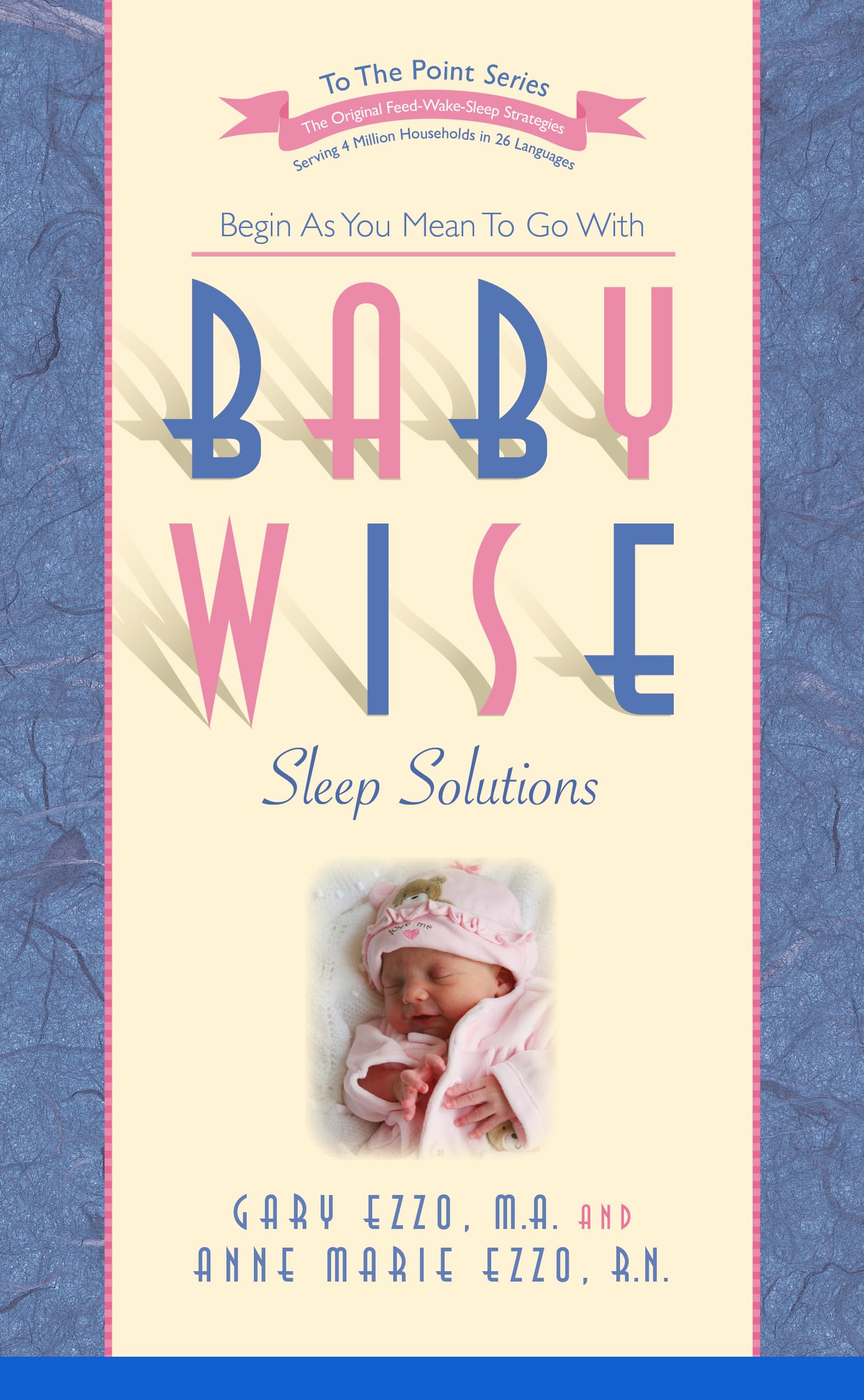
Babywise Sleep Solutions
Key Features
- Published: November 2024
- Item weight: 4.8 oz
- Print length: 144 pages
At 144 pages, Babywise Sleep Solutions is the shortest book here: a condensed edition of a long-running series, published in late 2024, built on the idea that a baby’s day should follow a repeating pattern of feeding and sleeping that stretches as they grow.
What it does well is remove decisions. There are sample days to copy, feeding schedules that adjust as a baby’s needs change, and guidance on stretching night feeds, so someone has already worked out the order of operations for you. We found the feeding schedules more useful than the sleep chapters, because the daytime feed pattern is what the rest of the plan hangs on.
It’s also unapologetically prescriptive, and that’s the dividing line. A parent who wants to follow the baby’s cues will spend the whole book arguing with it, and the condensed format gives you the what without much of the why. If you want structure from the early weeks and don’t need the reasoning, this is the fastest route to it.
Pros
- Sample daily schedules to copy
- Feeding schedules that adjust as baby grows
- Finishable in a single sitting
Cons
- Prescriptive days leave little room for cues
- Thin on why the plan works
A short, unapologetically prescriptive plan for parents who want a firm feeding-and-sleep routine from the early weeks and don’t need the reasoning explained.
Best for Research Reference
Healthy Sleep Habits, Happy Child

Key Features
- Edition: 5th edition
- Published: August 2021
- Print length: 816 pages
- Price: Midrange
Eight hundred and sixteen pages. That number tells you most of what you need to know: this is the reference book of the group, dense with research and case examples, covering children from infancy well past the toddler years. It’s also the book least likely to be finished by a parent currently waking up three times a night.
The central argument, that sleep begets sleep and that an early bedtime prevents more problems than it creates, is explained thoroughly and backed with studies rather than opinion. The age-by-age sections earn their keep when you’re troubleshooting a nap strike, a sudden 5 a.m. wake-up, or a bedtime that has crept later every week.
We didn’t enjoy reading it. It’s repetitive in places, dry throughout, and the same ground gets covered more than once. But as something to keep on the shelf and dip into when a new problem appears, it earns its space; ours is bristling with sticky notes, and the fifth edition, from 2021, is the one to get.
Pros
- Thorough, research-backed explanation of how sleep works
- Age-by-age sections for troubleshooting
- Covers infancy well past the toddler years
Cons
- Repetitive and dense at 816 pages
- Hard to navigate for a quick answer
Buy it as a reference rather than a rescue: the most thorough explanation of child sleep here, best for parents who want the research and will dip in by age.
Best for Toddlers and Preschoolers
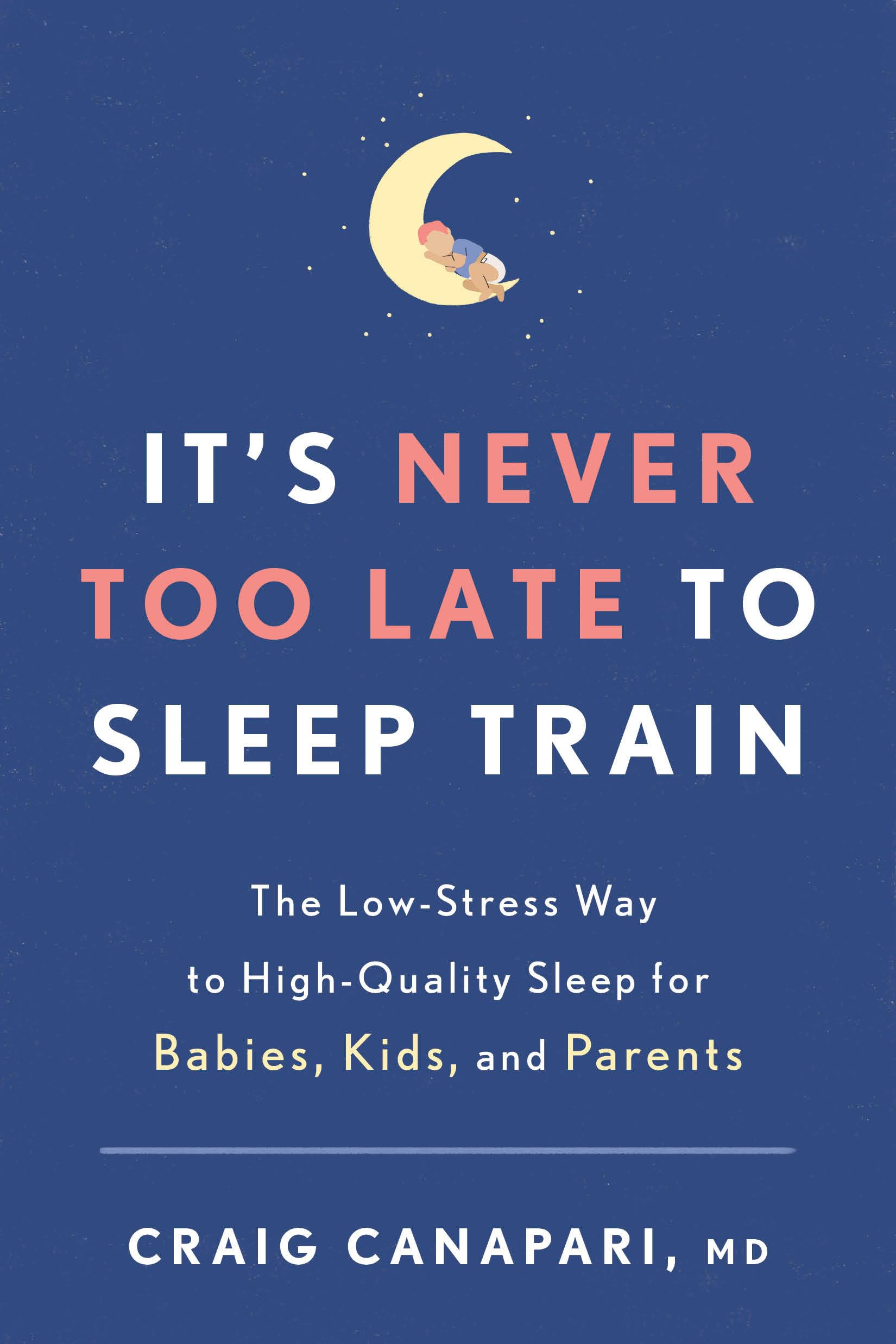
It’s Never Too Late to Sleep Train
Key Features
- Published: May 2019
- Dimensions: 5.4 x 0.57 x 8.2 inches
- Print length: 224 pages
- Price: Midrange
Your 3-year-old arrives in your bed at 2 a.m., and the sleep books on your shelf were all written for newborns. Canapari writes for families who missed the window, or never had one, and that alone makes this the most useful book here for anyone past the first year.
It’s short at 224 pages, low-stress in tone, and unusually flexible: several techniques are laid out with their pros and cons instead of one being insisted on, and the advice is written to work across different family setups and parenting styles. The dad-joke humor keeps it moving without undercutting the point.
The catch is that flexibility costs you a script. If you want minute-by-minute instructions for tonight, you’ll have to pick one of the options and build the plan yourself, and the book won’t follow you through the first hard week the way a single-method guide does. At this age, though, that trade usually makes sense, because the problem is often the whole family’s evening routine rather than one sleep association.
Pros
- Written for toddlers and older children
- Several techniques with their pros and cons
- Short, funny, and easy to finish
Cons
- No night-by-night script to follow
- Newborn parents will find little here
The pick for a child who is already walking: flexible, funny, and honest that you’re changing a family routine, not just a baby’s sleep association.
Best for Early Structured Plan
Twelve Hours’ Sleep by Twelve Weeks Old

Key Features
- Published: January 2006
- Item weight: 9.2 oz
- Print length: 176 pages
- Price: Budget
The plan in this book rests on arithmetic. You work out how much your baby takes in over 24 hours, then organize the day so those feedings land in fewer, larger meals, and the nights stretch out as a result. It’s a blunt and specific approach, and it explains the short length: 176 pages, most of them schedule.
It’s the most directive plan here after Babywise, and it moves fast. We found the steps plain enough to follow the same week you buy it, and the whole thing costs one evening to read, which is about the right investment for a method you might abandon by Friday.
The limitation is the audience. Because the plan depends on knowing and stretching 24-hour intake, it fits bottle-feeding far better than exclusive nursing, and it’s a poor match for exclusively breastfed babies under six months. If you’re nursing on demand, start with a book that addresses night feeds directly and come back to this one later.
Pros
- Short, specific plan to start this week
- Builds nights around stretched feedings
- Inexpensive enough to try without much risk
Cons
- No fallback if the schedule stalls
A short, specific plan for families who want nights stretched on a timeline and are happy to build the day around measured feeds.
Best for Quick, Firm Plan
The Baby Sleep Trainer Way

Key Features
- Published: May 2017
- Item weight: 4.8 oz
- Print length: 130 pages
- Price: Midrange
There’s a chapter in this book about crying, covering what it sounds like, how long it lasts, and what to do while it’s happening. Most sleep books tuck that into a paragraph and move on. Willes gives it real space, which tells you she’s writing for the parent who is about to sit outside a door and wants to know what the next 20 minutes will feel like.
The rest is equally direct: 130 pages, checklists instead of theory, and a method meant to be followed to the letter. It’s the closest thing to hiring a consultant in book form, and the charts and checklists make it easy to flip back to mid-plan when you can’t remember what step three was.
What you won’t get is much explanation of why any of it works, and there’s no gentler variant if the crying turns out to be more than you can take. What we appreciated is the honesty: no promise that it will be painless, just a clear sequence and a reminder that consistency is the whole trick. At 130 pages, it’s also the one you can finish before the weekend and start on Saturday.
Pros
- A full chapter on what crying is like
- Checklists and charts to follow mid-plan
- Short enough to read before you start
Cons
- Little explanation of why it works
- Not a gentle or no-cry option
For parents who want a consultant’s plan in 130 pages: direct, checklist-driven, and honest about the crying, with no theory to wade through.
How We Tested the Best Baby Sleep Books
We started with the titles that come up over and over in pediatric sleep clinics, parenting forums, and the group chat, then narrowed by checking how much of each book was actual instruction versus anecdote, which ages the plan covered, and whether the author explained why a step works or simply issued orders. That left 14 books, and we bought or borrowed every one.
Each got two readings. The first was how a tired parent reads — straight through during naps, noting where we got lost, where the jargon piled up, and whether a chapter could be finished in one sitting. The second was how you read it in the dark: we handed every book the same four problems — a 4-month regression, a 5 a.m. waking, a toddler who won’t stay in bed, and a baby who only sleeps on a person — and timed how long it took to find the answer using the table of contents and index. Books that buried the fix in chapter nine lost points.
Then we lived with them, spreading the work across six months. Each method got at least two weeks in a real household with a baby between three weeks and four years old, and we kept sleep logs: how long it took the baby to fall asleep, how many times they woke, the longest stretch of the night, and how the parents were holding up by day ten. We also asked the unglamorous question of whether the plan had a chapter for the age we were actually dealing with, or whether it stopped at six months and waved.
Last, we weighed substance against price — how many pages we would genuinely use, whether the second half repeated the first, and whether the reference charts were worth taping inside a kitchen cabinet. The books that scored highest were the ones we were still opening at month three.
How to Choose a Baby Sleep Training Book
The best sleep-training book isn’t the most popular one; it’s the one whose method you can still carry out on the third night, when the novelty is gone and everyone is tired.
Start With the Method, Not the Cover
Almost every book here teaches one of three approaches: full extinction, where you put the baby down and don’t return until morning; graduated check-ins, where you visit briefly at set intervals; or a slower route that reduces your involvement in small steps. The label on the cover is less reliable than the page describing night one, so read that before you buy.
The Happy Sleeper is gentler than Ferber’s method but still involves crying, and several books marketed as no-cry turn out to be check-in plans with a softer name. Precious Little Sleep is the one title here that lays out several of these routes side by side and lets you choose, which is useful if you genuinely don’t know what you can handle until you’re in it.
Match the Book to Your Child’s Age
Newborn books are really routine books. Moms on Call, Babywise, and Twelve Hours’ Sleep by Twelve Weeks Old are about shaping the day rather than teaching a baby to settle alone, and they assume a fairly young infant. Training guides such as The Sleepeasy Solution and Solve Your Child’s Sleep Problems start later and run through the preschool years, while It’s Never Too Late to Sleep Train is written for a child who is already walking.
The most common way this purchase goes wrong is buying for the stage you’re fearing instead of the one you’re in. A toddler book will sit unopened with a 3-month-old, and a strict newborn schedule stops fitting the moment your baby starts rolling and napping on a different clock.
Choose a Plan or a Reference
The books split cleanly by length. Anything under about 230 pages, including The Baby Sleep Trainer Way, Babywise, It’s Never Too Late, and Twelve Hours’ Sleep, is meant to be read once and acted on, and several are written for a parent reading in a single sitting. If you need to start this week, buy short.
The long books, up to 816 pages in the case of Healthy Sleep Habits, Happy Child, explain the why and then serve as troubleshooting for regressions, travel, and a second child. They earn their shelf space over years, not nights, and they’re the wrong purchase for someone who needs a plan before the weekend.
Read the Feeding Chapter First
Sleep training and feeding stay tangled, and a book that ignores night feeds will leave you stuck halfway. Twelve Hours’ Sleep builds its plan on measured 24-hour intake, which suits bottle-feeding and suits exclusive nursing in the early months poorly. The Sleepeasy Solution and Precious Little Sleep both address night feeds directly.
If you’re nursing on demand, pick a book that explains how to keep night feeds while changing how your baby falls asleep, and take any plan to drop feeds to your pediatrician before you begin. Dropping feeds is a feeding decision with a sleep benefit, not the other way around.
Frequently Asked Questions
What if my baby sleeps in our room?
You can still sleep train. Every method here is about how your baby falls asleep, not where, so a crib or bassinet beside your bed works; you may just need to step out of sight during check-ins. Health authorities recommend room-sharing for at least the first six months, and that guidance doesn’t conflict with teaching independent settling.
How long does sleep training take?
The plans here promise anything from three nights to a week, and the first two or three nights are usually the worst of it. What matters more than the timeline is consistency: same routine, same response at bedtime, naps, and night wakings. If nothing has shifted after two full weeks, look at your schedule and wake windows before switching methods.
Can I mix methods from two books?
Not at the same time. Check-in intervals, bedtime routine, and how you respond at 2 a.m. work as a package, and combining two plans usually means responding inconsistently, which is the one thing that reliably stalls training. Run one approach for at least a week, then borrow troubleshooting from Solve Your Child’s Sleep Problems if you hit a specific wall.
Is a book enough, or should we hire a sleep consultant?
For most families a book is enough. The plans here are the same kind of plans a consultant walks you through, and what you’re buying from a consultant is accountability and a schedule built around your week. Try a book first for two weeks; a consultant earns the fee with twins, a medical complication, or a situation you can’t untangle alone.
Final Verdict
Start with Precious Little Sleep. It pairs the clearest explanation of how baby sleep works with several methods, so you can choose one you can actually carry out, and that matters more than any single technique. If you already know you want a gentler route, The Happy Sleeper spells out the check-ins step by step; if your child is out of the crib, It’s Never Too Late to Sleep Train is written for that stage.
