This post contains affiliate links. We may earn a small commission when you buy through our links — at no extra cost to you.
A pregnancy book has two jobs pulling against each other: tell you the truth, and let you sleep. Get the balance wrong and you’re either spiraling through symptom searches at 2 a.m. or being talked down to by page nine. The good ones hand you a fact, say how solid it is, and let you decide what to do with it.
I’m not the one who’s pregnant — I’m the person friends hand the book to when they get the news. Over six months, 15 of them went out to expecting readers on my team and to friends in every trimester, who dog-eared, argued with, and abandoned a few. What separated the keepers wasn’t length or fame; it was readability, whether the content answered the question that sent you to the index, and whether it beat the free app already on your phone.
One thing worth knowing before you scroll: week-by-week is the most popular format in this category and the least essential. What matters more is whether a book covers your next four weeks well and whether your partner will actually open it. Some of these are hardcovers built for the gift table; others are paperbacks you’ll scribble in and hand off.




Best for First-Time Parents
What to Expect When You’re Expecting
Key Features
- Edition: 5th
- Coverage: Conception to postpartum
- Organization: Week by week
- Print length: 656 pages
- Price: Budget
Six hundred and fifty-six pages is either the reason to buy this book or the reason to avoid it, and which side you land on says a lot about how you’ll use it. It runs week by week from conception through postpartum, covering the spotting you weren’t expecting, the foods you’re suddenly unsure about, and the birth methods you’ve heard named but never had explained. It has been passed from one pregnancy to the next for a generation, and the fifth edition keeps that role.
That breadth is why it’s our top pick. Nothing else here covers as much ground in a single volume, and in a first pregnancy, before you know which questions you’ll have, coverage is worth more than a narrower book’s polish. The way to use it is by the month: read the chapter for the weeks you’re in, then leave the rest until you need it. Treating it as a novel is how people end up with a doorstop and a guilty feeling.
It’s also the pick most likely to get read by both people in the house. The language is plain enough that you’re not translating as you go, and the weekly structure gives a partner something concrete to follow along with. Nothing about it is charming, and that’s fine: it’s the book that gets consulted, not the one that gets quoted.
Pros
- Covers conception through postpartum in one book
- Week-by-week chapters that match the month you’re in
- Plain-language answers on symptoms, tests, and birth options
- Costs less than the rest of our picks
Cons
- Some answers take the long way around
The most complete single volume on our list, and the one we recommend as a default: it covers conception through postpartum, so most first-time parents won’t need a second general guide.
Best for Data-Driven Decisions
Expecting Better
Key Features
- Approach: Evidence and data
- Organization: Stage by stage
- Print length: 384 pages
- Price: Budget
Nearly every pregnancy rule arrives the same way: someone says not to, and you nod. This is the book we point people to when they want to know why. It takes the rules you’re handed in your first appointment, lays out the research behind each one, and shows how strong the evidence really is, and the effect is bracing, because some rules turn out to rest on thinner data than you’d expect.
The structure keeps it usable rather than academic. Chapters follow pregnancy stage by stage, so you read the section for where you are now and then move on to labor, delivery, and the choices that shape a birth plan. Nothing is buried in footnotes: studies are described in plain language and the reasoning is spelled out, even when the honest answer is that the research is mixed.
What it doesn’t do is hold your hand. If what you want at the end of a long day is someone to tell you it will be fine, the Mayo Clinic guide is the calmer companion. What you get here is a sharper set of questions for your next appointment, which for a certain kind of reader is more reassuring than reassurance.
Pros
- Explains the evidence behind common pregnancy rules
- Stage-by-stage chapters you can read out of order
- Gives you the material to build your own birth plan
Cons
- Analyzes decisions rather than soothing worries
- Assumes a reader comfortable with study data
For readers who want to make their own calls, this is the one we point to: it lays out the evidence behind the big pregnancy rules and hands the decision back to you.
Best for Plain Factual Reference
Mayo Clinic Guide to a Healthy Pregnancy
Key Features
- Edition: 2nd
- Publisher: Mayo Clinic Press
- Organization: By trimester
- Print length: 520 pages
- Price: Midrange
If the biggest bestseller on this list feels like too much personality attached to a medical question, this is the book that replaces it. Mayo Clinic’s guide is organized by trimester and written in the plain, unhurried register of a good clinic handout: what’s happening at each stage, what the standard tests are looking for, and what the current guidance is.
At 520 pages there’s room for the parts people actually go looking for, including labor and delivery and a breastfeeding chapter that plenty of general guides treat as an afterthought. It’s generously illustrated too, which matters more than it sounds like it should when you’re trying to work out what a position or a procedure actually involves.
Where it wins, we think, is restraint. Nothing is dramatized, the answers don’t wander, and a subject that generates a great deal of noise online gets handled in three calm paragraphs. That same flatness is why it isn’t the book you’ll stay up late reading, since there’s no warm voice telling you it’s all normal, just the information. For a reader who settles down when the facts are clear, that trade is worth making.
Pros
- Organized by trimester for quick lookups
- Written and published under the Mayo Clinic name
- Includes childbirth and breastfeeding chapters
- Illustrated, plain explanations without editorializing
Cons
- Clinical tone offers little hand-holding
The one we hand to readers who want the facts stated plainly and nothing else: it is calm, clinician-written, and organized so a specific question takes a minute to answer.
Best for Labor Preparation
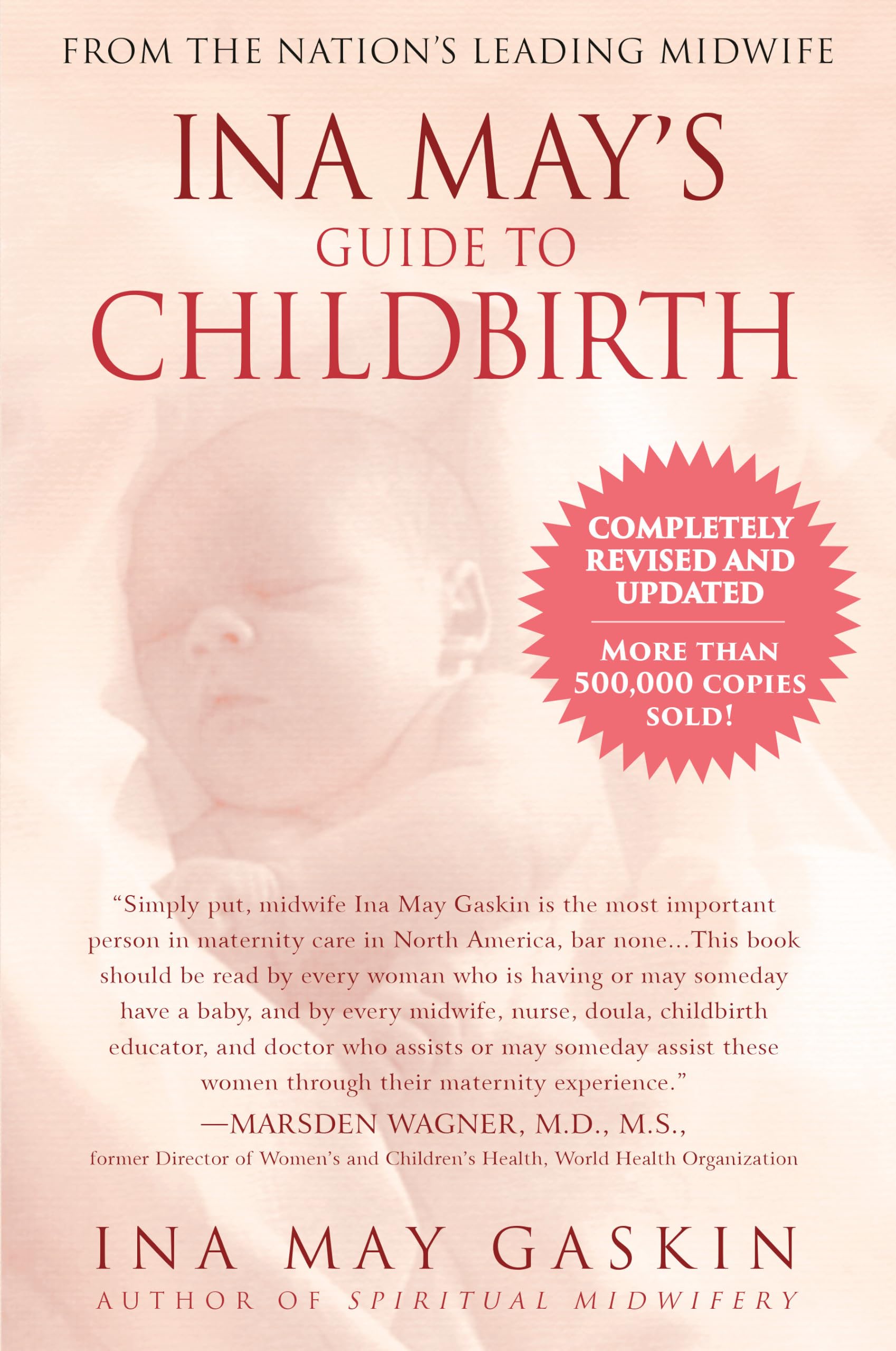
Ina May’s Guide to Childbirth
Key Features
- Focus: Natural childbirth
- Published: 2003
- Structure: Birth stories plus guidance
- Print length: 400 pages
- Price: Budget
Fear of labor is its own pregnancy symptom, and this is the book that addresses it head-on. A long opening section belongs to birth stories, told in the first person by women describing what contractions actually felt like and how they got through them. By the end of it, giving birth has stopped being abstract.
We think that section is the point. Account after account of the same event, told calmly, does something a chapter of physiology can’t: it makes labor feel survivable and ordinary at the same time. The guidance that follows, on how labor progresses and what helps, is practical and clearly explained, and it’s the part that turns all that encouragement into something usable.
The book has a position, and it’s worth knowing before you buy. It is written in service of unmedicated birth, and that conviction is part of why it works. Readers planning an epidural, an induction, or a scheduled cesarean will still learn a great deal about how labor works, but they’ll be reading against the grain. Treat it as the labor-preparation half of a two-book shelf rather than the whole thing.
Pros
- First-person birth stories that make labor less abstract
- Practical guidance on coping with labor
- Reads faster than its 400 pages suggest
Cons
- Advocates unmedicated birth; not a neutral overview
For the last trimester, this is the book we suggest to anyone who is more afraid of labor than of pregnancy: stories first, then practical guidance you can use in a delivery room.
Best for Expecting Dads
We’re Pregnant! First Time Dad’s Handbook
Key Features
- Written for: First-time dads
- Organization: Week by week
- Print length: 292 pages
- Price: Midrange
Most partners don’t need a doorstop. They need to know what’s happening this week and what they can do about it, and that’s the whole design here: short weekly chapters that explain what the pregnancy is doing, then hand over a few concrete things a partner can take off the pregnant person’s plate. It’s the one we recommend for someone who isn’t much of a reader, and it’s short enough to actually get finished.
The tone is the selling point. It’s funny, deliberately and relentlessly, and the jokes are doing real work, because they keep a nervous first-timer reading long enough to absorb the parts that matter. Underneath them is solid coverage: what happens at appointments, how to be useful during labor, and brief sections on money and the baby registry that most pregnancy books skip entirely.
The week-by-week structure is what makes it stick. A few pages read alongside the pregnancy is a far easier habit than a promise to get through a reference book, and the short chapters keep a reader who never finishes books roughly current. It’s a companion rather than a medical guide, so pair it with one of the general references here and both people’s questions are covered.
Pros
- Short weekly chapters a reluctant reader will finish
- Practical ways to help, not just fetal development
- Covers finances and baby registries too
- Funny without burying the useful parts
Cons
- Humor-first voice won’t suit every reader
This is the partner book we recommend when the partner isn’t a reader: short weekly chapters, real practical help, and enough humor to get the thing finished.
Best for Prenatal Nutrition
Real Food for Pregnancy
Key Features
- Focus: Prenatal nutrition
- Includes: Recipes and meal plans
- Print length: 346 pages
- Price: Premium
General pregnancy books tell you to eat well and move on. This one spends 346 pages on what that actually means: which nutrients matter at which stage, why they matter, which foods carry them, and where standard prenatal nutrition advice has drifted from the research.
Much of it reads like a nutrient-by-nutrient case file, heavily referenced and specific about food rather than supplements, explaining what to eat for a given nutrient and why a number on a label tells you less than the whole food does. Then come the meal plans and recipes, which is where a book like this usually thins out and this one doesn’t. Sections end with short recaps, so you can skim the science and still leave with the shopping list.
We recommend it to readers who want to eat deliberately and are willing to cook toward that. It isn’t a general guide and doesn’t try to be, so pair it with one of the broader books here, but nothing else on this list goes this deep on food, and the depth stays usable rather than academic.
Pros
- Deep, referenced detail on prenatal nutrients
- Meal plans and recipes included
- Explains why each nutrient matters, not just what to eat
Cons
- Premium price compared with the rest of our picks
- Assumes you cook from scratch most nights
The book we recommend to anyone who wants to eat deliberately through pregnancy and is willing to cook toward it: nothing else here goes this deep on prenatal nutrition.
Best for Natural-Minded Readers
The Mama Natural Week-by-Week Guide
Key Features
- Edition: Updated
- Includes: Recipes and affirmations
- Organization: Week by week
- Print length: 576 pages
This is the best-looking book on the list, and that isn’t a small thing. It’s a thick, generously illustrated volume with a design closer to a well-made magazine than a medical text, the kind of book that lives on a nightstand and gets opened because it’s pleasant rather than because you’re behind.
The week-by-week structure runs alongside the pregnancy instead of ahead of it. Each week brings a short chapter on what’s developing and what to watch for, with affirmations and recipes threaded through, so the reading stays in step with where you actually are. It’s the easiest book here to keep up with, and the illustrations make the whole business feel less clinical.
The point of view is unmistakable. This is a natural-leaning guide written from a know-your-options stance, and it’s at its best on nutrition, on the choices available to you, and on preparing for an unmedicated birth. Readers who want the mainstream medical line delivered straight, without commentary, will find parts of it preachy.
We like it as the second book on the shelf rather than the only one. As a weekly companion it’s warm, encouraging, and genuinely nice to spend time with, and the affirmations are the sort of thing you roll your eyes at in week 8 and lean on in week 38. Set beside a neutral reference, it’s the volume that makes the reading feel good.
Pros
- Week-by-week chapters with recipes and affirmations
- Illustrations make it far less daunting than a reference
- Written from a know-your-options stance
Cons
- Natural-leaning throughout; not a neutral reference
For readers whose pregnancy already leans natural, and who want a weekly companion rather than a clinical reference, this is the warmest and most readable option we found.
Best for Nervous First-Timers
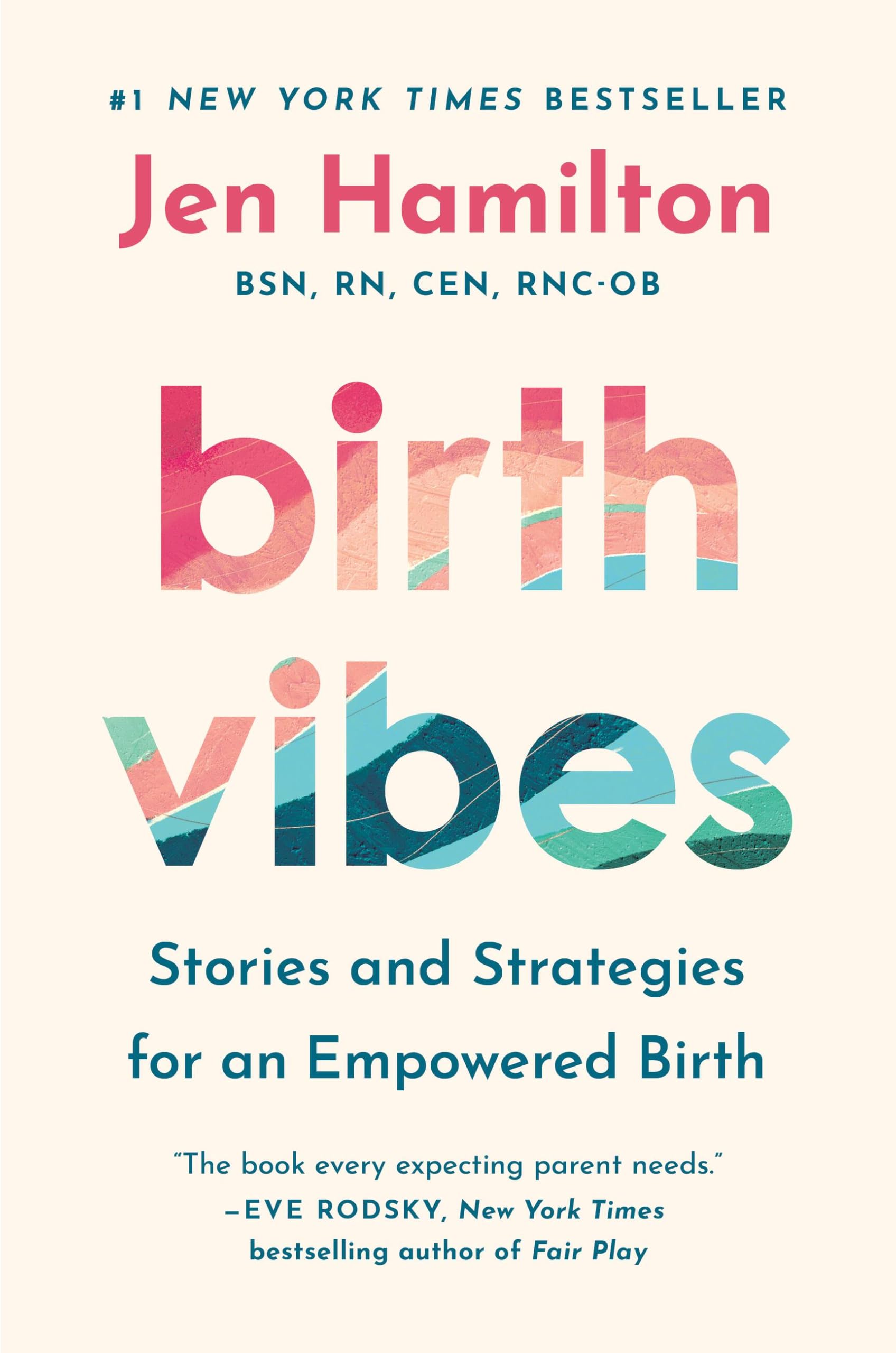
Birth Vibes
Key Features
- Approach: Humor and birth education
- Published: 2026
- Print length: 352 pages
- Price: Midrange
The funniest book here is also the one most likely to get a nervous first-timer to the last page. Birth Vibes treats labor as something to prepare for rather than dread, and it gets there with jokes, plain language, and stories that swing between very funny and genuinely moving.
It covers the full range of what birth can look like, including the parts that don’t make it onto the announcement card: unexpected turns, interventions nobody planned for, and loss. The chapter on pregnancy loss is the one that stayed with us, handling a hard subject without flinching and without frightening the reader, which is a difficult line to walk in a book that is otherwise making you laugh.
It’s also quick. Short chapters and a comic rhythm make it a week or two of bedtime reading rather than a project, and anyone who stalled halfway through a denser reference will notice the difference immediately.
Where it separates itself from the other birth books here is temperament. Ina May’s guide prepares you for labor; this one prepares you without making the prospect heavy, and it’s honest about the parts that don’t go to plan. For the reader who has been skipping the birth chapters entirely, it’s the one that actually gets opened.
Pros
- Funny enough to keep a nervous reader going
- Covers difficult outcomes, including loss, honestly
- Short chapters that fit a bedtime read
Cons
- Newest book here, so a shorter track record
The birth book we hand to someone who has been avoiding birth books: funny, candid about the hard outcomes, and short enough to finish before the due date.
How We Tested the Pregnancy Books
We built the shortlist from about 40 titles pulled off bestseller lists, publisher catalogs, and the battered copies sitting on the desks of the obstetricians and doulas we kept emailing. From there we filtered by edition date, since anything that hadn’t been revised in the past few years was out, and by whether a book covered the whole 40 weeks instead of only birth or only nutrition. That left 15, which we bought at full price so no publisher could claim a spot was bought.
For six months those books lived where pregnancy books actually live: a tote bag on the morning commute, a waiting room before a 20-week scan, a nightstand at 2 a.m. when a cramp wouldn’t let anyone sleep, and the passenger seat for a partner who’d been assigned chapters. We tested content the way readers use it — by looking things up. Each reader timed how long it took to find a straight answer to one specific question (Is deli turkey fine? How much coffee? Is this spotting normal?) using only the table of contents and the index, and noted whether the answer came with a source or just a confident opinion.
Readability got judged by whether anyone actually finished, and a few got abandoned around page 60. We also wrote down how each book left a reader feeling: informed, reassured, or quietly panicking and reaching for the phone. For the gift question, we handed copies to people who weren’t expecting one and watched their faces; for value, we asked whether anything in these pages beat the app already on their phone, and whether they’d keep the book for a second pregnancy instead of passing it on.
How to Choose a Pregnancy Book
The right pregnancy book isn’t the most comprehensive one. It’s the one you’ll still be opening in your third trimester, so choose for how you’ll use it.
Decide which job you need done
Most people buying their first pregnancy book want one thing: an answer at 11 p.m. that isn’t a search engine. That’s a reference job, and a general pregnancy guide does it best. The books here split into four rough jobs, which are a general reference, evidence and decision-making, labor preparation, and nutrition. Work out which one you’re short of before you spend anything.
If you’re unsure, start with the general reference. It’s the one that stays useful from the first appointment to the six-week checkup, and the others are easier to add later, once you know which questions you keep asking.
Week by week, or topic by topic
Two structures cover nearly everything here. Week-by-week guides pace the reading to your pregnancy, which makes them easy to keep up with and awkward to raid for one specific answer. Guides organized by trimester or by decision work the other way: quick to search, easy to ignore for a month.
Pick weekly if you read in small doses at bedtime; pick topic-based if you tend to look things up after appointments. One trap worth naming: a week-by-week book bought at 30 weeks has half its useful pages already behind you. Start those early and keep the topic-based reference for whenever a question lands.
Read a page for tone before you commit
Tone decides whether a book gets finished far more than page count does. The range here runs from clinic-plain to conversational to openly comic to natural-leaning, and none of those is wrong. But the voice that soothes one reader grates on another, and you can’t tell which you are from a description.
Read a sample chapter, or at least the introduction, before you buy. If the author’s manner irritates you in the first ten pages, it will irritate you for another 500, and the book joins the pile nobody mentions.
Budget for a second book
Almost nobody covers everything well in one volume. A general reference will tell you what’s happening and what’s normal, but it won’t go deep on prenatal nutrition, it won’t spend real time on the mechanics of labor, and it isn’t written for the partner.
Plan for two: one broad reference plus one book aimed at whatever you care most about. Buy the broad one first and the second in the third trimester, when the subject stops being theoretical and starts being next month.
Check the edition, but don’t overrate it
Pregnancy guidance gets revised, so for the book you’ll consult on symptoms, tests, and what’s safe, buy the newest edition you can find. Publishers don’t always make that obvious, and an older printing can look identical online.
For birth philosophy and nutrition, the classics hold up, because a book written twenty years ago about how labor works is still describing the same labor. The practical rule: newest edition for the reference, any edition for the point of view.
Frequently Asked Questions
Do I still need a pregnancy book if I have an app?
An app is good at telling you which week you’re in. It’s much less useful for explaining why a test was ordered, what the evidence behind a recommendation is, or how to think through a birth plan.
Keep the tracking app and use a book for the questions you’d otherwise save up between appointments.
When should I start reading one?
As soon as the test is positive. The opening chapters of a week-by-week guide cover exactly the weeks you’re in now, so starting at eight weeks makes the first-trimester material useful instead of a recap.
Hold the labor-preparation books until the third trimester, when the material is close enough to stick.
Is print better than an e-book?
Print, for most people. These are books you flip back through, whether that’s a symptom you want to reread, a week you skipped, or a recipe, and that’s clumsier on a phone.
An e-book makes sense for a book you plan to read once, straight through, or if you read in bed without a light.
Is a pregnancy book a good baby shower gift?
Yes, if you match it to the recipient. For a first pregnancy with no books yet, the general reference is the safe choice. If she already owns the big one, a labor-preparation or nutrition book adds something instead of duplicating.
Skip the partner book unless you know the partner actually reads.
Final Verdict
If you’re buying one book, buy What to Expect When You’re Expecting. It covers more ground than anything else here, from conception through postpartum, and it’s the volume most likely to still be in the house when the baby arrives.
Add a second book for whatever you care most about: Expecting Better if you want to interrogate the rules, the Mayo Clinic guide if you want them stated plainly, and Ina May or Birth Vibes once labor stops being theoretical.
