This post contains affiliate links. We may earn a small commission when you buy through our links — at no extra cost to you.
Every parent knows the eleven-minute arc of a bad craft kit: the box comes out, the kid is thrilled, then a piece snaps, the beads won’t go on the string, and you’re the one hunched over the instructions while everyone else drifts off. A good kit does the opposite — it hands your kid something to be proud of and buys you an hour of actual quiet. The difference usually isn’t the size of the box. It’s whether everything the project needs is inside and whether the supplies survive small hands.
I’ve spent the past three months with 16 of them, working through my own kids, my nieces, and a rotating cast of neighborhood children, and the ones that got pulled back out on a Tuesday were complete, colorful, and finishable by the kid on the label. An age range is a suggestion, by the way: a kit marked 8 and up can stall a patient 6-year-old and bore a 10-year-old by the second project.
The picks below cover the whole span, from a plain box of art supplies to beads, suncatchers, and slime, and most of them would go straight into a gift bag with nothing else added.



Best for All-Around Art Gift
Crayola Art Kit
Key Features
- Storage: Portable art case
- Color palette: Swirl and pastel shades
- Recommended age: 5–10 years
- Supplies included: 60 crayons, 40 markers, 20 colored pencils, 20 paper sheets
- Price: Midrange
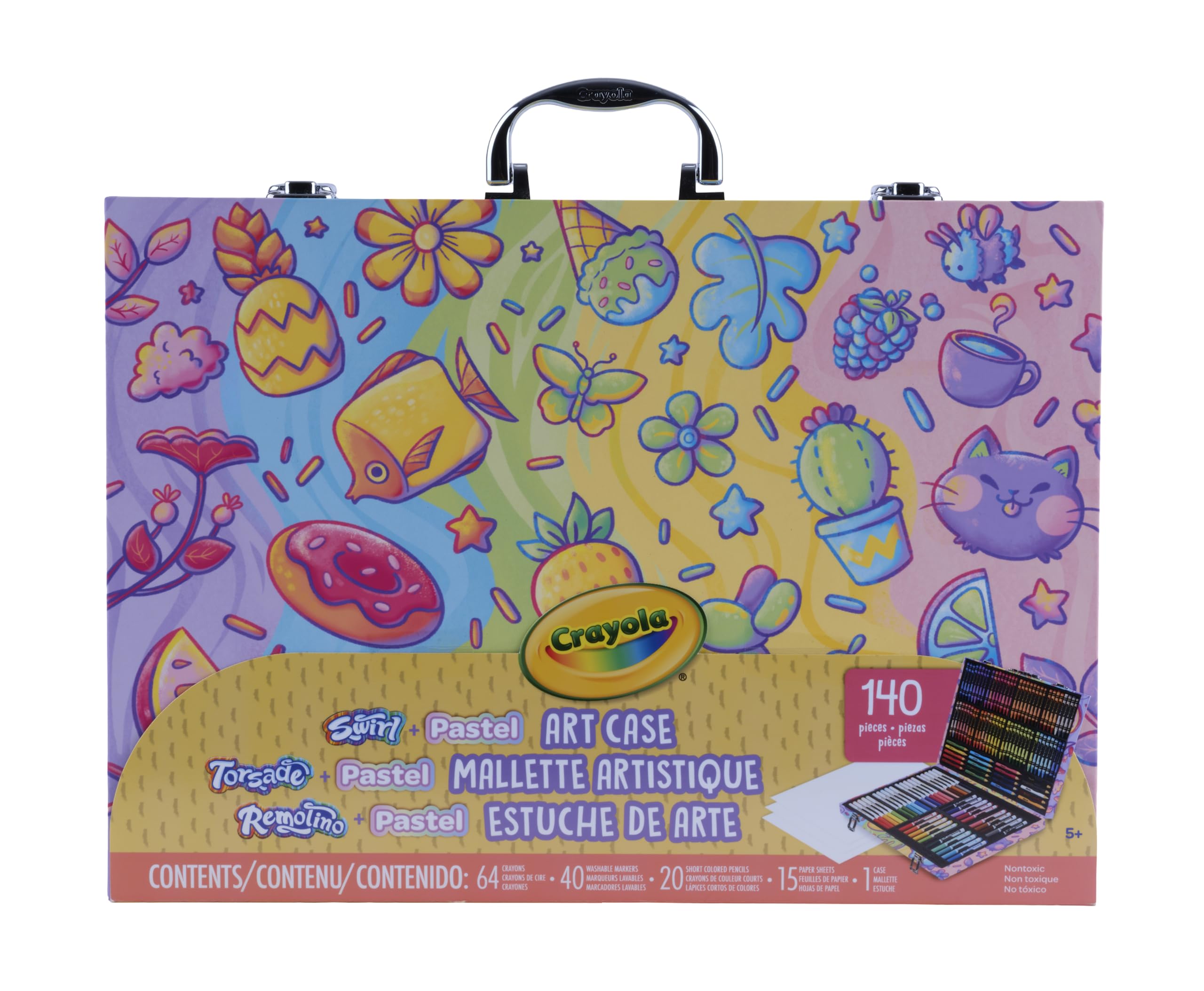
The first thing you notice about the Crayola Art Kit is the case: a flat, carry-along tray with 60 crayons, 40 markers, 20 short colored pencils, and 20 sheets of paper, all visible at once. That organization is why it earns our top spot. For a 5- to 10-year-old who likes to color, draw, and blend, it is the easiest yes in this group.
The pastel and swirl shades are the real draw for us. They are softer than a standard rainbow set, which makes them better for shading and blending than for bold posters. The case opens flat and keeps each tool in its own tray, so after a session you can see at a glance what is missing. The 20 paper sheets are the first thing to run out; add a sketchbook if your kid is a heavy drawer.
We appreciate that the kit works for solo drawing, a restaurant wait, or a shared table without needing a project plan. The markers and crayons are the workhorses, but the swirl shades are what change a simple drawing; they add depth without any special technique. It is the pick we hand to a child who wants to make something right away, without opening five bottles of paint.
Pros
- Keeps 120 drawing tools visible and organized
- Pastel and swirl shades encourage blending
- Portable case travels to restaurants and school
- Works for a wide 5-to-10 age range
Cons
- No guided craft projects included
- Case is bulky for small backpacks
We think this is the best all-around art kit here for kids who color and draw, with a sturdy case that keeps every tool visible and portable.
Best for Open-Ended Crafting
Dan&Darci Arts and Crafts Vault
Key Features
- Storage: Two-drawer case
- Kit type: Open-ended craft supplies
- Piece count: 1,000 pieces
- Recommended age: 4–12 years
- Price: Premium
The Dan&Darci Arts and Crafts Vault arrives as a two-drawer case packed with 1,000 pieces: pipe cleaners, pom-poms, felt strips, wooden beads, sequins, googly eyes, and more. It looks like the supply closet a preschool teacher would keep on a shelf, and that is the point.
We recommend it for the child who wants to invent rather than follow a kit. The drawers are the difference between a box that gets used and one that becomes a junk pile; each supply has a place, and you can pull out one drawer at a time. The pieces are small enough that younger kids need a grown-up to help choose a starting point, but the range is broad enough for a 4-year-old and a 12-year-old to work side by side.
The glue is the weak link in our experience; it struggles with heavier pieces, so keep a stronger craft glue nearby. That is a small fix for a kit that otherwise keeps giving. We like it best for a week of rainy afternoons, not a single planned project; the value is in the repeat play, not the first reveal.
Pros
- 1,000 pieces cover many craft techniques
- Two drawers keep supplies sorted
- Open-ended format suits ages 4 to 12
- Good for repeat play, not one afternoon
Cons
- Small pieces can scatter during setup
We recommend this for the child who wants to invent rather than follow a kit, because 1,000 pieces and two drawers turn a rainy day into an open-ended craft session.
Best for Group Craft Time
JOYIN Rock Painting Kit
Key Features
- Kit type: Rock painting
- Paint types: Glow-in-the-dark and metallic paints
- Piece count: 44 pieces
- Recommended age: 6–12 years
- Price: Budget
The JOYIN Rock Painting Kit leads with glow-in-the-dark paint, and that is the part kids will ask about first. The 44-piece set includes rocks, glow and metallic paints, brushes, and decorative bits, so it opens as a complete painting activity.
A white base coat makes the colors pop on the natural rocks; without it, the darker stones swallow the paint. We like that the set has both a fine-tip and a wider brush, because one child can outline while another fills in. The glow paint is the finish, not the foundation; judge the kit on the painting.
We recommend it for a group craft or a birthday-table activity, not as a display piece. The rocks are small enough that a finished set fits in a bowl, and the painting is forgiving enough for a mixed-age table. It is the kit we bring out when four kids need something to do at once.
Pros
- 44 pieces include paints, brushes, and rocks
- Paint is easy to apply on the included rocks
- Good for a group or party table
- Glow and metallic paints add variety
Cons
- Glow effect can be faint
We recommend this for a group craft or party because the painting is easy, the 44-piece kit has enough supplies to share, and the glow is a bonus rather than the main event.
Best for Older Kids
Spirograph Deluxe
Key Features
- Storage: Carry-along case
- Work surface: Built-in drawing surface
- Recommended age: 8+ years
- Wheels and rings: 19 wheels, 2 rings
- Price: Midrange
The Spirograph Deluxe is built around a work surface inside its carry case, with 19 precision wheels, two rings, and a rack that hold the gears in place. It is a drawing kit rather than a paint-and-glue craft, which makes it a good change of pace when the craft table needs a quiet option.
The putty is the small hero here: a dab holds the wheel to the paper so the gears do not skate while the pen goes around. We appreciate the built-in surface for the same reason; it keeps the whole setup contained on a lap or a kitchen table. The fine-line pens make crisp patterns, and the 20 sheets of design paper are enough for a first run.
The 14-page guide book gives a starting point, but the fun is in experimenting with wheel and pen combinations. The set stores in its own case, so the gears, pens, and paper stay together between sessions.
We recommend it for the 8-to-12-year-old who likes precision and pattern, especially on a car ride or a quiet afternoon. It is the one here that feels more like a tool than a toy, and that is why it holds attention.
Pros
- Built-in work surface keeps gears contained
- 19 wheels and 2 rings create many patterns
- Quiet, absorbing activity for older kids
- All pens, paper, and putty included
Cons
- Needs patience and steady hands
We recommend this for older kids who like precise, quiet drawing; it is the most absorbing sit-down kit in this group.
Best for Budget Jewelry Making
Redtwo Clay Beads Bracelet Kit
Key Features
- Storage: Bead storage box
- Age range: Over 3 years
- Bead size: 6 mm with 2 mm hole
- Bead count: 5,100 pieces
- Price: Budget
The Redtwo Clay Beads Bracelet Making Kit is the least expensive pick here, and it comes with about 5,100 pieces: flat polymer clay beads, letter and number beads, charms, elastic cord, scissors, and tweezers. That volume is the reason it earns a spot.
The 6 mm beads have 2 mm holes, which fit the included cord but not thicker string; do not plan to swap in yarn. The colors are bright and the charms give a preteen plenty of ways to personalize a bracelet. The elastic cord is slippery and needs a double knot, so younger kids will need help finishing.
We like the storage box more than we expected; it keeps the bead colors separated and makes the kit feel less like a pile. The beads are small, so this is a tabletop activity with a tray, not a car seat craft. For the money, it is the best way here to keep a preteen in bracelets for a long stretch.
Pros
- About 5,100 pieces for a very low price
- Wide color and charm selection
- Storage box and tools included
- Good starter jewelry kit for preteens
Cons
- Some bead types arrive mixed together
- Bead count can fall short of the listing
We think this is the best budget jewelry kit here for preteens who want a big bead stash and can handle a little knotting help.
Best for Younger Kids
Made By Me Window Art Kit
Key Features
- Display: Suction cups and cord
- Includes: 12 suncatchers, 12 suction cups, paints
- Projects: 20+ window art creations
- Paint type: Acrylic
The Made By Me Window Art Kit promises 20+ projects from 12 suncatchers, an acetate sheet, and five paint pens and tubes. It is one of the few kits here that ends with something a kid can stick on a window and show off.
We recommend it for younger kids, roughly 4 to 8, because the paint pens are sized for small hands and the designs are forgiving. The paint is thick, so let each suncatcher dry overnight before hanging; otherwise the suction cup has to hold more weight than it should.
The finished pieces look like mini stained glass, which is a bigger payoff than another paper drawing. We wish the kit included a few more preprinted designs, because the acetate sheet is the part that asks a kid to draw freehand. Still, for a younger child who wants to paint and display in the same afternoon, it is the easiest win here.
Pros
- 20+ projects from suncatchers and clings
- Paint pens are sized for small hands
- Finished pieces can be displayed on windows
- Good for younger kids and family craft time
Cons
- Suncatchers can lose suction on textured glass
We recommend this for younger kids who want a quick, colorful project, especially if a grown-up can help with the window display.
Best for Sensory Play
Original Stationery Ice Cream Slime Kit
Key Features
- Scent: Cherry
- Storage: Reusable storage container
- Piece count: 25 pieces
- Recommended age: 8–12 years
- Price: Midrange
The Original Stationery Ice Cream Slime Kit looks like a dessert shop in a box: cherry-scented slime base, color inks, sprinkles, and storage containers shaped like ice cream cones. It is a sensory craft first and a tidy craft second.
The activator is the make-or-break; add it a little at a time, because too much turns the slime rubbery and too little leaves it sticky. The kit includes enough ingredients for multiple batches, so the fun is in varying the recipe, not just making one batch. The storage containers are a nice touch; they keep the slime from becoming a countertop puddle.
We recommend it for a kid who likes to mix, stretch, and experiment, and for a parent who is ready to supervise. The cherry scent is pleasant without being overwhelming, and the ice-cream packaging makes it feel like a gift rather than a science project. It is not the kit for a child who wants a clean, finished object in one sitting.
Pros
- Mix-ins, colors, and storage container included
- Cherry scent adds sensory appeal
- Enough ingredients for multiple batches
- Ice-cream containers make it giftable
Cons
- Scent may be milder than expected
We recommend this for sensory-loving kids who enjoy mixing and stretching more than keeping a tidy table; the cherry scent and ice-cream containers add to the fun.
Best for Garden Craft
Creative Roots Turtle Stepping Stone
Key Features
- Paints: 6 acrylic paint pots
- Display: Indoor or outdoor with varnish
- Stone size: 8.25 x 1 x 8.25 inches
- Recommended age: 8+ years
- Price: Budget
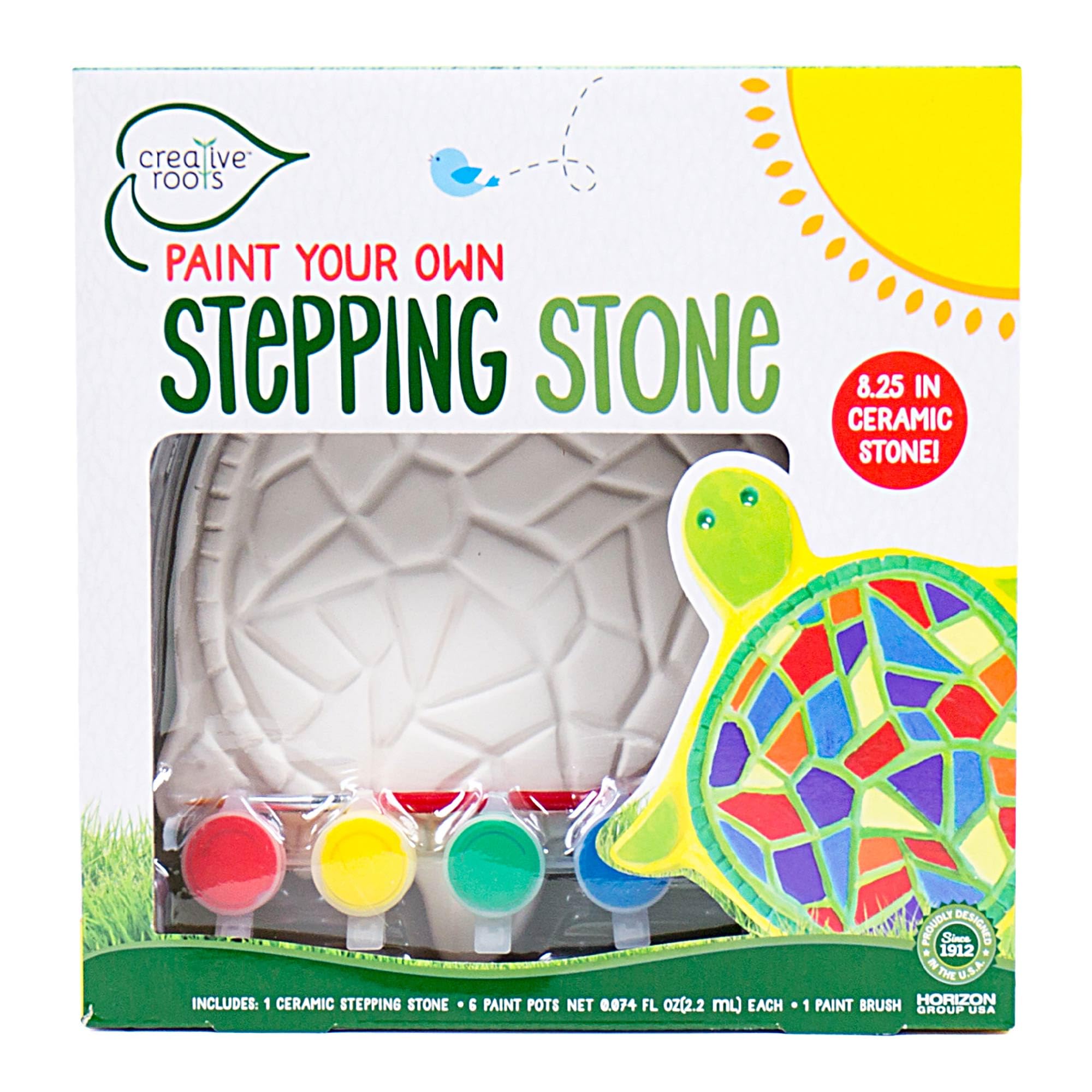
The Creative Roots Mosaic Turtle is an 8.25-inch ceramic stepping stone with a painted-on shell pattern and six acrylic paint pots. There is no plaster to mix and no mold to fill; the project starts as soon as the box opens.
The stone is ready to paint, which makes it a good choice for a kid who wants a finished object without a long prep step. The six colors are enough for a shell pattern, and the brush is usable for broad areas. The turtle is heavy enough to sit in a planter without tipping, but that also means it is not a craft a child will carry around.
For outdoor display, you need an exterior varnish; the kit does not include one. Indoors, it can go on a shelf or in a plant without any extra step.
We recommend it for a garden-minded kid or a gift for a grandparent, not as a rainy-day kit for a crowd. It is a single project with a clear payoff, and that is the point. The finished turtle looks more like a garden ornament than a kid’s craft, which is why it earns a place.
Pros
- Ready-to-paint ceramic stone, no plaster mixing
- Six acrylic paints and a brush included
- Makes a display piece for a garden or shelf
- 8.25-inch stone is substantial
Cons
- Surface quality can vary between kits
We recommend this for a garden-themed gift or a single-afternoon project, as long as you inspect the stone and plan to varnish it for outdoor display.
How We Chose and Tested 16 Craft Kits
We started with a list of about 40 kits pulled from store shelves, catalogs, and years of review sections, then cut anything that quietly required supplies we didn’t already own — no kits that send you to the craft store for glue or cornstarch. We also dropped kits whose reviews kept mentioning running out of one color, since value in this category is really projects-per-dollar, not box size. That left 16 kits, which we tested over three months.
Testing happened where craft kits actually happen: the kitchen table after school, a rainy Sunday when everyone was stuck inside, a birthday party with nine kids around one table, and a sleepover that ran well past bedtime. I handed each box over and stepped back, timing how long it took a kid to get from opening the packaging to actually making something, and noting the exact moment an adult had to be called in — a snapped clasp, a bead too small for the hole, instructions that assumed a level of patience nobody had.
Then the fussier checks. We counted beads by sorting them into piles of ten to see whether the box matched its own label, charged glow pieces under a lamp for ten minutes and checked them in a dark closet, pressed window clings and mosaic pieces into place and looked again the next morning to see if they’d curled or peeled, and stretched slime between two fingers to see whether it snapped or left residue on the table. We spread every palette out at once to check whether six colors were genuinely six colors, wiped finished projects and spilled paint with a damp paper towel to see what stained, and left the results on a shelf for weeks to see which ones the kids picked up again on their own.
How to Choose a Craft Kit for Kids
The best craft kit is the one that matches the child in front of you, not the one with the biggest box.
Choose between a project and a supply box
The first fork in the road is whether the child wants a finished object or a pile of possibilities. A single-project kit, like rock painting or a suncatcher set, gives a clear start and a payoff you can hang up. An open-ended arts and crafts kit, like the Dan&Darci vault, is better for a kid who already invents. We prefer a project kit for a gift or a party and a supply box for a child who crafts every week.
Match the age to the fine motor work
Age ratings are not just legal cover; they predict how much hand strength and patience the kit needs. Paint pens and large suncatchers suit 4- to 6-year-olds, while 6 mm beads, fine-line pens, and gear drawing are better for 8 and up. If a kit includes beads or charms, plan to help with the knot; the Redtwo set is a good example of a preteen kit that still needs an adult for the final tie.
Plan for drying, display, and cleanup
Paint, glue, and slime all need a drying plan, and the box photo rarely shows it. Acrylic paint on a suncatcher may need overnight; air-dry clay can take a day or more; outdoor ceramic needs a varnish the kit may not include. We set projects on a tray and keep a damp cloth nearby. Check the display method before you buy: suction cups want smooth glass, and heavy stones want a shelf or planter.
Look for storage that survives the first week
A kit without a home becomes a drawer of loose pieces. A case with trays, a two-drawer box, or a bead organizer makes cleanup part of the activity and helps you see what needs replacing. We also check whether the consumables are standard: paper, glue, and acrylic paint are easy to restock; custom refills are not. The Crayola case and the Dan&Darci vault both earn their space because the container does real work.
Frequently Asked Questions
Are craft kits safe for a 3-year-old?
Most kits in this roundup are rated for ages 4 and up, and many contain small beads, charms, or googly eyes that are choking hazards for a child who still mouths objects. Check the age label before buying, keep small parts in a lidded container, and plan to supervise paint, glue, and slime. For a 3-year-old, choose a large-piece kit or make the project together.
How long does one craft kit last?
A single-project kit can fill an afternoon or a rainy weekend; a supply box can last for months of shorter sessions. The turtle stone and suncatcher kit are one-and-done projects, while the bead kit and craft vault keep giving as long as the child has ideas. Buy for the kind of crafting you want: a planned activity or an open shelf staple.
What should I do if the paint or glue is dried out when the kit arrives?
Open the paints and squeeze a little onto a paper plate before handing the kit over. If a pot is dried solid, ask the retailer for a replacement or swap in acrylic paint or craft glue you already trust. Do not toss the whole kit; the rocks, beads, or suncatchers are usually still usable.
What makes a good craft kit for a party favor?
Choose a single-project kit with a clear finished object and one project per child, such as a small rock painting kit or a suncatcher. Avoid giant supply boxes for a party because the pieces get mixed and the host becomes the cleanup crew. Check the age range and pre-open boxes so kids can start without struggling with packaging.
Final Verdict
For most families, the Crayola Art Kit is the safest buy: it is organized, portable, and broad enough for siblings with different interests. If the child already likes to invent, the Dan&Darci Arts and Crafts Vault is the better use of money because it supplies 1,000 pieces and a place to keep them. For a single afternoon with a clear payoff, choose the JOYIN Rock Painting Kit for a group or the Made By Me Window Art Kit for a younger child.
