This post contains affiliate links. We may earn a small commission when you buy through our links — at no extra cost to you.
Peanut butter is one of the biggest little milestones in a baby’s first year, and for plenty of parents it’s also the scariest. Guidance now leans toward early introduction, around 6 months, but the jar in your pantry isn’t built for an infant: it’s stiff, salted, and thick enough that a spoonful becomes a choking risk. What you want is something smooth enough to thin with breast milk or water, made without added sugar or salt, and tasty enough that your baby comes back for bite two.
Over the past four months, my team and I worked through 14 jars, tasting each plain and stirred into oatmeal, yogurt, and purees. Here’s a thing nobody tells you first: oil pooling on top of a natural jar isn’t a defect, it’s just what happens when peanuts are the only ingredient. What matters is whether it stirs back in without a fight and stays that way. The picks below did both, and they’re the ones I’d hand to another parent.


Best for First Peanut Tastes
PBfit Simply Peanut Powder
Key Features
- Ingredients: Roasted peanuts only
- Container size: 24 oz
- Fat versus regular: 82% less
- Protein per serving: 0.32 oz
- Price: Midrange
Thinning a jarred spread to something a baby can swallow is fiddly work. Too thick and you are handing over a texture you do not want in a small mouth; too thin and it slides off the spoon before it gets there. A powder takes most of that guesswork out, and this is the one we kept coming back to. The tub lists a single ingredient, roasted peanuts, so there is no sugar, salt, or palm oil to think about, and it stirs into baby cereal or a fruit puree without the clumps that turn a first spoonful into a fight.
Powdered peanut butter is what is left after most of the oil is pressed out of roasted peanuts, which is why this one runs 82 percent lower in fat than the jarred stuff. For an adult counting calories that is the whole pitch. For a baby it is mostly beside the point, since the peanut exposure is what you are there for and the fat comes from milk and the rest of the diet. The 9 grams of protein per serving is a different matter, because it means the tub does not retire after the introduction: ours went into oatmeal, yogurt, and pancake batter.
The one thing worth knowing is how much the result depends on your stirring. Mix it in a small bowl, add water a teaspoon at a time, and stop when it looks like runny yogurt. Trying to loosen a paste that has already set is the only way we have found to make this powder behave badly.
Pros
- Single ingredient: roasted peanuts, nothing else
- Stirs into cereal and puree without clumping
- 9 g protein per serving keeps it useful
Cons
- 24 oz tub is a lot for first tastes
Our default for a first peanut: one ingredient, a grind that disappears into cereal, and a tub that stays useful once the introduction weeks are over.
Best for Peace-Of-Mind Bulk
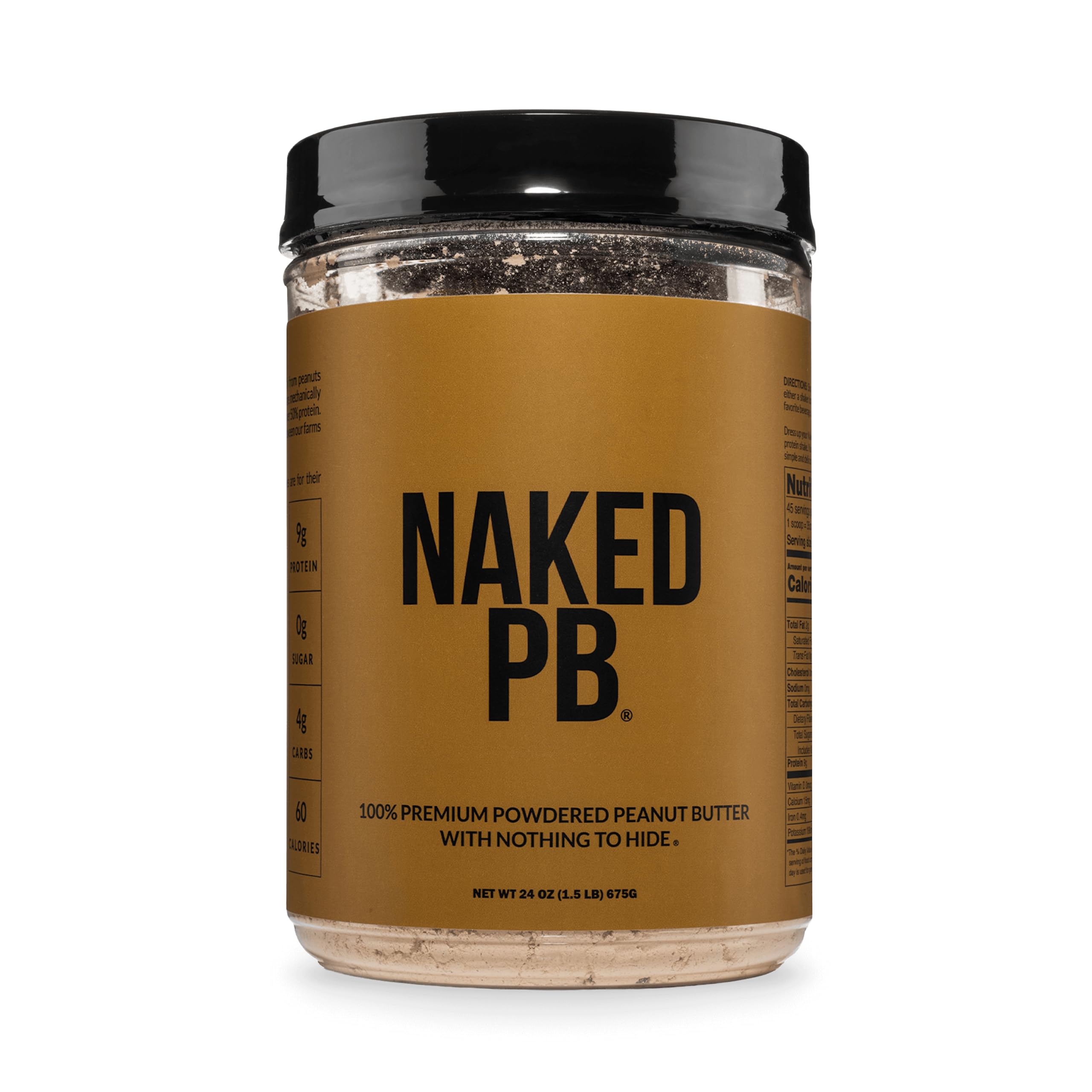
Naked Powdered Peanut Butter
Key Features
- Testing: Third-party heavy metals tested
- Ingredients: Roasted peanuts only
- Container size: 24 oz
- Protein per serving: 0.32 oz
- Price: Midrange
The detail that made us stop and reread the label is easy to miss: this powder is independently tested by third parties for heavy metals. Peanuts take up what is in the soil they grow in, and for something you are giving an infant by the teaspoon, an outside check on that is worth more than another flavor claim. Nothing else in this group carries that line on the pack.
The rest of the label is just as short: roasted peanuts and nothing else, grown, processed, and packed in the US, with no salt, sugar, or preservatives. It mixes into yogurt, oatmeal, and purees as readily as anything here, and 9 grams of protein per serving puts it at the top of this set on that measure alongside the PBfit Simply tub, at 60 calories a serving.
Plain is the price. This is the least sweet powder we tried, and the faint, almost bitter edge that a baby will not notice is exactly what sends adults looking for something else. Mixed into banana or sweet potato it disappears; licked off a finger, it does not.
Pros
- Third-party tested for heavy metals
- One ingredient, no salt or sugar
- Mixes readily into yogurt and purees
- 9 g protein and 60 calories per serving
Cons
- Plain, faintly bitter flavor on its own
We point to this one when third-party testing matters more to you than sweetness, because the ingredient line is just peanuts.
Best for Big Households
PB2 Pure Peanut Powder
Key Features
- Ingredients: 100% roasted peanuts
- Container size: 32 oz
- Protein per serving: 0.21 oz
- Price: Premium
Two pounds is a lot of peanut powder, and that is the entire pitch. This is the tub for a household that has already decided peanut is going to be a daily food rather than a couple of weeks’ experiment, and buying it in this format is how you stop thinking about it.
The label is as clean as anything here: 100 percent roasted peanuts, with no added sugar, salt, or preservatives. It mixes into smoothies and yogurt without clumping and behaves well in baking, which is where most of a tub this size ends up, a spoonful in pancake batter, a scoop in a smoothie, a thickener for a sauce.
What it does not do is lead this group. At 6 grams of protein per serving it trails the PBfit Simply and Naked tubs, and the flavor is mild enough that a good part of it vanishes into whatever it is mixed with. Neither matters much in a teaspoon-sized baby portion, where exposure is the point. They are why we rank it below those two for the introduction itself, and above them for feeding a family.
Pros
- 100% roasted peanuts, no additives
- Blends smoothly into smoothies and yogurt
- Large tub suits daily use
Cons
- Mild flavor fades into other foods
- 6 g protein, below the other powders here
The house jar: a clean label, two pounds of it, and a per-serving cost the smaller tubs cannot match once peanut is a daily food.
Best for Trying It Out
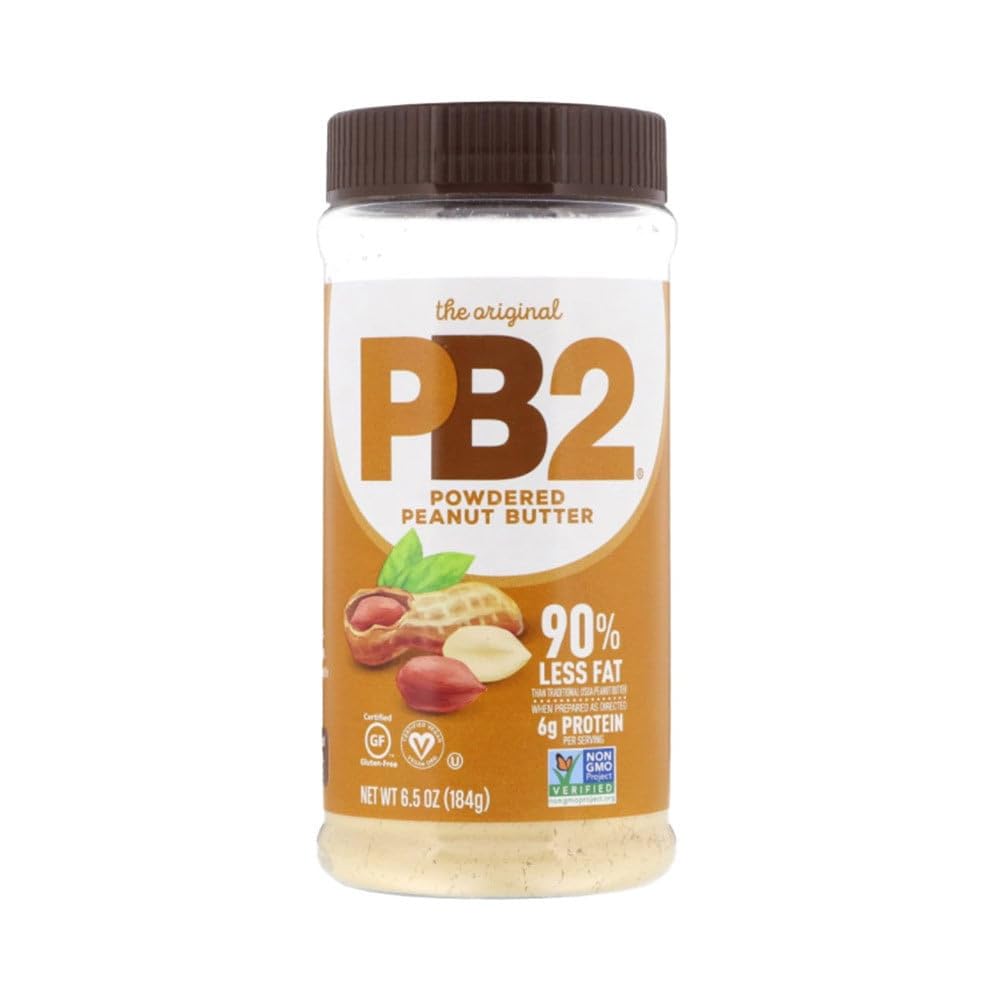
PB2 Powdered Peanut Butter 6.5 oz
Key Features
- Format: Powdered peanut butter
- Container size: 6.5 oz
- Fat and calories: 85% less fat and calories
- Price: Budget
Nobody knows how a baby’s first peanut is going to go, and that uncertainty is an argument for buying the smallest jar you can find. This one is 6.5 ounces, a few weeks of first tastes rather than a pantry commitment, and small enough to live in a diaper bag or a desk drawer.
The powder behaves like the larger PB2 tub: milled fine, stirred with water to whatever consistency you want, and easy to work into yogurt, cereal, or a puree. What earns it a place here is the size rather than the powder itself. It is the one to buy while you are still finding out whether peanut is going to become a weekly food in your house.
On paper it makes the same claim as every powder in this group: 85 percent less fat and calories than regular peanut butter. At a teaspoon a day that number is not doing any work for an infant. The format is the point, and this is the smallest version of it.
Pros
- Small jar suits first tastes
- Stirs into purees and yogurt
- 85% less fat and calories than regular
Cons
- Higher cost per ounce than bulk tubs
The first-jar pick: a few weeks’ worth of powder, so you are not committing to two pounds before you know how it goes.
Best for Organic Shoppers
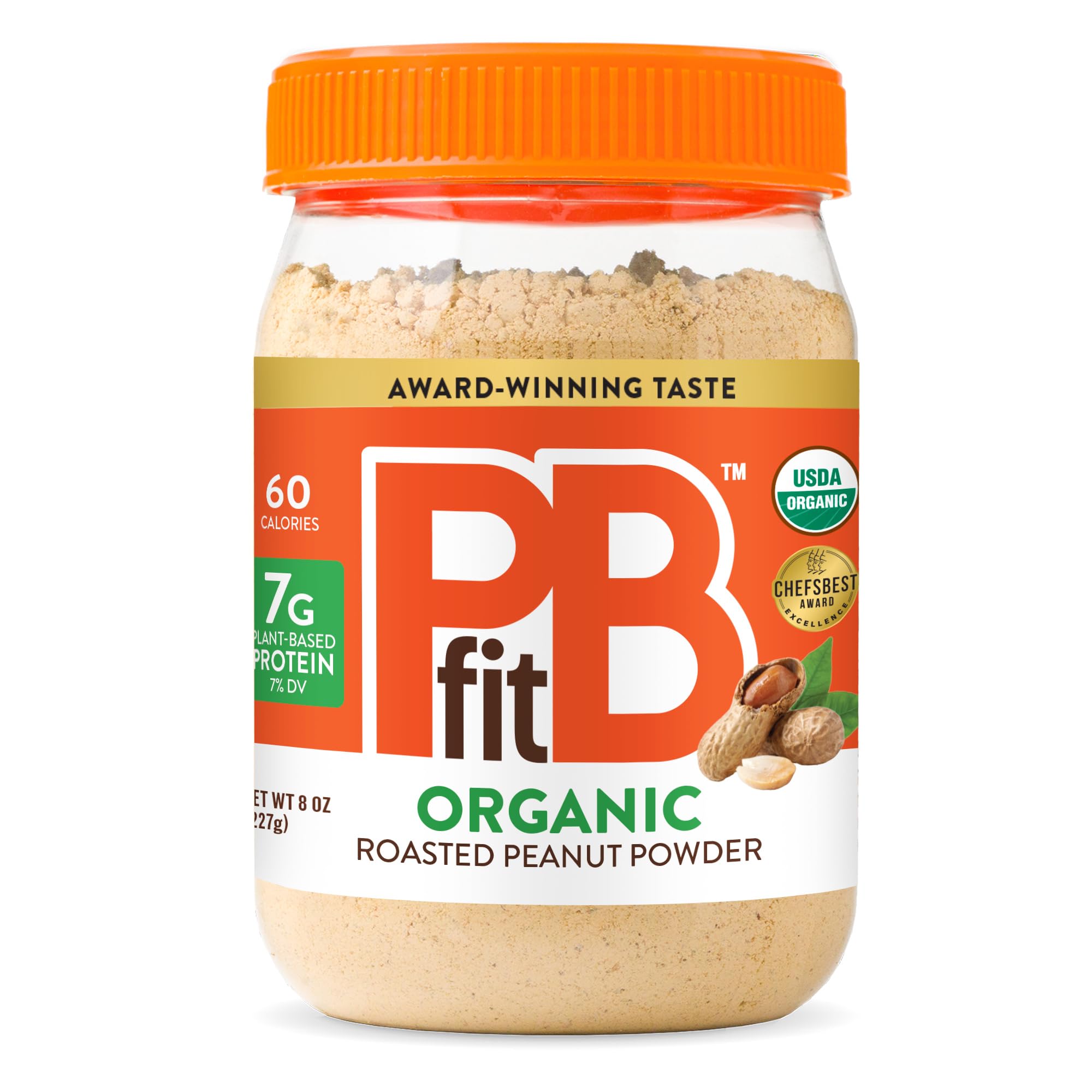
PBfit Organic Peanut Powder
Key Features
- Dietary: Non-GMO, gluten-free, dairy-free
- Certification: USDA Organic
- Container size: 8 oz
- Ingredient count: Three
- Price: Midrange
Organic certification is the reason this tub exists, and it earns it: USDA Organic, non-GMO, and free from dairy, soy, and gluten. What it is not is a one-ingredient powder. The panel lists three, and our preference for a baby’s first tastes runs to the tubs that list only peanuts.
Eight ounces is a sensible size for the introduction months, enough to see you through the first tastes without becoming a permanent fixture in the cupboard. It blends best wet: stirred into applesauce, oatmeal, or a smoothie it comes out smooth, but mixed stiff with a small splash of water it can turn grainy, so err on the looser side.
Where does that leave it? For a family that buys organic as a matter of course, this is a good small tub with a certification none of the other powders here carry. For a family whose standard is peanuts and nothing else, the Simply Peanut tub is the better buy, and the difference comes down to those two extra ingredients rather than anything about how it performs.
Pros
- USDA Organic certified
- Small 8 oz tub for the introduction months
- Blends smoothly into wet foods
Cons
- Three ingredients, not just peanuts
We recommend it to families who put organic certification first, with the caveat that the panel does not stop at peanuts.
Best for Family Pantry Staple
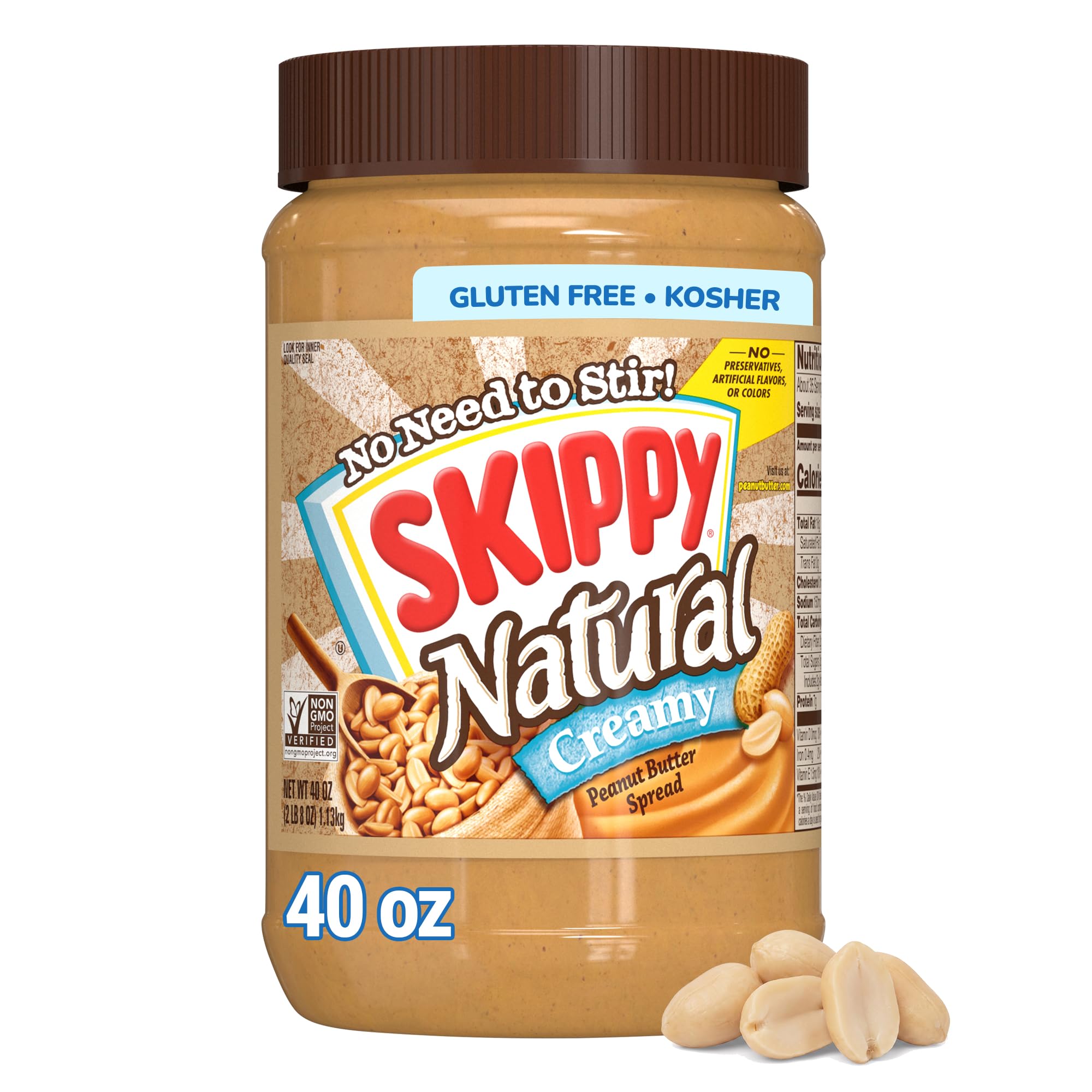
SKIPPY Natural Creamy
Key Features
- Stirring: Not required
- Ingredients: Roasted peanuts, sugar, palm oil, salt
- Container size: 40 oz
- Protein per serving: 0.25 oz
- Price: Budget
Sometimes the right peanut butter for a baby is the one already in the cupboard. This is a no-stir spread that does not separate, spoonable straight from the jar, and if it is going to be on your own toast anyway, it is a reasonable place to start a baby’s peanut journey.
The panel is roasted peanuts, sugar, palm oil, and salt, which is why it sits below the powders here for a baby and worth weighing up. At the teaspoon we are talking about, thinned with warm water, breast milk, or formula until it runs off the spoon, those extras are not the main thing to manage; getting the texture thin enough is. Mix it into something the baby already eats and the spread does its job.
It is genuinely creamy, spreads without tearing bread, and carries 7 grams of protein per serving. The lack of stirring is the quiet luxury: natural spreads that separate are a nuisance when you are already juggling a baby, and this one goes from jar to bowl in a single motion.
Pros
- No stirring needed
- Creamy and spreads easily
- 7 g protein per serving
Cons
- 40 oz jar is a lot for one baby
We hand this to households that will use the jar themselves: creamy, no stirring, and easy to thin down for the baby.
How We Chose and Tested the Best Peanut Butter for Babies
To build the shortlist, we read the labels on more than 60 jars and kept only smooth, unsweetened options without palm oil or added salt, then narrowed to 14 that covered a range of textures, protein counts, and price per ounce. Price factored in early, because a jar that costs double and tastes the same isn’t a better buy for a baby eating two spoonfuls a week.
Every jar was opened in a real kitchen and used the way parents use it: swirled into a morning bowl of baby oatmeal, spread thin on toast fingers, blended into yogurt and fruit puree, and thinned with breast milk or formula until it ran off a spoon. We noted whether each one tasted roasted and sweet or flat and bitter, whether it vanished into oatmeal or sat in lumps, and whether the texture was smooth enough for a 6-month-old’s first taste. Protein we read straight off the label per two-tablespoon serving, since that number is often the reason parents reach for peanut butter at all.
Oiliness got its own test. We let each natural jar sit for a week, looked at how much oil had risen, stirred for a 30-second count, then checked the next day to see if it had stayed combined or split again. Value came down to how much of the jar actually came out rather than clinging to the sides, and versatility meant it had to work cold from the fridge, straight from the pantry, and baked into pancakes. Anything that turned grainy, tasted chalky, or took five minutes of stirring to rescue got cut, and we kept eating the winners for another month before writing this.
How to Choose a Peanut Butter for Your Baby
For a baby, the right peanut butter is the one you can thin to a runny, lump-free spoonful without adding anything you would rather leave out.
Powder or jar comes first
Powdered peanut butter is ground roasted peanuts with most of the oil pressed out, which means you add the liquid and set the consistency yourself. A teaspoon of powder and a splash of warm water gets you to a thin puree in a way a jarred spread cannot, and that control is why the powders take most of the places here.
A jar is the better answer when the rest of the household will use it too. SKIPPY Natural doesn’t separate and thins perfectly well with warm water, so a teaspoon for the baby costs you nothing. Decide by who else is eating it, not by which one looks more like peanut butter.
Read the ingredient line, not the front of the pack
A one-item list, roasted peanuts, is the simplest thing to hand a baby, and several tubs here have exactly that. Mainstream spreads add sugar, salt, and palm oil; reduced-sugar powders may swap in sweeteners such as monk fruit or allulose. None of those are poisons, but a baby has no use for sweetness and each extra item is one more thing to think about.
Honey is the hard line, and it stays out of anything given to a child under twelve months whatever the label calls it. If you are reading a flavored nut butter, check for it before anything else.
Texture is the safety question
This matters more than the brand. A thick paste straight from the jar is hard for a baby to move around the mouth, and any chunk is a choking hazard, so thin whatever you use, a teaspoon of water, breast milk, or formula at a time, until it drops off the spoon rather than clinging to it.
Stir powder into cereal, yogurt, or a puree rather than serving it alone, and skip crunchy for now. Smooth, thinned, and mixed into something familiar is the whole technique.
Size, testing, and the extras worth paying for
First tastes are measured in teaspoons, so a two-pound tub is a household decision rather than a baby one. It makes sense if peanut is going to be a daily food and unnecessary if you are still finding out. Start small unless you know the whole family will get through it.
The extras that earn their premium are the checkable ones: third-party heavy metals testing, which Naked carries, and USDA Organic certification, which PBfit Organic does. Beyond those, you are paying for flavor you may not even taste once it is mixed into sweet potato.
Frequently Asked Questions
Can I use peanut powder instead of peanut butter for a baby?
Yes. Powdered peanut butter is roasted peanuts with the oil pressed out, not a flavoring, so it does the same job with more control over texture. Check that the ingredient line says peanuts and not peanut flavor or a snack coating.
Its advantage is the mixing: you add liquid a teaspoon at a time until the consistency is right, which is much harder to do once a jarred spread is already thick.
What if my baby has eczema or a family history of food allergies?
Raise it with your pediatrician before the first taste rather than skipping peanut altogether. Current guidance generally favors early introduction, but the timing and setting are decisions to make with them, and some babies are better introduced in the office.
Bring the question to a scheduled visit so you are not deciding it in the aisle.
How much should I offer the first time?
Start small: about a teaspoon of thinned peanut stirred into a food your baby already eats, given when they are well and you can watch them for a while afterwards rather than on the way out of the door.
If that goes fine, build up over the following servings. Get medical advice promptly for hives, swelling, or vomiting.
Final Verdict
For once the plainest option is also the easiest. A single-ingredient powder you thin yourself gives you more control than any jar, and PBfit Simply Peanut is the one we keep coming back to: peanuts and nothing else, a grind that disappears into cereal, and enough in the tub to stay useful after the introduction weeks.
If third-party heavy metals testing is the reassurance you want behind the scoop, choose Naked instead and mix it into something with flavor. If you want to try a first taste before committing to a big tub, the small PB2 jar is the sane place to start.
