This post contains affiliate links. We may earn a small commission when you buy through our links — at no extra cost to you.
Babies don’t so much read board books as audit them — with their mouths, their grabby hands, and the same request for "again" until your voice wears out. That’s a harder test than it sounds. The pages have to survive a diaper bag and a gumming session, and the words have to hold up on the ninth read of the same evening. A good one buys you five calm minutes and plants a habit; a bad one cracks at the spine, or makes you dread the request.
I’ve kept 18 board books in rotation at home for the past four months — bedtime, the car seat, the kitchen floor while dinner burns — and the keepers shared a few things. The text has to read aloud cleanly, because a sentence that trips me up at 7 p.m. gets quietly retired. The art needs something to point at from arm’s length. And the book itself has to take chewing, throwing, and a damp wipe without shedding corners. The picks below are the ones still standing.




Best for First Learning
The Very Hungry Caterpillar
Key Features
- Pages: 26
- Dimensions: 7.13 x 0.64 x 5 inches
- Reading age: 1+ years
- Learning focus: Counting, days, colors
The Very Hungry Caterpillar earns its place as the default because it does two jobs at once: it tells a story a baby can follow and gives a toddler something to count, name, and poke. The die-cut holes are the detail that makes the book feel interactive without turning it into a toy; each one marks the caterpillar’s path through the food. At 26 pages, it has enough of an arc to feel like a real read-aloud but not so much that a tired parent is editing on the fly.
What we keep coming back to is the pacing. The board pages are thick, the 7.13-by-5-inch trim is easy to hold in one hand, and the story moves from one fruit to the next with a rhythm that lets a baby anticipate the page turn. We think it is the best first board book here for a household that wants one title to cover counting, colors, and the simple pleasure of a story that finishes before attention runs out.
The board edition is compact, and the die-cut holes are sized for small fingers rather than adult ones. If you are choosing one book for a first birthday, this is the most reliable first choice in the set; if you want a slower bedtime ritual, Goodnight Moon is the better mood. We keep it in the everyday basket rather than the gift pile because it is the one we reach for when we want engagement without a production.
Pros
- Counting, colors, and days in one story
- Thick board pages for baby handling
- Compact trim is easy to hold
Cons
- Die-cut holes can be tight for bigger fingers
Start with The Very Hungry Caterpillar: it is the sturdiest all-round counting story here and the one we hand to most families first.
Best for Repetition and Colors
Brown Bear, Brown Bear, What Do You See?
Key Features
- Pages: 28
- Dimensions: 4.95 x 0.55 x 6.95 inches
- Reading age: 1–3 years
- Learning focus: Colors and animals
Brown Bear, Brown Bear, What Do You See? is the board book we choose when we want a baby to join in before they have words. The question repeats on every spread, the answer introduces a new animal and color, and the pattern is so clear that a toddler can supply the next line after a few readings. Our copy has the slightly tall, narrow trim of the anniversary board edition, which feels natural in an adult hand and still fits a small lap.
The white backgrounds keep the colored animals from feeling busy, which matters for a baby who is still learning to focus. There is no flap or gadget here; the engagement comes from the call-and-response and from the way the pages turn at a predictable moment. We found it especially useful as a short bedtime or diaper-change book because it can be finished in a couple of minutes and restarted without losing the thread. The 28-page count is a little misleading, since the text is spare and the pictures carry the book; that is a strength at this age.
Pros
- Repeated question invites babies to join in
- Clear colors and animals on white pages
- Spare text suits short attention spans
Cons
For repetition and early participation, we have not found a better board book in this set than Brown Bear.
Best for Bedtime Wind-Down
Goodnight Moon
Key Features
- Pages: 34
- Theme: Bedtime
- Dimensions: 5.8 x 0.7 x 4.9 inches
- Reading age: Baby and up
- Price: Midrange
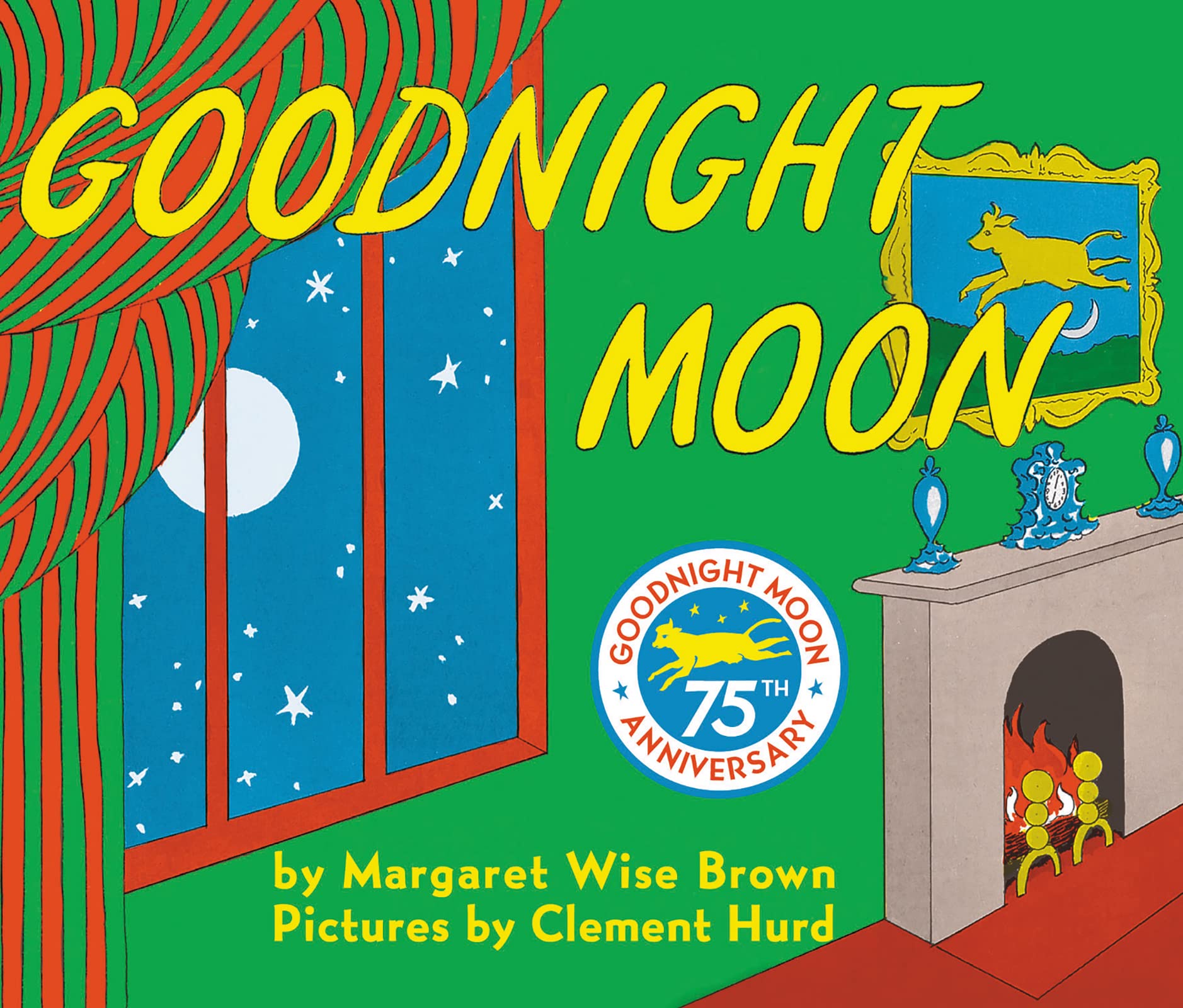
Goodnight Moon is less a story than a room you visit at the end of the day, and that is exactly why it works as a bedtime board book. The little bunny says goodnight to the objects in the great green room, one by one, and the repetition gives a baby a settling rhythm rather than a plot to follow. The 34-page count sounds long, but the pages are small and the text is spare.
The 5.8-by-4.9-inch trim is the smallest here, so it is a lap book rather than a floor book. We liked that for a crib-side chair: it is easy to hold one-handed while the other arm is around a baby. The alternating color and black-and-white spreads also give the book a visual hush, which is the sort of detail that matters when you are trying to bring the energy down at night.
We recommend it for the family who wants a bedtime ritual, not a book that teaches letters or counting. It is gentle enough to read when everyone is already tired, and the small scale keeps it from becoming a production. If your baby needs more bite-sized engagement, The Very Hungry Caterpillar is the better daytime pick; for the last book of the night, this is our favorite in the set.
Pros
- Quiet, repetitive bedtime ritual
- Color and black-and-white spreads slow the pace
- Small trim suits one-handed lap reading
Cons
We choose Goodnight Moon when the goal is sleep: its small, quiet ritual is the best wind-down here.
Best for Interactive Reading
Dear Zoo
Key Features
- Pages: 18
- Dimensions: 6.12 x 0.5 x 6.25 inches
- Interaction: Lift-the-flap
- Reading age: 1–3 years
- Price: Budget
Dear Zoo is built on one very good idea: every page invites a baby to lift a flap and find out which animal is hiding underneath. The text is simple and repetitive, and the animals are large enough for a baby to recognize before they can name them. At 18 pages, it is one of the shortest books here, which makes it easy to finish and start again.
We think it is the best interactive board book in this set for a baby who is just learning that pages can do something. The flaps are the whole point, and the reveal gives you a natural pause for animal sounds and a second look. It is the one we reach for when we want a baby to participate rather than just listen. Because the story is so simple, it leaves room for you to add the noises, ask where the elephant is, and let a toddler take over the lifting.
Pros
- Flaps make reading a hands-on game
- Simple repeated animal reveal
- Short enough for short attention spans
Cons
- Flaps can tear with rough handling
Dear Zoo is our interactive pick, and the one we keep for lap reading where an adult can protect the flaps.
Best for Truck-Loving Toddlers
Goodnight, Goodnight, Construction Site
Key Features
- Pages: 30
- Theme: Construction trucks
- Dimensions: 7.1 x 0.85 x 6.2 inches
- Reading age: 2–3 years
- Price: Budget
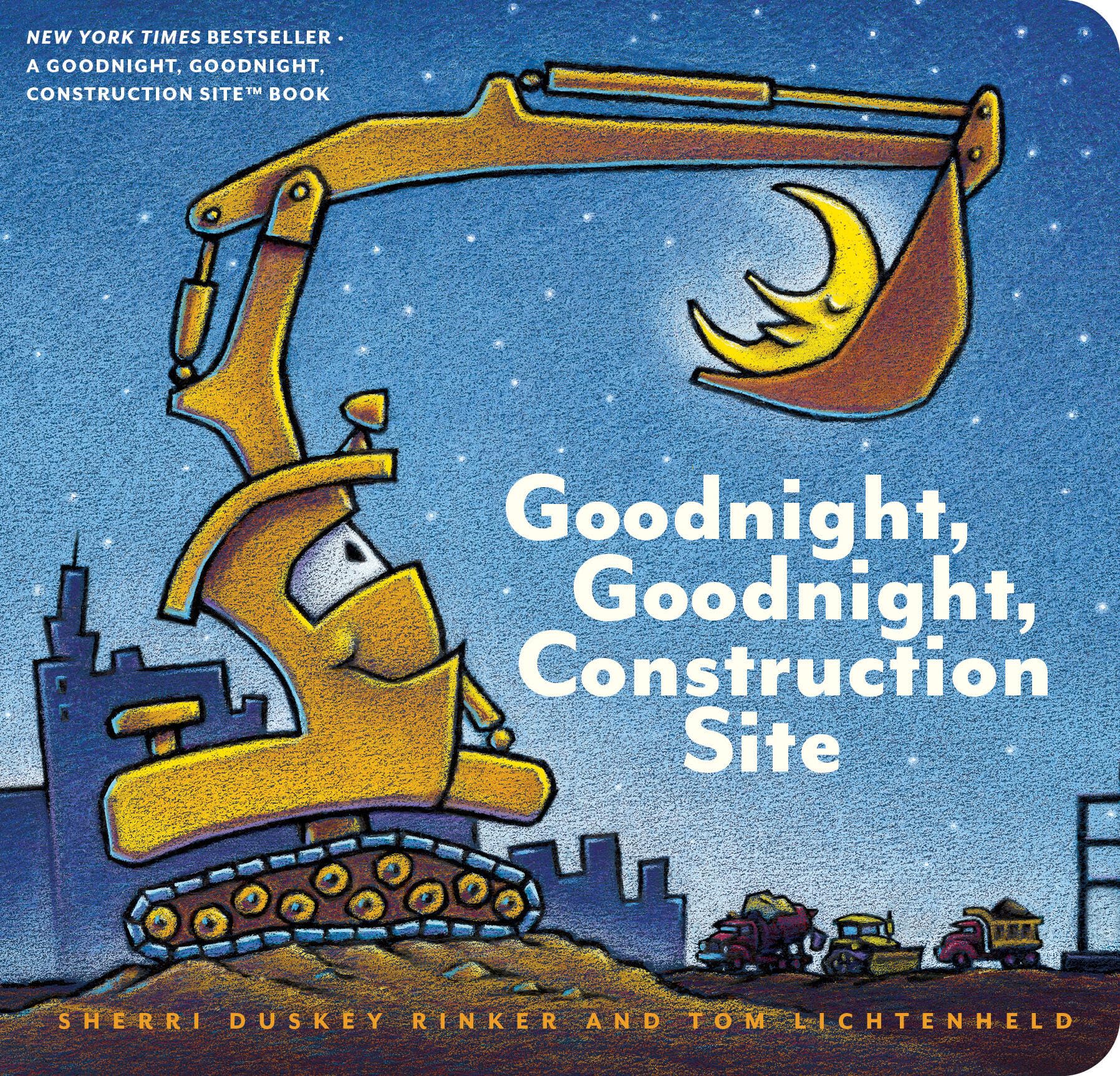
Goodnight, Goodnight, Construction Site is the board book for the toddler who points at every digger and cement mixer, and it earns that role by making the trucks wind down instead of revving them up. The rhymes follow each vehicle through its bedtime routine, and the illustrations give a truck-obsessed child plenty to name on every spread.
The stated reading age starts at two, and that fits: the 30-page rhyme is longer and more descriptive than the baby books here, so a younger baby may lose the thread before the crane gets to bed. For a two- or three-year-old who already knows the difference between a bulldozer and an excavator, the length is the pleasure. We found the rhyming cadence easy to read aloud and calm enough to use as the last book before lights-out.
Pros
- Rhyming bedtime routine for truck fans
- Calming read-aloud cadence
Cons
We reach for Goodnight, Goodnight, Construction Site when a truck-loving toddler needs a bedtime book that slows the day down.
Best for Sweet Gift
I Love You to the Moon and Back
Key Features
- Pages: 28
- Theme: Parent-child love
- Dimensions: 6.44 x 0.62 x 6.63 inches
- Reading age: Baby and up
- Price: Budget
I Love You to the Moon and Back is a small, square board book with the feel of a gift: a warm message, soft animal illustrations, and a trim that sits neatly in a newborn’s library. The text is a parent speaking to a child, and the sentiment is the point rather than the plot.
At 28 pages and 10.4 ounces, it is a substantial little book, heavier than several of the others here. We liked that weight for a lap read because the pages turn firmly and the book feels less likely to flop shut; it is less ideal if you want something ultralight for the diaper bag. The rhyme is simple enough to read when you are tired, and the animal pairs give a baby something to look at while the words wash over them.
We recommend it as a gift or a keepsake more than as a first independent book. It is the one we choose when we want a board book to say something, not just teach something, and it works well for a baby shower or a first-library starter. If you want a bedtime book with more of a ritual, Goodnight Moon is the stronger choice; if you want a message book, this is the one in this set.
Pros
- Warm parent-child message
- Gift-ready square board book
- Simple rhyme for tired reading
Cons
I Love You to the Moon and Back is the gift book we choose when the message matters more than the lesson.
Best for Alphabet Practice
Chicka Chicka Boom Boom

Key Features
- Pages: 36
- Dimensions: 5.5 x 0.9 x 7.25 inches
- Reading age: 1–4 years
- Learning focus: Alphabet
- Price: Budget
Chicka Chicka Boom Boom is the alphabet book that behaves like a chant, with lowercase letters climbing a coconut tree and a rhythm that carries a child from one page to the next. The letters are the characters, the tree is the stage, and the repeated refrain gives even a young toddler a line to join in on.
The 36-page text is longer and more wordy than the simplest books here, so it is not the one we start with for a newborn. For an older toddler who already recognizes a few letters, the extra language is the point: the rhyme gives letter names a shape and a sound, and the repeated ‘chicka chicka boom boom’ becomes a refrain a child can shout along with.
The small 5.5-by-7.25-inch trim keeps it manageable, though the busy pages are better for a child who can focus on a spread than for a baby swatting at the book. We liked the way the letters are the stars; it gives you something to point to and name without turning the read into a drill.
We recommend it as the alphabet pick in this set, best saved for the toddler years rather than the first board-book basket. If you want a book that teaches letters through repetition, this is the most playful option here; if your baby is still in the grab-and-mouth stage, Brown Bear is the easier place to start.
Pros
- Alphabet learning wrapped in a chant
- Bright letters and a refrain toddlers can join
Cons
We save Chicka Chicka Boom Boom for toddlerhood, when its alphabet chant can finally get the audience it deserves.
Best for Longer Story Time
Corduroy
Key Features
- Pages: 34
- Theme: Friendship
- Dimensions: 6.5 x 0.79 x 5 inches
- Reading age: Baby–4 years
- Price: Midrange
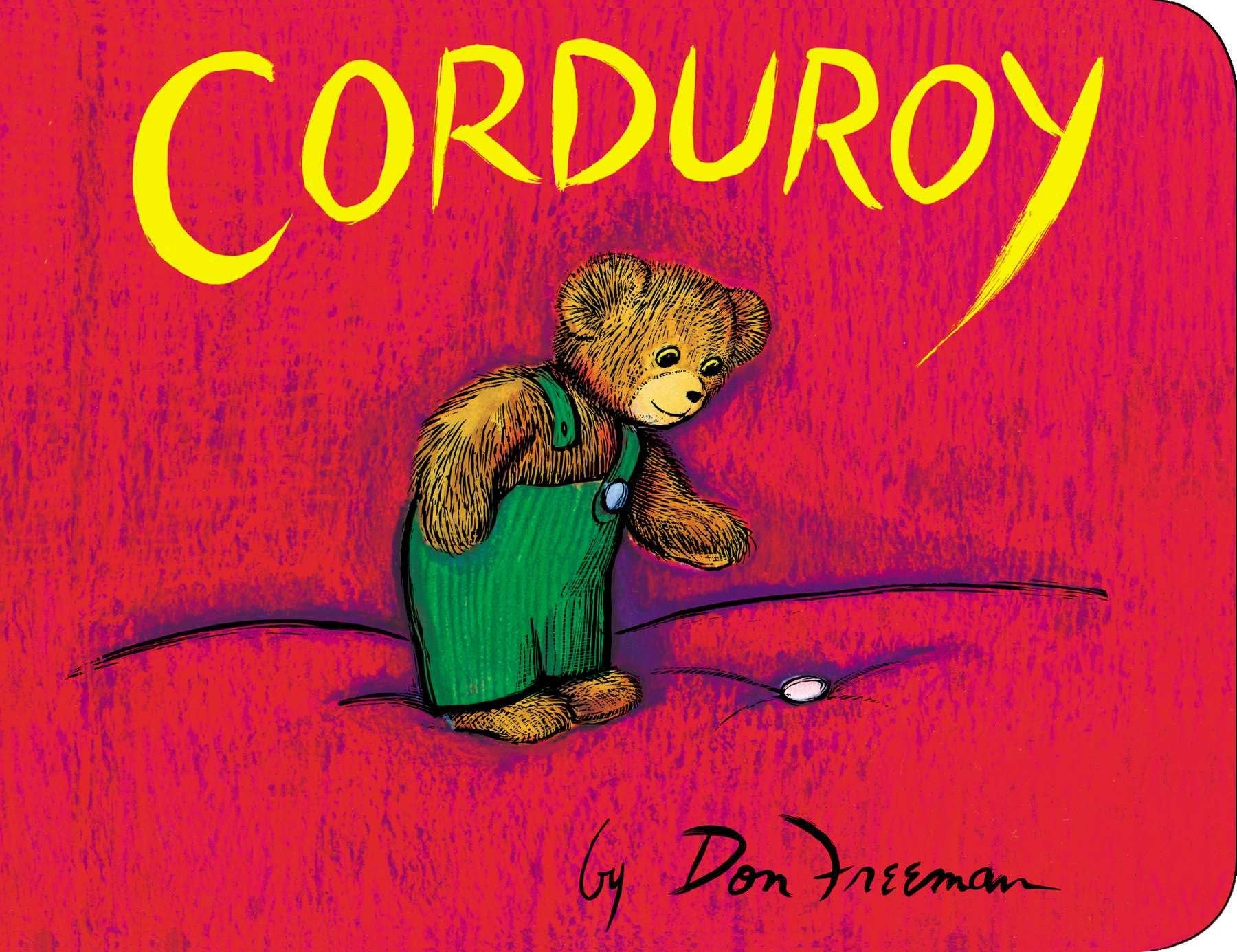
Corduroy is the longest story in this set, a department-store bear tale with a lost button, a nighttime search, and a friendship that resolves on the last page. That makes it a different purchase from the short, repetitive baby books here: it is a board book for the toddler who will sit through a plot, not the newborn who needs three words a page.
The 34-page board edition is compact at 6.5 by 5 inches, so it still fits a small lap even though the story is more involved. The illustrations have the soft, old-fashioned look that makes the department store feel like a place, and the narrative gives you more to talk about than colors or animal sounds: why Corduroy is looking for his button, why the girl wants him, what happens when a toy is missing a piece.
We found that the longer text is the main trade-off. A wriggly baby may check out before the night watchman appears, while a three-year-old who has favorite stories can follow the arc and ask for it again. The board pages themselves are sturdy enough for normal handling, but this is not the book we leave with a baby who is still learning how to turn pages without bending them.
We recommend Corduroy for the family who wants a classic story in a board format and is ready for a slightly longer read. It is the best longer-story board book in this set; if your child is still in the rip-and-grab phase, start with Brown Bear or Dear Zoo and come back to this one.
Pros
- Heartwarming friendship story
- Classic illustrations with plenty to discuss
- Board edition fits a small lap
Cons
Corduroy is the one we pick when a toddler is ready for a real story rather than a quick page of animals.
How We Tested (and Re-Tested) 18 Board Books
We started with the titles that get handed down and gifted — the classics — plus newer board books that kept surfacing on bookstore shelves and in other parents’ diaper bags, then narrowed by page count, page thickness, and whether the text worked without an adult explaining it. Every title had to exist as a true board edition rather than a paperback in disguise, and we passed on abridged classics where the trimming gutted the original’s rhythm.
Each of the 18 spent at least a week in rotation: read aloud at bedtime, tossed in the diaper bag for a wait at the pediatrician’s office, propped open during tummy time, and handed to a 9-month-old and a 2-year-old to see who reached for what. I read every one aloud at least five times and noted where I stumbled, where a rhyme forced an odd stress, and whether the ending landed or just stopped.
Then the less romantic part. I squeezed the page edges to compare thickness, ran a thumb along every corner, and checked the spine after a week in the bag. Books that came back from the high chair got wiped with a damp cloth to see whether the art smeared. Illustrations were judged at arm’s length, the distance a baby actually sees them, and we watched which spreads earned a finger point or a laugh. The ones that kept rising to the top of the stack are below.
How to Choose Baby Board Books
The board book that works is the one your baby can grab, mouth, and hand back without leaving you with a pile of torn paper.
Put page and flap construction first
A board book’s first job is survival. Look for thick, rigid pages with rounded corners and a binding that feels solid when the book is bent open. Lift-the-flap books add a second failure point: the flaps in Dear Zoo are the reason babies love it, but they need supervised lap reading rather than independent play until your child stops yanking. If a flap starts to lift at the hinge, retire the book rather than tape a loose piece back into a baby’s reach.
Match the book to the moment
Think about the job the book does in your day. A bedtime book should slow the room down: Goodnight Moon’s quiet repetition and Goodnight, Goodnight, Construction Site’s rhyming truck routine both end the day rather than wind it up. A daytime book can be more active: The Very Hungry Caterpillar gives you counting, foods, and a built-in page-by-page path, while Dear Zoo turns reading into a flap-lifting game. Buy for the routine you actually have, not the shelf you imagine.
Read the rhythm before you commit
Board books are performed as much as read, so test a page or two aloud. Repetition and rhyme do more work than a clever plot at this age: Brown Bear’s question-and-answer pattern lets a baby anticipate the next animal, and Chicka Chicka Boom Boom’s chant makes letters feel like a game. If the text is long enough that you start editing it down, save it for an older toddler and choose a shorter book for the first year.
Choose a size that suits your reading style
The trim size changes how you use a book. A compact square like Goodnight Moon or I Love You to the Moon and Back is easy to hold one-handed and tuck into a diaper bag; a slightly larger trim such as The Very Hungry Caterpillar gives a toddler more room to point on the floor. Board books are usually smaller than their picture-book counterparts, so check the dimensions if you are expecting a big gift edition.
Build a small rotation, not a big stack
Four to six board books cover the useful roles: one bedtime book, one interactive flap book, one rhyme or alphabet book, and one comfort read. Rotate them every week or two so the favorites stay fresh and the newer books get a chance. A small, well-chosen stack also makes it easier to notice which pages your baby reaches for, which is a better guide to the next purchase than a bestseller list.
Frequently Asked Questions
Do I need to buy the board-book edition of a classic I already own?
If your baby will handle the book, yes. Standard picture-book pages bend and tear under the grip of a baby who is learning to turn pages; a board edition lets the same story survive that stage. If you only read together with the book held out of reach, the picture-book edition is fine.
Can I clean a board book?
Wipe the cover and pages with a barely damp cloth, using a little mild soap only on sticky spots, then dry the book open so moisture does not sit in the binding. Do not soak it or put it in the dishwasher. Pay attention to lift-the-flap hinges, which are the first place to soften and tear.
Are board books safe for a teething baby?
Board books are not teethers. It is normal for babies to mouth them, but supervise that stage, check corners and flap edges for cracks or loose pieces, and remove any book that is shedding cardboard. A chewed board book belongs in the recycling, not back in the toy bin.
Final Verdict
The Very Hungry Caterpillar is the board book we recommend first. It has the clearest learning arc of the picks here, thick pages that stand up to baby handling, and a compact trim that works in a lap or a diaper bag.
If your priority is a quieter bedtime ritual, choose Goodnight Moon; if you want your baby to join in from the first reading, Brown Bear is the better fit. For most families, start with the caterpillar and add the other two as the routine calls for them.
