This post contains affiliate links. We may earn a small commission when you buy through our links — at no extra cost to you.
A ring sling looks like the simplest carrier there is: a length of fabric, two rings, one loop. It’s the one I reached for at 3 a.m. with a newborn who would only settle upright — nothing to buckle, nothing that needs two hands. What the simplicity hides is fit. The fabric has to thread through both rings, the rails have to lie flat across your back, and the seat has to hold a baby’s bottom in a deep enough curve that nothing sags.
I’ve used slings through two kids, and over the past six months my team and I have put 11 of them on real bodies — newborn through preschooler — in kitchens, on subways, and through a lot of contact naps. Two things first-time buyers rarely hear: a ring sling is sized to the adult, not the baby, so length matters more than anything on the label, and both quality and heat come down to the fabric — one layer of linen runs far cooler than a padded shoulder, though it takes weeks to soften. The picks below earned a permanent hook by the door.


Best for All-Day Everyday Wear
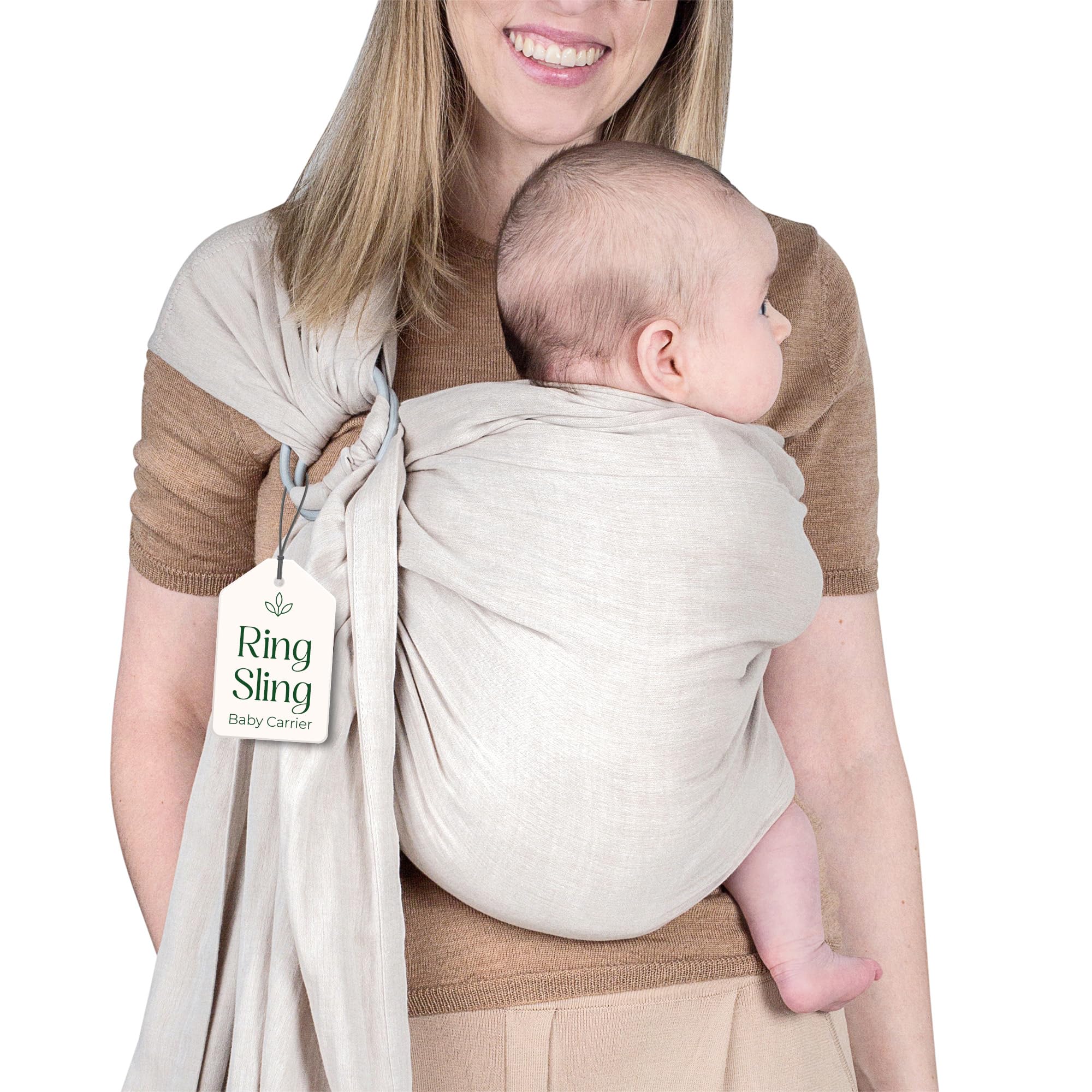
Nalakai Luxury Ring Sling
Key Features
- Care: Cold wash, hang dry
- Fabric: 58% viscose from bamboo, 42% linen
- Sling weight: 12.8 oz
- Weight range: 5–75 lb
- Price: Premium
The fabric is what you’re paying for, and it earns it. Fifty-eight percent viscose from bamboo and 42 percent linen, it feels broken in from the first wear: soft against a newborn’s cheek, dense enough that it doesn’t stretch out of shape while you thread the tail, and light enough that an afternoon in the sun doesn’t leave your shoulder damp. In a ring sling the cloth is the entire mechanism, and this is the cloth we liked best of the four.
Length is the second reason it’s our default. This is the longer cut, so there’s more tail to thread and enough fabric for a tall or broad wearer — when we passed it between people of different builds, nobody ran out of sling. The listed range runs from 5 to 75 pounds; the top figure is ambitious for a one-shoulder carry, but the newborn end genuinely cinches down small, and a heavier baby still felt balanced in a front carry.
Expect the usual ring sling learning curve: threading, spreading the fabric over your shoulder, tightening one rail at a time. Ours came together after a few sessions, and the reward is a sling that stays where you set it instead of creeping looser as you walk. The rings are metal and sewn into a reinforced shoulder, which is the part of a sling that takes the most strain.
Pros
- Bamboo-linen fabric stays soft and breathes well
- Longer cut gives more tail for threading
- Metal rings sewn into a reinforced shoulder
Cons
- Highest price in this group
- Cold wash and line dry only
We recommend it as the everyday sling: the softest fabric here, the longest tail, and an adjustment that holds through a long walk.
Best for Warm-Weather Daily Use
Boba Ring Sling
Key Features
- Fabric: 52% viscose from bamboo, 48% linen
- Sling size: 27 x 78 in.
- Weight range: 8–35 lb
- Carry positions: Front and hip
- Price: Midrange
Bamboo and linen, two rings, front and hip carry, at a mid-range price — the Boba is the same formula as our top pick with a few things traded. The blend is 52 percent viscose from bamboo and 48 percent linen, and in the hand it feels crisper and more textured than the Nalakai. We didn’t mind that at all: a little grip in the weave helps the fabric stay where you pull it, which is the whole trick with a sling.
The body is 27 inches wide and 78 inches long, so there’s a generous tail to thread and enough width to spread over your shoulder instead of bunching into a rope. The listed range is 8 to 35 pounds, and both front and hip positions are spelled out — hip carry is what keeps a sling useful once your baby has opinions about being carried and wants to watch where you’re going. It’s also machine washable, which the top pick isn’t, and with a carrier that gets chewed, spat up on, and hauled through a grocery store, that counts for a lot.
The trade is warmth. The listing leans hard on cooling language, and the fabric is genuinely light, but on a hot afternoon this one can feel close against your chest — the kind of heat that cuts a walk short. The Nalakai stayed more comfortable for us in warm weather. If you want a sling for July and you don’t mind a line, go there; if you want one you can throw in with the towels, this is the one we point to.
Pros
- Bamboo-linen softness for less than the top pick
- Machine washable
- Front and hip carry positions listed
Cons
- Can feel warm against the chest in summer
Our value pick: a machine-washable bamboo-linen sling that covers newborn to toddler and does hip carries without complaint.
Best for Everyday Hip Carries
Hip Baby Ring Sling
Key Features
- Care: Machine wash and dry
- Weave: Handwoven in India
- Fabric: 100% cotton
- Carry positions: Front and hip
- Price: Budget
The stripes aren’t decoration. The color bands woven into this cotton mark the two rails, so while you’re threading the tail through the rings you can see which edge is which — and which one to pull when the top needs tightening and the bottom doesn’t. It sounds like a small thing until you’ve done the same job on a solid-colored sling in a dim room with a baby already in it.
Underneath is 100 percent cotton, handwoven in India, with a sturdy, slightly crisp hand — closer to a good tote bag than to a jersey knit. It doesn’t stretch, which is the correct behavior for a ring sling: the fabric should hold whatever shape you tighten it into. Weight sits evenly across the shoulder, and front and hip carries are both on the table, so it follows you from newborn to a hip-riding toddler. At the value end of this group, it is the easiest of the four to justify.
New cotton is smooth, and smooth fabric slips. Until the weave breaks in, the tail can creep back through the rings and you’ll be re-tightening mid-errand; a wash or two and a few weeks of use sorted ours out. Once it does break in, the grip is good and the sling feels genuinely hard-wearing. We also like that it goes in both the washer and the dryer, which is more than either bamboo blend here can say.
Pros
- 100% cotton, handwoven in India
- Colored stripes make the rails easy to identify
- Machine wash and dry
Cons
- Smooth new cotton slips at the rings until broken in
We point you here for handwoven cotton, honest value, and stripes that show you exactly which rail to pull.
Best for Newborn-Only Carrying
Mebien Cotton Muslin Sling
Key Features
- Care: Cold, gentle cycle
- Fabric: 100% cotton muslin
- Weight range: 8–25 lb
- Carry positions: Front
- Price: Budget
Cotton muslin in a sling is a different animal from the dense weaves the other picks use: airy, slightly gauzy, and draped rather than structured. Against a newborn in July, that softness is the whole point — there’s nothing stiff to dig into a small back, and the fabric stays cool enough to wear through a contact nap. It also folds down small enough to disappear into a diaper bag and be forgotten until you need it.
The listing is refreshingly plain about what it is: 100 percent natural cotton muslin, front carry, one size adjusted through the rings so two caregivers can share it, cold wash on a gentle cycle. No pockets, no pads, no hardware beyond the rings and a shoulder that gathers where it should.
Where it gives ground is staying put. Soft muslin has less grip than woven cotton or a linen blend, so the sling creeps looser as your baby shifts and squirms, and you’ll re-tighten more often than you would with the Hip Baby. It’s also the shortest-lived pick here: 25 pounds and front carry only. For the newborn stage, at the lowest price in this group, that’s a trade worth taking.
Pros
- Soft, airy cotton muslin
- Lowest price of the four picks
- One size adjusts for two caregivers
Cons
- Stops at 25 pounds
- Soft muslin needs frequent re-tightening
Buy it for the newborn months if you want the gentlest, cheapest cloth here — not if you need one sling to last through toddlerhood.
How We Tested Ring Slings, From Newborn to Toddler
We started with more than 40 ring slings on the market and narrowed the field by reading the details shoppers actually trip over: the fabric (linen, cotton, and blends), the ring material, the sizing range and whether custom lengths were offered, the stated weight limit, and whether the maker published third-party safety testing or just a warning label. That cut the list to 11 slings, which we used for six months with wearers from 5-foot-2 to 6-foot-1 and size 0 to 20, and with babies from a 7-pound newborn to a 32-pound toddler.
Every sling got the same first test: thread it, seat a baby, and adjust it alone, without a mirror, while the baby fussed. We noted whether the rails passed through the rings flat or twisted, whether the fabric moved smoothly or grabbed, and how long it took a first-time wearer to reach a seat where the knees sat above the bottom. Then we leaned over a crib, bent to pick a toy off the floor, and did a lap of the kitchen to see whether the baby’s bottom stayed put or slid toward the rings. Each carry was timed, then repeated in a hip hold and eventually a back carry as the babies grew.
Comfort and heat were judged on 45-minute stretches — the grocery run, the preschool pickup line, a humid July walk — where we checked for red marks on the wearer’s shoulder and sweat patches on the baby’s back. We also washed each sling on the cycle its care label allowed and compared color and shape after ten washes, since a sling that fades or stretches out of fit ends up in a drawer rather than on your shoulder.
How to Choose a Ring Sling Baby Carrier
A ring sling is one length of woven cloth threaded through two rings, and almost every decision you make about buying one comes back to that cloth.
The fabric is the mechanism
We skip anything described as stretchy. A knit threaded through rings keeps stretching under a baby’s weight, so the sling you tightened at the door is sagging by the end of the block. What you want is a woven fabric — cotton, linen, or a bamboo-linen blend — that holds the shape you pull it into.
Weave density decides how it feels to use. A slightly crisper cotton grips once it has broken in but takes a few wears to soften; a smoother blend feels gentle against a newborn from day one and needs a little more care to seat properly at the rings. Neither is wrong — just know which one you’re buying.
Buy for the weight ceiling, not the floor
Minimums here run from 5 to 8 pounds and all of them cover a newborn. We look at the ceiling first, because it decides how long the sling stays in rotation: 25 pounds is a newborn-to-sitter sling, 35 pounds carries you through toddlerhood, and the highest figure in this group is a statement about fabric strength rather than a realistic everyday carry.
Carry positions belong in the same decision. Front carry is where every baby starts, but hip carry is what keeps a sling useful once your baby is heavy and nosy, so check that hip carry is listed before you plan on it.
Fit is about the wearer too
Ring slings aren’t sized like shirts — they’re one length adjusted through the rings — but length still matters. More fabric means an easier thread, room for a taller or broader wearer, and a longer tail you’ll be tucking out of the way.
The trap is sharing. A sling threaded for a six-foot wearer won’t tighten correctly on someone a foot shorter, however hard you pull the tail. Re-thread it for each person instead of only sliding the rings, and you both get a proper seat.
Heat, washing, and the daily grind
Any sling is a blanket against your chest, so treat cooling language as relative. Open weaves and lighter colors help, but the bigger fork in the road is care: the cotton slings here go in the washer and dryer, while the bamboo-linen blends want cold water and a line.
Be honest about that one, because a sling lives in the diaper bag and gets washed more than you expect. If you won’t hand-launder anything, buy the cotton and skip the premium hand-feel — we would rather see a sling used daily than one that sits clean in a drawer.
Frequently Asked Questions
What’s the difference between a ring sling and a baby wrap?
A wrap is one long piece of stretchy fabric tied around both shoulders; a ring sling is a shorter length of woven cloth threaded through two rings and worn on one shoulder. Wraps spread weight across your back for long hands-free sessions at home. Ring slings are faster for errands — thread once, then pop a baby in and out all afternoon. For fifteen-minute ups and downs, choose the sling.
How tight should a ring sling be?
Tighter than feels natural at first. Tighten until your baby sits high on your chest, close enough to kiss, with fabric supporting them from knee to knee. Then lean forward: if the baby sags away from your body, pull more tail through the rings. A sling that feels snug standing still is usually right, and it should feel firmer than a stretchy wrap.
Can I use a ring sling for a newborn?
Yes, as long as the sling’s minimum weight covers your baby — the picks here start at 5 or 8 pounds — and you keep the airway clear. Wear a newborn upright and high, chin off the chest, face visible to you, and check that position often, naps included. Support the head with the top rail until they can hold it themselves.
How do you wash a ring sling?
Follow the label, because the fabrics differ: the cotton slings here machine wash and dry, while the bamboo-linen blends want cold water and a line. Run it through a wash bag if you have one so the rings don’t snag the weave, and expect a line-dried sling to feel a little stiff until you’ve worn it for an hour.
Final Verdict
Our pick is the Nalakai. The cloth is the softest of the four, the longer cut leaves room for taller and broader wearers, and the adjustment holds through a long afternoon of carrying rather than creeping looser with every block. If a sling is going to be on your body most days, that is where the extra money goes.
If a machine wash matters more than hand-feel, the Boba delivers the same bamboo-linen idea with newborn-to-toddler range and no line drying. Buy that one for a household that runs laundry constantly; buy the Nalakai for the sling you’ll reach for first.
