This post contains affiliate links. We may earn a small commission when you buy through our links — at no extra cost to you.
At 7:40 on a school morning, there’s no time to negotiate over snack. A bar that shatters into dust in the bottom of a lunchbox, or comes home with one bite taken out of it, is why many parents fall back on crackers and string cheese. What a good kids’ granola bar fixes is small but real: it survives the backpack, gets eaten, and holds a kid over until dinner without making you wince at the price per bar.
Over the past four months, my team and I handed 16 different bars to kids ages three to twelve across four households and let them do most of the judging. Kids are honest critics — they won’t finish something they don’t like just because it’s on the counter. The takeaway: the flavors adults find appealing are rarely the ones kids go back for, portability lives or dies on whether a first grader can open the wrapper alone, and freshness is the one thing you can’t judge from the box. Every pick below got finished, most of the time.



Best for Everyday Lunchboxes
Quaker Chewy Chocolate Chip
Key Features
- Count: 58 bars
- Texture: Chewy
- Calories: 100 per bar
- Whole grains: 9g per bar
- Price: Budget
A 58-bar box is the closest thing to a set-and-forget lunchbox snack: you buy it, you stock the pantry, and you stop thinking about snacks for a while. We make it the default because it hits the middle of the kid-bar market: chewy, sweet, and small enough to sit beside a sandwich. The bar has real chocolate chips, 9 grams of whole grains, and 100 calories, with no artificial preservatives or colors. That is not a health-food promise; it is a snack that gets eaten.
The individual wrappers matter as much as the recipe. They survive a backpack, a glove box, and a lunchbox ice pack, and the portion is modest enough that a child can have one after school without ruining dinner. Chocolate chip is also the least divisive flavor here; it is the bar we hand to a friend’s kid without asking whether they like oats.
The 58-count box is a commitment, but it is the right one for a family that packs lunch five days a week. If you have one child or a small pantry, the smaller Sunbelt carton makes more sense. For everyone else, this is the bar that keeps the snack drawer full without a second thought.
Pros
- Soft, familiar chew most kids accept
- 58 individually wrapped lunchbox bars
- 9g whole grains and 100 calories
- Budget-friendly bulk box
Cons
- Large box can outlast peak freshness
We make this the default lunchbox bar: soft, familiar, and budget-friendly in a box that lasts through the week.
Best for Older Crunchy Fans
Nature Valley Crunchy Oats ‘n Honey
Key Features
- Count: 60 bars
- Pouches: 30 two-bar pouches
- Texture: Crunchy
- Whole grains: 22g per serving
- Price: Budget
The two-bar pouch is the giveaway: Nature Valley’s crunchy bar is built for dividing. One pouch gives a child a snack now and a second bar later, and the 22 grams of whole grain per serving is a real number rather than a dusting of oats. The bars are brittle, though, so they are not the tidy choice for a backpack that gets tossed around.
That crunch is exactly why we keep it in the rotation for older kids. It is the pick for a child who finds soft-baked bars mushy and wants something with a snap; the honey flavor is sweet without crossing into dessert. The two-bar format also makes it easy to send a smaller portion without opening a separate wrapper.
The 60-bar box is a budget way to cover snacks, and the pouches are easier to portion than a giant single bar. It is the pick for a child who wants a real crunch, not a soft chew.
Pros
- Satisfying crunch for older kids
- 22g whole grain per serving
- 60 bars in two-bar pouches
Cons
- Harder bite for younger children
We keep these for older kids who want a real crunch, not a soft lunchbox chew.
Best for Smaller Households
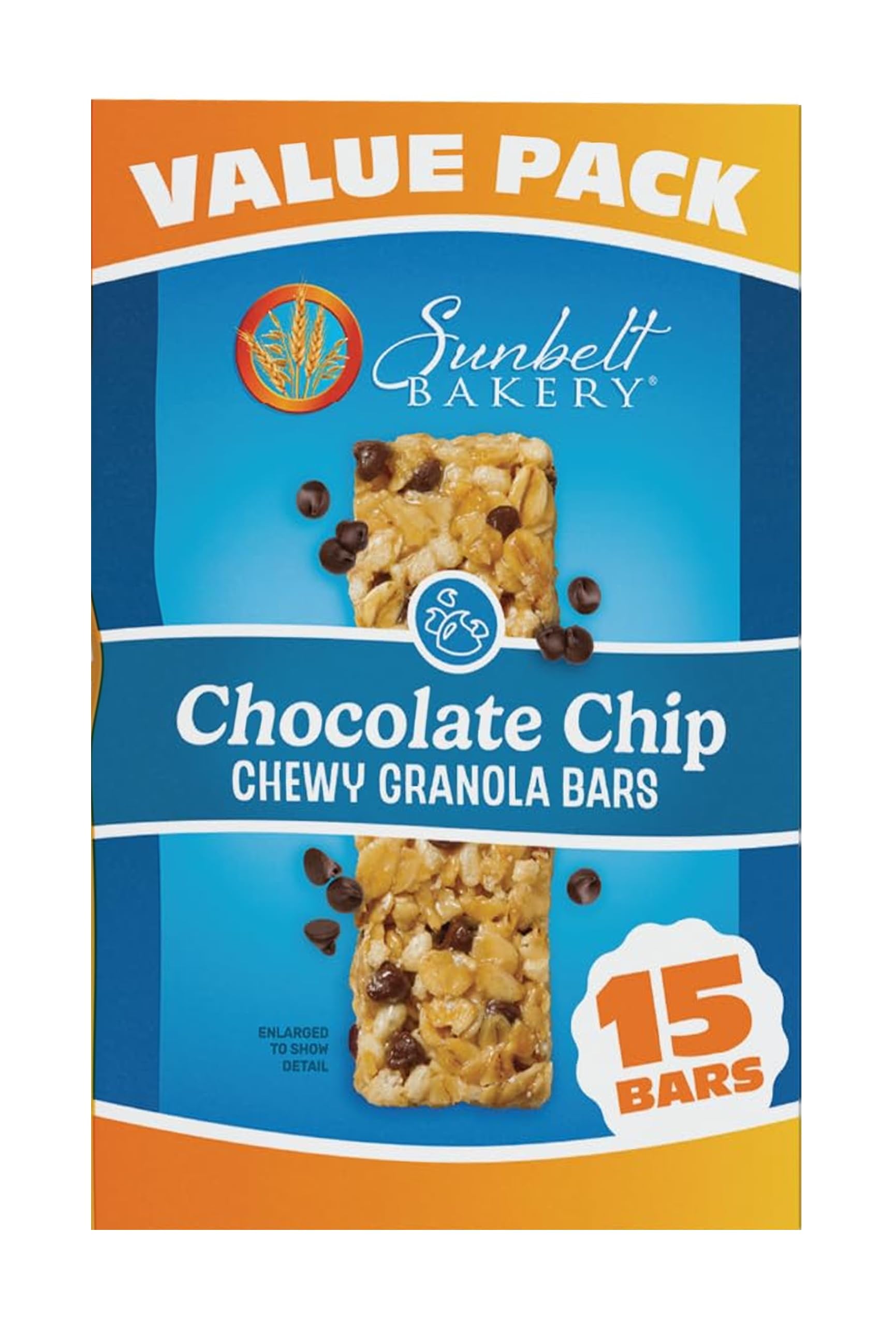
Sunbelt Bakery Chewy Chocolate Chip
Key Features
- Count: 15 bars
- Texture: Chewy
- Bar size: 1.1 oz
- Whole grains: 8g per serving
- Price: Budget
Fifteen bars is an odd size until you have thrown out the last third of a giant box. Sunbelt’s carton is aimed at smaller households, and the 1.1-ounce bars are a manageable lunchbox portion for a younger child.
The bar is chewy and chocolatey, with 8 grams of whole grain per serving, and it leans closer to a candy bar than a health bar. That is not a criticism in a kid snack; it is why the box empties.
We pick Sunbelt when freshness and counter space matter more than stockpiling. The 15-count carton is easier to finish, and the bars have a simple, soft chew that does not ask a child to work too hard. It is the smaller-box answer for one child, not the bulk-buy answer for a crowd.
Pros
- Soft chocolate-chip chew
- 15-bar carton suits small households
- 8g whole grain per serving
Cons
- Costs more per bar than bulk boxes
For a smaller household, this is the chewy bar we finish before it goes stale.
Best for Younger Soft-Baked Fans
Clif Kid Zbar Chocolate Brownie
Key Features
- Count: 18 bars
- Texture: Soft-baked
- Whole grains: 11g per bar
- Certification: USDA organic
- Price: Premium
Chocolate brownie is doing a lot of work in the name, and for a kid that is the point. Zbar’s soft-baked bar tastes like a lunchbox dessert, but it is built on organic oats and has 11 grams of whole grains per bar. We use it as the treat that happens to have some substance, not as the everyday cheap filler.
The texture is the reason it earns a place. It is softer and more muffin-like than a chewy oat bar, which makes it easier for younger children to bite through. The chocolate flavor is deep enough that a picky eater may accept it without a negotiation.
The catch is that brownie flavor is not universal; some kids want a plain oat bar. Try one box before you commit, and keep it for the child who wants a softer, dessert-leaning snack.
Pros
- Soft-baked texture for younger chewers
- USDA organic with 11g whole grain
- Brownie flavor kids recognize
- Individually wrapped lunchbox size
Cons
- Texture can be dry for some kids
- Premium price for an 18-bar box
We reach for Zbar when a younger child needs a softer bar and you want organic oats without a plain oat flavor.
Best for Nut-Free Schools
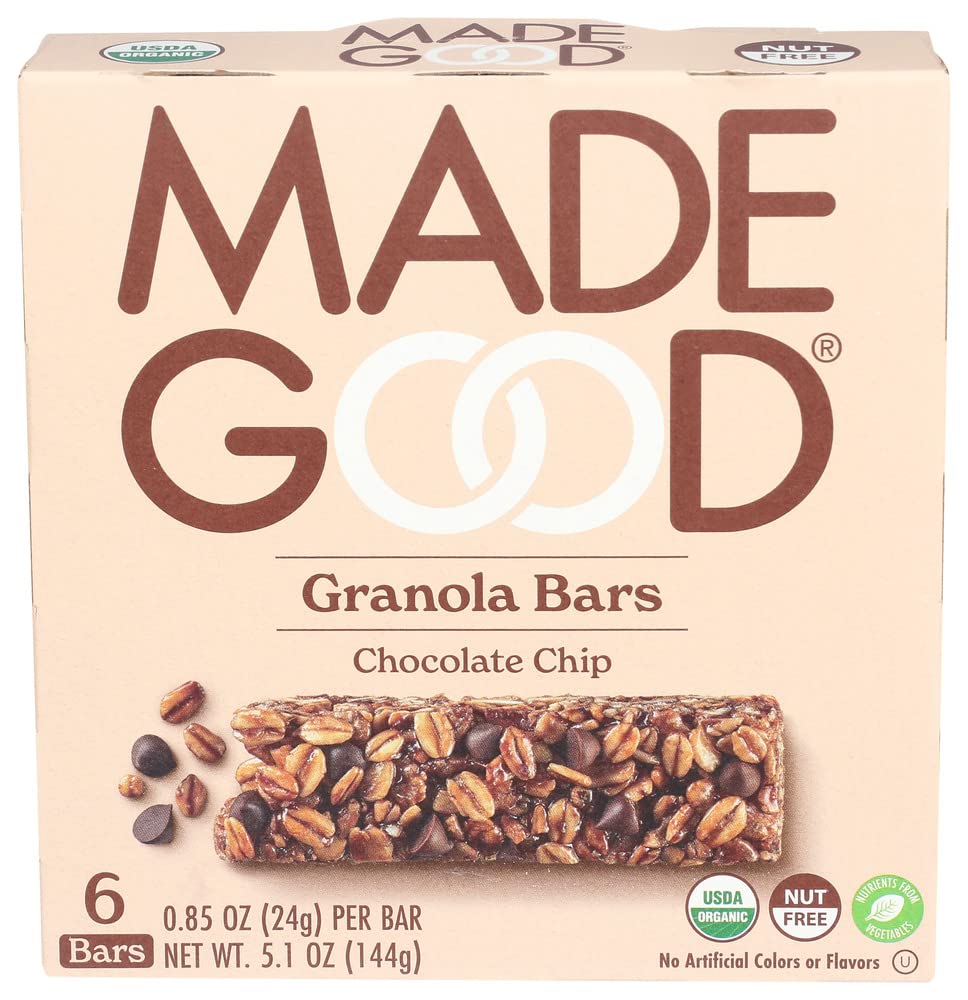
MadeGood Chocolate Chip
Key Features
- Count: 6 bars
- Bar size: 0.85 oz
- Facility: Dedicated nut-free
- Allergens: Free from top 8
If the lunchbox rule is ‘no nuts, no exceptions,’ the useful question is not flavor. It is whether the bar was made somewhere you can trust. MadeGood’s chocolate chip bar is free from the top eight allergens and made in a dedicated nut-free facility, which is the detail that matters when a classroom has a strict policy.
We like it as the allergy-friendly pick because it does not taste like a compromise. The bars are soft, chocolate-chip sweet, and small enough at 0.85 ounces for a preschooler. The six-bar box is the weak point: it runs out fast.
That small size is also the point. A bar that fits a small hand and does not take ten minutes to finish is the right preschool portion, and the soft chew is easy to manage. Keep this in the allergen-safe bin and check the school’s specific policy, since nut-free labels vary.
Pros
- Free from top 8 allergens
- Dedicated nut-free facility
- Soft preschool-size bars
Cons
- Small bars may not satisfy older kids
We recommend it for nut-free classrooms and younger snackers, with the caveat that the six-bar box disappears quickly.
Best for Classroom Variety
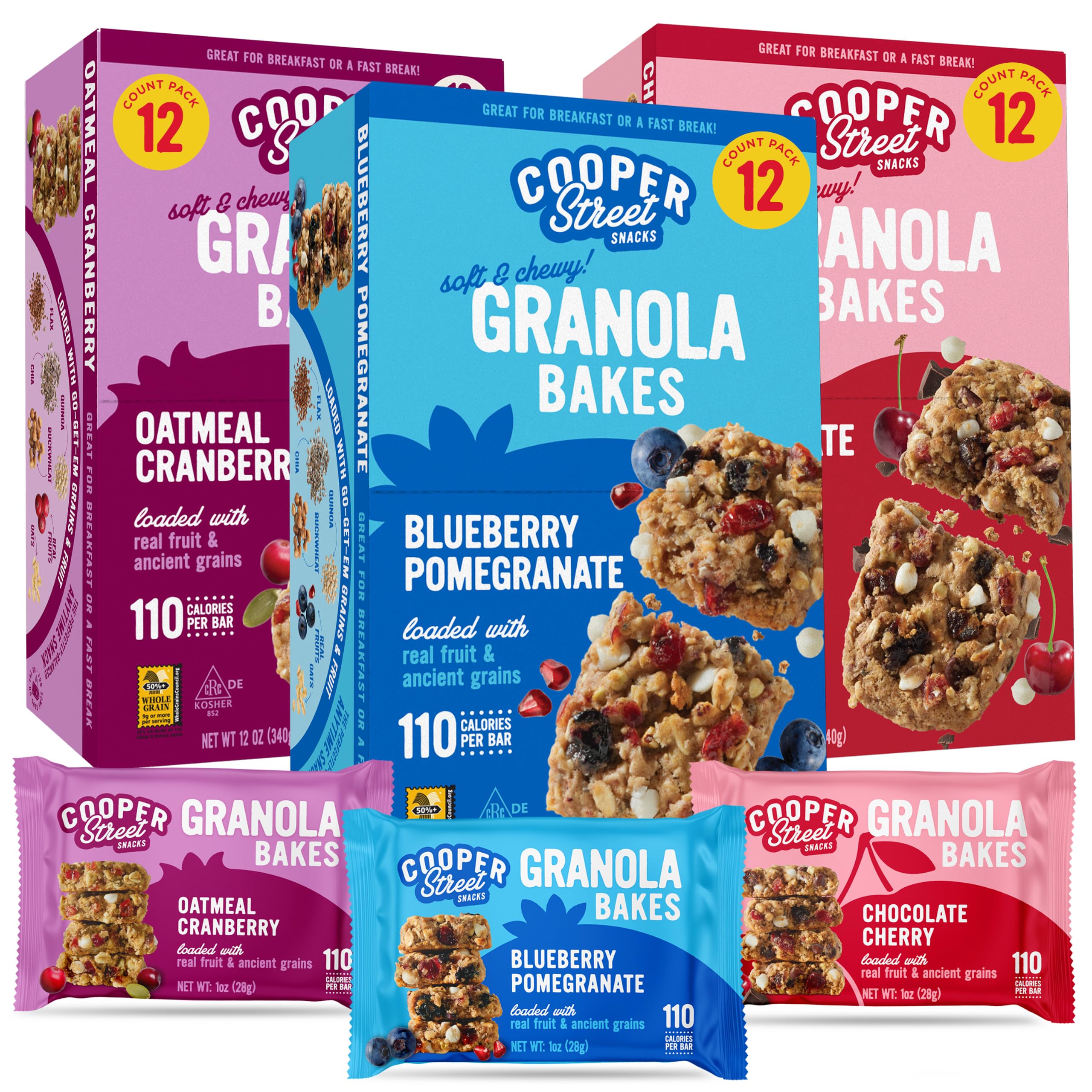
Cooper Street Soft Baked Fruit
Key Features
- Count: 36 bars
- Texture: Soft-baked
- Calories: 110 per bar
- Allergen facility: Peanut and tree nut free
- Price: Premium
Thirty-six bars is a lot until you are the parent supplying the whole soccer team. Cooper Street’s soft-baked fruit variety pack is built for that job: 36 individually wrapped bars, 110 calories each, and a mix of fruit flavors that lets a kid choose without a negotiation.
The texture is softer than a crunchy oat bar, with a little bit of chew and real fruit pieces. It is made in a dedicated peanut- and tree-nut-free facility, which is the reason to consider it for classrooms and team snacks rather than just another box of oats.
We put it in the school-safe category because the variety and the facility claim solve a real problem: you can hand one box to a coach or teacher and cover a crowd. The bars are on the small side, so older kids may eat two, but the format is built for sharing.
Pros
- 36 individually wrapped bars
- Dedicated peanut- and tree-nut-free facility
- Soft-baked fruit variety
- 110 calories per bar
Cons
- Premium price for a 36-bar box
This is our pick when one box has to cover a classroom or team, not when you are buying the cheapest everyday bar.
Best for Organic Chewy Fans
Annie’s Organic Chewy Chocolate Chip

Key Features
- Count: 12 bars
- Texture: Chewy
- Whole grains: 8g per serving
- Certification: USDA organic
- Price: Midrange
Annie’s organic chewy bar has the ingredient list many parents want and the texture question that decides whether kids finish it.
The bar is made with organic ingredients, 8 grams of whole grains per serving, and no artificial flavors, synthetic colors, or high-fructose corn syrup. The chocolate-chip flavor is familiar, and the 12-count box is easy to tuck into a pantry without committing to a giant supply.
The texture is where it gets tricky. It is meant to be chewy, but some bars arrive hard enough that a younger child struggles to bite through. That is the kind of thing to check before you put it in a preschool lunchbox; for an older kid with a sturdy bite, it is less of an issue.
We keep Annie’s as a supporting pick because the organic story is stronger than the everyday value. If your child already likes a denser chewy bar and you want organic oats, it is a good fit; if you need a soft bar for a toddler, Zbar is the safer texture.
Pros
- USDA organic ingredients
- 8g whole grain per serving
- No artificial flavors or synthetic colors
Cons
- Small 12-bar box
We keep Annie’s for organic-minded families with older chewers, not as the softest choice for a preschooler.
Best for Chocolate Treats
Quaker Chewy Dipps Chocolate Chip

Key Features
- Count: 14 bars
- Coating: Chocolatey flavored
- Texture: Chewy, chocolate-covered
- Bar size: 1.09 oz
- Price: Budget
Chocolate-covered granola is still granola, but it is also dessert, and we prefer to say that plainly.
Quaker’s Chewy Dipps packs a chocolatey coating around a chewy granola bar with real chocolate chips. Each bar is 1.09 ounces, individually wrapped, and made without added colors, artificial flavors, or artificial preservatives. The 14-count box is sized for a treat drawer rather than a month of lunchboxes.
The coating changes the job. A plain chewy bar can go in a lunchbox every day; this one feels more like a candy-bar alternative, and that is how we use it. It is a good portion-controlled treat for a kid who wants chocolate, but it is not the bar we reach for when we want something plain and everyday.
We keep it as a treat-day pick because it does one thing well: it gives a chocolate craving a little more structure than a candy bar. For everyday snacks, the plain Quaker Chewy is the better buy; for an after-school treat, the Dipps earns its place.
Pros
- Chocolatey coating kids like
- Portion-controlled treat
- No artificial flavors or added colors
Cons
- Coating can melt in warm bags
- Small 14-count box
We treat it as a lunchbox dessert, not the everyday bar; buy it when chocolate is the point.
How We Tested 16 Granola Bars for Kids
We started with more than 40 bars on grocery shelves and in online multipacks, then narrowed the field by reading ingredient panels, checking allergen labeling, and ruling out anything that looked too large for a small hand or too expensive to hand out more than once a week. That left 16, which we bought ourselves within the same few weeks so nobody was tasting a box that had been sitting in a warehouse since spring. We noted the best-by date on every box that arrived, whether the multipack showed up crushed or intact, and how easily we could find it in stock again — then handed the bars to the real panel: kids from three to twelve in four households, plus the adults who pack the lunches.
Bars went into lunchboxes at 7:40 a.m., into backpacks for the walk to school, into a soccer bag that sat in the sun, and into the glove box for after-practice pickup. We unwrapped at kitchen tables, on playground benches, and in the car. At each sitting we noted whether the bar shattered at the first bite or held together, whether it left crumbs down a shirt or stuck to teeth, and whether the texture read as properly crunchy, chewy, or somewhere in between. Several kids opened their own wrappers; we watched whether that ended in a clean tear or a mangled mess and a bar on the ground.
Durability got its own pass: each bar rode in a backpack next to a water bottle and a folder for a full school day, and we looked at how much of it had broken apart by afternoon. We also counted what came home, because the half-eaten bars and the untouched ones say more about size and taste than any rating. Value came down to cost per bar against how much actually got eaten, and to whether an open multipack could sit in a pantry for a week without going stale. The bars that made the list were the ones kids asked for again.
How to Choose Granola Bars for Kids
The right bar is the one your child will actually chew and finish, so start with texture and allergen rules before you compare pack sizes.
Start With the Bite, Not the Box
Soft-baked bars are the easier entry for toddlers and preschoolers; crunchy bars can be too hard and messy for small mouths. A chewy bar sits in between, but chewy can still mean tough, so look for bars described as soft and check the first one before it goes in a lunchbox.
We keep soft-baked options like Zbar and Cooper Street for younger kids, and crunchy Nature Valley for older children who want snap. If your child still handles pretzels and crackers cautiously, start with soft-baked; if they bite through toast easily, a crunchy bar is fair game.
Allergen and School Rules
A no-nuts claim on the front is not enough for a nut-free classroom. Look for a specific allergen statement and, where it matters, a dedicated nut-free facility; MadeGood and Cooper Street both make that claim. Check your school’s policy too, because one district’s rule is not another’s.
If your child has a diagnosed allergy, confirm the label every time and treat a front-of-pack claim as a starting point, not a guarantee.
Match the Bar to the Appetite
A 0.85-ounce bar is a preschool snack; a 1.1-ounce bar is a more typical school-age portion. If your child routinely eats two, a smaller bar is not a value—it is just two wrappers. Look at the bar weight and calories together, then decide whether you are buying one snack or two.
For a younger child, MadeGood’s small bar makes sense; for an older kid, Sunbelt’s 1.1-ounce bar is a better fit.
Read the Oats and Sugar, Not the Front Label
Whole grains and calories tell you more than organic or healthy alone. Organic bars can still be sweet treats; a 100-calorie bar with 8 to 11 grams of whole grains is a snack, not a meal. Use the label to decide whether it is an everyday bar or an occasional treat.
We keep the chocolate-covered Dipps for treats and the plain Quaker Chewy for the daily lunchbox.
Buy the Box You’ll Finish
Granola bars are shelf-stable, but they do not improve with time. A 58- or 60-count box is the budget play for a busy family; a 15-count carton makes more sense for one child or a small pantry. Check the best-by date when the box arrives, and store it cool and dry.
If a bar tastes stale or arrives crushed, return the box rather than letting it sit in the pantry.
Frequently Asked Questions
What is the difference between a granola bar and a cereal bar?
Granola bars are built around oats and whole grains, while cereal bars often start with puffed cereal and a syrupy binder. The front of the box is not reliable; check the first grain in the ingredient list. If you want a granola bar, oats should be near the top, and a chewy or crunchy oat texture is the giveaway.
How do I keep granola bars from getting crushed in a lunchbox?
Put the bar in a hard-sided container or an outside pocket, not at the bottom of a backpack under a water bottle. Crunchy bars and two-bar pouches are the most fragile; soft-baked bars hold together better. If a bar does break, crumble it over yogurt instead of throwing it out.
Final Verdict
For most families, Quaker Chewy Chocolate Chip is the bar to buy first: soft enough for a school-age child, familiar enough that it gets eaten, and cheap enough per bar to keep the lunchbox stocked. If your child needs a nut-free classroom snack, MadeGood or Cooper Street is the safer place to start; if they want crunch, Nature Valley.
The deciding question is texture first, then the allergen rule.
