This post contains affiliate links. We may earn a small commission when you buy through our links — at no extra cost to you.
Travel car seats promise portability, but the real split in this category isn’t weight or price — it’s age. What works for a 15-pound infant (an integrated stroller seat that eliminates transfers) is useless for a 40-pound preschooler who just needs a lightweight booster to toss in a suitcase.
Manufacturers sell ‘all-in-one’ convertibles as the only seat you’ll ever need, but real-world ownership reveals that strap-tightening headaches and heavy weight make them poor travel companions beyond the occasional road trip. The actual decision comes down to whether your child still needs a carrier or has graduated to a backless booster, and whether you prioritize convenience at every step or maximum portability for the luggage bin.



Best for Urban & transit
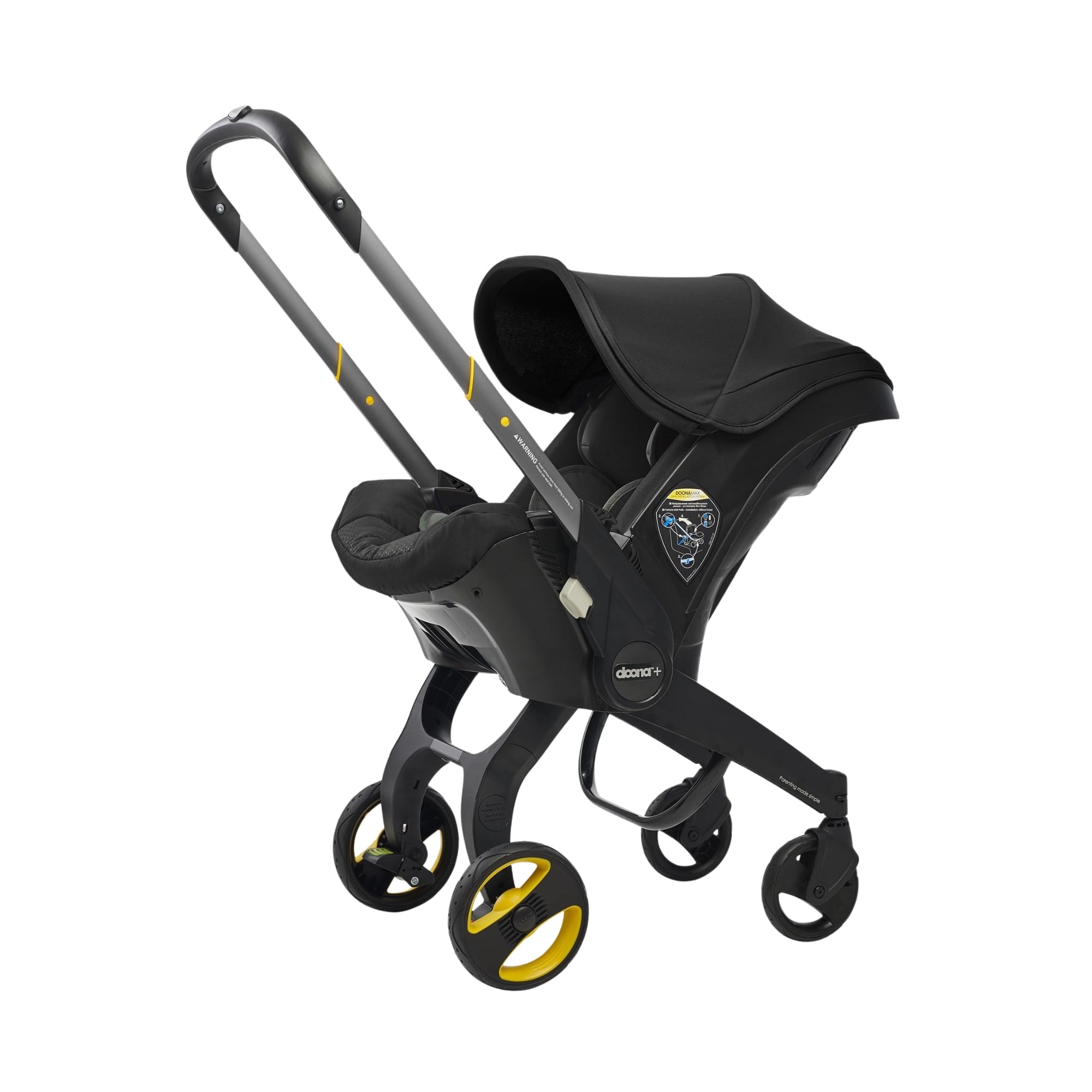
Doona Car Seat & Stroller
Rating: 4.8 ★ | Price: $650 | Seat Weight: 17.2 lbs carrier | Ease of Installation: LATCH only | Harness Adjustability: Manual adjust | Rear-Facing Limit: 30 lbs | Stability: LATCH
The only car seat that transforms into a stroller with one click, eliminating baby transfers for infant travel — at a premium price and weight.
The Doona’s one-click conversion from car seat to stroller is its defining feature: fold the handle, extend the wheels, and you’re rolling without waking a sleeping baby. In real-world use, the mechanism holds up reliably for ride-share hops and airport sprints, and the stroller rolls smoothly over pavement and tile. The trade-off is a heavy 17.2-lb carrier that strains your arm on longer carries, and a small but persistent subset of owners report the seat not latching securely into the base — an issue that demands careful installation each time.
This is for urban parents who juggle taxis, buses, and subway stairs with an infant under 30 lbs. If you travel often or rely on ride-shares, the Doona saves you from juggling a separate stroller. But the high $650 price, heavy carrier, and limited weight capacity make it a poor fit for budget-conscious families or those with larger babies nearing the 30-lb limit.
Pros
- One-click conversion from car seat to stroller eliminates the need to transfer a sleeping baby.
- Compact and easy to maneuver in tight urban spaces, taxis, and public transit.
- Premium build quality and innovative design that feels durable through daily use.
Cons
- Carrier weighs 17.2 lbs, making it heavy to carry for extended periods, especially with a baby inside.
- Latching mechanism can fail to click securely into the base, requiring extra attention during installation.
Buy this if you live in a city, use ride-shares, and travel frequently with your infant. Skip it if you need a lightweight seat, have a baby near 30 lbs, or are on a tight budget.
Best for Travel older kids
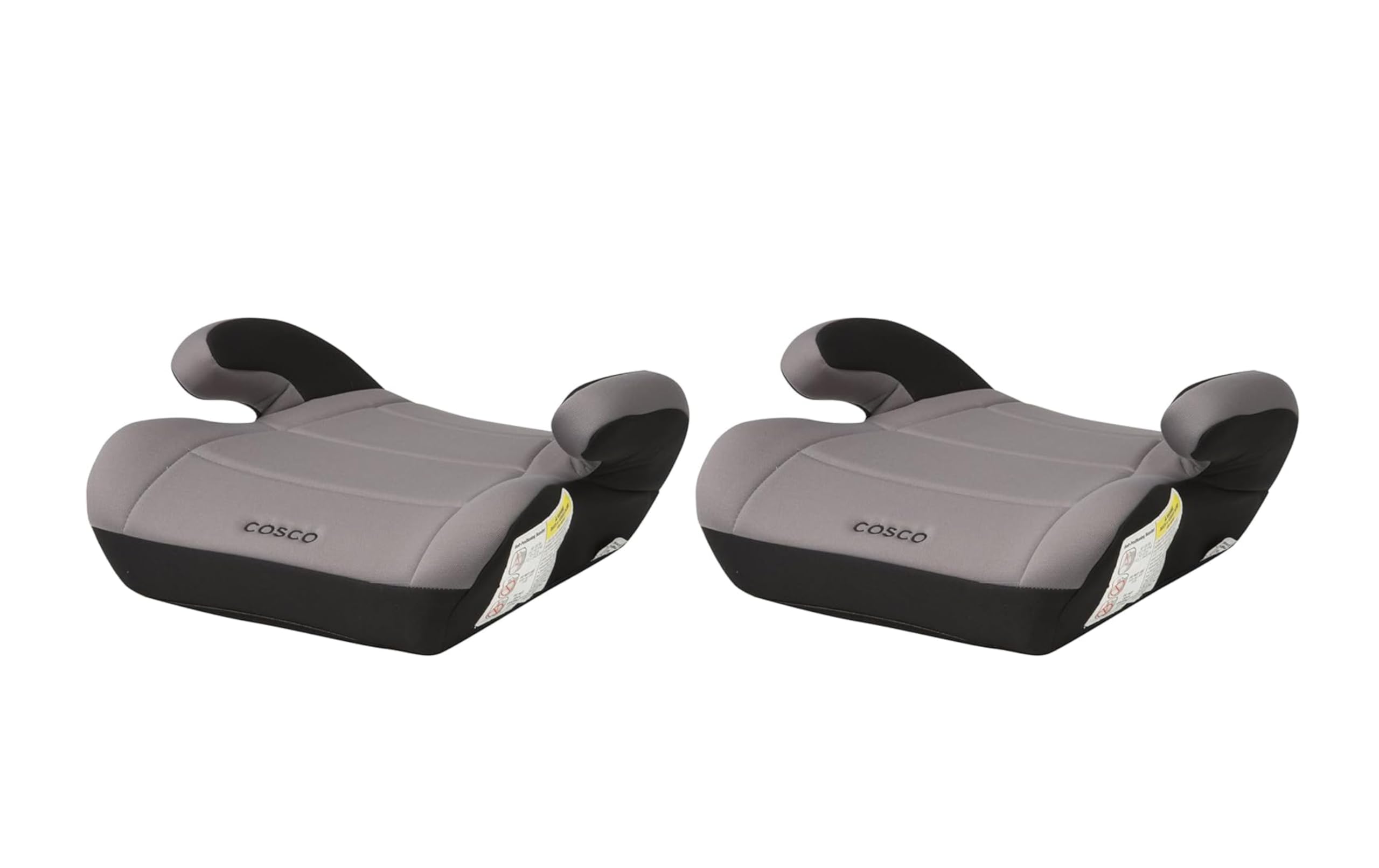
Cosco Topside Booster 2-Pack
Rating: 4.7 ★ | Price: $51.54 | Seat Weight: 2.09 lbs each | Ease of Installation: Seatbelt only | Stability: No LATCH
The lightest booster pack on the market at 2 lbs each and under $26 per seat – ideal for checked luggage or as a spare for older kids.
Two seats that weigh 2 lbs each and cost less than $26 per seat make this the obvious choice for families who need a travel-friendly booster or spares for multiple cars. The thin padding won’t win comfort awards on a six-hour drive, and the lack of LATCH means the seat slides on leather or smooth upholstery when empty—a common complaint that requires buckling it in or placing it on fabric seats. Best suited for older children (40–100 lbs) who sit still on shorter trips, and for budget-conscious parents who prioritize portability and price over long-haul comfort.
Pros
- Ultra-lightweight design (2.09 lbs each) fits easily into carry-on luggage or a backpack for travel.
- Exceptional value at roughly $26 per seat for a two-pack.
- Narrow profile allows three-across seating in most cars.
Cons
- Thin padding causes discomfort on drives longer than a couple of hours.
- No LATCH anchors; the booster slides on leather or smooth upholstery when empty.
Buy this if you need a cheap, ultra-light booster for travel or as a spare for older kids. Skip it if long road trips or stable fit on leather seats matter.
Best for Travel comfort
Chicco GoFit Booster
Rating: 4.8 ★ | Price: $54.99 | Seat Weight: 5 lbs | Ease of Installation: Seatbelt only | Stability: No LATCH
The most comfortable backless booster for kids who hate hard seats, with thick double foam padding and a wide seat.
The Chicco GoFit’s thick double foam padding and wide seat make it far more comfortable than the ultra-light Cosco Topside, which sacrifices padding for portability. It’s best for children who can sit still during rides and for parents wanting a comfortable, lightweight booster for long trips or multiple vehicles. However, unlike LATCH-anchored seats, this booster relies solely on the seatbelt and can shift on smooth seats or with wiggly children.
Pros
- Extra foam padding makes long rides more comfortable
- Solid build quality and durable materials
- Simple to install and move between vehicles
Cons
- No LATCH anchors; seat can slide when unoccupied or on smooth seats
- Some movement in use, especially with active children
Buy this if your child needs a comfortable, lightweight booster for long drives and can sit still without shifting the seat.
Best for Infant travel
Graco SnugRide Lite LX
Rating: 4.8 ★ | Price: $111.99 | Seat Weight: 7.2 lbs carrier | Ease of Installation: LATCH level indicator | Harness Adjustability: 5-point | Rear-Facing Limit: 30 lbs | Stability: LATCH
At 7.2 lbs, the lightest infant carrier — saves your back during daily transfers, with a clear LATCH indicator.
At 7.2 pounds, the Graco SnugRide Lite LX is the lightest infant carrier — a back-saving advantage for parents who lift the seat multiple times a day. Unlike the Doona’s integrated stroller design, this seat requires a separate stroller but weighs 10 pounds less. It’s best for newborns up to 30 lbs and budget-minded families, though the 30-lb limit means a short lifespan; some owners also report the base latch feels loose and requires careful clicking.
Pros
- Exceptionally lightweight carrier at 7.2 lbs reduces strain when carrying baby in and out of the car
- LATCH installation is straightforward with a clear level indicator that helps avoid common misinstallation mistakes
- Build quality feels solid for the price, with no rattles or flimsy parts reported
Cons
- Base latch can feel loose and some units require extra effort to click fully into place
- Padding is thinner than many competitors, leading to discomfort on longer rides for some babies
Buy this if you prioritize a lightweight carrier for frequent lifting and have a budget. Skip it if you need extended rear-facing or a travel system without a separate stroller.
Best for Budget small cars
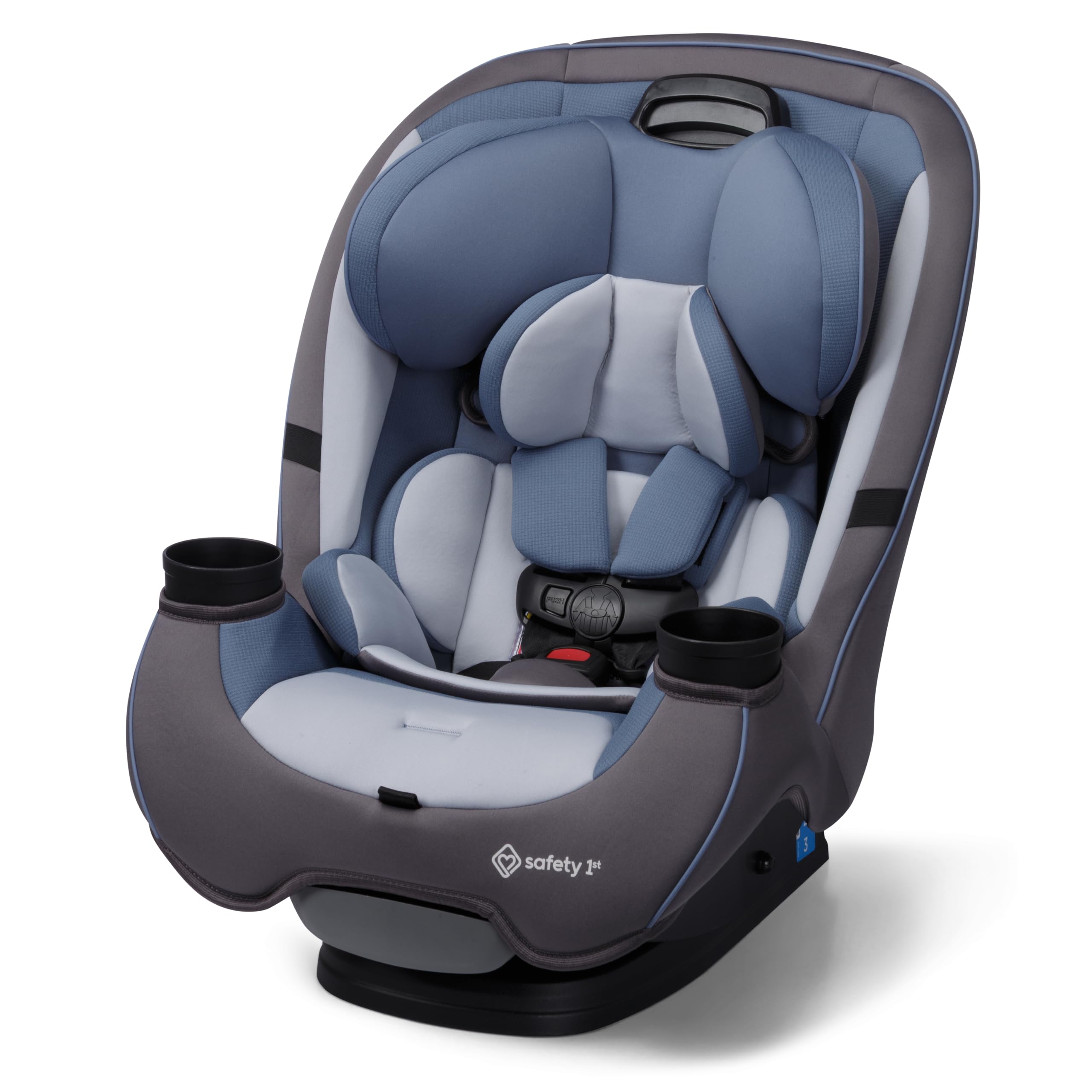
Safety 1st Grow and Go
Rating: 4.7 ★ | Price: $159.99 | Seat Weight: 13.2 lbs | Ease of Installation: LATCH or Seatbelt | Harness Adjustability: 5-point, hard | Rear-Facing Limit: 40 lbs | Stability: LATCH
Slim, affordable all-in-one convertible with plush comfort and over 34,000 reviews — but tricky straps and rear-facing install are real trade-offs.
Compared to the top pick, the Safety 1st Grow and Go prioritizes affordability and a slim 16.9-inch width that fits three across in smaller cars. Over 34,000 reviews confirm plush padding keeps children comfortable even on long drives. However, the harness straps are notoriously difficult to tighten and loosen, and installing the seat rear-facing requires considerable effort to achieve a secure fit. This is best for budget-conscious families who need a single seat from infancy to booster and own a small vehicle, but those who frequently move the seat between cars or need quick strap adjustments should look elsewhere.
Pros
- Plush padding keeps babies comfortable on long rides
- All-in-one design covers infant to booster at a mid-range price
- Slim 16.9-inch width fits three across in compact vehicles
Cons
- Harness straps are very difficult to tighten and loosen
- Rear-facing installation requires significant effort and often results in a loose fit
Buy this if you need an affordable, slim convertible for a small car and can tolerate tricky harness adjustments. Skip it if you frequently install the seat rear-facing or need quick strap tightening.
Best for Three-across air
Diono Radian 3R
Rating: 4.7 ★ | Price: $224.84 | Seat Weight: 23 lbs | Ease of Installation: LATCH, complex | Harness Adjustability: 5-point, hard | Rear-Facing Limit: 50 lbs | Stability: LATCH
Unlike the infant-focused top pick, the Diono Radian 3R grows from birth to 120 lbs and folds flat for overhead bins, fitting three across most rows.
The Diono Radian 3R stands out for its narrow 16.9-inch width and ability to fold flat for overhead bins, making it one of the few convertibles that fits both three-across cars and airline travel. However, at 23 pounds it is very heavy to carry, and installation — especially recline adjustments — is notably complex and confusing. This seat works best for families who need to pack three seats in one row and want a single seat that lasts from infancy to booster stage, but only if they can tolerate the weight and installation hassle for the long-term space savings.
Pros
- Folds flat for airline overhead bins and fits three seats across a row.
- Narrow 16.9-inch width allows three-across installation in most vehicles.
- Steel-reinforced frame and rollover testing exceed safety standards.
Cons
- Extremely heavy at 23 lbs – difficult to move between cars or carry.
- Installation is complex and confusing, especially recline adjustments.
Buy this if you need a narrow convertible that folds flat for flying and fits three across a car seat, and you’re willing to manage its heavy weight and tricky installation.
Best for Adjustable long-term
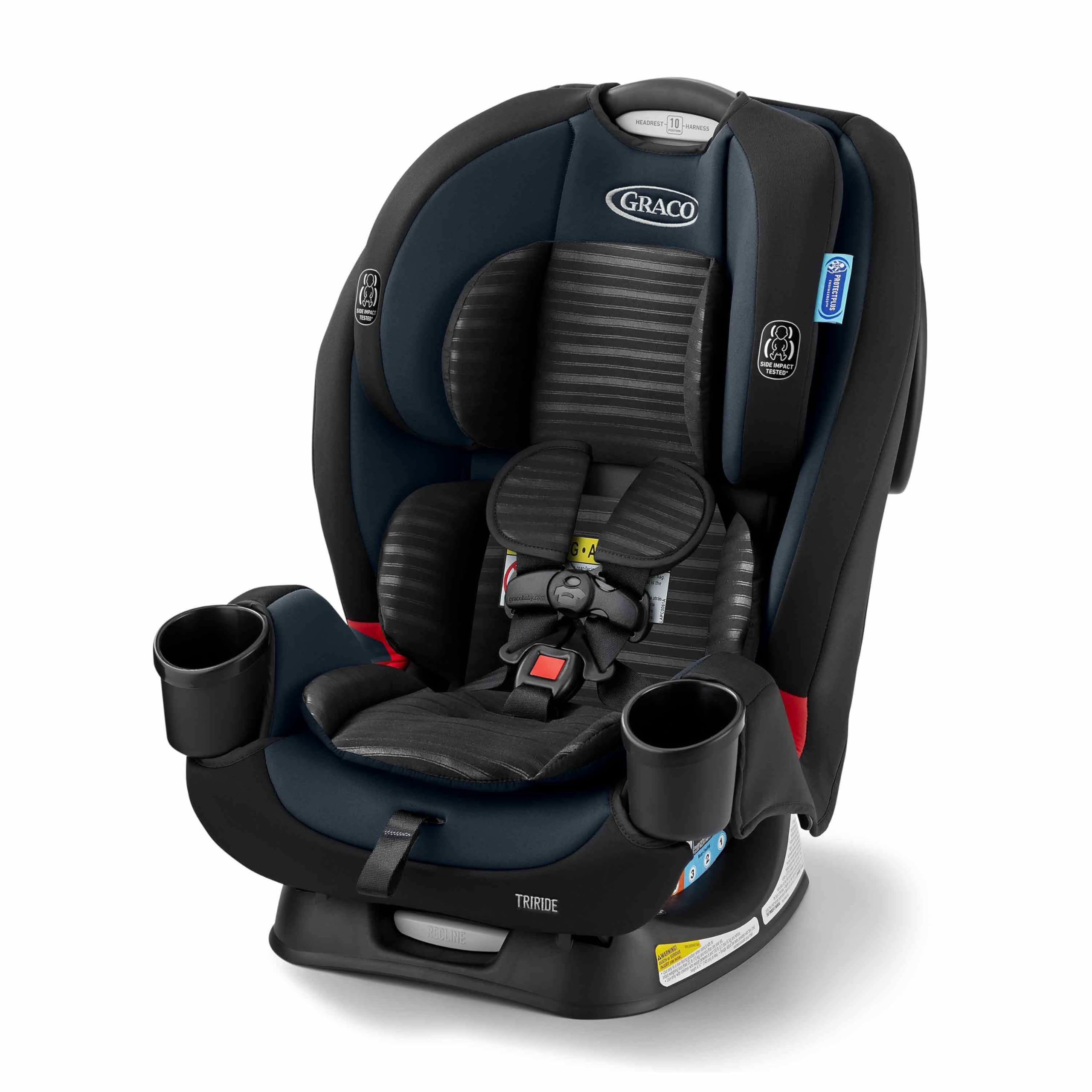
Graco TriRide 3-in-1
Rating: 4.7 ★ | Price: $149.99 | Seat Weight: 18.5 lbs | Ease of Installation: LATCH, tricky | Harness Adjustability: 5-point, hard | Rear-Facing Limit: 40 lbs | Stability: LATCH
The most adjustable convertible with 10 headrest and 6 recline positions for fine-tuning your toddler’s comfort.
10 headrest positions and 6 recline settings let you dial in fit for growing toddlers, and the padding earns high comfort marks. But the harness is genuinely difficult to tighten, and at 18.5 lbs it’s heavy for car-to-car moves. Compared to the more reviewed Safety 1st, this offers more adjustability but less buyer confidence.
Pros
- Solid build quality with thick padding that toddlers find very comfortable
- 10 headrest positions and 6 recline settings for a custom growing fit
Cons
- Harness straps are very difficult to tighten properly, requiring significant force
Worth considering if you prioritize adjustability and padding over portability and can tolerate strap tightening.
How to Choose
The biggest pitfall in travel car seats is trusting marketing claims of ‘easy install’ and ‘lightweight’ without reading real-world feedback on strap tightening and installation difficulty.
Seat Weight
For older children, a backless booster under 3 lbs is far more practical than a heavy convertible. For infants, the carrier weight (not total system) determines how easy it is to lift in and out of cars. Always check the carrier weight for infant seats.
Ease of Installation
LATCH systems are common but not always simpler than seatbelt installation. Look for clear level indicators or color guides that confirm a snug fit. Rear-facing installs are frequently confusing across many models, so favor seats with documented easy rear-facing steps.
Harness Strap Adjustability
The number one frustration in this category is straps that are hard to tighten or loosen. Product pages rarely mention this, so read recent reviews specifically about strap tension. A seat that’s hard to adjust daily will cause more stress than a slightly heavier seat.
Rear-Facing Weight Limit
Rear-facing is safest, so a higher weight limit (40 lbs or more) allows your child to remain rear-facing longer. This is especially relevant for convertible seats that you plan to use from infancy onward.
Stability
Backless boosters without LATCH anchors can slide on smooth seats when unoccupied. If your child sits still and the vehicle seat has grip, this is often fine. For leather or slippery surfaces, a booster with LATCH (or a highback with belt-positioning) is more secure.
FAQ
Do I need a LATCH system for a backless booster seat?
Not necessarily — a properly seated child and correctly routed seatbelt keep the booster secure. However, on leather or smooth seats, an unoccupied booster can slide during turns. If your child is restless or you have slippery upholstery, a booster with LATCH hooks offers extra security.
Why are car seat straps so hard to tighten?
Many convertible seats use a push-button or pull-strap mechanism that isn’t well-lubricated or has tight webbing. The design often prioritizes crash safety over daily user convenience. Before buying, check recent reviews for mentions of ‘strap tightening’ — some seats are notoriously frustrating regardless of price.
Is the Doona car seat too heavy to carry?
At 17.2 lbs for the carrier alone, the Doona is heavier than most infant seats (average 7–10 lbs). If you frequently carry the seat up stairs or through airports, the weight is a real drawback. But for parents who primarily use it as a stroller on wheels, that weight becomes irrelevant.
Can I use a convertible car seat for air travel?
Yes — most convertibles are FAA-approved when used without the base. However, weight and bulk matter. Seats like the Diono Radian specifically fold flat and fit into overhead bins, while many bulky convertibles will be gate-checked. Check the seat’s dimensions and your airline’s policy before traveling.