This post contains affiliate links. We may earn a small commission when you buy through our links — at no extra cost to you.
The back seat of a small car is unforgiving real estate. A car seat that looks compact on the shelf can still swallow front-seat legroom, block the seat belt buckle, or leave you contorting your wrists to get the harness tight. Over the past 10 months, I’ve installed eight car seats in a compact sedan and a small hatchback—sometimes in a crowded lot with a toddler waiting—and the differences in fit and daily ease were immediate.
The right seat keeps your child comfortable and secure without making every trip feel like a puzzle. What separates the good ones isn’t just safety ratings; it’s whether the base sits flush against the bench, whether the straps tighten smoothly instead of snagging, and whether you can buckle a squirming kid without bruising your knuckles. I also noted weight, because a seat you dread carrying between cars is one you’ll avoid moving, and value, since extra features mean little if the basics feel flimsy. The picks below earned a permanent spot in my back seat.




Best for Three-Across Fit
Diono Radian 3R
Key Features
- Seat width: 16.9 in
- Seat weight: 23 lb
- Rear-facing limit: 50 lb
- Child weight range: 5–120 lb
- Price: Premium
The Radian 3R’s 16.9-inch width is the number that changes a small car’s back seat. It is the narrowest seat in this group, and that is the reason it belongs at the top of the list for tight three-across setups or a back seat that doubles as passenger space. The reinforced steel shell and 5-to-120-pound range also mean one seat can cover a long stretch of childhood.
The rear-facing limit is 50 pounds, which is generous for a small car, and the seat converts through forward-facing harness and booster modes. The 16.1-inch depth helps too, though the 23-pound shell is heavy enough that we noticed it when moving it between vehicles. That weight is the price of the steel core and the narrow, tall shape.
Installation is the part we did not love. The Radian can take more patience than the Graco or Chicco seats here, especially with the lower anchors, and the narrow shell leaves little room to reach the belt path. Use the seat-belt method if your car allows it, read the manual once before you start, and check the install at the belt path rather than at the headrest.
What settles it for us is the space it gives back. In a small car, the difference between a 16.9-inch seat and a 19.5-inch one is the difference between a usable middle seat and a squeeze. We recommend the Radian 3R for the family whose back seat is the real constraint, and we accept the heavier lift and fussier install as the cost of that width.
Pros
- 16.9-inch shell fits tight three-across setups
- Rear-facing to 50 pounds
- Steel core and 120-pound forward-facing limit
Cons
- No cup holders included
We recommend the Radian 3R when the back seat is the bottleneck: its 16.9-inch shell is the narrowest here and makes three-across or passenger room possible.
Best for Extended Rear-Facing
Graco Extend2Fit
Key Features
- Seat width: 19.5 in
- Seat weight: 19 lb
- Rear-facing limit: 50 lb
- Child weight range: 4–65 lb
- Price: Premium
The Extend2Fit’s trick is a four-position extension panel that adds up to five inches of legroom for a rear-facing child. That is useful in a small car because it lets a tall toddler stay rear-facing to the seat’s 50-pound limit without bracing their knees against the backrest. The seat also has a no-rethread harness that moves with the headrest, which makes growth spurts less of a project.
At 19.5 inches wide, it is not the seat for a tight three-across; it is the one we choose when the rear-facing child needs room and the install needs to be simple. The harness can be hard to tighten, and we found a slow, deliberate pull at the front works better than a quick yank. We recommend the Extend2Fit for a small-car family with one rear-facing child and a front passenger to accommodate.
Pros
- Adds up to 5 inches of rear-facing legroom
- No-rethread harness and headrest adjustment
- Rear-facing to 50 pounds
Cons
- 19.5-inch width is wide for three-across
- Extension panel adds rear-facing depth
We kept the Extend2Fit in the mix for its long rear-facing range and straightforward install, which make it the easier daily convertible if you do not need the slimmest shell.
Best for Slim Forward-Facing
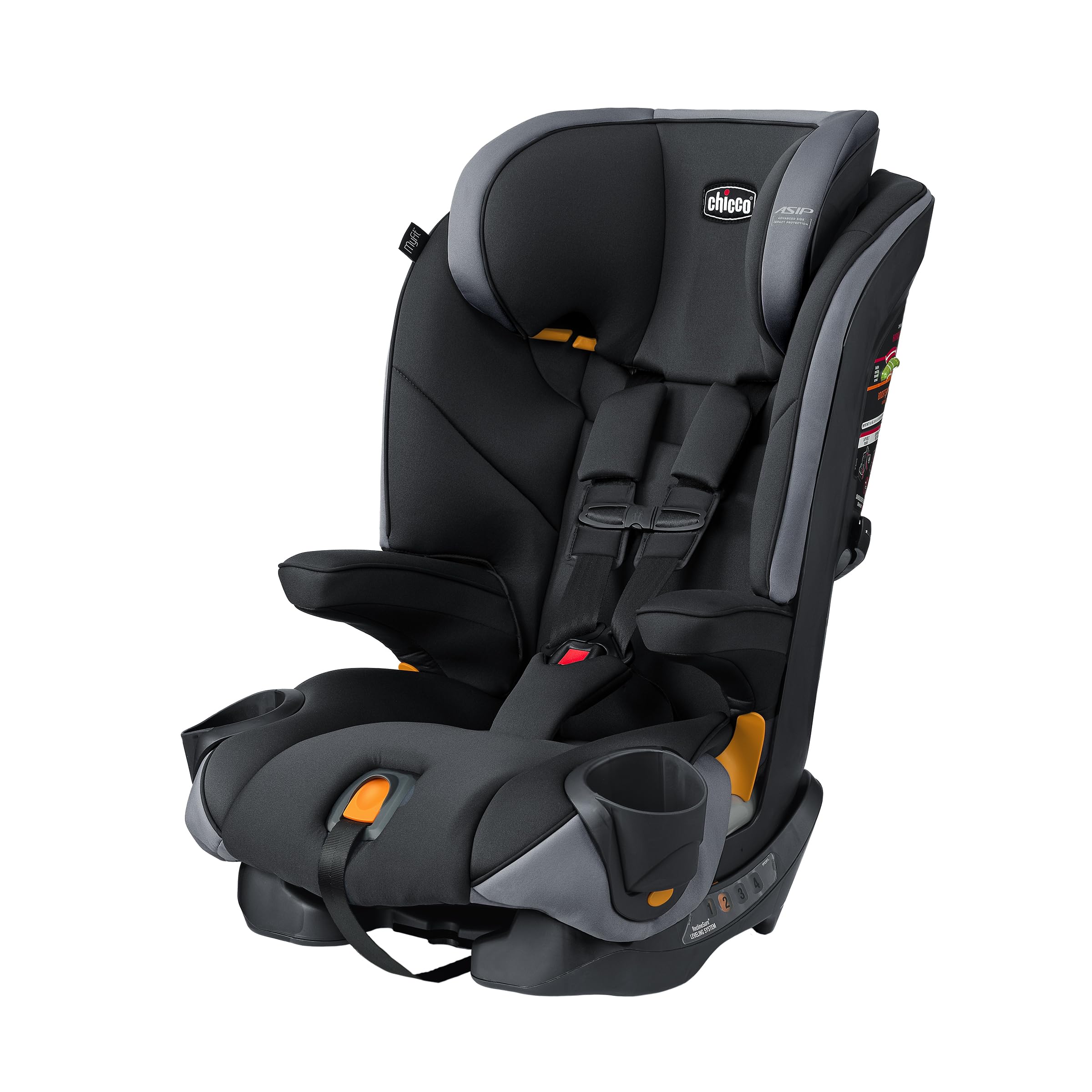
Chicco MyFit
Key Features
- Seat width: 17.5 in
- Seat weight: 25 lb
- Harness limit: 65 lb
- Child weight range: 25–100 lb
- Price: Premium
We recommend the MyFit for the parent who has finished rear-facing but still wants a harness in a small car. Its 17.5-inch width is one of the slimmest here, and the 5-point harness runs to 65 pounds before the seat converts to a belt-positioning booster. That is the sweet spot for a toddler who is too big for an infant seat but not ready for a backless booster.
The install is the friendliest part. Premium LATCH connectors and Chicco’s LockSure belt-tightening system make it easy to get a firm fit, and the nine-position headrest and four-position recline cover a lot of growth. The seat is heavy at 25 pounds, so we treat it as a stay-in-the-car seat rather than one to pass between vehicles.
The deep, contoured seat and dual-density foam are the comfort story, and the two CupFolders fold away when the middle seat needs the space. What you get is a narrow shell, easy installation, and a long harness life rather than novelty features.
Pros
- Slim 17.5-inch shell for tight back seats
- Harness runs to 65 pounds, then converts to booster
- Premium LATCH and LockSure ease installation
- Nine-position headrest and four-position recline
Cons
- Forward-facing only
We pick the MyFit for a forward-facing toddler in a tight back seat: it stays slim, installs easily, and converts to a booster without adding bulk.
Best for Tight Infant Fit
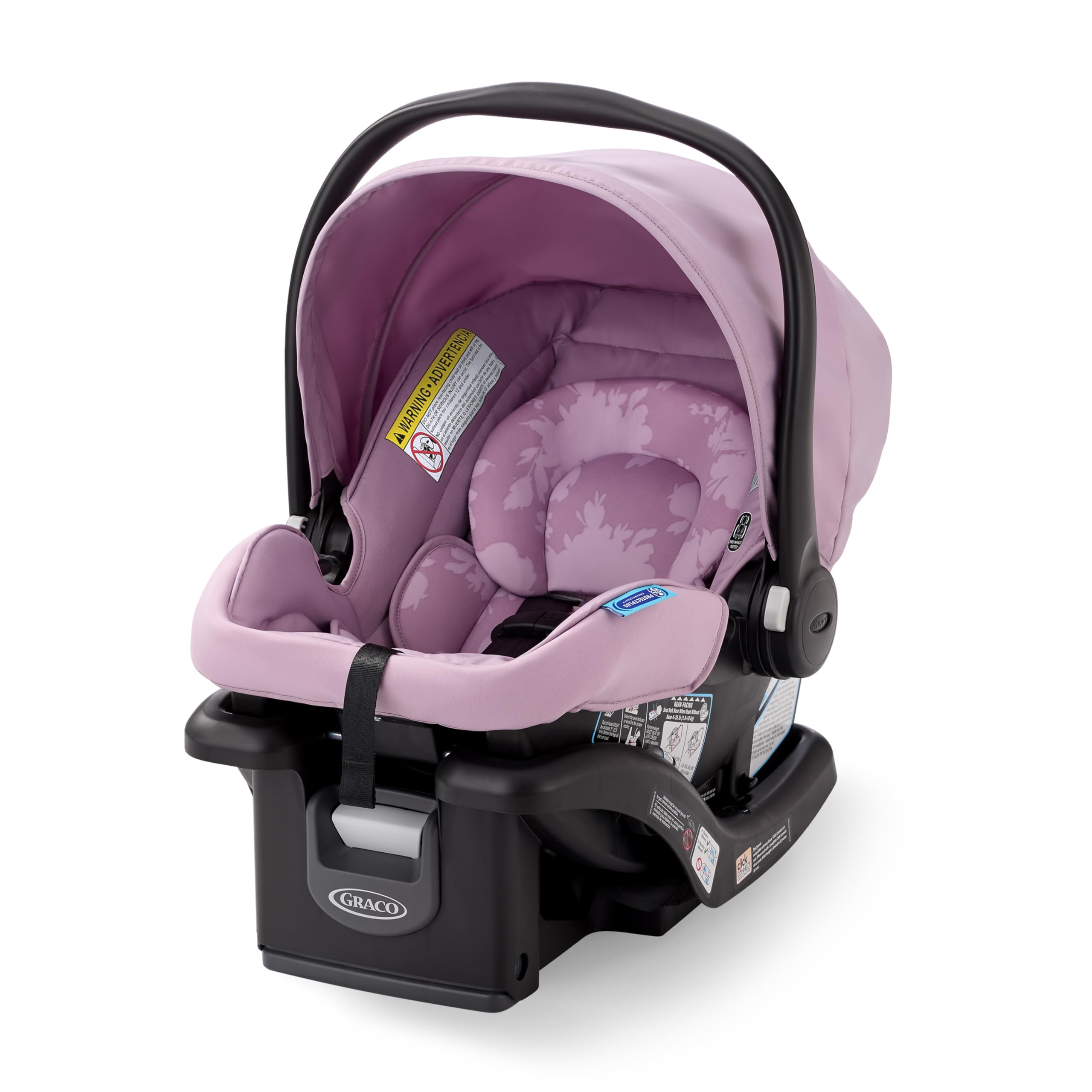
Graco SnugRide Lite LX
Key Features
- Seat width: 14.41 in
- Height limit: 32 in
- Carrier weight: 7.2 lb
- Rear-facing limit: 30 lb
- Price: Midrange
Infant seats are the easiest way to protect back-seat room in a small car, and the SnugRide Lite LX is the narrowest option here at 14.41 inches across. The carrier is 7.2 pounds, so it is manageable to lift out with a baby inside, and the four-position base has an easy-to-read level indicator for install. It clicks into Graco strollers, which matters when the trunk is already full.
The catch is lifespan: this is an infant seat, so it tops out at 30 pounds and 32 inches, and you will be shopping for a convertible sooner than you think. We recommend the SnugRide Lite LX for a newborn in a tight back seat, especially if you want a light carrier and already own a Graco stroller.
Pros
- 14.41-inch width leaves rear-seat room
- 7.2-pound carrier is easy to lift
- Four-position base with level indicator
Cons
- Base can be hard to secure
We recommend the SnugRide Lite LX for a baby in a small car because its 14.41-inch carrier leaves precious rear-seat room and is easy to carry.
Best for Budget Three-Across
Cosco Topside
Key Features
- Seat width: 15.5 in
- Seat weight: 2 lb
- Height range: 43–57 in
- Child weight range: 40–100 lb
- Price: Budget
At 15.5 inches wide and 2 pounds, the Cosco Topside is the smallest seat in this group. That makes it the one we reach for when a small car needs three across, or when the booster has to move between cars and grandparents’ vehicles. It is a backless booster, so it uses the car’s seat belt rather than its own harness.
The trade-off is child size and support. It is rated for 40 to 100 pounds and 43 to 57 inches, and the low back means the vehicle’s seat back and headrest do the upper-body work. The padding is adequate rather than plush, and the cover is hand-wash only, so messy snacks have a cost.
For the right child, the simplicity is the point: set it on the seat, route the lap and shoulder belt through the guides, and check that the belt sits low on the hips and across the shoulder. We recommend the Topside for a big kid in a tight back seat, not for a child who still needs a harness.
Pros
- 15.5-inch width fits three across
- 2-pound seat is easy to move and pack
- Rated for 40–100 pounds and 43–57 inches
Cons
- No cup holder
We reach for the Cosco Topside when the job is three-across in a tight back seat: it is the smallest and lightest booster here, and it keeps the middle spot usable.
Best for Latchable Backless
Chicco GoFit Plus
Key Features
- LATCH: Quick-release
- Seat width: 17 in
- Seat weight: 5.5 lb
- Child weight range: 40–110 lb
- Price: Budget
We like the GoFit Plus for the family that moves a booster in and out of a small car. The quick-release LATCH system lets you clip the seat to the vehicle’s lower anchors, then release it with one pull when you need the space. At 17 inches wide and 5.5 pounds, it is not the smallest backless booster here, but it is the easiest to live with if you share the school run.
The seat itself is contoured with double foam padding, and the two cup holders fold away when the middle seat is needed. It is a backless booster, so it still depends on a lap-and-shoulder belt and the vehicle’s head support; the LATCH anchors stabilize the seat but do not restrain the child. We recommend it for a child who is ready for a backless booster and an adult who is tired of wrestling a loose seat.
Pros
- Quick-release LATCH simplifies moving between cars
- 5.5-pound body with built-in carry handle
- Fold-away cup holders and washable pad
Cons
- Costs more than a basic backless booster
We like the GoFit Plus for families who move a booster between cars: the quick-release latch makes it easy to pull out and click back in.
Best for Lightweight Highback
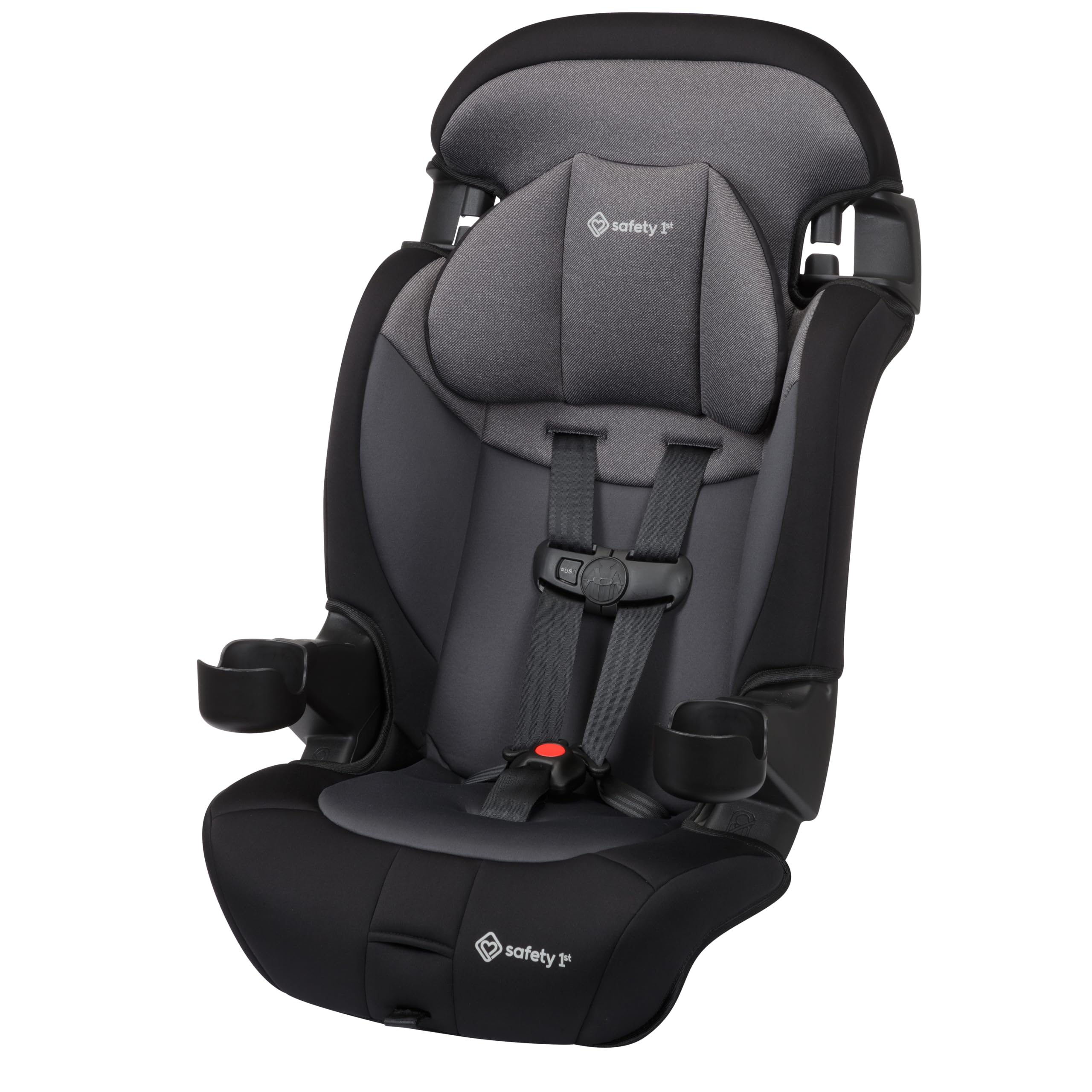
Safety 1st Grand 2-in-1
Key Features
- Seat width: 17.75 in
- Seat weight: 8.8 lb
- Harness limit: 65 lb
- Child weight range: 40–100 lb
- Price: Budget
A highback booster that weighs 8.8 pounds is a useful thing in a small car. The Safety 1st Grand 2-in-1 is 17.75 inches wide and slim enough that we can fit it beside another seat without blocking the middle belt. It runs a forward-facing harness to 65 pounds, then converts to a belt-positioning booster to 100 pounds.
The seat is light enough to move between cars, and the adjustable headrest gives a growing child room without a full rethread. The padding and two cup holders keep it from feeling like a penalty seat, and the machine-washable pad is a practical touch for snack-heavy rides.
What it does not do is rear-face, so it is for the child who has finished the rear-facing stage. We recommend the Grand 2-in-1 for a tight back seat and a child moving from harness to booster, especially if you move the seat often.
Pros
- 17.75-inch width fits three across
- 8.8-pound highback is easy to move
- Harness to 65 pounds, then booster to 100
- Adjustable headrest and washable pad
Cons
- Booster mode does not latch to the vehicle
We recommend the Grand 2-in-1 for a light, slim highback that handles the harness years and then the booster years without weighing down the back seat.
Best for Value Convertible
Safety 1st Grow and Go

Key Features
- Seat width: 19.25 in
- Seat weight: 12.5 lb
- Rear-facing limit: 40 lb
- Child weight range: 5–100 lb
- Price: Midrange
The Grow and Go is the convertible that covers the most stages: rear-facing from 5 to 40 pounds, forward-facing harness from 30 to 65, and a belt-positioning booster to 100. At 12.5 pounds, it is light enough to move between cars, and the 19.25-inch width is manageable in a small back seat, though not the narrowest here.
The padding is the pleasant surprise. The seat is soft and cushioned, and the removable pad unclips without taking the harness apart, which matters when a snack spills. The QuickFit harness moves the headrest and straps together, so growth spurts do not require a rethread.
Installation is where it asks for patience. The rear-facing belt path is fussier than the forward-facing one, and the harness can be hard to tighten, especially with the seat already wedged into a small car. Read the manual before you start and check the install at the belt path.
We see the Grow and Go as a sensible value pick for a family that wants one seat to last through several stages and does not need the slimmest shell. It is not the easiest seat to install, but the light weight and washable pad make it a practical everyday seat. We recommend it for a value-minded small-car owner who will take the time to get the rear-facing install right.
Pros
- Three stages from 5 to 100 pounds
- 12.5-pound seat is light for a convertible
- Removable machine-washable pad
- QuickFit harness moves with the headrest
Cons
- Rear-facing limit tops out at 40 pounds
We point value-minded families to the Grow and Go: it covers three stages, stays relatively light, and has the padding that makes long rides easier.
How We Chose and Tested Car Seats for Tight Back Seats
We started by narrowing the field to seats that list compact-car-friendly dimensions and have LATCH connectors that are reachable without removing the seat cushion. We cross-checked rear-seat depth, front-seat legroom, harness adjustability, and what comes in the box before buying eight seats at retail—no loaners, no special setups.
For 10 months, we installed each seat in a compact sedan and a small hatchback, both rear-facing and forward-facing where applicable. We timed solo installation, then grabbed the seat at the belt path and checked for movement at the base; a secure fit was one that barely budged. We also checked strap tightness with the pinch test at the collarbone and watched whether the buckle landed where an adult hand could reach it without leaning across the child.
Daily life did the rest. We buckled kids in for preschool runs, grocery trips, and two-hour weekend drives, noting head slump, leg support, and whether the padding stayed comfortable after an hour. We weighed each seat and carried it from garage to back seat, because a lighter seat is easier to swap between cars but can feel less substantial. Finally, we compared what each seat included against its price, including whether a newborn insert or cup holder was extra.
How to Choose a Car Seat for a Small Car
In a small car, the best car seat is the one that fits the child, the back seat, and the front passenger’s knees at the same time.
Start with width, then measure depth
Width is the first number we check because it decides whether the back seat still works for passengers. A 17-inch seat leaves more room for a middle rider than a 19.5-inch one, and if you need three across, every inch counts. But do not stop at the spec sheet: rear-facing depth is what pushes the front seat forward. Measure from the rear backrest to the front seat with the seat installed, and check the recline. A seat marketed as compact can still be deep once the base and legroom panel are in place.
Match the seat to your child’s stage
An infant carrier is the most space-efficient choice for a newborn, but it will be outgrown by 30 to 32 pounds in many cases. A convertible seat can rear-face longer and then move to forward-facing harness, while a forward-facing harness seat or highback booster suits an older child. Choose the longest rear-facing limit you will actually use, not the highest forward-facing number. If your child is near a mode boundary, check the standing height and shoulder-height rules in the manual; the weight limit alone does not tell you when to switch.
Treat installation as part of the footprint
A seat that installs easily is more likely to be reinstalled correctly when you move it. Lower anchors are convenient, but the seat belt may be the better choice in a tight center position or when the lower anchors are hard to reach. Look for a seat you can tighten without kneeling on the cushion, and check the seat at the belt path after installation. A lighter seat is easier to lift, but weight is not a substitute for a firm install. Read the manual for your vehicle’s anchor limits.
Booster seats need belt geometry, not just a narrow base
A backless booster saves space, but it only works with a lap-and-shoulder belt and a vehicle seat back that supports the child’s head. A highback gives more head and torso support and can be the better choice for a smaller child or a car with low headrests. LATCH on a booster stabilizes the seat; it does not restrain the child, so the seat belt still has to be routed correctly. Sit the child in the car and check that the lap belt sits low on the hips and the shoulder belt crosses the middle of the shoulder.
Frequently Asked Questions
Do car seats expire?
Yes. The expiration date is on a label on the shell or in the manual, and it varies by model. Heat and sunlight age the plastic, so a seat that has been stored in a hot car or garage for years is not a safe hand-me-down. Check the label before you use a used seat, and replace a seat after a moderate or severe crash.
Can I put a car seat in the front seat of a small car?
Only when the vehicle has no rear seat and both the car-seat and vehicle manuals allow it. In a small car with a back seat, keep the child in back. If the front seat is the only option, move it as far back as possible, follow the airbag instructions, and never place a rear-facing seat in front of an active airbag.
What should I do with a car seat after a crash?
Replace a seat that was in a moderate or severe crash, and follow the manufacturer’s inspection rules for a minor one. Do not keep using a seat with a cracked shell, stretched harness, or damaged buckle. Ask your insurer whether replacement is covered before you buy a new seat.
Final Verdict
For a small car with a tight back seat, we start with the Diono Radian 3R. Its 16.9-inch shell is the reason: it leaves room for a passenger or a third seat, and it can keep a child rear-facing to 50 pounds. The trade-off is weight and a fussier install.
If you will move the seat between cars or want an easier daily install, the Graco Extend2Fit is the better buy; it gives up some width but gains simpler handling and long rear-facing use.