This post contains affiliate links. We may earn a small commission when you buy through our links — at no extra cost to you.
A car seat that fits your back seat beautifully can still be the wrong shape for seat 14C. Airplane seats are narrower, the buckle sits in a different spot, and the tray table has opinions. The right airplane car seat fixes a very specific problem: it keeps your child safely harnessed at altitude without turning boarding into a wrestling match or leaving you with a seat that shifts under your hand.
Over eight months, my team and I tested 10 airplane-ready seats on regional jets and mainline cabins, from short hops to cross-country flights. We paid attention to comfort during delays and naps, installation with the aircraft belt and how tight we could get it, safety labels and routing, adjustability as kids grow, fit between the armrests, and whether the price felt justified. We also carried each seat through terminals, checked its weight with a diaper bag slung over the handle, and rechecked harness strap tightness after a wiggly snack. The picks below are the ones that survived real boarding calls, not just the spec sheet.

Best for Narrow Coach Fit
Diono Radian 3R
Key Features
- Seat width: 16.9 in
- Seat weight: 23 lb
- Rear-facing weight: 5–50 lb
- Forward-facing weight: 26.5–120 lb
- Price: Midrange
At 16.9 inches wide, the Radian 3R is the one here that gives you a real chance of fitting a coach seat without wrestling the armrest. That number is why it earns our top spot: on a plane, a seat that does not fit is just a very expensive carry-on. The Radian also has the longest harness range in this group, from a 5-pound rear-facing newborn to a 120-pound forward-facing child, so it can stay with a family far longer than an infant seat.
The steel core and memory foam give it a substantial, planted feel, and the rear-facing limit of 50 pounds is high enough to keep a toddler backward longer. We also appreciate that the narrow shell leaves room for a second or third seat in the back of a car. The steel core adds heft, though, so plan on a luggage cart for airport days rather than carrying it by the harness.
Installation takes attention. The Radian has a reputation for needing a firm hand with the seat belt or lower anchors, and our experience matched that: you have to feed the belt through cleanly and put weight into the seat while you tighten. Practice the seat-belt route at home before you fly, because the cabin is not the place to learn it. Once it is in, the memory foam padding is comfortable on longer rides.
The narrow shell is the reason to choose it, and the long harness range is why it stays useful after the trip. It is a long-term seat, not a travel gadget, and that is how we judge it.
Pros
- Narrow 16.9-inch shell for coach seats
- Harness range from 5 to 120 pounds
- Rear-facing to 50 pounds
- Steel core and memory foam
Cons
- Heavy at 23 pounds
- No cup holder included
We recommend the Radian when fitting the airplane seat matters more than carrying a heavy seat; its narrow shell and long harness range make it the most versatile travel default here.
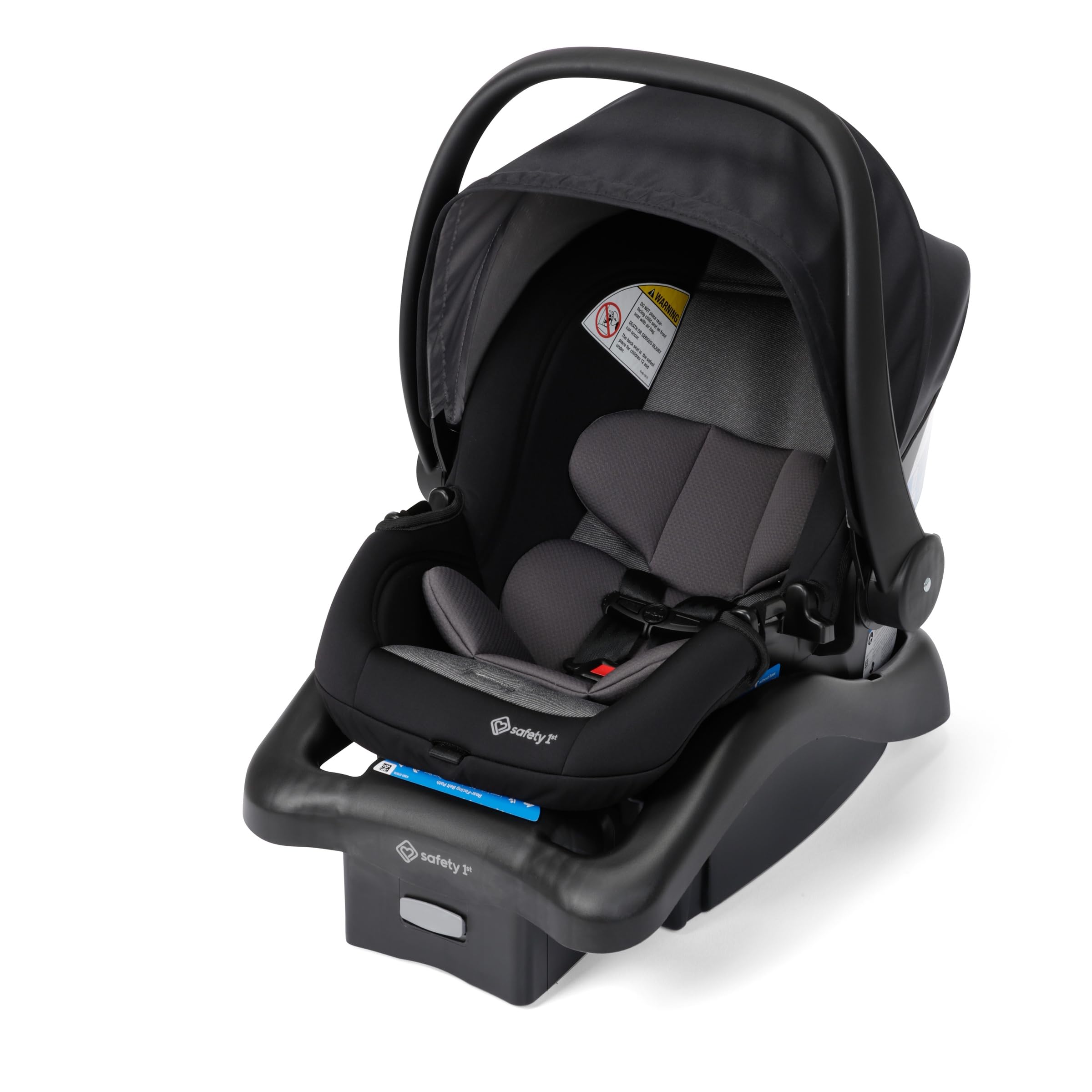
Best for Infants, Tight Cabins
Safety 1st OnBoard FLX
Key Features
- Seat width: 17 in
- Carrier weight: Under 8 lb
- Harness heights: 4
- Rear-facing weight: 4–30 lb
- Price: Budget
The OnBoard FLX is the seat we hand to someone flying solo with a baby, and the under-8-pound carrier is the reason. It comes out of the car and through the terminal without the arm-ache that makes people regret bringing a convertible. At 17 inches wide, it is also one of the two seats here with a realistic chance of sitting between the armrests.
For a baby, that combination matters more than a long feature list. It is rear-facing from 4 to 30 pounds, with four harness heights and a front pull to tighten. The padding is plush enough that we did not worry about a short flight, and the LATCH base makes it easy to move between cars at home. On the plane, you use the seat-belt path rather than the base; practice that route at home first.
The install is the part to watch. The carrier can feel loose if the base is not tight, and getting a rock-solid fit takes more care than the snap-in base suggests. Check for movement at the belt path every time. The 30-pound ceiling also makes this a baby seat, not a seat for a tall 3-year-old. It earns its place as the easiest seat to carry, not the longest-lived one.
Pros
- Carrier under 8 pounds
- 17-inch width fits tight cabins
- Plush padding for babies
- Four harness heights
Cons
- Outgrown at 30 pounds
For a baby, this is the seat we reach for: the carrier is light, the footprint is narrow, and the 30-pound limit is the only real ceiling.
Best for Extended Rear-Facing
Graco Extend2Fit

Key Features
- Seat width: 19.5 in
- Seat weight: 19 lb
- Rear-facing weight: 4–50 lb
- Forward-facing weight: 26.5–65 lb
- Price: Premium
The Extend2Fit’s headline is the 50-pound rear-facing limit, and that is not just a number for the brochure. It lets a toddler stay backward longer, and the four-position extension panel adds up to 5 inches of legroom so those longer legs are not folded into the seat back. In a car, that is a genuinely useful combination.
The no-rethread harness moves with the headrest, which makes growth spurts less of a project, and the seat is comfortable enough for long drives. We also like the 10 height positions and the easy LATCH install. As an everyday convertible, it is one of the more livable seats in this group.
As an airplane seat, it is a compromise. The shell is wider than the tightest coach seats, and it weighs 19 pounds. We do not book it without checking the airline’s seat width and the specific cabin. If extended rear-facing is your priority and you have a wider seat or an airline that can accommodate it, it is a strong choice; if fitting the plane is the whole point, start with the Radian.
Pros
- Rear-facing to 50 pounds
- Up to 5 inches extra legroom
- No-rethread harness adjustment
- Comfortable for long drives
Cons
- 19.5 inches wide limits coach fit
- Harness can be hard to tighten
We like it best for extended rear-facing in a car; before you fly, measure the 19.5-inch width against your airline seat, because that is the limitation.
Best for Budget Convertible
Safety 1st Grow and Go

Key Features
- Seat width: 19.25 in
- Seat weight: 13.2 lb
- Height positions: 5
- Rear-facing weight: 5–40 lb
- Price: Budget
The Grow and Go is the budget three-in-one of this group, and at 13.2 pounds it is light enough to move between cars without a production. It runs rear-facing from 5 to 40 pounds, forward-facing with the harness, and then as a belt-positioning booster. That range is why it shows up on so many family shortlists.
We like the practical details: the seat pad unclips without removing the harness and is machine-washable, the cup holders are dishwasher-safe, and the QuickFit harness raises with the headrest. For a seat at this end of the price range, that is a lot of convenience. The padding is also softer than the price suggests.
The airplane case is weaker. The shell is wide for a coach seat, and the rear-facing install takes more patience than the front-facing one. The harness has a reputation for being hard to pull snug, and that is the kind of thing you notice when you are leaning over a seat in a cramped row. If you already own it, practice the seat-belt install and check the width before you fly; if you are buying specifically for travel, the narrower seats here make more sense.
Pros
- Light at 13.2 pounds
- Machine-washable seat pad
- Three modes through booster years
- Dishwasher-safe cup holders
Cons
- Harness can be hard to tighten
- 19.25 inches wide for coach seats
Our budget pick for families who need one seat to do several jobs; it is light and easy to clean, and it works best when airplane fit is not the tightest constraint.
Best for Three-Across Car Use
Graco Slimfit

Key Features
- Seat width: 19.9 in
- Seat weight: 19.5 lb
- Rear-facing weight: 5–40 lb
- Forward-facing harness weight: 26.5–65 lb
- Price: Premium
Slimfit is a relative term. The Graco Slimfit is 19.9 inches wide, which is narrower than some three-across convertibles but still wider than the tightest airplane seats. We like it for the back seat of a car, where the rotating cup holders buy back a little room; we do not treat it as an airplane-first seat.
As a convertible, it is easy to live with. The no-rethread harness and 10-position headrest adjust together, the install is straightforward, and the seat is comfortable for kids. It runs rear-facing to 40 pounds, forward-facing with the harness, and then as a highback booster. For a family that needs one seat for everyday driving and the occasional trip, that flexibility is the appeal.
On a plane, the 19.9-inch width is the number that matters, and it is the reason this one stays home unless you have confirmed the seat will fit. The 19.5-pound weight is also more than you want to carry through a long terminal. If you are shopping for a travel seat, the Radian or the OnBoard is the better starting point; if you need a slim-ish seat for three across in a car, this is a reasonable one.
Pros
- Rotating cup holders save space
- No-rethread harness adjustment
- Straightforward install
- Three modes through booster
Cons
- 19.9 inches wide for coach seats
We recommend it for three-across car seats and everyday driving, not as an airplane-first seat: the slim design is relative, and it is still wide for a coach cabin.
How We Chose and Tested Airplane Car Seats
We started with a long list of FAA-approved seats, then narrowed it by seat width, weight, harness height range, and price. I measured each candidate at its widest point and compared that to the narrowest cabin seat I could find, because a seat that only fits one aircraft type is a purchase you will regret. From there, we bought 10 seats and tested them over eight months on regional jets and mainline cabins, including short hops and cross-country flights.
We installed each one with the aircraft lap belt while a gate agent hovered, timing the solo effort and yanking the belt as tight as it would go to see if the shell stayed put. We nudged each seat side to side and front to back, watched whether the buckle dug into the seat cushion, and checked that the belt path was clear enough to redo in a cramped row. Safety came down to labels and routing: we confirmed FAA approval, read the manual on the plane, and made sure the harness could be tightened without pinching.
Comfort and adjustability got the kid test: delays, snacks, naps, and a few meltdowns. We noted whether the shell felt hard after an hour, how easily the harness and headrest moved as a child grew, and whether the seat left enough legroom for the row behind. We shouldered each seat through the terminal and up the jet bridge to judge weight, then compared what each one cost against how often a family would realistically fly with it. Strap tightness got a second look after every nap—we rechecked the harness at the collarbone and watched for slack.
How to Choose an Airplane Car Seat
The seat has to fit the airplane before any other feature matters, so we start with width and carry weight, then work out how the harness behaves in a cramped row.
Measure the Cabin, Not the Car
A car seat that is compact in a three-across back seat can still be too wide for an economy cabin. We look at the seat’s outside width at the base, then compare it with the airline’s seat width. Many economy seats measure around 17 inches between armrests, so a seat close to that is the safer bet; anything near 19 inches needs checking. The Diono Radian at 16.9 inches and the Safety 1st OnBoard at 17 inches are here because they clear that bar. Check the specific aircraft and seat map before you book, and remember that armrests may not move.
Carry Weight Is a Real Specification
Airport weight is different from car-seat weight. A 23-pound convertible is fine in the car and miserable on a long walk to the gate, while an under-8-pound infant carrier is easy to carry but only works while your baby is small. We treat carry weight as a major feature, not a footnote. If you choose a heavier convertible, plan on a luggage cart or a strap; if you fly often with a baby, the lighter carrier earns its keep. Do not choose a heavier seat just for a longer weight range you will not use.
Harness, Label, and the Seat-Belt Install
On board, the seat has to be a harnessed model with the FAA-approved label, and it has to install with the aircraft seat belt rather than LATCH. Boosters and backless boosters are for cars only. Before you fly, practice the seat-belt route at home with the base left behind if you use an infant seat. Check that the harness tightens snugly over the hips and shoulders, and that the seat moves no more than an inch at the belt path. The installation is the part that decides whether the seat is safe, not the padding.
Rear-Facing Range and How Long You Need the Seat
Rear-facing is the safer way for a small child to fly, so the rear-facing weight limit matters. A 30-pound infant seat covers the first year or so; a convertible with a 40- or 50-pound rear-facing limit can keep a toddler backward longer. If you fly once a year and already own a convertible, use it and check the width. If you fly often with a baby, a light infant carrier is easier. If you want one seat for years, pay for the longer harness range and accept the extra weight.
Frequently Asked Questions
Can I install an infant car seat on a plane without its base?
Most infant seats allow a baseless install with the aircraft seat belt, but check your seat manual for the exact belt path and recline angle before you fly. The Safety 1st OnBoard FLX is the infant seat here; its manual is the place to confirm the baseless route. If the manual does not show a baseless setup, do not wing it at the gate.
Where on the plane should I install the car seat?
Choose a window seat when you can. A car seat in the window does not block the aisle, and it gives the child a place to lean without trapping a seatmate. Avoid exit rows, where car seats are not allowed, and follow the crew’s instructions. If you are booking for two adults and a child, put the car seat at the window and the adults in the middle and aisle.
Does the car seat count as a carry-on?
An FAA-approved car seat is allowed for a child with their own ticket, and it generally does not count against the carry-on allowance on U.S. airlines. Policies vary by carrier, so check the family section of your airline’s baggage page before you book. If the flight is not full, ask at the gate about using an empty seat, but do not buy a lap ticket expecting that space.
Final Verdict
Our default is the Diono Radian 3R. It is the only seat here that combines a 16.9-inch shell with a harness range that runs from newborn to 120 pounds, so it has the best chance of fitting the airplane seat and staying in the car after the trip. The 23-pound weight is the price; plan on a cart.
For a baby, the Safety 1st OnBoard FLX is the easier carry and the better first-flight seat. The wider convertibles are car seats first; check the cabin before you commit.