This post contains affiliate links. We may earn a small commission when you buy through our links — at no extra cost to you.
My sister called me at 7 p.m. on a Tuesday with a four-month-old screaming in the background who wanted nothing to do with a bottle, a pacifier, or anything else she’d tried. What finally worked was the corner of a silicone spatula. Teething toys exist so that moment doesn’t end in your kitchen drawer, but the good ones do more than stand in for whatever’s within reach: they give a baby something to gnaw at the exact angle their gums are demanding, in a size a small hand can actually hold.
I’ve spent the past four months with 18 teething toys rotating through my house and my sister’s, handed to babies between three and nine months old. The pattern showed up fast. Cuteness is a gift for the adult holding the baby; the toys that got grabbed again and again were the ones shaped to reach the back gums and light enough to wave around. A few got chewed hard enough to earn a second look at the seams. The standouts are below.



Best for All-Around Teething
Manhattan Toy Winkel
Key Features
- Weight: 3 oz
- Cleaning: Surface wash only
- Material: BPA-free polyurethane
- Dimensions: 5.02 x 4.04 x 3.54 inches
- Price: Premium
The Winkel looks like a tangle of soft tubing, and that is exactly why it works: there is no wrong end to grab. The loops sit at different angles, so a baby can hold it with one hand, two hands, or a whole fist. At 3 ounces it is light enough to wave around, and the BPA-free tubes can go in the refrigerator for a cooler chew.
We kept reaching for it because it moves from teether to plaything without asking the baby to switch toys. The tubes are soft but not floppy, and the center rattle gives a baby a reason to pick it up again after it drops. For the stroller, the diaper bag, and the living-room floor, that versatility is what earns it the top spot.
The care label is the part we minded: surface wash only, no submerging. A damp cloth and mild soap keep it clean, but it will not go in the dishwasher like the silicone tubes here. That is a small trade for a teether this easy to hold, though it is worth knowing before you buy.
For most babies, the Winkel is the best balance of grip, texture, and staying power. It replaces a handful of one-purpose teethers in the diaper bag, which is why it is the one we reach for first.
Pros
- Many grip points for small hands
- Soft tubes soothe front and side gums
- Light enough for a baby to wave
- Rattle and colors add distraction
Cons
- Premium price for a teether
Our default pick for most babies: the Winkel is light, easy to grab from any angle, and gives sore gums several soft places to chew.
Best for Early Gum Massage
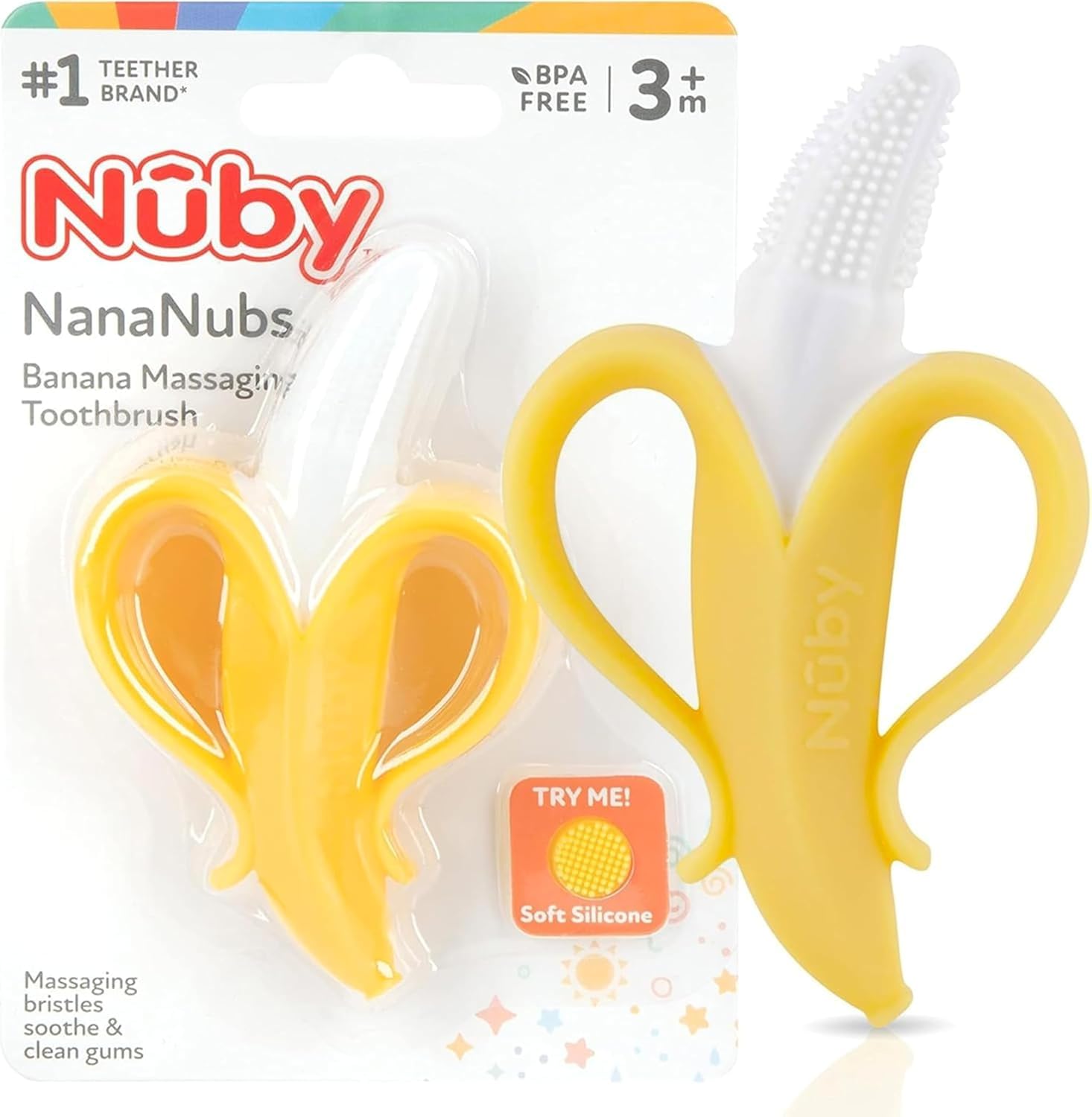
Nuby NanaNubs
Key Features
- Age: 3 months–2 years
- Weight: 1.3 oz
- Material: 100% silicone
- Dimensions: 2 x 2 x 2 inches
- Price: Budget
The banana shape is the first thing you notice, but the bristles are what make it useful: they are soft enough to massage a gum line and structured enough to feel like a first toothbrush. It is made from 100% silicone, rated for 3 months and up, and small enough for a baby to hold without a handle.
We liked it best for the stage when a baby is mouthing everything but does not yet have the hand control for a bigger teether. It is light, easy to angle toward the front gums, and simple to rinse. The small size also means it fits a 3- or 4-month-old’s hand without a handle, which is not true of every teether here.
Once teeth arrive, the bristles still help with early brushing, but they are not built for heavy chewing. Compared with the Winkel, this is a more targeted tool: better for front gums and familiarizing a baby with a toothbrush, less interesting as a plaything. If your baby wants to gnaw for long stretches, a bigger teether holds attention longer.
Pros
- Soft silicone bristles massage gums
- Easy for small hands to hold
- Simple to rinse and clean
- Makes early toothbrushing familiar
Cons
- Attracts lint and hair
A gentle first teether and gum massager: the soft silicone bristles are easy to hold and make early toothbrushing feel less like a chore.
Best for Budget Cooling
Nuby Ice Gel Keys
Key Features
- Fill: Ice gel
- Weight: 2 oz
- Material: Silicone
- Dimensions: 1.5 x 6.5 x 4.1 inches
- Price: Budget
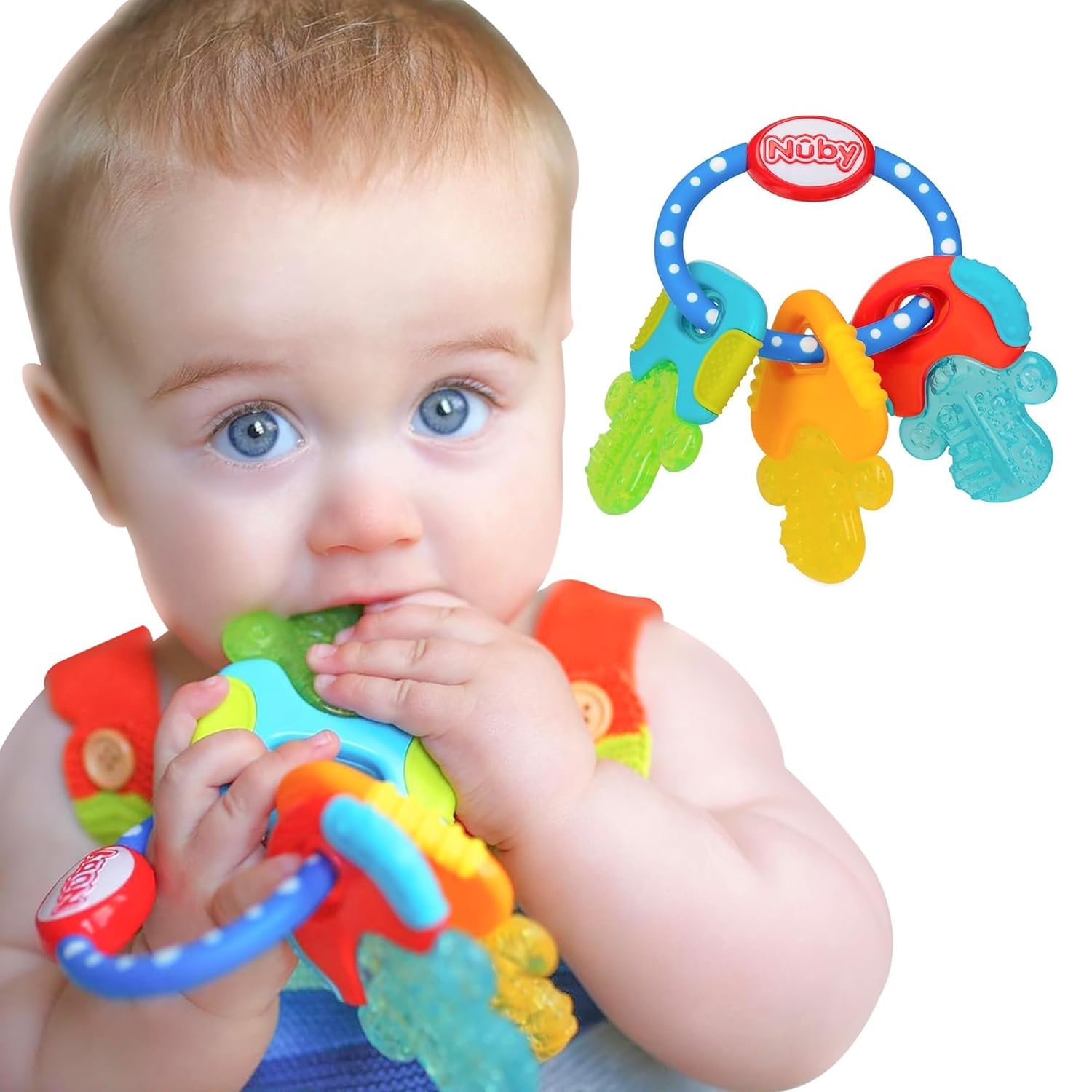
The keys are a budget-friendly way to try cooling relief: a ring of gel-filled keys that can go in the refrigerator and are light enough to dangle from a small hand. The silicone surface is textured for gums, and the bright colors give a baby something to track.
The shape is long, and that is both the appeal and the problem. It gives a baby plenty to hold, but it can feel bulky for a tiny mouth, especially before 6 months. We found younger babies often need help keeping the key end where they want it, while older babies manage the ring more easily.
We think it works best as a cooling add-on rather than a do-everything teether. It is for a short soothe session after it comes out of the fridge, not a long car ride. At this price, that is a reasonable trade, especially if your baby already likes key-shaped toys.
Pros
- Budget-friendly cooling option
- Easy-grip key ring
- Textured silicone soothes gums
- Light 2-ounce body
Cons
- Cold relief fades quickly
A budget-friendly cooling teether for babies who like to gnaw on keys; just expect the chill to fade and the shape to feel large for tiny mouths.
Best for Young Babies
ChooKaChoo Teething Mitten
Key Features
- Age: Over 3 months
- Count: 2 count
- Cleaning: Dishwasher-safe
- Material: Silicone
- Price: Midrange
A young baby cannot hold a teether for long, which is the gap this mitten fills: it slips over the hand and puts the chewing surface right where the mouth already goes. The design is simple, with a handle inside the palm and textured silicone across the fingers, and it comes as a two-pack.
We found it most useful for the stage when a baby is chewing their own hand but cannot yet aim a teether. Because it stays on, it spares you the pick-up game and keeps the chewing surface close. The mitten has to sit snugly or it will twist, so check the fit before you hand it over.
Once your baby can hold a Winkel or a tube, the mitten becomes a backup rather than the main teether. Until then, it is the one we reach for, especially in the car or stroller when a dropped teether is more than an inconvenience. It is not built to reach molars, but that is not the stage it is for.
Pros
- Stays on the hand
- Textured silicone reaches gums
- Two-pack shares the wash load
- Dishwasher-safe
Cons
- Picks up lint and hair
The clever pick for a baby who cannot hold a teether yet: it slips over the hand, stays put, and gives sore gums something to chew without constant drops.
Best for Older Toddlers
Bebecan Teething Sticks
Key Features
- Age: 36+ months
- Material: Food-grade silicone
- Dimensions: 0.6 x 0.6 x 6.2 inches
- Set contents: 6 tubes, 3 brushes
- Price: Midrange
The first number to notice on these sticks is the age rating: 36 months and up, which puts them in toddler territory rather than the first-teething drawer. The long, flexible silicone shape is built for the back of the mouth, where molars are harder to reach.
The length is the point. A stick can get behind the front teeth and into the corners where a round teether cannot, and the textured surface gives a toddler several places to chew. The set includes six tubes, three cleaning brushes, and a drawstring bag.
The hollow center and the brushes make them easier to clean than a solid stick, and the bag keeps them together in a diaper bag. They are flexible enough to bend without collapsing, which is what makes them tolerable for a teething toddler.
They suit a toddler who has moved past the first-teeth stage, not a young baby. The 36-month rating is a real limit, and the length that helps with molars makes them awkward for a small mouth. If your baby is still in the first year, a Winkel or NanaNubs is the better fit.
Pros
- Long shape reaches back molars
- Six tubes plus cleaning brushes
- Flexible silicone is easy to clean
- Storage bag keeps set together
Cons
- 36-month age rating limits younger babies
A long, textured stick set for older teethers working on back molars, with enough tubes and cleaning tools to keep one in every bag.
Best for Back Gums
Fu Store Teether Tubes
Key Features
- Age: 0–36 months
- Count: 5 count
- Cleaning: Dishwasher-safe
- Material: Silicone
- Price: Midrange
A tube is a surprisingly good shape for teething: long enough to reach the back of the mouth, thin enough for a small hand to wrap around, and flexible enough to bend rather than fight the gums. This set gives you five of them in different colors.
They are dishwasher-safe, which matters more than it sounds when a teether spends half its life on the floor. The hollow design lets drool pass through, and the different textures on each side give a baby something to explore. The open tube can hold water after washing, so shake it out before it goes back in the mouth.
Compared with a bulky cooling key, these are easier to get into the back corners of the mouth. They do not stay cold, so they are not the pick for cooling relief; they are the pick for reach and value. The five-pack means you can keep one in the car, one in the diaper bag, and still have a clean one at home.
Pros
- Long tubes reach back gums
- Five-pack covers home and travel
- Dishwasher-safe silicone
- Flexible enough for small hands
Cons
Five flexible tubes that reach the back gums, clean up in the dishwasher, and cost less than most single teethers.
Best for Cute Cooling Set
Itzy Ritzy Cactus Teethers
Key Features
- Fill: Water
- Count: 3 count
- Cooling: Refrigerator only
- Material: Silicone
- Price: Midrange
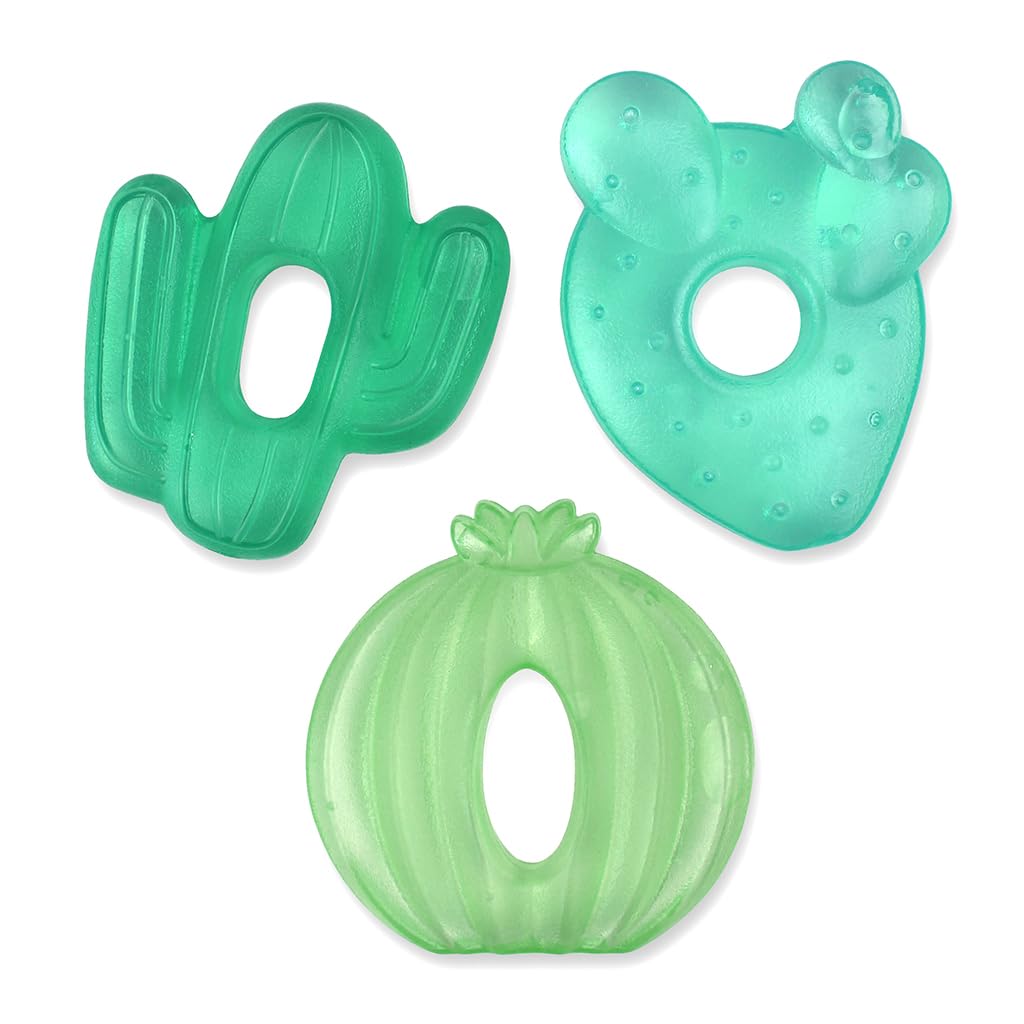
The cactus shape is the hook, but the water fill is the useful part: these go in the refrigerator for a cooler chew, and the open form is easy for small hands to grab. The set includes three coordinating cacti, each with texture on both sides.
The fill is water, and the chill is short-lived; these are for a short soothe session, not a long outing. The three-pack means one can be chilling while another is in use. They are also small enough to tuck into a diaper bag without taking over the pocket.
We like them as a cute, low-effort cooling option, especially for a baby who already grips ring-style teethers. The care is the trade-off: wipe-clean only, so they need a little more attention than a dishwasher-safe silicone tube. For a short cooling session, though, that is manageable.
Pros
- Cute cactus shapes
- Easy-grip open design
- Three-pack keeps one chilling
- Fridge-cooled relief
Cons
- Seams can split and leak
A cute, easy-to-grip water teether set for fridge-cooled relief, with a design that makes teething feel a little less clinical.
Best for Sensory Distraction
TOHIBEE Sensory Teether

Key Features
- Weight: 3.95 oz
- Cleaning: Hand wash only
- Material: Silicone and ABS plastic
- Dimensions: 4.72 x 3.15 x 2.36 inches
- Price: Midrange
The first thing a baby sees here is a cluster of bright silicone balls, a rattle ring, and a twisting clicking ball. The whole thing is compact, with lots of textures to mouth and small knobs and rings to bat at, which makes it more of a sensory toy than a single-purpose teether.
We found it best for a baby who can sit and handle a toy, not a very young infant. The compact size is easy to toss in a diaper bag, but it can feel small in a baby’s mouth, especially if they are used to a bigger teether. Check that the moving pieces are secure before each use.
The sounds are a big part of the appeal: the rattle and click keep a baby engaged without being loud enough to grate on a car ride. The colors are bright, and the different silicone balls give them a reason to keep exploring.
We see it as a distraction teether more than a dedicated gum soother. It is best for a baby who likes to fiddle and needs something to keep their hands busy. If your baby is actively working on molars, a long tube or stick reaches better; if you need a car-seat toy that also gives them something to chew, this one earns its place.
Pros
- Many textures and sounds
- Bright colors hold attention
- Compact for diaper bag
- Easy for small hands to grip
Cons
- Hand-wash only
A compact sensory teether that keeps a baby busy with textures, rattles, and colors; just check the size and moving parts before handing it over.
How We Tested 18 Teething Toys
We started with research: material safety information, manufacturer specs, and several hundred customer reviews across the category, then filtered for food-grade silicone, natural rubber, and untreated wood. Anything with loose beads, a gel bladder that could split open, or a painted-on finish came off the list. That left 18 toys, which we lived with for four months.
Testing happened wherever teething actually happens — the car seat at 5 p.m., the changing table, the stroller, and a kitchen floor. Every baby got the same basket, and we watched which toys they picked up unprompted, which ones got dropped over the side of the high chair, and which ones they lost interest in after a minute.
Size and grip: we measured and weighed each toy, then watched whether a three-month-old could close a fist around it and whether a nine-month-old could push it too far back. Temperature: we froze each one and checked it every 10 minutes to see how long it stayed genuinely cold. Durability: dishwasher cycles, hard chewing, and weekly inspections for bite marks, splitting seams, and water trapped inside. Cuteness, meanwhile, was ranked by parents — and ignored entirely by the babies.
How to Choose a Teething Toy
The best teether is not the cleverest shape on the shelf; it is the one your baby can hold, reach the sore spot with, and keep clean without a fight.
Start With the Stage, Not the Shape
A three-month-old who is just finding their hands needs something different from a one-year-old working on molars. For the earliest stage, look for a light teether with an easy grip or a mitten that stays on the hand. Once your baby can sit and grab deliberately, a looped teether like the Winkel gives them more ways to hold and chew.
The trap is buying a teether that is too big for the mouth. A long stick can reach the back gums, but it is awkward for a young baby; a small gum massager is better for front teeth. Match the size and shape to where your baby is actually chewing, not to the age on the box alone.
Check the Care Label Before the Cuteness
Silicone, BPA-free plastic, and natural rubber are the materials you will see most often. The bigger practical difference is cleaning. A dishwasher-safe silicone tube or mitten is easier to live with than a surface-wash-only teether, especially once it starts spending time on the floor.
We like the Winkel for its grip, but we minded that it is surface wash only. The Fu Store tubes go in the dishwasher, and the ChooKaChoo mittens can be washed with the rest of the baby dishes. If low-maintenance cleaning matters to you, let that decide between two otherwise similar picks.
Cooling Is a Bonus, Not a Requirement
Gel- and water-filled teethers can feel good on sore gums, but the chill does not last long. They are best for a short soothe session after they come out of the refrigerator, not for a long outing. Follow the maker’s instructions: some are refrigerator-only, and some should not be frozen.
If your baby likes cold pressure, choose a cooling teether with an easy grip, like the Nuby keys or the Itzy Ritzy cacti. If they are indifferent to temperature, a plain silicone teether gives you more cleaning options and fewer seams to worry about.
Inspect Seams, Size, and Wear
Teething toys take a beating once teeth arrive. Check the seams, the chewing surfaces, and any moving parts before each use. A water- or gel-filled teether that has split is finished, and a silicone teether with a torn edge should be replaced rather than trimmed.
Size matters as much as condition. A teether that fits comfortably in the mouth is more useful than one that is merely cute, and a compact sensory toy can be too small for a baby who wants a mouthful. When in doubt, choose the shape that matches the sore spot and keep the care instructions where you can find them.
Frequently Asked Questions
Do I need a separate teething toy and toothbrush?
Not necessarily. A soft silicone gum massager with bristles, like the NanaNubs, can help a baby get used to the feeling of brushing while also offering something to chew. Once teeth appear, use a small, soft toothbrush for actual cleaning and keep the teether for comfort.
How many teething toys should I keep on hand?
Two or three is usually enough: one at home, one in the diaper bag, and one that is clean or chilling. A multipack makes that easier, especially with hollow tubes or sticks that can get lost under the couch. Rotate them so your baby does not get bored with the same texture.
What if my baby refuses every teether?
Try a different texture, shape, or temperature before deciding they hate teething toys. Some babies prefer a cold spoon or a clean, damp washcloth to silicone. Offer the teether when they are already mouthing their hand, and do not force it; if pain seems severe or feeding changes, check with your pediatrician.
Final Verdict
Buy the Manhattan Toy Winkel if you want one teether that works from the first gums through the grabbing-and-throwing stage. It is the easiest of these to hold from several angles, and the soft tubes give a baby a real place to chew.
For a gentler first gum massager, choose the Nuby NanaNubs. For a baby who cannot hold a teether yet, the ChooKaChoo mitten is the practical exception.
