This post contains affiliate links. We may earn a small commission when you buy through our links — at no extra cost to you.
Many trampolines advertise high weight capacities and big jumping areas, but real-world use often reveals a gap: frames that flex, springs that snap, and assembly instructions that turn a weekend project into a multi-day ordeal. Missing parts and torn spring covers are common complaints across brands, making it hard to know which model will actually hold up.
A trampoline that looks great on paper may leave you with bent poles and a torn net after a season. Meanwhile, a lesser-known model with fewer reviews might surprise you with its solid build. The key is knowing which specs matter—frame thickness, spring count, enclosure design—and which features add fun but not longevity. This guide helps you match a trampoline to your yard, your kids’ ages, and your patience for assembly, focusing on models that balance safety, durability, and straightforward setup.

Best for Multiple Children
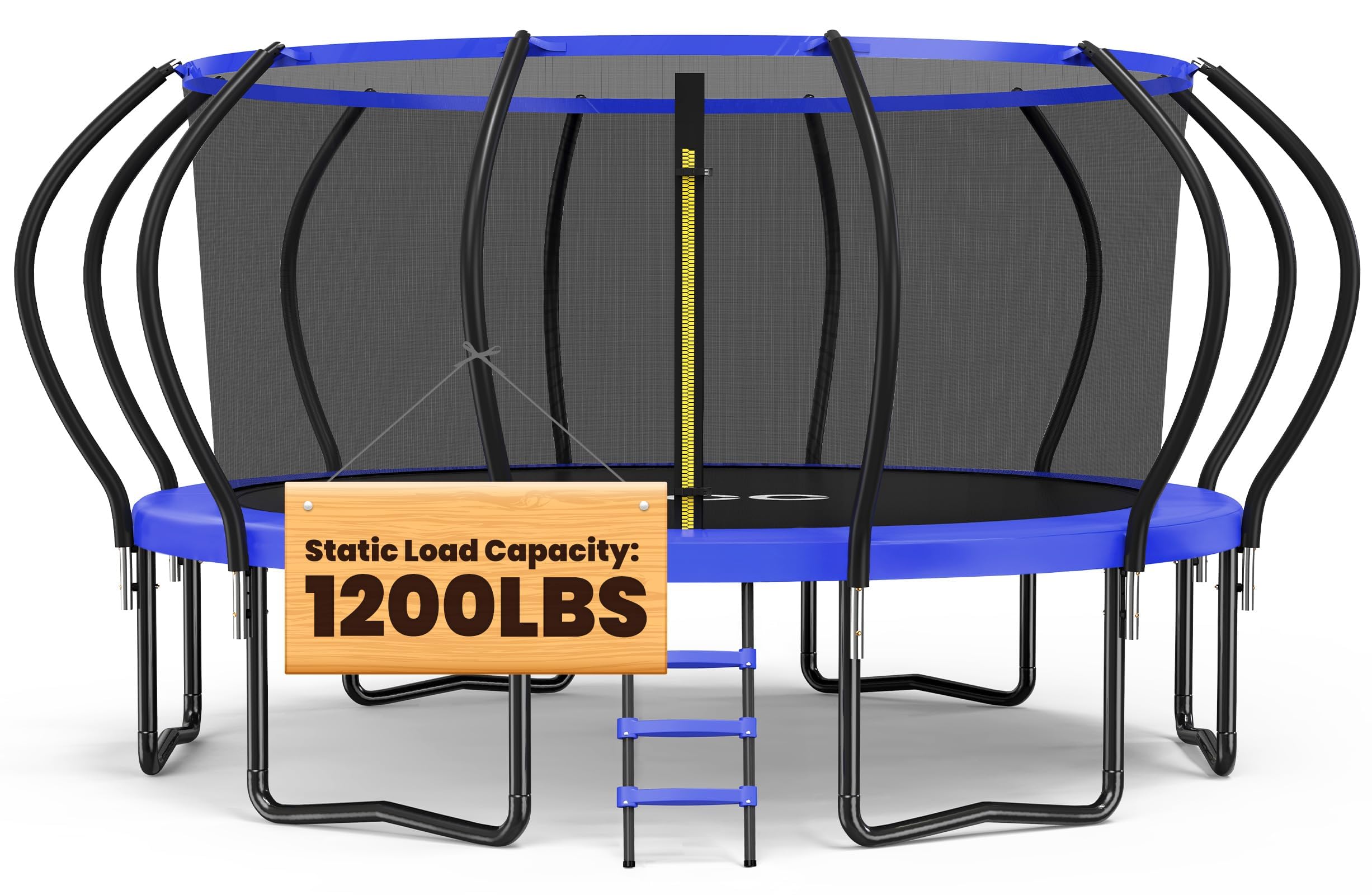
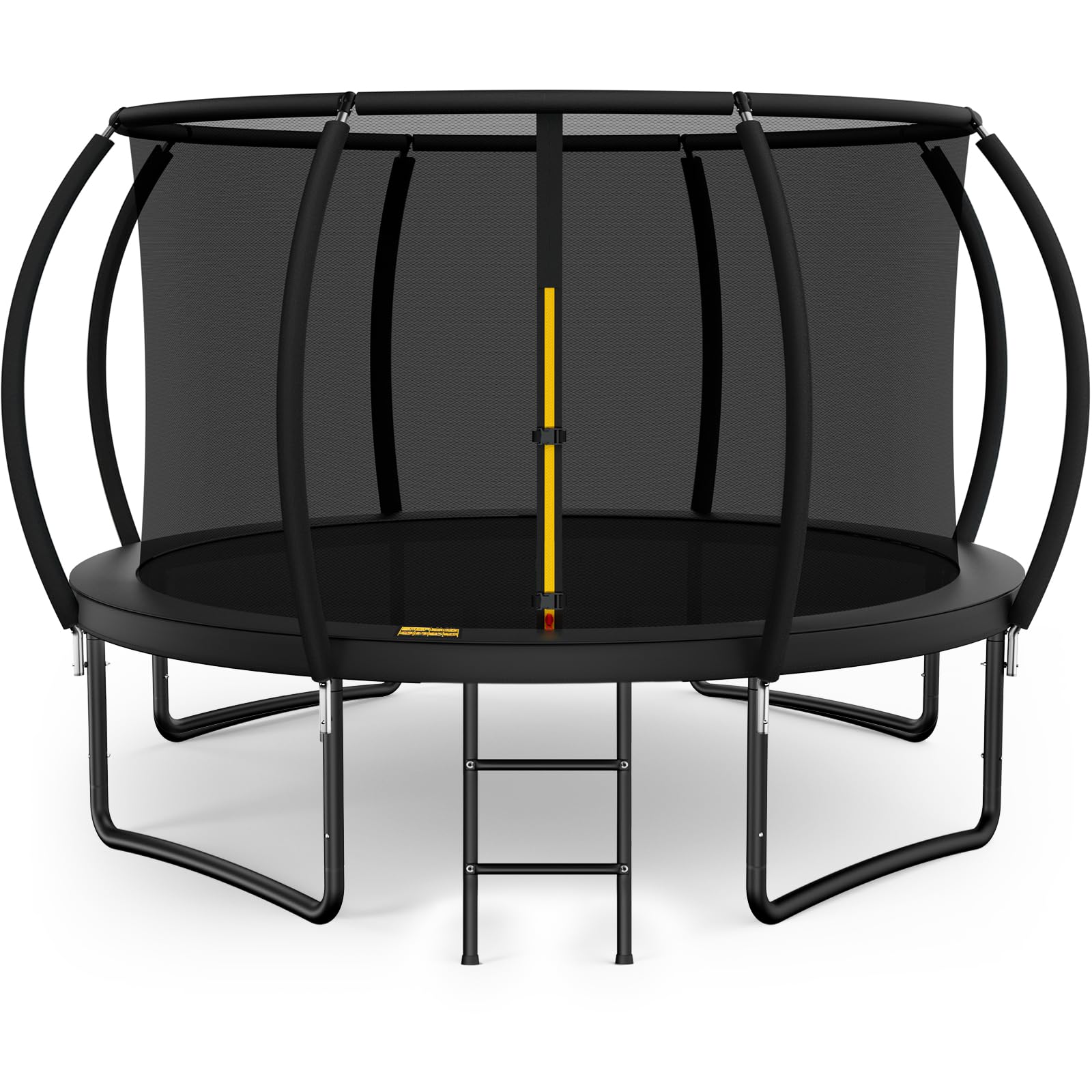
ORCC 12FT Outdoor
The ORCC’s frame is hot-dip galvanized, not painted or powder-coated, meaning it resists rust even in rain and snow. The 72 springs and 1,200 lb static rating support heavy use without sagging or bending. That durability is why 74% of owners specifically praise how the structure handles storms and daily bouncing from multiple kids — a rare consistency at this price point.
Assembly runs 1.5–2 hours, which is reasonable for a 12‑foot trampoline, but the bottom net threading is the one step that tries patience. Owners describe it as “tedious” and recommend a second person. Once up, the curved safety poles and thick padding keep jumpers inside, and the net stays taut after months of use. The included spring tool works well for most of the job, though a handful of users report it snapping near the last few springs — a spare tool or a simple wrench solves that.
This trampoline is best for families with two or more children who will use it daily, in all weather, for several years. It’s not for toddlers under three or yards with less than a 12‑foot diameter — the jumping area needs clearance. The nylon net and UV‑resistant mat stand up to sun and snow, so you won’t be patching or replacing every season. If you’re okay with a solid afternoon of assembly and the mind‑numbing task of threading the net cord, the ORCC rewards you with a jump surface that feels as solid year two as it did day one.
Pros
- Frame and mat survive storms and years of heavy use without rust or sagging.
- Clear instructions and included tools make assembly manageable for a trampoline this size.
- Curved poles, thick padding, and a secure net keep kids safely contained.
- Mid‑range price with heavy‑duty specs that undercut many weaker competitors.
Cons
- Spring installation tool can snap during the final springs; a spare or wrench helps.
- Bottom net cord threading is time‑consuming and fiddly without a second person.
Buy this if you want a heavy‑duty trampoline that handles multiple kids, storms, and years of use without cutting corners on safety. Skip it if you have limited assembly patience or a very small yard that can’t give the required 12‑foot clearance.
Best for Toddlers 2-5
Little Tikes 3′ Trampoline
The Little Tikes 3′ Trampoline comes with a track record few competitors can claim: over 33,800 ratings averaging 4.7 stars, with consistent praise for its safety and long-term durability. The padded handlebar and wide jumping surface provide a stable base for toddlers, and parents report the frame holding up through years of daily use. Compared to newer multi-activity models, this trampoline keeps things simple—no extra toys or accessories. The one notable vulnerability is the handlebar: if a child wiggles it vigorously, the legs can lift off the floor, so supervision is necessary.
This trampoline is made for indoor living rooms or playrooms, specifically for children aged 3-6 under 55 pounds. It’s an easy choice for first-time trampoline buyers who want a well-documented safety record without the risk of an unknown brand. The lightweight design and simple assembly mean you can move it between rooms as needed. But if you have older siblings or need something for outdoor use, look elsewhere—this is strictly for toddlers and indoor use. The handlebar wobble is a real limitation that requires attentive supervision, but for its intended purpose, it’s a dependable piece of equipment.
Pros
- Padded handlebar and wide jumping surface keep toddlers stable.
- Metal and plastic frame holds up through years of daily play.
- Simple assembly and lightweight for easy indoor repositioning.
Cons
- Handlebar can lift the trampoline legs when wiggled aggressively; requires adult supervision.
- Only supports children up to 55 lbs, so older kids outgrow quickly.
Buy this if you want a well-established indoor trampoline for toddlers with an unmatched safety record and durable build. Skip it if you need an outdoor trampoline or something for older children.
Best for Small Backyards
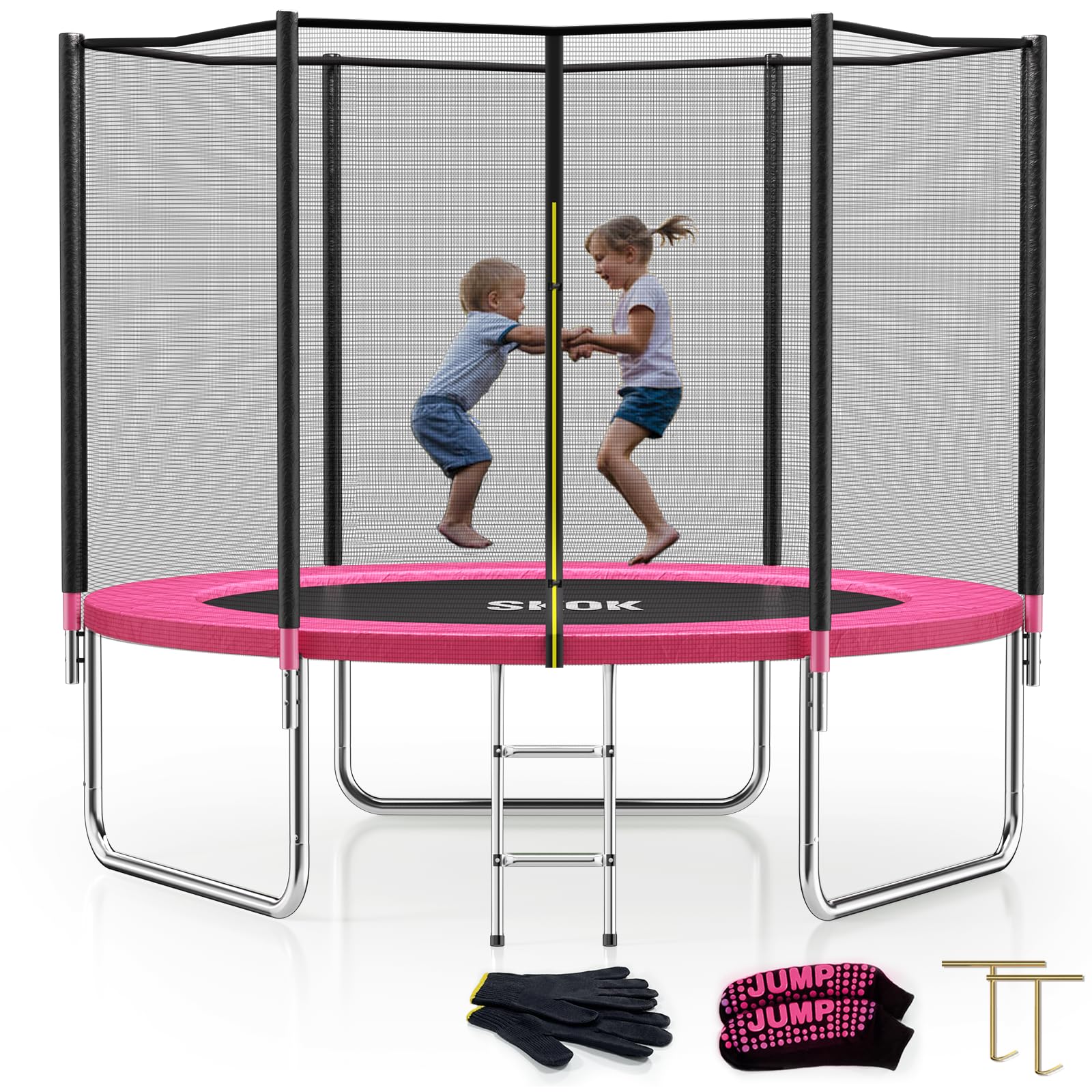
SKOK 8FT Outdoor
The SKOK 8FT delivers a build quality that feels more premium than its budget price suggests, backed by strong customer feedback. Compared to the top pick’s larger 12-foot frame and hot-dip galvanized steel, this model uses alloy steel and 42 springs, offering a smaller jumping area ideal for toddlers and early elementary-age kids. Owners report assembly goes smoothly, and the compact 8-foot footprint fits easily in limited yard space.
This trampoline fits best in small backyards where space is at a premium, accommodating one or two children ages 3 to 8. The 8-foot diameter and 400-pound weight limit work well for light play, but families with multiple older children or teens will quickly outgrow it. Some owners report springs showing wear and the mat detaching after a year of regular use, and the net poles can bow inward—these are trade-offs at this price point.
Pros
- Build quality that feels more expensive than the price suggests.
- Assembly goes smoothly, with most owners finishing quickly.
- 8-foot size is ideal for cramped backyards.
- Good value for the build and safety features.
Cons
- Size limits jumping to one or two small children.
- Springs and mat may show wear after extended use; occasional rust reports.
- Net poles can bend inward, affecting stability perception.
Buy this if you need an affordable trampoline for a small backyard and have one or two children under 8. Skip it if you plan for multiple kids, heavy daily use, or want a trampoline that lasts several years.
Best for Toddlers 2-6
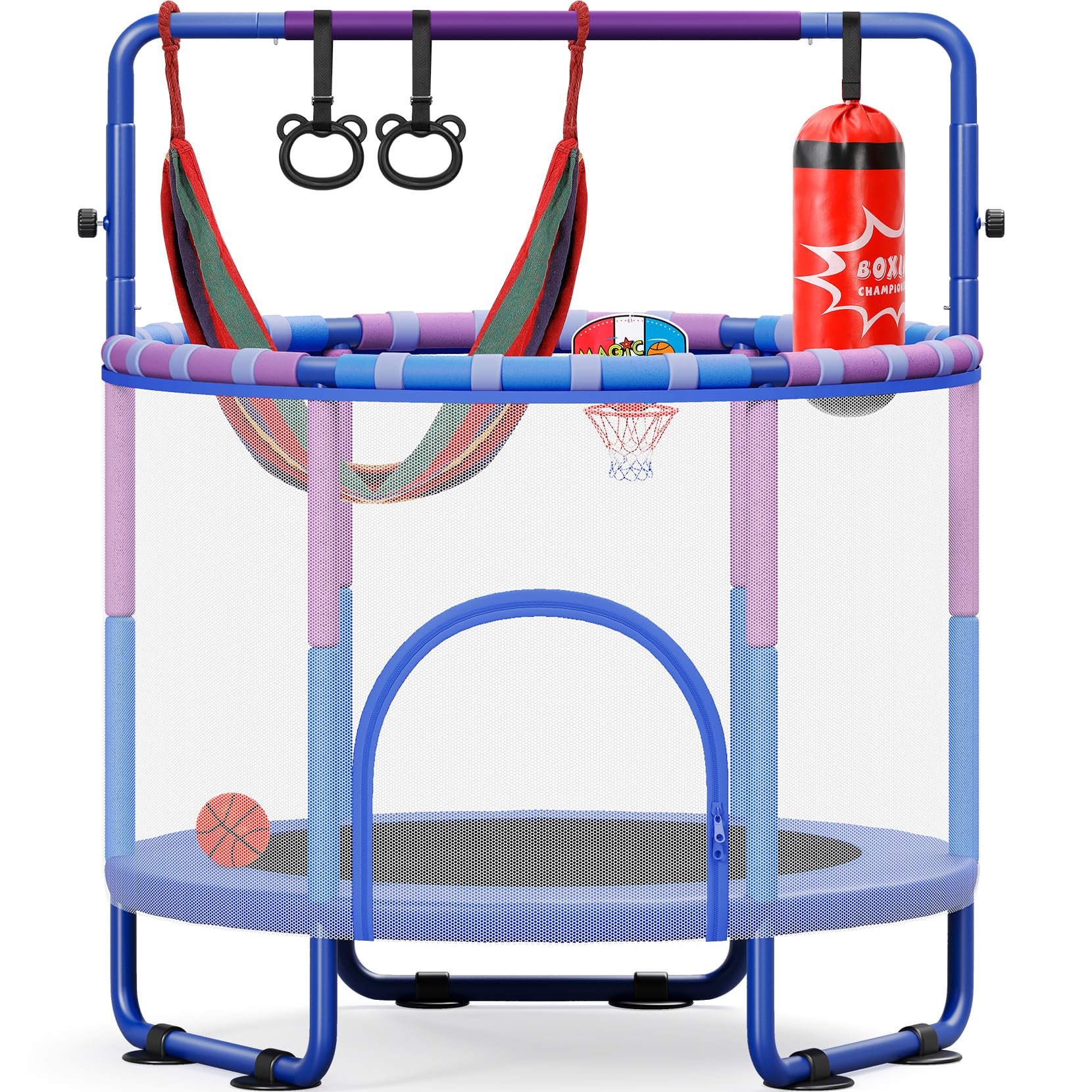
Yohood 55" 6-in-1
The Yohood 55" combines a basketball hoop, punching bag, rings, swing, and gymnastics bar into a frame that buyers consistently praise for its sturdiness and quick assembly — most report under 30 minutes. It feels more premium than its price suggests, offering a full activity center that keeps toddlers engaged for hours.
Best for families with kids aged 2–6 who want an indoor all-in-one play setup without a permanent outdoor commitment. The smaller review base (215 ratings) means the frame’s longevity is less confirmed than the more established toddler trampoline in this guide, and the included swing and hammock attachments feel less robust. It’s not suited for older children over 7 or for outdoor use in harsh weather.
Pros
- Sturdy frame and padding create a safe bouncing area for toddlers.
- Assembly is quick, typically under 30 minutes.
- Multiple activity stations keep kids entertained for hours.
- Build quality surpasses expectations for the price bracket.
Cons
- Limited long-term durability data due to smaller review sample.
- Swing and hammock attachments feel less premium than the main frame.
Buy this if you want a feature-packed indoor trampoline for toddlers that assembles quickly and feels high-quality for the price. Skip it if long-term durability is your top priority or if you need an outdoor solution.
Best for Older Kids
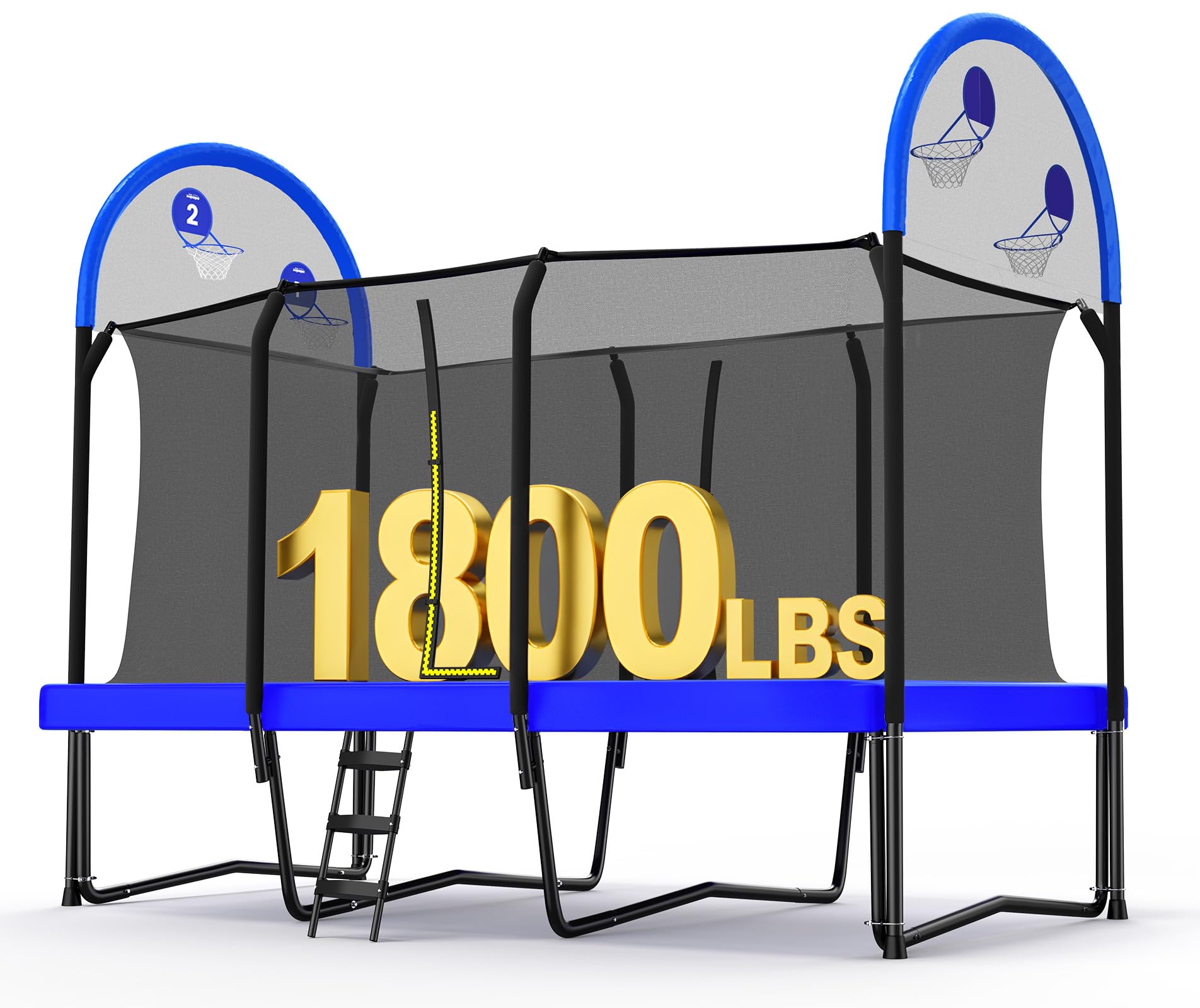
Zupapa Rectangle 10×17
The Zupapa’s rectangular shape and no-gap enclosure set it apart from round trampolines, giving gymnasts a consistent, high-response bounce with full edge-to-edge jumping area. The hot-dip galvanized steel frame and 450 lb dynamic weight capacity provide exceptional stability — the structure doesn’t flex even during aggressive routines. This premium build comes with a 10-year frame warranty, though the price pushes well beyond typical backyard trampolines. Minor hardware quality concerns (nylon nuts, spring cover straps) are noted by owners, but the overall performance justifies the investment for dedicated athletes.
This trampoline fits best in large backyards for families with older kids or teens training in gymnastics. The size (10×17 ft) and premium cost rule out casual use or smaller spaces. Be prepared to replace the included nylon nuts with stainless steel hardware during assembly — a simple upgrade that addresses the most common owner complaint. Supervision remains required, as with any trampoline, but the no-gap net eliminates fall risks effectively.
Pros
- Rectangular shape gives gymnasts a superior, consistent bounce edge-to-edge
- Heavy-duty frame stays rigid under intense use; no wobble or flex
- No-gap safety net attached directly to the mat prevents falls
- Responsive customer service quickly replaces defective parts
Cons
- Premium pricing limits accessibility to larger budgets
- Nylon nuts and washers benefit from upgrading to stainless steel
- Spring cover straps can tear after several months of use
Buy this if your family has serious gymnasts and a spacious backyard with budget to match. Skip it if you need a casual, cost-effective trampoline or have limited space.
Best for Backyard Use
ARMY VANCA 14FT
Assembly frustration is the most common complaint across the trampoline market, but the ARMY VANCA 14FT sidesteps that entirely. Feedback consistently points to clear instructions and a straightforward build, with 85% of assembly mentions positive. The safety net and padding earn equally high marks — 97% of safety-related comments are favorable. This makes it a standout for families who want to spend less time wrestling with springs and more time jumping. The trade-off comes in two areas: the net-to-mat lacing can loosen in wind, and the included ground stakes are underwhelming for gusty conditions.
Best for families with medium to large backyards who prioritize safety and easy setup over absolute wind stability. The 450-pound weight capacity and CPSIA/ASTM F381-16 certification provide a solid safety baseline. However, the review count of 365 is modest compared to higher-volume models, meaning long-term durability is less proven. If you live in a windy area, plan to replace the stakes with aftermarket anchors. Overall, this trampoline delivers on its core promise — fast assembly and high safety satisfaction — without pretending to be the most wind-ready option on the market.
Pros
- Easiest assembly in its class with clear instructions
- Safety net and padding earn near-universal praise
- Sturdy frame holds up well in storms
- Available in multiple sizes from 10 to 16 feet
Cons
- Net bottom threading can loosen in wind; periodic retightening needed
- Included ground stakes are weak for windy areas
- Modest review volume limits long-term durability confidence
Buy this if you want a large trampoline that assembles quickly and has strong safety ratings, and you’re willing to upgrade the stakes for wind-prone areas. Skip it if you need the most proven track record or live in consistently high-wind zones.
Best for Proven Safety
JUMPZYLLA 12FT Trampoline
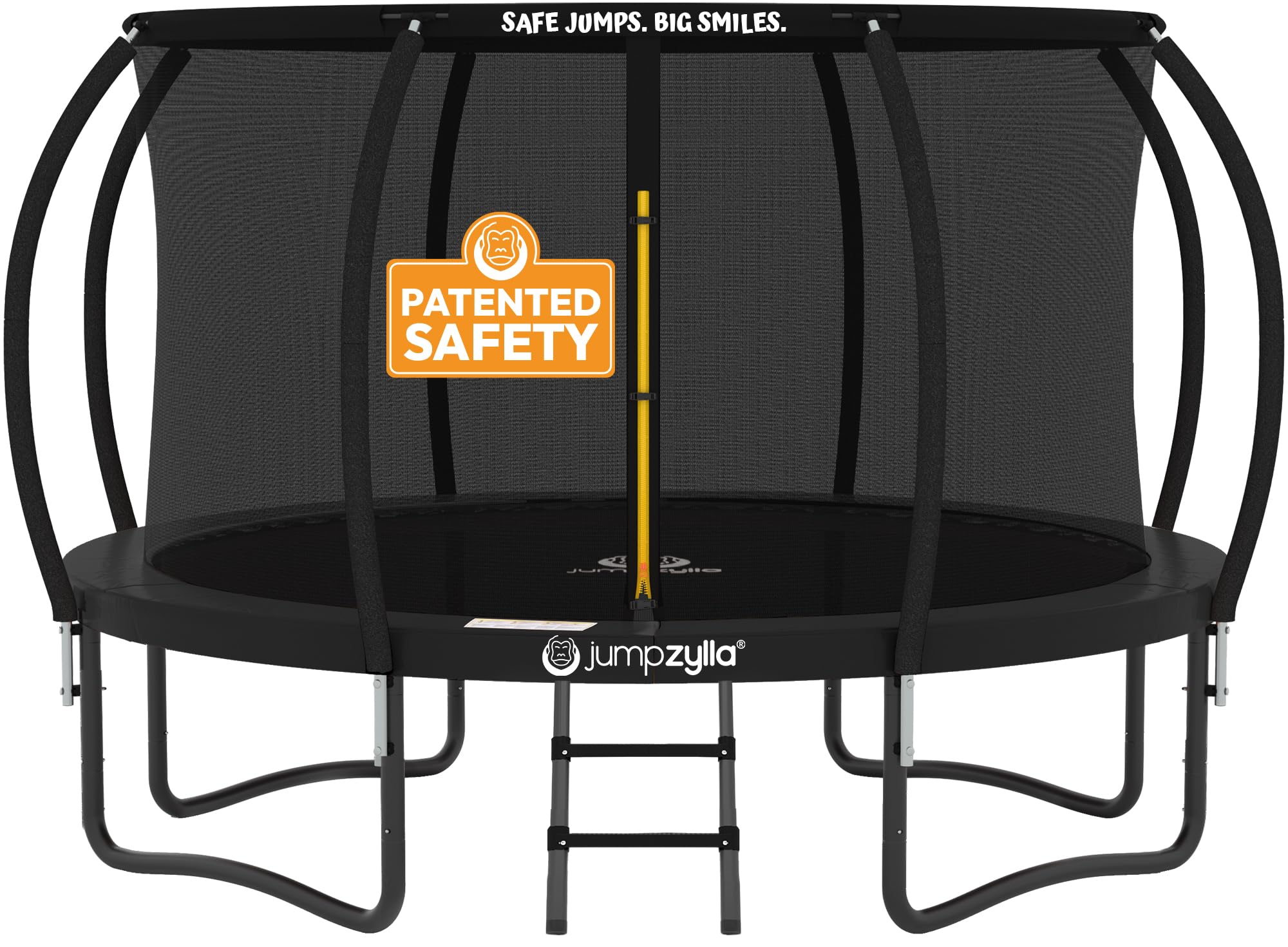
The JUMPZYLLA trampoline’s curved safety poles reduce collision risk, and customers often note the easy assembly for its size. However, reports of spring cover tearing and net pole bending after a few months are common enough to raise durability concerns. Wind stability also requires extra anchoring. These issues prevent it from matching the consistency of models like ORCC. For families wanting strong safety features at a mid-range price, it’s a reasonable choice, but long-term reliability is uncertain.
Pros
- Curved safety poles add distance from the net, reducing collision risk for jumpers.
- Good value for quality – buyers report a decent trampoline for the price.
- Assembly is easier than many similarly sized trampolines, helped by a video tutorial.
Cons
- Spring cover and net poles show wear after a few months of use.
- Wind stability is limited; supplied stakes may not hold in breezy conditions.
Worth considering for families seeking strong safety features and easy setup in a mid-range trampoline, despite durability trade-offs.
Best for Budget Families
AOTOB 8FT Trampoline

The AOTOB trampoline delivers on its core promise: a spacious jumping surface and a basketball hoop at one of the lowest prices in this category. Families on a budget appreciate the value. However, the savings come with compromises. Multiple reports of missing leg extenders and screws mean you may need to contact support before even starting assembly. And the assembly process itself is lengthy, often taking 4-6 hours with instructions that could be clearer. Additionally, some users have experienced springs breaking within weeks of use, which raises durability concerns. While the trampoline can work well for casual, supervised play, its quality control variances and assembly demands make it a risk for those seeking a hassle-free experience.
Pros
- Great value for the price with included basketball hoop.
- Spacious for multiple kids; 8 ft fits 2-3 children comfortably.
Cons
- Assembly is time-consuming (4-6 hours) with unclear instructions.
- Occasional missing parts like leg extenders and screws.
Worth considering if you’re on a tight budget and want a large jumping area with a basketball hoop for occasional backyard use.
Best for Lights & Sprinkler
JoyBerri 12FT with Lights
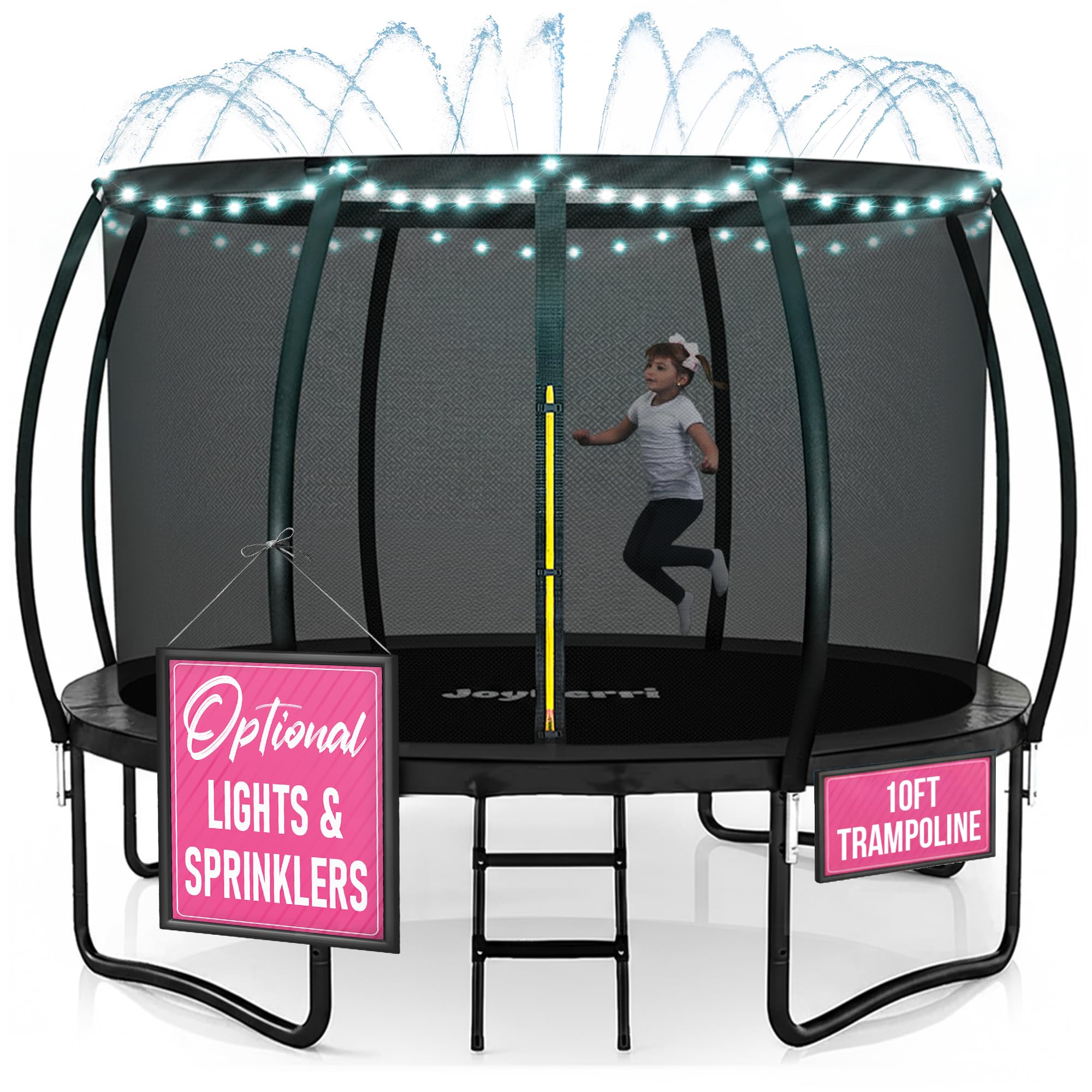
The JoyBerri trampoline stands out for its built-in LED lights and sprinkler, which make nighttime bouncing a treat for kids. Assembly is straightforward, and the price is reasonable for a mid-range outdoor trampoline. However, the net poles are prone to popping out of place and bending, limiting this to occasional, low-impact use by smaller children. For families who prioritize long-term durability or regular active jumping, the stability concerns here are a notable compromise.
Pros
- LED lights and sprinkler add unique fun for kids.
- Clear instructions make assembly relatively painless.
- Decent build quality for the price point.
Cons
- Net poles pop free and bend easily, creating instability.
- Durability concerns with the net, poles, and sprinkler over time.
Worth considering if you want a trampoline with novelty lights and a sprinkler for occasional backyard fun with small kids, and you’re okay with lighter-duty use.
Best for Large with Extras
ACWARM 14FT with Hoop
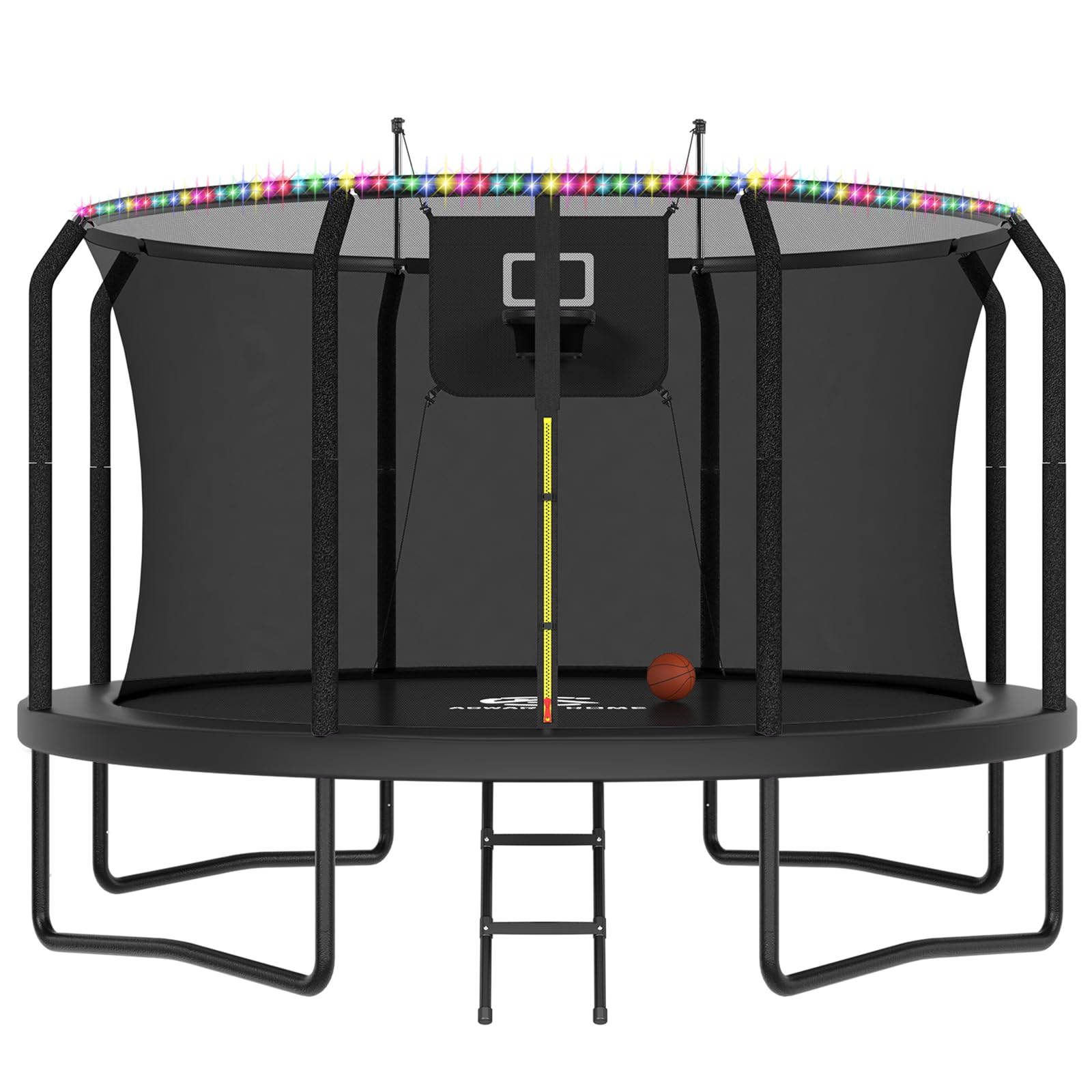
The ACWARM HOME trampoline delivers a large jumping area with fun extras like a basketball hoop and LED lights that kids love. At a mid-range price, it offers good value for occasional recreational use. Assembly is manageable with two people, though the net attachment requires manual threading and often extra zip ties. However, inconsistent quality control undermines confidence — some units report frame bending after a month, and net poles and spring covers are vulnerable in wind. These durability concerns and the tedious net installation keep it from competing with more robust options like the top pick.
Pros
- Basketball hoop and LED lights add extra fun for kids.
- Good value for a large trampoline at this price point.
- Assembly manageable with two people.
Cons
- Net attachment requires manual threading; often needs extra zip ties.
- Occasional reports of frame bending under normal use.
Worth considering if you want a large trampoline with extras for occasional use and are prepared to handle assembly quirks and accept some durability risk.
Best for Narrow Yards
ORCC Oval 8×13
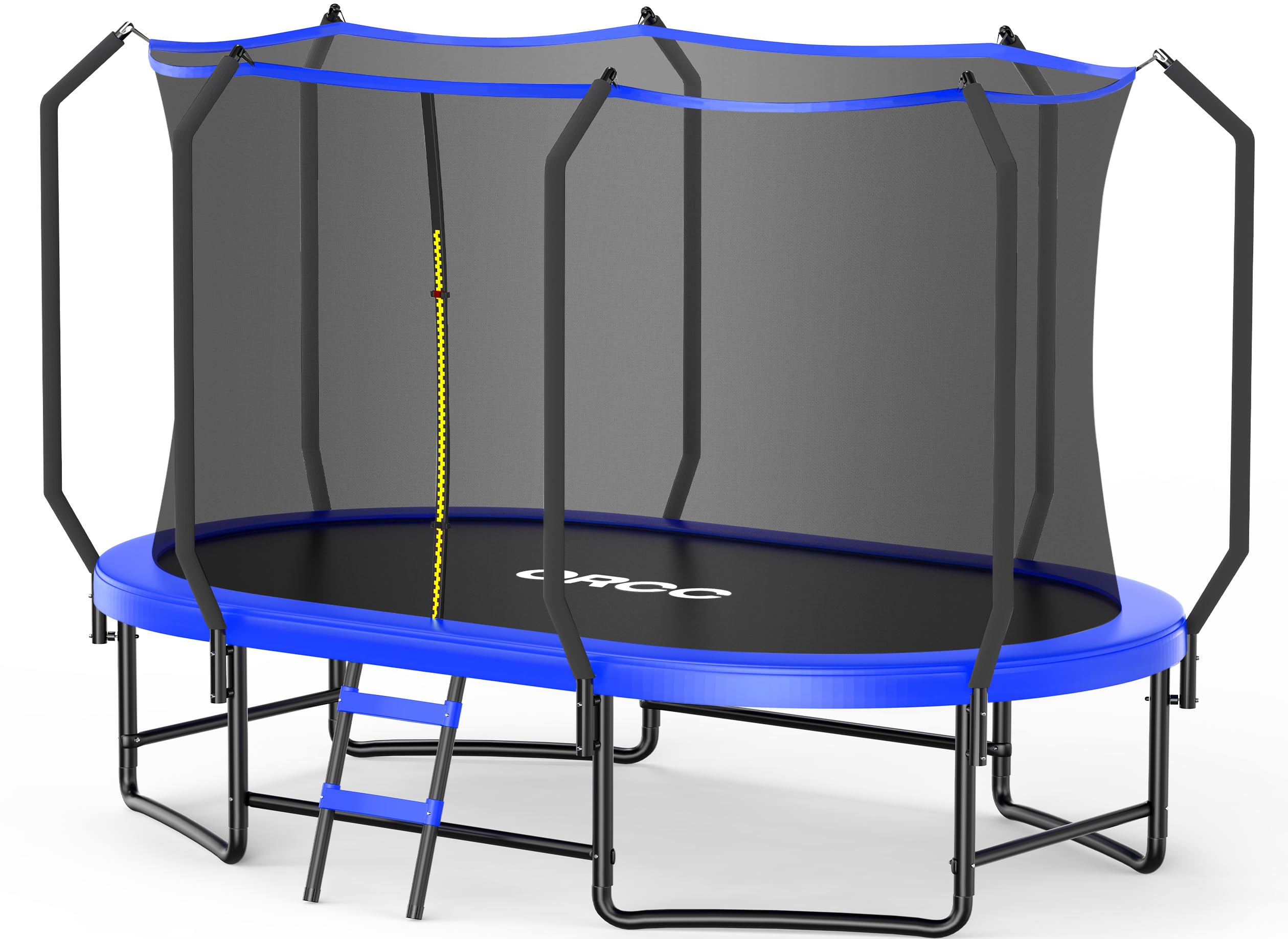
The ORCC Oval Trampoline delivers a unique solution for yards that are longer than they are wide. Its oval shape provides ample jumping space while fitting into a narrow footprint, and the hot-dip galvanized steel frame reflects ORCC’s attention to build quality. Customer service receives praise for quick part replacements. With only 230 reviews, long-term durability data is thinner than for more established round models. Some users report the long side bars bending on first use, and net pole stability can be inconsistent. For those who need the oval footprint, it’s a solid option with manageable trade-offs.
Pros
- Oval shape provides more jumping area in a narrow footprint
- High-quality hot-dip galvanized steel frame
- Responsive customer service from ORCC
Cons
- Some long side bars have been reported to bend during first use
- Net poles can lean after assembly, needing periodic adjustments
Worth considering if your yard is longer than it is wide and you prioritize ORCC’s build quality, but be aware of limited long-term data and occasional side bar bending.
How to Choose
Frame thickness and enclosure quality matter more than advertised weight limits for long-term safety and durability.
Size and Jumping Area
Choose a diameter that fits your yard and your kids’ ages. A 3-foot mini trampoline works for toddlers indoors, while an 8- to 12-foot model suits outdoor family use. Measure the intended space, including a 2-foot clearance buffer around the frame.
Weight Limit and Frame Thickness
Look for a dynamic weight capacity that covers your children plus some buffer. Thicker galvanized steel frames (at least 1.5mm wall thickness) resist bending and rust better than thinner alloy tubes. The frame’s T-joint welds are often the first failure point.
Safety Enclosure and Padding
Curved safety poles that angle outward reduce impact risk. The enclosure net should attach directly to the jumping mat (no-gap design) to prevent limbs slipping through. Padding over springs should be thick and UV-resistant; tie-down loops that hold it in place are critical.
Assembly Difficulty and Part Quality
Plan for 2-4 hours with two people. Check that all springs, bolts, and the spring tool are included before starting. Clear video tutorials or printed instructions with labeled parts cut build time significantly. Missing or poorly fitting hardware is the top frustration.
Weather Resistance and Warranty
Hot-dip galvanized steel frames withstand rain and snow better than painted steel. Replace included ground stakes with heavy-duty auger anchors for wind-prone areas. A warranty of at least 1 year on the frame and 6 months on the net/cover indicates manufacturer confidence.
FAQ
How do I keep my trampoline from blowing away in the wind?
The ground stakes that come with most trampolines are too short and flimsy for real wind. Buy heavy-duty auger-style anchors that screw into the ground at least 12 inches deep. For extra security, use sandbags or water weights on the legs, especially for larger models.
What size trampoline is best for a 3 year old?
For a 3-year-old, a toddler trampoline around 3 to 5 feet in diameter is safest. The smaller jumping surface and low height reduce fall risk. Models with a padded handlebar or full enclosure allow supervised indoor bouncing. Larger outdoor trampolines are better suited for ages 6 and up.
Are trampoline LED lights safe for kids?
LED lights themselves are low voltage and safe, but the wiring and battery compartments must be well sealed. Some models have exposed wires that can snag. Stick to trampolines with fully enclosed, weatherproof LED strips, and avoid any where lights are attached with loose tape or zip ties.
Why does my trampoline spring cover keep coming off?
Spring covers often detach because the tie-down loops are too few or poorly placed. Many budget trampolines use thin fabric loops that tear. Secure the cover with additional bungee cords or heavy-duty zip ties at the stress points. If the cover is already torn, a replacement pad from the manufacturer is safer than trying to patch it.