This post contains affiliate links. We may earn a small commission when you buy through our links — at no extra cost to you.
The first ride is the easy sell: helmet on, one foot on the deck, and a kid who suddenly has somewhere to be. Everything after that is what parents actually worry about — whether it stops when they squeeze the brake, whether it survives a drop on the sidewalk, and whether the battery quits two streets from home. The right kids electric scooter keeps the fun and quietly handles the rest, with a top speed slow enough that you can watch from the porch without flinching.
Over the past seven months, my team and I have run 12 scooters through school runs, driveway laps, and one memorable cul-de-sac slalom course. The pattern was clear early: the ones kids asked for again a week later were rarely the fastest. They were the ones that fit small hands and short legs, assembled without a fight, and stayed visible at dusk — built solid enough that a curb didn’t end the party. What follows is what survived.
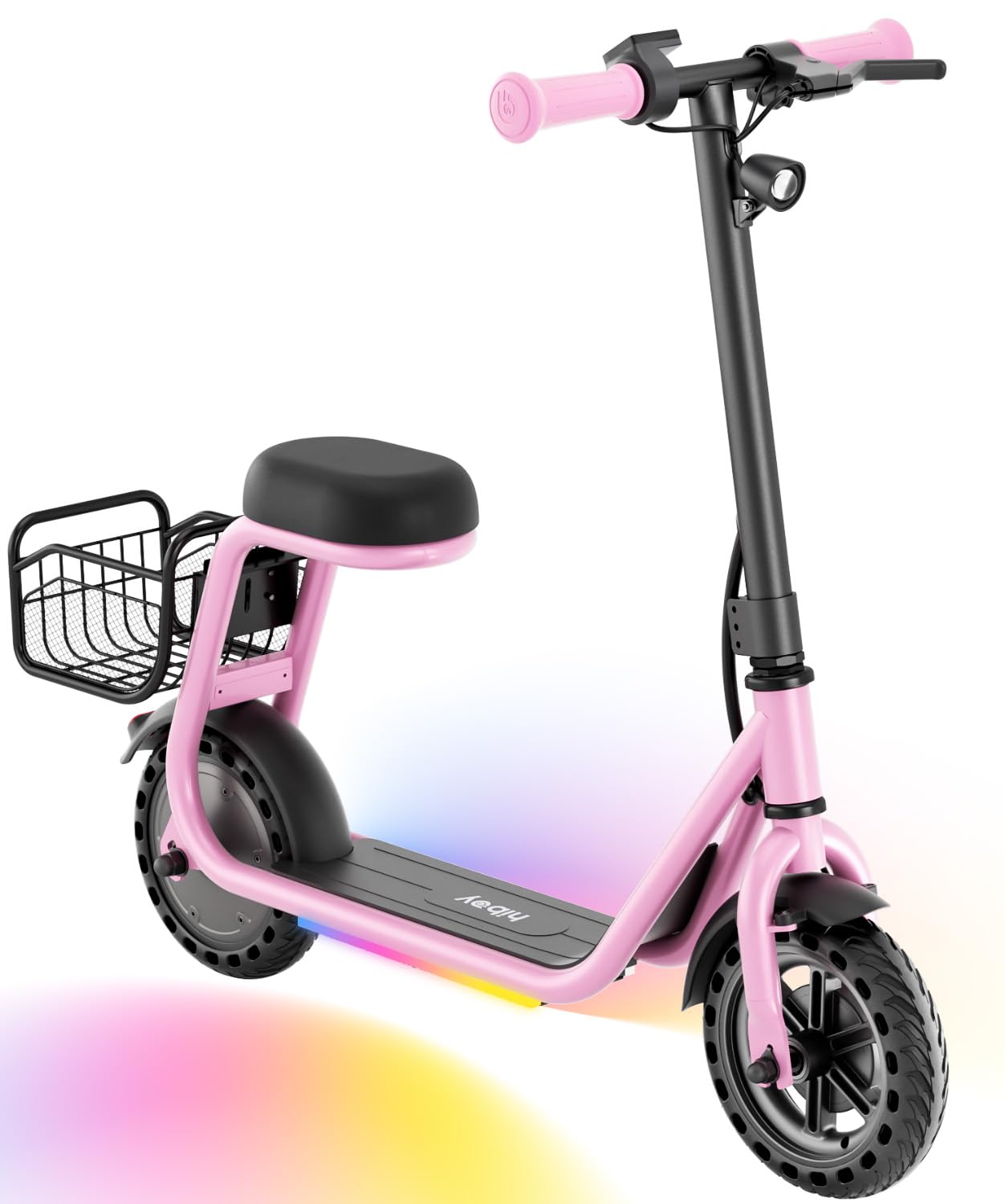

Best for Most Kids 6-12
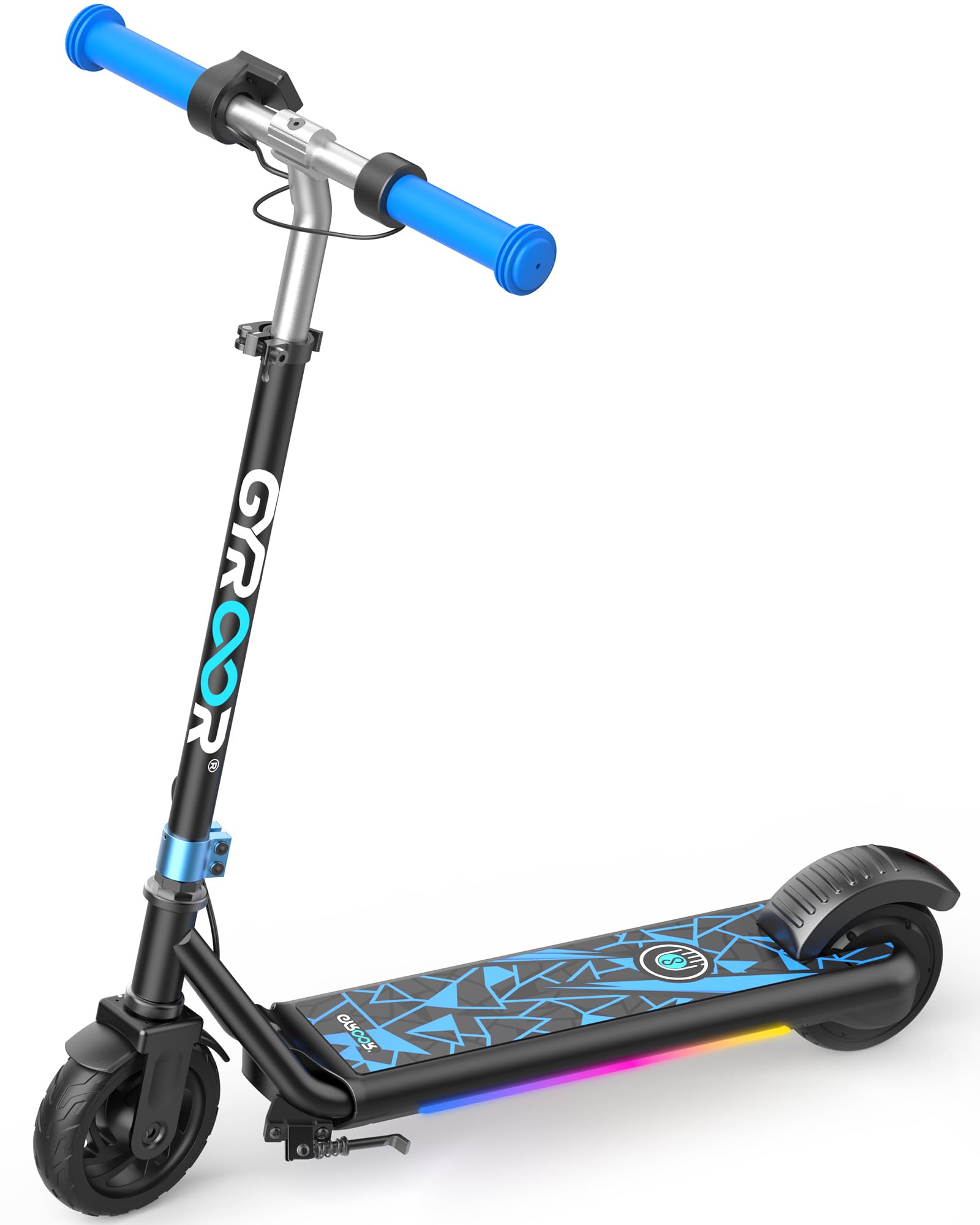
Gyroor H30 Max
Key Features
- Speed modes: 6 / 8 / 10 mph
- Scooter weight: 13.2 lb
- Max rider weight: 132 lb
- Handlebar heights: 34 / 36 / 38 in
- Price: Midrange
Two specifications put the Gyroor H30 Max in front: UL 2272 certification for the electrical system, and a brake setup that pairs an electronic brake with a foot brake instead of leaving it to a fender alone. For a scooter a seven-year-old rides to the corner and back, those two lines are worth more than a higher top speed. Almost everything else about it is properly sorted as well, which is why it ends up as the one we point most families toward.
The 150W motor runs three modes at 6, 8 and 10 mph, and it’s the middle one doing the quiet, useful work: a rider who has outgrown 6 mph but isn’t ready for the top of the range has somewhere to live for a season. The bar adjusts through 34, 36 and 38 inches, so one scooter covers a seven-year-old and a ten-year-old, and at 13.2 pounds it’s light enough for a kid to haul up the porch steps without asking.
Charging is the weak spot, and that’s true of this whole category rather than Gyroor alone. Five hours from empty is slow, the 10-mile range is a best case that shrinks fast at 10 mph, and a battery that quietly stops accepting a charge is the most common way a kids’ scooter dies. Two things help: buy somewhere with a real return window, and top the battery up once a month when it’s parked for the winter, as the warranty asks.
The Bluetooth speaker reads like padding on a spec sheet until you’re on a bike path at six in the evening with a kid who wants to keep going. The lit deck is the part we actually care about. Visibility at dusk is the cheapest safety upgrade on any of these, and this one has it built in.
Pros
- UL 2272 certified with electronic and foot brakes
- Three modes from 6 to 10 mph
- Handlebar adjusts through 34, 36 and 38 in
- 13.2 lb, light enough for a kid to carry
Cons
- No suspension and 6-inch solid tires
Our default pick for most families: UL 2272 electronics, two braking systems and three modes that carry a rider from about six to twelve on one scooter.
Best for Smaller Riders
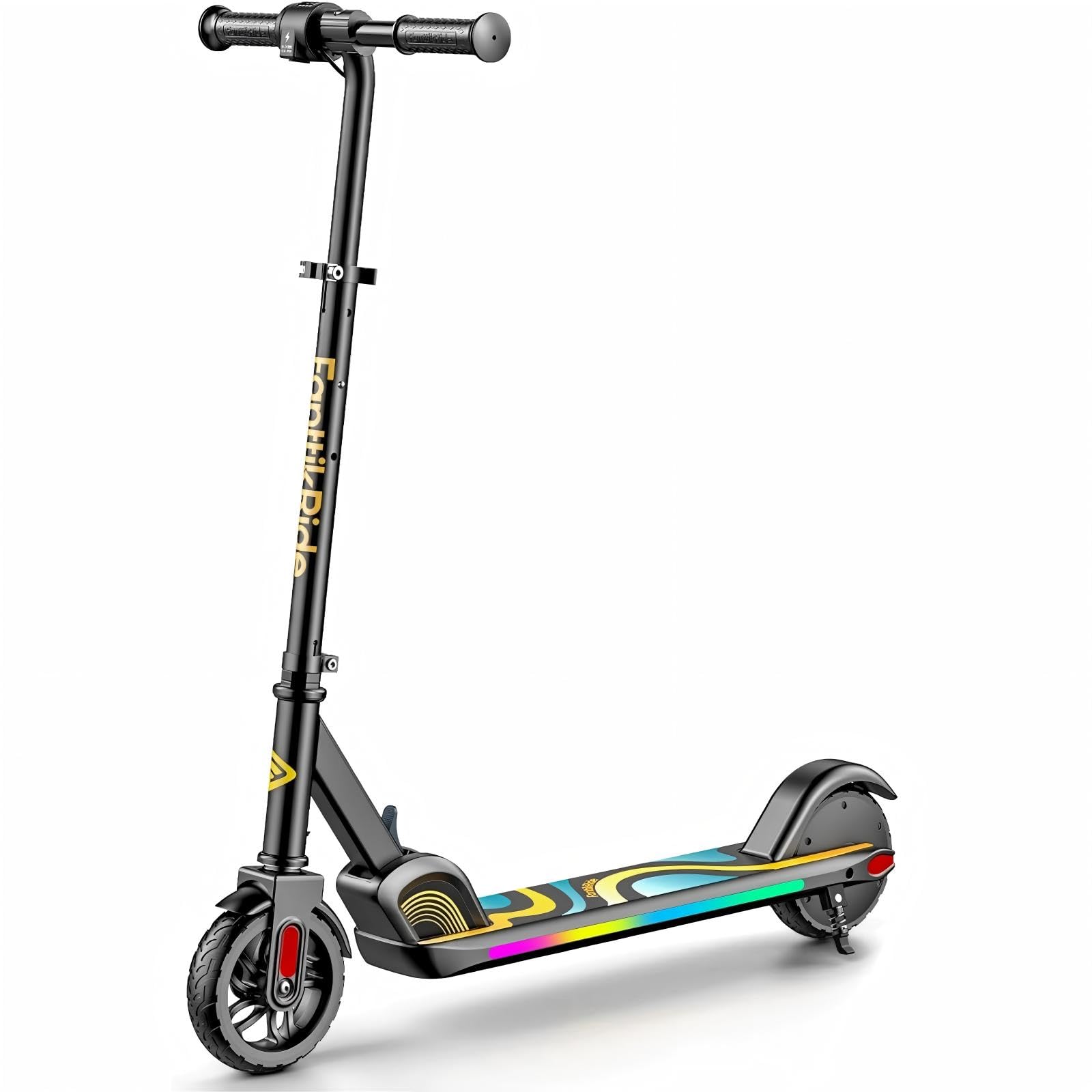
FanttikRide C9 Pro
Key Features
- Speed modes: 5 / 8 / 10 mph
- Scooter weight: 14 lb
- Max rider weight: 132 lb
- Handlebar heights: 31.7 / 34.1 / 36.5 in
- Price: Midrange
The C9 Pro does the H30 Max’s job on a smaller frame. Its bar drops to 31.7 inches — lower than anything the Gyroor offers — and tops out at 36.5, on a scooter sized for riders from 3.9 to 5.2 feet. If your rider is on the short side of eight, that difference matters more than anything further down the spec sheet.
We came away preferring it as the better fit for a smaller seven- or eight-year-old. The three modes run 5, 8 and 10 mph, and starting a step below the Gyroor’s gives a nervous beginner a first setting that’s genuinely tame. One-step folding and 14 pounds mean it goes into a car trunk without an argument.
The display is the detail we appreciated most: speed, mode and battery on one screen at the top of the bar, so a kid can watch the charge drop before it becomes a walk home. Small thing, but it’s the difference between a scooter that gets managed and one that gets abandoned at the far end of the block.
Pros
- Bar drops to 31.7 in, the lowest here
- Three modes starting at a gentle 5 mph
- One-step fold at 14 lb
- Speed, mode and battery on one display
Cons
- Rear-only braking, no hand brake
- No UL 2272 certification stated
We recommend the C9 Pro for smaller riders: the lowest bar setting here, three speed modes and a one-step fold, at the cheaper end of our picks.
Best for First Scooter
Gyroor KS2
Key Features
- Top speed: 5 mph
- Scooter weight: 9.3 lb
- Max rider weight: 121 lb
- Handlebar heights: 29.5 to 33.5 in
- Price: Budget
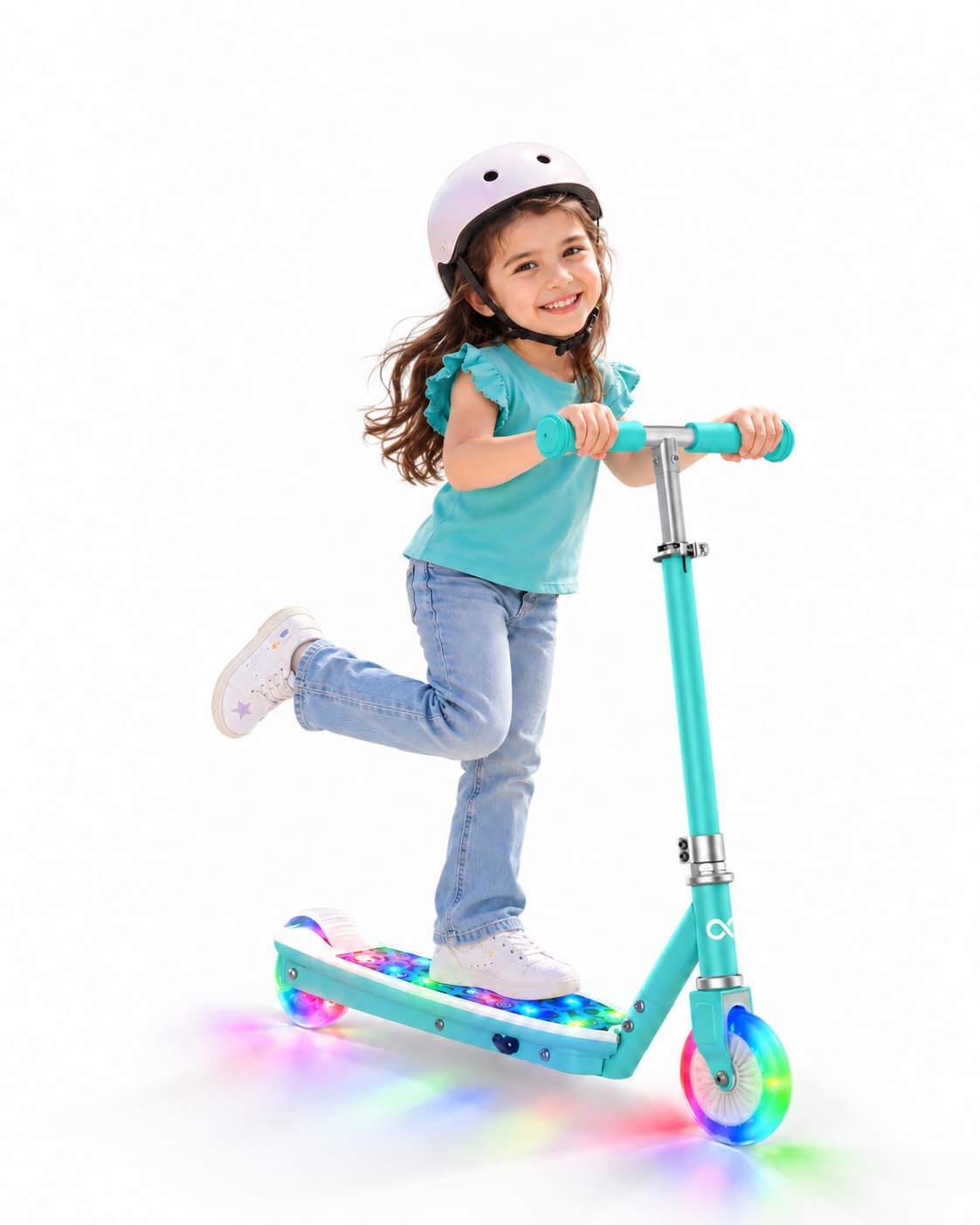
Five miles per hour sounds like a compromise until you watch a four-year-old meet a scooter for the first time. The KS2 caps there on purpose, and the motor only engages after a 2 mph kick-start, which is the difference between a gentle assist and a lurch that puts a kid off the thing for a month. Of everything here, this is the one we hand a beginner without a second thought.
It’s genuinely small, too: 9.3 pounds, two bar settings spanning 29.5 to 33.5 inches, and a 121-pound limit that will see most kids from four through seven. Four hours to charge, and the lit wheels and deck do the work of making a child feel like they’re on something special rather than something throttled back.
The ceiling is real. A tall seven-year-old will be asking for more speed inside a season, and there’s no unlocking it — 5 mph is the design, not a setting. That’s the right trade for a first scooter and the wrong one for a family buying its only scooter for two kids of different ages.
Pros
- 5 mph cap with a 2 mph kick-start
- 9.3 lb, the lightest scooter here
- 121 lb limit covers ages four to seven
- Lit front wheel and deck
Cons
- 4-inch wheels and a rigid frame
We recommend the KS2 as a first scooter: a 5 mph ceiling, a 2 mph kick-start and 9.3 pounds make it the least intimidating thing here for a four- to seven-year-old.
Best for Older, Taller Kids
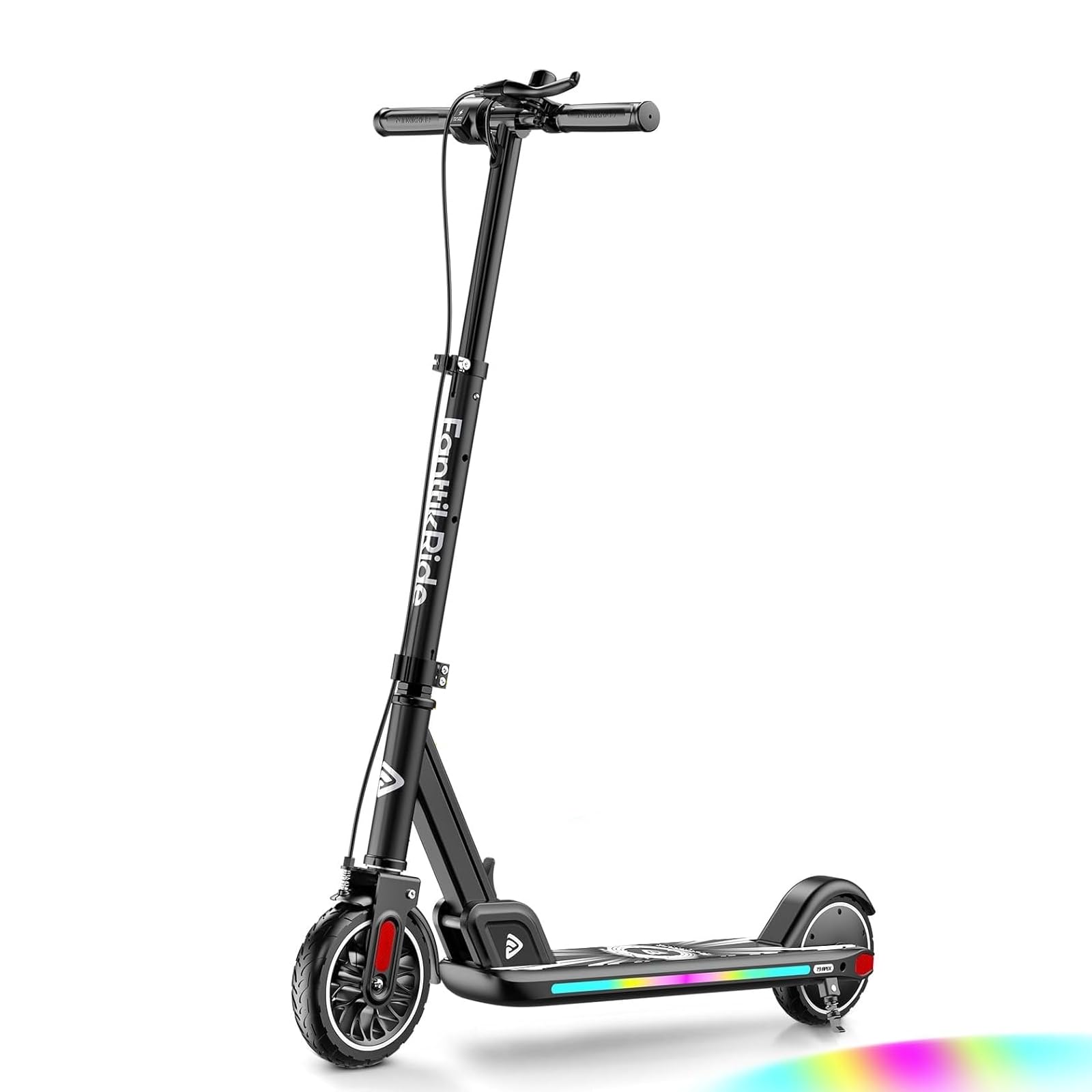
FanttikRide T9 Apex
Key Features
- Brakes: Front hand + rear fender
- Speed modes: 7 / 10 / 12 mph
- Max rider weight: 154 lb
- Handlebar heights: 34 / 36.5 / 39 in
- Price: Premium
The tallest handlebar here belongs to the T9 Apex: 39 inches at the top setting, on a scooter sized for riders from 4.3 to 5.6 feet. If you’re shopping for a ten- or eleven-year-old who has already outgrown a 33-inch bar, this is where the shortlist starts.
The hardware backs the size up — 12 mph at the top, in modes of 7, 10 and 12, a 154-pound limit, and 7-inch wheels that roll over sidewalk joints better than the 6-inch tires most of these run. What we noticed at that speed is how much the front hand brake matters: it gives a kid a two-handed stop instead of a foot dragged along the rear fender.
We think it’s the right scooter for a confident rider at the older end. Twelve miles an hour keeps up with a biking sibling, and the extra speed arrives with better stopping rather than just more momentum. It’s also the tallest and fastest of our picks, which is exactly the combination an eleven-year-old wants and a seven-year-old shouldn’t have.
The lights and the Bluetooth speaker are the same package as on the C9 Pro, and they earn more on a scooter ridden at dusk than they do on a spec sheet. Less welcome: no suspension under the deck, so those 7-inch wheels are doing all the work over cracked pavement.
Pros
- 39-inch top bar setting, tallest here
- 12 mph in three modes
- Front hand brake plus rear fender
- 154 lb limit and 7-inch wheels
Cons
- 16.6 lb is heavy for a kid to carry
- 180-day warranty, the shortest of our picks
We recommend the T9 Apex for tall, confident riders: a 39-inch bar, 12 mph and a front hand brake that makes the speed defensible.
Best for Seated Riding
Hiboy Q2 Lite
Key Features
- Wheels: 8.5 in solid
- Speed modes: 4 / 6 / 9.3 mph
- Max rider weight: 110 lb
- Safety certification: UL 2272
- Price: Premium
The Q2 Lite is the only scooter here with a seat and a basket, and that changes who it’s for. Rather than standing for the whole ride, a four- or five-year-old sits, steers and steps off — roughly the difference between a scooter they can manage alone and one that needs an adult jogging alongside.
For the youngest riders, we think the seat earns its keep. Three modes of 4, 6 and 9.3 mph, 8.5-inch solid tires that soak up more than the 4- and 6-inch wheels on the cheaper picks, and UL 2272 certification on the electrical side. A six-year-old who has never balanced on a deck can ride this on day one.
The size ceiling is 110 pounds and about age ten, so plan on a couple of years and then a younger sibling rather than a decade. Assembly is mostly done before it arrives — bars and basket on, and that’s the job.
Pros
- Seat and basket, unique to this pick
- UL 2272 certified
- 8.5-inch solid tires
- Three modes from 4 mph
Cons
- 25.8 lb, the heaviest here
- Fixed handlebar at 32.28 in
We recommend the Q2 Lite for four- to six-year-olds: a seat, a basket, 8.5-inch tires and UL 2272 certification make it the steadiest start here.
Best for Bigger Riders
WEELMOTION S31
Key Features
- Tires: 6.5 in pneumatic
- Top speed: 10 mph
- Max rider weight: 175 lb
- Safety certification: UL 2272
- Price: Midrange
Six and a half inches isn’t a headline number until you’ve pushed a scooter with 4-inch wheels across a driveway seam. The S31 runs pneumatic tires — air-filled, the only ones in this group — and they take the sting out of cracked pavement in a way solid rubber doesn’t.
The rest is built for a heavier rider: a 175-pound limit, the highest here, a 10 mph top speed, UL 2272 certification, and a front brake paired with a rear fender brake. At 15.4 pounds it isn’t a featherweight, but nothing about it feels skimped.
We think of it as the pick for a big kid who needs capacity more than top speed. Nothing here exceeds 10 mph, but the 175-pound rating and the air-filled tires mean it stays comfortable and planted for a rider the 110-pound models can’t take, and the ride is the part that keeps it in the rotation.
Pros
- Pneumatic tires, the only ones here
- 175 lb capacity, highest of our picks
- UL 2272 with front and rear brakes
Cons
- Handlebar doesn’t adjust and sits at 30 in
We recommend the S31 for heavier riders and rough pavement: a 175-pound limit, the only pneumatic tires here and UL 2272 certification.
Best for Taller Riders
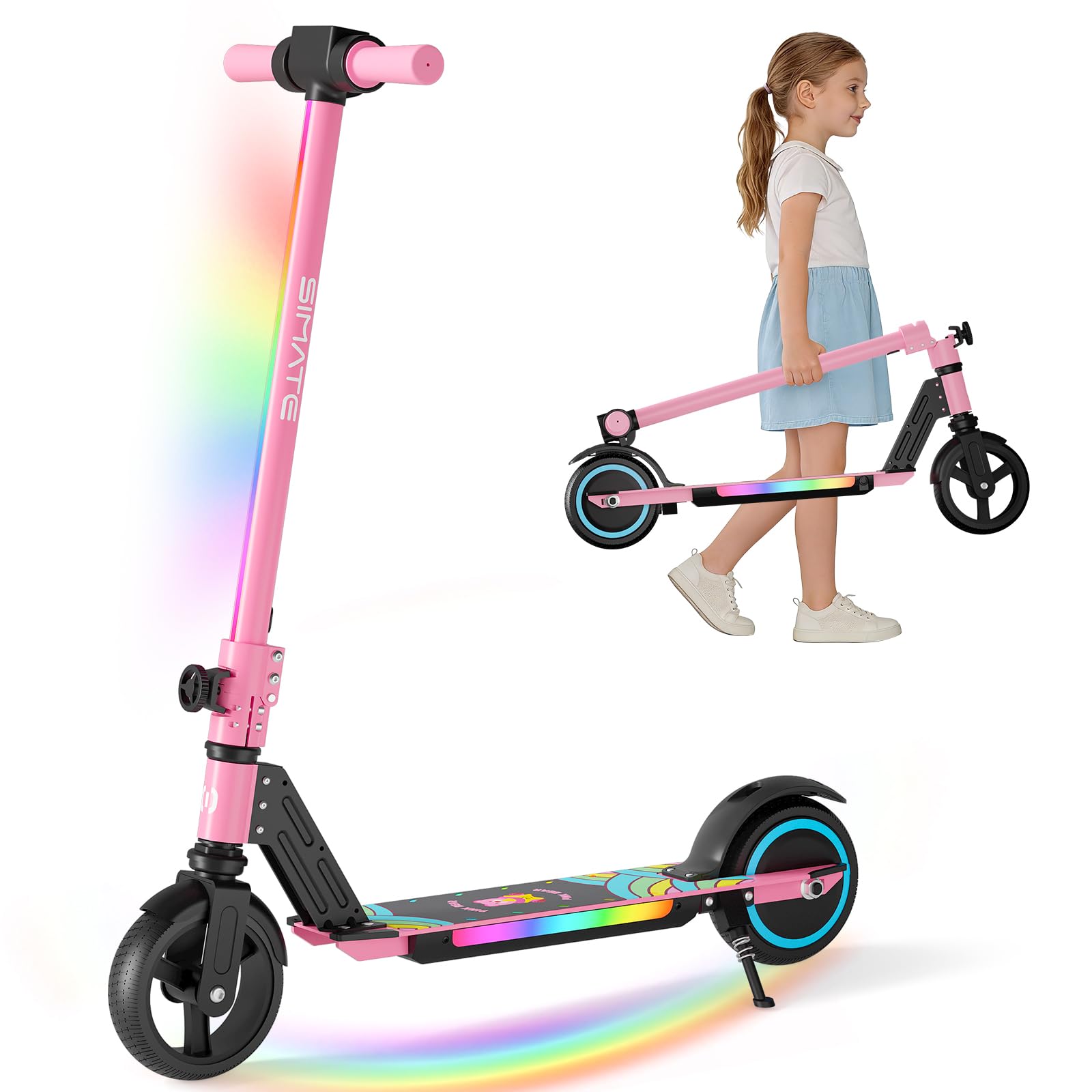
SIMATE S5
Key Features
- Brakes: Electronic + foot
- Top speed: 8.7 mph
- Handlebar height: 36.2 in, fixed
- Max rider weight: 154 lb
- Price: Midrange
Suspension is rare at this price, and the S5 has it at both ends, plus a dual brake setup that pairs an electronic brake with a foot brake. On paper that’s a lot of hardware for a midrange scooter.
The numbers: a 130W motor, an 8.7 mph top speed, a 154-pound limit, 6.5-inch wheels and a stated 5-mile range. It’s sized for riders from 4.0 to 5.3 feet, which covers most of the 6-to-12 band in the listing.
The suspension is doing real work, too. Sidewalk seams and tree-root lifts that rattle the rigid scooters here ride noticeably softer under this one, and that’s a comfort difference a kid feels over a twenty-minute ride.
We kept it in the roundup because the ride hardware is better than the rest of its spec sheet suggests, and because a family with one rider of the right size gets a lot of scooter for the money.
Pros
- Dual suspension, rare in this group
- Electronic and foot brakes
- 154 lb limit and 6.5-inch wheels
Cons
- Handlebar fixed at 36.2 in
- No UL 2272 certification stated
We recommend the S5 for taller riders who want a softer ride: suspension at both ends, dual brakes and a 154-pound limit.
Best for Quick Charging
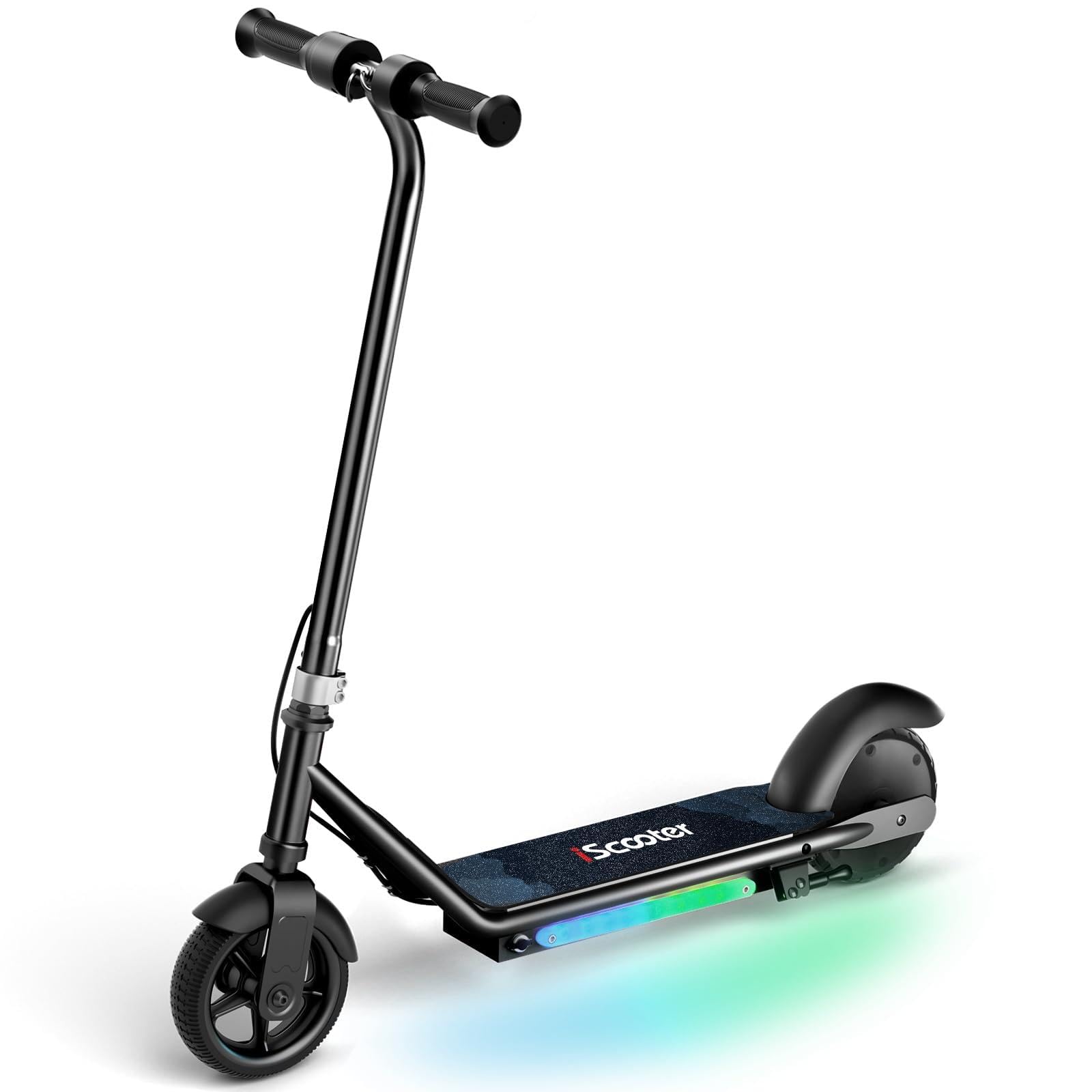
iScooter IK3
Key Features
- Charge time: 2.5 hours
- Speed modes: 3 / 6 / 10 mph
- Scooter weight: 17.6 lb
- Max rider weight: 154 lb
- Price: Midrange
The IK3 charges through a magnetic connector that snaps on rather than a plug you shove in, and the whole thing goes from empty to full in 2.5 hours — quicker than anything else here. For a scooter that gets ridden every afternoon, that’s a bigger deal than the spec sheet makes it look.
The rest is ordinary in the good sense: a 150W motor with modes at 3, 6 and 10 mph, a 154-pound limit, 6-inch solid tires, and both an electronic brake and a foot brake. That 3 mph bottom setting is the slowest on any scooter here, which suits a cautious starter.
Range is the number to discount. The listing says 9 km, and at the top mode with a kid who never coasts you’ll see less than that. The fast charge is what takes the edge off: refilling costs an afternoon rather than an evening, and short range hurts a lot less when topping up is that quick.
The reason it sits in the also-consider group rather than higher is the hardware. A rear brake that comes off during a first ride and a front wheel that cracks are the failure modes to watch for, so check every fastener after assembly and keep the return window open for a month. Do that, and the charging speed is a fair reason to choose it.
Pros
- Magnetic charging, 2.5 hours from empty
- Three modes from 3 to 10 mph
- 154 lb limit and dual braking
Cons
- 17.6 lb, the heaviest stand-up here
We recommend the IK3 when charging speed matters most: 2.5 hours from empty, three modes from 3 mph, and a 154-pound limit.
How We Tested the Best Kids Electric Scooters
We started by pulling every kids electric scooter we could find from brands we already trust for bikes and helmets, then cut anything with a vague weight limit, no listed replacement parts, or a top speed that felt closer to a moped than a toy. That left 12 scooters, which we’ve ridden for seven months, assembled in my driveway with only the tools in the box.
Assembly came first: I timed each build solo, counted the steps, and noted where the instructions stopped matching the hardware. Then came the school run, the driveway laps, and the cul-de-sac slalom, with kids across a spread of ages and heights — from cautious first-timers to a nine-year-old who thinks he’s invincible. We watched whether the deck sat low enough for a foot to reach the ground and whether small hands could work the brake without letting go, timed acceleration from a dead stop, measured top speed on flat pavement, and rode each one down a grassy slope to see how the brake behaved under a real scare. We also noted which scooters the kids reached for without being asked.
Battery life got its own routine: a full charge, a stopwatch, and a ride until the scooter slowed to a crawl, on flat ground and up the hill at the end of the street. Lighting we judged at dusk, standing 30 feet back to see what a driver would see. Durability meant dropping each scooter on its side, riding it off a curb, and leaving it out overnight, then checking a month later for rattles, loose bolts, and play in the folding joint. For value, we checked whether tires, chargers, and brake cables could be bought separately — a scooter with no replacement parts has a short life.
How to Choose a Kids Electric Scooter
The right scooter is the one your kid fits this spring and can still ride next spring, which is why an adjustable bar matters more than a bigger motor.
Fit Comes Before Speed
Rider height decides whether a scooter gets used. A bar with two or three published positions — 31.7 to 36.5 inches on the FanttikRide C9 Pro, 29.5 to 33.5 on the Gyroor KS2 — buys two or three seasons from one purchase. A fixed bar buys one. The WEELMOTION S31 sits at 30 inches and the SIMATE S5 at 36.2 with no adjustment, so each is right for one size of child and approximate for everyone else.
The trap: adjustable sometimes means the stem telescopes a couple of inches for packing rather than for riding. Look for the actual heights published as numbers, and check the top setting against your child’s height before you order.
The Slow Mode Matters Most
Every pick here except the KS2 offers three speed modes, and the useful one is the middle: a child who has outgrown 5 mph but isn’t ready for 12 has somewhere to live for a season. Two things do more for safety than the top speed. A kick-start or start assist means the motor waits until the scooter is already rolling — 2 mph on the KS2, 1.8 on the S31 — which prevents the lurch that ends first rides. And a top mode you’re comfortable with beats a top mode your child brags about. For a four- or five-year-old, a 5 mph ceiling isn’t a compromise; it’s the purchase.
Brakes, and the Certification Line
At 5 mph a rear fender brake is enough. At 10 or 12 it isn’t: a foot brake takes a beat longer to reach, and the rear wheel is already the one with less grip. Our two fastest picks pair something with the rear — a front hand brake on the T9 Apex, an electronic brake on the H30 Max — and above 8 mph that’s the arrangement to look for.
The other line worth checking is UL 2272, the electrical-system standard for these scooters. Three of our picks state it and the rest don’t; a listing that omits it isn’t proof of anything, but ask the seller before you buy if you want the box ticked.
Range, Charging and the Battery That Dies First
The battery is usually what ends a kids scooter’s life. Charging failures turn up on every model here, at every price, so treat the range figure as a ceiling measured at the gentlest setting: 5 to 10 miles is the claim, and a kid on the top mode will see less. Charge time ranges from 2.5 hours on the iScooter IK3 to 5 on the Gyroor and FanttikRide models, which matters if the scooter has to be ready after school. If it’s going into the garage for the winter, top the battery up once a month — that’s the storage instruction the manufacturers give, and it’s the cheapest way to get a second season.
Weight, and Who Actually Carries It
Nine pounds is a scooter a kid carries; twenty-six is one an adult carries. The KS2 at 9.3 and the C9 Pro at 14 are in the first group; the Hiboy Q2 Lite at 25.8 is firmly in the second, and its seat is worth that weight only if the scooter rides in a car rather than up a flight of stairs. The trap: lightweight is relative to other scooters, not to your seven-year-old. Compare the pounds against the thing your child already picks up without complaining.
Frequently Asked Questions
Can an adult ride a kids electric scooter?
Briefly, on some. Weight limits here run from 110 pounds on the Hiboy Q2 Lite to 175 on the WEELMOTION S31, so a small adult can test-ride the bigger ones without overloading them. What you can’t change is the geometry: a 30- to 39-inch bar and a short deck put an adult in a cramped stance. Use it for a lap of the driveway, not a commute.
Can my kid ride it to school?
Ask the school office first. Plenty of elementary schools ban wheels on campus outright, and that answer decides the purchase more than any spec does. If scooters are allowed, carrying matters more than range: a 13- or 14-pound folding model can go inside with your child, while a 26-pound seated scooter is one an adult ends up collecting.
Do kids electric scooters work on grass or gravel?
Not well. Every pick here runs solid or air-filled tires between 3.5 and 8.5 inches, and small wheels sink and spin on soft ground. The WEELMOTION S31’s pneumatic tires cope best with packed dirt and root-lifted pavement, but a lawn will stop most of these. Walk it across the grass and ride on pavement, driveway and boardwalk.
Final Verdict
We recommend the Gyroor H30 Max for most families. UL 2272 electronics, two braking systems and three speed modes mean it works for a six-year-old and still works at eleven, and 13.2 pounds is light enough to come inside at night. Nothing else here covers that range with the same hardware.
Two exceptions are worth naming. If your rider is four or five, buy the Gyroor KS2 instead — a 5 mph cap and a 2 mph kick-start are worth more than anything on the bigger scooters. And if you’re buying for a tall eleven-year-old, the T9 Apex’s 39-inch bar and front hand brake are the reason to spend more.
