This post contains affiliate links. We may earn a small commission when you buy through our links — at no extra cost to you.
Babies have loud opinions about being set down, and a carrier is how you get your hands back. The wrong one turns a quick errand into a countdown: a strap sawing at your neck, a waistband creeping up, a baby fussing because their legs are dangling instead of supported. The right one does something quieter — it lets a nap happen on your chest in the middle of a grocery run, leaves your shoulders fine afterward, and makes you wonder why you waited so long to try one.
The thing nobody tells you is that fit matters more than any spec on the box. Waistbands, buckles, and strap placement vary wildly from one carrier to the next, and a model that’s perfect on a 5-foot-2 frame can dig into someone six inches taller. Over the past six months, my team and I have worn 11 carriers on grocery runs, up and down subway stairs, on two-mile walks, and around the kitchen at 3 a.m. with a fussy newborn. The ones below are the carriers we kept reaching for even on days we didn’t strictly need one.


Best for Newborn to Toddler
Ergobaby Omni Classic
Key Features
- Fabric: Mesh
- Weight range: 7-45 lbs
- Wearer support: Lumbar support
- Carry positions: 4 positions
- Price: Premium
The 7-45 lb range is the reason this is the default recommendation for a single carrier that lasts. It covers a newborn with the seat adjusted narrow and a toddler in a back carry, and the four positions—front-in, front-out, hip, and back—mean you are not shopping again at the first growth spurt. The mesh fabric and padded waist belt are the parts we appreciate on a long afternoon; the lumbar support is real, not just a label.
We also like that the shoulder straps can be crossed or worn H-back. That sounds like a small detail until you have a heavy toddler: changing the strap path moves the load off the same spot on your shoulders. The adjustable back panel and bucket seat keep the carry compact as the baby grows, and the hip-healthy positioning is a useful baseline rather than a marketing extra.
The trade-offs are price and heft. This is the most expensive carrier in this set, and it is bulky enough that it takes up diaper-bag space. The fit also runs small for some petite wearers, so check the waist and shoulder adjustment before you commit. If you want one carrier for daily walks, errands, and toddler back carries, the range and support justify the premium.
Pros
- 7-45 lb range covers newborn to toddler
- Four positions, including back carry
- Mesh fabric and lumbar support
- Cross-back or H-back strap options
Cons
- Hand wash only
- Bulkier than wraps and hip seats
- Premium price for one carrier
We recommend the Omni Classic to anyone who wants one carrier to handle newborn walks, errands, and toddler back carries without shopping again.
Best for Budget Everyday
Infantino Flip 4-in-1
Key Features
- Care: Machine wash
- Head support: Adjustable
- Weight range: 8-32 lbs
- Carry positions: 4 positions
- Price: Budget
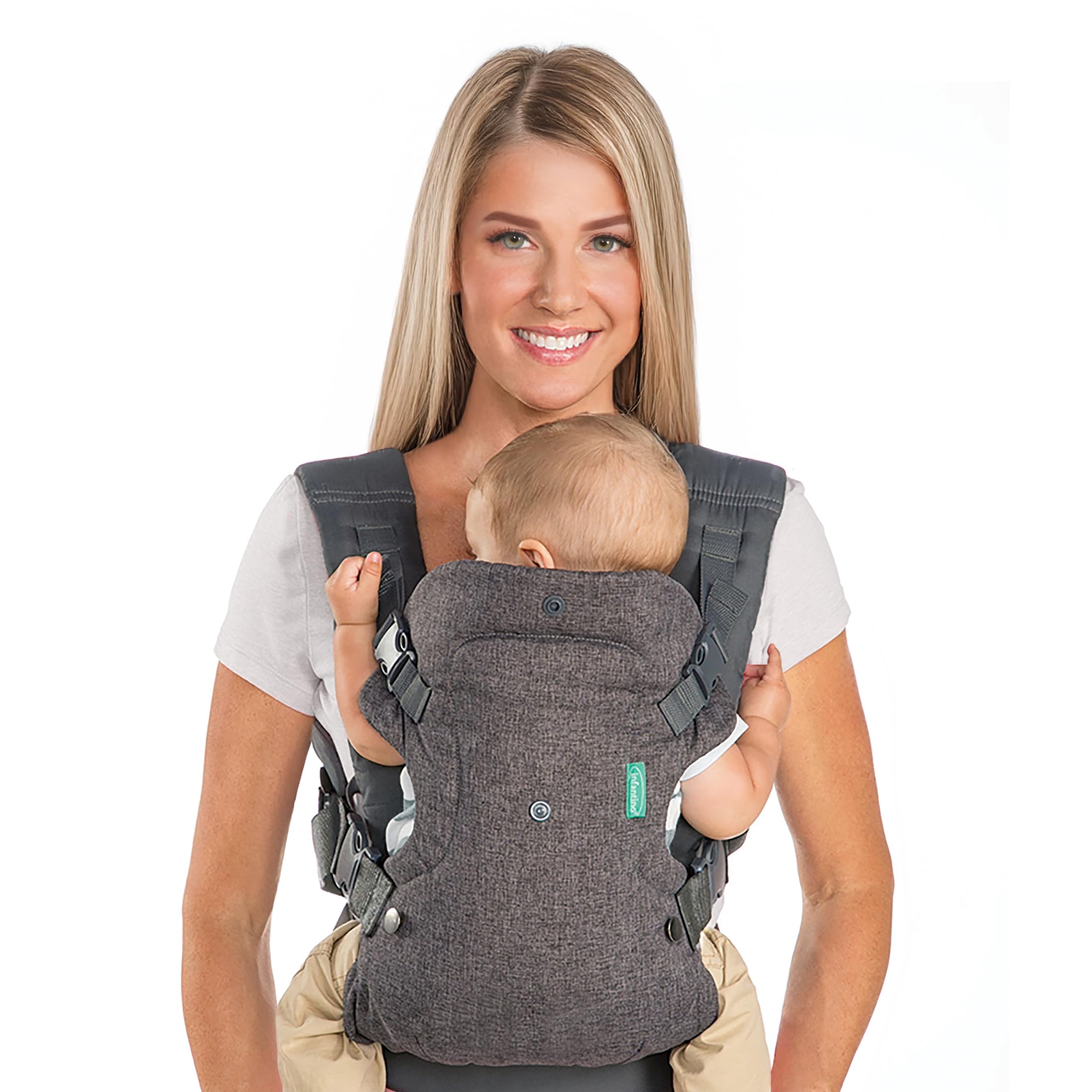
This is the budget anchor of the group, and we mean that as a recommendation rather than a compromise. It covers 8-32 lbs, offers four carry positions, and has a supportive waist belt and extra-padded shoulder straps—the basics that matter for errands and neighborhood walks. For a family that wants one inexpensive carrier to leave in the car, it is the easiest yes in this set.
The seat converts from a narrow newborn setting to a wider one, and the adjustable head support is more useful than it looks for a baby who is not yet steady. The catch is the buckle count. There are several adjustments to learn, and the first few tries can feel like a puzzle, especially if you are alone with a squirming baby. It also starts at 8 lbs, so it is not the carrier for a tiny newborn, and the back support is not as generous as the premium picks for a heavy toddler. At this price, those are fair limits rather than deal-breakers.
Pros
- Four carry positions at a budget price
- Adjustable head support for smaller babies
- Machine-washable fabric for easy cleanup
- 8-32 lb range covers the first year
Cons
- More buckles to learn than premium picks
- Starts at 8 lbs, not tiny newborns
- Back support thins for heavy toddlers
Buy the Flip if you want a genuinely useful four-position carrier for everyday errands and do not need premium padding or a tiny-newborn fit.
Best for Newborn Comfort
Ergobaby Embrace
Key Features
- Fabric: Soft knit
- Head support: Head and neck padding
- Weight range: 7-25 lbs
- Carry positions: 2 positions
- Price: Premium
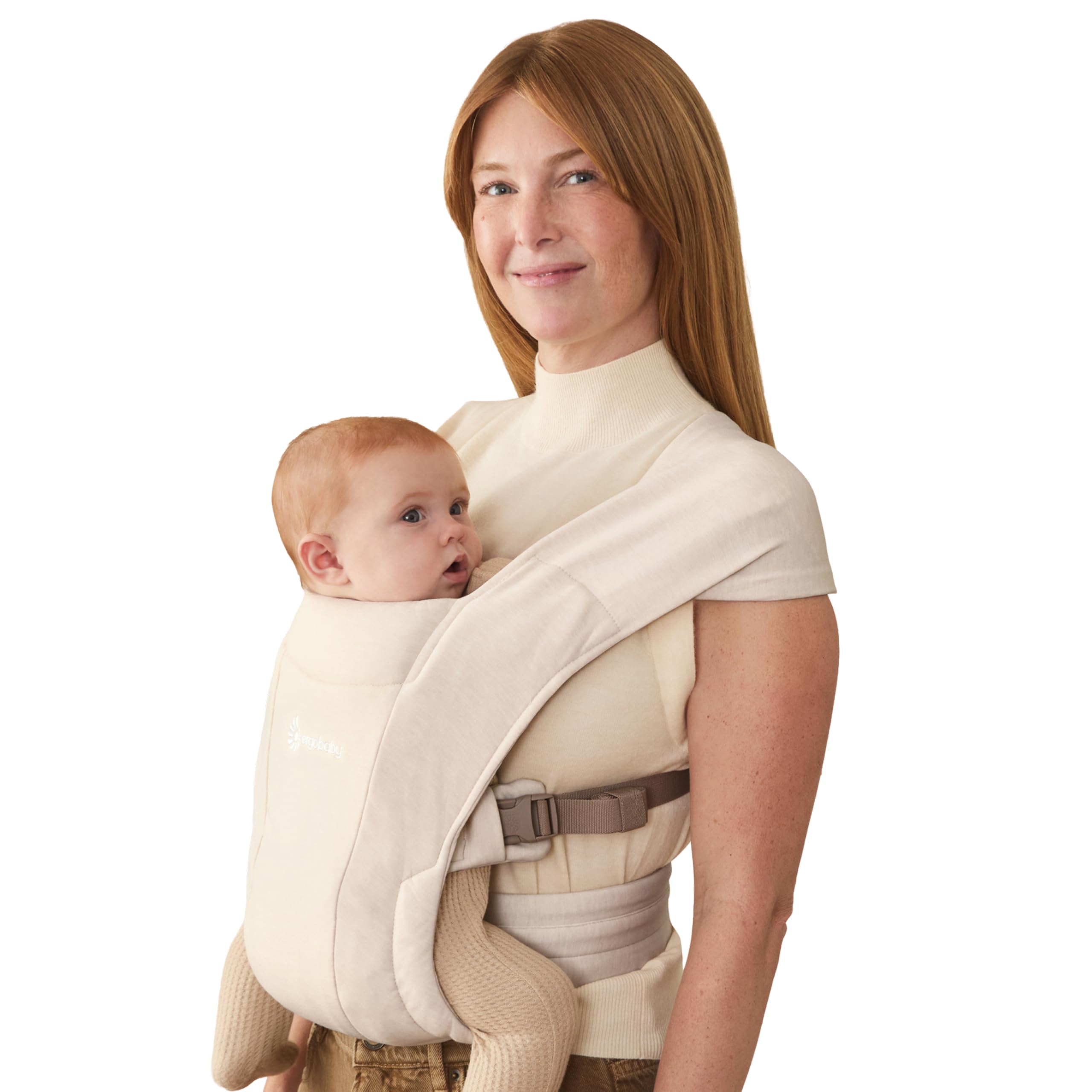
The Embrace is the newborn specialist in this group. The soft knit, head and neck padding, and 7-25 lb range are built around the first year, when a baby wants to be held close and a bulky structured carrier can feel like overkill. It goes on with buckles rather than a long tie, which makes it easier to manage alone than a wrap when you are already holding a fussy baby.
What it does not do is grow with you. There are only two positions, both front-facing, and the 25 lb ceiling means a heavier toddler will need a different carrier. The upside is that it packs small enough to live in a diaper bag, and the fabric is soft enough to feel less like gear and more like a cozy layer. That compactness is the reason we reach for it on newborn errands and short trips rather than the bigger all-rounders.
We recommend the Embrace to parents who want a dedicated newborn carrier and do not mind buying again when the toddler stage arrives. If you want one carrier from day one through back carries, the Ergobaby Omni is the better long-term spend. If your priority is a soft, simple carry for the first few months, the Embrace is the one we would hand to a nervous first-time parent.
Pros
- Soft knit feels gentle on newborns
- Head and neck padding for support
- Quick to put on by yourself
- Packs small for a diaper bag
Cons
- Premium price for a short wear window
The Embrace is the newborn carrier we recommend when softness, quick solo use, and a compact carry matter more than growing into toddler years.
Best for Newborn Wrapping
KeaBabies Wrap
Key Features
- Care: Machine wash cold
- Fabric: Stretch fabric
- Weight range: 7-35 lbs
- Carry positions: Front
- Price: Budget
The KeaBabies wrap is a long piece of stretch fabric—202.5 inches of it—and that length is the whole trick. You tie it to your body, tuck the baby in, and get a close, high carry that feels more like clothing than gear. The 7-35 lb range covers a newborn through a small toddler, and the fabric has enough stretch to stay snug without constant readjustment. It is machine washable on cold, which matters because it sits against both of you.
We like it most for the first few months, when a baby wants to be held constantly and a structured carrier feels like overkill. The tie takes practice, and the first few attempts will be slower than you want; once you have a routine, there are no buckles to fight in a parking lot. It is front-only, so it is not the carrier for back carries or heavy toddler hikes. For a snug newborn carry and a wrap that lives in the diaper bag, it earns its place.
Pros
- Soft, stretchy fabric stays snug
- 7-35 lb range for newborn to toddler
- No buckles to adjust once tied
- Machine wash cold for easy care
Cons
- Tying takes practice, especially alone
- Front-only carry
Choose the KeaBabies wrap if you want a soft, snug newborn carry and are willing to practice tying before you rely on it in public.
Best for Quick Errands
TushBaby Original
Key Features
- Storage: 5 pockets
- Weight range: 8-45 lbs
- Wearer support: Lumbar support
- Carry positions: Hip
- Price: Midrange
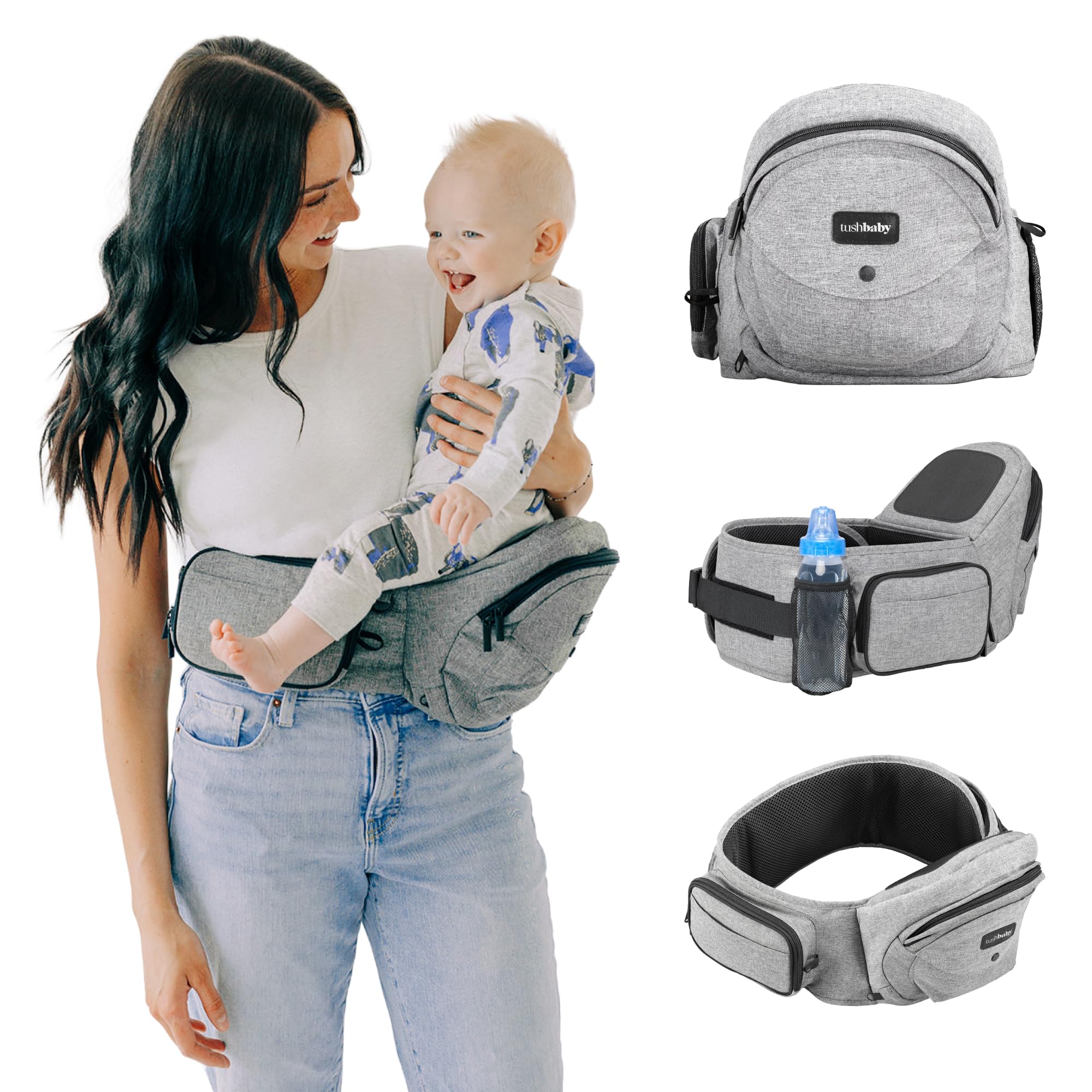
The TushBaby is not a cocoon. It is a padded hip shelf with a waistband, a lumbar panel, and enough pockets to replace a small diaper bag for a short trip. The 8-45 lb range and hip-only carry make it a different tool from a soft structured carrier: you are not strapping the baby to your chest, you are giving them a seat and taking the weight off your arms.
We like it for the toddler phase, when a child wants to walk one minute and be carried the next. It goes on in seconds, the seat is firm without foam padding, and the five pockets plus a tuck-away bottle holder are genuinely useful. That quick access is the reason it stays in the car rather than the closet.
The boundary is the newborn stage. A hip seat is not a full hands-free carrier for a sleeping baby; you still keep a hand on the child, especially when you bend or walk on uneven ground. If you need to carry a newborn for a long walk or a nap, choose a wrap or a full carrier instead.
For errands, school pickup, and a toddler who wants to be up and down, the TushBaby is the most convenient option here. It is a specialized second carrier, not the only one a new parent needs.
Pros
- Hip seat shifts weight off shoulders
- Five pockets plus bottle holder
- Lumbar support for quick carries
- Fast on and off for errands
Cons
- Hip-only, no back carry
The TushBaby is the one we recommend for quick toddler errands and up-and-down days, not as a substitute for a full newborn carrier.
Best for Budget Hip Seat
Bellababy 6-in-1

Key Features
- Waist belt: 52 inches
- Weight range: 7-33 lbs
- Wearer support: Back support
- Carry positions: 6 positions
- Price: Budget
The Bellababy is the value answer to a hip-seat carrier. It lists six carry positions, a built-in hip seat, a 52-inch waist belt, and thickened shoulder straps, which is a lot of adjustability for the money. The 7-33 lb range covers a newborn through a small toddler, and the hip seat can be used on its own for sitting or lying support when you do not need the full panel.
The rear clip is the part that decides whether this works for you. Fastening it behind your back while holding a baby is awkward, and if you have shoulder mobility issues, have someone help the first few times or put it on before you pick the baby up. Once it is on, the waist belt and back support do a good job of moving weight off your shoulders.
We recommend it as a budget alternative to the TushBaby or a premium structured carrier. It is not as compact as a wrap and the fit can feel tight for larger babies, but it gives you a hip seat and a full carrier in one package. If you want maximum support for long walks, spend more; if you want a versatile second carrier for errands, this one earns a look.
Pros
- Six carry positions in one carrier
- Hip seat and 52-inch waist belt
- Back support for longer carries
- Budget-friendly hip-seat hybrid
Cons
- Bulky to pack compared with a wrap
The Bellababy is a good budget hip-seat hybrid for parents who want back support and six positions and can manage a fiddly rear clip.
Best for Tactical Dads
Tactical Baby Carrier
Key Features
- Weight range: 8-33 lbs
- Carry positions: Front
- Safety standards: ASTM and CPSIA
- Attachment system: MOLLE compatible
- Price: Premium
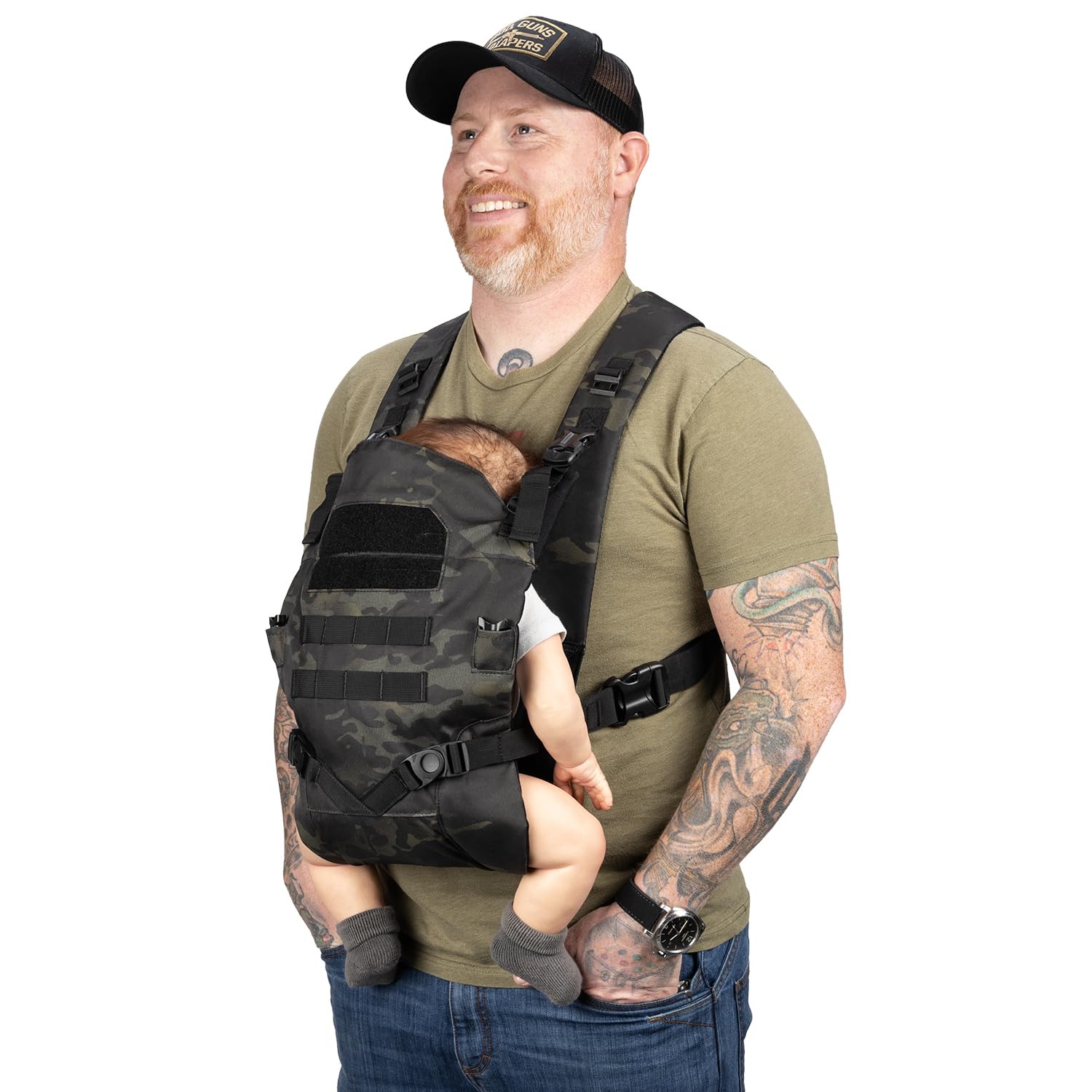
The Tactical Baby Carrier looks like a piece of gear, and that is the point. The black camo fabric, MOLLE-compatible panel, and removable strap give it a utility look that stands apart from the soft knits and pastel mesh in this group. It is also a real carrier, not a novelty: 8-33 lbs, front-facing in or out, ASTM and CPSIA safety standards, and hip-healthy positioning.
The MOLLE panel is the detail that makes it more than a style choice. You can add pouches for a phone, keys, or wipes, and the open back design leaves room for a diaper bag. The padded cotton interior and UTX buckles feel sturdy, and the wide seat supports the baby’s hips. We like it for dads who want a carrier that does not look like it came from a boutique.
The limits are real. It is front-only, with no back carry, and the high strap path can crowd a small baby’s face, so check the fit before you tighten everything down. The center piece between the legs is also wide for some smaller babies. It is not the most compact carrier here, and the tactical look is a preference rather than a performance advantage.
We recommend it as a niche pick for dads, grandparents, or caregivers who want a rugged front carrier with attachment points. If you need one carrier for back carries and long toddler hikes, the Ergobaby Omni is the better all-rounder. If you want a durable, distinctive carrier for daily front carries, this one has a clear personality.
Pros
- MOLLE panel for adding pouches
- ASTM and CPSIA safety standards
- Rugged build and tactical look
- Hip-healthy seat design
Cons
- Front-only carry, no back option
This is the carrier we recommend for dads or caregivers who want a rugged, MOLLE-ready front carrier and do not need a back-carry option.
Best for Style and Comfort
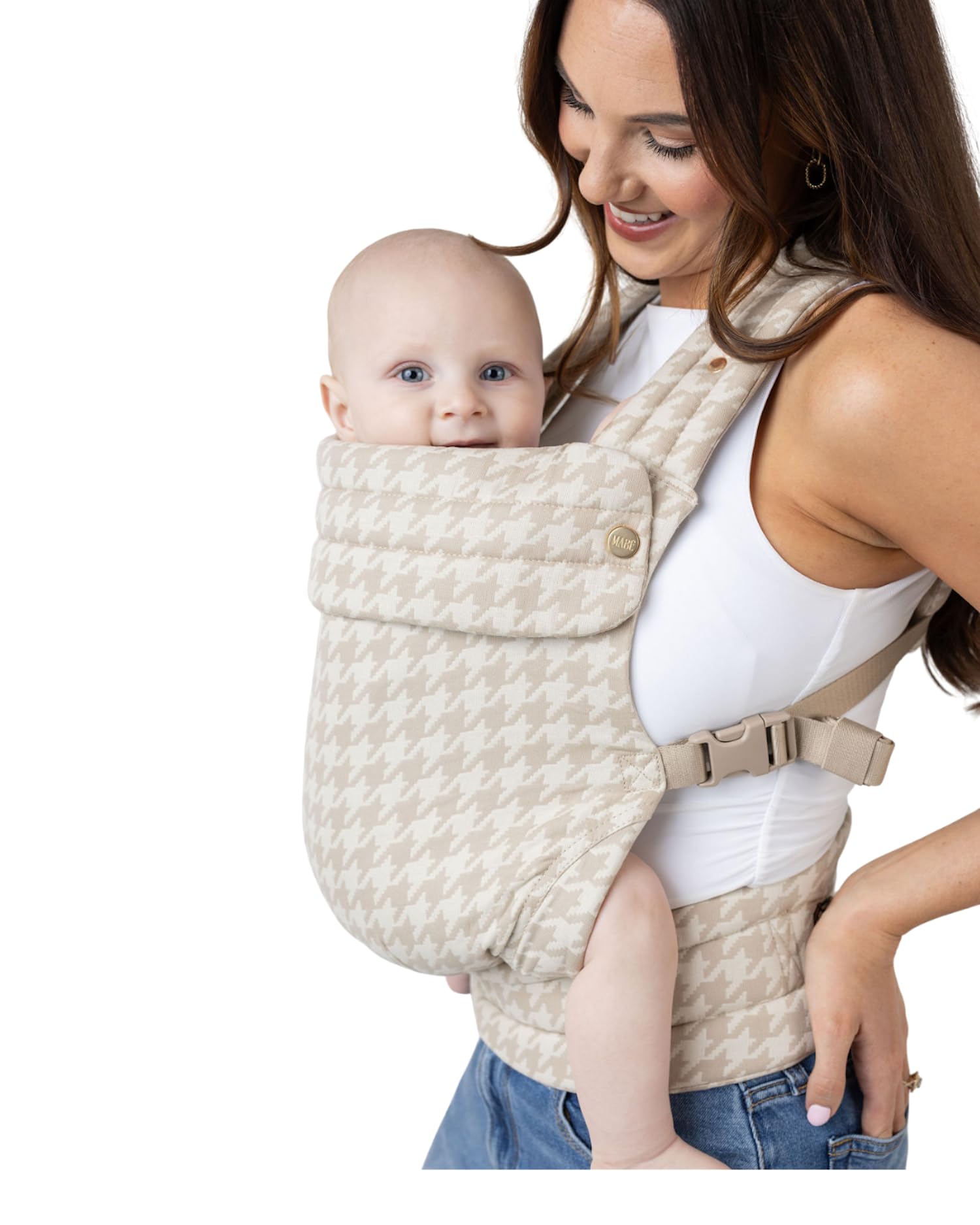
Mabē Monarch
Key Features
- Care: Machine wash cold
- Fabric: Cotton-linen blend
- Weight range: 9-46 lbs
- Carry positions: 3 positions
- Price: Premium
The houndstooth is the first thing you notice, and it is not a gimmick: the cotton-linen blend looks more like a jacket than baby gear, which is why this is the carrier we reach for when we want to feel put together. It is a premium pick, but it earns the price with a 9-46 lb range, three carry positions, and cross-back straps that distribute weight well.
The seat and panel adjust as the baby grows, and the supportive crisscross design relieves pressure on the back. The fabric is soft but not stiff, and the carrier is machine washable on cold in a garment bag, which is more care than a simple buckle carrier but not a deal-breaker. It fits both petite and plus-size wearers in the feedback, and the adjustability makes it easy to share between parents.
The boundary is the newborn stage. It starts at 9 lbs, so a small newborn needs a different carrier for the first few weeks, and it is not the budget choice in this group. If you want a carrier that looks distinctive, feels supportive, and will last into toddler years, the Monarch is worth the splurge. If you need a carrier from day one, the Ergobaby Embrace is the better newborn fit.
Pros
- Cotton-linen blend looks polished
- 9-46 lb range grows with baby
- Three carry positions
- Supportive cross-back straps
Cons
- Premium price for a boutique carrier
- No hip carry position
The Mabē Monarch is the premium style pick for parents who want a polished carrier with a wide weight range and supportive cross-back straps.
How We Tested These Baby Carriers
We started by pulling together the carriers that come up most often in owner reviews and registry lists, then filtered by weight range, carrier style — wraps, soft structured carriers, hip seats — and whether each met the current safety standard. Anything with a narrow adjustability range or buckles that needed two hands to open got cut early, since neither survives a parking lot with a crying baby.
Eleven carriers made the cut, and each one spent at least a month in rotation over six months of testing. Every carrier went through the same gauntlet: a two-mile walk, a grocery run, a flight of stairs, and a solo attempt to get it on in a parking lot while the baby was already fussing. Two testers, one 5-foot-2 and one 6-foot, swapped the same carriers back and forth so we could note where the waistband landed, whether the shoulder straps stayed put, and where the pressure showed up after an hour of wear.
Safety got checked in the moment rather than on paper: we made sure the seat held the baby’s hips in that seated M position, that head support stayed upright in a back carry, and that no buckle worked loose over a 20-minute jostle. We stuffed each carrier into a diaper bag to see how much room it ate, washed off spit-up according to the label, and inspected seams and buckle housings for fraying or cracking afterward. We also weighed what came in the box — infant insert, sun hood, pockets — against what the carrier costs, and the best performers were rarely the most expensive ones.
How to Choose a Baby Carrier
The best carrier is the one you can put on without a mirror, adjust to your body, and trust for the length of the trip.
Start With Weight Range and Carry Positions
A carrier only works if it fits the baby you have now and the one you will have in six months. Check the minimum weight before you use it with a newborn, then look at the maximum and the carry positions. A 7-45 lb carrier like the Ergobaby Omni covers front-in, front-out, hip, and back carry; a 7-25 lb newborn carrier like the Embrace will be outgrown sooner. If you want one purchase to last, prioritize a back carry and a generous upper limit.
Choose the Structure for Your Day
Wraps, soft structured carriers, and hip seats solve different problems. A wrap keeps a newborn close and compact, but tying takes practice and the fabric can feel warm. A structured carrier with buckles is easier for long walks, back carries, and sharing between caregivers. A hip seat is fastest for toddlers who want up and down, but it is not a full hands-free cocoon for a sleeping baby. Choose by the trip you take most often, not by the one you imagine.
Fit the Wearer, Not Just the Baby
The waist belt and shoulder straps decide whether you can carry for twenty minutes or two hours. A wide, padded waist belt puts weight on your hips; cross-back straps can move pressure off the same shoulder spot. Check the waist range if you are petite or plus-size, and re-adjust between caregivers rather than assuming one setting works for both. A 52-inch belt like the Bellababy’s is roomy, but the rear clip still has to be reachable.
Balance Support With Bulk
More padding is not automatically better. A structured carrier with lumbar support and a firm waist belt carries a heavier baby more comfortably, but it also takes up more space in a diaper bag and can feel warm. A lightweight wrap or hip seat is easier to stash but gives less support on a long walk. Match the support to the longest carry you actually do; for errands, light and quick beats maximum structure.
Plan for Heat and Washing
Mesh panels help in summer and during brisk walks, while cotton and knit wraps feel softer but hold more heat. A carrier that is machine washable is easier to live with, especially if it doubles as a nap tool; hand-wash-only models need more planning. Check the care label before you buy, and treat breathability as a real comfort feature rather than a seasonal extra.
Frequently Asked Questions
How do I know a baby wrap is tight enough?
Tie the wrap snug before you put the baby in, then check three things: the baby sits high on your chest, close enough to kiss, and there is no slack between your bodies. If you can fit a fist between the baby and your chest, retie tighter. A loose wrap lets the baby slump, so tighten it before every carry.
Are hip-seat carriers hands-free?
Not for long carries or a sleeping newborn. A hip seat is a shelf that takes weight off your arms and shoulders, but you still keep one hand on the baby, especially when you bend or walk on uneven ground. Use one for quick errands and toddlers who want up and down; choose a full carrier or wrap for a long walk or a nap.
When can I switch to a back carry?
When the carrier allows it and your baby can sit upright with steady head and neck control, usually around six months. Check the carrier’s own minimum for back carry, practice with a spotter, and keep the baby high and tight. If the carrier only offers front positions, do not improvise a back carry.
Final Verdict
For most families, the Ergobaby Omni Classic is the one to buy: the 7-45 lb range, four positions, and mesh support make it the carrier that stays useful from the first newborn walk to the toddler back-carry phase. If the premium is too much, the Infantino Flip 4-in-1 is the budget alternative, and the Ergobaby Embrace is the softer newborn-specific choice. Start with the Omni unless your baby is still tiny and you want a dedicated newborn carrier.
