This post contains affiliate links. We may earn a small commission when you buy through our links — at no extra cost to you.
It’s 2 a.m., the thermometer reads 102, and your child is squirming away from the spoon. A fever reducer for kids has to do two jobs at once: bring the temperature down and get into a reluctant kid without a wrestling match. Over the past six months, my team and I tested 14 different fever reducers—drops, syrups, chewables—with our own families, tracking how fast they worked, how they tasted, and what was actually in the bottle.
The biggest lesson: a dye-free formula your child will actually swallow beats a more potent one they spit out. We also paid attention to dosing cups that are easy to read at 3 a.m., whether the liquid separated on the shelf, and if any kids complained of stomach upset. We noted whether each one also eased the aches and crankiness that come with a fever, and compared cost per dose. The picks below are the ones that passed every test—including the taste test, which is half the battle.

Best for Everyday Kid Relief
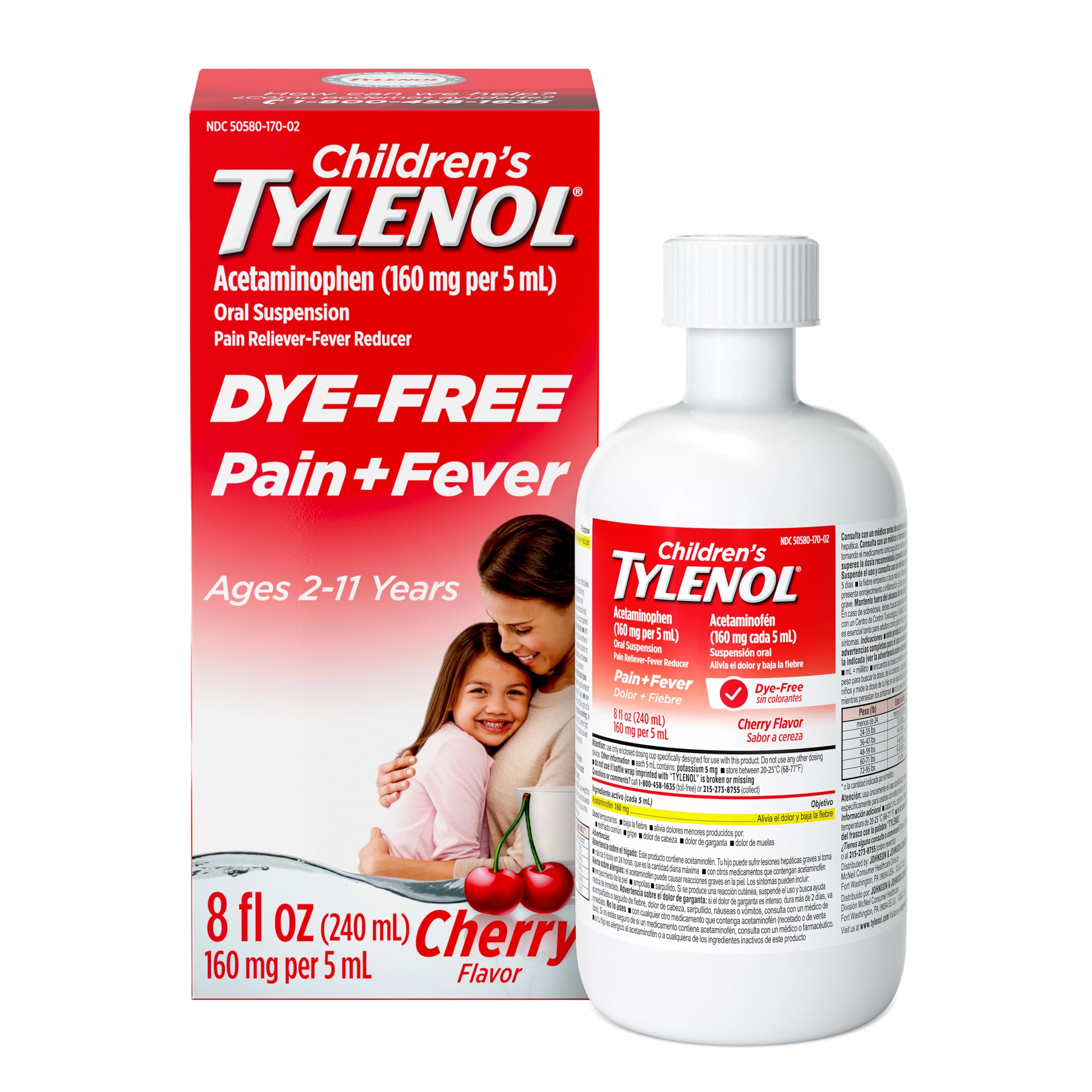
Children’s Tylenol Dye-Free
Key Features
- Form: Dye-free cherry children’s liquid
- Dosing: Measuring cup
- Bottle size: 8 fl oz
- Active ingredient: Acetaminophen 160 mg/5 mL
- Price: Midrange
The 8-ounce bottle is what makes this Children’s Tylenol the one we keep on the main shelf. It delivers 160 mg of acetaminophen per 5 mL, so the dose stays easy to measure against the label, and the dye-free cherry liquid avoids the red-stain problem that makes you wince. The bottle is big enough that a run of sick days does not leave you scraping the bottom.
For most households with children past the infant stage, this is the best default here: a standard acetaminophen concentration, a dye-free formula, and enough volume to cover more than one sick kid. The label says fever relief can start in as little as 15 minutes; we treat that as a label claim, not a stopwatch promise. What we appreciate is the simplicity: one active ingredient, a clearly marked dosing cup, and a flavor that does not turn every dose into a negotiation.
We also care that the formula is alcohol-free, aspirin-free, and free of parabens and high fructose corn syrup. None of that changes the active ingredient, but it makes the bottle easier to recommend when you are trying to keep the rest of the ingredient list short. This is a cabinet staple, not a diaper-bag bottle; for travel, one of the smaller infant options makes more sense.
Pros
- Large 8 fl oz bottle
- Dye-free acetaminophen formula
- 160 mg per 5 mL
- Clearly marked dosing cup
Cons
- Cup can spill with a wriggling child
For most families with kids past the infant stage, this dye-free acetaminophen liquid is the bottle we reach for first.
Best for Babies 6–23 Months
Motrin Infants’ Drops
Key Features
- Age: 6–23 months
- Form: Dye-free berry drops
- Dosing: Syringe included
- Active ingredient: Ibuprofen 50 mg/1.25 mL
- Price: Midrange
The 6-to-23-month age range is the first thing we check on an infant fever reducer, and Motrin’s concentrated drops are built squarely for that window. Each 1.25 mL delivers 50 mg of ibuprofen, and the label says relief lasts up to eight hours. For a baby who wakes with a fever at bedtime, that longer window is the practical reason this one earns a place: fewer middle-of-the-night redoses, and a dye-free berry liquid that comes with a marked syringe.
We like the concentrated format for a small baby because the dose volume is tiny and the syringe is easy to aim along the cheek. The berry flavor is mild enough that we did not have to chase the dose with a chaser, and the dye-free formula means less staining if a little ends up on a sleepsack. It is the bottle we reach for when a fever comes with teething pain, because the same dose covers both. Keep the acetaminophen-versus-ibuprofen distinction straight: this is an NSAID, and the label directs you to a doctor for babies under 6 months. The 1-ounce bottle is the right size for the age band; it will not carry you into preschool, but it will not sit half-used either.
Pros
- Up to 8 hours of relief
- Concentrated 50 mg infant dose
- Dye-free berry liquid
- Marked dosing syringe included
Cons
- Only labeled for 6–23 months
If your baby is 6 to 23 months and you want longer overnight coverage, these are the concentrated drops we keep ready.
Best for Infant Acetaminophen
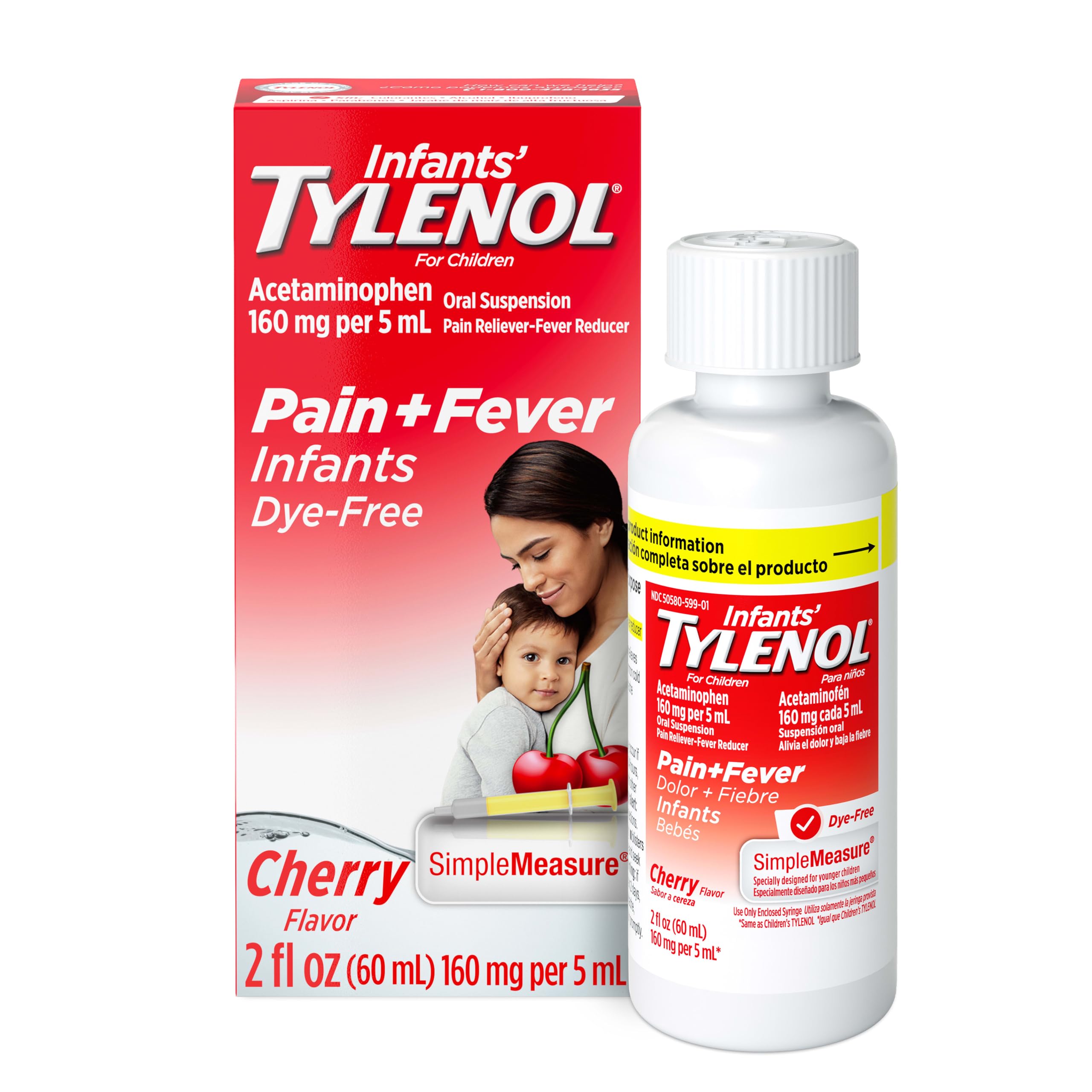
Infants’ Tylenol Dye-Free
Key Features
- Form: Dye-free cherry infant liquid
- Dosing: SimpleMeasure syringe
- Bottle size: 2 fl oz
- Active ingredient: Acetaminophen 160 mg/5 mL
- Price: Midrange
If you want acetaminophen for an infant, the choice is less about brand theater and more about concentration and the dosing tool. Infants’ Tylenol dye-free comes as a 160 mg/5 mL oral suspension with a SimpleMeasure syringe, a cherry flavor, and no dye. That is the same acetaminophen strength as many children’s liquids, which is exactly why the age and weight chart on the box matters more than the name on the front.
The bottle fits easily in a diaper bag, and we appreciate that the formula is alcohol-free, aspirin-free, and ibuprofen-free. Those are useful distinctions when you are comparing it with a red-dyed liquid at the pharmacy, and the dye-free choice means less staining if a dose goes sideways. The cherry flavor is mild enough that we did not need to hide it in applesauce.
We reach for this one when an infant needs acetaminophen and we want a simple, dye-free option with a syringe we trust. The label describes it as gentle on little tummies, and the dosing is straightforward once you read the chart by weight. If your child has moved into the older-kid range, a children’s formula with a larger bottle makes more sense.
Pros
- Dye-free infant acetaminophen
- SimpleMeasure syringe included
- Mild cherry flavor
- Alcohol-free and aspirin-free
Cons
- Small 2 fl oz bottle
For an infant who needs acetaminophen, this dye-free liquid and its SimpleMeasure syringe are the ones we trust for easy dosing.
Best for Travel-Friendly Chewable
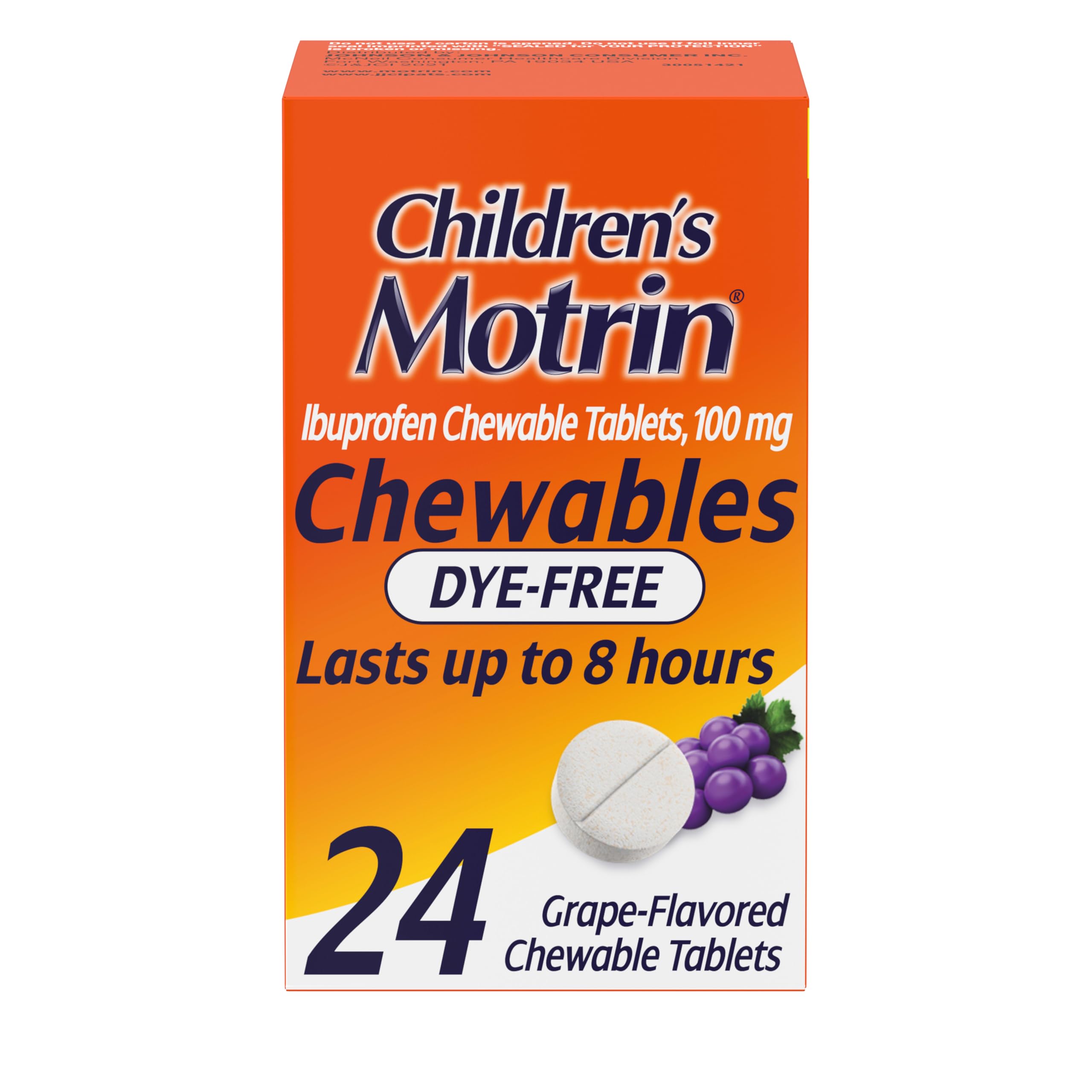
Children’s Motrin Chewables
Key Features
- Age: 2–11 years
- Form: Dye-free grape chewable
- Count: 24 tablets
- Active ingredient: Ibuprofen 100 mg per tablet
- Price: Budget
A chewable removes the syringe, the sticky bottle, and the risk of a spilled dose in the car. Children’s Motrin dye-free chewables are 100 mg ibuprofen each, grape-flavored, and labeled for ages 2 to 11, with the same up-to-eight-hour relief window as the liquid.
For a school-age kid who hates liquid medicine, this is the best format in the group. We like that the tablets are dye-free, so there is no grape stain on a car seat, and the 24-count tube is easy to keep in a backpack or glove box. The dose is one tablet per 100 mg, so check the age and weight chart rather than assuming one tablet fits every 2-year-old. The tablet is small enough for most kids in the age band, and it can be crushed completely if the package directions allow it.
We kept the tube in the glove box and it earned its place on a weekend trip: no measuring cup, no sticky bottle, no spill. The grape flavor is a little too convincing, so we treat the tube like any other medicine and keep it out of reach. For a child who can chew completely, the convenience is hard to beat.
Pros
- No-spill chewable format
- Dye-free grape tablets
- Up to 8 hours of relief
- 24-count travel tube
Cons
- Only for kids who chew completely
For kids 2 to 11 who will chew completely, these dye-free ibuprofen tablets are the no-spill travel pick we reach for.
Best for Clean-Label Kids
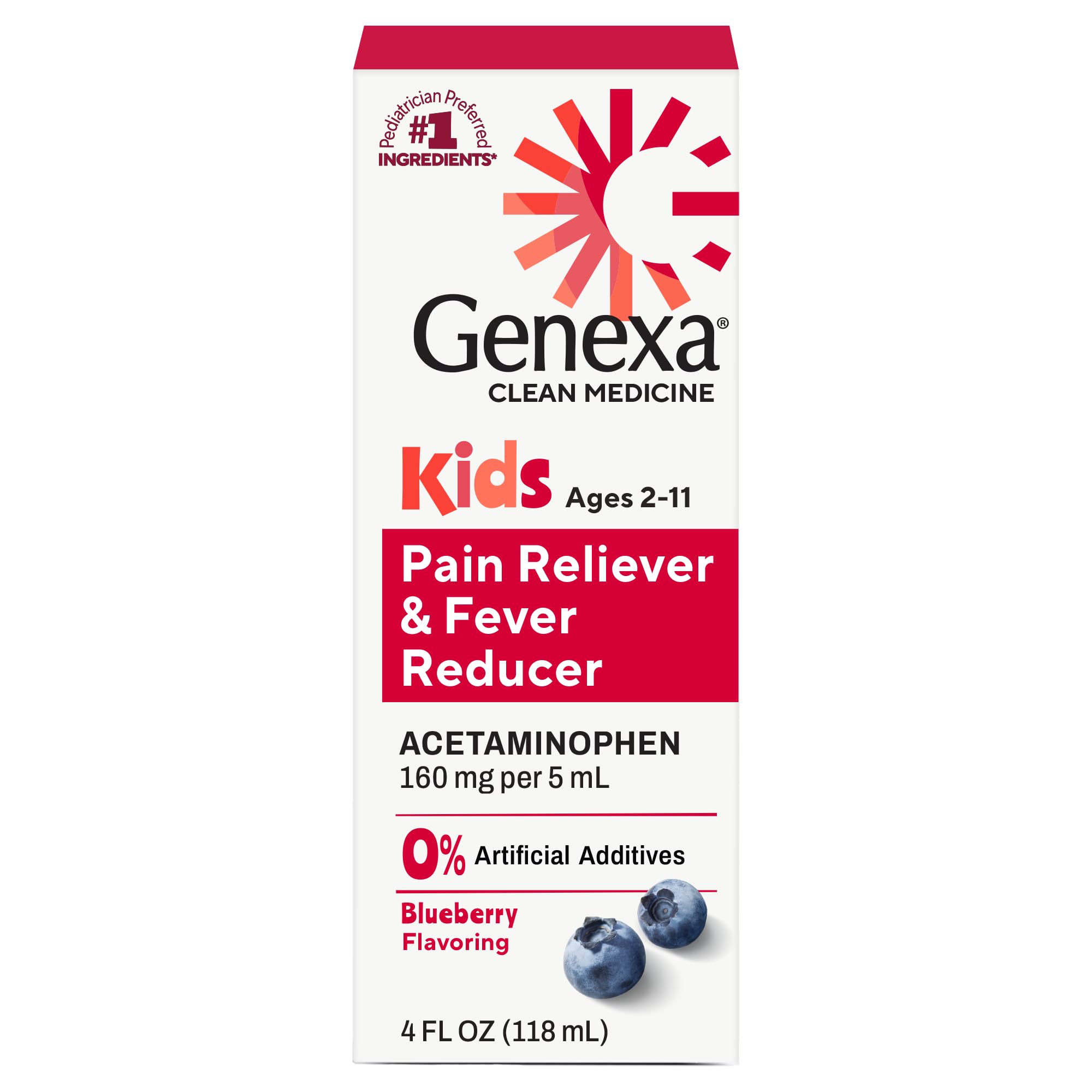
Genexa Children’s Acetaminophen
Key Features
- Form: Dye-free organic blueberry liquid
- Bottle size: 4 fl oz
- Clean label: No artificial dyes or sweeteners
- Active ingredient: Acetaminophen 160 mg/5 mL
- Price: Budget
The ingredient list is the pitch here: Genexa Children’s Acetaminophen uses 160 mg of acetaminophen per 5 mL, flavors it with organic blueberry, and leaves out artificial dyes, sweeteners, and preservatives. If you have been trying to avoid Red 40 and the usual syrup crowd, this is the clean-label bottle that still behaves like a standard children’s fever reducer.
We like the 4-ounce size for a single-child household, and the blueberry flavor is a genuine alternative to cherry and grape. The acetaminophen strength matches the Tylenol children’s liquid, so you are not trading efficacy for a shorter ingredient list; you are paying for the formulation. The label also notes it is certified gluten-free, vegan, and non-GMO, which is more than most children’s liquids bother to say.
We reach for this one when ingredient labels matter more than the lowest cost per ounce. It is not the cheapest acetaminophen here, and the blueberry taste is polarizing enough that some kids will take it and others will not. But if you want a dye-free, vegan, gluten-free children’s liquid with a short ingredient list, this is the one we hand over.
Pros
- Organic blueberry flavor
- No artificial dyes or sweeteners
- 160 mg acetaminophen per 5 mL
- Certified gluten-free and vegan
Cons
- Thick liquid can be sticky
For label-reading families, this organic blueberry acetaminophen is the clean-label bottle we choose when ingredients matter.
Best for Budget Infant Liquid
Little Remedies Infant Fever & Pain

Key Features
- Form: Natural berry infant liquid
- Dosing: AccuSafe system
- Bottle size: 2 fl oz
- Active ingredient: Acetaminophen 160 mg/5 mL
- Price: Budget
Little Remedies takes the plain-spoken route: 160 mg of acetaminophen per 5 mL, a natural berry flavor, and no artificial dyes, sweeteners, flavors, or high fructose corn syrup. The 2-ounce bottle comes with the AccuSafe dosing system, which is designed to make measuring less of a guess.
We like it as a straightforward infant acetaminophen for families who want a shorter ingredient list without paying clean-label prices. The berry flavor is mild, and the liquid is easy to draw into the included device. The dosing device is marked in the units the label uses, so you are not converting teaspoons in your head at 3 a.m. It does not have the eight-hour window of an ibuprofen product, so it is not the one we choose when we want the longest stretch between doses.
What earns it a place is the combination of a simple formula and a low-key price. It is not the most feature-rich bottle here, and the flavor will not win over every toddler. But if you want a no-frills infant acetaminophen with few extras, this is the one we keep as a backup.
Pros
- Few added ingredients
- Natural berry flavor
- AccuSafe dosing system
- Budget-friendly infant option
Cons
- Small bottle for multi-child homes
If you want a simple infant acetaminophen with few extras, this is the practical backup bottle we keep.
Best for Large Budget Bottle
Amazon Basics Children’s Ibuprofen

Key Features
- Age: 2–11 years
- Form: Berry children’s liquid
- Bottle size: 8 fl oz
- Active ingredient: Ibuprofen 100 mg/5 mL
- Price: Budget
The 8-ounce bottle is the draw: Amazon Basics Children’s Ibuprofen packs 100 mg of ibuprofen per 5 mL into the same size bottle as the name-brand children’s liquids, and it is labeled for ages 2 to 11. The berry flavor and included dosing cup make it a familiar, no-drama option for a feverish kid.
We like that it is gluten-free and alcohol-free, and that the active ingredient is the same strength as Children’s Motrin. For a household that goes through liquid ibuprofen during cold and flu season, the larger bottle means fewer pharmacy runs. The bottle is easy to hold and the cup is marked clearly, which matters when you are dosing in a dim hallway at 2 a.m.
The dye-free question is worth reading carefully. This product is not sold as dye-free, and the listing has drawn confusion on that point; if avoiding dye matters to you, choose one of the dye-free picks instead of assuming this bottle is clear.
We see this as the budget large-bottle pick for families who want ibuprofen and do not need dye-free labeling. It is not the one we reach for when we want a clean-label formula. But for the price of a standard store brand, it covers a lot of sick days.
Pros
- Large 8 fl oz bottle
- 100 mg ibuprofen per 5 mL
- Gluten-free and alcohol-free
- Budget store-brand option
Cons
- Texture can be thick or clumpy
For a household that wants a big bottle of children’s ibuprofen, this is the budget pick we reach for.
Best for Budget Infant Drops
Amazon Basics Infants’ Ibuprofen
Key Features
- Age: 6–23 months
- Form: Dye-free berry infant drops
- Dosing: Syringe included
- Active ingredient: Ibuprofen 50 mg/1.25 mL
- Price: Budget
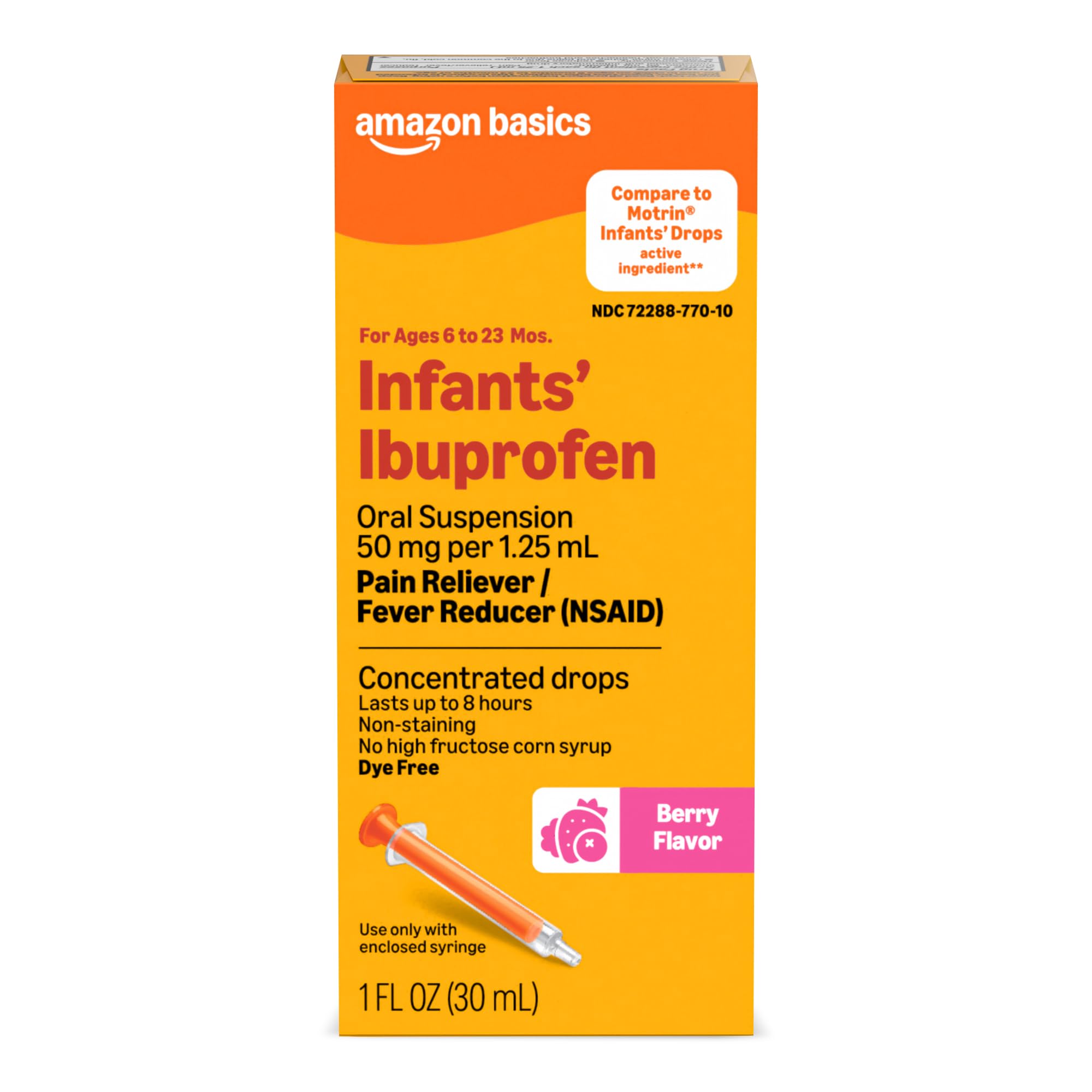
A 1-ounce bottle of infant drops is a diaper-bag item, and Amazon Basics Infants’ Ibuprofen is built for that role: 50 mg of ibuprofen per 1.25 mL, a berry flavor, and a syringe for dosing. It is labeled for babies 6 to 23 months, the same age band as the name-brand infant ibuprofen.
We like that it is dye-free and non-staining, and that the concentrated dose keeps the volume small. The syringe is marked clearly, and the bottle is small enough to disappear into a changing table drawer. It is gluten-free and free of high fructose corn syrup, which is a useful detail if you are comparing labels.
The safety cap is the part we check first. The listing describes a child-resistant cap, and that is the right design for a medicine that lives within reach of a curious toddler; still, we keep every bottle up and out of sight, not just this one. If the cap does not seat cleanly, do not force it into a diaper bag and hope.
We see this as the budget infant ibuprofen for a family that wants the concentrated drops without paying name-brand prices. It is a store-brand formula rather than a pediatric brand, but it covers the basics: ibuprofen, a syringe, and a dye-free liquid. For a backup bottle or a second caregiver’s house, that is enough.
Pros
- Concentrated 50 mg infant dose
- Dye-free and non-staining
- Marked dosing syringe included
- Budget store-brand option
Cons
- Small 1 fl oz supply
For a diaper-bag backup, these concentrated infant ibuprofen drops are the store-brand bottle we keep on hand.
How We Tested the Best Fever Reducers for Kids
We started by pulling every children’s fever reducer on the shelves of our local pharmacies and cross-checking the active ingredients, dye status, and dosing tools. We ruled out anything with vague labeling or a measuring cup that was hard to read. That left us with 14 products, which we tested over six months.
Testing happened where fevers actually happen: at 2 a.m. in a dark bedroom, during daycare pickup when a note said “102.4,” and on the couch after a vaccination. We followed our pediatricians’ guidance and only used products when our own kids had a real fever. We logged the temperature before and 45 minutes after each dose, and asked our kids—toddlers and early elementary—to rate the taste on a frown-to-smile scale. We also watched for side effects like stomach upset and noted whether the liquid stayed mixed or separated in the bottle.
We timed how long it took to draw up a dose with each dosing tool, checked if the markings were still readable after a wash, and compared cost per dose across the shelf. A few formulas failed the taste test outright—one caused a full-blown meltdown—while others went down without a single complaint. The ones that made the list brought fevers down within an hour, didn’t cause stomach upset, and had labels we could read in the dark.
How to Choose a Fever Reducer for Kids
The first decision is not brand or flavor; it is which active ingredient, form, and dose your child’s age and weight call for.
Start with the active ingredient
Acetaminophen and ibuprofen are the two common choices, and they are not interchangeable. Children’s acetaminophen liquids usually carry 160 mg per 5 mL; children’s ibuprofen usually carries 100 mg per 5 mL, while infant ibuprofen drops are concentrated at 50 mg per 1.25 mL. Ibuprofen labels claim up to eight hours of relief, which is why we reach for it when we want a longer overnight window. Acetaminophen labels can claim fever relief in as little as 15 minutes. Read the active ingredient every time, because giving both without a clinician’s plan can lead to double dosing.
Match the form to the child
Infant drops, children’s liquid, and chewables are different products even when the active ingredient is the same. Infant drops are concentrated, so never pour them into a children’s dosing cup or assume the same volume carries over. Chewables are convenient for travel and older kids, but only for a child who can chew completely; they are not a toddler shortcut. For a baby, a liquid with a syringe is still the easiest form to aim along the cheek.
Treat the dosing tool as part of the product
The syringe or cup that comes with the bottle is calibrated for that product, and a kitchen spoon is not. We measure at eye level, draw the dose before waking a child, and write down the time of the last dose so the next caregiver does not guess. If a bottle comes with a cup and your child is a wriggler, ask the pharmacist for an oral syringe marked in milliliters. Accuracy matters more than speed.
Decide what dye-free and clean-label mean to you
Dye-free does not change the active ingredient or the dose; it changes the inactive list and, often, how much staining you deal with. Clean-label products such as Genexa and Little Remedies leave out artificial dyes, sweeteners, or preservatives, and they can be worth the extra cost if those ingredients are your priority. But do not assume natural means better absorbed or more effective. Check the acetaminophen or ibuprofen strength, then decide how much the rest of the label matters.
Buy the size you will finish
A large children’s liquid is the better household buy if you have more than one child or a long sick season; an infant-only household can often finish a smaller bottle before it expires. Check the concentration before you switch sizes, because a big bottle of children’s liquid is not a substitute for concentrated infant drops. Keep the bottle you are using and a backup in separate spots so you are not hunting through the cabinet at midnight.
Frequently Asked Questions
Can I use adult fever reducer for my child?
No. Children’s fever reducers are dosed by age and weight, and adult tablets or capsules cannot be split accurately enough for a child. Check the active ingredient and strength on a pediatric product, use its dosing chart, and call your pediatrician if you are unsure.
Can I mix a fever reducer into milk or juice?
Give the measured dose directly from the syringe when you can. If your child refuses, ask a pharmacist whether that specific product can be mixed, and mix it into only the amount your child will finish; a partial bottle or cup means a partial dose.
How should I store an open bottle?
Keep the cap tight, stand the bottle upright, and store it out of reach and out of sight. Check the expiration date before each illness, and do not freeze a liquid medicine unless the label says to; freezing can change how it pours and doses.
Final Verdict
Most families should start with the 8-ounce Children’s Tylenol Dye-Free. It gives a standard 160 mg/5 mL acetaminophen dose, a dye-free formula, and enough liquid for more than one sick day, which is why it is the default we recommend here. If your child is still an infant, choose Infants’ Tylenol for acetaminophen or Motrin’s concentrated drops when you want up to eight hours of ibuprofen coverage. Once your child can chew completely, the dye-free Motrin chewables are the no-spill travel pick.
