This post contains affiliate links. We may earn a small commission when you buy through our links — at no extra cost to you.
Somewhere in the second trimester, the mirror starts showing faint pink lines and the internet responds with a hundred creams that promise to erase them. I bought three during my first pregnancy and finished none of them. What a stretch mark cream actually does is narrower than the labels claim: it keeps fast-stretching skin hydrated and supple, quiets the itch that comes with a growing belly, and softens the feel of marks and scars that are already there.
Consistency, not miracles, is what separates a formula you’ll finish from one that dries out in a drawer, so we looked hard at how each cream felt going on and how it held up six hours later. Fourteen formulas went to testers who were pregnant, postpartum, or working on old scars, and each one was used twice a day for four months. One thing nobody tells you: heavily perfumed creams can turn your stomach long before you notice whether they work, so fragrance got its own scrutiny. The ones below earned their place.



Best for First-Trimester Default
Burt’s Bees Mama Belly Butter
Key Features
- Size: 6.5 oz
- Scent: Fragrance-free
- Format: Belly butter
- Key ingredients: Cocoa, shea and jojoba butters
- Price: Budget
Fragrance-free is the phrase that settles this one for us. Scent isn’t a scandal in a belly cream, but the first trimester is both when most people start shopping and when the wrong smell can put you off a product permanently. This butter is made without added fragrance and without phthalates, parabens or petroleum, and 99 percent of its ingredients are natural in origin. It isn’t odorless, though: the cocoa, shea and jojoba butters leave a faint, slightly oaty smell that fades within a minute of rubbing it in, and we prefer that to a perfume that hangs around all afternoon.
Texture is what makes it a twice-a-day product rather than a shelf ornament. It spreads like soft butter, covers a whole bump in a few swipes, and sinks in fast enough that you can pull a shirt down a minute later. The 6.5 oz tub is generous next to the smaller jars here, and you don’t need much per application, so it keeps going.
Comfort is where it quietly outperforms the lotions here. Skin stays comfortable through a working day rather than tightening by lunchtime, and the itch that comes with a stretching belly settles instead of building. It also spreads far enough for hips, thighs and breasts, the places people forget until a mark appears there.
What it doesn’t do is feel rich. If you want something you can feel sitting on very dry, tight skin, this is thinner than the word butter suggests, and an oil will serve you better: Weleda’s for a massage, HATCH’s if you want the fastest finish. For everyone else the appeal is that you can slather it three or four times a day when the itching is bad without thinking about cost or scent.
Pros
- No added fragrance, so it’s easy to live with daily
- Absorbs fast enough to dress a minute later
- Keeps skin comfortable through a working day
- Generous 6.5 oz tub in the budget price tier
Cons
- Tub means fingers, not a pump
Our default pick: unfragranced, light enough to use twice a day, and the one we point a first-trimester reader toward when every scented product is turning your stomach.
Best for Existing Marks
Bio-Oil Skincare Body Oil
Key Features
- Size: 6.7 oz
- Format: Body oil
- Skin type: All skin types
- Key ingredients: Vitamin E, chamomile and lavender oils
- Price: Midrange
Bio-Oil is the lightest thing in this guide: a thin, faintly pink body oil that spreads almost like water and vanishes into skin fast. That makes it a different proposition from a belly butter. You get moisture with no film at all, and the bottle dispenses slowly, so a few drops really do cover a hip and a thigh.
Where it earns its spot is on marks that are already there. Of everything here it has the deepest record on old stretch marks and acne scarring, and it’s the one we point to when the question is softening what’s visible rather than preventing what isn’t yet. The vitamin E, chamomile and lavender formula is also non-comedogenic, which matters if your chest and stomach break out easily.
The scent is the thing to think about before you buy. It’s a soft floral oil, pleasant to most noses but strong enough that a scent-sensitive first trimester may not enjoy it, and if that sounds like you, the unfragranced picks here are the safer buy. Used daily on a bump it’s pleasant rather than luxurious; the appeal is that you forget you’re wearing it.
Pros
- Absorbs fast with no greasy film
- Strongest record here on existing scars and marks
- A few drops cover a lot of skin
- Non-comedogenic, so it suits breakout-prone skin
Cons
- Costs more per ounce than the lotions here
The one to reach for when the marks are already there: a light, fast-absorbing oil with the deepest record here on softening old stretch marks and scars.
Best for Twice-Daily Budget
Palmer’s Stretch Marks Body Lotion
Key Features
- Size: 8.5 oz
- Format: Body lotion
- Formula: Hypoallergenic
- Key ingredients: Cocoa butter, shea butter and argan oil
- Price: Budget
A stretch mark routine only helps if you keep it up, and what keeps it up is texture and cost. That’s the case for this one: an 8.5 oz bottle at the bottom of the price range, with a lotion thin enough to rub over a bump in half a minute and then disappear.
The formula is the familiar cocoa butter, shea and argan oil combination with collagen and elastin, and it’s hypoallergenic. What stood out is the finish. It isn’t greasy, it doesn’t leave a sticky film, and it takes the edge off the itch of a stretching belly. It’s the one to keep in the bathroom and use without rationing.
Our reservation is richness. On a genuinely itchy evening this lotion sinks in and leaves you wanting a second layer, which is where a butter earns its keep, and Earth Mama’s is the richer of the two we recommend for that. Used twice a day on belly, hips and thighs, though, it does the everyday job, and per ounce it’s the cheapest way to do it of anything here.
Pros
- Light enough to rub in and dress straight after
- Lowest cost per ounce of any pick here
- Cocoa butter, shea and argan oil for daily moisture
- Hypoallergenic formula for everyday use
Cons
- Cocoa scent is strong and not to everyone’s taste
If you plan to moisturize twice a day and don’t want to ration it, this is the lotion we point to: light, non-greasy, and the cheapest way to keep the habit.
Best for Massage Routine
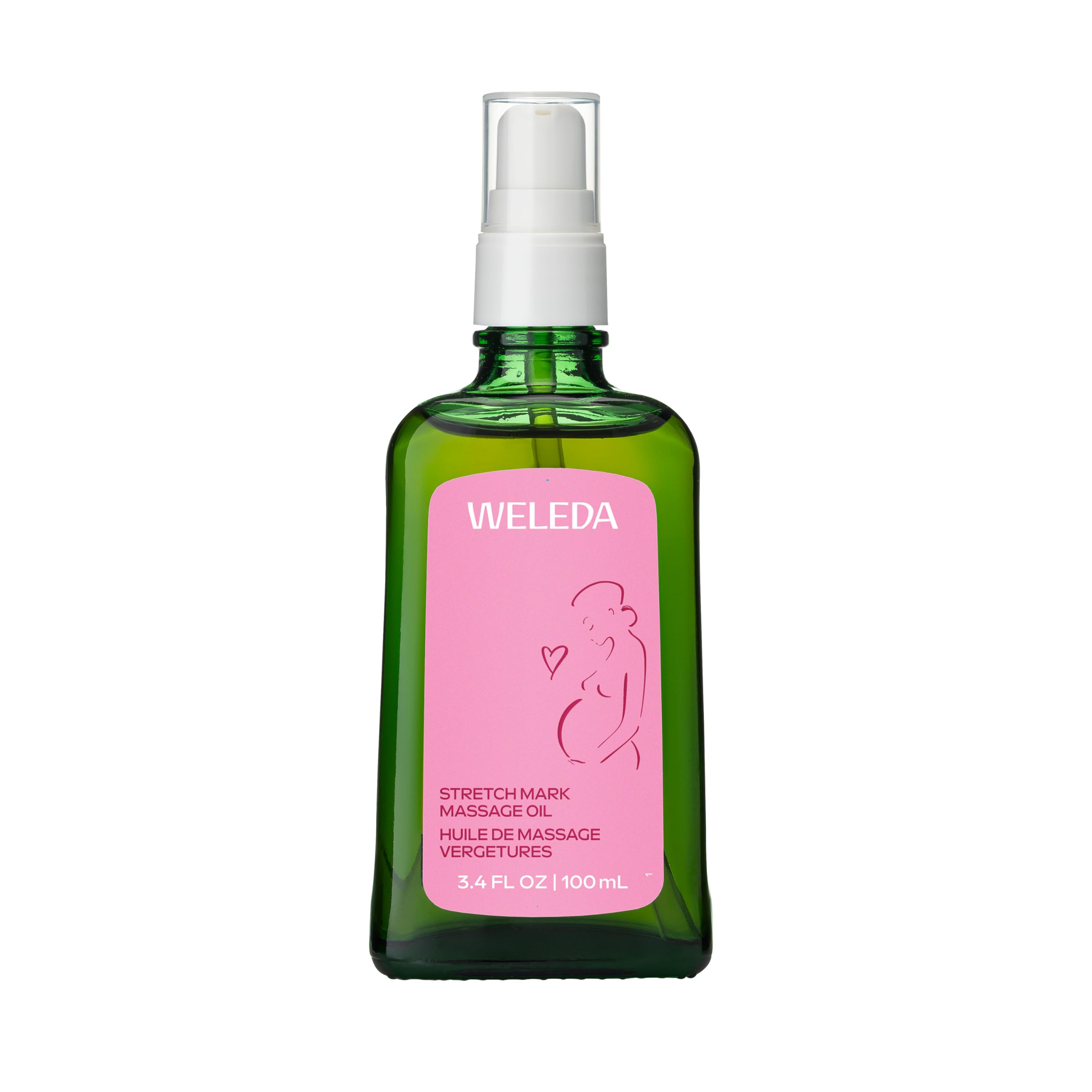
Weleda Stretch Mark Pregnancy Massage Oil
Key Features
- Size: 3.4 fl oz
- Format: Massage oil
- Packaging: Pump bottle
- Key ingredients: Wheat germ, almond and jojoba oils
- Price: Midrange
A pump bottle that lives by the shower is the whole idea here. Weleda’s oil is meant to go on after a bath, worked in with both hands for a minute or two, and the pump makes that easier than a pour bottle: one press per hip, one for each side of the bump, no fumbling with a cap while you’re damp.
The blend is wheat germ, almond and jojoba oils with vitamin E, and it behaves like a proper oil for the first minute before sinking in. That’s the difference between it and Bio-Oil: this one has weight and slip, which is exactly what you want if the point is the massage, and it still doesn’t leave a greasy film once it’s worked in.
The scent is earthy and herbal rather than sweet, closer to a spa treatment than a dessert. It’s noticeable while you’re applying it and faint an hour later, which is the right balance for something you use every day.
We rate it as the pick for tight, itchy skin at the end of a long day. Richer than a lotion and faster than a butter, it gives you two minutes that feel like something you’re doing for yourself rather than a chore you’re squeezing in, and that’s the real reason it gets finished. If your skin runs dry once the heating comes on, this is the one we reach for first.
Pros
- Absorbs quickly without leaving a greasy film
- Rich plant oils that calm tight, itchy skin
- Pump bottle makes a two-minute massage easy
- Earthy herbal scent most people like
Cons
- 3.4 fl oz pump empties fast at daily use
Buy it if the ritual is the point: a plant-oil blend that turns two minutes of belly massage into something you look forward to, in a pump bottle made for it.
Best for Reactive Skin
Earth Mama Belly Butter
Key Features
- Size: 8 fl oz
- Format: Belly butter lotion
- Certification: NSF/ANSI 305 organic
- Key ingredients: Shea butter, jojoba oil, calendula and borage oil
- Price: Midrange
Most belly products call themselves gentle; this is the only pick here that puts dermatologist and clinical irritation testing on the label, and it’s certified to the NSF/ANSI 305 organic standard. If your skin has already rejected two or three creams, that combination is why we start you here.
The formula is shea butter, jojoba oil, calendula blossom and organic borage seed oil, and it behaves like a rich lotion rather than a stiff balm: thick enough to feel like something, thin enough to rub in without warming it between your palms first. It absorbs cleanly and doesn’t leave a sticky film, which is what makes it usable in July.
Eight ounces with a pump is the other practical advantage. You can dose it properly instead of scraping a tub, there’s enough for belly, hips, thighs and breasts without rationing, and it’s the one bottle here you can operate one-handed while holding a shirt out of the way.
Pros
- Clinically tested for irritation, good for reactive skin
- NSF/ANSI 305 organic certification
- Rich but absorbs without a sticky film
- 8 fl oz pump covers belly, hips and thighs
Cons
- Costs more than the budget picks
For skin that has already rejected three creams, this is where we start: irritation-tested, organic-certified, and rich enough to make a difference.
Best for No-Residue Finish
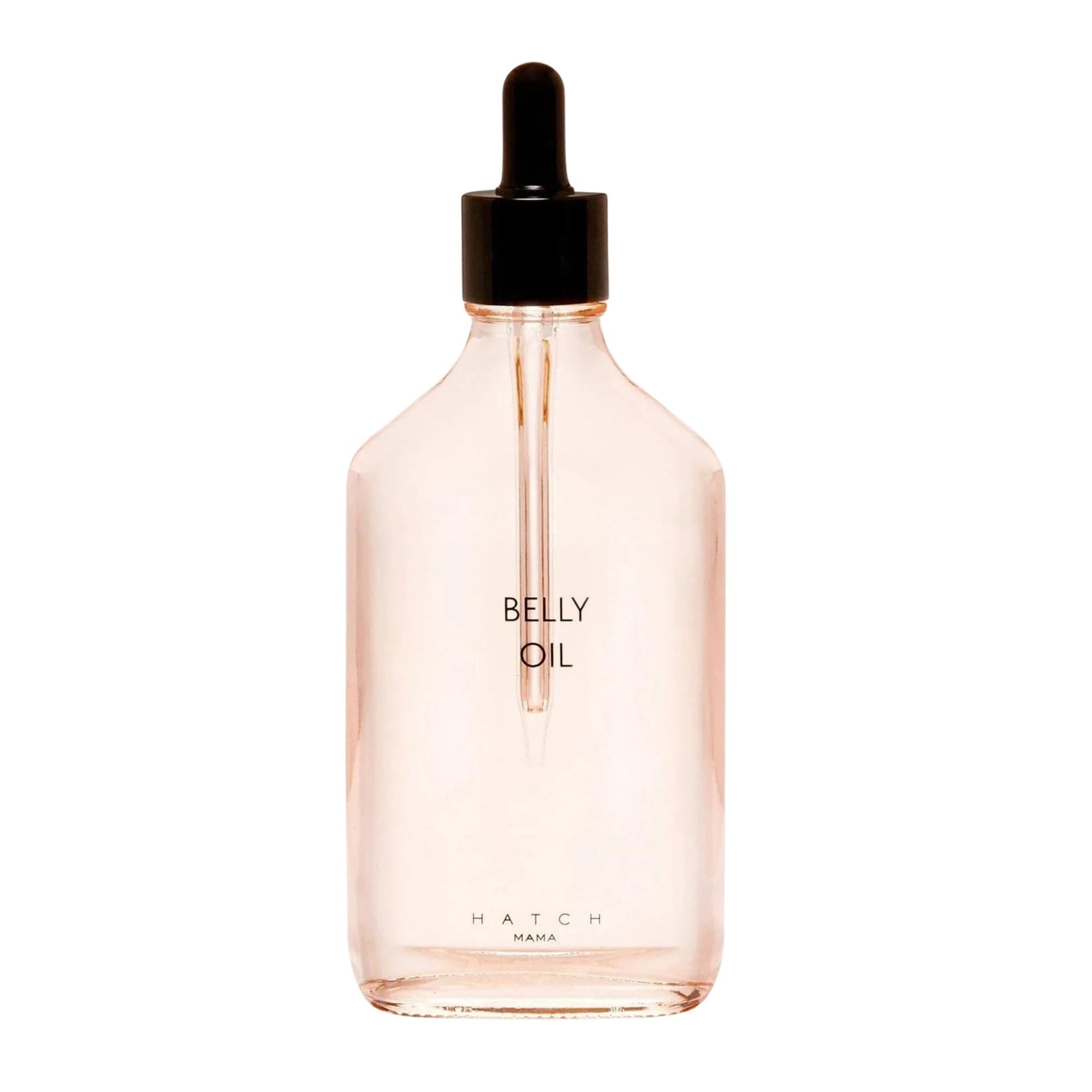
HATCH Belly Oil
Key Features
- Size: 6.6 fl oz
- Finish: Quick-dry
- Format: Belly oil
- Key ingredients: Calendula, sweet almond oil and grapefruit
- Price: Premium
The finish is the whole argument. HATCH’s oil goes on slick for about as long as it takes to cover a bump and then dries to almost nothing: no film, no sticking to a shirt, no standing in a towel waiting. If the reason you abandoned a belly oil last time was the wait before getting dressed, this removes the excuse.
That quick-dry finish is why it earns a place here. The blend is calendula, sweet almond and grapefruit, the scent is a soft citrus that doesn’t carry across a room, and the 6.6 oz bottle is big enough for hips, breasts and thighs as well as the bump.
The trade-off is weight of hydration. This is moisture for people who don’t like the feel of moisture, and on a genuinely tight, itchy evening it disappears too completely; a butter underneath does more than a second coat of oil. Use it as the daytime layer and keep something richer for bedtime.
Pros
- Dries within minutes with no residue on clothes
- Light citrus scent that doesn’t linger
- 6.6 oz covers belly, breasts and hips
Cons
- Most expensive product in this set
Worth the premium if the reason you stopped using belly oil was the wait: it dries in minutes, leaves nothing behind, and smells faintly of grapefruit.
Best for Pleasant Scent
Body Boost Milk & Honey Butter

Key Features
- Size: 8 oz
- Scent: Milk and honey
- Format: Body butter
- Free from: Parabens, phthalates and mineral oil
- Price: Midrange
Milk and honey sounds like it belongs in a candle, but the smell here is soft and creamy rather than sugary, and it’s the rare pregnancy product that smells like something you’d choose on purpose. It doesn’t fill the room, and it’s gone by the time you’ve finished dressing.
The texture is the surprise. A butter this rich should sit on top of the skin, and instead it goes on thick and then absorbs quickly, leaving skin soft rather than coated. The formula leans on gotu kola and is free of parabens, phenoxyethanol, synthetic colors and synthetic fragrance, and it’s sold for pregnancy and nursing.
What we like most is that it doesn’t ask you to choose between a product that works and one that’s pleasant to use. It’s rich enough for a dry, tight bump, it smells good, and it sinks in fast enough to use on a work morning. The 8 oz tub is a sensible size for the money, and it’s the one we mention when someone wants a scent that isn’t citrus or cocoa.
Pros
- Thick butter that still absorbs without residue
- Pleasant milk-and-honey scent
- Free of parabens, phenoxyethanol and synthetic fragrance
Cons
- Scented, so it won’t suit a fragrance-free routine
If a scent you actually enjoy is what keeps you applying, this is the one: a rich milk-and-honey butter that sinks in faster than it has any right to.
Best for Bag-Sized Backup
Palmer’s Cocoa Butter Massage Cream

Key Features
- Size: 4.4 oz
- Scent: Cocoa butter
- Format: Massage cream
- Price: Budget
This is a proper cream: thick, pale, and smelling like a chocolate bar the moment you open the 4.4 oz tub. That scent is either the reason you’ll love it or the reason you won’t, and if you’ve gone off sweet smells, take the unfragranced butter instead and don’t look back.
It goes on silkier than the brand’s lotion and you need less of it: a fingertip covers a quadrant of the bump, and it settles into skin without the waxy feel that puts people off heavier butters. On the dry, itchy patch under the bump it’s genuinely soothing, and it’s the pick here that works just as well on legs and arms.
It’s a different product from the lotion, not a richer version of it. The cream is for targeted areas where skin is already dry and tight; the lotion is for the all-over, twice-daily job. Keeping both is a reasonable way to run a routine, and it’s how this one gets used most.
We treat it as the second product rather than the first: something small and thick for the office, the car or a weekend away, while the big container does the daily work. Judged on that basis it earns its place, and the smell makes the extra application something to look forward to rather than a chore.
Pros
- Thick cream that soothes dry, itchy patches
- Silkier than the brand’s lotion, and a little goes far
- Small enough to keep in a bag
Cons
- Costs more per ounce than the brand’s lotion
A small, thick, cocoa-scented cream that’s easy to keep in a bag: a good second product rather than a first one, and the smell is half the appeal.
How We Tested the Stretch Mark Creams
We started with a list of roughly 60 creams and cut it down from the label before we ever opened a tube: anything with a heavy fragrance load or drying alcohol was out, and so was anything priced so high per ounce that using it twice a day for months would be unrealistic. That left 14 formulas, from thick balms to lightweight lotions, and we handed them to testers at different stages — first trimester, third, postpartum, and a few who were only chasing old scars.
For four months, testing happened where the product actually lives: after a morning shower on a damp belly, hips, and thighs, and again before bed, when clothes are looser and a rich cream has time to sink in. Each tester photographed the same patch of skin once a week under the same light, so we could compare early marks against later ones instead of trusting memory.
We watched for absorption — whether a cream disappeared in a minute or left a film that pilled under leggings and marked the sheets — then checked back at the six-hour mark to see if skin still felt cushioned or already tight. Fragrance got sniffed twice, at application and again half an hour in, because a scent that’s pleasant in the tube can turn sour when you’re nauseated. Over older stretch marks and a C-section scar, testers noted whether the skin looked and felt softer, not whether anything vanished.
Finally, we counted applications per tube and worked out the cost per week of twice-daily use, and we squeezed every tube from top to bottom to see whether the formula stayed uniform or separated. Value and consistency turned out to matter as much as the ingredient list — a cream you dread applying or can’t afford to reapply never gets the chance to work.
How to Choose a Pregnancy Stretch Mark Cream
The cream that gets used twice a day beats the one with the better ingredient list, so start with the two things you’ll notice every single time: how it feels going on and how it smells.
Pick the format you’ll actually tolerate
Lotions are the lightest and the easiest to reapply, which is why the cheapest pick here is also one of the most useful: you can put one on in a work bathroom and be dressed a minute later. Butters are richer and slower, better for dry, tight skin and for the itch that arrives in the third trimester. Oils sit between the two, with the fastest finish and the least residue but a slip that some people dislike in heat.
If you’ve abandoned a belly product before, the format was probably why. Ask which of the three you’d tolerate twice a day for six months rather than which sounds most effective. Someone who hates residue will use HATCH’s oil; someone whose skin feels tight by mid-afternoon will do better with Earth Mama’s butter.
Treat scent as a practical choice, not a preference
The first trimester is when most people start shopping and also when the wrong smell can end a routine overnight. Fragrance-free is the safer starting point, but read it carefully: it means no added fragrance, not that the product is odorless. Cocoa and shea butters carry their own faint, sometimes oaty smell, and citrus or herbal blends are still noticeable for a few minutes after you apply them.
So if you’re scent-sensitive, buy the unfragranced formula first and the pleasant one later, once you know what your stomach will accept. If you’re past the nausea and want something you enjoy putting on, a milk-and-honey or citrus scent is one of the few genuine pleasures in a twice-daily routine.
Budget by the ounce and by the reapplication
Bottles vary enough that the sticker price tells you very little. A 3.4 oz oil used twice a day empties in a matter of weeks, while an 8.5 oz lotion at a lower cost per ounce can carry you through a trimester. Work out roughly what a month of twice-daily use costs before you decide a premium product is worth it.
The second half of that sum is how much you use per application. Oils go further per pump than butters, so a small bottle can outlast a big tub, but only if you like the finish enough to keep reaching for it. The product you use carelessly is the one that turns out to be good value.
Decide whether you’re buying comfort or fading
Most pregnancy products are sold on prevention, and no cream can promise a mark-free pregnancy. What these products can do is keep stretching skin comfortable, cut down the itch, and, with scar-focused formulas like Bio-Oil, soften how a mark that already exists looks over several months.
Be honest about the job. If you’re buying to stay comfortable and elastic through the third trimester, a plain unfragranced butter or lotion is money well spent. If you’re buying for marks you already have, choose the product with a record on fading them and give it months rather than weeks. Either way, patch test on the inside of an arm for a couple of days before you commit a whole bump to it.
Frequently Asked Questions
When should I start using a stretch mark cream?
Whenever skin starts to feel tight or itchy, which for most people is somewhere in the second trimester. There’s no rule against starting earlier if it helps you build the habit.
Frequency beats the start date: twice a day, every day, does more than an early start you abandon by week 30.
How much should I apply, and where?
Enough to cover the bump without leaving a slick film, roughly a palmful, plus a second helping if you’re doing hips, thighs and breasts. The spots people miss are the underside of the bump, the flanks and the inner thighs.
Use feel as the gauge: if skin still feels tight ten minutes later you used too little, and if it’s tacky an hour later the product is too rich for that area.
Do I need both an oil and a butter?
No. Pick one you’ll use twice a day and put the money there.
If you like the ritual, apply the oil first and seal it with a butter a few minutes later, which is how people who use both tend to do it. Layering isn’t necessary, and it doubles the spend on a routine one product can carry.
Can I keep using it after the baby arrives?
Yes, for most of these. They’re body moisturizers rather than treatments, and continuing on a belly, hips and thighs postpartum is the obvious use. Body Boost is the only pick here that names nursing on its label.
If you’re breastfeeding and being careful about a particular ingredient, check that product’s ingredient panel rather than the front of the pack.
Final Verdict
Burt’s Bees Mama Belly Butter is the one we point most readers toward. It’s unfragranced in a category full of strong smells, it absorbs fast enough to use twice a day, and it’s inexpensive enough that you will. For a first purchase in pregnancy, that combination is hard to beat.
Change the requirement and the pick changes. If the marks are already there, Bio-Oil has the deepest record on fading them. If your skin is reactive and you want something irritation-tested, Earth Mama’s butter is the one. And if the reason you stopped using belly oil was the wait before dressing, HATCH’s finish is worth the premium.
