This post contains affiliate links. We may earn a small commission when you buy through our links — at no extra cost to you.
There’s a particular kind of defeat in unzipping a sleep sack at 2 a.m. and finding the crib sheet soaked through — again. With cloth diapers, the cover usually isn’t the culprit; the insert is. That plain rectangle of fabric is what does the actual absorbing, and the gap between a good one and a thin one tends to show up around hour six of a twelve-hour night.
Over the past four months, my team and I have used 14 different inserts on the same handful of babies — through naps, overnight stretches, daycare days, and long car rides. Two things decide most of it: how many layers you’re getting, and what the material is. Microfiber grabs liquid fast but gets stingy under pressure, which is why car seats and baby swings have a way of undoing an otherwise fine diaper.
Bulk is the other tradeoff, and it’s the one new buyers overlook. The thickest insert isn’t automatically the safest bet when a baby still needs to bring their knees to their chest. Below are the ones that held up on absorbency, fit, softness, and cost per insert.
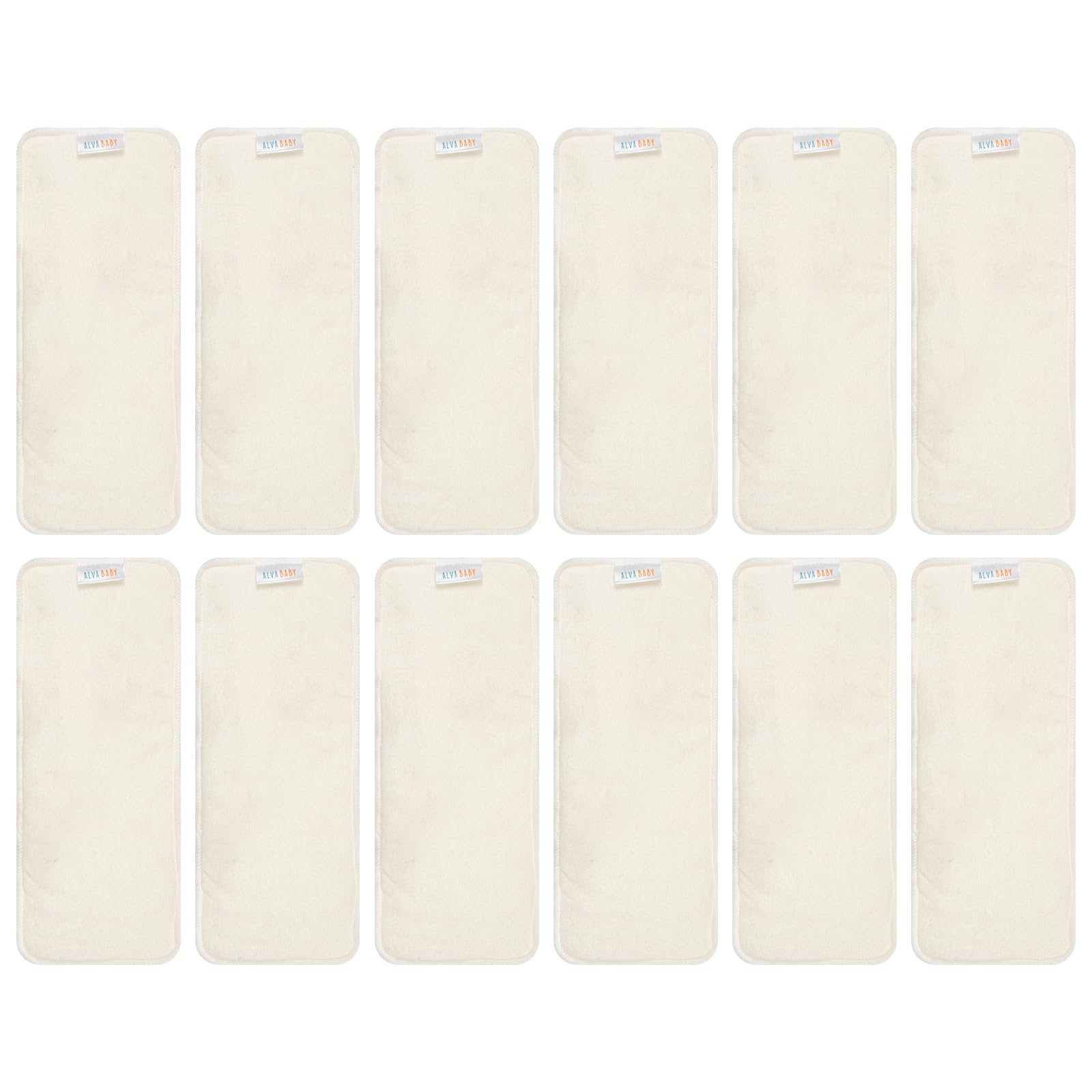


Best for Daytime and Naps
ALVA 4-Layer Super Soft Inserts
Key Features
- Fit range: 8.8–33 lb
- Pack size: 12 inserts
- Dimensions: 12.99 x 5.32 in
- Construction: 2 fiber + 2 microfiber layers
- Price: Midrange
The first thing we noticed about the ALVA four-layer inserts is how much softer they feel than the shiny microfiber pads that came with our pocket diapers. The two fiber layers and two microfiber layers give the insert a flexible, cloth-like hand, so it tucks into a pocket without the stiff bunching that can make a diaper look lumpy under a onesie. At 12.99 by 5.32 inches, they fit the same one-size pockets as the other ALVA inserts we tried.
We reach for these first for daytime and naps. They soak up quickly, and in our testing they held a full wet diaper without the clammy surface feel we associate with plain microfiber. The 12-pack is enough to rotate through a few days of changes, and they came out of the wash soft rather than crunchy. If you want one insert to handle overnight for a heavy wetter, the Wegreeco five-layer is the more sensible starting point; for most babies and most daytime changes, this is the easier insert to live with.
The practical appeal is the dozen. You can keep a clean set in the diaper bag and still have enough at home for laundry day, which is more than we can say for the 10-packs here. They have held their shape in our rotation and have not stiffened the way cheap microfiber sometimes does.
Pros
- Soft blend feels gentler than plain microfiber
- Four layers absorb well for daytime and naps
- 12-pack covers a laundry rotation
- Washes up soft without stiffening
Cons
- Seam stitching can loosen over time
For most families, these are the cloth diaper inserts we recommend first: soft, absorbent, and sold in a practical dozen.
Best for Heavy Wetters
Wegreeco 5-Layer Charcoal Inserts
Key Features
- Fit range: 10–35 lb
- Pack size: 12 inserts
- Dimensions: 13.4 x 5.1 in
- Construction: 5 layers
- Price: Midrange
Five layers is the reason to look at the Wegreeco inserts: they are the thickest, most cushiony pads in this group, and that extra bulk is what makes them a credible overnight insert for a baby who soaks through a three-layer pad before morning. We like them for that job. The charcoal color also hides stains, which matters more than it should when you are sorting a wet bag at the end of the day.
The 13.4 by 5.1 inch size fits most one-size pockets and covers, and the pad stays put when you stuff it. In our testing, a single insert handled a heavy wet diaper without the immediate compression leak we saw with cheaper microfiber. They are soft enough for overnight, but they are not the trim choice; under a snug sleeper, the extra thickness is visible.
If you need a pad that disappears under daytime clothes, choose the ALVA four-layer instead; if you need more margin at night, this is the one. For a light wetter, a three-layer pad is plenty, and the Wegreeco is for the nights when you want one less wake-up. It is the insert we reach for when we want the diaper to last until morning without a change.
Pros
- Five layers suit heavy wetters
- Charcoal color hides stains
- Soft enough for overnight
- 12-pack gives a full rotation
Cons
- Seams can loosen with hot washing
If your baby regularly floods a daytime insert, the Wegreeco five-layer is the one we reach for overnight.
Best for Softness
Nora’s Nursery Cloth Diaper Inserts
Key Features
- Pack size: 10 inserts
- Dimensions: 13 x 15 in
- Folded size: 13 x 5 in
- Price: Premium
At 13 by 15 inches, the Nora’s Nursery insert is less a pad than a small square of fabric, and that is exactly why it works for some setups: you fold it down to the rise you need, so the absorbent material sits where your baby wets rather than bunching at the front. We folded ours into thirds for a one-size pocket and got a thick, soft pad that stayed put.
The fabric is the softest in this group, with a brushed, plush feel that doesn’t have the squeaky hand of microfiber. In our testing, it absorbed a normal daytime wetting without wicking through to the cover, and it washed clean without a lingering smell. It is the insert we reach for when a baby is fussy about texture or when we want a softer layer against the skin in a cover.
Fit is the deciding factor. The square is wide, and it works best in covers or roomy pockets where you can shape it; in a trim pocket diaper, it can feel like too much fabric. We think it’s a lovely choice for flat diapers and covers, and less convenient for a streamlined daytime pocket.
Pros
- Plush fabric feels soft against skin
- Folds to fit different rises
- Absorbs well for daytime
- Washes clean and fresh
Cons
- Only 10 inserts per pack
For a soft, moldable insert that works beautifully in covers, Nora’s Nursery is our pick; just plan to fold it and buy enough for laundry day.
Best for Daytime Budget
ALVA 3-Layer Microfiber Inserts
Key Features
- Fit range: 6.6–33 lb
- Pack size: 12 inserts
- Dimensions: 12.99 x 5.32 in
- Construction: 3-layer microfiber
- Price: Budget
The math is the appeal: a full dozen inserts for less than the price of most 10-packs here, which makes the ALVA three-layer set the easy way to build a daytime stash without committing to a premium fabric. We keep a set in the diaper bag because losing one or two does not feel like a disaster.
They are microfiber, so they absorb fast and dry quickly. We used them in pocket diapers for daytime changes and liked how little space they took up in the diaper bag. The 12.99 by 5.32 inch size fits standard one-size pockets, and the 12-pack gives you enough to get through a couple of days if you wash every other day. They are easy to stuff and do not bunch at the front.
We treat them as a daytime insert. For overnight or a heavy wetter, a five-layer pad gives more margin, and the difference shows up in the morning. If your baby is a light-to-average wetter and you want a dozen pads without spending much, these are the practical choice. They are also the set we are least worried about losing in the wash.
Pros
- Low-cost 12-pack for daytime use
- Microfiber dries quickly between washes
- Fits standard one-size pockets
- Enough inserts for a daytime rotation
Cons
- Compression leaks under pressure
For a budget daytime stash, these are the inserts we buy by the dozen; just don’t expect them to hold overnight.
Best for Trim Pockets
Babygoal 3-Layer Microfiber Inserts

Key Features
- Fit range: 8–33 lb
- Pack size: 12 inserts
- Dimensions: 12.2 x 3.15 in
- Construction: 3-layer microfiber
- Price: Budget
The Babygoal inserts are the narrowest pads in this group at 3.15 inches wide, and that slim profile is their whole reason for being: they slide into trim pocket diapers and narrow openings where a five-inch-wide insert bunches up. We tried them in a slim pocket diaper and appreciated how little bulk they added under a onesie.
At 12.2 inches long, they fit the same babies as the larger inserts, but they cover less surface area. They are soft enough, dry fast, and cost less than the larger pads, which makes them a sensible add-on for a trim daytime stash. We also like that they do not make a pocket diaper look stuffed.
The narrow cut is the point, and it makes them a useful extra layer in a well-fitting diaper. They are the ones we tuck into the diaper bag for quick changes, and they earn their low price by staying out of the way. A spare in the car takes up almost no room, which is more than we can say for the thicker pads here.
Pros
- Narrow 3.15-inch width fits trim pockets
- Low-cost 12-pack for light use
- Soft microfiber dries quickly
- Adds little bulk under clothes
Cons
- Thin for heavy wetters
- Narrow cut covers less area
For narrow pocket diapers and light daytime use, these are the trim inserts we reach for; heavy wetters need more layers.
How We Tested Cloth Diaper Inserts
We built the shortlist by comparing listings on fiber content, layer count, pack size, and price per insert, then cross-checking against what parents on our team had actually been stuffing into diapers at home. Anything that couldn’t clearly say what it was made of got cut. That left 14 inserts, which we rotated through the same diapering routines for four months.
Each one went into pockets and covers for naps, twelve-hour overnights, daycare, and car rides, and we kept a log of every leak: when it happened, how long the diaper had been on, and whether the insert was soaked through or just gave out under pressure. Inserts that bunched up when stuffed, or had to be fished out of a pocket after washing instead of agitating free, got marked down for functionality early.
For absorbency, we poured water onto each insert in measured increments and timed how quickly it disappeared, then pressed a dry cloth over the wet insert with a weight on top to see how much moisture came back out — the closest thing we could rig to a baby sitting in a car seat. Fit was judged on a ten-pound newborn and a toddler pushing thirty pounds. Every insert went through our regular wash routine every other day, and we checked for curled edges, pilling, shrinkage, and set-in stains along the way, plus whether it still felt soft against the wrist after a line dry versus a tumble in the dryer.
Value came down to arithmetic: how many inserts a pack actually gives you, what each one costs, and how many you need to get through two days between laundry.
How to Choose Cloth Diaper Inserts
The right insert is the one that matches your baby’s wetting pattern and your diaper’s pocket opening, not simply the one with the most layers.
Start with material, then layer count
Microfiber is the fast, cheap option: it pulls liquid in quickly and dries faster than thicker plant-fiber blends, which is why it shows up in so many budget packs. The catch is compression—microfiber can release liquid back into the diaper when a baby sits or sleeps on it. A four- or five-layer insert gives you more margin, but only if the extra thickness still fits your pocket. We prioritize a material that matches the wetting pattern: microfiber for daytime changes and a softer blend or extra layer for overnight.
Measure the pocket, not just the baby
Insert dimensions matter as much as the weight range on the package. A pad that is too wide bunches in the pocket and leaves gaps at the legs; one that is too long pushes the diaper down and makes the rise fit poorly. The Babygoal insert is only 3.15 inches wide, which suits trim pockets, while the Nora’s Nursery square is 13 by 15 inches and needs folding. We check the pocket opening before the weight range, because a pad that does not sit flat will leak no matter how absorbent it is.
Plan for washing and drying
Every insert here is reusable and machine washable, but the care details differ. Several ALVA and Wegreeco inserts list a maximum wash temperature of 30°C (86°F), and they ask you to skip fabric softener and additives. Microfiber dries quickly; thicker five-layer pads hold more water and take longer. A second set is not a luxury if you line dry. We wash before first use, follow the maker’s temperature limit, and check seams before the inserts go into the dryer.
Buy enough for your wash rhythm
A 10-pack sounds generous until you count changes. A newborn can go through 10 to 12 diapers a day, and an older baby may need 6 to 8; if you wash every other day, one pack is a supplement rather than a full stash. We look at the number of inserts in the bag and the price per insert together, not the sticker on the pack. A 12-pack of budget microfiber can be the smarter first buy if you plan to add a five-layer pad for nights.
Frequently Asked Questions
Should cloth diaper inserts touch the baby’s skin?
Microfiber should stay inside a pocket or under a stay-dry liner; directly against skin, it can feel rough and pull moisture away too aggressively. A soft bamboo or cotton insert can sit against skin in a cover, but check the maker’s directions for that specific insert. If you are unsure, add a liner between the insert and your baby.
How do I prep new cloth diaper inserts?
Wash new inserts once before the first use, and wash natural-fiber blends two or three times to wake up absorbency. Skip fabric softener, which can coat the fibers and make them repel water. If a drop of water beads on the surface instead of sinking in, wash the insert again before putting it on your baby.
Can I double up inserts for overnight?
Yes, but stack them with a purpose. Put a fast-absorbing microfiber pad under a slower-absorbing bamboo or charcoal layer, and check that the doubled insert still fits inside the pocket without gaps at the legs. If the diaper looks overstuffed, use one five-layer insert instead of two thin pads.
Final Verdict
The ALVA 4-Layer Super Soft Inserts are the best default in this group. They are soft enough for everyday wear, absorbent enough for daytime and naps, and sold in a practical 12-pack that makes laundry day easier. We recommend them for most families building or topping up a cloth diaper stash.
If your baby soaks through a four-layer pad overnight, the Wegreeco 5-Layer Charcoal Inserts are the better buy; the extra layer gives you more margin, and the charcoal fabric hides stains. They are bulkier under clothes, so keep the ALVA four-layer for daytime.
