This post contains affiliate links. We may earn a small commission when you buy through our links — at no extra cost to you.
Baby booties have one job, and it is harder than it sounds: stay on a kicking foot and keep tiny toes warm. The sweetest-looking pair can still be the one that ends up under the car seat, leaving one bare foot and one very cold baby. The problem is rarely the cuteness — it is the ankle opening, the heel, and whether the closure gives you any real adjustment.
Over the past four months, we have tried 14 pairs on babies from newborn through the cruising stage, in fleece, organic cotton, and crochet, with grippy soles and adjustable tabs. What separated the keepers was fit that stayed put through diaper changes and stroller naps, linings that felt soft against skin, and enough warmth without turning into a sweatbox. We checked for comfortable cuffs that did not leave red marks, and we washed every pair more than once, because a bootie that pills or loses its shape after a cycle is not a bargain. The picks below are the ones that earned a spot by the door.



Best for Everyday Wear
Hudson Baby Cozy Fleece Booties
Key Features
- Sole: Textured grip
- Closure: Slip-on
- Material: Fleece
- Price: Budget
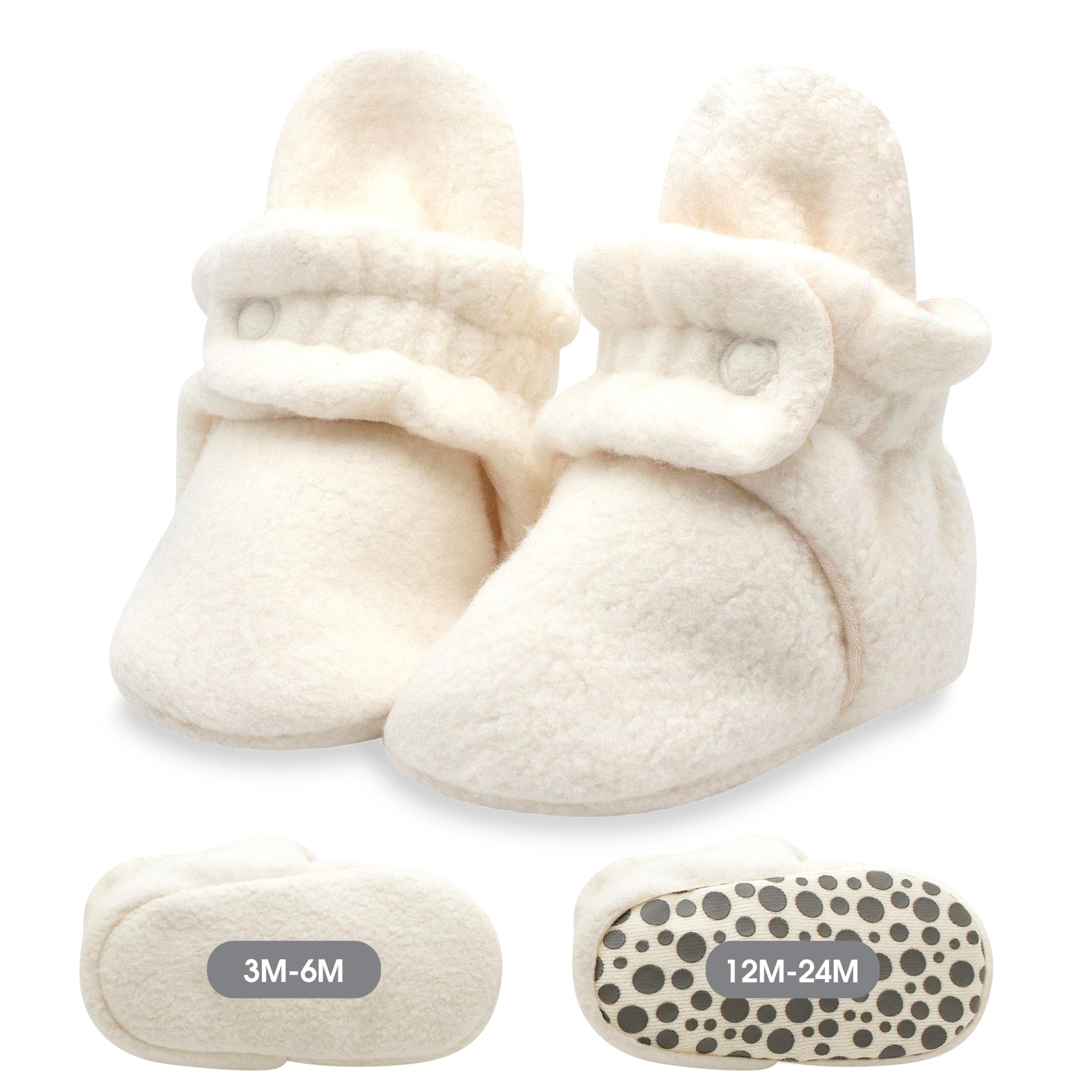
The case for the Hudson Baby fleece bootie is simple: it’s one of the least expensive pairs here, and it does the two things a bootie has to do—stay on and keep tiny feet warm. We put a pair through the usual car-seat, stroller, and living-room circuit and came back to it more often than the fancier options. The fleece has enough stretch to pull over a chunky ankle without a fight. A little texture under the foot adds grip for a baby pulling up, though this is still a soft-soled slipper, not a shoe.
What we appreciate most is the lack of fuss. There are no snaps to line up or Velcro to clean lint out of, so you can get them on a wiggly baby in one motion. That matters at daycare drop-off and during middle-of-the-night changes. The simple shape also makes them a good crib-side layer over a sleeper or a thin sock. They aren’t as polished as the Zutano pair or as breathable as the Burt’s Bees cotton bootie, but they’re the pair we reach for when we want the job done without thinking.
If you need more grip for a new walker, the Zutano Cozie is the better pick. Otherwise, this is the pair to buy in two colors and stop worrying about. It’s the rare baby shoe that earns its keep because it asks nothing of you.
Pros
- Stays on through kicking and crawling
- Soft fleece stretches over chunky ankles
- Textured sole adds grip for early standing
- Low cost makes spare pairs easy
Cons
- Soft sole is not for wet or rough ground
For most families, the Hudson Baby fleece bootie is our top choice: soft, warm, inexpensive, and harder to kick off than socks.
Best for Warm Rooms
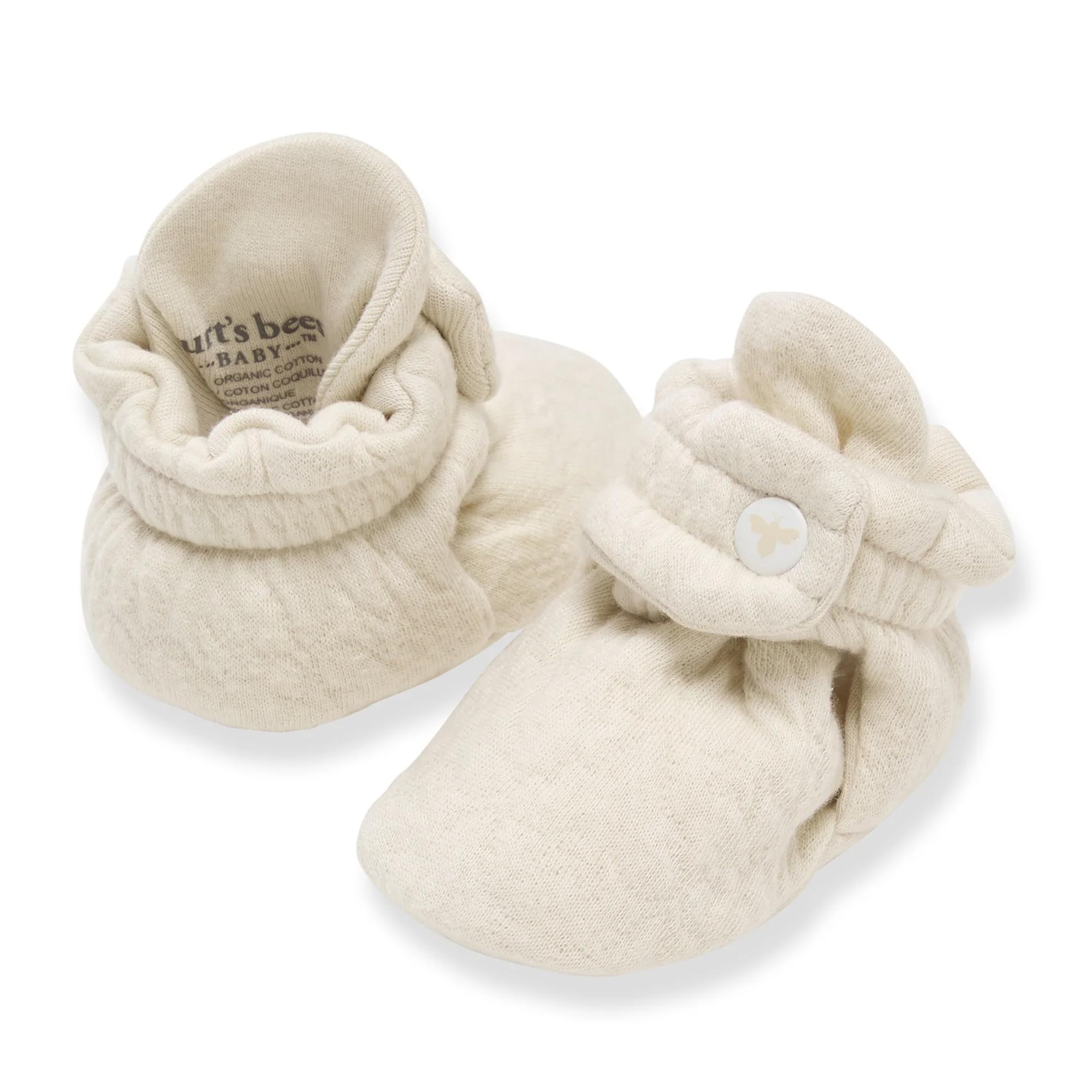
Burt’s Bees Organic Cotton Booties
Key Features
- Closure: Two snaps
- Material: 100% organic cotton
- Ankle fit: Adjustable
- Price: Midrange
The two-snap closure is what sets the Burt’s Bees bootie apart. Instead of relying on stretch, you fasten the flap at one of two points, which gives a snugger fit over a narrow ankle or a thin sock. The organic cotton is soft and breathable, and it feels more like a cozy sock than a structured shoe. We used these indoors and on mild-weather errands, where the lighter material kept a warm baby from overheating.
We like these best for the in-between stages: a newborn who needs a layer over a sleeper, or a baby who runs warm in a heated house. The trade-off is that the cotton sole is soft rather than grippy, so it’s not the pair we reach for once a baby starts cruising on hardwood. The two snaps also take a second longer than a slip-on, which is fine at home but noticeable during a diaper change.
The look is clean enough to pass as a real shoe, and the two-snap adjustability means they stay on longer than a plain sock as the ankle grows. For a baby shower gift or a warm-weather layering piece, these are an easy recommendation.
Pros
- Two snaps adjust the ankle over socks
- Breathable organic cotton for warm rooms
- Soft enough for newborns
- Neat enough for gifting
Cons
- Seams can loosen after washing
We choose these when you want an organic-cotton bootie that adjusts over socks and stays put without a hard sole.
Best for Early Walkers
Zutano Cozie Fleece Booties
Key Features
- Sole: Grippers
- Closure: Two snaps
- Material: Fleece
- Price: Premium
The Zutano Cozie is the pair to choose when a baby starts pulling up. The sole has a real grippy texture rather than a faint finish, and the fleece upper is thick without feeling stiff. Two snaps let you adjust the ankle over a sock, a sleeper, or a chubby foot. We noticed the difference most on hardwood, where the grippers gave a cruising baby a little more confidence.
This is the premium pick because the fleece feels more substantial than the budget pairs, and the shape holds up after repeated wear. The two snaps are easy to line up and don’t require threading a tie. It’s still a soft bootie, so it belongs on dry floors and stroller rides, not in slush.
If you want one pair that looks tidy enough for outings and has the grip for early steps, this is the one we keep for the cruising stage. For a newborn who mostly rides in a stroller, the Hudson or Burt’s Bees pair covers the same ground. These are the ones we reach for once a baby starts moving.
Pros
- Grippy sole for early walkers
- Two snaps adjust over socks
- Thick fleece stays warm
- Holds shape after repeated wear
Cons
- Premium price for a fast-growing baby
The Zutano Cozie is our premium pick for early walkers, with a grippy sole and two-snap fleece that outclasses the budget pairs.
Best for Active Crawlers
Pro Goleem Fleece Booties
The bottom is the reason to notice the Pro Goleem bootie: it has a non-slip sole that gives a crawling baby useful traction on wood and tile. The fleece upper is soft and warm, and the Velcro strap tightens across the top of the foot. We found it stayed put on a wiggly ankle without digging in.
The adjustable closure is more forgiving than a slip-on if your baby has a narrow ankle or you’re layering over a sock. It adds a step when you’re changing a diaper in the dark, but that’s the trade-off for a closure that stays where you put it. The fleece is soft enough for bare feet and warm enough for a cool floor.
What tips the decision for us is how much grip and adjustability you get for the money. The Hudson is simpler and softer, but it can’t match this sole on a hardwood floor. If your baby is crawling, pulling up, or treating the living room like a track, this is the pair we choose.
Pros
- Non-slip sole for wood floors
- Velcro adjusts over socks
- Warm fleece at a low cost
- Stays on active crawlers
Cons
- Fleece can pill with heavy wear
We like these as the adjustable pick for active babies: secure Velcro, a non-slip sole, and warm fleece at a low cost.
Best for Special Occasions
Jefferies Socks Crochet Booties
Key Features
- Sole: Soft crochet
- Closure: Tie
- Material: Hand-crocheted yarn
- Price: Midrange
These are not the booties for a baby who is crawling across the living room; they’re the pair for a christening, a coming-home outfit, or a baby-shower gift. The hand-crocheted upper has a delicate, heirloom look, and the tie lets you snug the ankle without elastic.
There’s no quick closure, and the delicate crochet is not built for daycare or a busy toddler. The bootie holds its shape and looks more expensive than it is, but treat it gently and hand-wash when you can. If you want a soft bootie for daily wear, the Hudson or Burt’s Bees picks are the better call.
We recommend these for the outfit, not the routine. They earn their place in a newborn’s coming-home bag or a grandparent’s keepsake box, and the tie gives a more precise fit than a plain sock. Just don’t expect them to survive a crawling stage; that’s not what they’re for.
Pros
- Heirloom hand-crocheted look
- Tie adjusts for a snug ankle
- Holds shape for photos and events
- Soft yarn feel for newborns
Cons
- Newborn size has little growing room
Our pick for a keepsake or special occasion, these hand-crocheted tie booties are lovely for a newborn and not for everyday crawling.
Best for Cold Stroller Rides
Luvable Friends Cozy Fleece Booties

Key Features
- Sole: Grippy bottom
- Closure: Velcro strap
- Material: Fleece
- Price: Budget
The Luvable Friends bootie is the closest alternative to our top pick, with one clear difference: a Velcro strap across the ankle. The fleece is thick and warm, and the bottom has enough texture to keep a baby from sliding on smooth floors; it’s not as grippy as the Zutano, but it’s useful on tile. In our testing, the strap made it easier to get a snug fit over a sleeper than a plain slip-on, especially on a baby who likes to kick.
That adjustability is why we keep this pair in the stroller bag for cold mornings. It’s bulkier than the Hudson, so it takes up more room in a diaper bag and can feel warm indoors, but the extra thickness is the point when you’re outside. The strap is also easier to fine-tune on a chunky foot than a plain sock. This is a winter-stroller bootie, not a sleek everyday slipper.
Pros
- Velcro strap tightens over sleepers
- Thick fleece holds warmth
- Textured bottom adds traction
- Easy to pull on active babies
Cons
- Sizing runs small for some babies
We keep these for thick, warm fleece and an ankle strap that helps them stay on through cold-weather stroller rides.
How We Tested Baby Booties
To build the shortlist, I started with the booties that show up again and again in registry lists and parent forums, then filtered for size range, materials, closure type, and whether the sole had any traction. We narrowed to 14 pairs and tested them for four months on babies from newborn to early walkers, in the same rotation a family would use them: morning diaper changes, stroller walks, carrier naps, playmat time, and the car seat shuffle.
Fit was the first cut. We noted where the heel landed, whether the toe box left room to wiggle, and how much gap remained at the ankle after we tugged each bootie gently. We put them on wriggling babies during diaper changes, timed how long it took to get each pair on and off, and checked again after 20 minutes in the stroller, looking for booties that had twisted, slid down, or gone missing. For warmth, we felt the baby’s toes after a cool-weather walk and checked whether the lining felt damp. For softness and comfort, we pressed the inside against the wrist and looked for red marks or sock bunching at the ankle.
We also washed each pair at least twice, following the care label, and inspected seams, elastic, and grippers afterward. Appearance got a second look post-wash: did the color hold, did the fleece pill, did the crochet lose its shape? On hardwood and rug, we watched whether the grippy soles actually gripped or just looked the part. The pairs that survived all of that — still soft, still on, still looking decent — are the ones we recommend.
How to Choose Baby Booties
The bootie that stays on is the one you’ll actually use, so start with closure and fit before warmth or style.
Start With the Closure
A bootie only earns its keep if it stays on. Slip-on fleece styles rely on stretch; snap and Velcro closures let you tighten the ankle over a sleeper or a chubby foot. We prefer two snaps for a neat fit, but Velcro is faster for daycare drop-off. Ties look precious but take an extra step and can loosen. Whichever you choose, check the closure before every wear and make sure it sits flat against the ankle, not digging in.
Match the Material to the Weather
Fleece is the warmest option here and the right choice for cold cars, drafty floors, and winter strollers. Organic cotton breathes better in heated rooms, but it won’t block wind and isn’t a rain boot. We treat soft baby slippers as an indoor and light-outdoor layer, not a replacement for a weatherproof shoe. If you’re layering over a sleeper, size for the extra bulk.
Look for Grip at the Right Stage
Before walking, a soft sole is fine; once a baby pulls up, a textured or rubberized sole makes a difference on wood and tile. The Zutano Cozie and Pro Goleem picks have the most purposeful grip in this group. A smooth cotton sole is better for lap time and photos than for cruising. Check the sole with your thumb: you want a little texture, not a slick finish.
Size for Room, Not a Perfect Fit
Baby booties vary widely by brand, and a 3-6 month label is not a promise. Measure the foot, check the maker’s chart, and leave a little toe room without so much length that the heel slips. If a brand runs small, size up rather than squeezing. A bootie that’s too tight at the ankle is as likely to come off as one that’s too loose.
Frequently Asked Questions
Are baby booties better than socks?
For a baby who kicks socks off, yes—a bootie adds a closure and a little structure, so it stays on through the car seat and stroller. For a newborn who mostly sleeps, a footed sleeper is simpler and less likely to get lost. Keep two pairs at most; one fleece and one cotton covers most days.
Can baby booties be worn for sleep?
They can add warmth over a sleeper, but only if they fit snugly and have no loose ties, snaps, or detachable pieces. Skip them if the bootie is damp, bunches at the ankle, or has a fastener that does not lie flat. For overnight, a footed sleeper is the simpler choice.
How should I wash baby booties?
Most fleece and cotton pairs can go on a cold, gentle cycle, but check the care label first. Fasten Velcro and snaps before washing so they don’t snag other clothes, then air-dry; heat can shrink cotton and mat fleece. Hand-wash crochet and tie styles, and reshape them while damp.
Final Verdict
For most families, we recommend the Hudson Baby fleece bootie: it’s soft, warm, inexpensive, and harder to kick off than a sock. If your baby runs warm or you want an organic-cotton layer, choose Burt’s Bees. For a cruising baby on hardwood, the Zutano Cozie’s grippy sole is worth the premium. The Jefferies crochet bootie is a keepsake, not the daily pair.
