This post contains affiliate links. We may earn a small commission when you buy through our links — at no extra cost to you.
The first time a stomach bug went through our house, I poured an electrolyte drink into a cup and watched my kid take one sip and push it away. That’s the real problem with this category: the drink only works if they finish it, and kids are brutally honest about salty, chalky, or medicine-sweet flavors. A good one replaces what a fever or a hot afternoon at practice takes out of them — and tastes good enough that they ask for more.
Over the past four months, my team and I mixed and taste-tested 15 electrolyte drinks — powders, drops, and ready-to-drink bottles — with a rotating panel of kids ages 4 to 12 and a few adults who were honest about aftertaste. The loudest labels rarely won. What mattered was a sensible sodium-to-sugar ratio, ingredients you can pronounce, and a flavor that held up when diluted in a full water bottle. A couple even became the grown-ups’ pick after a late night. The ones below earned their spot in the pantry.

Best for On-The-Go Hydration
Pedialyte Powder Variety Pack
Key Features
- Age: 10 months and up
- Dose: 1 stick per 16 fl oz
- Format: Powder sticks, 24 count
- Flavors: Grape, strawberry lemonade, orange
- Price: Midrange
A small box — seven ounces, paperback-sized — holding 24 sticks, each already measured for 16 fl oz of water, is the Pedialyte we keep coming back to. Nothing needs the fridge until you mix it, nothing needs measuring, and nothing leaks into a bag. For a diaper bag, a school backpack or a car’s glovebox, that is worth more than anything printed on the front of the carton.
The flavors are why it takes the top spot rather than just a place. Grape, strawberry lemonade and orange are mild rather than syrupy, and this is the widest flavor choice here — which matters when you are handing a drink to someone with strong opinions about grape. It dissolves cleanly with a stir instead of clumping at the bottom of the bottle, and a fussy three-year-old in the middle of a fever will take it, which is more than you can say for every salty rehydration drink.
The one real adjustment is the dose. A stick makes a full 16 ounces, a whole water bottle’s worth, which is more than a toddler drinks in a sitting. So this format suits a school-age kid who carries a bottle, or a sick day where you are offering sips across an afternoon. For a two-year-old taking a few swallows at a time, a bottle you can pour from and put back in the fridge is less wasteful.
Pros
- 24 pre-measured sticks, no measuring
- Three kid-friendly flavors in one box
- Travels without refrigeration
Cons
- Costs more per serving than a bottle
We think this is the box most families should keep on hand: three mild flavors, pre-measured sticks, and nothing to chill until you mix it.
Best for Sick-Day Rehydration
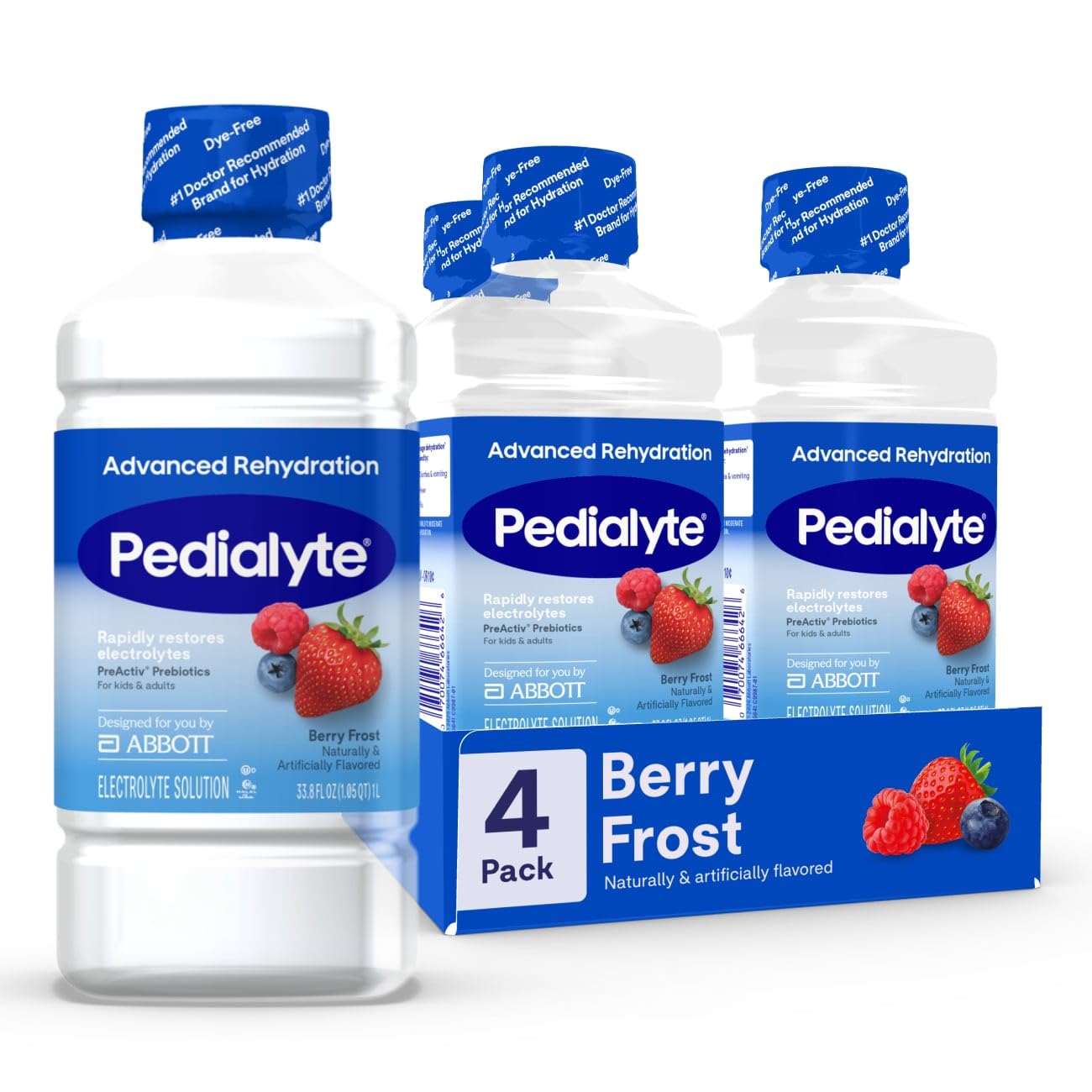
Pedialyte Advanced Rehydration Dye-Free
Key Features
- Dyes: No synthetic dyes
- Format: Ready-to-drink, 4 × 1 L
- Sodium: 1,380 mg per liter
- Sugars: No more than 19 g per liter
- Price: Midrange
Strip out the synthetic dyes and the formula gets stronger, not weaker. This is the only pick here that is dye-free, and each one-liter bottle carries 1,380 mg of sodium with no more than 19 g of sugars — against the leading sports drink, roughly three times the electrolytes and half the sugar.
That is the profile we want in the fridge when a child is genuinely ill. A drink built around sodium and glucose is designed to pull fluid back in, which is not the job a sweetened sports drink is built for. Of the three here, this is the one we keep at the front of the fridge when someone has been up half the night.
Expect a mineral edge. It is mild, but it tastes like what it is — salty-sweet rather than fruity — and a kid used to juice may pull a face at the first cup. Cold helps a lot, and so does serving it in the cup they already use. Where it does beat the sticks is portioning: you pour two ounces for a two-year-old and there is nothing left over to refrigerate.
Pros
- No synthetic dyes
- Most sodium per liter in this group
- Ready to pour with no mixing
Cons
- Four liters take up fridge space
For a kid who is actually under the weather, we reach for this one: dye-free, heavy on sodium, and nothing to mix when nobody wants to measure anything.
Best for Budget Hydration
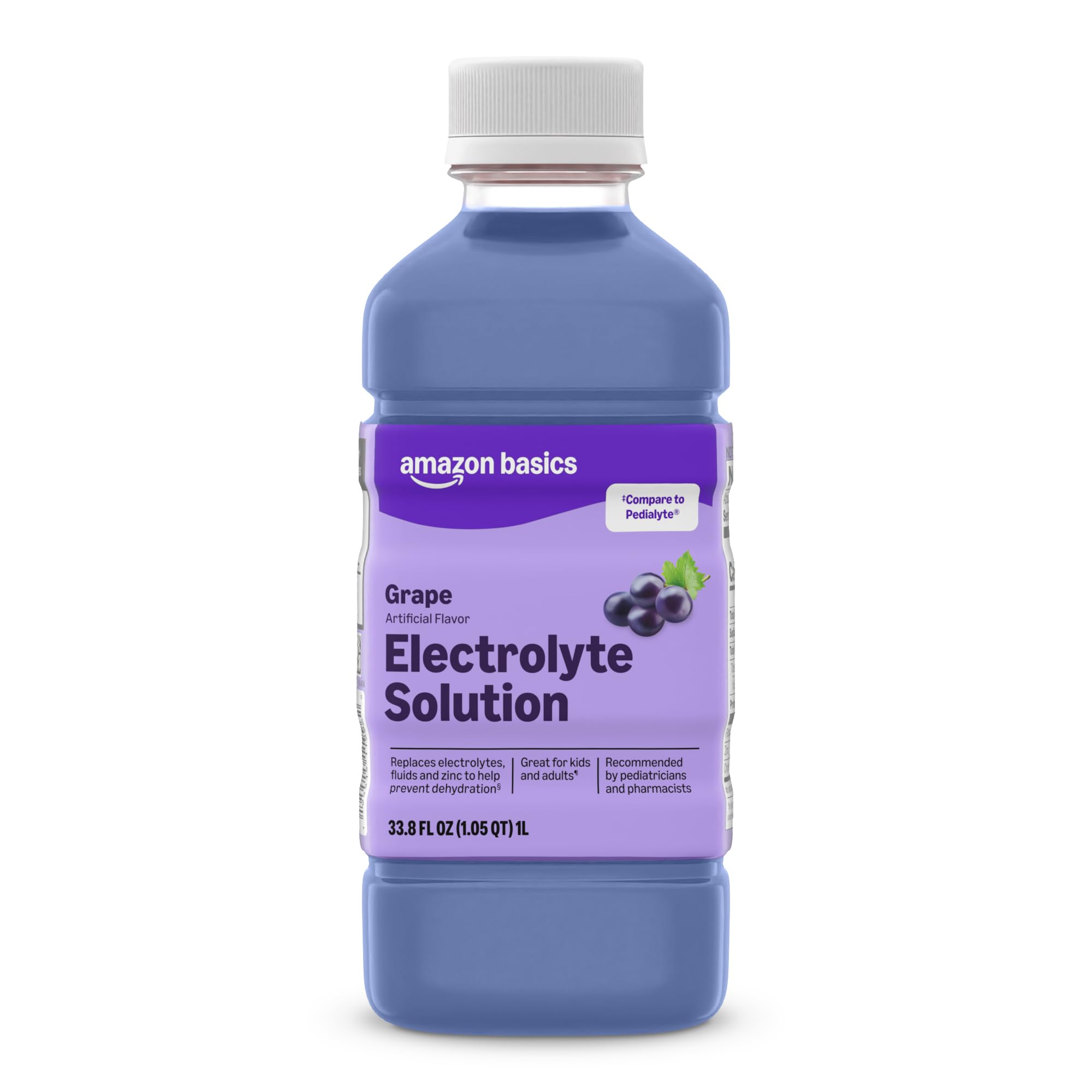
Amazon Basic Care Electrolyte Solution
Key Features
- Flavor: Grape
- Format: Ready-to-drink, 33.8 fl oz
- Minerals: Electrolytes plus zinc
- Price: Budget
The price gap is the whole story. Amazon’s store-brand solution costs a fraction of what the brand-name bottles run, and it is not a watered-down version of them — the label positions it the same way, for dehydration from vomiting, diarrhea, heat or hard exercise, with electrolytes and zinc in the bottle. It is the one we buy without agonizing over it.
In the glass it behaves like a pediatric rehydration solution rather than a sports drink: mild, a little salty, better cold, and easy to sip in small amounts, which is exactly how the label tells you to start. The grape flavor is unremarkable in the best way — a fussy kid does not fight it, and a queasy one is more likely to keep sipping.
Pros
- Least expensive bottle in this group
- Electrolytes plus zinc
- Mild grape flavor, better cold
Cons
- Sweetened with sucralose
- Only one flavor and one bottle size
The budget answer, and one we are happy to recommend: it handles sick-day rehydration for the least money here.
How We Chose and Tested Kids Electrolyte Drinks
We started with a list of more than 40 drinks sold as kids or family-friendly — powders, drops, and ready-to-drink bottles — and cut anything with artificial dyes, a sugar count that looked more like soda, or a per-serving price that made daily use unrealistic. That left 15 products, which we tested over four months.
Testing looked like real life: a hot Saturday soccer tournament, a stomach bug that hit two households in the same week, a bedside cup during a fever, lunchboxes, and a swim meet. We mixed each one according to its label in 8 ounces of water, then again in a full 16-ounce bottle to see whether it went watery. Kids tasted blind, from unmarked cups, and we noted how much came back — a half-finished cup told us more than any score sheet. We also watched whether anyone asked for a second glass.
Portability got its own round: sticks and packets went into backpacks and lunchboxes, sat in a hot car for an afternoon, and got shaken into a half-full bottle at practice. We checked for clumping, leaks, and grit at the bottom of the cup. Since ingredients drive most parents’ decisions, we read every label for sodium, potassium, sugar, and sweetener type, then compared cost per serving. Effectiveness was the hazy one — we tracked whether kids perked up after a fever or a long, sweaty afternoon, and whether the adults who borrowed a stick after a late night felt any relief. The drinks that scored best were the ones kids finished without being nagged.
How to Choose a Kids’ Electrolyte Drink
The formula matters more than the flavor and the format matters more than either — get those two right and the brand on the bottle is the least interesting part of the decision.
A Rehydration Drink Is Not a Sports Drink
Sports drinks are built for sweat: plenty of sugar, a modest amount of sodium, and a job that starts when a kid is running hard in the heat. A rehydration solution runs the other way — saltier, leaner on sugar, designed to pull fluid back into a child who is losing it to a stomach bug or a fever. Our dye-free Pedialyte carries 1,380 mg of sodium and no more than 19 g of sugar per liter, which puts it at the salty end of this group.
So match the drink to the day. A sports drink for a tournament weekend, an electrolyte solution for a child who has been vomiting since midnight, and water with a normal appetite for almost everything else.
Powder Sticks or Ready-to-Drink Bottles
Sticks win on storage and travel. A box of 24 lives in a bag, needs no refrigeration, and each stick is dosed for 16 fl oz of water — nothing to measure, nothing to spill. The catch is that 16 ounces is a full bottle, more than a small child drinks in one sitting, so sticks suit school-age kids and long days out better than a toddler taking sips.
Bottles win when someone is actually ill: no mixing, no measuring, and you can pour an ounce at a time. We keep both — a box in the bag and a liter in the fridge — and if you are only buying one, buy the format that matches where your child will be when they need it.
Read the Sodium, Then the Sugar
Sodium is the number doing the work and sugar is the number making it drinkable, and both sit on the panel per liter or per stick — which means you have to convert before you compare a powder with a bottle. Higher sodium with lower sugar is the profile to look for in a rehydration drink; a sweet, low-sodium drink is closer to juice with a few minerals stirred in.
Cheap is not automatically weak, and it is not automatically equal either. Read the panel rather than the price on the shelf.
Dyes, Sweeteners, and What You’ll Trade
If synthetic dyes are something you avoid, the dye-free Pedialyte is the only pick here made without them. Sweeteners are the other fork in the road, and the two preferences do not line up neatly: the least expensive option here is also the one carrying an artificial sweetener on the panel.
Decide which of those two matters to you before you shop rather than standing at the fridge at midnight, because one bottle may not give you both.
Frequently Asked Questions
Can adults drink kids’ electrolyte drinks?
Yes. All three picks are formulated for children and adults, and nothing in the formula is child-specific beyond the flavor and the serving size. An adult replacing fluid after heat or a stomach bug can use the same stick or bottle — expect to drink a full serving rather than a few sips.
Is it OK to mix a powder stick with less water so it’s stronger?
No. Each stick is dosed for 16 fl oz of water, and that sodium-to-sugar-to-water ratio is the entire point of the formula; half the water gives you a drink twice as concentrated, not twice as effective. If your child only takes a few ounces at a time, mix the full stick, offer what they will drink, and keep the rest chilled.
Is an electrolyte drink safe for a baby under 1?
Ask your pediatrician first. The Amazon Basic Care label directs you to consult a doctor before giving it to a child under 1 year, and the Pedialyte powder is listed for 10 months and up, so a very young infant is a conversation with a doctor rather than a shopping decision.
If a child cannot keep fluids down at all, get medical advice rather than reaching for another cup.
Final Verdict
For most families, the Pedialyte powder box is the one we recommend. Three mild flavors, a dose already measured, and a format that survives a diaper bag and a glovebox are worth more than the per-serving savings of a bottle — and it is the box you will still have on hand the next time a fever shows up at bedtime.
If your child is sick right now, pour the dye-free liters instead: no mixing, no dye, and the most sodium here. If money is the deciding factor, the store-brand grape does the job for the least. Buy the format that matches where your kid will be when they need it; that choice will matter longer than the flavor.
