This post contains affiliate links. We may earn a small commission when you buy through our links — at no extra cost to you.
The first time my daughter’s eczema flared, I bought three creams in one pharmacy run and hoped one would work. A good baby eczema cream won’t cure the condition, but it can calm the itch, rebuild a rough patch, and make bath time and diaper changes less of a fight. It also has to moisturize without a greasy film, stay fragrance-free, and be gentle enough for a baby’s face and bottom. My team and I tested 16 formulas over four months, from after-bath slathers to middle-of-the-night diaper changes, to find the ones worth keeping.
The thickest cream was not always the most moisturizing. Some heavy balms sat on top of the skin and rubbed off on pajamas, while lighter lotions sank in fast but faded by morning. I also learned that fragrance-free doesn’t always mean scent-free — a few unscented formulas still carried a faint masking smell. The picks below are the ones that held up overnight, behaved in the diaper area, and didn’t turn a wriggling baby into a greased piglet.

Best for Daily Full-Body Use
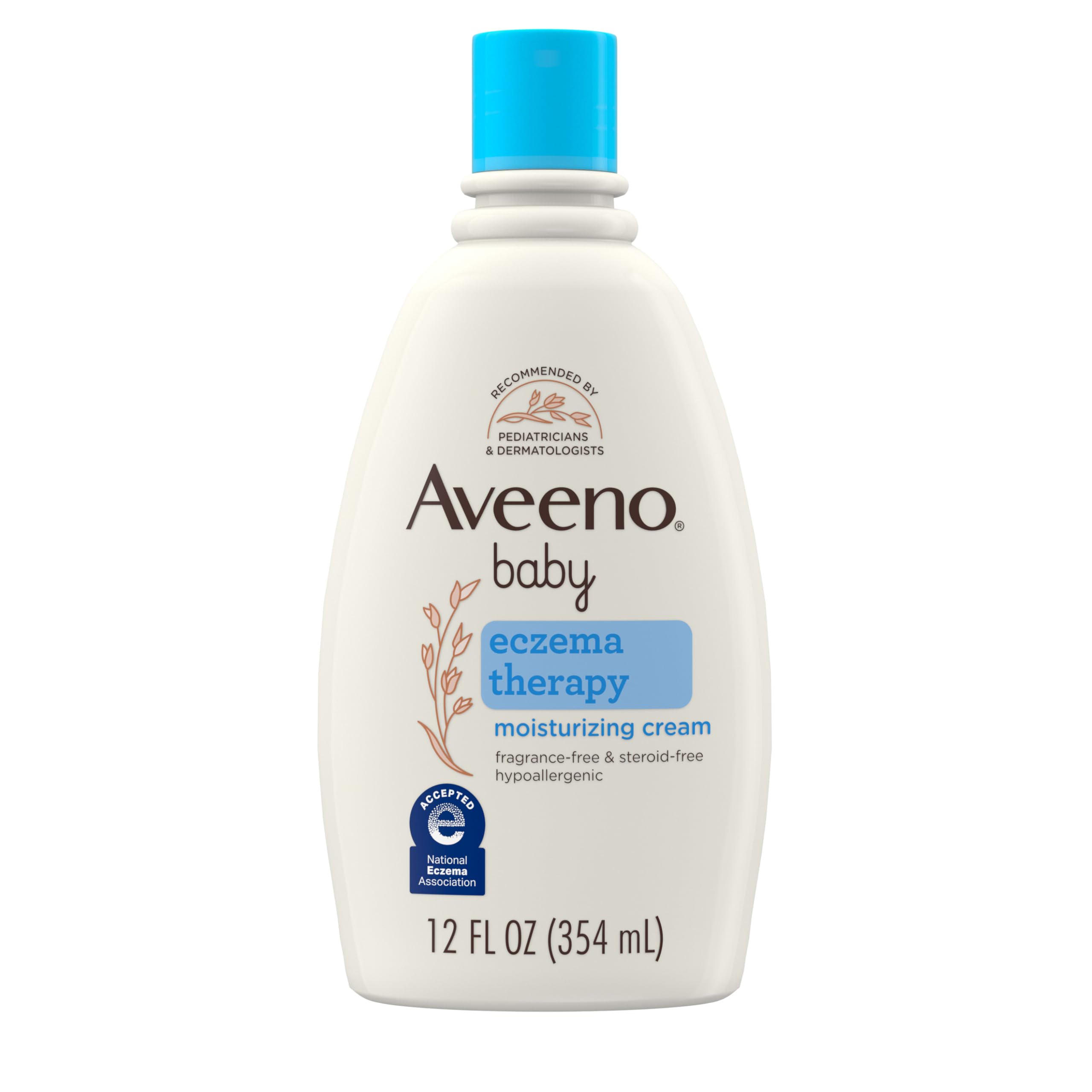
Aveeno Baby Eczema Therapy Cream
Key Features
- Size: 12 fl. oz
- Free from: Fragrance, steroids, parabens
- Key ingredient: Colloidal oatmeal + vitamin B5
- Eczema acceptance: NEA Seal of Acceptance
- Price: Midrange
The question we kept asking about every cream here was whether we kept reaching for it once the worst of a flare had settled and the routine got boring. Aveeno is the one that stayed on the bathroom shelf longest. It goes on like a soft lotion, rubs in completely, and leaves skin feeling like skin rather than like it has a coating on it, which matters when you are smoothing it over a whole baby after every bath and again before bed.
The formulation is why it takes the top spot rather than just the feel. Colloidal oatmeal is the skin protectant most eczema labels are built around, and here it sits alongside vitamin B5, with the National Eczema Association’s Seal of Acceptance on the tube. It is fragrance-free, steroid-free, paraben-free and pH-balanced, which is close to the checklist most pediatric skin advice comes down to. At 12 fluid ounces, a full-body application does not feel like rationing.
Fragrance-free and eczema-accepted does not mean sting-proof, though. On skin that has been scratched raw, this cream can sting, and some babies end up redder rather than calmer. Patch-test a small area, behind the knee or on the inner arm, for a day before you commit to a full application, and stop if the skin looks angrier an hour later.
Where it beats the rest of this group is range. It is light enough for cheeks and chin in the morning, thick enough to matter on arms and legs at night, and it does not leave a film on the sleep sack. If you want one tube that covers the whole routine, start here.
Pros
- Non-greasy finish you can apply twice a day
- Colloidal oatmeal plus vitamin B5, eczema-accepted
- Fragrance-, steroid- and paraben-free
- 12 oz covers a whole body without rationing
Cons
- Can sting on raw, scratched skin
We make this the default baby eczema cream: fragrance-free, non-greasy and eczema-accepted, it suits twice-daily use on faces and bodies, and most babies tolerate it well.
Best for Stubborn Dry Patches
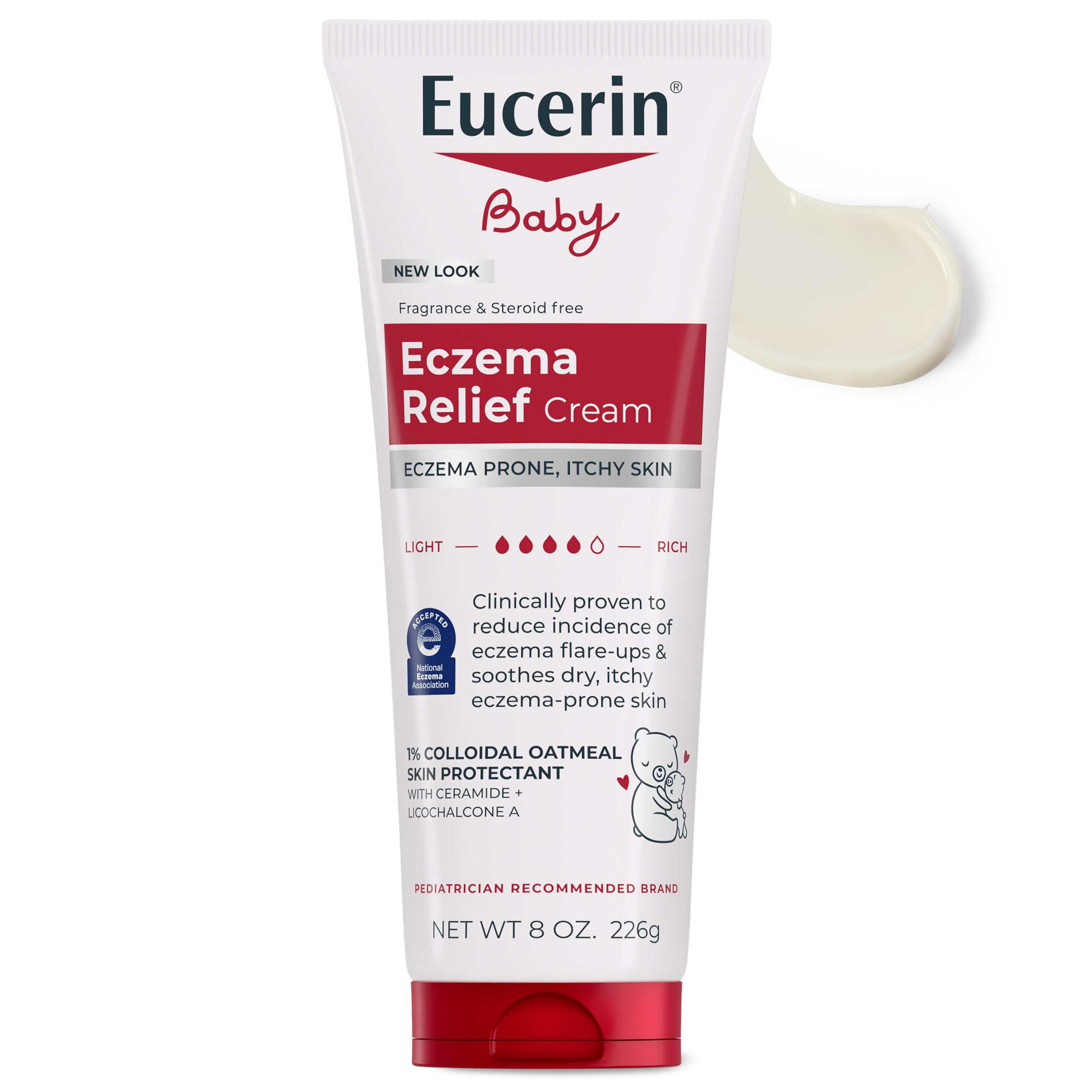
Eucerin Baby Eczema Relief Cream
Key Features
- Size: 8 oz tube
- Free from: Fragrance, dyes, parabens, steroids
- Also contains: Ceramide-3 + licorice root
- Key ingredient: 1% Colloidal Oatmeal
- Price: Midrange
One percent colloidal oatmeal is the figure worth knowing, because that is the concentration at which oatmeal counts as a skin protectant rather than a nice-sounding additive. Eucerin states it on the tube, adds ceramide-3 and licorice root extract, and backs the whole thing with a 24-hour hydration claim and acceptance from the National Eczema Association.
What separates it from the Aveeno cream is body. This is the thicker of the two, closer to a salve than a lotion, and yet it rubs in without the greasy shine we expected from something this rich. On the rough, thickened patches that turn up on shins and elbows, the extra weight is the point: it stays where you put it long enough to do some good. If your baby’s eczema is a few stubborn spots rather than all-over dryness, this is the one we reach for first.
The squeeze tube is a small everyday win: one hand, no dipping, almost nothing wasted at the end. Two things to know. It is an 8-ounce tube, so heavy full-body use runs through it faster than the top pick, and on skin that is already scratched open this cream can burn. That sting is the reaction to watch for, so patch-test first, especially on the angriest patch.
Pros
- 1% colloidal oatmeal at protectant strength
- Ceramide-3 and licorice root in the formula
- Thick yet absorbs without a greasy shine
- Squeeze tube is clean and one-handed
Cons
- Can burn on open, scratched skin
Our pick when the patches are rough and stubborn: a thick cream that still rubs in clean, though it can burn on skin that is already scratched open.
Best for Cracked, Stubborn Patches
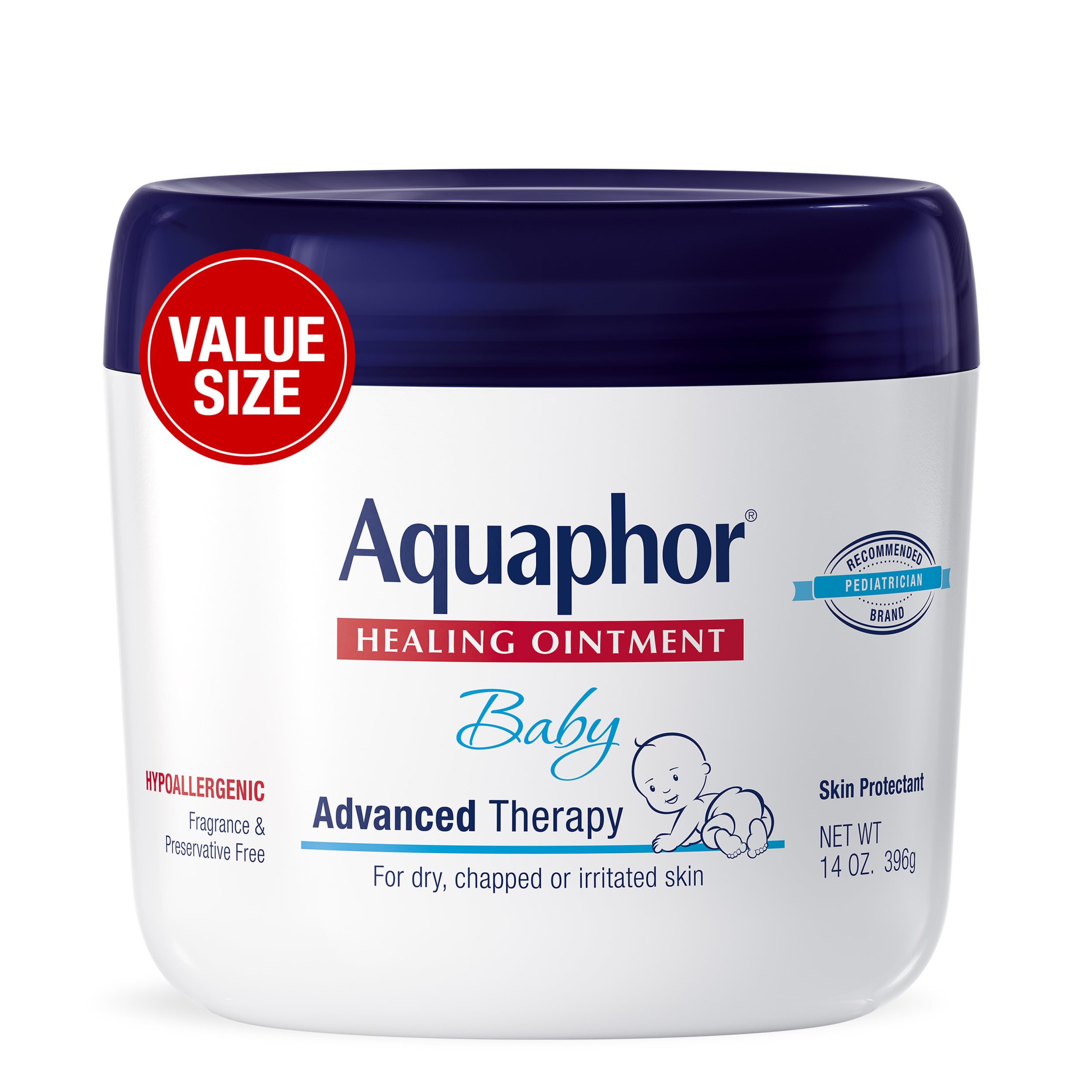
Aquaphor Baby Healing Ointment
Key Features
- Size: 14 oz jar
- Free from: Fragrance, preservatives
- Also suited to: Drool rash, chapping, diaper area
- Key ingredient: 41% Petrolatum
- Price: Midrange
Drool rash, chapped cheeks from a streaming nose, the angry crease under a chin: the places where a cream vanishes within twenty minutes are exactly where this ointment earns its keep. Forty-one percent petrolatum is the whole idea. It sits on the surface, holds moisture underneath and lets oxygen through, so it is still there after a nap, a bottle and a diaper change.
It is not a cream and we do not use it like one. A thin coat covers a surprising amount of skin, so the 14-ounce jar stretches across eczema patches, drool rash, cuticles and chapped heels without looking dented. Because it is fragrance-free, preservative-free and hypoallergenic, it is the thing we reach for on raw winter skin without a second thought.
Where it wins is staying power. On cracked patches that shrug off lighter creams, this goes on at night over a layer of the Aveeno cream, and the skin is soft rather than tight by morning. It does leave a film, so dress the baby in a bodysuit you do not mind sacrificing, and expect the sheet to pick up a little of it too.
Pros
- 41% petrolatum seals in moisture for hours
- Fragrance- and preservative-free
- Handles drool rash, chapping and patches
- 14 oz jar goes a long way
Cons
- Jar too bulky to carry in a diaper bag
The ointment we keep for cracked, angry patches and drool rash: 41% petrolatum stays put for hours, and the big jar covers far more than eczema.
Best for Daytime and Warm Rooms
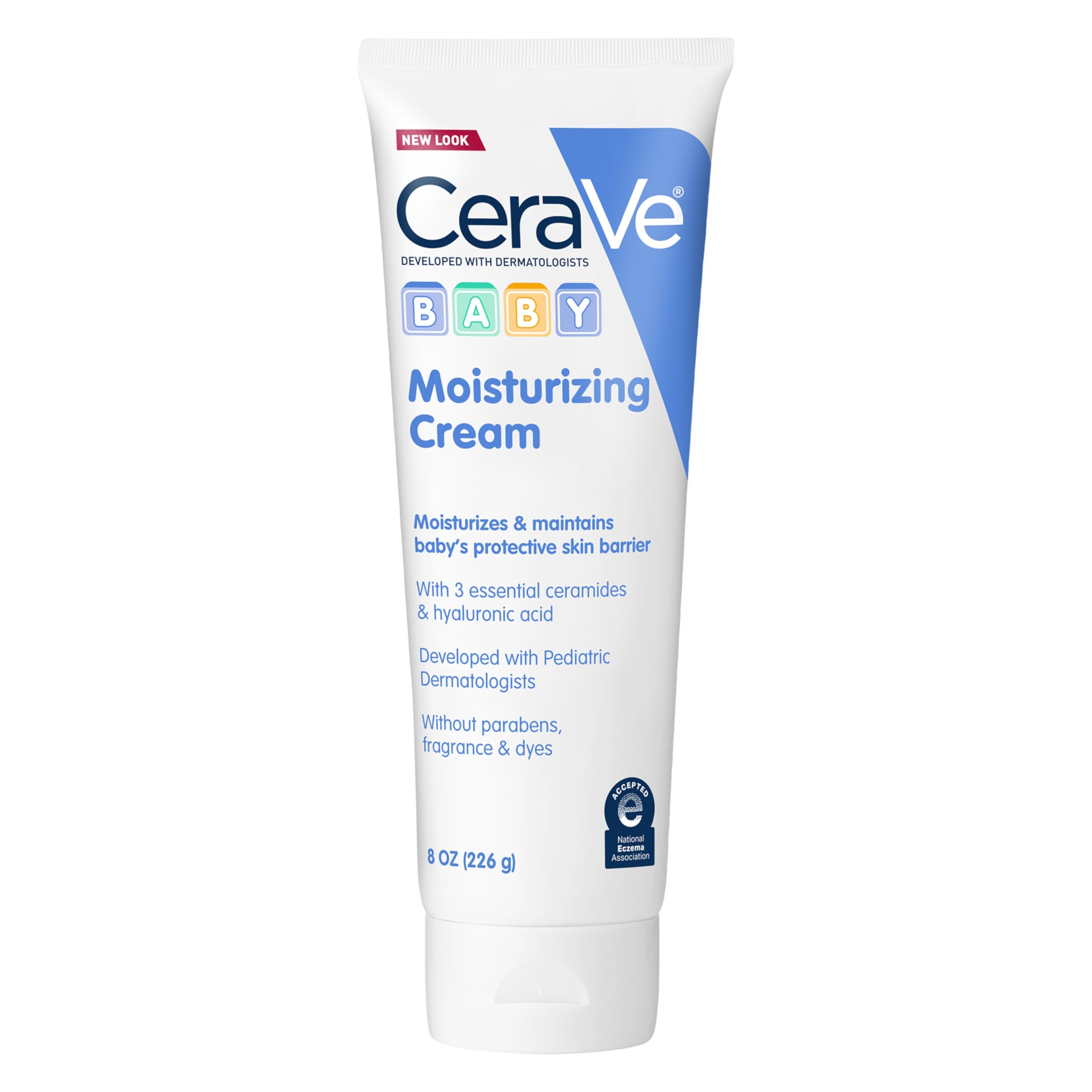
CeraVe Baby Cream
Key Features
- Size: 8 oz
- Free from: Fragrance, parabens, dyes, phthalates
- Key ingredients: 3 ceramides + hyaluronic acid
- Eczema acceptance: NEA Seal of Acceptance
- Price: Budget
Ceramides are the barrier lipids that eczema-prone skin tends to run short of, and CeraVe puts three of them into this baby cream alongside hyaluronic acid, with the National Eczema Association’s seal on the tube. What we noticed first was the finish: it is the lightest cream in this group, absorbing almost on contact and leaving nothing behind. No shine, no tackiness, nothing for a toddler to wipe off on a sleeve.
That is why it is our pick for daytime, for warm rooms and for babies who protest at cream in general. The trade-off is weight: on thick, leathery patches it is not enough alone, and we layer the Aquaphor ointment or the Aveeno balm over it at night. It is fragrance-, paraben-, dye- and phthalate-free, and light enough that you never think twice about a second application.
Pros
- Three ceramides plus hyaluronic acid
- Absorbs instantly and leaves no film
- Fragrance-, dye- and phthalate-free
- Easiest cream here to use on faces
Cons
- Too light for thick, cracked patches alone
The cream we reach for on faces and in warm weather: ceramides and hyaluronic acid in a formula that disappears on contact, though thick patches need more.
Best for Keeping One Everywhere
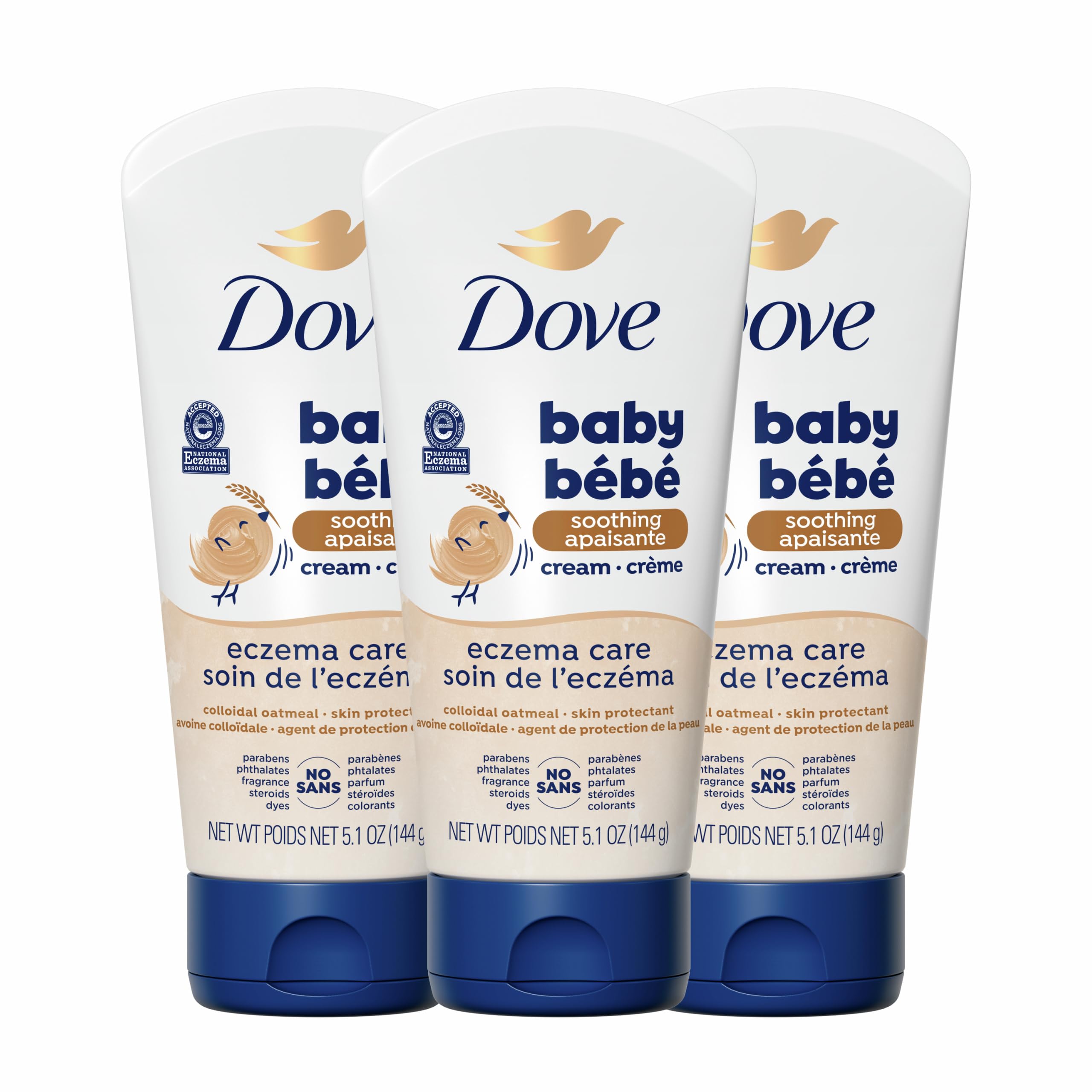
Baby Dove Soothing Cream 3-Pack
Key Features
- Format: 3 tubes, 5.1 oz each
- Free from: Fragrance, steroids, dyes, sulfates
- Suitable for: Newborn skin
- Eczema acceptance: NEA Seal of Acceptance
- Price: Midrange
Three 5.1-ounce tubes arrive together, and within a week they had scattered: one to the changing table, one to the diaper bag, one to the grandparents’ bathroom. That sounds like a small thing until you are holding a squirming, itchy baby and the cream is in another room.
The cream itself is thicker than the lotion-style packaging suggests, a proper cream rather than a watery one, but it absorbs quickly, which is what keeps a wriggling baby from sliding out of your grip. It is fragrance-free, steroid-free and free of parabens, phthalates, sulfates and dyes, and it is accepted by the National Eczema Association. Of everything here, this is the one we suggest to families who want a tube in every room.
One honest note: fragrance-free does not mean odorless. There is a faint oatmeal smell when it first goes on that fades within a minute or two. We noticed it, then stopped noticing it, but if you are sensitive to smells, that is the thing to know before you commit.
Pros
- Eczema-accepted and gentle enough for newborns
- Thick but absorbs fast with no greasy feel
- Fragrance-, dye- and steroid-free
- Three tubes cover nursery, bag and grandparents
Cons
- Sold only as a three-pack before you know it suits
Three eczema-accepted tubes for roughly the price of one premium cream, thick enough to matter and fast enough to use on a wriggling baby.
Best for Faces and Eyelids
Mustela Stelatopia Face Cream
Key Features
- Size: 1.35 fl. oz
- Use area: Face, including around eyes
- Free from: Fragrance
- Key ingredients: Avocado perseose + sunflower oil
- Price: Premium
Eczema loves the face: cheeks, chin, the creases beside the nose, sometimes the eyelids. Almost every cream on this page tells you to keep it away from the eyes. This one is specified for the eye area, applied around the eyes while avoiding direct contact with the eye itself. For a baby whose flare sits high on the cheeks, that single instruction decides the purchase.
The formula is plant-based, built on avocado perseose and sunflower oil distillate, fragrance-free, and labeled suitable from birth for the whole family. The texture is the pleasant surprise: a light cream that absorbs without stickiness, so you can put it on a cheek thirty seconds before a hat goes on. The tube is 1.35 ounces, which sounds tiny and is, but you are using it on a face, and a small dot covers a cheek and a chin.
We keep it as the face specialist rather than the all-over workhorse. It is the priciest cream here for the least product, and some babies react with stinging, so patch-test along the jawline before you go near the eyes. Used as designed, a thin layer on the cheeks and around the eyes morning and night, it does something the bigger tubes cannot.
Pros
- Specified for use around the eyes
- Fragrance-free and suitable from birth
- Light and non-sticky on cheeks
Cons
- Small tube for the money
- Can sting very reactive skin
The face cream we keep for cheeks and eyelids, since it is the only one here specified for the eye area, though the tiny tube costs the most per ounce.
Best for Overnight Barrier
Aveeno Baby Nighttime Balm

Key Features
- Size: 11 oz
- Free from: Fragrance, steroids, parabens
- Key ingredients: Colloidal oat + ceramide
- Eczema acceptance: NEA Seal of Acceptance
- Price: Midrange
The logic of a nighttime balm is straightforward: put the thickest thing on the skin at the point where nobody is going to wipe it off for eight hours. Aveeno’s version pairs colloidal oat with ceramide and describes it as a barrier that seals moisture in, and it is noticeably heavier than the brand’s daytime cream, closer to a body butter than a lotion.
That weight is the argument for it and the argument against it. Spread thin, it softens dry shins and elbows and is still doing something at bath time the next morning. Spread thick, it stays tacky, and a baby in a sleep sack will paste it onto the cotton before it ever sinks in.
The thing to watch is reactivity. Fragrance-free and eczema-accepted, yes, but this balm has the rockiest tolerance record in this group: stinging and increased redness are the reactions to watch for, so a patch test is not optional. Try a small area on the inner arm one evening, and if the skin is calmer the next morning, you have your night cream.
For the right baby it is a good second step: the daytime cream in the morning, this on the dry patches at night, and after a week the skin on the shins and elbows feels different. If you want one product that does everything, this is not it. If your routine already has a daytime cream and the nights are the weak point, it earns its place.
Pros
- Colloidal oat plus ceramide barrier
- Built for overnight, heavier than a cream
- Fragrance-free and eczema-accepted
Cons
- Can sting or redden reactive skin
A genuine overnight step for dry shins and elbows, worth adding if your daytime cream is working, but the one here most likely to sting reactive skin.
Best for Premium All-Over Care
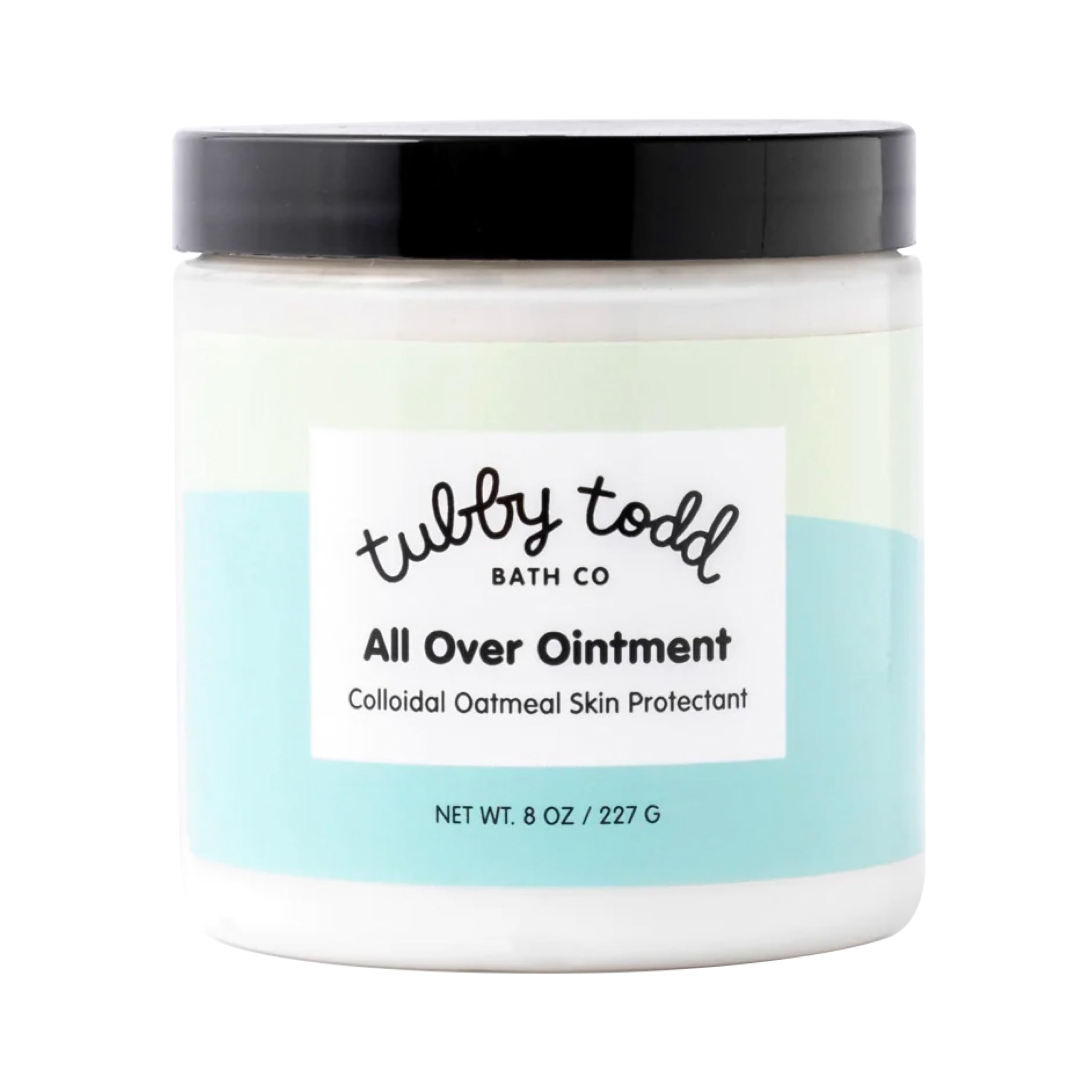
Tubby Todd All Over Ointment
Key Features
- Size: 9.59 oz
- Free from: Fragrance, steroids, gluten
- Also contains: Jojoba esters, camellia, avocado
- Key ingredient: 1% Colloidal Oatmeal
- Price: Premium
This is the priciest pick here by a wide margin, and it arrives with the kind of following that makes you skeptical before the lid comes off. Then the lid comes off: thick, smooth, unscented, closer to whipped than to petrolatum, and genuinely nice to spread.
The formula leads with 1% colloidal oatmeal at protectant strength, plus jojoba esters, camellia leaf extract and avocado fruit extract, and it is made without steroids or gluten. It is fragrance-free too, which matters more here than the botanical list does: a thick cream carrying a scent is a gamble on eczema-prone skin.
In use it is a genuine all-over product. We used it on dry patches, on cheeks and on the odd scraped knee, and a little spreads much further than the thickness suggests. What we did not find was a step up in results. On a normal flare it calmed skin about as well as the Aveeno and Eucerin creams, and the difference we noticed was in how it feels going on.
So it is worth the money if you have a baby who fights cream and you want one thick, pleasant product that travels from scalp to diaper line without a battle. It is not worth it if you are hoping for faster results than the mid-priced picks. You are paying for texture and a very nice tub, which is a fair thing to buy, just not a medical one.
Pros
- 1% colloidal oatmeal in a thick base
- Fragrance-free, steroid- and gluten-free
- A little spreads a long way
Cons
- The priciest pick here for a modest tub
- No clearer results than the mid-priced creams
A lovely, thick, fragrance-free ointment that goes everywhere from scalp to diaper line, if you are willing to pay premium money for texture rather than faster results.
How We Chose and Tested Baby Eczema Creams
We started with a list of 40 formulas sold at drugstores, big-box retailers, and specialty baby shops, then narrowed it by reading ingredient panels and customer reviews. We filtered out anything with added fragrance, essential oils, or ingredients that parents repeatedly flagged as stingy or irritating, and kept a mix of thick balms, mid-weight creams, and lotions so the final group reflected what’s actually on the shelf. We also looked at price per ounce and package size, because eczema cream gets used by the handful and a tube that empties in a week isn’t a good value.
The 16 finalists went home with me and four other parents for four months. They lived in diaper bags, bathroom cabinets, and bedside drawers, and we used each one after bath time, on flare-ups, and at 2 a.m. diaper changes. Every cream was labeled for babies, and we followed the package instructions on patch testing before using it on a flare-up. In the diaper area, we watched for redness and whether a cream created a barrier that held up through a wet diaper. On faces and arms, we noted whether a baby fussed or pulled away during application — a decent proxy for stinging — and whether the cream disappeared or left a shiny film.
We sniffed every tube and read the label twice, because a fragrance-free claim on the front doesn’t always match the ingredient list on the back. To judge moisturizing staying power, we checked rough patches before bath, after application, and again 12 hours later. We measured how far a tube went with twice-daily use, which is where value for money shows up, and we compared notes across five households, since a cream that suited one baby’s skin sometimes left another with tiny bumps. The formulas that scored best absorbed without a greasy residue, calmed angry patches within a few days, and were gentle enough for the most sensitive skin in the group.
How to Choose a Baby Eczema Cream
The cream that helps is the one you apply often enough, which makes texture and packaging as decisive as the ingredient list.
Cream, Balm, or Ointment: Match It to the Moment
Think in layers rather than in one perfect product. A light cream is what you reach for at seven in the morning and again after lunch, because it sinks in fast enough to put a baby down afterwards. A balm or a petrolatum ointment belongs at night, when a film on the sleep sack costs you nothing.
The trap is buying only the thickest thing on the shelf and then using it twice a week because it is a production. Households managing a daily flare usually settle on two: the Aveeno cream for daytime and the Aquaphor ointment for the patches that stay rough.
Read the Ingredient Line, Not the Front of the Tube
Colloidal oatmeal at 1% is the strength at which oatmeal counts as a skin protectant, and it is the ingredient most eczema creams here are built around. Ceramides and petrolatum do different jobs: ceramides support the barrier, petrolatum seals over it.
Words like natural and plant-based say nothing about tolerance, and unscented is not the same as fragrance-free. A botanical balm can be lovely on healthy skin and aggravating on a flare. For eczema-prone skin, we put fragrance-free ahead of every other claim on the label.
Patch-Test, Because Accepted Does Not Mean Sting-Proof
Several creams here are fragrance-free and carry the National Eczema Association seal, and any of them can still sting on skin that has been scratched raw. That is not a reason to avoid cream. It is a reason to test one properly.
Smooth a small amount onto the inner arm or behind the knee, wait a day, and look at whether the skin is calmer, unchanged, or angrier. Angrier means stop, whatever the tube says. Calmer means you have found your starting point.
Buy Packaging You Can Work One-Handed
A tube is the practical default: squeeze, cap, done, with a baby on your hip. A wide jar needs two hands and somewhere to set the lid down, which is why the big petrolatum jars end up living on a shelf instead of in the changing bag.
Buy size deliberately. A large tube lets you apply generously twice a day, which is the whole point, and a three-pack quietly solves the problem of the cream always being in the wrong room.
Frequently Asked Questions
Can I use these creams on a newborn?
Some are labeled for it: Mustela Stelatopia and Baby Dove both say suitable from birth, and CeraVe describes its cream for all ages. Check the age statement on the tube rather than assuming.
Then patch-test a small area a day ahead. Newborn skin is the most reactive it will ever be, so start with a thin layer on one cheek rather than a full-body application.
Should I put eczema cream on wet or dry skin?
Damp skin. Pat the baby dry after a bath, leave the skin slightly damp, and smooth the cream on within a few minutes. The water underneath is what a petrolatum ointment like Aquaphor is sealing in.
Mid-day, on skin that is already dry, a light cream first and a thin layer of ointment over the top holds better than ointment on its own.
Will these creams stain clothes and bedding?
The creams mostly sink in. The petrolatum ointment and the nighttime balm leave a film that transfers, so put those on under a cotton bodysuit you do not mind retiring and give them a minute before dressing.
If marks bother you, keep the ointment for nights and use a cream during the day.
Final Verdict
Buy the Aveeno Baby Eczema Therapy cream first. It is fragrance-free, non-greasy, eczema-accepted, and big enough that you can apply it generously twice a day to a whole baby, which is what actually turns dry, itchy skin around.
If the flare is cracked and stubborn, layer the Aquaphor ointment over it at night. If you want one thick cream that still absorbs, Eucerin is the pick. And when the redness sits on cheeks and eyelids, the Mustela face cream goes where the others cannot.
