This post contains affiliate links. We may earn a small commission when you buy through our links — at no extra cost to you.
Few things derail a baby’s day faster than angry, chapped cheeks. A baby’s skin barrier is thinner than ours, so winter wind, a drooly chin, and a quick lunchtime wipe can leave it rough and red—and the wrong cream can sting, pill, or sit like a greasy film. I’ve spent the past five months testing 12 baby face creams with my team, using them on our own kids’ cheeks after naps, before stroller walks, and at bedtime.
What I want is simple: enough moisture to soften a rough patch without a shine that transfers to everything, and a texture that spreads over a wriggling face without dragging. The best ones also earned their keep on mild diaper rash, and we watched for stinging or redness on sensitive skin. One tip from a pediatric dermatologist we consulted: patch-test a new cream behind the ear for a day, because what suits one baby can irritate another. The picks below are the ones that made the cut without costing a fortune per use.


Best for Everyday Facial Dryness
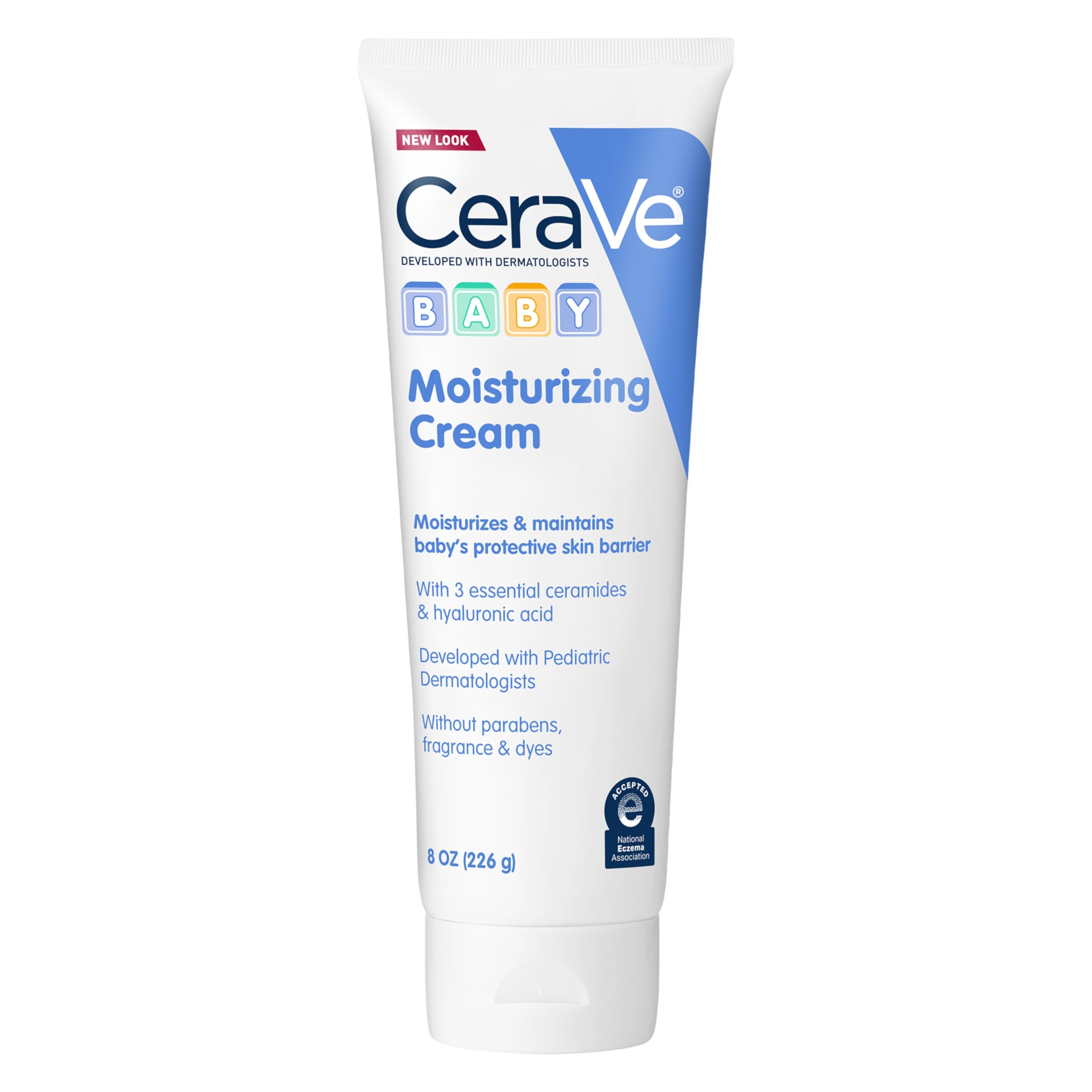
CeraVe Baby Cream
Key Features
- Size: 8 oz
- Format: Squeeze tube
- Formula: Fragrance-free, NEA seal
- Key ingredients: Ceramides and hyaluronic acid
- Price: Midrange
A face cream that leaves a shine on your baby’s cheeks is a cream you stop reaching for within a week. A baby’s face gets wiped, kissed, and dragged across a blanket all day, so the products that survive a routine are the ones that sink in and disappear. That is the case CeraVe Baby Cream makes, and it is why this is the one we recommend first.
What settled it for us is how little it asks of you. The formula is fragrance-free, with no parabens, dyes, or phthalates, and the ceramides and hyaluronic acid are there to shore up the skin barrier rather than just coat it. It carries the National Eczema Association’s Seal of Acceptance, which matters if your baby’s dryness has ever tipped over into a flare. And it absorbs quickly — a pea-sized blob warms between your fingers and vanishes into a cheek before anyone can smear it onto a collar.
The 8-ounce squeeze tube is the detail we appreciate most at six in the morning. It stands on the changing table and dispenses one-handed, which is exactly as many hands as you have free. There is no scent to argue with, it layers under a hat or a coat collar without pilling, and the tube outlasts the small face creams here by a wide margin.
Where it stops is raw skin. This is a cream, and a cream is for maintenance — the everyday dryness of winter, air conditioning, and a face that gets washed twice a day. For cracked or nose-wiped-raw patches, the ointment below does the sealing. For everything else, this is the tube we buy, and it is one of the least expensive creams in this guide.
Pros
- Fragrance-free with the NEA seal
- Ceramides and hyaluronic acid support the barrier
- Absorbs quickly with no greasy film
- Squeeze tube works one-handed
Cons
- A cream, so it will not seal raw skin
Our default for everyday baby faces: fragrance-free, ceramide-rich, and light enough to apply twice a day without leaving a greasy film on the cheeks.
Best for Cracked, Raw Skin
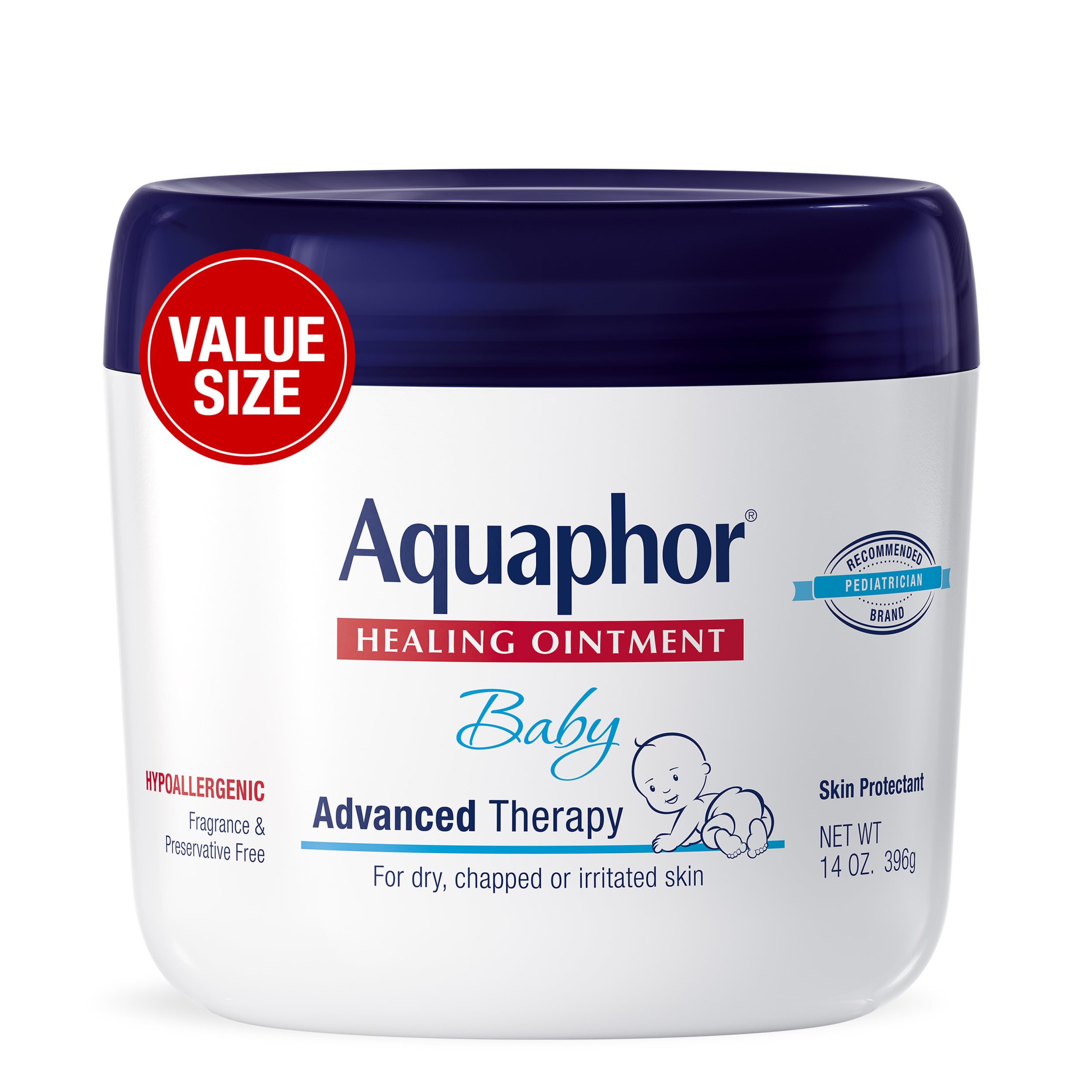
Aquaphor Baby Healing Ointment
Key Features
- Size: 14 oz
- Format: Ointment
- Formula: Fragrance-free, hypoallergenic
- Active ingredient: 41% petrolatum
- Price: Midrange
Forty-one percent petrolatum is the whole argument for Aquaphor Baby Healing Ointment, and it is why a jar lives within arm’s reach of our changing table. Petrolatum is a skin protectant: it sits on the surface, holds moisture in, and lets the skin underneath get on with repairing itself. At that concentration, with no fragrance and no preservatives, it is about as plain as a barrier product gets.
It behaves like an ointment, which is both the point and the catch. It does not sink in; it stays glossy, and a thin layer at bedtime means a shiny face until the morning wash. On a nose rubbed raw by a cold, on cheeks soaked in drool, or on the chapped patch under a bottom lip, that trade is worth making every time. Warm a fingertip’s worth between your fingers before you apply it — straight from the jar it drags across sore skin.
Treat it as the nighttime half of a routine rather than a cream you reapply at daycare. It also earns its keep under a chin during teething and on the dribble rash that follows, which is more than most face creams here can claim. The 14-ounce jar is far more than faces need, so we spoon some into a small pot and park the rest in the cupboard; a jar that size carries a household through a winter.
Pros
- 41% petrolatum seals and protects
- Fragrance-free, preservative-free, hypoallergenic
- Handles drool rash and chapped chins
- A large jar lasts a whole winter
Cons
- Stays shiny and heavy, so it suits nighttime
For cracked, drool-soaked, or nose-wiped-raw cheeks, this petrolatum ointment is the repair layer we reach for.
Best for Eczema-Prone Skin
Aveeno Baby Eczema Therapy Cream
Key Features
- Size: 7.3 oz
- Formula: Fragrance-free, NEA seal
- Label age: 6 months and up
- Key ingredients: Colloidal oatmeal and vitamin B5
- Price: Midrange
The National Eczema Association’s seal is the quickest way to sort a shelf of baby creams: it means the formula met the association’s criteria for use on eczema-prone skin, not that it will cure anything. Behind the seal here is colloidal oatmeal, the same skin protectant that goes into an oatmeal bath, paired with vitamin B5 and no added fragrance, steroids, parabens, or phthalates.
Texture is where this one earns its keep on a face. It is thick enough to feel like it is doing something, and it still rubs in without a sticky residue — the difference between a cream you apply more than once a day and one you avoid because it makes a baby’s cheeks gleam. It is pH-balanced and gentle enough for daily use, and of everything here it straddles moisturizer and eczema treatment most convincingly.
We reach for it when the dryness is clearly eczema — rough, itchy patches on the cheeks, the creases behind the knees, the elbows — rather than the mild chapping of a cold snap. One caveat is worth knowing before the first application: on very reactive or already-broken skin the oat formula can sting, so spread a little on the inside of the arm an hour before you commit it to a cheek, and wash it off if the skin reddens.
The label sets a six-month minimum, so a newborn needs something else from this list first. Past that mark, this is a cream that keeps working on a five-year-old’s elbows and a parent’s hands, which is a longer useful life than most of the baby-specific tubes here.
Pros
- Colloidal oatmeal calms itchy, eczema-prone skin
- Carries the NEA Seal of Acceptance
- Fragrance-free, steroid-free, pH-balanced
- Absorbs without a sticky residue
Cons
- Label sets a six-month minimum age
If your baby’s dry patches itch and flare, we buy this oatmeal cream first — and patch-test on the arm before it goes near a cheek.
Best for Newborn Cheek Bumps
Mustela Cicastela Recovery Cream
Key Features
- Size: 1.35 fluid ounces
- Format: Cream
- Formula: Fragrance-free, 92% natural origin
- Key ingredients: Avocado and hyaluronic acid
- Price: Midrange
At 1.35 fluid ounces, the Cicastela tube looks like something that belongs in a handbag rather than a nursery, and that is the point. This is a spot cream — a dab on each cheek, a smear under the chin — not a lotion you pump over a whole body. If you have ever tried to cream a newborn’s face with one hand while the other holds the baby, the size makes immediate sense.
Mustela builds it around avocado and hyaluronic acid, with 92% ingredients of natural origin, no fragrance, and a texture that spreads thinly and sinks in fast. We like it for the specific, miserable weeks when a newborn’s cheeks and chin break out in little red bumps, and for the red patches that follow a spell of heavy drooling. It is the smallest tube here and the one we tuck into a changing bag.
The label is unusually direct about how to use it: twice a day on clean, dry skin, not on oozing skin, patch-test first, and see a doctor if the appearance does not improve. Follow that. The obvious cost is that a tube this size disappears quickly if you start using it as an all-over cream, so keep it for the face and buy something bigger for the rest.
Pros
- Fragrance-free, 92% natural-origin formula
- Small enough for a diaper bag
- Avocado and hyaluronic acid
- Spreads thinly on cheeks and chin
Cons
- Tiny tube runs out fast with daily use
A small, fragrance-free cream we keep in the diaper bag for newborn cheek bumps and chin redness, not a tube for a whole body.
Best for Chapped Cheeks
Earth Mama Face Nose & Cheek Balm
Key Features
- Size: 2 oz
- Format: Balm
- Formula: Organic, EWG Verified
- Key ingredients: Calendula and coconut oil
- Price: Budget
By February a lot of babies have two bright red cheeks and a raw stripe under the nose, and nothing in a pump bottle quite handles either. Earth Mama’s balm is named for exactly that territory — face, nose, and cheeks — and it is built for the weeks when the problem is weather and tissues rather than a skin condition.
The base is calendula and coconut oil rather than petrolatum, with no mineral oil and no added fragrance, and it is certified organic by Oregon Tilth and EWG Verified. It is also dermatologist and clinically tested for irritation, which is the claim that matters most on skin that is already angry. A 2-ounce tin goes further than the size suggests, because one swipe covers a cheek.
It is a balm, so it is oily — properly oily, with a shine that transfers onto a sleeve and a pillowcase. That is not a flaw so much as the mechanism: a barrier that stays put through a stroller ride has to sit on the surface. We use it before bed, or under a bib, and save the lighter creams for mornings when a baby is going out to be admired.
For the narrow job of protecting a face from cold air and constant wiping, this is the best of the balms here. For everyday dryness on a baby who is not being pushed through a wet January, a cream is easier to live with and easier on the budget.
Pros
- Calendula and coconut oil shield chapped skin
- Certified organic, EWG Verified, no added fragrance
- Handles windburn and runny-nose rawness
- No petrolatum or mineral oil
Cons
- Oily finish marks clothes and bedding
Windburn and a raw nose are this balm’s territory; it is the one we want in a coat pocket from November onward.
Best for Stubborn Eczema Patches
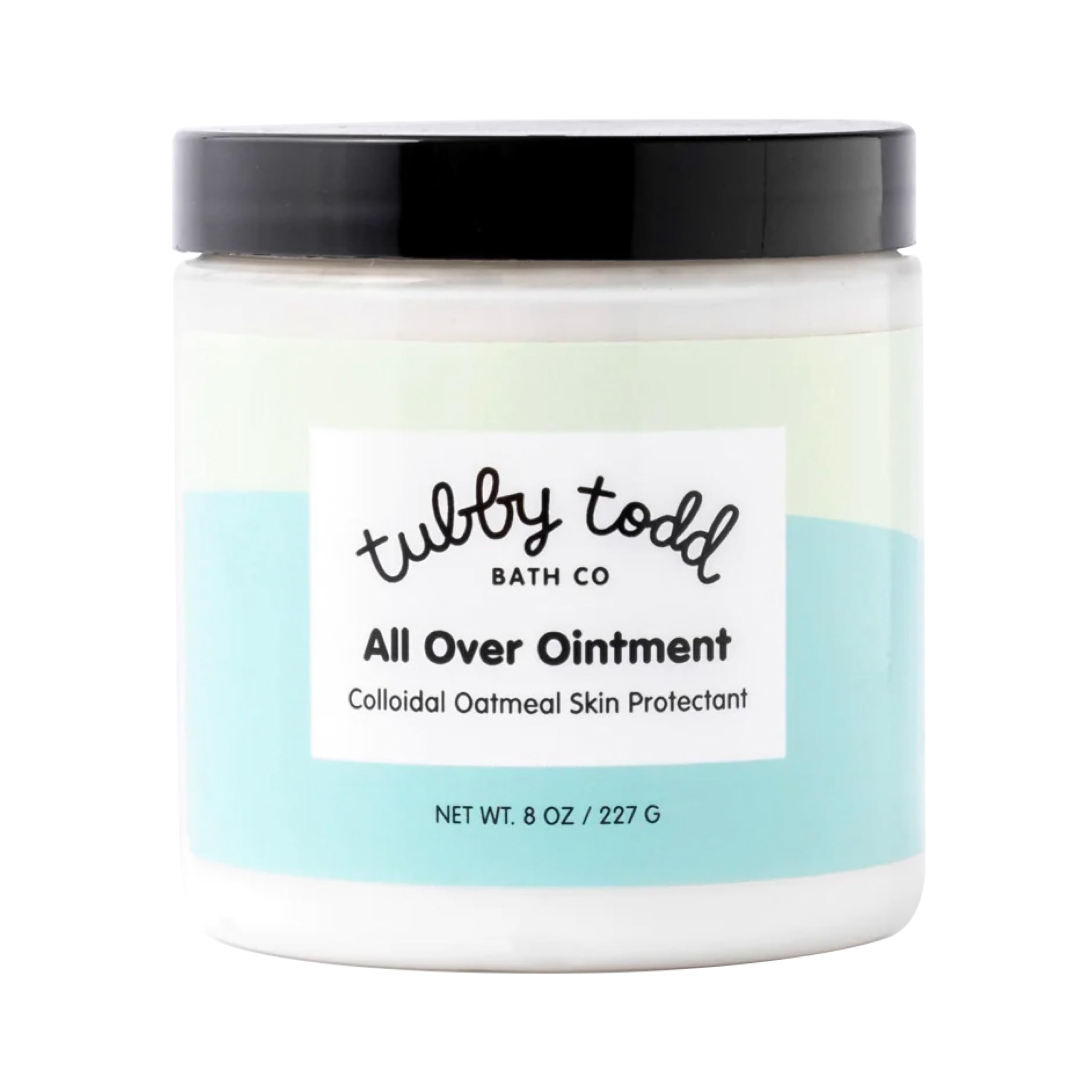
Tubby Todd All Over Ointment
Key Features
- Formula: Fragrance-free, no steroids
- Texture: Thick ointment
- Key ingredient: 1% colloidal oatmeal
- Price: Premium
Tubby Todd’s All Over Ointment is the priciest product in this guide, and we still buy it for one job: the thick, stubborn eczema patch that has shrugged off every cream in the cabinet. If your baby’s skin is mostly fine with the occasional rough spot, the cheaper picks here do everything you need. If you have a patch that has been there a month, this is the one to try next.
Behind it is 1% colloidal oatmeal — the concentration eczema products tend to settle on — along with jojoba esters, camellia leaf extract, and avocado. It is fragrance-free, gluten-free, and steroid-free, and it is thick without behaving like an ointment: it spreads like a rich cream and absorbs rather than sitting shiny, which is the opposite of what the word on the label suggests. A thin film covers a surprising amount of skin.
The honest caveats are these. Botanical-rich formulas do not suit every baby, and this is the richest one here, so patch-test on the arm if your baby’s skin has reacted to a cream before. And the price is real — this is a splurge, not the tube you buy three of. What you get for it is a product that behaves like a treatment rather than a moisturizer, and in our experience a calmer-looking face by morning.
Pros
- 1% colloidal oatmeal for stubborn patches
- Fragrance-free, gluten-free, no steroids
- Thick but absorbs without grease
- A little covers a lot of skin
Cons
- The priciest cream in this group
- Rich botanical blend can irritate reactive skin
The most expensive cream here, and we think it earns that for one stubborn eczema patch that has shrugged off everything else.
Best for Whole-Family Face Care
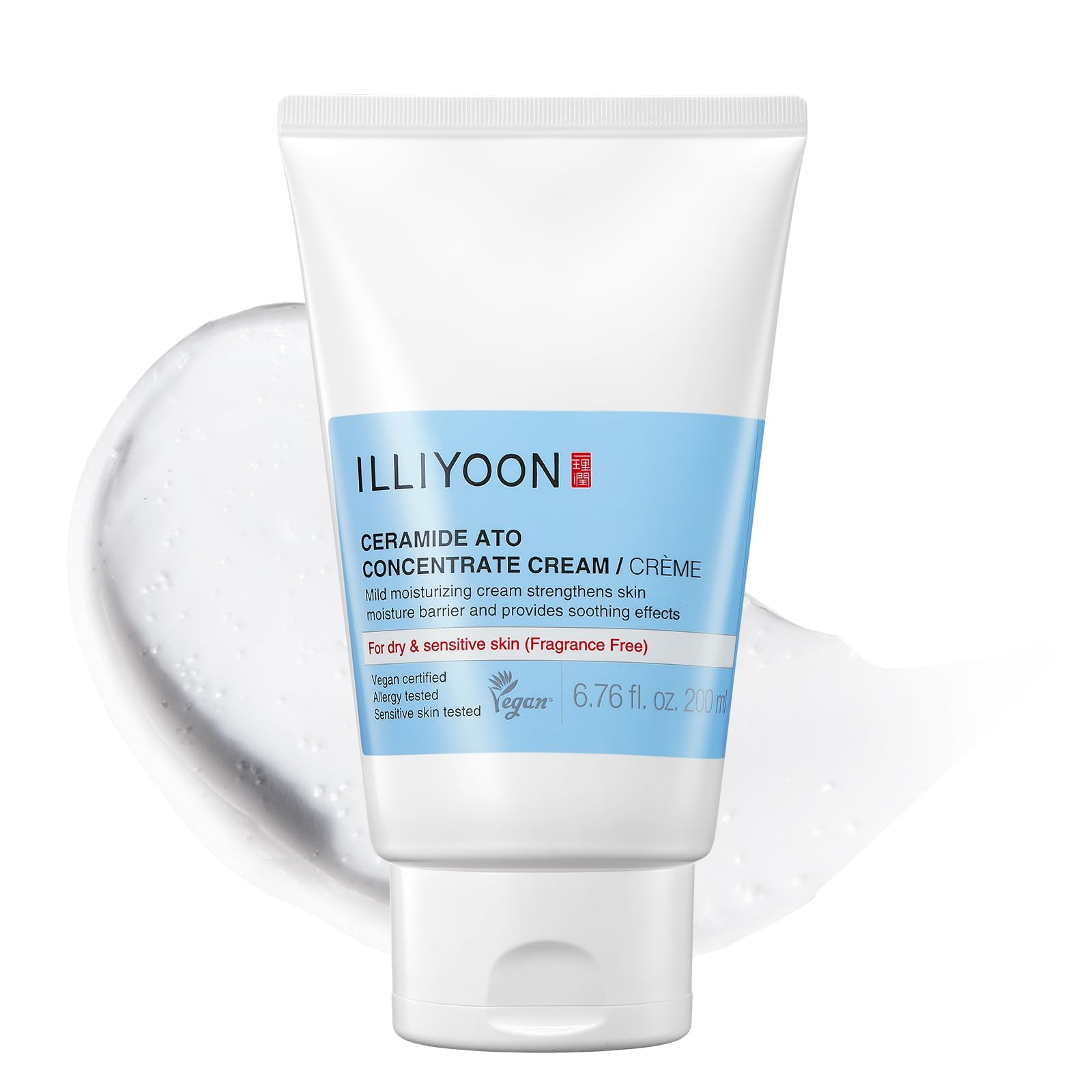
Illiyoon Ceramide Ato Cream
Key Features
- Size: 6.76 fluid ounces
- Formula: Fragrance-free, vegan certified
- Suited to: Face and body, all ages
- Key ingredients: Plant-derived ceramides
- Price: Premium
Illiyoon sells this on the adult face-cream shelf, in a bottle sized for a family, and both facts are the point. It is a thick ceramide cream with a plant-derived ceramide complex, no fragrance, vegan certification, and a texture closer to a winter balm than a lotion. The brand states that the formula is safe for the whole family, babies included.
What it is not is a baby-specific product. The evidence behind it is grown-up facial use — winter dryness, flaking from retinol, sensitive skin that will not tolerate scent — and the infant case rests on the brand’s all-ages claim rather than a long record of babies using it. That does not make it wrong for a baby’s face. It does mean you are borrowing a grown-up cream rather than buying one built for the job.
Where we reach for it is the household calculation: one tube on the shelf, everyone’s face and body, no scent, no fuss, and a thickness that holds up in a dry house from October to March. For a first cream on a newborn’s cheeks, we stay with the products built for babies. For a family that is already dry, this earns its shelf space.
Pros
- Plant-derived ceramides in a thick cream
- Fragrance-free and vegan certified
- Large tube covers face and body
Cons
- Sold as an adult face cream, not a baby product
- Thick texture feels heavy on oily skin
Think of it as the household’s cream rather than the baby’s: thick, fragrance-free ceramide moisture we buy when one tube must serve everyone.
Best for Multi-Use Skin Care
Burt’s Bees Baby Healing Ointment

Key Features
- Size: 7.5 oz
- Scent: Noticeably scented
- Formula: No parabens, phthalates, or SLS
- Key ingredients: Coconut oil and beeswax
- Price: Budget
Unscrew the tin and you know immediately whether Burt’s Bees Baby Multipurpose Healing Ointment is for you. It has a real scent, and it lingers. That single fact decides more of this review than anything else in it, because a scented product on a newborn’s cheeks is either perfectly fine or a dealbreaker depending entirely on the baby.
Everything else about it is straightforward. Coconut oil and beeswax form the barrier instead of petrolatum, with no parabens, phthalates, or SLS, and it is pediatrician tested per the label. It is soft and mobile in the tin, so it spreads easily over a chin chapped by drool, a pair of lips cracked by cold, or the diaper area — the multipurpose claim is one this product actually earns.
Texture is where the split sits, and where we land depends on the job. On a wriggling face it is oily enough to leave a sheen on whatever the cheek touches next, and it does not sink in. On a bottom, that is exactly the behavior you want. We keep the tin for chapped patches, lips, and the changing table, and reach for something plainer when the target is a newborn’s face.
If your household likes the smell and nobody’s skin has complained, this is the best value in the group — 7.5 ounces that will outlast most of the tubes here. If there is eczema in the family or a history of reactions, put the extra money into a fragrance-free cream and keep this one for the diaper pail end of the routine.
Pros
- Coconut oil and beeswax barrier without petrolatum
- No parabens, phthalates, or SLS
- Earns its multipurpose claim
- One of the least expensive tins here
Cons
- Noticeably scented for a baby’s face
- Oily finish that does not sink in
A budget natural ointment we keep for lips, cheeks, and diaper duty — provided the noticeable scent suits your baby’s skin.
How We Tested Baby Face Creams
We started by building a shortlist of 30 baby face creams from drugstore shelves and specialty retailers, filtering out anything with a heavy fragrance, a confusing ingredient list, or packaging that made one-handed application impossible. Twelve formulas made the cut. For five months, three parents on my team kept each cream in rotation: after morning diaper changes, before cold-weather stroller walks, after lunchtime face wipes, and at bedtime.
Each cream got the same real-life workout. We rubbed a dab between our fingers first to note whether it felt like a lotion, balm, or paste, then spread it over a wriggling baby’s cheeks and chin, counting how many finger dips it took and whether it dragged or left a white cast. We pressed a tissue to the cheek ten minutes later to see how much shine transferred, and checked again before the next nap to judge whether dry patches had softened or come back. At each diaper change, we also used the multipurpose formulas on mild rash, watching whether redness eased and whether the cream stayed put through a nap.
Sensitivity was the line we would not fudge. We watched for redness, stinging, or new bumps within 24 hours of application, and had adult volunteers with reactive skin patch-test each formula on their inner forearm for a quicker read. We also tracked how long a tube lasted with twice-daily use, so value was judged by cost per application rather than shelf price alone. The twelve that survived were the ones we kept reaching for—not the ones that looked best on paper.
How to Choose a Baby Face Cream
The cream that works on a baby’s face is usually not the one that works on the rest of the body, and the decision comes down to how much shine, scent, and sealing you are willing to live with twice a day.
Start with the job: maintenance or repair
Most baby face problems are one of two things. Either the skin is dry and needs moisture every day, or it is damaged — cracked by cold, rubbed raw by a nose, chapped by drool — and needs sealing while it heals. Creams do the first job. Ointments and balms do the second, because they sit on the surface instead of sinking in.
The giveaway is texture. A cream disappears within a minute; a 41% petrolatum ointment stays glossy for hours. The common mistake is buying a jar of ointment for a morning routine and then avoiding it because it shines, or asking a light cream to rescue a nose that is already raw. Plenty of families end up with one of each and alternate: cream in the morning, ointment at night.
Read the fragrance line before anything else
Fragrance-free is the most useful single thing to look for on a baby face cream, and it is also the most misread. Natural and organic say nothing about scent — a coconut-and-beeswax ointment can carry a smell strong enough to notice across a room. If a baby’s skin has reacted to anything before, or if eczema runs in the family, start with the plainest formula you can find.
Then test it rather than trusting the front of the tube. A dab on the inside of the arm, an hour of waiting, and a look for redness tells you more than any claim on the package, and it costs you nothing but an hour.
If it is eczema, look for a seal and an active ingredient
The National Eczema Association’s Seal of Acceptance is the fastest way to sort a shelf: it means the formula met the association’s criteria for use on eczema-prone skin, not that it treats a flare. Beyond the seal, three ingredients do most of the work — colloidal oatmeal to calm, ceramides to rebuild the barrier, and petrolatum to hold moisture in.
Check the minimum age on the label too, since several creams here start at three or six months. And if a patch spreads, weeps, or has not improved after a week of steady use, the next appointment is worth more than the next cream.
Size your routine: tubes, tins, and how much you use
A pea-sized amount covers a baby’s cheeks and chin; a single swipe of balm covers a nose. That is why the small, expensive-looking tubes are not the waste they appear to be, and why the big jars are best bought for a household rather than a face. What matters more than size is placement: a squeeze tube that stands on the changing table gets used, and a jar you have to unscrew with one wet hand does not.
Keep the small tube in the diaper bag and the large one at home, and if you buy a jar, decant a spoonful into a smaller pot so you are not dipping fingers into a family-sized supply.
Frequently Asked Questions
Can I use my baby’s body lotion on their face?
You can, but it is usually the wrong tool. Body lotions are thinner, more often scented, and built for skin that is not being wiped and kissed all day. Reach for a fragrance-free cream labeled for the face or for eczema-prone skin, and if you are making do with a body cream, pick the plainest one in the house and patch-test along the jaw first.
How do I get cream onto a baby’s face without a fight?
Warm a pea-sized blob between your fingers first, then dab it along the cheeks and chin from behind the head rather than reaching across the face, which is what triggers the turn away. Damp skin after a bath or a wipe-down takes it faster, and a fingertip of cream on each cheek between feeds gets the job done without a full negotiation.
Is petroleum jelly safe on a baby’s face?
Petrolatum is a recognized skin protectant and the active ingredient at 41% in our barrier pick, and it is one of the plainest options for a chapped cheek. Use a thin layer, keep it out of the eyes, and leave oozing or broken skin alone until a pediatrician has looked at it.
Final Verdict
CeraVe Baby Cream is what we buy for a baby’s face today: fragrance-free, ceramide-based, and light enough that applying it twice a day does not turn into a negotiation. It handles the ordinary dryness that winter, car heaters, and two face washes a day produce, and it costs less than most of the tubes here.
When the cheeks are already cracked and raw rather than just dry, switch to Aquaphor at night and let the cream handle the mornings. If the dryness is eczema that itches, try the Aveeno oatmeal cream first — with a patch test on the arm before it goes anywhere near a cheek.
