This post contains affiliate links. We may earn a small commission when you buy through our links — at no extra cost to you.
A 1-year-old’s milk cup is a daily trust exercise: creamy enough to drink, clean-tasting enough to finish, sturdy enough to survive the fridge door. Organic whole milk looks simple, milk from organically raised cows with the fat left in, but cartons are not interchangeable. Organic tells you about farming; whole tells you about fat, and neither guarantees the milk will taste fresh or last through the week. What you need is a dependable everyday pour for sippy cups, oatmeal, and the back of the fridge.
My team and I tested 12 organic whole milks over eight weeks, tasting them cold and in warm oatmeal, checking dates and fridge storage, and packing a few into stroller baskets and lunch bags. I also watched how they held up after opening, because a carton that starts clean can turn by day three. Value counted too, not just cost per ounce but how much got poured out. The picks below are the ones we would happily hand over again.
Best for Toddler Daily Milk
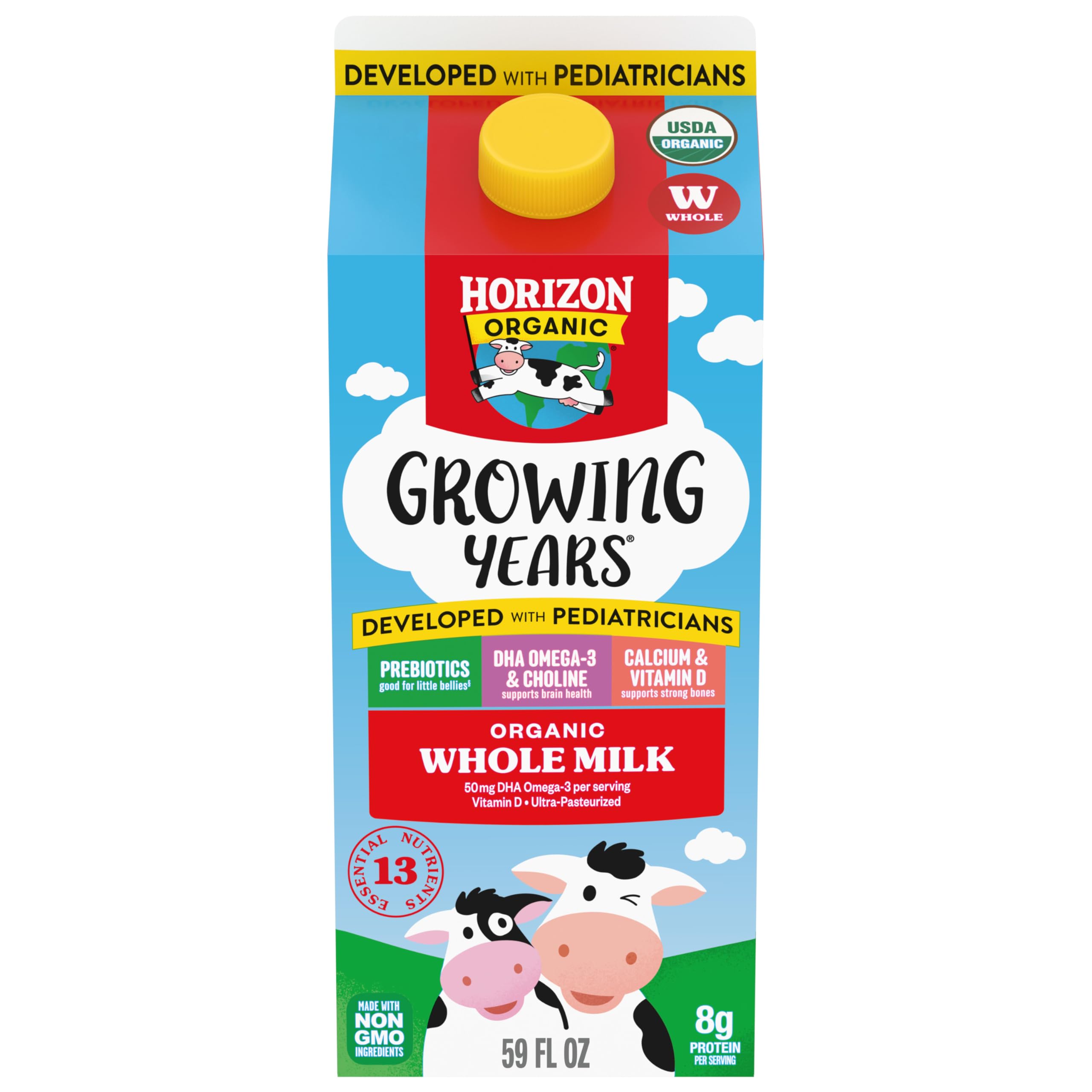
Horizon Growing Years Whole Milk
Key Features
- Protein: 8 g per cup
- Milk type: Organic whole milk
- Package size: 59 fl oz
- Added nutrients: 50 mg DHA, choline, prebiotics
The toddler-specific DHA and prebiotic blend is what sets Horizon’s Growing Years apart from the plain organic cartons here. It’s still organic whole milk, with 8 grams of protein per cup, but the label lists 50 mg of DHA plus choline and prebiotics. That’s the reason we put it at the top for a 1-year-old: you’re not choosing between milk and a toddler drink, you’re choosing a whole-milk carton that carries a few extra nutrients.
We kept the 59-ounce carton in the fridge door and poured it into a sippy cup at meals. The size is a good fit for a toddler’s daily routine: it’s not so large that it dominates the shelf, and it’s easy to shake before pouring. We liked that the milk is plain enough to use in cereal or a smoothie, not a sweetened toddler beverage. The carton is also a sensible size for a small household.
This is a milk for the toddler who drinks milk regularly, not a carton to buy by the gallon for the whole family. If your toddler is already eating well and you prefer a plain gallon, 365 or Organic Valley make more sense. But when the goal is a milk built around a 1-year-old’s needs, this is the one we reach for first.
Pros
- Adds DHA, choline, and prebiotics
- Organic whole milk with 8 g protein per cup
- Kid-sized 59 fl oz carton
Cons
- Premium price for added nutrients
Horizon Growing Years is our default for a 1-year-old: organic whole milk with DHA, choline, and prebiotics in a carton sized for a toddler’s week.
Best for Budget Family Gallon
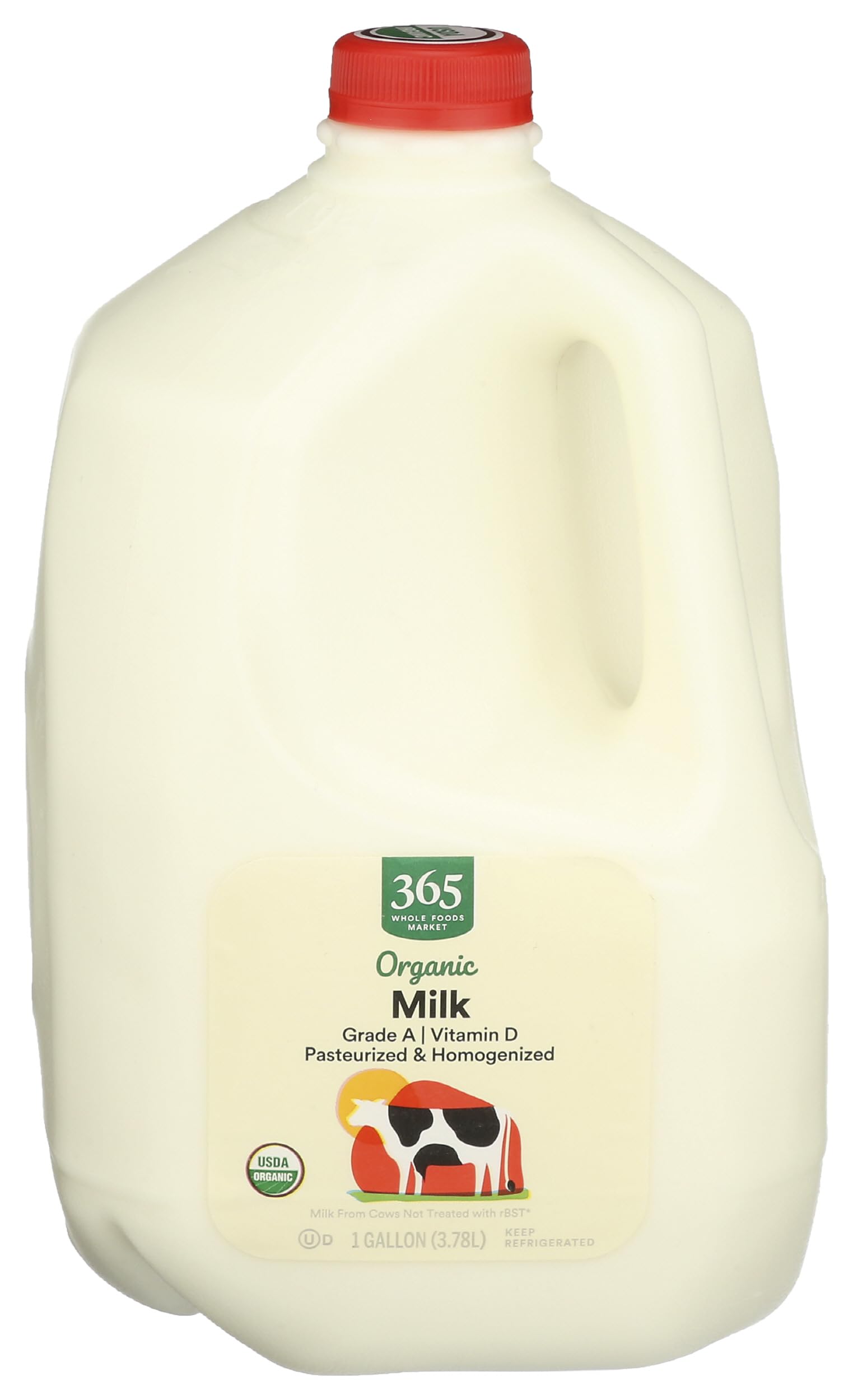
365 Organic Whole Milk
Key Features
- Storage: Refrigerated
- Milk type: Organic whole milk
- Package size: 128 fl oz
- Carton dimensions: 6.1 x 6.15 x 9.9 in
- Price: Budget
A full gallon of organic whole milk at the value end of this group is the reason 365 keeps showing up in our cart. The 128-ounce carton is plain organic whole milk, without a grass-fed or toddler-specific claim, and it’s the cheapest way to keep a milk-drinking household supplied among these picks. We liked that there’s no premium to pay for sourcing or added nutrients when all you want is a dependable everyday pour.
We used it as the house gallon: cereal, cooking, and a cup for the toddler at lunch. The carton is heavy when full, and the value comes from committing to a gallon rather than a half-gallon. For a family that goes through milk quickly, it earns its shelf space.
If you want a plain organic milk that doesn’t ask you to pay for a grass-fed label or a toddler blend, this is the one. We kept coming back to it for cooking because the flavor is neutral and the carton is always in the fridge.
Pros
- Lowest price per ounce here
- Full gallon suits busy households
- Plain organic whole milk, no premium extras
Cons
- A gallon needs steady milk drinkers
When the goal is a plain organic gallon at the lowest price per ounce here, 365 is the carton we keep in the fridge.
Best for Creamy Grass-Fed Half-Gallon
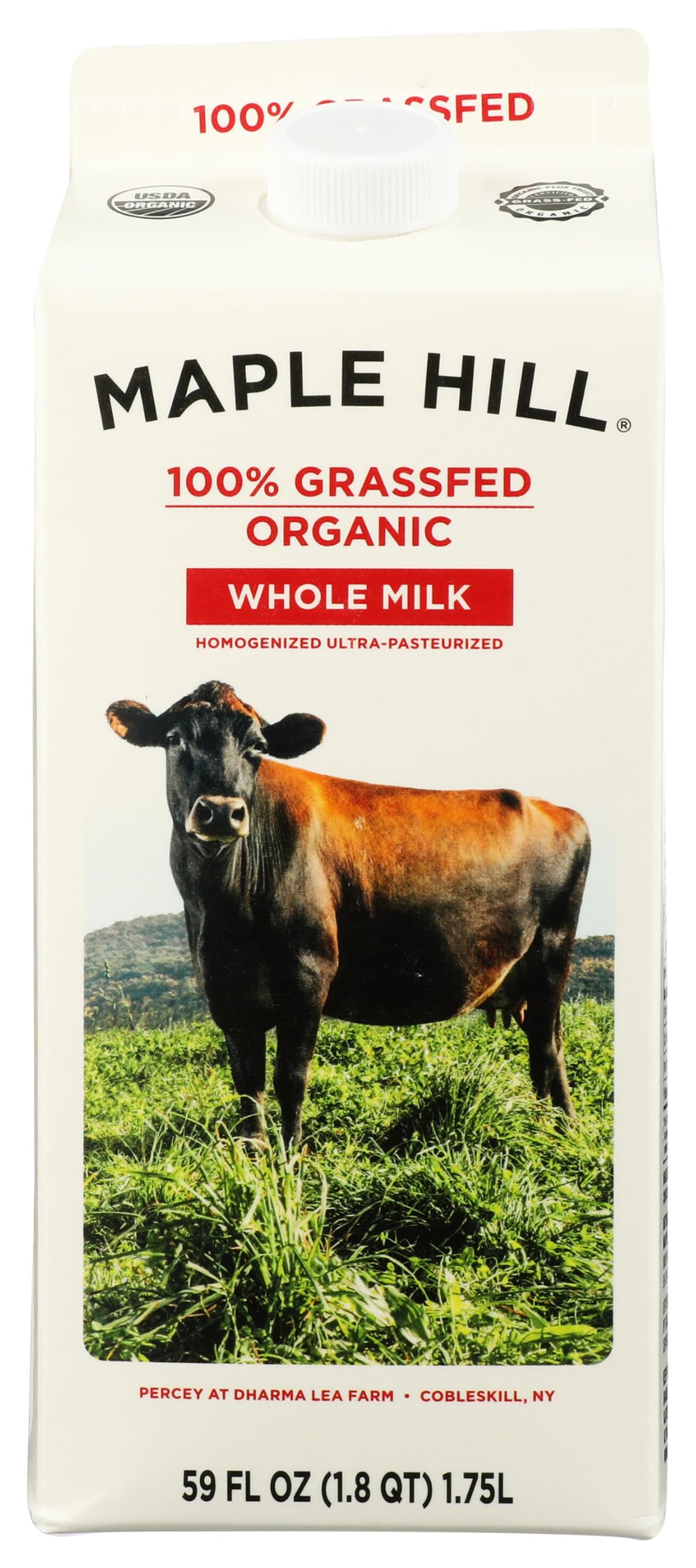
Maple Hill Organic Whole Milk
Key Features
- Storage: Refrigerated
- Sourcing: Grass-fed cows
- Milk type: Organic whole milk
- Package size: 64 fl oz
- Price: Premium
The first thing we noticed about Maple Hill is the creamy, almost sweet finish. It’s whole milk, so the fat is doing some of that work, but the grass-fed sourcing gives it a richer profile than a standard organic carton. If your toddler has been turning up their nose at thinner milk, this is the one to try.
The 64-ounce carton is a practical middle size: it fits in the fridge door and doesn’t commit you to a gallon. We used it for drinking and cereal, and the carton sat comfortably in the fridge door. The grass-fed claim is the main reason to choose it over 365 or Organic Valley’s plain gallon; the difference is in the sourcing and the creamier texture, not in added DHA or single-serve packaging.
For us, Maple Hill is the pick when taste is the deciding factor and you don’t need a gallon. It’s a half-gallon that feels a little special at breakfast, and that matters when you’re trying to get a toddler to finish the cup. The 64-ounce size is also easier to finish before the date code than a gallon.
Pros
- Rich, creamy grass-fed texture
- 64 oz half-gallon fits fridge door
- Organic whole milk with no added nutrients
Cons
- Premium price for a half-gallon
For a toddler who turns their nose up at thinner milk, we reach for Maple Hill’s creamy grass-fed half-gallon, the richest pour in this group.
Best for Everyday Family Gallon
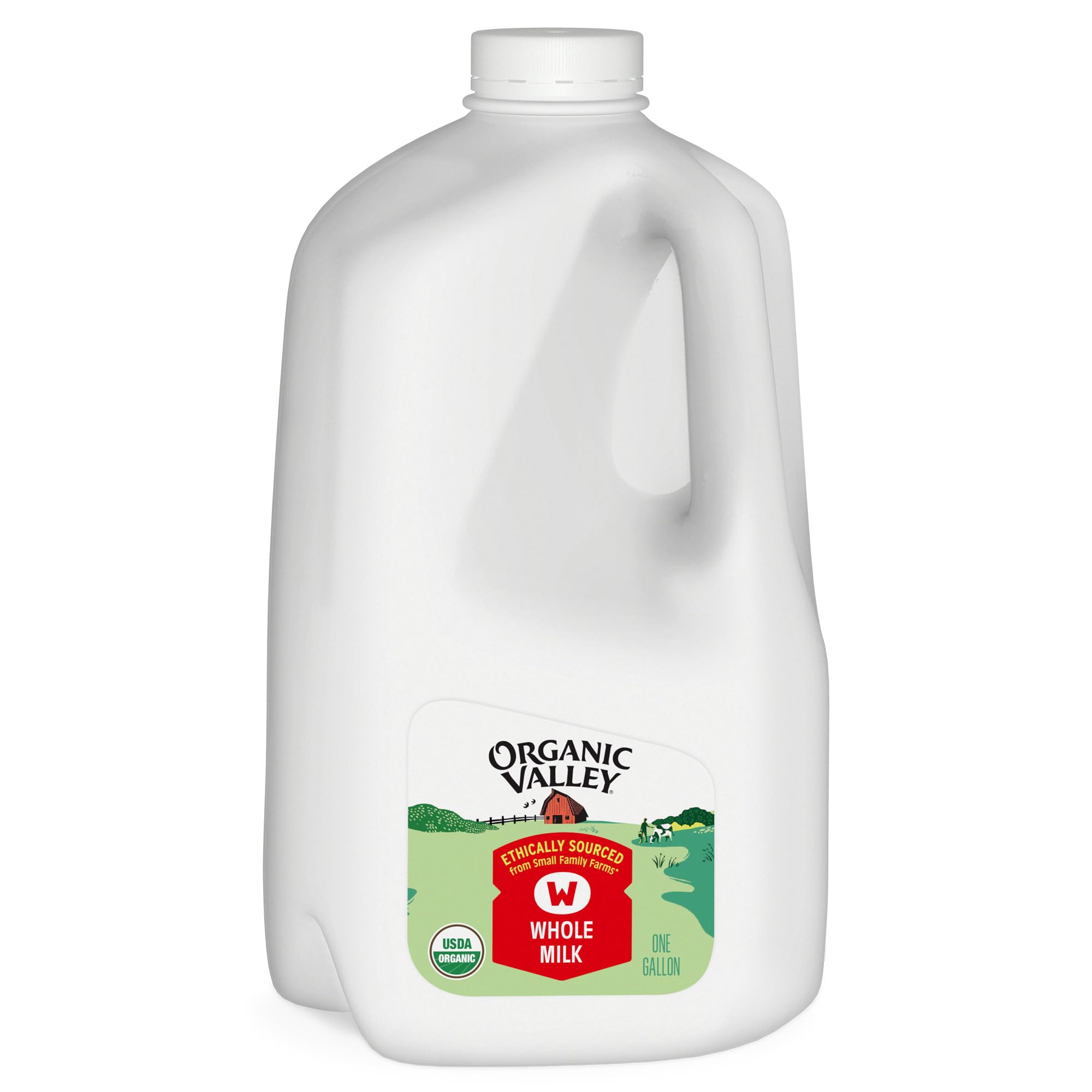
Organic Valley Organic Whole Milk
Key Features
- Sourcing: Farmer-owned organic farms
- Milk type: Organic whole milk
- Nutrients: 12 essential nutrients
- Package size: 128 fl oz
- Price: Midrange
If 365 is the value gallon, Organic Valley’s 128-ounce carton is the one that sits beside it as the midrange alternative. It’s still plain whole milk, but the label lists 12 essential nutrients and the milk comes from farmer-owned organic farms. The carton is the same gallon size, so the choice comes down to what you want behind the label.
We used it as the everyday gallon for cereal, cooking, and cups at lunch. The milk is creamy without being heavy, and it poured cleanly from the carton. We liked having a gallon that felt a step up from the budget pick without moving into the grass-fed premium. For a family that finishes a gallon in a few days, that’s a comfortable middle ground.
A gallon is a commitment. We check the date code before buying, and if it’s short, we choose a half-gallon instead. For a family that goes through milk quickly, Organic Valley’s gallon is a steady everyday choice.
Pros
- 12 essential nutrients per serving
- Farmer-owned organic sourcing
- Creamy without being heavy
Cons
- Gallon size can outpace a small household
We see Organic Valley’s gallon as the middle-ground pick for families who want a familiar organic whole milk with 12 essential nutrients and enough for the week.
Best for Travel and Lunchboxes
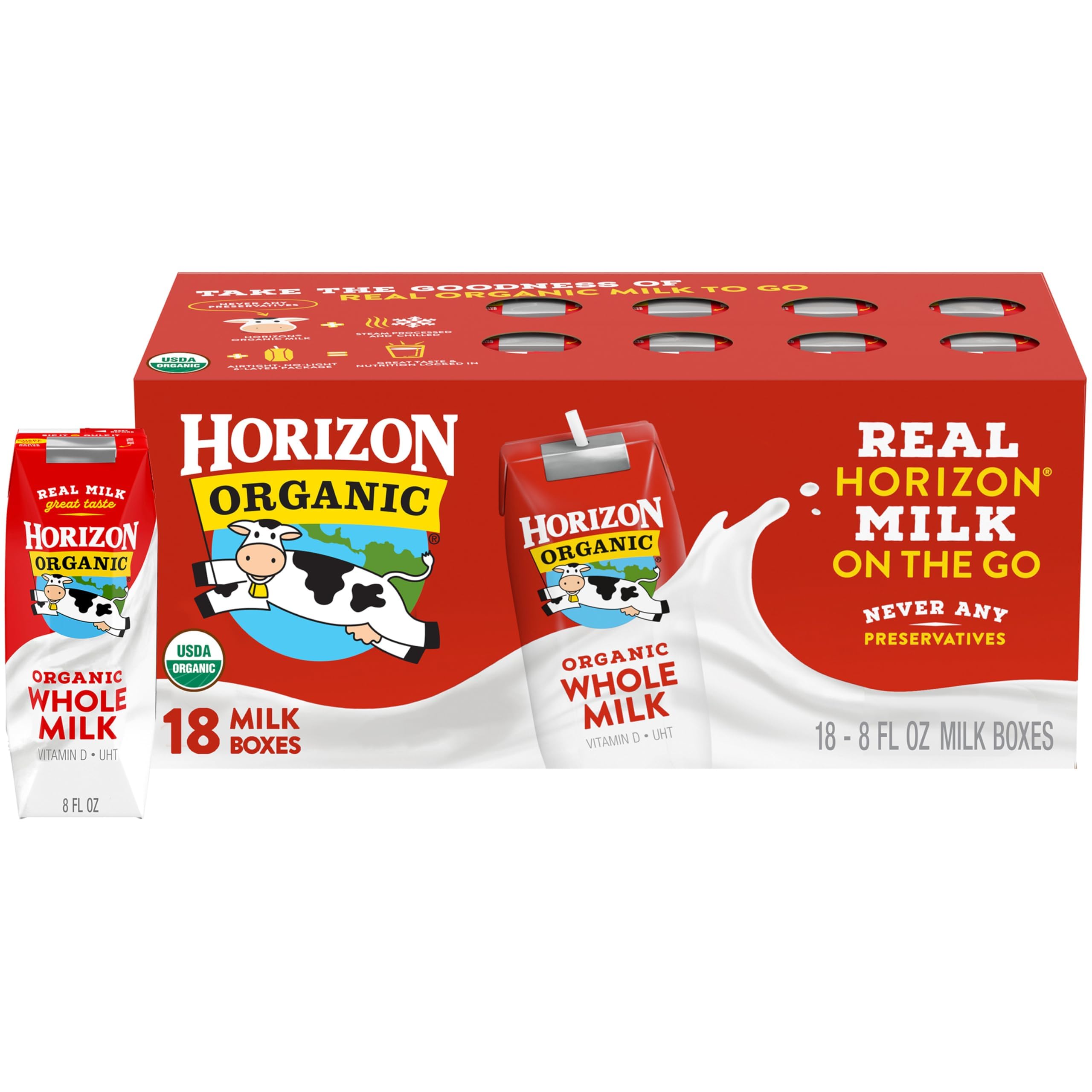
Horizon Shelf-Stable Milk Boxes
Key Features
- Protein: 8 g per serving
- Storage: Shelf-stable until opened
- Milk type: Organic whole milk
- Package size: 18 x 8 fl oz
- Price: Premium
We reach for the boxed Horizon milk when we’re packing the diaper bag, not when we’re filling the fridge. Each carton is 8 ounces of organic whole milk, UHT pasteurized so it can sit on a shelf until you open it, and each box carries 8 grams of protein. That combination is what makes it useful: it’s a real milk serving for a 1-year-old, not a juice box or a toddler formula.
We kept a few boxes in the diaper bag and at daycare drop-off. The 8-ounce size is right for a single serving, and the straw-and-tab format is easy to hand over when you’re out. We liked that we didn’t have to remember an ice pack, and the milk tasted like milk once it was chilled. It’s not the carton we reach for at home, but it’s the one we’re glad to have when we’re not home.
The boxes make the most sense if you’re out of the house most days. If your toddler drinks milk mostly at home, a gallon or half-gallon is the better routine. We keep a few boxes for backup, not as the main milk supply.
Pros
- Shelf-stable until opened
- 8 oz single servings
- 8 g protein per box
Cons
- Premium price for convenience
- Date codes can arrive shorter than expected
We reach for Horizon’s shelf-stable boxes when packing for daycare or a day out: unopened, they need no fridge, and each box is a single serving.
Best for Grass-Fed Half-Gallon
Organic Valley Grassmilk
Key Features
- Storage: Refrigerated
- Sourcing: 100% grass-fed cows
- Milk type: Organic whole milk
- Package size: 59 fl oz
- Price: Premium
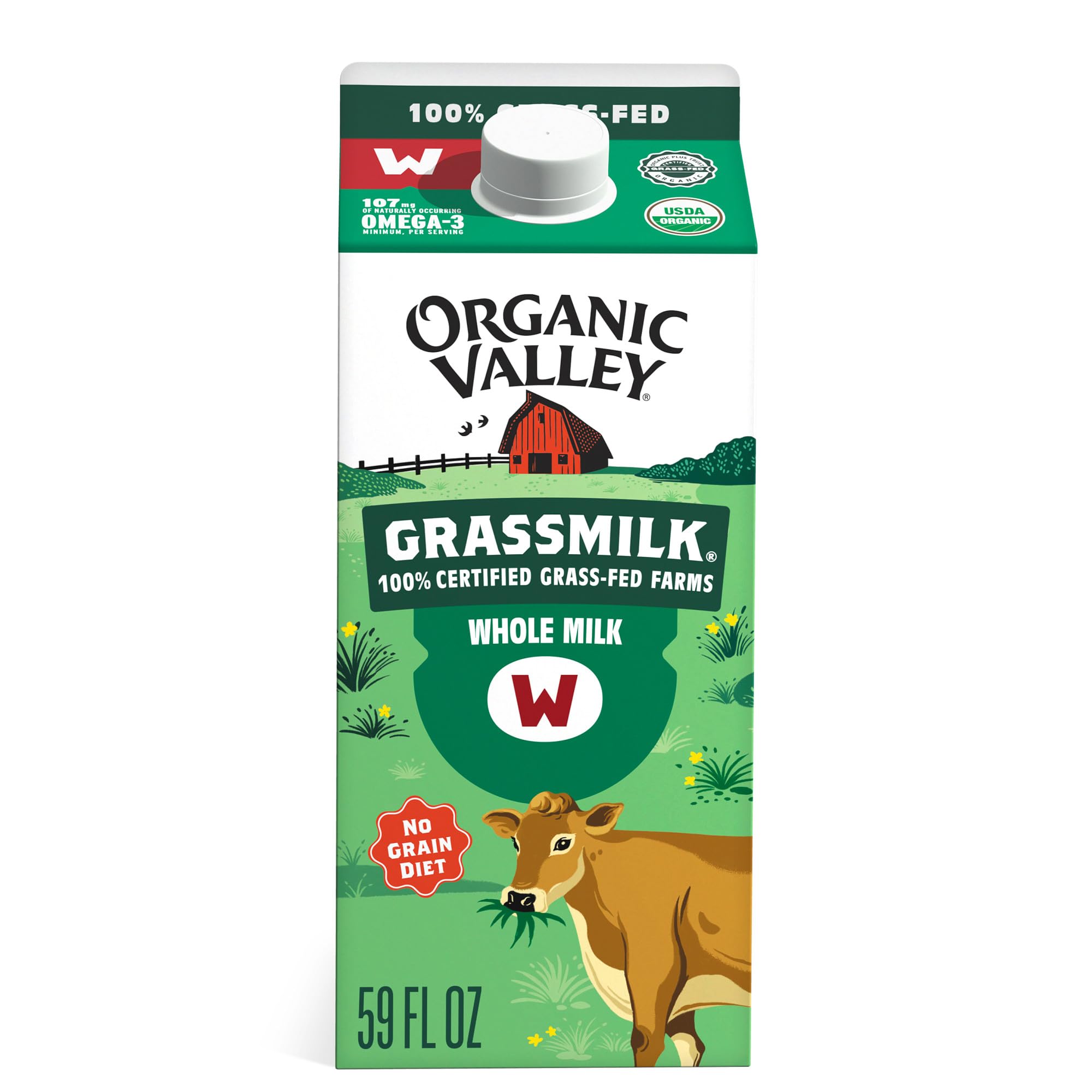
Organic Valley’s Grassmilk is for the household that wants the grass-fed label to be the whole story. It’s 100% grass-fed organic whole milk, not just organic milk from cows that sometimes graze, and the difference shows up in a richer, creamier pour. The 59-ounce carton is smaller than a half-gallon, which makes it easy to try without committing to a gallon.
We used it for drinking and cereal, and the creaminess was the part we noticed most. It’s a good milk for a toddler who likes a thicker texture, and it held its own against Maple Hill in a side-by-side cup. The carton is compact enough for a crowded fridge. It’s not a milk for someone who wants the plainest, most neutral pour.
For us, the Grassmilk is a special-occasion carton rather than the everyday gallon. The 100% grass-fed sourcing is the reason to choose it, and the smaller size suits a household that wants to finish the carton while it’s fresh. We check the date code before buying, because a 59-ounce carton is only convenient if you have time to use it.
Pros
- 100% grass-fed organic whole milk
- Rich, creamy texture
- Compact 59 oz carton
Cons
- Premium price for a small carton
For grass-fed loyalists who want a smaller carton, we like Organic Valley Grassmilk, a rich 100% grass-fed pour that doesn’t commit you to a gallon.
How We Tested Organic Whole Milk for 1-Year-Olds
To build the shortlist, I started with the organic whole milks sold in stores near our test kitchen and cross-checked labels for a USDA organic seal, whole-milk fat, added vitamin D, and a package size that made sense for a household using milk every day. I ruled out cartons that were hard to restock or sold only in huge multi-packs that would spoil before a small family finished them.
We tested 12 of them over eight weeks. Each one had a turn in the morning sippy cup, a bowl of warm oatmeal, and a small banana smoothie. We tasted every milk chilled first and then warmed gently, noting whether it tasted clean and creamy or thin, cooked, or faintly cardboard. We also checked the date code on arrival and kept opened cartons in both the main fridge and the door shelf, smelling and tasting at day three and day five to see when a sour edge appeared.
For portability, we loaded each carton into a stroller basket and a lunch bag, looking for cap leaks and whether it resealed without a drip after a pour. We used the same milks in oatmeal, smoothies, and a simple pasta sauce, watching for curdling or a flavor that overwhelmed the food. At the end, we compared cost per ounce against how much of each carton we actually finished before it turned, because the cheapest milk is not a value if half of it goes down the drain.
How to Choose Organic Whole Milk for a 1-Year-Old
The right carton is the one your toddler will drink, that fits your fridge, and that you can finish before the date code.
Start with whole, organic cow’s milk
For a 1-year-old, the base milk should be organic whole cow’s milk, not a reduced-fat carton or a plant-based drink. Whole milk carries about 3.25% milkfat, and that fat is part of why it fits the toddler years. Check the label for organic whole milk and a plain ingredient list; some cartons add DHA, choline, or prebiotics, which are optional rather than required. The carton should also be clearly labeled for drinking, not infant formula.
Match the carton to your fridge and your week
The right size is the one you finish before the date code. A gallon is the best value per ounce and works for a family that goes through milk at breakfast, cooking, and snacks. A half-gallon or 59-ounce carton suits a smaller household or a toddler who is the main milk drinker. Single-serve boxes are for days out, not for the fridge shelf. If you routinely pour out the last of a gallon, buy smaller.
Choose fresh or shelf-stable for your routine
Fresh cartons stay in the refrigerator and are the default for home. Shelf-stable boxes are UHT pasteurized and made for the diaper bag, lunchbox, or car; they are not a better everyday milk, just a more portable one. A mixed approach works well: a fresh gallon or half-gallon at home, a few boxes for outings. If your toddler drinks milk mostly at the table, skip the boxes and put the money into the larger carton.
Let taste and creaminess decide the repeat buy
A toddler’s acceptance matters more than a sourcing claim. Grass-fed milk often tastes richer and creamier, which can help a picky drinker finish the cup, but it also costs more. Plain organic whole milk is neutral and works in cereal, smoothies, and cooking. If you’re unsure, start with a smaller carton of the richer milk before committing to a gallon. The best milk is the one your child actually drinks, not the one with the longest label.
Compare value per ounce, not the sticker
Organic milk costs more than conventional, and the gap widens with grass-fed, added nutrients, and single-serve packaging. Compare the unit price across sizes: a gallon is usually the cheapest per ounce, a half-gallon sits in the middle, and 8-ounce shelf-stable boxes carry the convenience premium. Factor in waste, too. A cheap gallon that expires before you finish it is not a bargain. Buy the size that matches your week, then choose the sourcing you care about.
Frequently Asked Questions
Can a 1-year-old drink organic whole milk instead of formula?
Once your child’s doctor gives the go-ahead around 12 months, organic whole milk can take the place of formula as a drink. It should sit alongside meals and snacks, not replace them. If your child was premature, has a milk allergy, or has feeding concerns, ask before switching.
Is Horizon Growing Years a toddler formula?
No. It is organic whole milk with added DHA, choline, and prebiotics, not an infant formula. Use it as a milk drink for a child who is already eating a mixed diet; it is not a replacement for formula before 12 months. If you want plain milk, choose 365 or Organic Valley.
Do Horizon shelf-stable milk boxes need refrigeration?
Unopened boxes can stay in the pantry, diaper bag, or car. Once you open one, refrigerate it and treat it like fresh milk; check the date code before packing a box for later in the week. If your toddler prefers it cold, chill the box before serving.
Final Verdict
For most 1-year-olds, we recommend Horizon Growing Years Whole Milk. It keeps the organic whole-milk base and adds DHA, choline, and prebiotics, which is the clearest toddler-specific reason to choose it over a plain carton. The 59-ounce carton fits a small fridge, but a milk-loving toddler will empty it quickly.
If you want a plain gallon for the family, 365 Organic Whole Milk is the value pick; if you’re packing for a trip, Horizon’s shelf-stable boxes are the easier choice. Buy the size you will finish and the milk your toddler will actually drink.