This post contains affiliate links. We may earn a small commission when you buy through our links — at no extra cost to you.
Toddler sleep clocks promise a simple solution: red means stay in bed, green means it’s okay to wake. But many parents find that these clocks develop problems within months – the light is too bright even on the lowest setting, the cord breaks at the connector, or app-dependent models lose connection regularly. The result is a device that adds frustration instead of solving early-morning wake-ups.
The most dependable sleep trainers avoid these traps. They use physical buttons instead of apps, offer adjustable dimming that actually works, and are built to last. This guide picks the models that deliver consistent red/green training without the headaches – because the real win is a clock that still functions reliably after a year of toddler use.




Best for Budget Sleep Training
Windflyer Little Teddi
Key Features
- Wake/Sleep Cues: Red/green
- Sound Options: 4 sounds
- Night Light: Adjustable, dimmable
- Setup Method: Physical buttons
- Power Type: USB-C corded, battery backup
- Price: Budget
The Windflyer Little Teddi uses a clear red/green color system that toddlers quickly learn to associate with sleep and wake times. Over 900 customer reports highlight that most children respond within days, solving early rising without gimmicks. The face display and adjustable brightness make it kid-friendly, and the four sleep sounds provide enough variety for most families. Setup is straightforward once you understand the button sequence — the manual covers it clearly, but a minority of users find the programming menu takes a moment to grasp.
This clock is best for budget-conscious parents who want a reliable sleep trainer without an app or complex features. The nap timer maxes out at 90 minutes, so if your child regularly naps longer than that, this isn’t the right fit. Durability is noticeably better than cheaper alternatives — reports of failures are rare, making it a set-and-forget solution for the toddler years.
Pros
- Clear visual cues that toddlers understand quickly
- Easy enough for daily use once set up
- Kid-friendly design with adjustable brightness
Cons
- Programming can be confusing for some users
- Nap timer limited to 90 minutes, no 2-hour option
Buy this if you need a simple, durable sleep training clock with a sound machine and no app dependency. Skip it if your child takes naps longer than 90 minutes or you prefer a model with app-based controls.
Best for Growing Kids
LittleHippo Mella
Key Features
- Wake/Sleep Cues: Red/yellow/green
- Sound Options: 3 sounds
- Night Light: Adjustable (bright)
- Setup Method: Physical buttons, child lock
- Power Type: Plug-in, battery backup
- Price: Mid-Range
Unlike the top pick’s simple red/green system, the Mella adds an LCD clock and expressive face that keep older kids engaged as they grow out of strict sleep training. The intuitive programming and child-lock make daily setup a breeze. It’s well-suited for families who want one clock that lasts from toddler years into early elementary – but note the built-in sound machine is thin, and some units have experienced failures after several months. If you already have a separate white noise machine and value the long-term versatility, this is a practical option.
Pros
- Children quickly learn to stay in bed until the green light appears
- Simple programming with a child-lock slider prevents accidental changes
- Cute face design with blinking eyes keeps kids excited about their clock
Cons
- Sound machine output is thin and not soothing – most parents use a separate white noise device
- Some units stop working or experience random shut-offs after several months of use
Buy this if you want a sleep trainer that doubles as an alarm clock and grows with your child. Skip it if you need a reliable all-in-one with good sound or a portable battery-operated unit.
Best for Tech-Savvy Parents
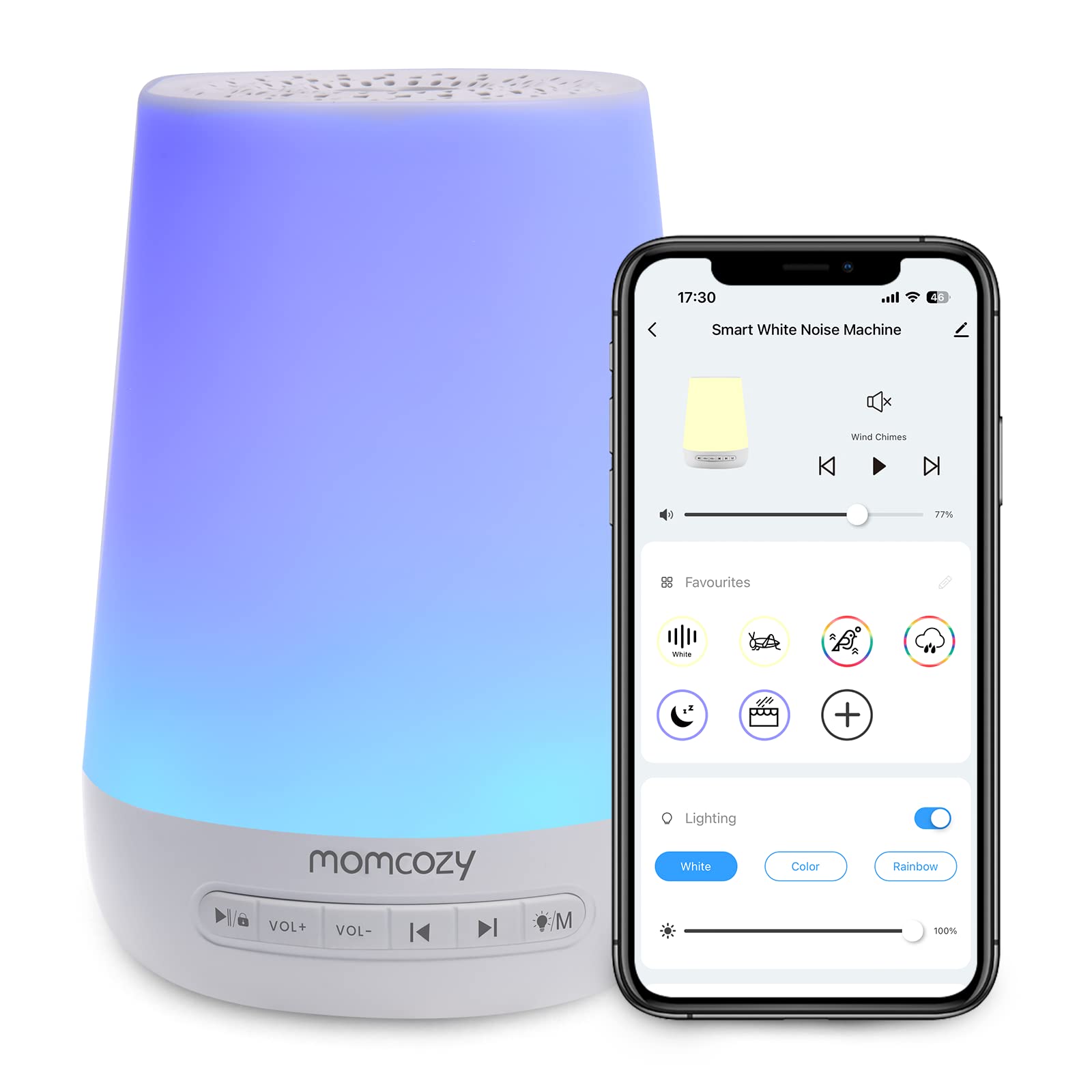
Momcozy Sleep Trainer
Key Features
- Wake/Sleep Cues: Red/green
- Sound Options: 34 sounds
- Night Light: 7 colors, adjustable
- Setup Method: App required
- Power Type: USB-C corded, battery backup
- Price: Mid-Range
Offers 34 sound options and app remote control, making it a feature-rich alternative to basic sleep trainers. Parents who want extensive noise choices and an adjustable night light will find good value at this price. However, app connectivity can be inconsistent, the battery is short for portable use, and some units stop working within months. Best for tech-savvy caregivers comfortable with occasional troubleshooting and keeping the device plugged in.
Pros
- Extensive sound library with 34 options
- App control plus tactile buttons as backup
- Great value for a multi-feature device
Cons
- App connectivity can be inconsistent
- Battery life is short for portable use
Buy this if you want a budget-friendly sound machine with app control and a wide sound selection, and you’re comfortable with potential connectivity issues and keeping it plugged in. Skip it if you need a portable, consistent sleep trainer for daily use.
Best for Budget Families
ANNNGUL Wake Clock
Key Features
- Wake/Sleep Cues: Red/green
- Sound Options: Alarm tones only
- Night Light: 10 colors, dimmable
- Setup Method: Physical buttons
- Power Type: USB-C corded, battery backup
- Price: Budget
The ANNNGUL Wake Clock cuts straight to the core of sleep training: red means stay in bed, green means it’s okay to wake. The silent color change is enough to keep most toddlers in place, and the 5-level dimmer can reduce brightness for sensitive sleepers. It costs notably less than the top pick, but that saving means no continuous sound machine (only alarm tones) and a minority of buyers report units failing or USB ports acting up. This trade-off makes sense for budget-conscious families who just need a simple visual cue and are okay with a shorter expected lifespan.
Pros
- Extremely simple red/green system that toddlers understand within days.
- Affordable price with solid build that holds up to daily use.
- Silent color change option prevents startling sensitive kids awake.
Cons
- Some units experience power or cord failures shortly after purchase.
- Light output can be too intense for children who are particularly sensitive to light.
Buy this if you need the cheapest wake clock that does one job simply and don’t mind the lack of a sound machine. Skip it if you want a reliable built-in sound machine or continuous white noise.
Best for Cat-Loving Toddlers
ANALOI Cat Clock
Key Features
- Wake/Sleep Cues: Red/green
- Sound Options: 7 sounds
- Night Light: Light-up ears (fixed)
- Setup Method: Physical buttons
- Power Type: USB-C corded, internal battery
- Price: Budget
Light-up cat ears and a purring cat sound make this sleep trainer instantly appealing to toddlers. The ANALOI Cat Clock stands out from more utilitarian sleep trainers with its playful cat design and 7-sound machine, including a purr that kids love. However, the unit has a notable downside: some units fail after a month, and battery life is short when not plugged in — a reliability gap compared to the top pick. Best for families who prioritize a fun, visually engaging clock and are willing to accept potential durability trade-offs for the lower price.
Pros
- Adorable cat design that children love – makes bedtime fun.
- Built-in sound machine with soothing cat purr option.
- Easy-to-use buttons clearly labeled for kids.
Cons
- Some units fail after a month; battery life poor when unplugged.
Buy this if your toddler adores cats and you want a budget-friendly sleep trainer with a built-in sound machine; skip it if long-term reliability is your top priority.
Best for Dinosaur Fans
H-chin Dinosaur Clock
Key Features
- Wake/Sleep Cues: Red/green
- Sound Options: 17 sounds
- Night Light: Adjustable, dimmable
- Setup Method: Physical buttons (manual needed)
- Power Type: USB-C corded
- Price: Budget
This dinosaur clock packs 17 sounds and a 120-minute nap timer — more than the cat-shaped alternative. Toddlers adore the design, and the red/green training cues help them stay in bed until it’s okay to get up. But a minority of units stop working or reset settings randomly, and programming the buttons requires reading the manual. Best for families who want a themed, budget-friendly sleep trainer with plenty of sounds and are willing to accept occasional quality variances.
Pros
- Cute dinosaur design that toddlers love
- Effective red/green sleep training cues
- Wide variety of sounds and dimmable brightness
Cons
- Some units stop working or reset settings randomly
- Programming is tricky without the manual
Buy this if your toddler is dinosaur-obsessed and you want a budget-friendly clock with many sounds and a long nap timer. Skip it if you need flawless long-term durability or a device that’s simple to program without a manual.
Best for Screen-Free Timer
Gro-Clock

Key Features
- Wake/Sleep Cues: Stars/sun
- Setup Method: Physical buttons (complex)
- Power Type: Plug-in, no battery backup
- Price: Premium
The Gro-Clock’s star countdown is a gentle, visual way for toddlers to grasp time passing — no screens required. However, its premium price tag covers only basic sleep training: no night light, no sound machine, and programming requires deciphering tiny instructions. The lack of battery backup means any power flicker resets settings entirely. It works well for families who value the unique star feature and have stable power, but cheaper, easier alternatives now offer far more.
Pros
- Star countdown gives kids a clear visual of time passing without a screen.
- Many children quickly grasp the sleep/wake concept with this clock.
Cons
- Setup is fussy with tiny instructions and confusing button combos.
Worth considering if you want a screen-free visual timer and have stable power at home, but skip it if you need a night light, sound machine, or simpler setup.
How to Choose
The most important factor in a sleep trainer clock is not the number of sounds or app features – it’s whether the clock reliably holds its settings and stays put on a nightstand without breaking.
Wake/Sleep Cues
Red/green systems are the standard, but some use stars or sun icons. Ensure the colors are distinct and not confusing, especially in low light. A bright red light can disrupt sleep if it’s too intense.
Sound Machine
If you want a built-in sound machine, prioritize models with multiple sounds and adjustable volume. Beware that many cheaper clocks have tinny speakers that are either too loud or too quiet. Parents often end up using a separate white noise machine anyway.
Night Light
Adjustable brightness is essential – many clocks are too bright even on the lowest setting. Look for a dimmer that offers a true low light that won’t disturb your child’s sleep. Some models have a nightlight that can be turned off completely.
Programming and Child Lock
Simple physical buttons are more reliable than app-dependent controls. A child lock is crucial to prevent toddlers from changing settings. Avoid models that require re-setting after every power outage.
Durability
The most common complaint is that clocks stop working within months – either the cord breaks or the unit fails entirely. Choose a clock with a detachable USB-C cord (easy to replace) and a battery backup that holds settings during power loss.
FAQ
Why does my toddler sleep trainer clock keep turning off?
This is often caused by a loose power cord connection or a failing internal battery. Many budget clocks use fragile cords that break at the connector. Try a different USB cable first; if the problem persists, the unit itself is likely defective.
How to set up a toddler sleep clock without an app
Most physical-button clocks require only a few button presses to set wake and sleep times. Look for models with a clear manual and a child lock to prevent changes. No app is needed for reliable red/green training.
Do toddler sleep clocks really help with early waking?
Yes, when used consistently. The color cue helps children understand when it’s okay to get up, reducing early waking. It’s not a magic fix – your child still needs to learn the rule – but most parents see improvement within a week.