This post contains affiliate links. We may earn a small commission when you buy through our links — at no extra cost to you.
Car seat marketing often promises "easy installation" and "grows with your child," but real-world use reveals a different story. Rear-facing installation can require significant effort, strap adjustments are frequently frustrating, and forward-only seats lock families out of extended rear-facing — a key safety recommendation. The result is that many parents end up with a seat that works on paper but annoys them daily.
The trade-off between multiple recline positions for napping and a slim profile for tight spaces is the most common decision point. This guide acknowledges that no single seat does everything well; instead, it helps you identify which sacrifices you are willing to make — whether that is weight for portability, recline for fit, or cost for convenience. Matching a seat to your car’s dimensions and your child’s sleep habits is the real path to satisfaction.

Best for Budget All-In-One
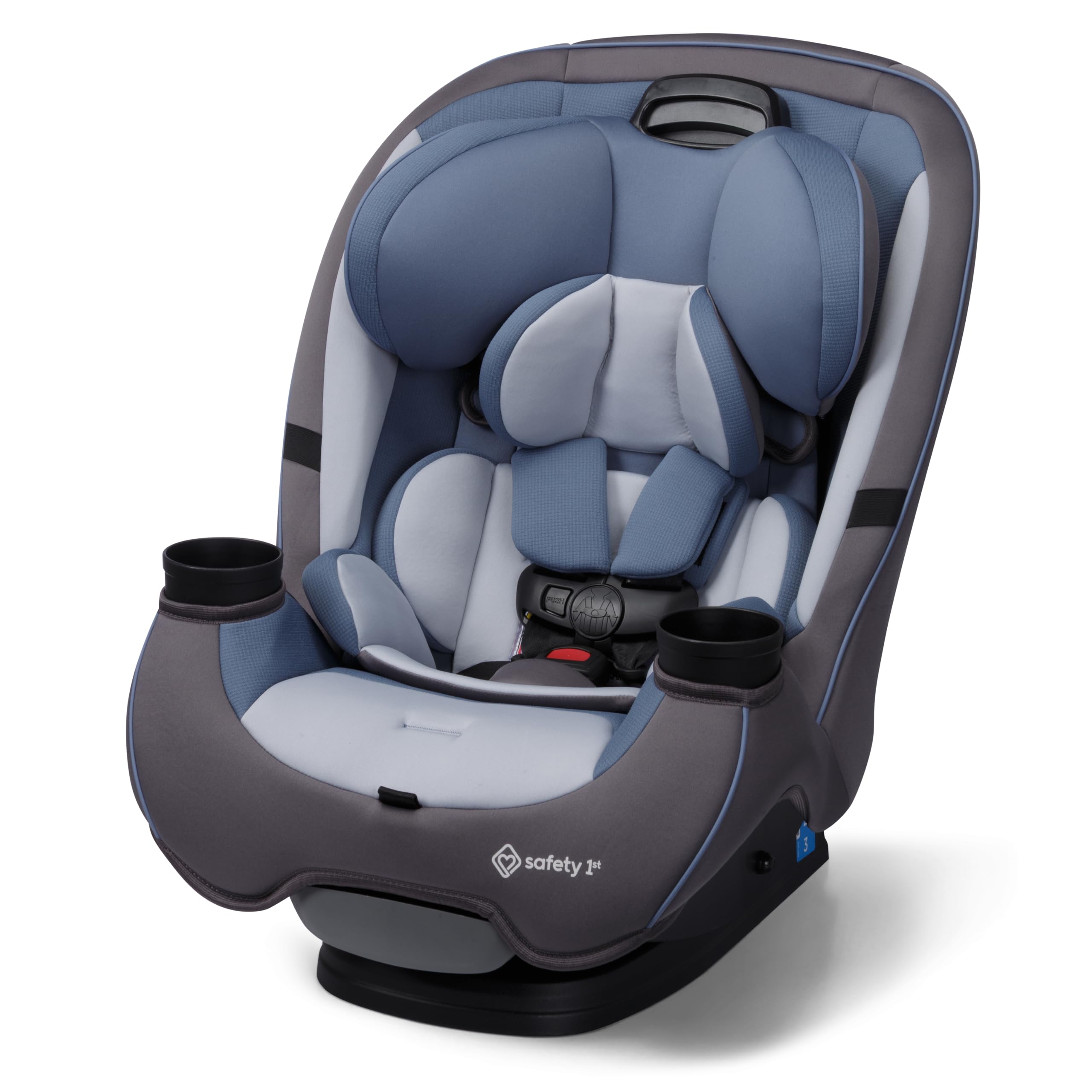
Safety 1st Grow and Go
Key Features
- Orientation: Rear + Forward
- Rear-Facing Max: 40 lbs
- Forward Max: 65 lbs
- Harness Adjustment: Manual
- Recline Positions: 3
- Seat Weight: 13.2 lbs
- Price: $$
This seat combines a slim 16.9-inch width with a 40-pound rear-facing limit and booster use up to 100 pounds — a rare value in a category where space and longevity often conflict. Owners report excellent comfort: children nap well in the plush padding, and the 5-point harness holds securely once properly adjusted. The trade-off for the slim profile and low price is a stiff strap adjuster that requires significant force to tighten or loosen, and rear-facing installation can be tricky — many families need help or a CPST to achieve a snug fit.
Best for budget-conscious parents who need a slim convertible for smaller cars and can tolerate a learning curve for installation and daily strap adjustments. If you frequently swap seats between vehicles or want effortless one-hand strap tightening, consider a model with a smoother adjuster.
Pros
- Covers rear-facing through high-back booster without breaking the bank
- Plush padding keeps kids comfortable and sleeping well on longer drives
- Sturdy build and strong safety ratings give long-term confidence
Cons
- Strap adjustment requires forceful effort and can get stuck
- Rear-facing installation often needs extra help to achieve a secure fit
Buy this if you want a slim, long-lasting convertible that saves money without sacrificing safety or comfort. Skip it if you prioritize quick, tool-free installation and easy daily strap tightening.
Best for Nap-Friendly Comfort
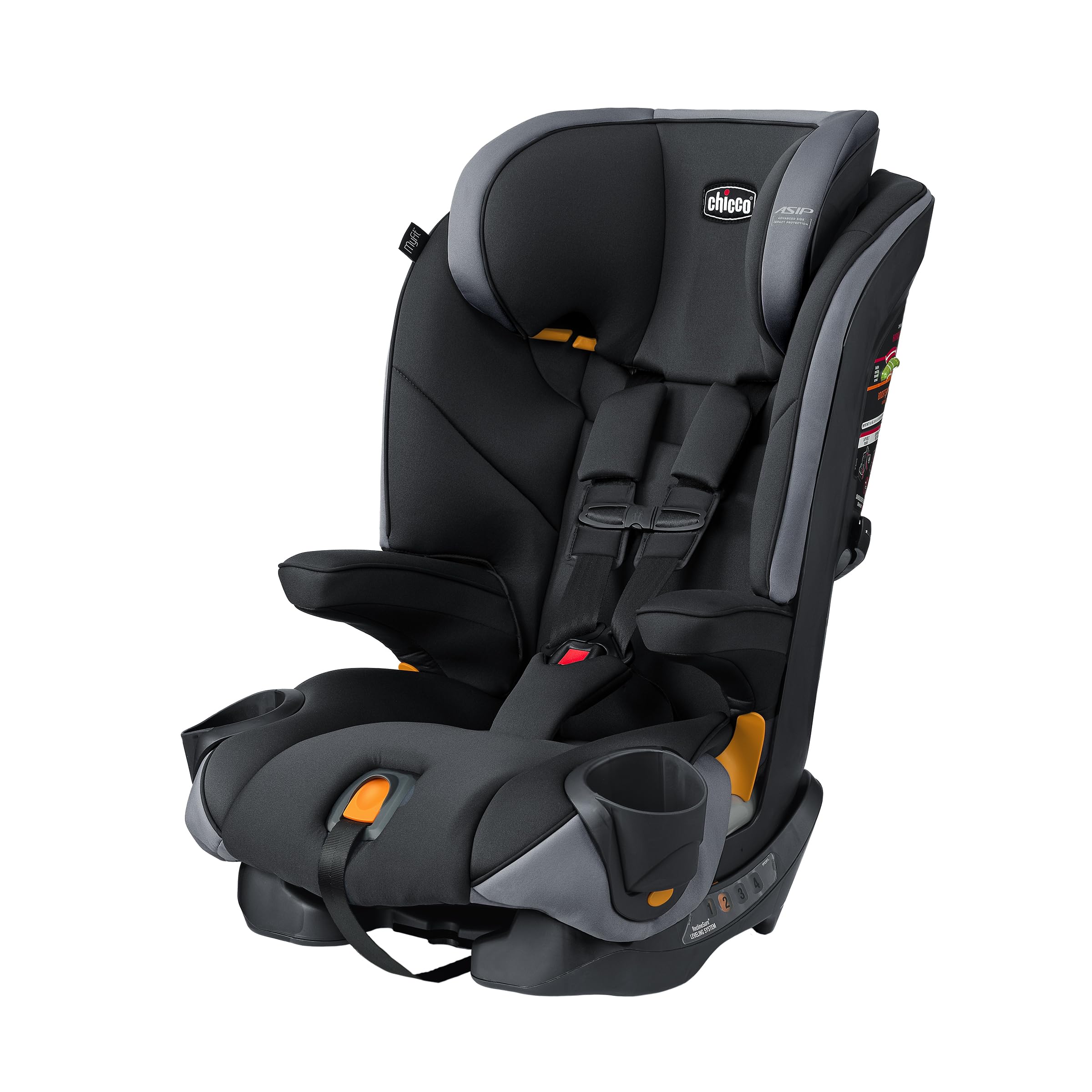
Chicco MyFit
Key Features
- Orientation: Forward-only
- Forward Max: 65 lbs
- Harness Adjustment: Manual
- Recline Positions: 4
- Seat Weight: 25 lbs
- Price: $$$
The Chicco MyFit stands out for its exceptional padding and recline support that keeps kids sleeping soundly without head flop, backed by easy LATCH installation with clear level indicators. However, at 25 pounds and forward-facing only, it’s best suited for families who leave it installed in one vehicle and don’t need rear-facing capability. The cup holders can detach over time, but the overall build quality and safety features justify the premium price for long-distance trips.
Pros
- Deep padding and recline keep children sleeping comfortably without head flopping.
- Clear level indicators and LATCH system make installation simple and secure.
Cons
- Heavy 25-lb design makes it difficult to move between vehicles.
- Cup holders can detach under normal use – check them periodically.
Buy this if you prioritize long car ride comfort and easy installation for a forward-facing seat. Skip it if you need to move the seat frequently or require rear-facing capability.
Best for Lightweight Travel
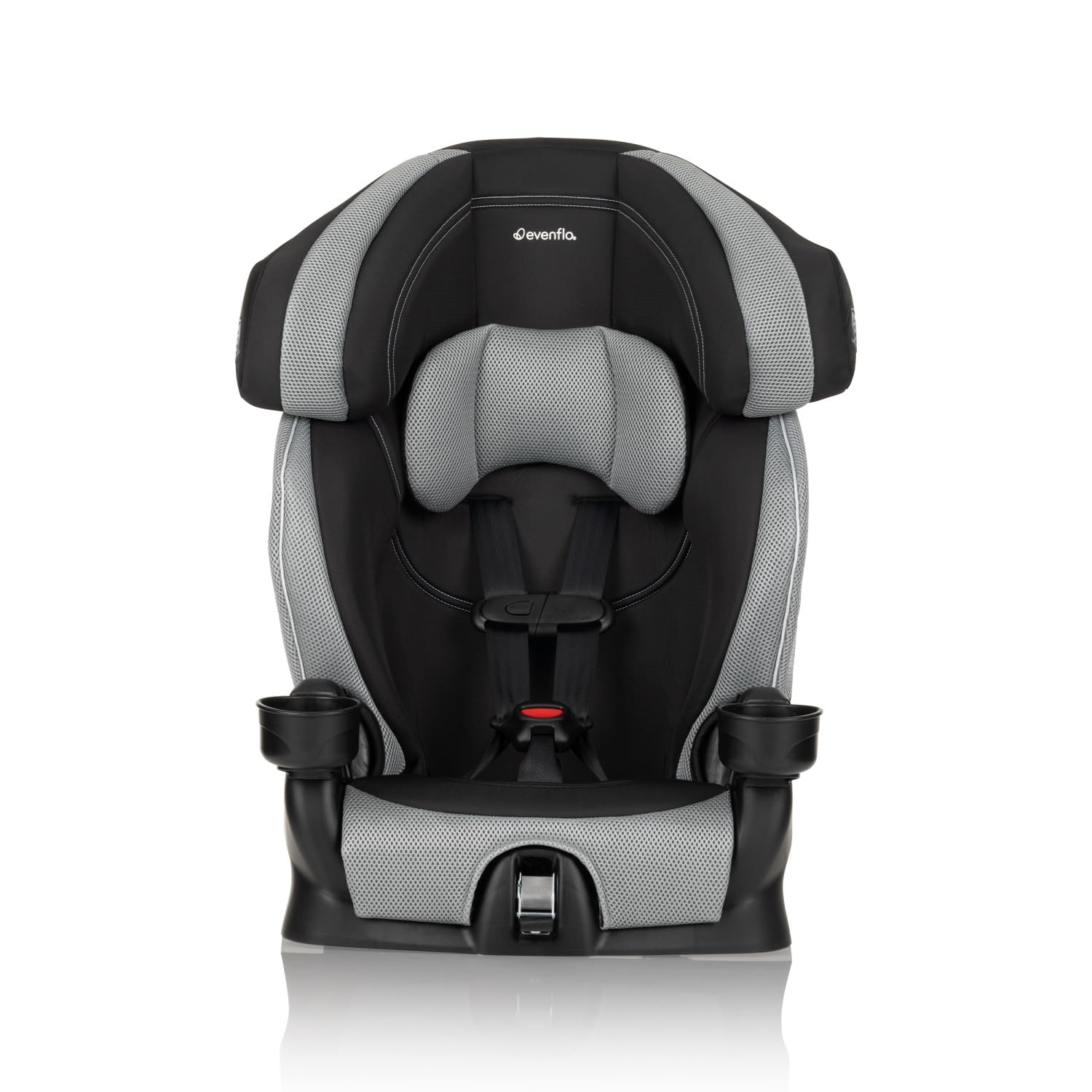
Evenflo Chase LX
Key Features
- Orientation: Forward-only
- Forward Max: 65 lbs
- Harness Adjustment: Manual
- Seat Weight: 9.1 lbs
- Price: $
The Evenflo Chase LX weighs just 9.1 pounds, making it the lightest forward-facing harnessed booster in this roundup. That low weight is its core advantage for families needing a second seat for occasional trips, air travel, or sharing between cars. However, the trade-off is an upright seat with no recline – children’s heads flop forward when they nap – and flimsy screw-on cup holders that pop off easily. These limits make it best for short, awake rides rather than daily commuting or long car naps.
Pros
- Extremely lightweight at 9.1 lbs – easy to carry between cars and onto planes.
- Budget-friendly price without compromising basic safety.
- Clear LATCH installation instructions make setup quick.
Cons
- No recline causes head flop when children sleep during rides.
- Cup holders are flimsy and frequently pop off during use.
Buy this if you need a lightweight, affordable second seat for travel or grandparent use.
Best for Budget Reclining Convertible
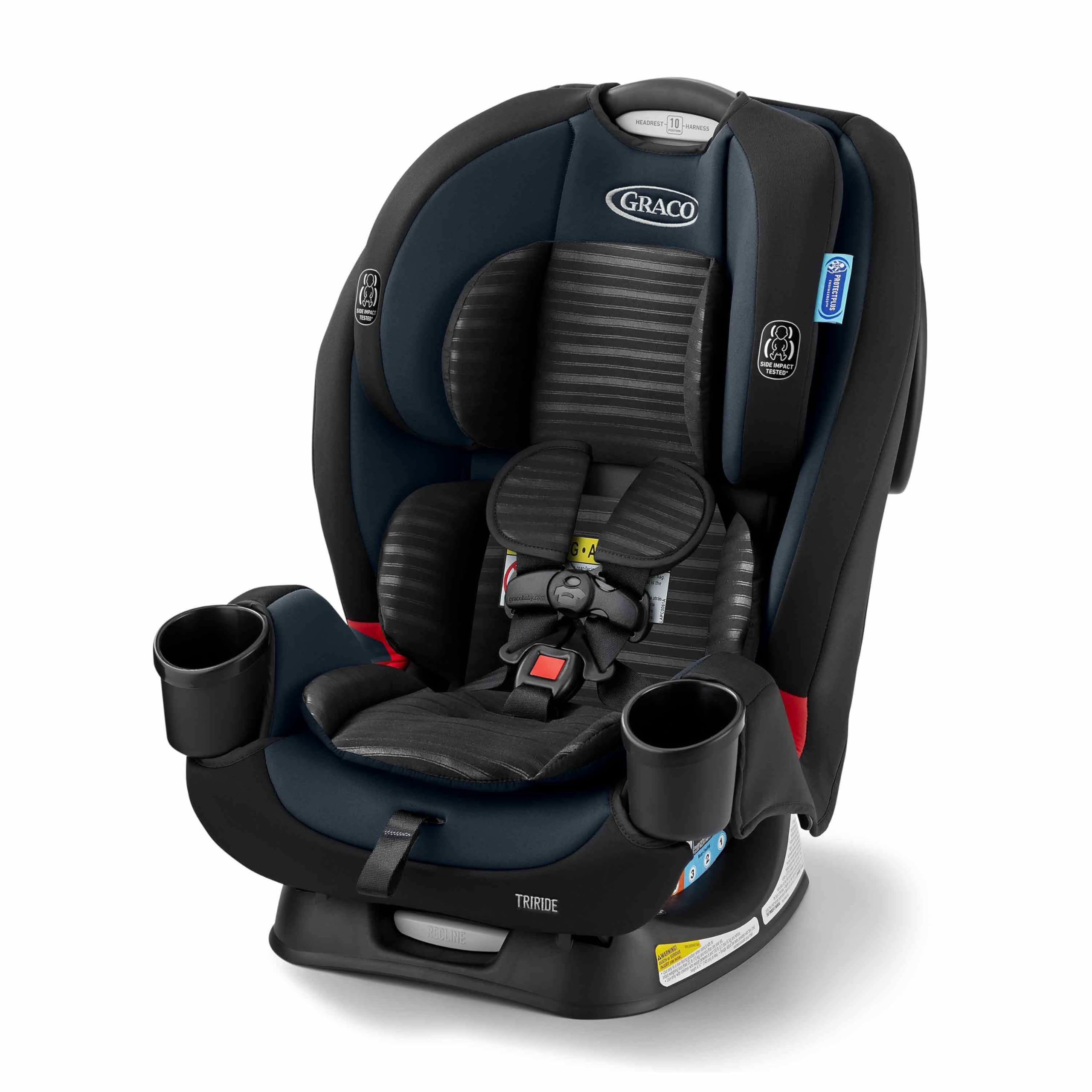
Graco TriRide 3-in-1
Key Features
- Orientation: Rear + Forward
- Rear-Facing Max: 40 lbs
- Forward Max: 65 lbs
- Harness Adjustment: No-rethread
- Recline Positions: 6
- Seat Weight: 18.5 lbs
- Price: $$
The Graco TriRide stands out for its six recline positions, making it easier to keep sleeping toddlers comfortable compared to the top pick. The no-rethread harness adjusts smoothly as kids grow, and the padding is plush. However, the strap tightening mechanism is noticeably stiff and can loosen on its own over time — a common complaint that adds hassle during daily buckling. The cup holders also pop off easily when pulled by children, a minor annoyance but not a safety concern. Families who prioritize napping comfort over quick adjustments will find this a good fit, but those frequently moving the seat between cars may find the 18.5-pound weight and stiff straps frustrating.
Pros
- Harness height adjusts without rethreading as child grows.
- Six recline positions support comfortable napping.
- Build quality and padding feel durable and comfortable.
Cons
- Strap tightening is stiff and tension can loosen over time.
- Cup holders detach easily when pulled by children.
Buy this if you want a reclining 3-in-1 with easy height adjustments for growing kids. Skip it if you need quick strap tightening or plan to move the seat between cars frequently.
Best for Three-Across Slim
Diono Radian 3R
Key Features
- Orientation: Rear + Forward
- Rear-Facing Max: 50 lbs
- Forward Max: 120 lbs
- Harness Adjustment: Manual
- Recline Positions: 3
- Seat Weight: 23 lbs
- Price: $$$
This seat’s slim profile makes it one of the few that reliably fits three across in smaller vehicles, and its steel frame handles extended rear-facing up to 50 lbs and forward-facing to 120 lbs. The trade-off: it weighs 23 lbs, and installation—especially rear-facing—is more complex than seats with simpler LATCH systems. Best for families who need three-across spacing or want a single seat from birth to booster, but not for those who frequently swap seats between cars or want a quick, intuitive install.
Pros
- Narrow 16.9-inch width enables three-across in most vehicles.
- Rear-facing up to 50 lbs and forward-facing to 120 lbs for longest use.
- Steel frame and memory foam feel solid and durable.
Cons
- Heavy at 23 lbs, inconvenient for moving between cars.
- Installation is complex and manual can be confusing, especially rear-facing.
Buy this if you need a slim seat for three-across or want a single seat from birth to booster with extended rear-facing. Skip it if you frequently swap seats between vehicles or prefer quick installation.
Best for Character Design Fun
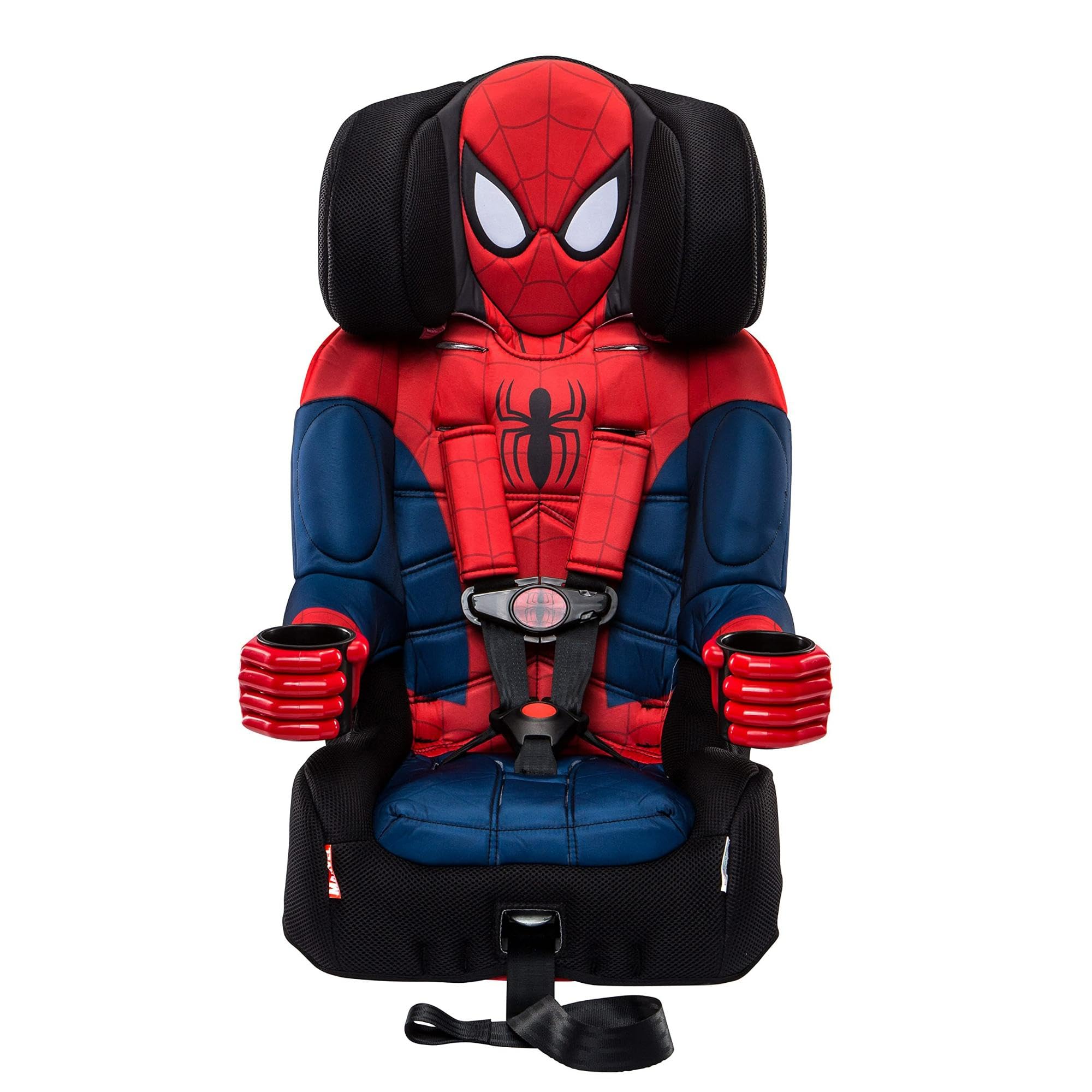
KidsEmbrace 2-in-1
Key Features
- Orientation: Forward-only
- Forward Max: 65 lbs
- Harness Adjustment: Manual
- Recline Positions: 3
- Seat Weight: 15 lbs
- Price: $$
Unlike the top pick’s all-stage versatility, the KidsEmbrace 2-in-1 focuses on fun: licensed character designs that children love and an easy LATCH setup. Ideal for forward-facing toddlers who are already past rear-facing, this seat shines in occasional-use scenarios like grandma’s car or road trips. However, the buckle can pinch legs during closing and some toddlers have figured out how to unbuckle themselves, so vigilance is required. The lack of a rear-facing mode means it’s not a fit for younger siblings still in that stage.
Pros
- Licensed character themes that kids get excited about.
- Easy installation using the LATCH system.
- Comfortable padding with solid safety features.
Cons
- Buckle can pinch legs and some toddlers can unbuckle themselves.
- Forward-only design – no rear-facing mode for younger toddlers.
Buy this if your child is already forward-facing and you want a seat that makes them excited to buckle in. Skip it if you need a convertible seat or a buckle that’s simple to operate.
Best for Disney Themed Convertible
Disney Grow and Go

Key Features
- Orientation: Rear + Forward
- Rear-Facing Max: 40 lbs
- Forward Max: 65 lbs
- Harness Adjustment: No-rethread
- Recline Positions: 3
- Seat Weight: 13 lbs
- Price: $$
This seat delivers the same functionality as the Safety 1st Grow and Go – convertible from rear-facing to booster – with a Mickey Mouse theme that toddlers adore. It’s lightweight and the cover is easy to clean. However, it costs more than the functionally identical Safety 1st, so you’re paying for the Disney aesthetics. Also, the straps can twist, making adjustments fiddly.
Pros
- Cute Mickey Mouse design that children love
- Comfortable padding and easy-to-clean cover
Cons
- Straps twist easily and can be difficult to tighten
Worth considering if your child is a Disney fan and you want a lightweight, easy-to-clean all-in-one seat that grows with them.
Best for Premium All-In-One
Graco 4Ever DLX

Key Features
- Orientation: Rear + Forward
- Rear-Facing Max: 40 lbs
- Forward Max: 65 lbs
- Harness Adjustment: No-rethread
- Recline Positions: 6
- Seat Weight: 23 lbs
- Price: $$$
4-in-1 design spans rear-facing to 120-lb booster with a washable cover that cleans without removing the seat. However, it’s heavy (23 lbs) and straps can be hard to loosen, making daily use fiddly. Priced about $100 above the top pick and heavier; the TriRide offers similar features for less.
Pros
- 10-year lifespan from rear-facing to 120-lb booster, with 92% positive reviews on quality.
- RapidRemove cover is machine-washable without uninstalling the seat.
Cons
- Heavy (23 lbs) and bulky, with only 77% positive installation ratings.
Worth considering if you want a single seat from birth to booster and prioritize easy cleaning over weight and strap convenience.
Best for Budget Forward-Only
Graco Tranzitions

Key Features
- Orientation: Forward-only
- Forward Max: 65 lbs
- Harness Adjustment: No-rethread
- Seat Weight: 15.1 lbs
- Price: $
Weighing 15.1 pounds, the Tranzitions is a lightweight, affordable forward-facing booster that’s easy to swap between cars. The no-rethread harness simplifies height adjustments as kids grow. But it lacks rear-facing and recline – heads slump forward on longer rides, limiting it to short trips or backup duty. The Evenflo Chase LX is lighter and cheaper for similar use.
Pros
- Lightweight design makes it portable for travel or second car use.
- No-rethread harness adjusts height without removing the seat.
Cons
- Occasional missing cup holders out of the box due to quality control.
Worth considering if you need a lightweight, inexpensive forward-facing seat for occasional trips or as a backup. Skip it if your child still requires rear-facing or naps in the car.
How to Choose
The single most important decision is whether your toddler will remain rear-facing past age 2, because that rules out forward-only seats and cuts your options by half.
Rear-Facing vs Forward-Only
If you plan to keep your child rear-facing past age 2 (recommended for safety), avoid forward-only seats. They save money upfront but force you to buy another seat later. Check the rear-facing weight limit – some seats max out at 40 lbs, others at 50 lbs, giving you more time.
Weight and Height Limits
Every seat has maximum weight and height for each mode. For forward-facing, look for at least 65 lbs harness capacity to last through age 4-5. Booster limits of 100-120 lbs ensure the seat can serve until your child is ready for a seat belt alone.
Harness Adjustment
No-rethread harness systems let you adjust headrest and straps in one motion, saving time as your child grows. Manual rethread seats require removing and rethreading the harness, which is more tedious but often found on budget-friendly models.
Recline Positions
Multiple recline positions keep your child’s head from flopping forward when they sleep – a common complaint. Seats with 4-6 reclines offer better nap support than those with only 2-3. Some forward-only seats have no recline at all, making them poor for long trips.
Seat Weight
A heavy seat (over 20 lbs) is cumbersome to move between cars or take on trips. If you need portability, look for seats under 15 lbs. The lightest options weigh around 9 lbs and are ideal for travel or as a second seat.
FAQ
How do you tighten the straps on a Safety 1st Grow and Go car seat?
The strap adjuster on the Safety 1st requires significant force. You may need to pull the strap from the front while pushing the adjuster button – it can be stiff. Many parents find it easier to tighten after installing the seat and checking for a snug fit. If it’s consistently stuck, inspect for twists in the harness.
Does the Chicco MyFit rear face?
No. The Chicco MyFit is forward-facing only, designed for toddlers 25–65 lbs in harness mode. It cannot be used rear-facing. If you need a seat that works from birth, consider a convertible like the Safety 1st Grow and Go.
Why do car seat cup holders keep falling off?
Many brands use clip-on or screw-in cup holders that detach easily, especially on Evenflo, Graco, and Chicco models. This is a common design issue. If it bothers you, check if the cup holders are reinforced or consider aftermarket options. Some parents use zip ties for a permanent fix.
Is the Evenflo Chase LX good for long car rides or napping?
Not ideal. The Evenflo Chase LX has no recline, so a sleeping child’s head can flop forward, causing discomfort. It’s best for short trips where the child stays awake. For longer drives, look for a seat with multiple recline positions.