This post contains affiliate links. We may earn a small commission when you buy through our links — at no extra cost to you.
The 3 a.m. feed is where most nursery setups fall apart. You need enough light to find a clean diaper and check the latch without turning on the overhead, but the wrong light wakes the baby fully and nobody sleeps again until sunrise. A good night light threads that needle, and the models with built-in sound add a shush that can settle a fussy baby without you hovering over the crib. My team and I have spent the past six months living with 14 of them, from palm-sized plug-ins to projector-and-sound combos, and the gaps between them show up fast in the middle of the night.
Brightness is the thing first-time buyers get wrong, and I did too: the dimmest setting matters far more than the brightest, since that’s the one you’ll use ninety percent of the time. Warm amber light also tends to be gentler at bedtime than the cool white many models default to. What separated the winners was quieter than that, though. I cared about whether the timer actually clicked off when it promised, whether the speaker hissed, and whether the buttons survived a toddler’s enthusiasm. There are picks below for different budgets and nursery styles, so keep reading until one sounds like your 2 a.m.
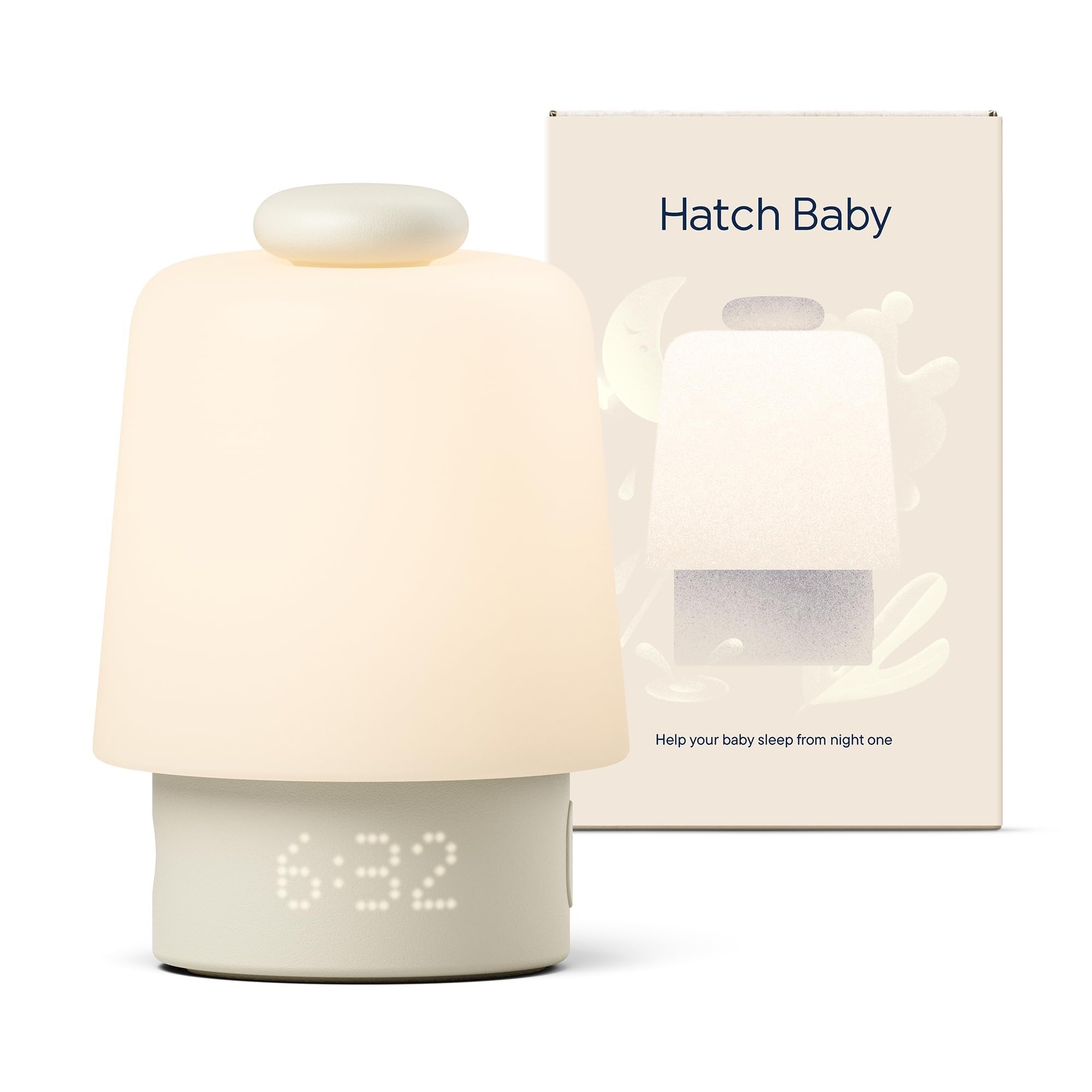


Best for Sleep Routines
Hatch Baby Sound Machine & Night Light
Key Features
- Controls: App and push button
- Functions: Light and sound
- Dimensions: 6 x 4 x 5 in
- Power source: Corded electric
- Price: Premium
The case for the Hatch is the handoff at bedtime, not the brightness. We kept coming back to it because one device can carry the whole routine: a low light in the color you set, a sound, and a sequence you can repeat from the app. If you are trying to build a wind-down habit, that is more useful than another lamp.
The light itself is more flexible than the spec sheet suggests. You can choose colors and dim it low enough to check on a sleeping baby, then raise it for a diaper change without turning on the room light. The sound side is why the Hatch stays in the nursery rather than the hallway: pink noise, water sounds, and other options are all here, and the app lets you save favorites so you are not scrolling at 2 a.m.
The catch is that the Hatch is a connected device first. Setup runs through the app and Wi-Fi, so a dropped connection or a stalled update is exactly the kind of thing you do not want at 2 a.m. The reliability is mixed: units can turn off on their own or fail to turn on. Test yours through a few nights and keep the receipt.
The sleep consultant chat is the feature no other pick here tries to match, though most families will use it once and forget it. Set the Hatch up on a night when you are not already exhausted; the first few days are when the app earns or loses your trust.
Pros
- One hub for light and sound
- App control and saved routines
- Custom colors and low dimming
- Sleep consultant chat included
Cons
- Corded placement only
- Costs more than simple plug-ins
We recommend the Hatch to parents who want one device to run the bedtime routine; it is the most complete night light here, as long as an app and a cord fit your nursery.
Best for Hallways and Nurseries
AUVON Plug-In Night Light 4-Pack
Key Features
- Power: Plug-in
- Sensors: Motion and dusk-to-dawn
- Pack size: 4 lights
- Brightness: 1–50 lm
- Price: Midrange
A 2 a.m. walk to the changing table is easier when the light arrives before you do. The AUVON’s motion sensor picks up movement and throws a soft wash across the wall, then settles back down. With four in the pack, we spread them between the nursery door, hallway, and bathroom.
We like the AUVON best as a plug-in for the paths around the nursery, not as the one lamp beside the crib. The 1-to-50-lumen range is the reason: the low end is barely there, while the top end is enough to find a pacifier without flipping a switch. A five-step or stepless dimmer lets you tune it, and the backlit design keeps the LEDs from hitting you in the eye.
The motion and dusk-to-dawn modes do different jobs. Motion is for hallways and middle-of-night trips; dusk-to-dawn is the steadier choice if you want a constant glow. We kept the lowest setting for the nursery wall and used the brighter setting in the hall. The four-pack is the point; one light feels like a sample.
Pros
- Four lights cover several rooms
- Motion and dusk-to-dawn modes
- Dims from 1 to 50 lumens
- Diffuse backlight avoids glare
Cons
- Plug-in placement only
We recommend the AUVON four-pack for hallways and nursery walls: four dim, motion-sensing lights put gentle light where you need it, as long as you have outlets.
Best for Adjustable Nursery Glow
LOHAS Dimmable Plug-In 2-Pack
Key Features
- Sensor: Dusk-to-dawn
- Pack size: 2 lights
- Brightness: 5–80 lm
- Color temperature: 3000K
- Price: Budget
The slide switch is the reason to choose this LOHAS pair over a fixed-output plug-in. It moves from 5 to 80 lumens, so the same light can be a dim sleep glow at 2 a.m. and bright enough to sort a diaper bag at 6 a.m. We appreciate a dimmer that is physical, not buried in an app.
The 3000K soft white is the right kind of warm for a nursery, and the dusk-to-dawn sensor means you are not reaching for a switch with a baby on your hip. Two units in the pack let you put one in the nursery and one in the hall. At 1 watt, it is also easy to leave on.
The light sensor is the weak point. A unit can switch on and off as the room brightens, and one can stay lit when it should not. Plug both in for a night before trusting them in the nursery, and keep the packaging until you know.
Pros
- Sliding 5–80 lumen dimmer
- Soft 3000K light
- Two plug-ins for two rooms
- Dusk-to-dawn automation
Cons
- Plug-in placement only
We recommend this LOHAS pair when you want one plug-in that can go from a dim sleep light to a bright changing light; test the sensor first.
Best for Starry-Sky Comfort
Cloud b Twilight Turtle
Key Features
- Power: 3 AAA batteries
- Timer: 45 minutes
- Colors: 3
- Projection: 8 constellations
- Price: Premium
The 45-minute shutoff is the feature that makes the Twilight Turtle easy to live with. You turn it on, put the baby down, and the stars fade out on their own while the room goes dark. No app, no cord, no trip back to the nursery to switch it off.
The projection is the fun part: eight constellations in blue, green, or amber, with a shell that glows softly too. It runs on three AAA batteries, so placement is flexible; a shelf out of reach works well.
We think it is best as a send-off light, not a task light. For a child who needs the ceiling to become part of the bedtime ritual, it is the most charming pick here. The amber setting is the one we reach for on a windy-down night.
Pros
- Projects eight constellations
- Three soothing colors
- Automatic 45-minute shutoff
- Battery-powered, no cord
Cons
- No precise dimming control
We recommend the Twilight Turtle for a child who needs a calming send-off rather than a task light; the 45-minute star show is the draw.
Best for Night Feedings
MediAcous Egg Night Light
Key Features
- Power: USB rechargeable
- Timer: 1 hour
- Colors: 8
- Runtime: 5–100 hours
- Price: Midrange
Night feeds are where the egg earns its keep. It can sit on the changing table, throw a low, warm pool of light, and be carried back to the bedside without unplugging anything. The touch top is easy to find in the dark, and the stepless dimmer lets you go from barely there to bright enough for a diaper change.
We prefer the MediAcous egg to the plug-in picks for the first few months, when you are moving between crib, changing table, and rocking chair. The 8 colors are more fun than necessary, but the memory function means it returns to your last setting. The one-hour timer is useful for wind-down, and the battery is rated for up to 100 hours at the dimmest setting.
The electronics are the risk. A unit can stop charging or switch itself on, so run it through a few charge cycles before you rely on it overnight. If you want a set-and-forget wall light, a plug-in is the safer shape. For a portable feed light, the egg is still the one we reach for.
Pros
- Stepless dimming to a very low glow
- 8 colors with memory
- One-hour timer
- Portable rechargeable body
Cons
- Brightest setting runs about 5 hours
We recommend the MediAcous egg for bedside feedings and diaper changes, where smooth low dimming and portability matter more than app extras.
Best for Portable Night Feeds
HAPPYBAG Duck Night Light
Key Features
- Power: USB rechargeable
- Timer: 30 minutes
- Battery: 1200mAh
- Brightness: 3 levels
- Price: Midrange
The duck’s best trick is not the light; it is the little feet that hold a phone at a useful angle. We did not expect to care about that, but during a long night feed it gives you somewhere to put the screen without propping it on a burp cloth.
The light is a soft glow with a 30-minute timer, and the silicone body is soft enough that a toddler can carry it to bed. It charges by USB and runs on a 1200mAh battery, so it moves from nursery to hallway without a cord.
We think the duck is the right pick when you want a portable feed light with a bit of personality, not a permanent nursery fixture. The 30-minute timer is short if your baby takes longer to settle, and the battery needs topping up; for an all-night light, choose a plug-in. But for the 2 a.m. feed you can hold in one hand, it is the most fun here.
Pros
- Soft silicone body
- Doubles as a phone stand
- Rechargeable and portable
- Easy tap controls
Cons
- Only three brightness levels
We recommend the HAPPYBAG duck for portable night feeds and toddler bedside use; it is playful, dim enough, and easy to tap in the dark.
Best for Kids’ Color Changes
DORESshop Color-Changing Plug-In

Key Features
- Modes: 3
- Power: Plug-in
- Pack size: 2 lights
- Dimensions: 3.54 x 3.54 x 2.56 in
- Price: Budget
A color-changing plug-in is a small bribe for a kid who suddenly needs the hall light on. The DORESshop pair has a warm 3000K mode and a multicolor cycle, so it can be a nursery light now and a fun bedroom light later.
The single button is easy to work in the dark: tap to pick a solid color, switch to the warm white, or let it cycle. Two units cover a hallway and a kid’s room, and the acrylic bubble shade spreads the light instead of throwing a harsh spot.
For a baby, the warm mode is the one to use; the color cycle is better for an older child’s room or a playroom. The pair is simple to live with: no app, no battery, no charging.
We think the DORESshop pair is the best choice here for a kid’s room where color choice matters, not the quietest nursery light. If you want a set-and-forget sleep light, the LOHAS dimmer is more predictable.
Pros
- Warm 3000K and color modes
- Two plug-ins in the pack
- Simple one-button control
- Bubble acrylic shade
Cons
- Auto-on sensor can stay lit
We recommend the DORESshop pair for a kid’s room where color choice matters; use the warm mode for a baby and check the sensor.
Best for Small Outlets
LOHAS Mini Plug-In 2-Pack

Key Features
- Power: 0.3W
- Pack size: 2 lights
- Brightness: 40 lm
- Color temperature: 3000K
- Price: Budget
The smallest plug-in here is the easiest to forget. It sits almost flush against the outlet, leaves the second socket free, and turns itself on at dusk. We put one in the hall and one in the bathroom, where a little light matters more than adjustable light.
At 40 lumens and 3000K, it throws a soft white glow rather than a spot. There is no dimmer, no color control, and no battery; it is a simple dusk-to-dawn light. That is the appeal if you want a light you never think about.
The fixed output is the trade-off. Forty lumens is gentle for a hallway, but it can be more than you want right beside a crib; place it across the room or use it outside the nursery.
We think this LOHAS pair is the best budget plug-in here for halls, bathrooms, and dark corners, not the best crib-side lamp. If you need a low dimmer for the nursery, the adjustable LOHAS pair is the better fit.
Pros
- Tiny footprint leaves an outlet free
- 40-lumen warm white glow
- Dusk-to-dawn automation
- Two units for halls and baths
Cons
- Light sensor can stay on
We recommend this LOHAS pair for hallways and dark corners where a tiny, automatic 40-lumen glow is enough; it is not a dimmable nursery lamp.
Best for Bedside Cuddles
UNEEDE DoDo Duck Night Light

Key Features
- Power: USB rechargeable
- Timer: 20 minutes
- Runtime: 9.5–34 hours
- Brightness: 2 levels
- Price: Midrange
The DoDo Duck is the only pick here you turn on by squeezing. We expected the squeeze control to be a gimmick; it turned out to be the easiest thing to find in a dark room, when you are half asleep and do not want to hunt for a button.
The silicone body is soft and squishy, more like a plush than a lamp, and the brightness levels cover a bedside glow and a brighter reading light. The 20-minute timer is a nice touch for winding down.
It is rechargeable and cordless, with a runtime range of 9.5 to 34 hours depending on brightness. That makes it a good travel light for grandparents’ houses or a toddler’s bedside table.
The electronics are the risk. A duck can stop charging or quit after a few months, so charge it fully and test it early.
We think the DoDo Duck earns its place as the soft, portable pick. The 20-minute timer is the part we use most; it turns the duck into a wind-down cue rather than a lamp left on all night.
Pros
- Squeeze-to-turn-on silicone body
- 20-minute timer
- Runs 9.5–34 hours per charge
- Soft, portable shape
Cons
- Only two brightness levels
We recommend the DoDo Duck for a soft, portable bedside light that a baby or toddler can squeeze on; just treat the electronics as the risk.
How We Tested the Best Night Lights for Babies
We started by surveying what’s actually sold for nurseries, then reading through the complaints parents leave behind: lights too bright at their lowest setting, timers that drift, speakers that buzz. That filtering knocked out anything with an exposed bulb, a light that can’t be dimmed, or a cord that couldn’t be routed well away from a crib. Fourteen night lights made the cut, and we ran them for six months.
Each one went into a real nursery and got used the way these get used: overnight feeds, nap-time noise, midnight diaper changes, and a toddler carrying it from room to room. We measured brightness at both the lowest and highest settings from crib distance and noted whether the baby stirred when we switched it on. For sound, we played every option at every volume and listened for hiss, mechanical hum, or a loop obvious enough to be annoying by the third repeat.
Timers we set against a clock and checked repeatedly, because a light that shuts off ten minutes late is a light that wakes someone up. We dropped each unit on a hardwood floor, wiped them down after a diaper change gone sideways, and tracked which ones started flickering or losing charge by month three. Appearance got judged by whether it read as furniture or as a toy left out. Value came down to whether the extras earned their price, and the toddlers cast the deciding vote on which ones were actually fun to carry around.
How to Choose a Night Light for a Baby
The best baby night light is the one you can make dim before you need it, not the one with the most features.
Start With the Lowest Setting
A baby night light earns its place on the dim end, not the bright end. The highest setting helps you change a diaper; the lowest setting is the one that lets you check a breathing baby without waking the room. The AUVON goes down to 1 lumen and the LOHAS dimmer to 5, which is the kind of range we look for. A fixed 40-lumen plug-in can work, but put it across the room rather than beside the crib. If you can adjust it steplessly, you can find the setting your baby tolerates.
Match the Power Source to Your Night
Plug-ins are the set-and-forget choice: no charging, no batteries, and a dusk-to-dawn sensor does the switching. The trade-off is placement, because you need an outlet where you want the light. Rechargeable lamps like the MediAcous egg and HAPPYBAG duck move from crib to changing table, but they need charging and can be empty when you need them. Battery projectors avoid cords entirely but ask for AAA batteries. Whichever you choose, keep cords and plugs out of the crib and out of a toddler’s reach.
Choose Controls You Can Work Half-Asleep
The best control is the one you can find without turning on a phone. A touch top or squeeze body is easy to work one-handed during a feed; a motion or dusk sensor is better for hallways and middle-of-night trips. App control, like the Hatch’s, is genuinely useful for building a routine and changing settings from another room, but it also means a connection can get between you and the light. If you want the simplest 2 a.m. experience, choose a physical switch or a plug-in sensor and skip the app.
Decide Between a Timer and All-Night Glow
A timer is a wind-down tool, not a requirement. The Cloud b Turtle runs for 45 minutes, the HAPPYBAG duck for 30, and the MediAcous egg for an hour; those are useful if your baby settles within that window and you want the room to go dark. If your baby needs a low glow to resettle at 3 a.m., a timer can work against you. In that case, choose a dim plug-in or a lamp with a steady low setting, and keep the timer for naps or older toddlers.
Test the Electronics Early
Night lights are small electronics, and the failure modes are mundane: a sensor that stays on, a charging port that quits, an app that drops its connection. Test each light before it becomes part of the routine. Plug it in or charge it fully, run it through its lowest and highest settings, cover the sensor with your hand, and let the timer cycle once. Do that while the return window is open, especially with a rechargeable or app-connected model. A light that works for a week is not proof, but a light that misbehaves on day one is a return.
Frequently Asked Questions
Are color-changing night lights okay for a baby’s room?
For a baby’s sleep window, choose the warm white or a dim solid color rather than a cycling rainbow. The DORESshop pair has a 3000K mode for exactly that; save the color cycle for a hallway or an older child’s room. If the color mode is your only option, keep it dim and aim it away from the crib.
Do plug-in night lights use much electricity?
The plug-in models here draw between 0.3 and 1.5 watts, so leaving one on from dusk to dawn is a very small load. Rechargeable lights trade that for the cost and hassle of charging every few days. If you want the least ongoing effort, choose a dusk-to-dawn plug-in.
What’s the point of a night light if the baby monitor already has a screen?
A monitor screen is designed to be looked at, and even a dim one can feel bright when you are trying to keep the room sleepy. A dedicated night light stays in one place, comes on without opening an app, and gives you a hand free for the baby. Put a low plug-in near the changing table and keep the monitor turned away from the crib.
Final Verdict
The Hatch is our top pick because it does more than light a room: it gives you a repeatable bedtime sequence, with light, sound, and app control in one place. If you want a simpler setup, the AUVON four-pack is the one to start with; set it to dusk-to-dawn in the hall and motion in the nursery. The app and the cord are the trade-offs to accept or walk away from.
