This post contains affiliate links. We may earn a small commission when you buy through our links — at no extra cost to you.
A budget crib is the one piece of furniture your baby will sleep in every single night, so the stakes feel high even when the price tag is low. I still remember wrestling with a hand-me-down crib in a cramped apartment, only to discover two screw holes that didn’t line up—and that was before I knew what to look for. Over the past six months, my team and I assembled and lived with nine budget cribs, from flat-pack boxes to finished nursery staples, to see which ones get the basics right without cutting corners on safety.
What surprised me most is how much the shopping experience varies at this price. Some cribs look lovely online but arrive with misaligned holes or a strong odor that takes days to air out. Others are plain but rock-solid, easy to put together, and sized to fit standard mattresses without a fight. We paid attention to how each one felt once built—the sturdiness when you lean over the rail, the finish that wipes clean, and the footprint that actually fits a small nursery. The nine below are the ones that earned a spot in a real home, not just a showroom.


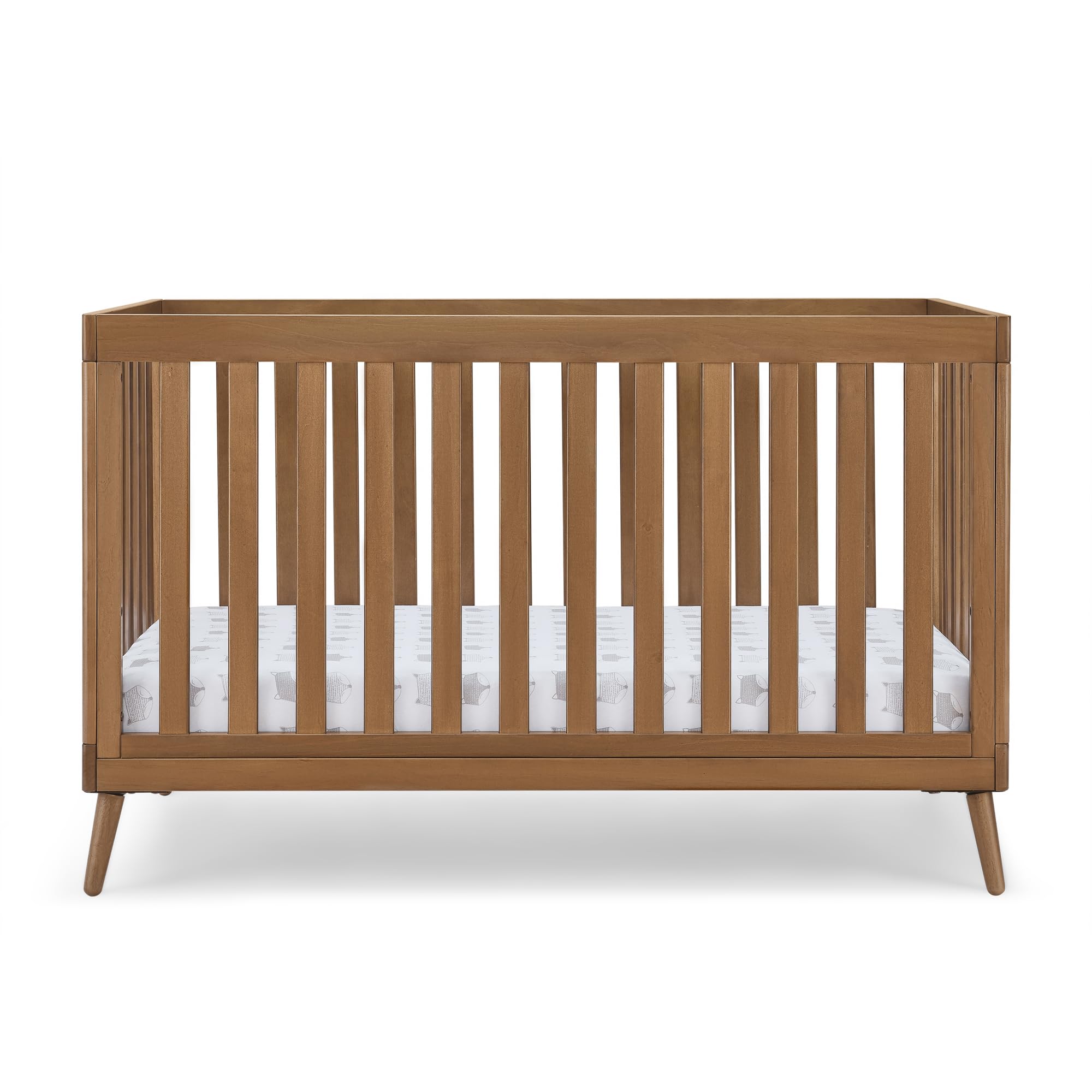

Best for Budget Nursery
Delta Heartland 4-in-1
Key Features
- Weight: 38 lb
- Conversion: Toddler, daybed, full-size; kits sold separately
- Assembled size: 54.25"L x 29.5"W x 35"H
- Mattress heights: 3 positions
- Price: Budget
The Heartland is the crib we point budget shoppers to first, and the reason is simple: it puts the money into a standard full-size frame and the basic safety pieces instead of a long list of conversion extras. You get the crib, three mattress-height positions, and a 50-pound weight limit that covers the crib years. The 35-inch height and 38-pound frame also make it easier to handle in a small room than the heavier cribs here.
Assembly is one of the Heartland’s better arguments. The parts are labeled, the frame squares up without a fight, and once the bolts are snug it feels steady rather than springy. The mattress support drops through three positions, which is enough to take a baby from newborn height to the low setting a toddler needs. The simple grey finish is not trying to be furniture, but it looks tidy and leaves you room to spend on a better mattress or a rug.
The catch is the conversion math. The toddler guardrail and full-size bed frame are sold separately, so the four-in-one label is a path, not a bundle. That is fine if you mainly need a crib and a toddler bed, but price the rails before you count on the full-size stage. Open the box and let the parts breathe before assembly; it is a small step that makes the first week in the nursery feel less like a chemistry experiment.
Pros
- Full-size frame at the budget end
- Three mattress heights cover newborn to toddler
- Simple, well-labeled assembly
- Relatively light 38-pound frame
Cons
- Toddler and full-size conversion kits sold separately
We recommend the Heartland as the budget crib most families can stop shopping for: it is steady, simple to assemble, and sized for a standard mattress.
Best for Lowest Price
Dream On Me Synergy 5-in-1
Key Features
- Weight: 35 lb
- Conversion: Five stages; toddler rail sold separately
- Assembled size: 53"L x 29"W x 39"H
- Mattress heights: 3 positions
- Price: Budget
The Synergy is the least expensive full-size crib in this group, and it does not shrink the job to get there. It takes a standard crib mattress, uses a steel mattress support, and converts through five stages, including a full-size bed with or without a footboard. At 35 pounds, it is also the lightest crib here, which matters if you move it between rooms or assemble it alone.
The reason it is not our top pick is the build experience. The price is real, but so is the risk of holes that do not line up, hardware that needs coaxing, and instructions that can be missing from the box. Dry-fit the rails and headboard before tightening anything, and open the carton well inside the return window. When the pieces do line up, the crib feels stable and the three height settings do their job.
The finish is the other place the savings show. Paint and wood can arrive chipped or dented, and the assembly process can add a few more marks. That is a cosmetic problem most of the time, but it is worth photographing any damage before you build. We see the Synergy as a second crib, a guest nursery, or a buy for a family who is comfortable troubleshooting. If you want the lowest possible entry into a full-size convertible, it earns the look; just go in with your eyes open.
Pros
- Lowest price in this set
- Five conversion stages
- Steel mattress support
- Light 35-pound frame
Cons
- Hole alignment can be off during assembly
- Paint and wood can arrive chipped or dented
The Synergy is the bargain of this group: a standard full-size five-in-one with a steel support, provided you are ready to troubleshoot the assembly.
Best for Small Nursery
Delta Essex 4-in-1
Key Features
- Weight: 40.3 lb
- Conversion: Daybed/sofa rail included; toddler rail sold separately
- Assembled size: 54"L x 29.5"W x 34"H
- Mattress heights: 3 positions
- Price: Midrange
At 34 inches high, the Essex is one of the lower cribs here, and that changes the room more than the spec sheet suggests. You can reach a newborn without the deep lean a taller crib asks for, and the lower back rail keeps sightlines open in a small nursery. The chestnut finish and slightly tapered legs make it look a step nicer than the price suggests, without turning the crib into the loudest thing in the room.
We rank it as the compact alternative to the Heartland because it does the standard full-size job with a calmer assembly and a more furniture-like finish. The daybed and sofa rail is included, which is a genuine saving if you plan to use that stage. The mattress support has three positions, the frame feels solid once squared, and the 40-pound weight is manageable for two adults. The toddler guardrail is still a separate purchase, so the four-in-one path is not completely bundled.
The trade-off is that you pay more for the lower profile and the finish, not for a longer conversion list. Some cribs carry a chemical or paint smell when first unboxed; air the parts out before assembly and keep the room ventilated. If the crib will sit under a window or in a tight corner, the Essex is the one we prefer. If height is not a constraint, the Heartland gives you more budget left for the mattress.
Pros
- Lower 34-inch height eases reaching in
- Daybed and sofa rail included
- Strong assembly and sturdiness
- Slim 29.5-inch depth
Cons
- Toddler guardrail sold separately
The Essex is the best pick here for a small nursery: a lower 34-inch frame, a nicer finish, and an included daybed rail for a modest step up.
Best for Under-Crib Storage
Graco Hadley 5-in-1
Key Features
- Weight: 66.2 lb
- Storage: Two-compartment under-crib drawer
- Assembled size: 29.9"L x 54.8"W x 39.8"H
- Mattress heights: 4 positions
- Price: Premium
The Hadley’s under-crib drawer is the reason to choose it over the other convertibles here. It is a full-width, two-compartment drawer that takes extra sheets, pajamas, and the odds and ends that otherwise end up on the glider. The drawer sits under the crib rather than beside it, so the storage comes without giving up floor space. It also hides the clutter that usually collects in a nursery basket.
The four mattress-height positions are another practical advantage. The newborn setting is higher than the usual top position, which saves your back in the first months, and the lower settings are there as the baby grows. Assembly is straightforward, though the drawer adds a step and the finished piece is heavy enough that you should build it where it will live. The black finish looks crisp in person and hides the drawer seams better than a pale paint does.
Paint is the weak spot. Chips can show up early around the drawer and top rail, so inspect the edges before assembly and ask for a replacement if the damage is more than a shipping scuff. We still recommend the Hadley when storage is the deciding feature; if you only need a crib, the Heartland does the same core job with less weight and less money.
Pros
- Two-compartment under-crib drawer
- Four mattress heights including newborn setting
- Crisp black finish
- Sturdy once assembled
Cons
- Toddler and full-size conversion rails sold separately
Choose the Hadley if you want real under-crib storage and four height settings; it is the most practical crib here for a small nursery with no closet.
Best for Style-Focused Nursery
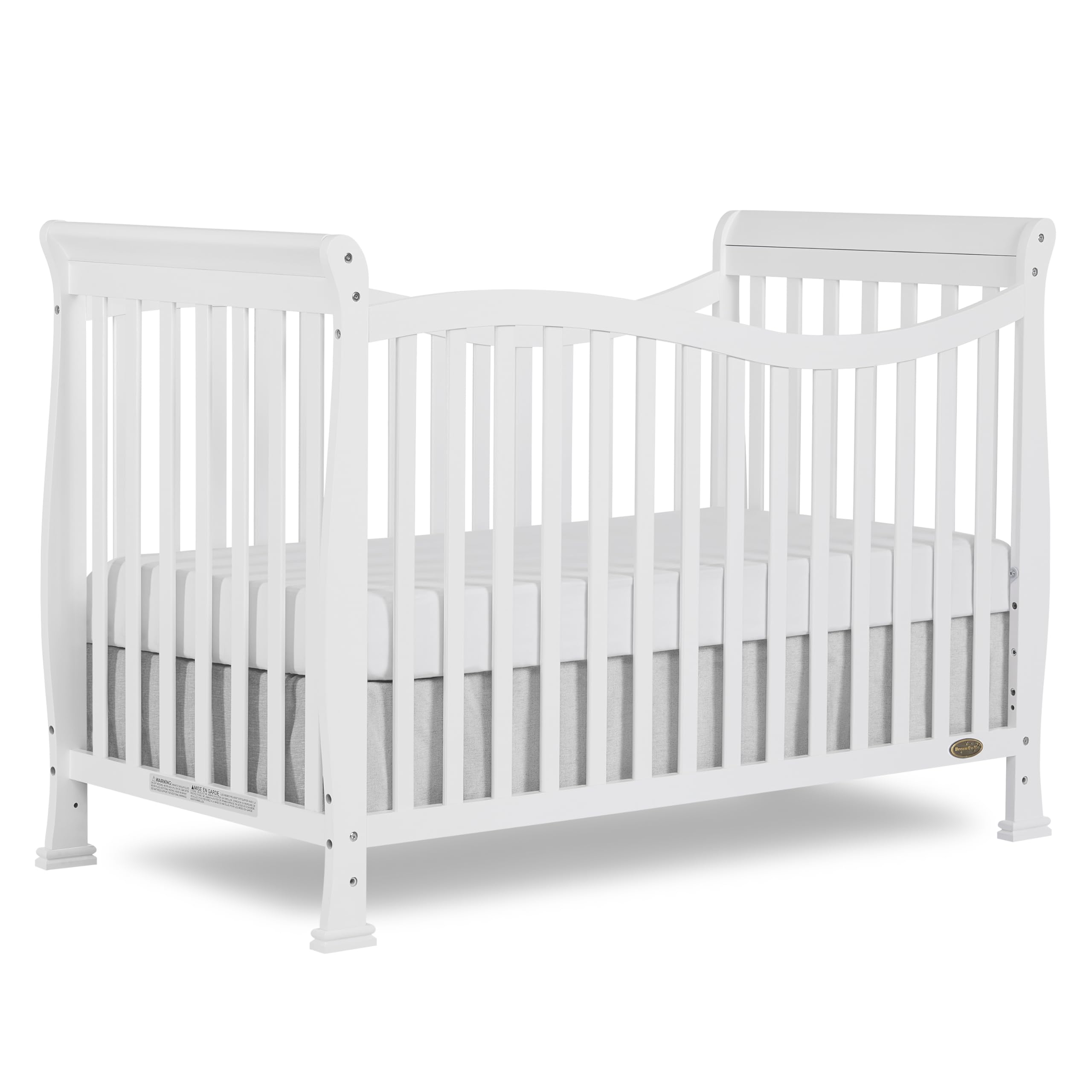
Dream On Me Violet 7-in-1
Key Features
- Weight: 40 lb
- Conversion: Seven configurations; kits sold separately
- Assembled size: 58"L x 29"W x 39"H
- Mattress heights: 4 positions
- Price: Midrange
The Violet’s wavy rail is the first thing you notice, and it is the reason this crib does not read like a budget box. The curved top rail and simple straight posts give it a softer look than the square convertibles here, and the white finish keeps it easy to mix with almost any nursery palette. It is still a standard full-size crib, so the style does not cost you mattress compatibility.
Four mattress-height positions put it near the top of this set for adjustability, and the steel platform gives the mattress a firm, flat base. Assembly is generally straightforward, and the 40-pound frame is light enough to shift before you load it with a mattress. The seven-stage conversion claim is where you need to read the fine print: the extra stages depend on separate kits, so the crib is the starting point, not the whole path.
We rank the Violet as the style pick rather than the default because you pay for the look and the extra height settings, and the finish can arrive with scuffs or chips. Inspect the rails before assembly, especially the curved top piece, and keep the packaging until you are sure you do not need a replacement. If the crib is going in a room where you want it to look special, the Violet earns the step up; if you want the simplest budget path, the Heartland is easier to justify.
Pros
- Distinctive wavy rail
- Four mattress-height positions
- Light 40-pound frame
- Standard full-size mattress fit
Cons
- Conversion kits sold separately
- Finish can arrive scuffed or chipped
The Violet is the style pick: a wavy rail, four height settings, and seven conversion stages for a nursery that does not want to look budget.
Best for Adjustable Height
DaVinci Charlie 4-in-1

Key Features
- Weight: 58 lb
- Hardware: Hidden
- Assembled size: 54.75"L x 30.5"W x 43.75"H
- Mattress heights: 4 positions
- Price: Premium
Four mattress heights is the largest adjustment range in this group, and the Charlie hides the hardware so the frame looks clean from every side. That matters in a crib you will see from the door, not just from the changing table. The 43.75-inch height gives it a taller, more furniture-like stance than the lower Essex, and the solid pine frame has a reassuring heft.
The sturdiness is the part we trust most. The frame feels solid when you push on the rails, and the hidden bolts keep the sides from snagging on blankets or sleeves. Assembly is not the quickest here because the pieces are heavier and the finish needs care, but the result is a crib that looks more expensive than the budget models around it. The 58-pound weight is the trade-off: build it in place and line up help for the headboard.
We stop short of making the Charlie the default because the finish is delicate for the money. Paint can chip during assembly, and some pieces can arrive with dents or marks, so inspect every panel before you tighten the bolts. The conversion kits are also separate, which means the four-in-one label is a path rather than a bundle. If four height settings and a cleaner furniture look are worth the premium, the Charlie is the one; otherwise the Heartland keeps more of the budget for the mattress.
Pros
- Four mattress heights
- Hidden hardware
- Solid pine frame
- Tall furniture-like stance
Cons
- Conversion kits sold separately
- Paint can chip and panels can arrive dented
The Charlie is for the buyer who wants four mattress heights and a cleaner furniture look, and will pay a premium for the extra adjustment and hidden hardware.
How We Tested the Best Budget Cribs
We built a shortlist by scanning the budget end of the crib market and filtering out any model with a pattern of safety complaints, missing certifications, or reviews that repeatedly mentioned wobbly frames or hardware that wouldn’t line up. Nine cribs made the cut, spanning different finishes, slat styles, and assembly methods. I assembled each one solo in a spare bedroom that doubles as a nursery, starting the clock when I opened the box and stopping when the last screw was tight. I noted every moment where the instructions lost me, where a hole didn’t align, and how much force it took to get the frame square.
Once built, each crib stayed in place for six months of everyday use—with a standard mattress, a weighted test doll, and plenty of leaning, reaching, and sheet-changing. I checked sturdiness by shaking the frame at the headboard and footboard, then harder, the way a toddler might pull up on the rail. I measured slat gaps, ran a finger along every edge, and tracked scratches, finish wear, or screws that needed retightening.
To test for odor, I sniffed each crib right after unboxing and again after a week, noting whether that chemical smell faded or lingered. I also tried a standard mattress in each one, paying attention to how easily sheets went on and whether the corners felt too tight for a standard crib sheet.
The cribs that rose to the top weren’t the flashiest. They went together without a fight—no misaligned holes, no confusing diagrams—and felt solid when you leaned over the rail. I compared the finish to the online photos and wiped each one down to see how it held up, then weighed what you got for the price: sturdy construction, a straightforward build, and no lingering smell. Safety was the baseline, not a bonus—every crib had to meet current CPSC standards and pass our shake test before we’d recommend it.
How to Choose a Budget Full-Size Crib
The right budget crib spends its savings on a solid full-size frame and the safety basics, not on conversion pieces you may never use.
Start with a standard full-size frame
A budget crib still has to be a real crib. Look for a standard full-size model that takes a 28-by-52-inch mattress, not a mini or playard substitute. The mattress is sold separately on every crib here, so price it into the decision before you fall for a low crib price. Also check the assembled footprint and height: the Essex is 34 inches tall and easier to reach into, while the Charlie stands 43.75 inches and takes more visual space. Measure the wall and the door swing, not just the mattress.
Count the conversion pieces, not the stages
A four-in-one or seven-in-one label describes the stages a crib can reach, not what comes in the box. Toddler guardrails, daybed rails, and full-size bed frames are often separate purchases, and the cost adds up when you buy them later. The Essex includes its daybed and sofa rail; the Heartland, Synergy, Violet, and Charlie require model-specific kits for some stages. If you only need the crib and toddler bed, buy for those two stages and ignore the longer conversion list. If you plan to use the full-size bed, price the kit before you choose.
Assembly and finish are where the savings show
The cribs here are not hard to build in principle, but hole alignment, missing instructions, and heavy panels separate a calm assembly from a frustrating one. Dry-fit the rails and headboard before tightening bolts, and open the carton well inside the return window. Paint is the other budget risk: chipping can appear during assembly, especially on the Hadley and Charlie, so inspect the top rails and drawer fronts first. If a panel is damaged beyond a shipping scuff, ask for a replacement before the crib goes together.
Match the extras to your nursery
Storage and adjustability are the two upgrades worth paying for in this set. The Hadley’s two-compartment drawer is useful if the nursery has no closet, but the crib is heavier and you give up some floor space to the drawer. Four mattress heights, as on the Violet and Charlie, make the newborn months easier on your back and give you more settings as the baby grows. If neither feature changes your daily routine, put the savings into a firm standard mattress that fits snugly.
Frequently Asked Questions
What size mattress fits a standard full-size crib?
A standard full-size crib mattress is 28 by 52 inches. Every crib in this guide uses that size, and the mattress is sold separately. A mini crib or playard mattress is not a substitute because it leaves gaps at the sides. Measure the inside of the assembled crib and push the mattress into each corner; if you can fit more than two fingers between the mattress and the rail, the fit is wrong.
Is GREENGUARD Gold certification worth paying for on a budget crib?
GREENGUARD Gold means the crib has been tested for chemical emissions and VOCs, which is a useful filter in a nursery. It is not a substitute for a snug mattress fit or careful assembly. Several cribs here carry it, including the Essex, Hadley, and Charlie. If two cribs are otherwise close, choose the certified one; if the certified model costs much more, put the difference into a better mattress.
Why does a new crib smell like paint or chemicals?
New paint, wood, and composite panels can release a paint or chemical smell when first unboxed. Air the parts in a well-ventilated room before assembly, and keep the nursery ventilated for the first few days. If the smell is sharp or persists after a week, contact the manufacturer rather than masking it with air fresheners. A faint wood smell that fades is normal; a strong solvent smell that stays is not.
Final Verdict
Start with the Delta Heartland. It is the budget crib we recommend because it covers the standard full-size job, puts the money into the frame and height settings, and does not make you pay for a conversion bundle before you need it. If the nursery is tight or you want a lower reach, choose the Essex; its 34-inch height and included daybed rail are the better fit. For under-crib storage, the Hadley earns its premium.
